There’s a certain magic that clings to the name Sandro Botticelli, a whisper of a forgotten spring, a dream of gods and goddesses rendered in lines so fluid they seem to breathe. To walk through Florence is to walk through his world, a city where the golden light of the Renaissance still seems to pool in the cobblestone alleys and bounce off the serene face of the Arno River. This isn’t just a trip to see paintings in a museum; it’s a pilgrimage to the very source of a revolution in beauty, an immersion into the mind of a man who painted not just what he saw, but the very soul of his age. Alessandro di Mariano di Vanni Filipepi, the man we call Botticelli, was a product of this city—its fierce politics, its groundbreaking philosophy, and its intoxicating love for all things beautiful. To understand his art, one must understand Florence, and to truly experience Florence, one must seek out the lingering spirit of Botticelli. Here, in the cradle of the Renaissance, his ethereal figures still dance, his allegories still challenge, and his legacy is etched into the very stones of the city.
This journey into the heart of an artist’s world is not unique to Florence, as one can also embark on a similar artistic pilgrimage through Van Gogh’s Europe.
The Uffizi Gallery: The Sacred Heart of the Botticelli Universe

Any journey into Botticelli’s world must begin—and will likely reach its peak—within the revered halls of the Uffizi Gallery. This is more than just a museum; it is a sanctuary of Renaissance spirit, housed in a splendid building designed by Giorgio Vasari that embraces the Arno River. Visiting the Uffizi is a slow, unfolding revelation. You move through rooms showcasing early Gothic masters, witnessing the rigid, gilded forms of Byzantine art gradually giving way to the humanism and naturalism that defined the era. This chronological journey is vital, providing the context in which Botticelli was born, and then—in rooms 10-14—you see how he utterly transformed that world.
The atmosphere here is one of quiet reverence, interrupted only by the clicking of cameras and murmurs in a dozen languages. Light streams through grand windows, illuminating dust particles floating like tiny sprites. The sheer number of masterpieces can be overwhelming, but the Botticelli rooms feel different. They are the sanctuary, the heart of this pilgrimage. Here, the air seems charged with a poetic energy. It is here that you encounter the works that have shaped our very notion of Renaissance beauty.
Practical Advice for Visiting the Uffizi
A word for the modern visitor: the Uffizi is one of the world’s most popular art museums, and spontaneity often leads to disappointment. Booking your ticket is not just advisable; it is essential, especially if you plan to visit between April and October. Secure your timed entry slot weeks or even months ahead via the official gallery website or a trusted reseller. This will spare you from the long queue that frequently winds around the courtyard under the harsh Tuscan sun.
Consider visiting on a weekday, ideally later in the afternoon when large tour groups have tapered off. Allow yourself plenty of time—at least three to four hours—to truly absorb the collection. Rushing through the Uffizi is like gulping fine vintage wine; you miss all the nuances and subtle notes that make it exceptional. A good strategy is to head straight to the Botticelli rooms upon arrival, experiencing them fresh and before art fatigue sets in. Afterwards, you can meander back through earlier periods at a gentler pace.
The Encounter with Primavera
And then you see it. Allegory of Spring, better known as Primavera. The painting is larger than expected, a vibrant tapestry of myth and symbolism that commands the entire wall. It doesn’t demand your attention loudly; it sings a soft, lyrical melody that draws you closer. There is an almost theatrical quality to the scene. Set in a lush orange grove dotted with a thousand meticulously rendered flowers, this complex Neoplatonic allegory was likely commissioned by a member of the powerful Medici family for a wedding.
To stand before Primavera is to be drawn into a philosophical dance. On the right, Zephyrus, the wind god, pursues the nymph Chloris, who transforms into Flora, the goddess of spring, scattering flowers from her dress. At the center, Venus, goddess of love and beauty, presides with her head slightly tilted in a gesture of serene welcome. Above her, Cupid, blindfolded, aims his flaming arrow. On the left, the Three Graces—Chastity, Beauty, and Pleasure—dance in a circle, their diaphanous gowns revealing the elegant lines of their forms. Finally, Mercury, the messenger god, disperses the last winter clouds with his caduceus, heralding the arrival of a perfect, eternal spring.
What mesmerizes most is Botticelli’s line. It is his signature: a flowing, musical quality shaping the contours of the figures, the folds of their garments, the delicate turns of wrists. The figures seem to float rather than stand, imbued with a weightless grace that defies physics. They are not realistic portraits, but idealized forms embodying concepts from Lorenzo de’ Medici’s philosophical circle. The painting celebrates love, fertility, and the intellectual and cultural flourishing of Medicean Florence. Take time to study the details: the botanical precision of the flowers, the subtle expressions on each face, the intricate fabric patterns. The work reveals its secrets slowly, rewarding patient viewers with layers of meaning and breathtaking beauty.
The Vision of The Birth of Venus
In the same room awaits another icon of Western art: The Birth of Venus. If Primavera is a complex, earthly allegory, Venus is a moment of pure, divine revelation. This is one of the world’s most famous images, reproduced on everything from coffee mugs to mousepads, yet seeing the original is deeply moving. The colors are softer, more ethereal than reproductions. The goddess’s pale, pearlescent skin seems to glow with an inner light against the cool tones of sea and sky.
Here, the story is simpler, more direct. Venus, born from sea foam, arrives at the shore on a giant scallop shell, propelled by the wind god Zephyrus, who holds his partner, the gentle breeze Aura. On the shore, a Hora, one of the goddesses of the seasons, waits to cloak her in a flower-embroidered garment. The composition is a masterpiece of balance and harmony. Venus’s pose—the famous Venus Pudica, with one hand covering her breast and the other her groin—nods directly to classical statues rediscovered during the Renaissance. It is a moment of synthesis where pagan myth and Christian ideals of purity converge.
Botticelli’s Venus epitomizes a new kind of beauty. She is not powerful or voluptuous, but delicate and almost vulnerable, with long, flowing golden-red hair swirling in impossible, elegant curls. Her expression is melancholic, her gaze distant, as if contemplating the mortal world she is about to enter. This painting was radical for its time—a large-scale depiction of a nude mythological female figure unseen in Western art for a millennium. It testifies to the progressive, classicism-obsessed culture of Medici Florence that such a work was created and celebrated. Standing before her, you feel the cool sea breeze, hear the whisper of waves, and witness the birth not just of a goddess but an entire aesthetic ideal.
Other Florentine Masterpieces
While Primavera and The Birth of Venus are undisputed highlights, don’t overlook Botticelli’s other works in the Uffizi. His Adoration of the Magi from around 1475 is as much a historical document as a work of art. In this bustling, vibrant scene, Botticelli painted portraits of his patrons, the Medici family, as the Magi and their entourage. Cosimo the Elder kneels before the Christ child, with his sons Piero and Giovanni nearby. A young man on the far right, looking directly at the viewer, is believed to be a self-portrait of Botticelli himself—a bold act of self-insertion into the sacred narrative. The painting is brilliant political flattery, cementing the Medici’s status as Florence’s wise rulers.
Also seek out Pallas and the Centaur. This powerful allegory depicts the goddess of wisdom, Pallas Athena, gently taming a centaur, representing humanity’s base instincts. It is widely interpreted as a political allegory praising Lorenzo de’ Medici’s diplomatic skill in navigating Italy’s treacherous political landscape. Pallas’s dress bears the Medici’s interlocking diamond ring emblem, leaving no doubt about the painting’s message. The contrast between the serene, controlled power of the goddess and the centaur’s pained submission is masterful visual storytelling.
Following the Threads: Botticelli’s Presence Across Florence
While the Uffizi boasts the most magnificent collection, Botticelli’s essence is not confined within its walls. To truly connect with the artist’s life, you must walk the streets he once walked and visit the places where he worked and prayed. Florence itself serves as the canvas, with his works acting as milestones on a journey through his life story.
Chiesa di Ognissanti: A Place of Work and Rest
A short, pleasant walk westward from the city center along the Arno leads to the Chiesa di Ognissanti (All Saints’ Church). This beautiful church, situated in a quiet and less touristy piazza, holds special significance in Botticelli’s story. It was the parish church of the influential Vespucci family, Botticelli’s neighbors and early patrons. The renowned explorer Amerigo Vespucci, after whom the Americas are named, grew up here. In 1480, Botticelli painted his powerful fresco, Saint Augustine in His Study, for this very church.
This work is often displayed opposite Domenico Ghirlandaio’s Saint Jerome in His Study, creating a compelling artistic dialogue. Botticelli’s Augustine is portrayed as a visionary, eyes lifted upward, caught in a moment of divine inspiration. The intensity of his gaze and the intellectual energy of the scene are tangible. The light, the meticulously rendered objects on his desk, the astronomical sphere—all reflect the Renaissance fascination with knowledge, both divine and scientific.
Yet, the most poignant reason to visit Ognissanti is that it is Botticelli’s final resting place. He was buried here in 1510, in the Vespucci family chapel at his own request. A simple, circular marker on the floor of the right transept marks his tomb. There are no grand monuments or ornate sarcophagi—only a humble stone. Standing in this quiet space evokes a direct connection to the man himself, removed from the crowds and grandeur of museums. It offers a moment for quiet reflection on the arc of his life—from celebrated favorite of the Medici to his more obscure later years, and finally, this peaceful end in the neighborhood where he was born and lived.
The Pitti Palace and the Accademia Gallery: Expanding the Vision
Across the Arno River stands the vast Palazzo Pitti, the lavish later residence of the Medici grand dukes. Within its Palatine Gallery, surrounded by works by Raphael, Titian, and Rubens, you can find several of Botticelli’s paintings, mainly Madonnas. Pieces such as the Madonna and Child with the Young Saint John (Madonna del Roseto) reveal a different facet of the artist. These works of tender devotion highlight his skill in portraying gentle expressions and delicate, loving gestures. Viewing his work within this sumptuous palace helps one understand the variety of patronage he engaged in—from grand philosophical allegories to more intimate pieces intended for private devotion.
Likewise, while the Galleria dell’Accademia is globally famed for a single masterpiece—Michelangelo’s David—it is well worth exploring its other halls. Here, you can discover more of Botticelli’s earlier works and pieces from his workshop, such as the Madonna of the Sea. This painting derives its name from the subtle seascape visible through the window behind the Virgin and Child. It is a charming, intimate work that showcases his evolving style and his mastery of lyrical, flowing lines even in the earliest phase of his career. Visiting these additional galleries provides a fuller understanding of Botticelli’s output, demonstrating that his brilliance extended beyond the mythological masterpieces of the Uffizi.
The Medici Sanctuaries: Understanding the Patron
To understand Botticelli, one must grasp the importance of the Medici family. They were not merely his patrons but the architects of the cultural milieu in which he flourished. Visiting the Palazzo Medici Riccardi offers a step back into the heart of their power. This was the principal residence of the Medici family during the 15th century. Walking through its courtyards and chambers, one can sense the immense wealth and refined taste of the family. The true treasure is the Magi Chapel, adorned with breathtaking frescoes by Benozzo Gozzoli depicting the Magi’s journey as a glittering procession of the Medici family and their allies. This was the world that supported Botticelli—the lavish, intellectually vibrant court that demanded art that was both beautiful and deeply philosophical.
Similarly, the Medici Chapels in the Basilica of San Lorenzo, the family’s parish church, stand as a testament to their enduring legacy. Although these chapels are dominated by Michelangelo’s genius, their very existence speaks to the dynasty’s power and their ambition to secure a lasting place in history. Imagining a young Botticelli moving through these circles, listening to Neoplatonic philosophical debates led by Marsilio Ficino, and witnessing the family’s aspirations firsthand, offers a rich context for the art he would create.
The Roman Interlude: Botticelli and the Sistine Chapel
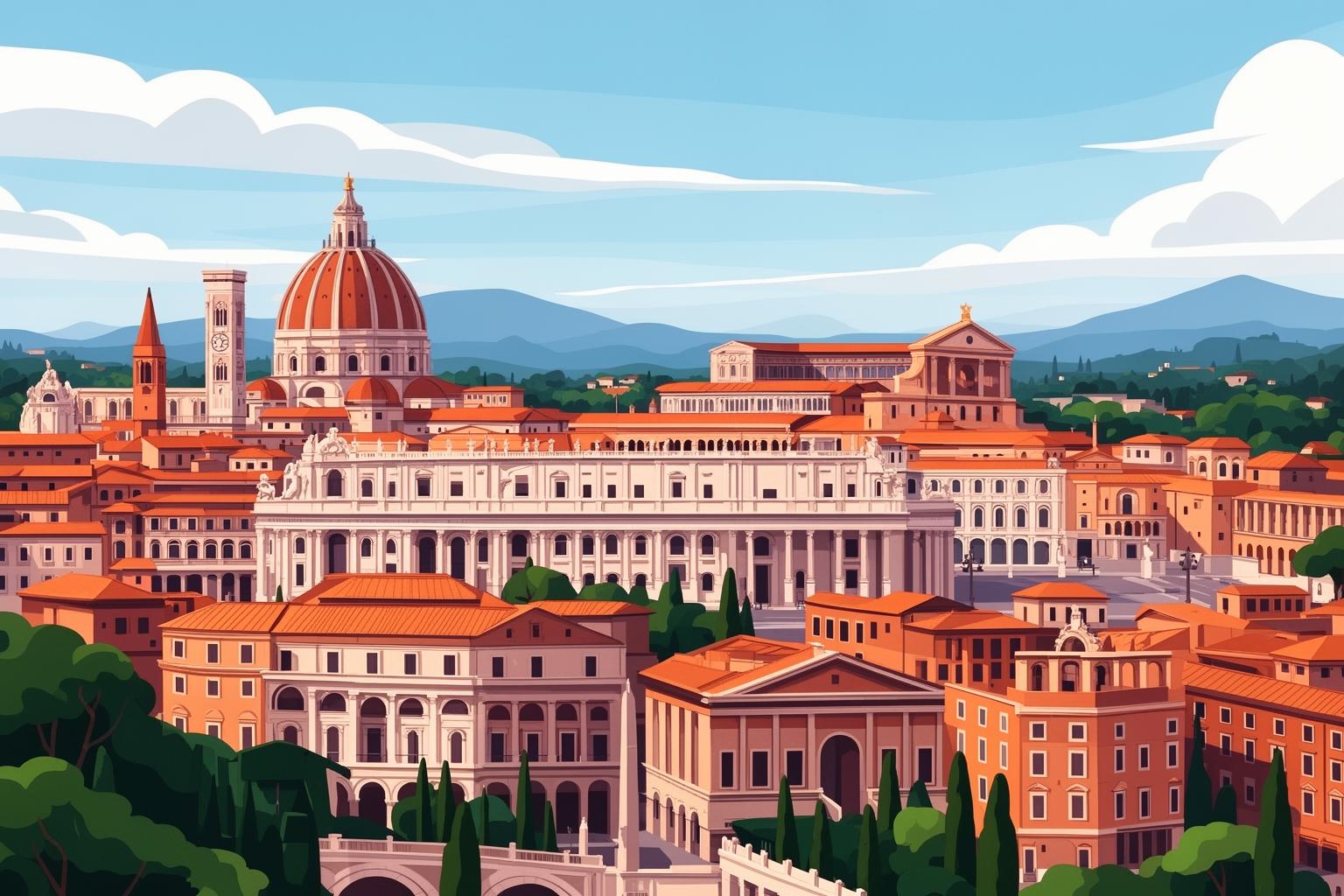
Botticelli’s story extends beyond Florence. In 1481, at the peak of his fame, he was called to Rome by Pope Sixtus IV to join a “dream team” of the era’s greatest artists, including Perugino, Ghirlandaio, and Rosselli. Their grand mission was to decorate the walls of the Pope’s new chapel—the Sistine Chapel.
Today, the chapel is so strongly linked with Michelangelo’s ceiling and Last Judgment that many visitors overlook the frescoes along the side walls. However, this is a mistake. These narrative cycles, depicting the lives of Moses and Christ, were the chapel’s original decorations, with Botticelli leading the project. His contribution includes three large frescoes: The Temptations of Christ, The Youth of Moses, and The Punishment of the Rebels.
Experiencing Botticelli in the Vatican
Visiting the Sistine Chapel is a powerful experience. After moving through the expansive Vatican Museums, you enter the sacred space where silence is required and photography is forbidden. The vastness of Michelangelo’s work overhead is dizzying, but I encourage you to lower your gaze to the walls and find Botticelli’s panels. His style is distinctive. Even in this grand, formal setting, his figures retain their signature graceful linearity. The compositions are intricate and multi-layered, often portraying several episodes from a single story within one frame.
In The Temptations of Christ, for example, you can observe Christ’s three temptations by the devil set against a backdrop that includes a depiction of a leper’s cleansing ritual in the foreground—a symbol of Christ’s healing power. The architecture is classical, the landscapes detailed, and the figures elegant and expressive. In The Punishment of the Rebels, he dramatizes the biblical story of the rebellion against Moses and Aaron with clear moral intensity. It served as a strong warning against opposing papal authority.
Viewing these works is essential. They reveal Botticelli not just as a painter of lyrical myths but as a master of complex narrative frescoes, capable of working on a monumental scale and addressing profound theological themes. They highlight his esteemed position among his peers and add depth to his artistic identity. When visiting, take a moment to appreciate this earlier layer of history before your eyes are drawn upward to the heavens painted by Michelangelo.
The Final Chapter: Savonarola’s Shadow and a Change of Heart
The story of Botticelli’s later years is closely connected to one of the most dramatic figures in Florentine history: the Dominican friar Girolamo Savonarola. After the death of Lorenzo de’ Medici in 1492, Florence entered a time of political and religious upheaval. Savonarola delivered fiery sermons from the Duomo, condemning the city’s worldliness, its neo-pagan art, and the moral decay of its leaders.
His influence was vast. Many Florentines, including, it is believed, Botticelli himself, became his followers, known as the Piagnoni or “Weepers.” This era culminated in the infamous “Bonfire of the Vanities” in 1497, where thousands of items considered sinful—mirrors, fine clothing, musical instruments, and “immoral” books and artworks—were publicly burned in the Piazza della Signoria. Vasari, his biographer, claims that Botticelli personally threw some of his own mythological drawings onto the flames.
Whether or not this is true, a significant change is evident in his later work. The serene, classical grace of his earlier paintings gives way to a more emotional, agitated, and intensely spiritual style. His figures grow more contorted, their expressions filled with anguish or ecstatic devotion. The compositions become flatter, less focused on Renaissance perspective and more intent on conveying raw, spiritual emotion, recalling an older, Gothic style.
To truly experience this chapter of the artist’s life, stand in the Piazza della Signoria. Picture the towering bonfire, hear the fervent sermons of Savonarola resonating from the nearby Palazzo Vecchio. This was a city gripped by spiritual crisis, and it left a profound mark on one of its most sensitive artists. His later paintings, like the haunting Mystic Nativity (now in London) or his illustrations for Dante’s Divine Comedy, are creations of a man wrestling with faith, sin, and salvation in a turbulent world. They lack the effortless beauty of Venus, yet they carry a profound and moving spiritual depth that completes the portrait of this complex artist.
Living Florence: Breathing the Air of the Renaissance
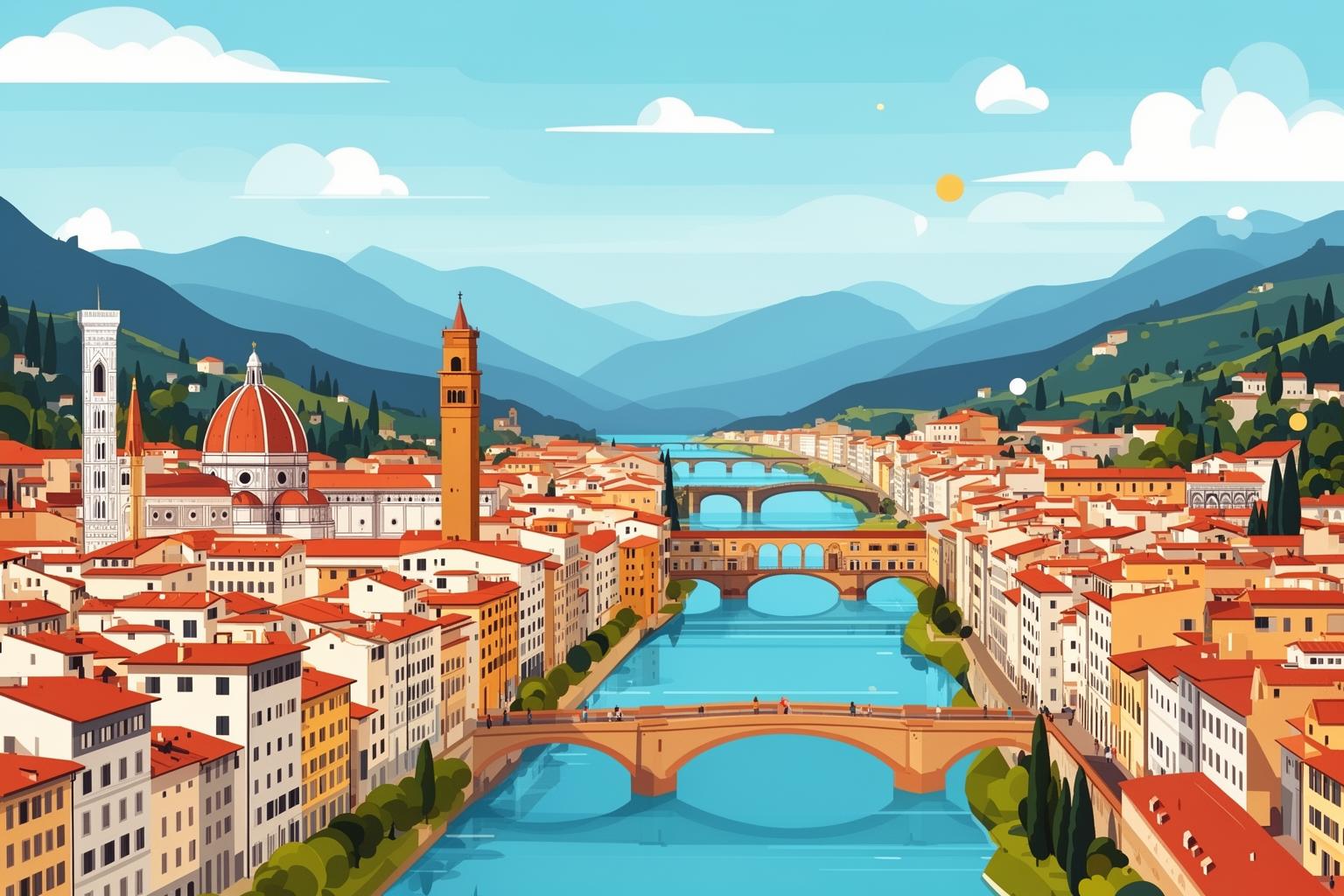
To complete your pilgrimage, you must do more than merely visit museums and churches; you need to experience the city itself. The Florence that Botticelli knew remains remarkably intact. The layout of the historic center has changed very little, with the same narrow streets, the same stone buildings, and the same iconic skyline dominated by Brunelleschi’s magnificent dome.
Rise early, before the city fully awakens, and walk across the Ponte Vecchio. Watch the sunrise cast a golden glow over the Arno, the very view that artists have admired for centuries. Climb Giotto’s Bell Tower or, if you have the stamina, ascend the 463 steps to the top of the Duomo. From this vantage point, the city spreads out beneath you like a map. You can see the Ognissanti neighborhood where Botticelli lived, the Uffizi where his art now resides, and the Piazza della Signoria where his worldview may have been forever changed. Gazing down, you realize how compact and walkable the city is, with all these historical threads woven into a tight, beautiful fabric.
Lose yourself in the Oltrarno district on the south side of the river. This is the artisan’s quarter, where you can still find small workshops—the botteghe—where craftsmen practice age-old techniques. This is the same kind of setting where a young Botticelli would have learned his trade as an apprentice, grinding pigments, preparing panels, and mastering the art of the line. The sounds and scents of these workshops provide a direct link to the city’s creative past.
Savor the local cuisine. Visit the Mercato Centrale, a bustling indoor market, and let the vivid colors and aromas of fresh produce, cheeses, and cured meats envelop you. Enjoy a simple, perfect meal at a local trattoria—a plate of pasta, a glass of Chianti. This connection to the land and the flavors of Tuscany is part of the sensory experience that informed the Renaissance worldview—a celebration of the beauty and bounty of the earthly world.
As dusk falls, find a spot to watch the sky turn pink and purple behind the Ponte Santa Trinita. Florence in the golden hour is pure magic. The palace stones seem to soften, and the city takes on a dreamlike quality. In these moments, it’s easy to imagine Botticelli’s world—a world of philosophical debates, artistic rivalries, and an unrelenting pursuit of beauty. You realize his paintings were not created in isolation; they were born of this light, this stone, this air. The grace, the elegance, the touch of melancholy—they’re all still here, waiting to be discovered.
Your journey in the footsteps of Sandro Botticelli is more than an art history tour. It is an invitation to see the world through his eyes and to engage with the profound questions of love, beauty, and divinity that inspired his art. You will leave Florence not only with memories of beautiful paintings but also with a deeper understanding of a pivotal moment in human history and a profound connection to the gentle, lyrical soul of a master who captured its very essence.