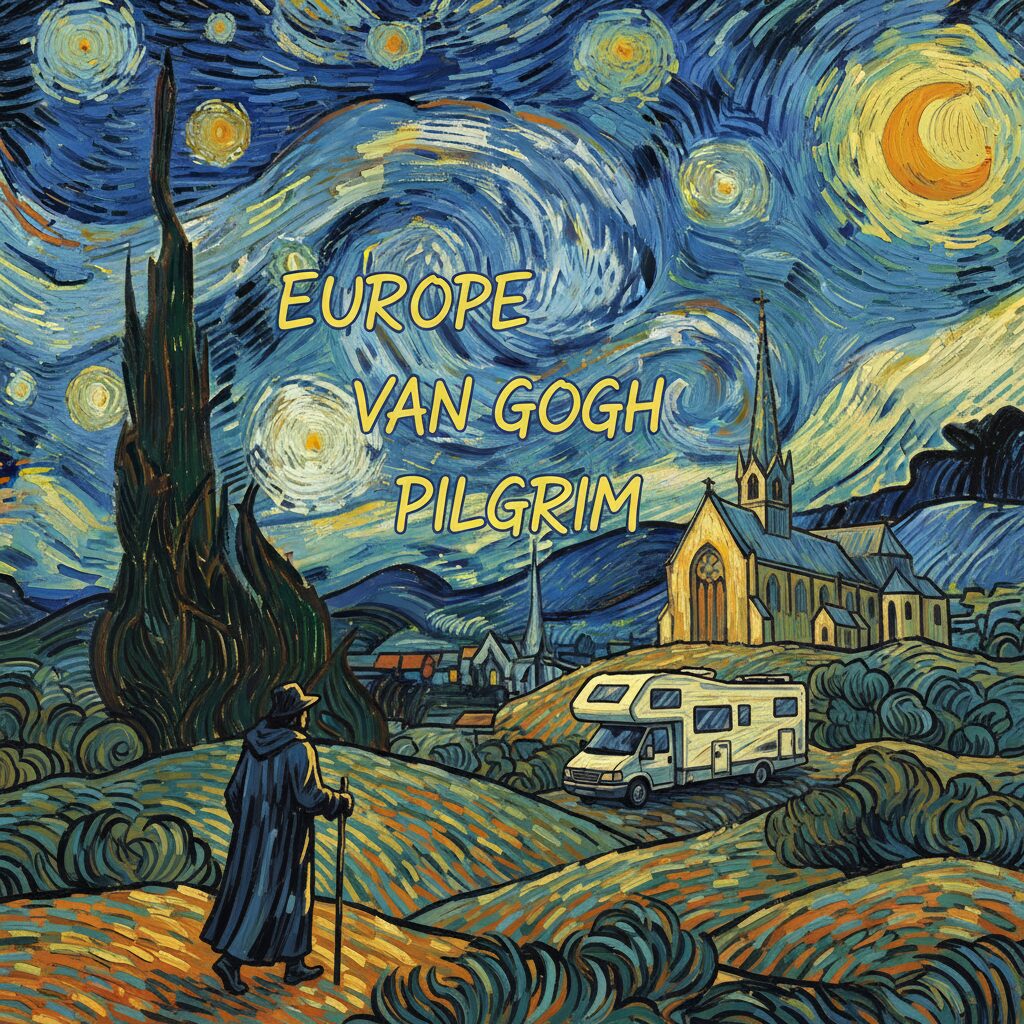
There are artists who paint, and then there are artists who live on the canvas, whose every breath seems drawn in strokes of ultramarine and chrome yellow. Vincent van Gogh was such a soul. To follow his path is not merely to visit locations on a map; it is to undertake a pilgrimage into a world ablaze with color, emotion, and a desperate, beautiful search for light. This is a journey through the landscapes that shaped him, the fields that absorbed his sorrows, and the starry nights that witnessed his genius. It’s a walk through the Netherlands, Belgium, and France, tracing the footsteps of a man who saw more in a humble sunflower than most see in a lifetime. We begin not in a museum, but in the soil, the sun, and the wind that he translated into immortal art. It’s a journey to understand how a Dutch pastor’s son came to paint the soul of the universe, one brilliant, impassioned brushstroke at a time. Before we step into the fields of Brabant or under the sun of Provence, let us see the map of his life, a constellation of places that hold the echoes of his passing.
If you are inspired by this journey through Van Gogh’s world, you might also enjoy a similar pilgrimage through the landscapes of J.M.W. Turner.
The Dutch Roots: Where the Colors First Stirred

Every story has a beginning, and Vincent’s starts in the flat, fertile, and often somber landscapes of North Brabant in the Netherlands. This is a terrain of damp earth, low skies, and diligent people—a world portrayed in the muted, earthy hues that would characterize his early work. To grasp the brilliant burst of color that emerged later in France, one must first sense the damp chill and quiet dignity of his Dutch origins. This is where the seed of the artist was planted, in a realm far removed from the vibrant cafés of Paris or the sunlit fields of Provence.
Zundert: The Seed of a Sunflower
In the small market town of Groot-Zundert, near the Belgian border, the journey begins. It is here that Vincent was born on March 30, 1853. The air still carries a provincial quietness, deeply tied to the rhythms of the land. His birthplace no longer exists, lost to time, but now the Van Gogh Huis stands in its place—a modern arts center devoted to his legacy and artists inspired by him. It is not a dusty museum but a living tribute. Standing here, you can almost sense the presence of the young, red-headed boy destined to transform the art world. The center brilliantly evokes his childhood, not through artifacts but via atmosphere and contemporary art that resonates with his spirit.
A short walk away is the Dutch Reformed church where his father, Theodorus, served as a minister. The small, modest brick building symbolizes the piety and austerity that marked Vincent’s upbringing. In the nearby graveyard lies a poignant piece of his story: the gravestone of his older brother, also named Vincent, stillborn exactly one year before the artist’s birth. Passing this stone, as Vincent himself likely did countless times, evokes a shiver of the profound sense of replacement and melancholy that shadowed his life. It is a somber yet essential stop to understand the psychological landscape of his youth.
To truly connect with Zundert, take a walk into the surrounding countryside. The fields and woods where Vincent took his first solitary strolls remain unchanged. It was in this nature, he wrote, that he first experienced a sense of the eternal. The landscape is not dramatic, but it holds a subtle, moody beauty unmistakably Holland—a world of dark, gnarled trees, broad fields, and a sky that seems to press down upon the earth.
Nuenen: Painting the Soul of the Peasant
If Zundert was the seed, Nuenen was the soil where Van Gogh the artist truly began to grow. He lived here with his parents from 1883 to 1885, a period marked by intense work and artistic growth. It was in Nuenen that he resolved to become a painter of peasant life, capturing the raw, unvarnished truth of those who worked the land. This era culminated in his first great masterpiece, “The Potato Eaters.”
Today, Nuenen proudly calls itself Van Gogh Village, having done an exceptional job preserving his legacy. The experience starts at the Vincentre, a museum that immerses visitors in his life here. Through letters, audiovisuals, and reconstructions, you don’t just learn about Van Gogh—you feel as if you are walking beside him. From the Vincentre, the real magic unfolds. The village functions as an outdoor museum, dotted with 23 locations he painted or that were important to his life, linked by walking and cycling routes. Freestanding audio columns and informational plaques bring his story vividly to life.
Renting a bicycle is essential for the full Nuenen experience. Cycling through the Brabant countryside, you’ll see the landscapes he saw, the very same trees and cottages. You can stand before the small church he painted for his mother, visit the home of the De Groot family who posed for “The Potato Eaters,” and explore the presbytery where his studio stood. The feeling is uncanny, as if stepping directly into one of his canvases. The colors may differ—your eyes perceive greens and blues where he saw somber ochres and browns—but the forms, the light, and the spirit of the place remain unchanged.
One of the most enchanting parts of this trail is the Van Gogh-Roosegaarde cycle path. At dusk, this 600-meter stretch, inspired by “The Starry Night,” glows with thousands of twinkling, light-emitting stones, creating a magical, swirling galaxy beneath your wheels. It is a breathtaking blend of art, technology, and nature—a fittingly innovative tribute to an artist who was far ahead of his time. Spending a day in Nuenen is to witness the birth of his empathy, to see how he discovered rugged beauty and profound humanity in the harsh lives of the poor—a theme that would resonate throughout his entire career.
The Parisian Crucible: A Collision with Modernity
Leaving behind the rustic simplicity of the Netherlands, Vincent immersed himself in the dazzling, vibrant core of the 19th-century art world: Paris. From 1886 to 1888, he lived with his brother Theo in Montmartre’s bohemian quarter. This period marked a profound transformation. The somber, heavy palette of his Dutch phase was broken apart and replaced by the bright, fragmented brushstrokes of the Impressionists and the bold, flat planes inspired by Japanese Ukiyo-e prints, which he avidly collected. Paris became a crucible—a chaotic and exhilarating laboratory where he crafted a new visual language.
Montmartre’s Electric Atmosphere
Montmartre in the 1880s buzzed with creative energy, a village perched atop a hill overlooking the vast city, brimming with artists, writers, and thinkers challenging the limits of art and society. Although many famous landmarks of the era have changed, the spirit of the neighborhood endures if you know where to look. Climbing the winding cobblestone streets, you leave behind Haussmann’s grand boulevards and enter a more intimate, village-like realm.
Vincent and Theo lived at 54 Rue Lepic, in a building that still stands today. From his window, he enjoyed a sweeping view of the Parisian rooftops, a scene he painted multiple times. Though it remains a private residence, standing outside you can envision him gazing out, capturing the city’s light and life. Nearby is the Moulin de la Galette, one of Montmartre’s last surviving windmills, which he painted across seasons, portraying its rustic charm against the expanding cityscape. While the area is now peppered with tourists and souvenir shops, moments of authenticity remain. In the early morning, before the crowds arrive, the light softly illuminates the old stone walls and narrow alleys, evoking a timeless feeling.
In Paris, he encountered artists who would forever alter his vision: Pissarro, Degas, Gauguin, and Toulouse-Lautrec. He frequented Montmartre’s color merchants and art suppliers, including Père Tanguy, whose portrait he famously painted set against a backdrop of treasured Japanese prints. He absorbed Impressionism’s lessons—the emphasis on light and pure color—but quickly pushed beyond them, pursuing a style more personal and emotionally charged. His artistic evolution can be traced at the Musée d’Orsay, where his Parisian works hang alongside those of his peers. There, one sees his brushwork grow increasingly agitated, his colors more vivid, as he progressed from painting Montmartre’s windmills to his first vibrant self-portraits, his gaze already burning with restless intensity.
To experience the essence of his Paris, stray from the crowded Place du Tertre. Wander the quieter side streets, find a small café, and watch the interplay of light on the buildings. Visit the Musée de Montmartre, housed in one of the hill’s oldest buildings, offering insight into the bohemian life Vincent lived. Paris was far from peaceful for him—the relentless social and artistic stimulation was both invigorating and exhausting—but it was a crucial chapter. It formed the bridge that carried him from the darkness of the north to the brilliant light of the south.
The Provençal Dream: Chasing the Sun in Arles
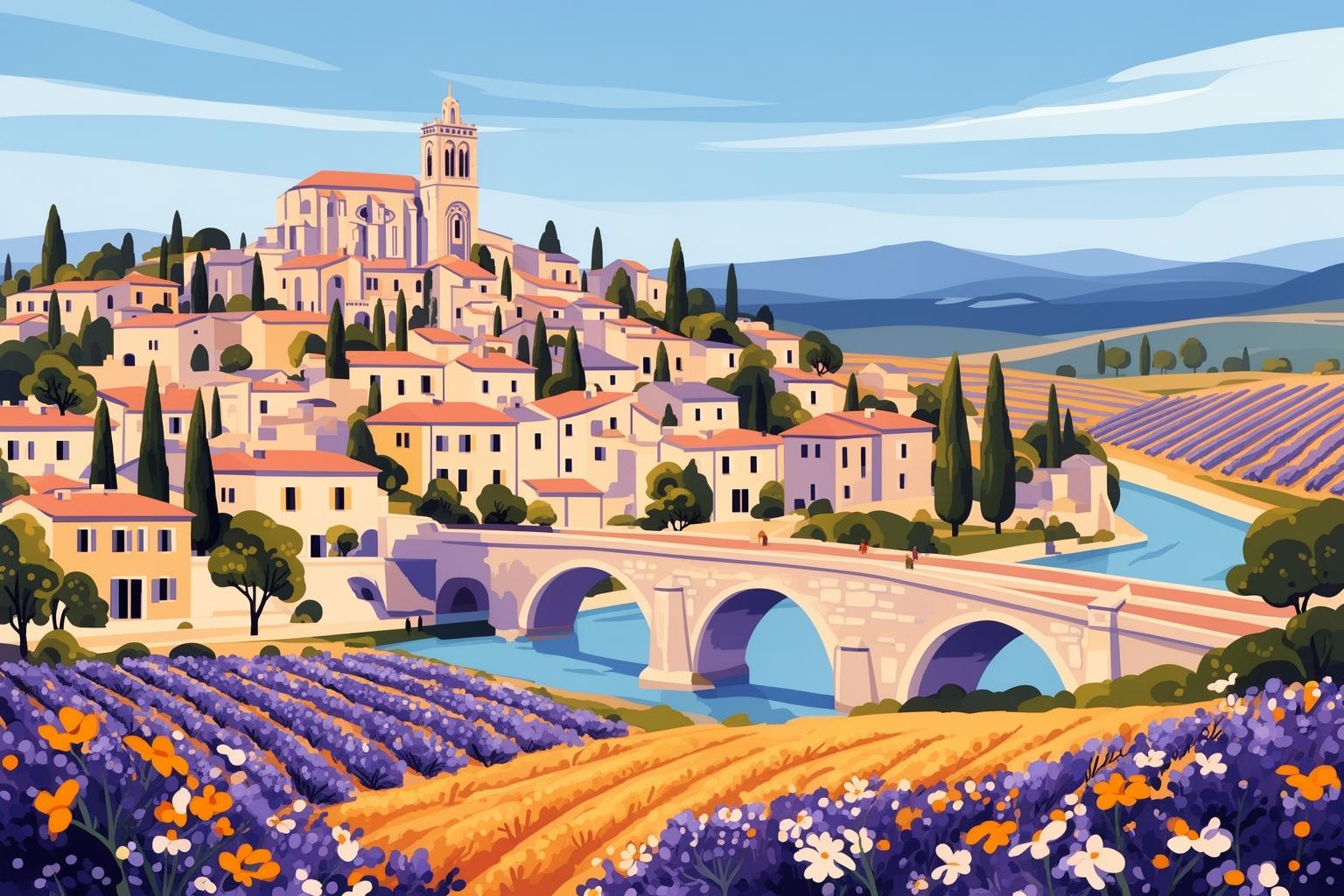
Overwhelmed by Paris’s gray winters and hectic pace, Vincent fled south in February 1888 in search of light, color, and tranquility. He found them in Arles, a small Roman town in the heart of Provence. The moment he stepped off the train, he was awestruck by the intensity of the southern sun and the vibrancy of the colors. “The nature of the South can’t be painted with the palette of the North,” he wrote to Theo. It was in Arles that his art blossomed into a symphony of vivid yellows, deep blues, and fiery oranges. In just 15 months, he created over 200 paintings—some of his most iconic and beloved works—in a flood of creative energy unmatched in art history.
The Yellow House and a Symphony of Color
Central to Van Gogh’s dream in Arles was the Yellow House, a small building he rented on Place Lamartine. He painted it a lively yellow, the color of sunshine and hope, and dreamed of making it a “Studio of the South,” a collective where artists could live and work together. Although the house was destroyed by bombing in World War II, its location is marked, and standing there near the public garden he painted, you can sense the energy of his ambition and his desperate yearning for companionship.
From this focal point, Arles unfolds as a Van Gogh canvas. The town has created a detailed walking trail leading to the exact spots where he set up his easel. Each place is marked by a plaque featuring a reproduction of the painting he created there. The effect is breathtaking. You can stand on the corner of Place du Forum and see the café from “The Café Terrace at Night,” its awning still glowing yellow beneath the deep blue evening sky. The atmosphere is electric, especially at dusk, as gaslights flicker on and stars begin to appear. It feels as if he painted it only yesterday.
A short walk away, you can stand on the banks of the Rhône and find the very viewpoint for “Starry Night Over the Rhône.” Here, you can watch the city lights shimmer and reflect on the dark, flowing water—a more serene, hopeful vision than the more famous, turbulent counterpart painted later in Saint-Rémy. The experience is deeply moving, providing a direct connection to the artist’s eye and his ability to discover cosmic beauty in an earthly scene.
Following the Brushstrokes in Arles
The joy of an Arles pilgrimage is in the act of discovery. As you wander the sun-baked streets, you’ll find the Roman Amphitheatre (“The Arena at Arles”), the ancient burial grounds of Les Alyscamps, and the public garden near the Yellow House. Each step deepens your appreciation for how Van Gogh transformed reality into something more profound and emotionally charged.
A must-do excursion is a trip just outside town to see the Pont de Langlois, the drawbridge he painted repeatedly, enchanted by its structure and how it reminded him of the landscapes of his Dutch homeland, now reimagined under the brilliant Provençal light. A reconstruction of the bridge stands a few kilometers from the original site, and seeing it feels like watching a painting come to life.
Practical advice for visitors to Arles: timing is everything. Visit in spring or early autumn to avoid the intense summer heat and largest crowds. The light during these seasons is softer and golden, ideal for photography and appreciating the landscape’s colors. Wear comfortable shoes, as the best way to experience the city is on foot. Allow yourself to get lost in its winding streets. Arles is more than a checklist of painting locations; it’s a feeling, a warmth that seeps into your bones. It was a place of immense hope and creativity for Vincent, but also of deep crisis, culminating in the infamous incident with Paul Gauguin and the severing of his ear. To be in Arles is to feel the full spectrum of his passionate, tumultuous soul.
Turbulence and Transcendence: Saint-Rémy-de-Provence
After his breakdown in Arles, Vincent voluntarily admitted himself to the Saint-Paul de Mausole asylum in the nearby town of Saint-Rémy-de-Provence in May 1889. This period of his life is marked by a profound paradox: a time of confinement and mental torment that gave rise to some of the most transcendent and visionary art ever produced. Surrounded by the rolling hills of the Alpilles, with their twisted olive trees, towering cypresses, and sunlit fields, he discovered a new, wilder muse. The year he spent in Saint-Rémy was not an end but a transformation, where his inner turmoil was transformed into canvases swirling with cosmic energy and raw emotion.
A Room with a View of the Stars
Today, the Saint-Paul de Mausole asylum continues to operate as a psychiatric institution, but part of it is open to the public, preserved as it was in Vincent’s era. Walking through the quiet, cloistered Romanesque courtyard and its tranquil garden, you can sense a peace he occasionally found here. The atmosphere is subdued, respectful, and deeply moving. You can visit a reconstruction of his small, sparse bedroom. From its barred window, he gazed upon an enclosed wheatfield and, beyond that, the Alpilles mountains. This was his world, his subject, his universe.
It was this very view that inspired his masterpiece, “The Starry Night.” Standing in that room, you can understand how the artist’s confined imagination could reach toward the heavens. The rolling hills transform into swirling masses of energy, and the modest cypress tree becomes a dark flame reaching for the stars. He wasn’t merely painting what he saw; he was expressing what he felt—a universe pulsating with life, turmoil, and deep spiritual yearning. Being there helps you realize that this iconic painting was not a fantasy, but a translation of intense emotional and spiritual experience.
Visitors can now freely explore the asylum’s grounds and the surrounding fields. A path has been created through the wheatfields and olive groves where Vincent set up his easel. Along the path, reproductions of his paintings are displayed, allowing you to compare his vision with the landscape today. As you stroll through the Olive Grove, you see how he captured the gnarled trunks and the silvery-green shimmer of the leaves under the Provençal sun. You see the cypresses, which he described as “beautiful as an Egyptian obelisk,” standing tall and dark against the bright sky. The connection between the art and the land is immediate and powerful.
Finding Peace in the Alpilles
Beyond the asylum’s walls, the landscape of Saint-Rémy offers a deeper insight into his work. The surrounding Alpilles, a small yet rugged mountain range, are traversed by walking trails offering breathtaking views. A short hike or drive from the asylum leads to the archaeological site of Glanum and the Romanesque arch and mausoleum known as “Les Antiques,” subjects he also painted. The area is rich with history, but for the art pilgrim, it is the raw nature that captivates.
The light in Saint-Rémy differs from that in Arles—it is clearer, sharper, and somehow more dramatic as it carves shadows across the rocky outcrops. This is a place for quiet reflection. First-time visitors should plan to spend at least half a day here, taking time to explore the asylum and then walk through the surrounding landscape. Let the scent of lavender and wild thyme fill the air, listen to the hum of cicadas, and simply sit and gaze at the mountains. It was in this landscape that Vincent, despite his illness, found a powerful creative force—a connection to the fundamental rhythms of nature that enabled him to produce work of staggering beauty and power. This was a place of healing as much as suffering, and both energies can still be felt in the air.
The Final Brushstroke: Auvers-sur-Oise
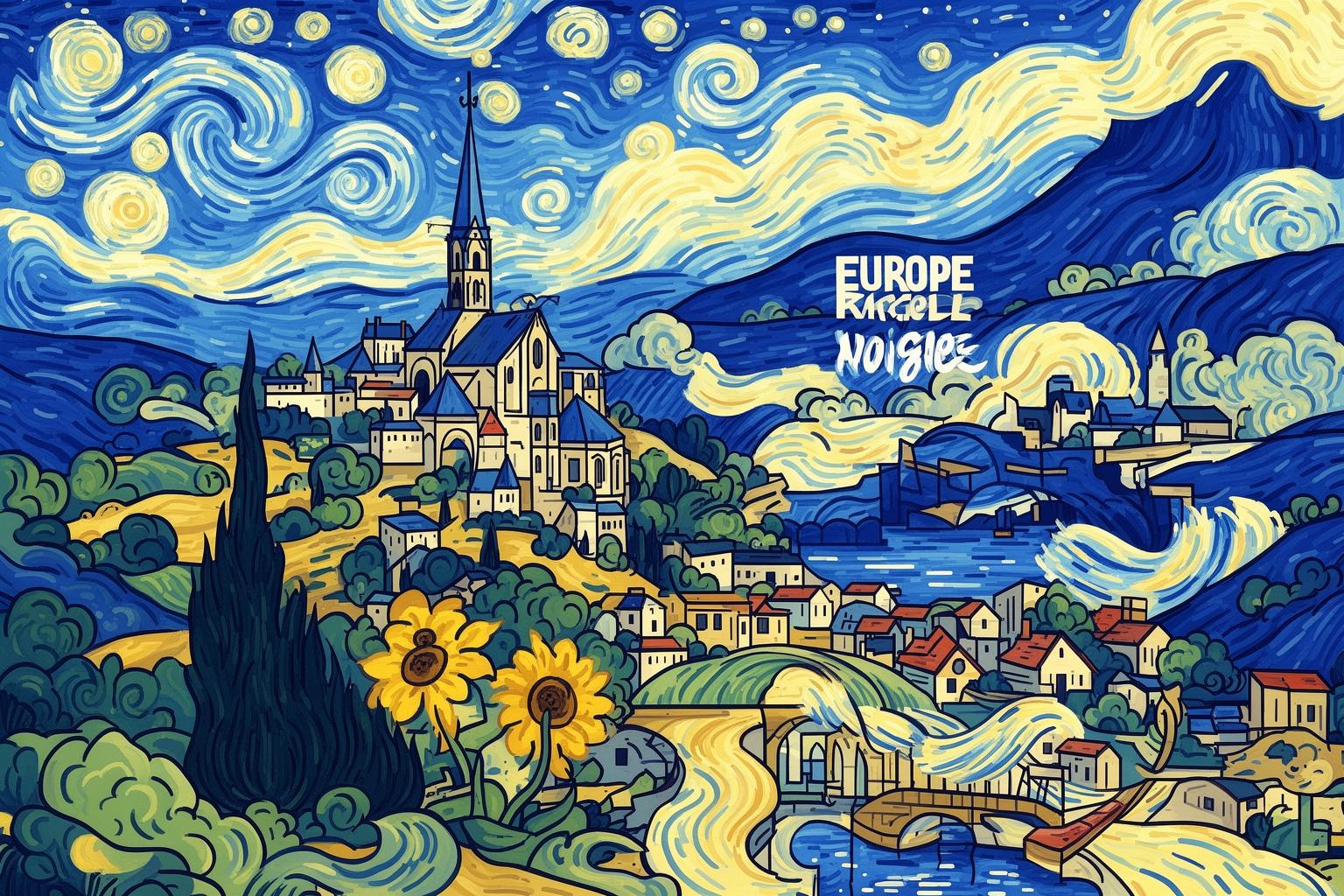
In May 1890, after spending a year in an asylum, Vincent moved north to Auvers-sur-Oise, a charming village along the banks of the Oise River, just outside Paris. Under the care of Dr. Paul Gachet, an art-loving homeopathic physician, this was meant to be a fresh start—a place for quiet convalescence. Instead, it became the backdrop for the last, intense, and remarkably productive chapter of his life. In just 70 days, Vincent van Gogh painted nearly 80 canvases, averaging more than one per day. The village and its surrounding fields served as his final, expansive open-air studio before he died from a self-inflicted gunshot wound on July 29, 1890.
A Fleeting Peace in the Wheatfields
Today, Auvers-sur-Oise still retains much of the rustic charm that attracted a generation of artists, including Cézanne and Pissarro, before Vincent. The town functions as a living museum of his final days. A well-marked walking tour leads visitors through the key sites, and as in Arles, reproductions of his paintings are displayed at the exact locations where he worked. The experience here is uniquely moving, overshadowed by the knowledge of his imminent death.
You can visit the Auberge Ravoux, the inn where he rented a small, austere attic room. The room has been preserved exactly as it was, and climbing the worn wooden stairs to stand in that tiny, bare space under the eaves is an incredibly powerful and somber experience. It is a room of solitude, suffused with the memory of his intense creative drive and profound loneliness. Downstairs, the restaurant where he had his meals has been restored to its 19th-century look, offering a tangible link to his daily life.
A short walk from the inn is the iconic Gothic church depicted in his painting, “The Church at Auvers.” He portrayed the building with turbulent, emotional lines, making it appear alive and almost bending under a deep blue sky. Seeing the real church—solid and made of stone—and comparing it to his electrifying interpretation reveals the full force of his expressive genius. You can also visit the home of Dr. Gachet, offering a fascinating glimpse into the life of the man who was Vincent’s doctor and friend during his final months.
The Wheatfield with Crows: A Farewell to the Sun
The most moving part of the Auvers pilgrimage is the walk up the hill from the village, past the church, into the vast, open plateau of wheatfields that he painted so obsessively. This is the landscape of his final, tormented masterpieces, including the famous and foreboding “Wheatfield with Crows.” Standing at the crossroads of dirt paths that intersect through the endless fields beneath a wide, dramatic sky, you sense vast space, conveying both freedom and isolation. The wind stirs the wheat, and it’s impossible not to imagine the black crows taking flight against a stormy sky—a scene often seen as a premonition of his death. This ground is sacred for art lovers, the very earth that witnessed his last creative acts.
From the wheatfields, a short path leads to the village cemetery, where two simple, identical graves lie side by side, blanketed in ivy. One is Vincent’s; the other is his beloved brother Theo’s, who died just six months later, heartbroken. Their shared resting place, symbolizing their inseparable bond, offers a quiet, powerful, and deeply moving conclusion to the journey. Visiting Auvers-sur-Oise is an essential, heart-wrenching final step in understanding the life and art of Vincent van Gogh. It is a place of profound beauty, steeped in the story of a brilliant light that burned too fiercely and was extinguished far too soon.
The Legacy in Frames: Where to Witness the Soul on Canvas
To walk in Van Gogh’s footsteps is to witness the world that inspired him, but to truly grasp his vision, you must encounter the art itself. The journey through the landscapes of his life reaches its highest point in the quiet, reverent galleries of the museums that display his work. Here, the fields, flowers, and faces he once knew come alive in vivid color and texture. Seeing a Van Gogh painting in person is a deeply sensory experience; the thick impasto, the dynamic swirl of brushstrokes, the overwhelming emotional intensity—none of this can be fully conveyed through reproductions. Two museums, in particular, serve as essential shrines to his legacy.
The Van Gogh Museum, Amsterdam: A Universe Within a Man
No single place holds his spirit more completely than the Van Gogh Museum in Amsterdam. With the largest collection of his work—over 200 paintings, 500 drawings, and most of his letters—the museum is not merely a gallery but a full biography unfolded through art. The collection, primarily from the estate of his brother Theo, is displayed chronologically, allowing you to walk through his life, step by step, painting by painting.
You start in the Netherlands, with the dark, somber tones of “The Potato Eaters,” experiencing the gravity and seriousness of his early years. Then you progress into the light and color of his Paris period, observing his embrace of Impressionism. The journey climaxes in the vibrant brilliance of his Arles, Saint-Rémy, and Auvers-sur-Oise periods. To stand before the glowing “Sunflowers,” the delicate “Almond Blossom,” the stormy “Wheatfield with Crows,” or the haunting self-portraits is to be in the presence of his essence. The museum expertly contextualizes the art with his letters, providing direct access to his thoughts, struggles, and resolute belief in his purpose. It is a powerful and unforgettable experience. A tip for visitors: book your tickets online well in advance. The museum is one of Amsterdam’s top attractions, and timed entry tickets are essential to avoid long waits or disappointment.
The Kröller-Müller Museum, Otterlo: Art in a Forest Sanctuary
For a different, more reflective experience, head to the Kröller-Müller Museum, a hidden treasure set within the Hoge Veluwe National Park in Otterlo. This museum holds the world’s second-largest Van Gogh collection, gathered by passionate art collector Helene Kröller-Müller in the early 20th century. What makes this museum unique is its harmonious blend of art, architecture, and nature.
To get there, you travel through a beautiful forest, and the museum offers free white bicycles to explore the park’s trails. The atmosphere is peaceful and restorative. Inside the bright modernist building, you will find iconic works such as “Café Terrace at Night” (a different version than the one painted in Arles) and “The Potato Eaters” (an oil study). The collection here is particularly strong in his early Dutch and Paris periods, providing deep insight into his artistic evolution. Because it is less crowded than the Amsterdam museum, you can often spend more time in quiet contemplation of the paintings.
The experience extends beyond the museum walls into one of Europe’s largest sculpture gardens, where works by Rodin, Moore, and others are set against the forest backdrop. Visiting the Kröller-Müller is not only about viewing art; it’s about experiencing it in a holistic, serene environment that resonates with Vincent’s own love of nature. It’s the perfect complement to the urban energy of Amsterdam—a true sanctuary for the soul.
Following the ghost of Vincent van Gogh across Europe is an immersive, emotional, and deeply rewarding journey. It leads you from the earthy fields of his homeland to the sun-drenched soil of Provence, from moments of ecstatic creation to times of profound despair. But to walk this path is to understand that his life, like his art, was not a tragedy. It was a testament to the enduring power of the human spirit to find dazzling beauty amid darkness, to perceive eternity in a simple flower, and to paint the stars with the fire of an uncontainable soul. Go, and see the world through his eyes—you will never see it the same way again.