There are stories that linger, narratives that wrap themselves around your consciousness and refuse to let go. They are more than mere entertainment; they become emotional landscapes we inhabit long after the final credits roll. Kei Sanbe’s masterpiece, Erased, known in Japan as Boku dake ga Inai Machi (The Town Where Only I Am Missing), is one such story. It is a taut, psychological thriller masterfully interwoven with a poignant tale of redemption, childhood trauma, and the fierce, unyielding desire to protect those we love. The story’s central mechanic, a mysterious ability Satoru Fujinuma calls “Revival,” flings him backward in time to prevent tragedies. When a devastating event in his present life triggers a massive jump, he finds himself not minutes in the past, but eighteen years, back in his ten-year-old body in the winter of 1988. His mission: to solve a cold case involving the abduction and murder of his childhood classmates and, in doing so, save the future. The anime adaptation brought this world to life with breathtaking fidelity, its visuals creating a palpable sense of place. The world of Erased feels startlingly real because, in many ways, it is. The story is anchored in two distinct Japanese locales: the cold, snow-swept city of Tomakomai in Hokkaido, which served as the model for Satoru’s childhood home, and the bustling urban sprawl of Chiba Prefecture, representing his detached adult life. To walk these streets is to trace the contours of Satoru’s journey, to feel the chill of the Hokkaido wind, and to understand the stark contrast between the past he must repair and the present he is desperate to reclaim. This is not just a tour of filming locations; it is an immersion into the very soul of the narrative, a pilgrimage to the heart of memory, mystery, and hope.
For more on how real-world settings can deepen a narrative, explore our guide to the filming locations of The Case of Hana & Alice.
Tomakomai: Echoes of 1988 in the Northern Snow
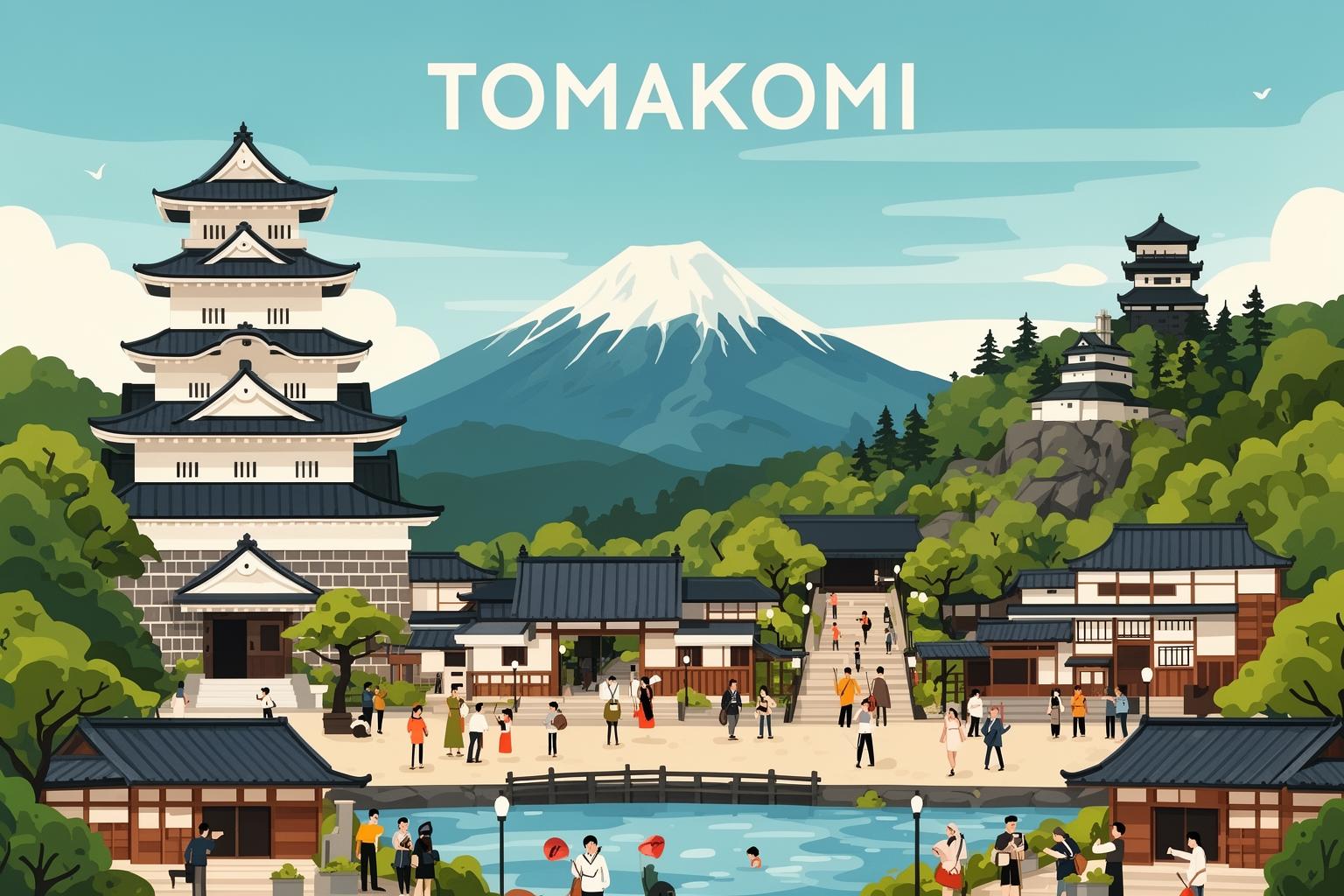
The heart and soul of Erased pulse through the fictional city of Mihama, a setting meticulously crafted to reflect the real industrial port city of Tomakomai, situated on the southern coast of Hokkaido, Japan’s northernmost island. To grasp the story, understanding this setting is essential. Unlike typical tourist destinations like Sapporo or Hakodate, Tomakomai is a working city, defined by its vast paper mills that often fill the air with a distinct, woody aroma, and its expansive, utilitarian port. This industrial foundation imparts a grounded, unpretentious character vital to the anime’s mood. The narrative of Erased demanded a place that felt ordinary—a town where daily life follows a steady rhythm, making the sudden emergence of extraordinary evil all the more unsettling. Tomakomai perfectly embodies this backdrop. Visiting during winter, the season in which Satoru’s childhood ordeal takes place, is a deeply immersive experience. The city is cloaked in a thick layer of snow, a recurring visual motif throughout the anime. This snow serves not only as decoration but as a character itself: it dampens sound to create an eerie silence that heightens tension, buries the landscape symbolizing hidden truths and repressed memories Satoru must uncover, and accentuates the vulnerability of the children, their small, colorful forms stark against the vast, monochrome white. Walking through Tomakomai in winter, you can feel the biting cold seeping through Satoru’s thin jacket, hear the lonely crunch of boots on packed snow, and see the white plumes of breath hanging in the frosty air. The atmosphere is one of profound stillness and isolation, perfectly reflecting Satoru’s solitary quest to defy a fate only he foresees.
The Sacred Ground of Childhood: Key Locations in Tomakomai
Journeying through Tomakomai is like traversing Satoru Fujinuma’s memories, a tangible link to the places that shaped his friendships, his fears, and his ultimate victory. The anime’s creators scouted the city with great care, rendering many locations so precisely that stepping into them feels like entering a direct frame from the show.
The Crimson Arch: Izumi-bashi Bridge
No location in Tomakomai is more iconic to Erased fans than the Izumi-bashi, the vibrant red arch bridge that Satoru and his friends cross daily. In the anime, this bridge silently witnesses the entire emotional arc of the story. It symbolizes connection—between home and school, innocence and the awakening awareness of danger. It is where Satoru walks with Kayo Hinazuki, their small figures dwarfed by its steel frame, sharing quiet moments of companionship that underpin his determination. It is also a place tinged with melancholy and foreboding, a threshold where the ordinary brushes against shadowy threats. The real bridge, spanning the Tomakomai River, is equally striking in person. Its vivid red paint contrasts brilliantly with winter snow or summer greenery. Standing on its walkway, you gaze down at the slow-moving river below—the same view Satoru saw—and feel the gentle vibrations as cars pass, a subtle hum of the city’s lifeblood. For visitors, this spot invites reflection, embodying the choice to cross over, to move forward, and to face what lies ahead—capturing the essence of Satoru’s struggle.
A Sanctuary of Knowledge: Tomakomai Municipal Central Library
The pursuit of truth is central to Erased, and within the story, the library becomes Satoru’s key resource. As an adult trapped in a child’s body, he returns to the local library to research old case files, poring over microfilmed newspapers in a desperate search for clues. The actual Tomakomai Municipal Central Library (Tomakomai Shiritsu Chuo Toshokan) is a handsome, modern building faithfully depicted in the anime. Its distinctive architecture, especially the large sloped windows, is instantly recognizable. Entering the library, one is struck by a hushed, reverent atmosphere common to libraries but felt more deeply here. It serves as a sanctuary where the chaos of the outside world is held at bay. You can almost envision Satoru hunched over a reader, the microfilm machine whirring softly as his mind races to connect the dots across time. Though you may not access the exact archives he did, simply sitting in this space, surrounded by books and the quiet pursuit of knowledge, connects you to his intellectual and emotional journey. It powerfully reminds us that the fight against darkness is often won not with violence, but with diligence and an unrelenting dedication to truth.
The Universe of Escape: Tomakomai City Science Center
One of Erased’s most heartwarming and heartbreaking moments is Satoru’s visit with Kayo to the local science center. For Kayo, a child enduring horrific abuse at home, this outing offers a rare moment of pure joy and wonder. The planetarium in particular becomes a magical space—a dark, safe dome where they can gaze at stars and dream of a world beyond their own. This crucial scene is set in the Tomakomai City Science Center. Its distinctive domed planetarium is another easily recognizable landmark for fans. Visiting the science center allows one to relive this pivotal moment. Sitting in the plush planetarium seats as the lights dim and constellations ignite overhead is deeply moving. It’s a chance to connect with the awe and escapism Satoru so desperately sought to share with Kayo. The science center represents the beauty and mystery of the universe, starkly contrasting the man-made horrors the children face. It symbolizes Satoru’s core mission—not only to save Kayo’s life but to offer her moments of happiness, to reveal that a world of warmth and wonder exists and is worth fighting for.
The Schoolyard and the Shadows: Navigating Satoru’s Neighborhood
Surrounding these key landmarks are smaller yet equally meaningful places. The elementary school Satoru attended is modeled after nearby schools, such as Misawa Elementary School. Pilgrims should remember this is an active school and act with respect—no trespassing, no photographing students, and maintaining a respectful distance—but the school’s architecture and nearby playgrounds evoke a strong sense of nostalgia. The streets Satoru and his friends walked, the small parks where they played, and the shadowed underpass where tragedy struck can all be found in Tomakomai’s residential neighborhoods. Exploring on foot is essential to appreciating the scale of Satoru’s world. The walk from the school to the bridge, the proximity of Kayo’s house to the park—these geographic details crucial to the plot become clear. The riverbanks where Satoru and Kayo shared a quiet moment, a small patch of nature amid the urban sprawl, are especially poignant. These places embody profound duality, sites of innocent friendship and looming dread, and their real-world counterparts carry a quiet, contemplative weight.
Chiba Prefecture: The Disconnected Present
While Hokkaido embodies the warm heart of Satoru’s past and the essence of the mystery, his adult life takes place in the modern, anonymous environment of Chiba Prefecture, part of the Greater Tokyo Area. The stark contrast between these two settings serves as a deliberate and powerful narrative device. Whereas Tomakomai is spacious, quiet, and shaped by nature and industry, Chiba is dense, noisy, and defined by the relentless flow of commuters and concrete. It is here that we encounter the 29-year-old Satoru, a struggling manga artist working a dead-end job as a pizza delivery driver, his life adrift and his emotions shut off. The locations in Chiba are purposely generic, reflecting Satoru’s sense of detachment. His pilgrimage sites are not places with distinct character but rather symbols of modern, everyday Japan.
The Urban Labyrinth: Funabashi and Chiba City
The anime portrays Satoru living and working in areas inspired by Funabashi and Chiba City. Unlike the specific, recognizable landmarks of Tomakomai, the Chiba locations focus more on capturing an atmosphere. The pizza restaurant where Satoru and his coworker Airi Katagiri work is typical of a Japanese chain family restaurant, a bright, functional space found in nearly every city. The train stations, such as Funabashi Station, are bustling centers of activity, a constant stream of people moving with purpose, highlighting Satoru’s own lack of direction. His apartment is situated in a quiet, nondescript residential neighborhood, the kind of place where neighbors rarely interact. Exploring these areas offers a different kind of pilgrimage experience. It’s less about locating the exact building and more about immersing oneself in the environment that shaped Satoru’s adult malaise. It is in the crowded train cars, the sterile brightness of a late-night convenience store, and the quiet loneliness of a suburban street that one can sense the isolation he strives to escape. It is Airi’s unwavering faith in him, a beacon of light in this impersonal urban landscape, that gives him the strength to confront his past. Her presence shows that connection is possible even in the most anonymous settings, providing a crucial counterpoint to the deep bonds Satoru formed during his childhood in Tomakomai.
The Pilgrim’s Journey: Practicality and Perspective
Embarking on a pilgrimage for Erased requires some preparation, but the experience is profoundly rewarding. The journey itself reflects the story’s shifts in time, guiding you from the modern hustle of the Tokyo area to the nostalgic tranquility of Hokkaido.
Access and Acclimation
The easiest way to reach Tomakomai is by flying into New Chitose Airport (CTS) near Sapporo, followed by a short train ride. The JR Chitose Line links the airport directly to Tomakomai in approximately 30-40 minutes. Once in the city, many key sites are within a comfortable walking or cycling distance from the main train station, although the local bus service is also reliable. Visiting in winter (December to February) offers the most authentic atmosphere but be ready for heavy snow and freezing temperatures with appropriate winter gear. Visiting during the warmer seasons, from spring to autumn, presents a different viewpoint. The city becomes lush and green, and the absence of snow unveils landscape details hidden in winter. It’s an opportunity to experience the world as Satoru might have in other seasons, reminding us that life in this town wasn’t defined solely by that one fateful winter. For the Chiba segment, locations are conveniently accessible via the extensive train network of the Greater Tokyo Area. Funabashi serves as a major hub on the JR Sobu Line, making it an easy journey from central Tokyo.
The Showa Era and a Sense of Time
One of the most captivating parts of visiting Tomakomai is the sensation of stepping back into another era. The anime is set in 1988, near the close of Japan’s Showa Era, a time of transition—on the brink of the digital revolution but still deeply rooted in an analog world. Many smaller Japanese cities like Tomakomai have preserved a distinctly Showa-era ambiance in their older neighborhoods, shopping streets, and buildings. This palpable sense of the past adds remarkable depth to the pilgrimage. You aren’t just seeing Satoru’s town; you’re experiencing the texture of his time. This historical context is essential. The story’s themes of community, children playing freely in parks and walking to school alone, and the reliance on payphones and newspapers are all firmly embedded in that era. The pilgrimage becomes an act of historical empathy, offering a way to connect with a recent past that feels worlds apart from our hyper-connected present.
As you walk the final stretch back toward Tomakomai station, the story’s powerful conclusion will resonate in a fresh way. You have followed the steps of a boy who changed fate—a hero who proved that even the smallest person, armed with courage and unwavering faith in their friends, can make a difference. Exploring the real-life locations of Erased offers more than typical anime tourism. It’s a profound and personal journey into the story’s lasting themes. It’s about sensing the weight of history and the shining hope of the future. It’s about understanding that the towns we inhabit, the bridges we cross, and the friendships we build shape the geography of our own lives. To visit Tomakomai is to be reminded that every quiet street and snow-blanketed park holds the possibility of extraordinary bravery, and that the desire to create a world where no one is missing is a journey worth undertaking—in both fiction and reality.