A train rattles across a sun-scorched landscape. Three brothers, estranged and wrapped in their own bespoke grief, sit in a meticulously designed cabin, a bubble of curated melancholy moving through the vibrant, unpredictable heart of India. This is the world of Wes Anderson’s The Darjeeling Limited, a film that is as much a journey inward as it is a physical pilgrimage. It’s a quest for spiritual enlightenment that comically, and then tragically, goes off the rails. For fans of the film, for lovers of Anderson’s symmetrical, color-saturated aesthetic, and for anyone drawn to the profound allure of India, tracing the path of the Whitman brothers is a pilgrimage of its own. But here lies the first secret of the journey: the train, despite its name, is not bound for the misty hills of Darjeeling. Instead, its soul, its rhythm, and its most iconic backdrops are found in the royal, rugged, and utterly mesmerizing state of Rajasthan. This is a guide to that journey. Not just a map of filming locations, but an invitation to experience the sensory overload, the unexpected grace, and the deep-seated history that so profoundly colored Anderson’s cinematic vision. It’s a chance to find your own spiritual, or perhaps just beautifully chaotic, adventure in the Land of Kings.
If you’re drawn to cinematic pilgrimages that explore profound family dynamics within visually arresting settings, consider embarking on a similar journey to the heart of Zhang Yimou’s ‘Raise the Red Lantern’.
Jodhpur: The Blue City, The Brothers’ Beginning
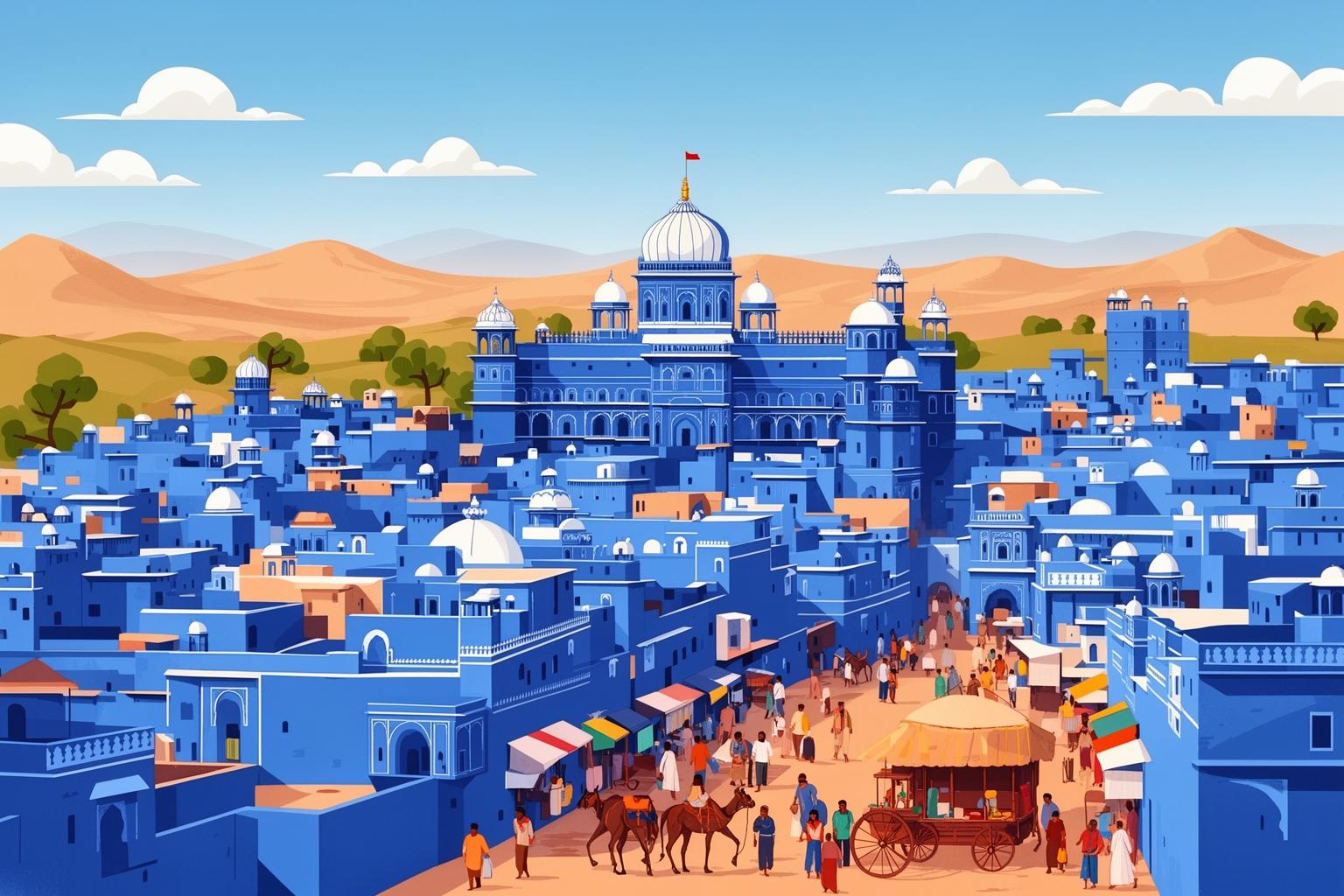
The journey of Francis, Peter, and Jack truly begins against a vivid backdrop of piercing blue and majestic sandstone. Jodhpur, Rajasthan’s second-largest city, served as the primary setting for the film. This is not a quaint, pastoral India; it’s a city brimming with overwhelming energy, where history isn’t confined to museums but thrives in every narrow, winding alley. The imposing Mehrangarh Fort towers over the city like a giant, a constant reminder of the region’s warrior heritage, while below, a sea of blue-painted houses cascades down the hillside. For the Whitman brothers, this city marks the chaotic starting point of their carefully planned spiritual journey. For the modern pilgrim, Jodhpur is the ideal place to become wonderfully, irreversibly lost and to begin grasping the film’s aesthetic and emotional landscape.
The Rhythmic Heartbeat: The “Darjeeling Limited” Train
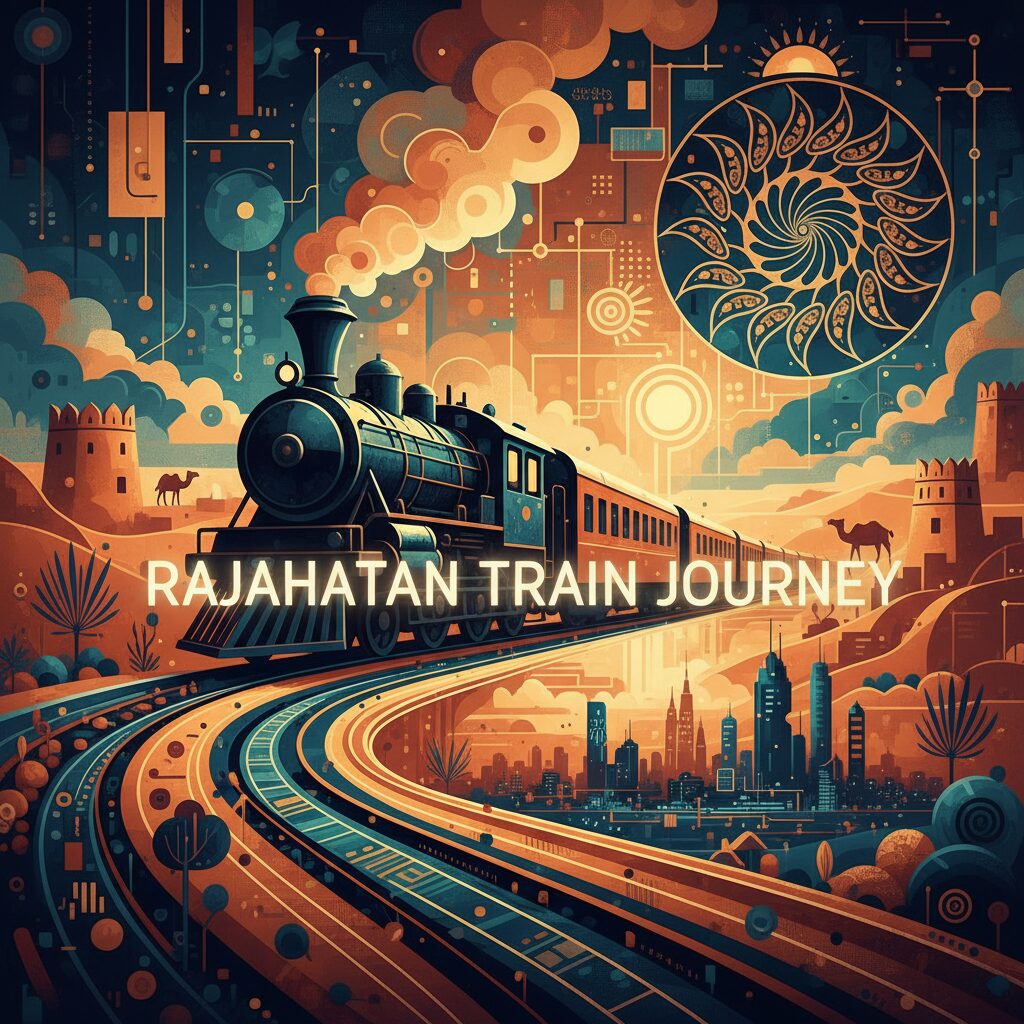
The fourth Whitman brother, though not truly a brother, is the train itself. The Darjeeling Limited, with its hand-painted carriages, charmingly inefficient stewards, and compartments filled with secrets, forms the film’s central set piece. In truth, this train was a beautiful fiction, a moving masterpiece of production design. Wes Anderson and his team leased ten railway carriages from Indian Railways and meticulously redesigned them inside and out. The interiors, featuring wood paneling, unique textiles, and subtle animal motifs, were crafted in a Jodhpur workshop. These carriages were then joined to a real working train, creating a film set that rolled and swayed through the actual Rajasthani desert.
The route chosen for these iconic scenes runs between Jodhpur and Udaipur, cutting through the heart of the Thar Desert. The view from the Whitman brothers’ window is authentic: a starkly beautiful panorama of arid plains, rocky Aravalli Hills, and scattered acacia trees. It’s a landscape that feels ancient and endless, punctuated by the sudden sight of a shepherd herding goats or a village rising naturally from the dust. Experiencing this yourself connects you with the very essence of the film’s journey. While you can’t ride the fictional Darjeeling Limited, you can board a train along the same tracks. An Indian train journey offers a cultural immersion like no other. The air is thick with the scent of chai and fried snacks sold by vendors who hop on and off at rural stations. Conversations with fellow passengers arise effortlessly, bridging languages and cultures. The constant movement creates a meditative rhythm, a backdrop for reflection. For a genuine experience, book a sleeper class or an air-conditioned chair car on a regular passenger train. It will be crowded, loud, and unforgettable. For those seeking the film’s curated comfort, luxury trains like the Palace on Wheels offer a more lavish, though different, way to experience the romance of Rajasthani rail travel, complete with private cabins and gourmet dining.
The Sunstone Citadel: Mehrangarh Fort’s Silent Watch
Dominating every view of Jodhpur is the magnificent Mehrangarh Fort. It appears in the film as a powerful, almost mythical backdrop, silently witnessing the brothers’ frantic taxi ride through the city. Although they never enter it onscreen, its spirit permeates every Jodhpur scene. To visit Jodhpur without exploring Mehrangarh is like reading a book but skipping the first chapter. Perched atop a 400-foot-high sheer cliff, the fort is a masterpiece of Rajput architecture and military engineering. Construction began in the mid-15th century under Rao Jodha, the city’s founder, and continued through expansions by subsequent rulers over the centuries. The result is a structure that is brutally imposing from the outside and exquisitely beautiful inside.
Passing through its series of seven massive gates, each commemorating a victory, feels like stepping back in time. The walls, in places rising 120 feet, bear the scars of cannonballs from past battles. Inside, a complex of courtyards and palaces unfolds, each more breathtaking than the last. The Moti Mahal, or Pearl Palace, was the grand audience hall, its ceiling adorned with gold leaf and mirrors. The Phool Mahal, or Flower Palace, was a private pleasure hall, its walls covered with intricate paintings of royalty and divine figures. The Sheesh Mahal, the Hall of Mirrors, is a dazzling chamber where a single candle can illuminate the entire room. The fort’s museum ranks among the best in Rajasthan, housing a stunning collection of royal palanquins, weaponry, textiles, and miniature paintings. Beyond its artifacts, the true magic of Mehrangarh lies in its atmosphere. Standing on the ramparts, with the vast blue city sprawling below and the desert stretching to the horizon, you feel a profound sense of history and scale. The wind carries distant sounds of markets and temples, a timeless soundtrack to a view little changed for centuries. For the best experience, arrive early to catch the soft golden light and avoid the midday heat. The audio guide is excellent, offering rich stories and historical context that bring the stone walls to life.
A Symphony of Chaos: Sadar Bazaar and Ghanta Ghar
If Mehrangarh embodies Jodhpur’s regal past, the Sadar Bazaar represents its vibrant, chaotic present. This sensory-rich, kinetic environment is where the Whitman brothers plunge in, their Western anxieties clashing with the frenetic pace of Indian commerce. The market centers around the Ghanta Ghar, the city’s colonial-era clock tower, radiating outward into a maze of stalls and shops. This is where the city’s real life happens, an exhilarating assault on the senses. The air is a heady mix of fragrant spices—turmeric, cardamom, and chili—stacked high in vivid pyramids. Shops glitter with silver jewelry and colorful lac bangles. Puppeteers display intricate Rajasthani puppets, while vendors sell everything from hand-dyed textiles and embroidered leather shoes (mojaris) to antique-like trinkets and household goods. The sounds form a symphony of bargaining, vendor calls, temple bells, and incessant honking of auto-rickshaws navigating impossibly narrow lanes. This is the unfiltered India the brothers sought, where their carefully laminated itinerary becomes instantly irrelevant. To enjoy the bazaar, one must surrender to it. Don’t arrive with a fixed plan; instead, roam the alleys, let curiosity guide you, and be ready to engage. Bargaining is expected and part of the experience—a friendly exchange rather than a confrontation. While here, be sure to sample Jodhpur’s famous street food, such as the spicy Mirchi Bada (a deep-fried chili pepper) or the sweet Makhaniya Lassi, a thick saffron-infused yogurt drink often eaten with a spoon. For a brief respite, find a rooftop café overlooking the market. From this vantage point, you can watch the beautiful chaos unfold below—a living, breathing tableau of color and movement as captivating as any meticulously crafted Wes Anderson shot.
Udaipur: Reflections in Water and Soul
After the dry, vibrant intensity of Jodhpur, the film’s narrative and our journey shift towards Udaipur. Known as the “City of Lakes” or the “Venice of the East,” Udaipur presents a striking change in both scenery and atmosphere. Here, the landscape softens into lush greenery, framed by the shimmering waters of its man-made lakes and the rolling Aravalli Hills. Palaces of white marble appear to float on the water, while grand havelis line the ghats. This transition reflects a transformation in the brothers’ journey. The controlled chaos of their plan gives way to a genuine crisis and an involuntary pause, compelling them to face realities much larger than themselves. Udaipur is where the veneer of their spiritual quest cracks, unveiling something rawer and more authentic beneath.
The Unscheduled Stop: Tragedy and Truth in the Aravalli Hills
The film’s most crucial moment—the shift from quirky comedy to deep drama—is the tragic drowning of the village boy. This poignant scene, where the brothers’ self-centered quest collides with the stark realities of life and death, was shot in the rural countryside near Udaipur. The village was a constructed set, meticulously designed to appear authentic. However, the surrounding landscape is genuine. This is the rugged terrain of the Aravalli Range, one of the world’s oldest mountain ranges. The film showcases its stark, rocky riverbeds, dry earth, and sparse vegetation, typical of the region, especially outside monsoon season. This landscape is both beautiful and unforgiving, providing a powerful backdrop for this turning point in the story. The film’s quiet, respectful portrayal of the boy’s funeral and the brothers’ subsequent stay with his family marks a profound change. They are finally stripped of their tourist façades and connect with India on a deeply human, personal level. For travelers, seeking out this exact spot is less important than experiencing the spirit of the landscape that shaped it. Undertaking a guided trek or jeep tour into the Aravalli Hills from Udaipur offers insight into another side of Rajasthan, away from grand palaces. You can visit small villages, witness traditional lifestyles, and appreciate the quiet, raw beauty of the land. It’s an opportunity for reflection, much like the one imposed on the Whitman brothers, allowing connection with the film’s deeper, more somber undercurrents.
Palaces Adrift: The Serene Illusion of Lake Pichola
Although Udaipur’s iconic lake palaces don’t serve as direct filming locations, their romantic, dreamlike quality permeates the film’s visual style of faded splendor. The city itself appears as though a Wes Anderson set brought to life. The focal point is Lake Pichola, a vast artificial lake created in the 14th century. At its center lie two island palaces: Jag Mandir and Jag Niwas, the latter known worldwide as the Lake Palace hotel. On the lake’s eastern bank stands the City Palace, a magnificent, sprawling complex—the largest in Rajasthan. Rather than a single palace, it is a series built over four centuries by different rulers, yet it maintains remarkable stylistic unity. Its balconies, cupolas, and towers overlook the lake, forming an unforgettable skyline. Udaipur’s atmosphere is serene and romantic. The best way to experience it is by boat ride on Lake Pichola, especially in the late afternoon. As the sun sets, the palaces’ white marble glows with soft, golden light, and the city seems to shimmer. The boat passes bathing ghats where daily life unfolds and provides stunning views of the City Palace complex from the water. It’s a moment of cinematic beauty and a chance to sense the tranquility the Whitman brothers searched for, albeit clumsily. Exploring the City Palace is another essential experience. Its maze-like corridors lead to decorated courtyards, audience halls with stained-glass windows, and private chambers adorned with intricate mirror work and murals. From upper terraces, the panoramic view of the lake and city is breathtaking. Udaipur offers the perfect contrast to Jodhpur, providing a space for contemplation and appreciation of a different kind of Rajasthani beauty—one defined by water, reflection, and architectural harmony.
The Himalayan Deception: A Convent Atop a Desert Hill
One of The Darjeeling Limited’s most clever tricks is its finale. The brothers track their estranged mother to a Christian convent, supposedly high in the Himalayas. We see snow-capped mountains and hear crisp, cold air in their dialogue. Yet this Himalayan refuge was also filmed in Rajasthan, showcasing the magic of production design. The convent location was the Maharana Udai Singh II memorial, perched on a hill outside Udaipur. This elegant, white marble cenotaph, with its arches and domes, was transformed into a convincing mountain monastery. The crew built a chapel on the grounds, added Christian symbols, and used camera tricks and digital effects to superimpose snowy peaks in the background. In reality, the view from this hill is of the Aravalli Hills and Udaipur city, not the Himalayas. Visiting this spot is captivating for film lovers. It’s a quiet, peaceful place, far less crowded than other tourist draws. You can explore the actual structures used in filming and admire both their authentic Rajasthani architecture and their creative disguise. More importantly, the location perfectly echoes the film’s theme. The brothers journey to India on a contrived spiritual quest, only to discover their mother has crafted her own secluded sanctuary—just as artificial as their adventure. The irony that their “Himalayan” destination lies mere stone’s throw from the desert city they crossed is striking. It suggests that peace and resolution often reside in unexpected places, hidden in plain sight. Standing at this memorial, with the breeze rustling and a panoramic view of Udaipur below, offers a quiet, fitting end to a cinematic pilgrimage.
Living the Symmetrical Dream: A Wes Anderson Guide to Travel
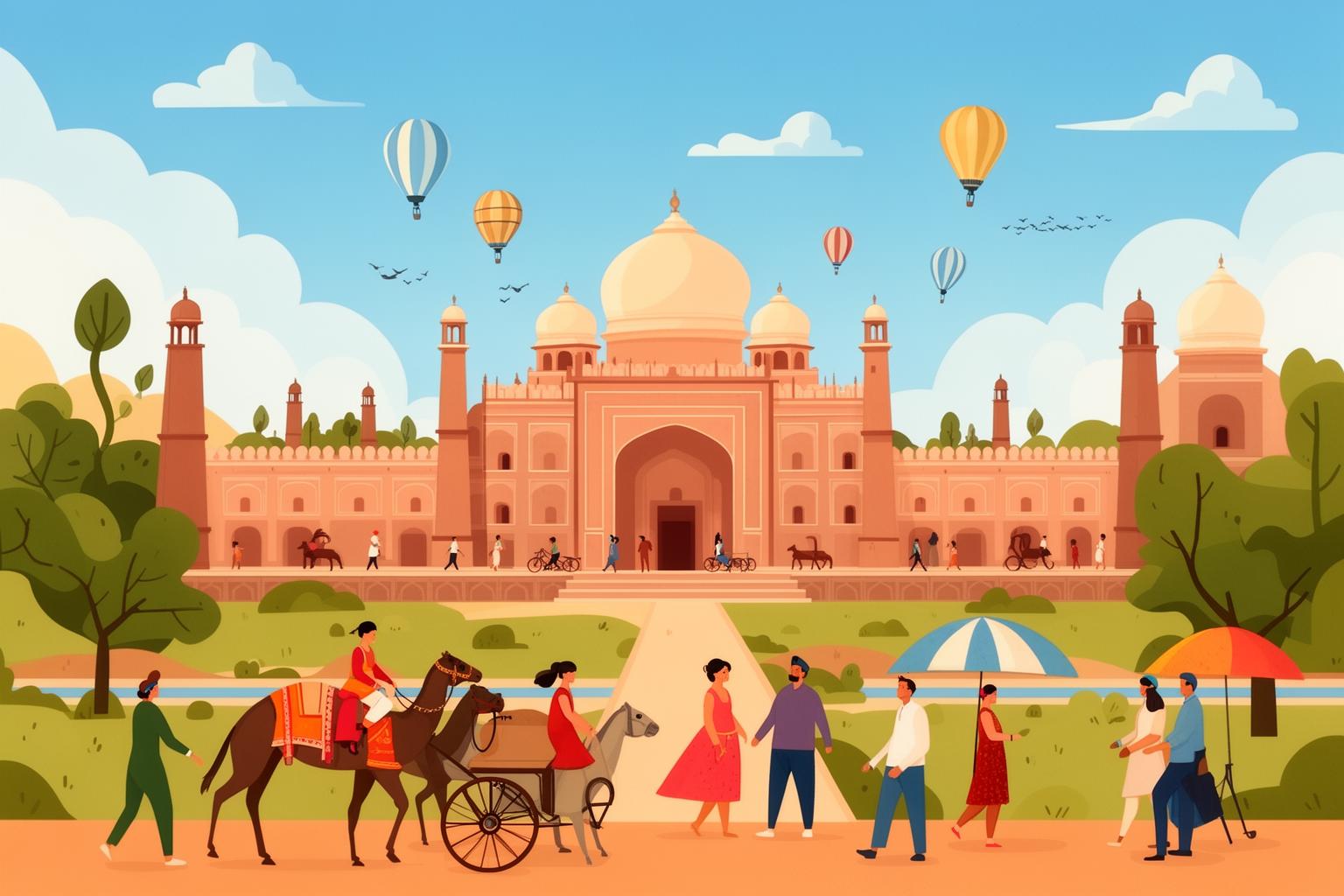
To journey in the footsteps of The Darjeeling Limited is to do more than merely visit places; it is to learn to view the world through a distinct perspective. It involves discovering the symmetry, the color, and the poignant, quirky details that surround you. Rajasthan, with its rich heritage and vibrant culture, offers an ideal canvas for this kind of aesthetic appreciation.
Framing the World: Highlighting Rajasthan’s Natural Symmetry
Wes Anderson is renowned for his affection for symmetry, centered framing, and meticulous arrangement. Rajasthan’s architecture feels perfectly suited to this style. The grand arches of its forts, the geometric designs of its tiled floors, the repetitive columns in palace halls, and the flawless reflections in its lakes provide endless chances for beautifully balanced photographs. As you explore, challenge yourself to spot these moments of perfect symmetry. Frame a shot looking directly down a long palace corridor. Center a doorway or window in your viewfinder. Capture the City Palace’s reflection in the still waters of Lake Pichola. By seeking out these compositions, you begin to notice the incredible artistry and intention behind Rajasthani design. It trains your eye to appreciate details—the intricate latticework of a jali screen, the patterns of murals on a wall, the orderly chaos of items arranged in a market stall. Your travel photos will evolve from simple snapshots into carefully crafted frames, each telling a small, symmetrical story.
The Soundtrack of a Journey: From Satyajit Ray to Street Musicians
The film’s soundtrack blends an eclectic and brilliant mix, combining Indian filmmaker Satyajit Ray’s scores with rock anthems by The Kinks and The Rolling Stones. This East-West fusion perfectly embodies the brothers’ experience as cultural outsiders. As you travel through Rajasthan, tune in to the soundscape around you. This land brims with remarkable musicality. You’ll hear the haunting call to prayer from a mosque echoing across the city, rhythmic chanting from a Hindu temple, the lively beat of a drum during a street procession, and soulful melodies from a folk musician playing a sarangi on a street corner. These genuine sounds of Rajasthan invite you to be moved by them. Consider creating your own travel playlist that merges the film’s soundtrack with recordings you capture on your phone—the rumble of trains, market chatter, the sound of temple bells. Music is a powerful gateway to memory and emotion, and crafting a personal soundtrack for your journey allows you to carry its spirit long after you return home.
The Luggage We Carry: Packing for Body and Spirit
Francis, Peter, and Jack travel with a collection of beautiful, custom Louis Vuitton luggage, inherited from their late father. This luggage serves as a poignant running metaphor throughout the film. It represents their literal baggage, as well as the emotional burdens they carry—their grief, resentments, and shared history. In the film’s final, triumphant slow-motion scene, they deliberately abandon the luggage to catch their train, symbolizing the act of letting go of the past and moving forward unburdened. As you prepare for your own trip to Rajasthan, reflect on the luggage you will bring, both physical and emotional. Practically, lightweight, breathable clothing is essential for daytime heat, along with a sweater or jacket for the surprisingly cool desert nights. Comfortable, sturdy shoes are a must for exploring forts and wandering markets. Sunscreen, a hat, and sunglasses are indispensable. But beyond practicalities, consider your intentions. What are you seeking on this journey? What weight are you hoping to shed? Travel, especially in a place as intense and transformational as India, often serves as a mirror to ourselves. Be open to the experience. Be willing to set aside your rigid itinerary when a more intriguing opportunity arises. Prepare to be challenged, frustrated, and filled with wonder. Like the Whitman brothers, you may discover that the most meaningful moments are the unplanned ones, and the greatest souvenir you bring back is a lighter spirit.
The Journey Continues
Following the route of The Darjeeling Limited through Rajasthan is a journey that offers rewards on many levels. It is a treasure hunt for film enthusiasts, a visual delight for artists, and a deep cultural immersion for adventurers. From the vibrant blue alleys of Jodhpur to the calm, reflective waters of Udaipur, you’re not merely visiting filming locations; you’re entering the world that inspired the film. You can feel the desert heat, hear the rhythmic clang of the train on the tracks, and witness the extraordinary tapestry of life that unfolds in the Land of Kings. The film portrays a messy, imperfect, yet ultimately healing quest for connection, and your own journey here will likely mirror that experience. It will be a pilgrimage not to a sacred place, but to a state of mind—one brimming with color, chaos, beauty, and the quiet realization that sometimes, you must travel halfway across the globe to truly meet yourself. The train is waiting at the station. It’s time to board.