
There are films that entertain, and then there are films that burrow into your soul, leaving an indelible mark long after the credits roll. Walter Salles’s 1998 masterpiece, Central do Brasil, or Central Station, is firmly in the latter category. It’s a story that starts in the chaotic, beating heart of Rio de Janeiro and unfolds across the vast, sun-scorched landscapes of Brazil’s Northeast, a journey not just of miles, but of the human spirit. The film follows Dora, a cynical, retired schoolteacher who writes letters for the illiterate at the city’s main train station, and Josué, a young boy whose mother has just been tragically killed, as they embark on an improbable quest to find the father he has never met. This is more than a road movie; it’s a pilgrimage toward redemption, a poignant exploration of faith, connection, and the families we find in the most unexpected places. To trace their footsteps is to embark on your own pilgrimage, to see Brazil not through the lens of a tourist brochure, but through the eyes of its own people, on a path paved with hardship, hope, and breathtaking humanity. This journey begins, as it must, at the grand, tumultuous nexus of a million stories: Central do Brasil.
If you’re inspired to explore more cinematic pilgrimages, consider tracing the romantic paths of Before Sunset in Paris.
The Heartbeat of Rio: Central do Brasil Station
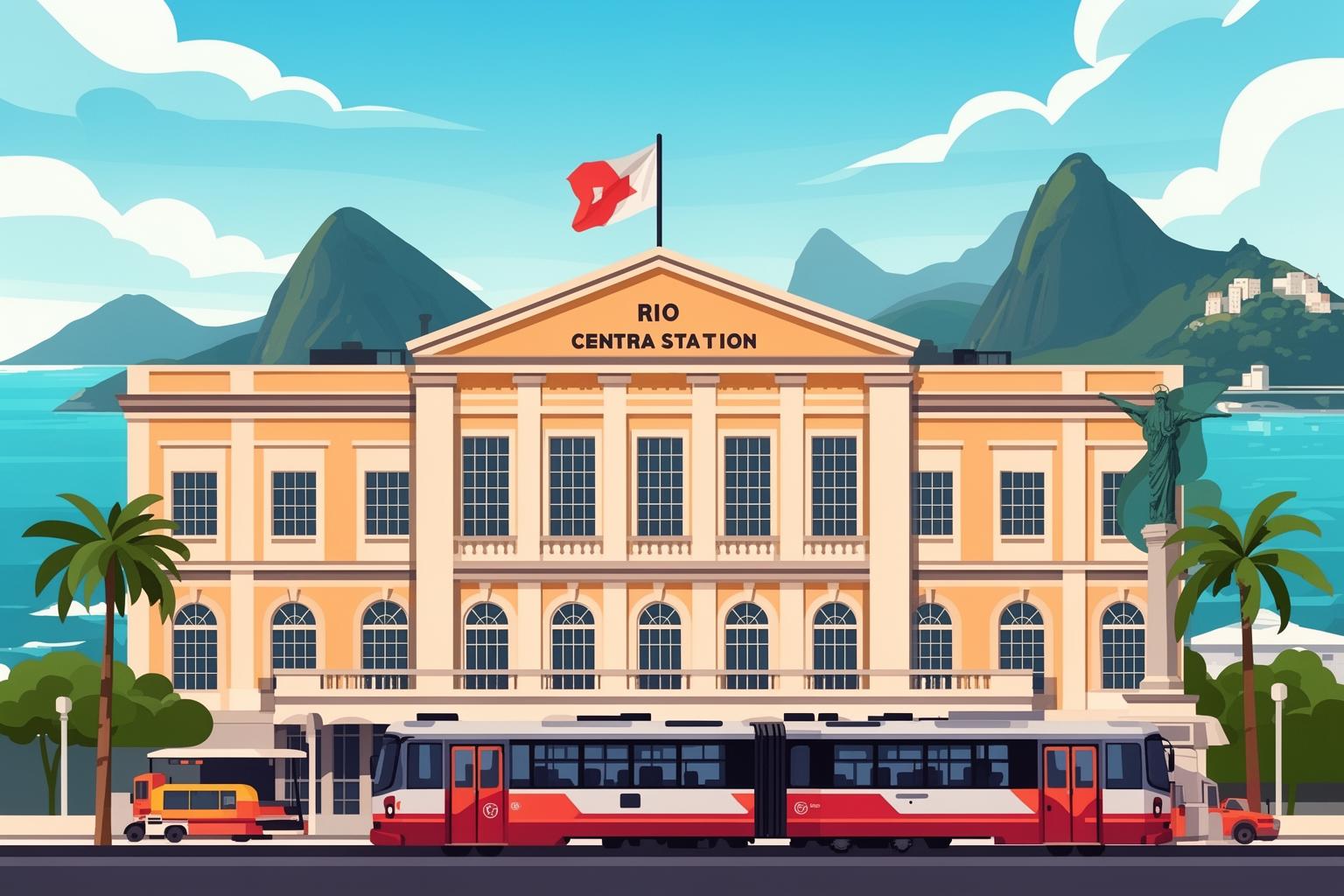
Before you can grasp the journey, you must first comprehend its origin. Central do Brasil is more than just a setting; it is the film’s initial and most essential character. This is not a sterile, modern transit hub—it’s a living, breathing entity, a grand cathedral of commotion where the lifeblood of Rio de Janeiro pulses with unyielding energy. Entering its main concourse means being swept up in a current of humanity. The air vibrates with a symphony of sounds: the screech of train brakes, the rhythmic calls of vendors selling everything from coffee and pão de queijo to cheap electronics, echoing announcements over the PA system, and the constant murmur of thousands of conversations, greetings, and farewells. It is here, amid this overwhelming and beautiful chaos, that we first encounter Dora, sitting at her small, unassuming desk—a quiet island in a sea of movement.
A Cathedral of Commotion
The station itself is a marvel of late 19th-century architecture, with its towering clock tower standing as a steady landmark against the Rio skyline. Built as a symbol of Brazil’s progress and ambition, it served as a gateway to the nation’s interior. But its true grandeur lies not in the ironwork or stone facade, but in the stories that unfold daily within its walls. The film captures this with raw, almost documentary-like honesty. Director Walter Salles famously incorporated real commuters into the opening scenes, blurring the line between fiction and reality. The faces rushing past Dora’s desk aren’t extras—they are the real people of Rio, each carrying their own hopes, fears, and destinations. The feeling is one of vast scale and deep intimacy. You sense the weight of a million lives intersecting for just fleeting moments—a powerful reflection of the anonymity of city life that has hardened Dora’s heart.
When you visit, take a moment to stand still. Find a spot on the edge of the main hall and simply watch. Observe the soldiers in their uniforms, the businesspeople in suits, the laborers in worn jeans, and the mothers trying to keep track of their children. This is Brazil’s melting pot in perpetual motion. It is loud, sometimes gritty, and utterly breathtaking in its vitality. This is the world that shaped Dora—a world where building walls is necessary to survive the emotional tides. The station is a place of transit, hellos, and goodbyes, but for Dora, it has become a place of stasis, a purgatory where she profits from others’ hopes without truly engaging with them.
Walking in Dora’s Footsteps
Getting to Central do Brasil is easy, as it’s a major hub for Rio’s metro, train, and bus networks. Metrô Rio’s Linha 1 and Linha 2 both meet here at the ‘Central’ stop, making it accessible from popular neighborhoods like Copacabana, Ipanema, and the city center. Once you emerge, the iconic clock tower will guide you. The primary filming location is the main concourse, the Salão Principal. While Dora’s exact desk no longer exists, the spirit of her work and the environment she inhabited remains palpable. You can almost see her, glasses perched on her nose, her expression a mask of weary indifference as she transcribes the heartfelt words of a stranger.
For the most authentic experience, visit during a weekday rush hour. It’s an intense immersion, a sensory overload that drops you straight into the opening frames of the film. You’ll feel the crowd’s surge and the urgency in the air. For a more reflective visit, mid-morning or mid-afternoon are better times. The crowds thin somewhat, letting you appreciate the space’s scale and observe the daily rhythm without being overwhelmed. As with any large city transit hub, keep an eye on your belongings. Secure your valuables and stay alert—not out of fear, but as practical advice to fully engage with the environment safely, just like a local would.
The Letters: A Portal to the Soul of Brazil
To truly understand Dora’s role in the station, one must grasp the deep significance of her service. In a country with a history of literacy challenges, the professional letter writer, or escrevente, was a vital link for many people. They were scribes of the heart, entrusted with the most intimate human emotions: love, longing, forgiveness, and despair. Dora’s desk is a modern-day confessional. Those who come to her pour out their souls, trusting her to give voice to their feelings. This act is the film’s central metaphor. Words hold power—the power to connect, to heal, or, in Dora’s cynical hands, to be discarded into a drawer, their potential silenced.
This theme resonates deeply with the Brazilian concept of saudade, a word without a direct English equivalent describing a deep, melancholic longing for something or someone absent. It is a bittersweet ache, a nostalgia for what was or what could have been. The letters Dora writes are steeped in saudade: a woman sending a message to a lover who left for the city, a son trying to reconnect with a distant father. Standing in the station means standing at the heart of this national emotion. It is a place where thousands of invisible threads of connection are spun each day, stretching across the vast expanse of Brazil—all beginning from this single, chaotic point. Dora’s journey starts when she is compelled to follow one of these threads, to perceive a letter not merely as a transaction, but as a promise.
The Escape: Beyond the City’s Grip
After the shocking event that connects Dora and Josué, their true journey begins. The film takes a dramatic turn, leaving behind the confined, frantic energy of the station for the vast, uncertain openness of the road. The bus they board serves as more than mere transportation; it is a vessel of transition, carrying them away from the life Dora once knew and into a Brazil she has either long forgotten or never truly seen. The journey itself emerges as a character—a lengthy, winding narrative that reflects the internal transformation of the protagonists.
The Road Beckons: Tracing the Bus Route
Identifying the exact, continuous bus route shown in the film is impossible, as it was a fictional composite created for storytelling. Nevertheless, the spirit of the journey remains entirely authentic. Long-distance bus travel is a vital mode of transportation for millions of Brazilians, linking the far-flung corners of this vast country. The buses serve as rolling microcosms of society, where for hours or days, people from all walks of life share a common space. The film vividly captures the nuances of this experience: the vendors hopping on at small-town stops to sell snacks and drinks, the shifting landscapes glimpsed through dusty windows, and the shared moments of weariness and silent reflection among strangers.
To follow their path in spirit, one would trace major routes heading northeast from Rio de Janeiro toward Bahia and Pernambuco. The trip would take you along highways like the BR-040 and BR-116, through Minas Gerais’ rolling hills, and into the increasingly dry, harsh landscapes of the Sertão. For those dedicated to the pilgrimage, traveling a portion of this route by bus is essential. Perhaps board a bus from Rio to Belo Horizonte, Minas Gerais’ capital, or even further to a city like Vitória da Conquista in Bahia. This journey isn’t about speed; it’s about immersion—feeling the rhythm of the road, watching small towns flicker by, and grasping the vastness of the country. It is on this bus that the first cracks appear in Dora’s hardened exterior, as the city’s anonymity gives way to a forced, and ultimately transformative, intimacy with Josué.
Bom Jesus do Norte: A Glimpse of True Faith
One of the film’s most visually and emotionally powerful sequences occurs when Dora and Josué find themselves amid a massive religious pilgrimage, or romaria. The town called ‘Bom Jesus do Norte’ is fictional, yet it powerfully represents a cultural phenomenon deeply embedded in the Brazilian Northeast. These scenes were shot in various locations, including Rodelas, Bahia, to create a composite capturing the essence of these immense expressions of faith. The town they arrive in contrasts sharply with Rio. Bathed in an unrelenting sun, its streets are filled not with hurried commuters but with devout pilgrims, their faces marked by a mixture of suffering and steadfast belief.
The atmosphere is overwhelming. The air thick with dust, incense, and the sounds of chanted prayers. The colors are vivid—the bright ribbons tied to statues, the vibrant clothing of the faithful set against the muted tones of the arid land. Here, Dora, the ultimate cynic, confronts a kind of faith that is raw, desperate, and absolute. People crawl on their knees, carry heavy crosses, and openly weep at saints’ feet. For them, faith is not an abstract idea but a tangible, visceral force—their ultimate hope. This moment marks a crucial turning point. Surrounded by this collective act of hope against all odds, Dora’s transactional worldview is profoundly tested. It is here that she writes a letter not for money, but from a genuine, stirring empathy—a sign that her own pilgrimage of the heart has truly begun.
The Sertão: A Landscape of Hardship and Hope
As the journey ventures deeper into Brazil’s interior, the landscape itself becomes the central force driving the narrative. They have entered the Sertão, the legendary backlands of Northeast Brazil, a region characterized by its semi-arid climate, cyclical droughts, extreme poverty, and a culture marked by remarkable resilience and strength. The lush, chaotic greenery of Rio is entirely replaced by a vast, minimalist expanse of cracked earth, thorny caatinga vegetation, and an endless pale blue sky. The transformation is striking and profound, symbolizing the stripping away of Dora’s former identity.
Entering the Brazilian Outback
The Sertão is far from a place of gentle beauty. It is stark, commanding, and magnificent in its austerity. Walter Salles and his cinematographer, Walter Carvalho, expertly use this landscape to mirror the characters’ emotional states. The vast emptiness reflects their feelings of being lost and alone in the world. The relentless sun and dry earth echo the hardships they endure. Yet within this harshness lies a powerful clarity. Removed from the noise and clutter of the city, there is nothing left to hide behind. It is in the Sertão that Dora and Josué must face their true emotions and their reliance on each other. The landscape demands honesty. There is a quiet poetry in the scenes set here—the long, straight roads stretching to the horizon, the solitary figures of Dora and Josué walking against the immense backdrop. Visually, it represents their smallness in the face of the world and the immense courage it takes to journey through it.
For any traveler seeking to understand this element of the film, a trip into the interior of states like Bahia, Pernambuco, or Ceará is essential. This is not the Brazil of beaches and samba; it’s a different, older, and arguably more fundamental Brazil. It calls for a spirit of adventure and a willingness to embrace simplicity. The rewards are profound: a connection to a landscape of quiet beauty and an encounter with a culture forged in resilience, known for its rich folklore, distinctive music, and warm, welcoming people despite the hardships they face.
Filming in Milagres, Bahia
While the journey is a cinematic tapestry woven from many threads, the emotional climax of the film—when Dora and Josué finally reach their destination—was shot in and around the municipality of Milagres, in the heart of Bahia. This spot is the true pilgrimage site for fans of Central Station. Here, they find the small settlement where Josué’s half-brothers, Isaías and Moisés, live. Visiting this area today is to step directly into the final, poignant scenes of the movie.
Reaching Milagres is a journey in itself, a fitting parallel to the film. It lies about 250 kilometers west of Salvador, the state capital. The most practical way to explore is by renting a car, allowing you the freedom to navigate rural roads and absorb the landscape at your leisure. This is not a tourist hotspot. Large hotels and English-speaking guides are absent. Instead, you find something far more valuable: authenticity. You’ll stay in simple, family-run inns called pousadas, enjoy hearty traditional meals at local restaurants, and experience the slow, deliberate rhythm of life in the Sertão. Learning a few key Portuguese phrases is not only helpful but essential for connecting with the locals, who respond with warmth and appreciation. The people here are the soul of the region, and engaging with them is the true purpose of this pilgrimage.
The House of Isaías and Moisés
The heart of the pilgrimage is locating the house and carpentry workshop used for the brothers’ home in the film. It’s a simple, rustic building, emblematic of the humble, hardworking lifestyle typical of the region. Here, the film’s emotional journey reaches its conclusion. After traveling across the continent, Josué doesn’t find the father he sought but discovers a family he never knew. He finds a home—a place to belong. For Dora, it represents the fulfillment of her selfless mission: delivering the boy and rediscovering her own capacity for love and connection.
Standing in this quiet place, one can feel the immense emotional weight of those final scenes—the peace after a long, taxing journey, the bittersweet nature of Dora’s departure. She leaves Josué in a place of stability and hope but must continue her own path, forever changed. The film concludes not with a tidy, happy ending but with a deeper sense of grace. The journey is complete, the letter delivered. This location invites quiet reflection on the film’s themes—what defines family, the meaning of home, and the redemptive power of one compassionate act.
The Spirit of the Journey: More Than Just Locations
A pilgrimage inspired by Central Station is more than just ticking off locations on a list. It involves embracing the sensory and emotional textures of the journey, engaging with the culture, food, music, and people that enrich and give resonance to the film’s world. It’s about allowing the journey to affect you deeply, just as it did Dora.
The Flavors of the Road
Food serves as a constant, grounding presence in the film. From the stolen meal at a roadside truck stop to the simple provisions shared by the characters, food marks the stages of their journey and the bond that grows between them. To follow in their footsteps, one must savor the flavors of the road. Brazil’s regional cuisine is wonderfully diverse. In Rio, bustling markets and the classic feijoada stand out. But traveling into the Northeast, the palate evolves. Seek out roadside lanchonetes and restaurantes por quilo (where you pay by the weight of your food). Be adventurous. Try carne-de-sol (sun-dried beef), a Sertão staple often served with aipim (cassava) and feijão tropeiro (beans with manioc flour and sausage). These aren’t fancy meals, but hearty, honest, and deeply satisfying—the fuel of the people. Sharing a simple meal in a humble roadside diner offers one of the most direct ways to connect with the spirit of Dora and Josué’s journey.
The Soundtrack of the Sertão
The film’s score, composed by Antonio Pinto and Jaques Morelenbaum, is a masterful example of subtle emotional power. The haunting, melodic themes are as vast and melancholic as the landscapes themselves. Creating a travel playlist can greatly enhance the pilgrimage experience. Begin with the official soundtrack, allowing its familiar melodies to guide your travels. Then broaden it with traditional music from the Northeast, especially forró. This lively, accordion-driven music forms the heartbeat of the region, heard in dance halls and festivals, telling stories of life, love, and hardship in the Sertão. Listening to this music as you pass through the landscapes that inspired it offers a powerful, immersive fusion of sight and sound, connecting you more deeply to the journey’s cultural essence.
A Photographer’s Dream
For those drawn to visuals, this journey presents an extraordinary photographic narrative. The contrasts are breathtaking. In Rio, your camera will strive to capture the motion, energy, and claustrophobia of the crowds at Central do Brasil. Use fast shutter speeds to freeze fleeting expressions, blur of commuters, and gritty station details. This is photography that captures chaos and humanity. Upon reaching the Sertão, your approach must shift completely. Here, wide-angle lenses, patience, and stillness are key. It’s about capturing the vastness of sky and land, the texture of cracked earth, and the dramatic light at sunrise and sunset. Focus on composition—a lone tree, a winding road, or a simple house on the horizon. Photography in the Sertão is about evoking a sense of place, solitude, and enduring strength.
Practical Itinerary for the Dedicated Pilgrim
Embarking on a journey of this magnitude requires thoughtful planning and preparation. Although the route can be spontaneous, having a basic framework ensures you can fully immerse yourself in the experience without being bogged down by logistics. Here is a suggested blueprint for a two-week pilgrimage.
A Two-Week Itinerary Blueprint
Days 1-3: Rio de Janeiro. Arrive and acclimate to the city’s vibrant energy. Dedicate at least half a day to Central do Brasil. Don’t just pass through—linger, observe, and absorb the pulse of the place. Spend the rest of your time exploring the city to better understand the world Dora is leaving behind. Wander the streets of the Centro district, visit the iconic Sugarloaf Mountain, and experience the striking contrast between the city’s chaos and its breathtaking natural beauty.
Day 4: The Bus Journey. To truly honor the film, you need to experience the road. Take a comfortable long-distance bus from Rio’s Rodoviária Novo Rio terminal. Consider a day trip or an overnight journey to a city in the neighboring state of Minas Gerais, such as Ouro Preto or Tiradentes. This will give you an authentic taste of bus travel culture and the shifting landscapes without committing to a multi-day ordeal.
Days 5-10: The Heart of the Northeast. From Rio or Minas Gerais, catch a domestic flight to Salvador, the capital of Bahia, which will serve as your gateway to the Sertão. Rent a car in Salvador—this is the most important investment for your pilgrimage, offering unmatched freedom. Begin driving inland and let the landscape change around you. Spend these days exploring the interior, visiting the vibrant market town of Feira de Santana. Your ultimate goal is the region around Milagres. Take your time; this stage is about the journey, not rushing to a specific point on the map. Stop in small towns, chat with locals, and let the rhythm of the Sertão guide your way.
Days 11-12: The Spirit of the Romaria. While the film’s pilgrimage was a cinematic creation, you can connect with its spirit by visiting a real center of faith in the Northeast. If your timing coincides with a religious festival, it’s an unforgettable experience. Alternatively, consider visiting a renowned pilgrimage site like Juazeiro do Norte in Ceará (a longer trip, but significant) to witness devotion to Padre Cícero, or stay within Bahia to explore towns known for their historic churches and religious traditions. This will enrich your understanding of the powerful scenes of faith depicted in the movie.
Days 13-14: Return and Reflection. Begin your journey back to Salvador. Use this travel time for reflection. The drive through the landscapes you’ve come to know will feel different now. You’re no longer just an observer—you have followed the path. Spend a final night in Salvador, perhaps in the historic Pelourinho district, before flying home with the memories of the road close to your heart.
Budgeting and Logistics
Brazil offers a wide variety of options for travelers. Accommodation ranges from budget-friendly hostels and simple pousadas to more comfortable hotels. In the rural Northeast, lodging tends to be clean and welcoming but basic. Food is generally affordable and delicious, especially at local por quilo restaurants. The largest expenses will be internal flights and car rental, so book in advance for better rates. The best time to undertake this journey is during the dry season, roughly May to September, to experience the Sertão in its iconic, sun-drenched state—though it will be hot. Regarding language, while you can manage with English in tourist centers, Portuguese is essential in the interior. Learn basic phrases—greetings, please and thank you, numbers, and how to ask for directions or order food. A small effort goes a long way and transforms interactions from transactional to genuinely meaningful.
The Letter Home
Ultimately, this pilgrimage is about more than retracing a film’s journey; it’s about embracing its central, beautiful metaphor. Dora’s story begins with her writing letters for others, serving as a detached conduit for their emotions. But through her journey with Josué across the soul of Brazil, she learns to write her own story. The final scene, where she sits on a bus writing a letter to the boy she has left behind, is both heartbreaking and deeply hopeful. She has reconnected not only with another person but with herself and her own heart.
Traveling the path of Central Station is like writing your own letter home. It’s a journey that will challenge, move, and transform you. You will encounter the extremes of Brazil, from its bustling urban core to its quiet, soulful landscapes. You will witness hardship and unwavering faith. You will experience the deep ache of saudade and the profound warmth of human connection. You begin at a station, a place of fleeting encounters, and end in a home, a place of belonging. Like Dora, you will leave a piece of your heart along that long, dusty road, yet carry its spirit with you—a silent promise fulfilled, a story of your own finally written.