
There are films that you watch, and then there are films that you inhabit. Anthony Minghella’s The English Patient is a masterpiece of the latter. It is a sweeping, lyrical epic that paints its story across two vastly different, yet equally evocative canvases: the sun-scorched emptiness of the North African desert and the gentle, wounded beauty of the Tuscan countryside. Winner of nine Academy Awards, including Best Picture, the film is more than a tragic romance; it’s a sensory experience, a meditation on memory, identity, and the maps we draw on our own hearts. It leaves an indelible mark, a yearning for the stark beauty of its world. For those of us haunted by its beautiful melancholy, a journey to its filming locations is not just a trip—it is a pilgrimage. It’s a quest to walk through the landscapes that held Almásy’s secrets, to feel the cool stone of the monastery that sheltered Hana’s grief, and to stand under the same infinite sky that witnessed a love that knew no borders. This is a guide to that journey, a map to chasing the ghosts of Katharine, Almásy, Hana, and Kip, and finding that the soul of the film lives on in the sand, the stone, and the light of these extraordinary places.
If you’re inspired to explore other cinematic pilgrimages, consider a journey to the unseen Vietnam of Full Metal Jacket.
Echoes in the Sand: Uncovering the Sahara in Tunisia

The first half of The English Patient is dominated by the desert, which acts as a character itself—vast, relentless, beautiful, and merciless. It serves as the backdrop for forbidden passion, discovery, and profound loss. Although the narrative is set in Egypt and Libya, the filmmakers chose the cinematic deserts of Tunisia to bring this world to life. Here, the story’s passionate core pulses within a realm of shimmering heat and endless horizons.
The Cave of Swimmers: A Cinematic Illusion
One of the film’s most powerful symbols is the Cave of Swimmers, where Almásy carries Katharine after the plane crash. This cave serves as their temporary refuge and a tomb of memory, where he reads Herodotus to her and promises to return. The authentic Cave of Swimmers, featuring Neolithic paintings, is located on the Gilf Kebir plateau in Egypt—a remote and protected archaeological site largely inaccessible to visitors. Cinema’s magic lies in its ability to recreate reality, and since the crew could not film at the actual location, they built an impressive replica near the desert town of Tozeur in Tunisia. Standing in the Tunisian landscape, aware the cave set was constructed nearby, deepens one’s appreciation of the film’s artistry. It reminds us that a place’s power in a story stems not solely from its physical reality but from the emotions it evokes. The desert around Tozeur offers that emotion abundantly. The profound silence, broken only by wind whispers over the dunes, feels ancient, allowing one to hear the echoes of Almásy’s desperate promise echoing through time.
Tozeur and the Chott el-Djerid: Gateway to the Desert
Tozeur, a sprawling oasis famous for its distinctive brickwork architecture, served as the logistical hub for the film’s desert scenes. It marks the true beginning of the Sahara, where paved roads give way to sand and stone. Wandering its shaded medina, you can almost sense the film crew’s presence, the energy of a large production descending on this remote outpost. But the region’s true cinematic star is the Chott el-Djerid, an immense salt flat extending to the horizon. In the film, this landscape represents Almásy’s expeditions. During the heat of day, the salt pan produces shimmering mirages that dissolve the world into a watery, uncertain haze, perfectly symbolizing the moral and emotional ambiguity enveloping the characters. Traveling across it, one feels deep isolation and awe. The cracked salt ground forms a mosaic beneath an impossibly vast sky. This is the terrain that tests the characters, revealing their core selves. Experiencing it offers insight into the desert’s powerful allure for a man like Almásy. A useful tip for travelers is to hire a local driver with a 4×4, as they understand the desert’s moods and can lead you to the most stunning viewpoints—especially at sunrise or sunset when the salt flats glow with otherworldly shades of pink and orange.
The English Camp: Onk Jemal (Camel’s Neck)
A short, exhilarating drive from Tozeur lies Onk Jemal, a rock formation famously resembling a camel’s neck. Film enthusiasts will immediately recognize this site for another reason: it was prominently featured in the Star Wars saga as the backdrop for Mos Espa. In The English Patient, this striking landscape served as the location for the English base camp. Here, Almásy, Madox, and others gather around maps, their canvas tents pitched against the desert’s raw beauty. Standing on this windswept ridge, it’s easy to envision the scene: the explorers’ camaraderie, the flickering lanterns casting long shadows, and the quiet tension building between Almásy and Katharine. The panoramic view is breathtaking—a sea of dunes and rocks stretching endlessly in all directions. It’s a place both epic and intimate, perfectly capturing the spirit of the Royal Geographical Society expeditions. Visiting today, one can still sense the lingering magic of cinema. Though the sets have disappeared, the landscape remains the true star, its raw power timeless.
Mahdia and Sfax: The Coastal Cities
While the desert sequences anchor the film’s past, the vibrant city life of 1930s Cairo and Alexandria was equally vital to the story. These scenes were largely shot in the coastal Tunisian cities of Sfax and Mahdia. The historic medina of Sfax, with its maze-like alleys and lively souks, doubled for the bustling markets of Cairo, where Katharine and Almásy’s bond deepens. One can still wander these streets, filled with the scent of spices and the clamor of daily life. Mahdia, with its stunning seaside setting and historic architecture, provided the backdrop for other urban scenes. The filmmakers skillfully used these authentic locations to create a vivid sense of time and place—a world bustling with life that stands in stark contrast to the desert’s stark emptiness. It is within these crowded city streets that the characters’ carefully constructed lives begin to unravel, where stolen glances and secret meetings set the stage for the unfolding tragedy.
A Tuscan Sanctuary: Finding Grace in the Val d’Orcia
If the desert represents the film’s fiery, passionate core, Tuscany embodies its soul—a place of healing, memory, and quiet redemption. After the harsh landscapes of Africa, the story moves to the lush, rolling hills of Val d’Orcia in Italy. It is here, during the final months of World War II, that the Canadian nurse Hana creates a sanctuary for her enigmatic, dying English patient. The landscape is soft and forgiving, serving as a gentle balm for the film’s raw wounds.
The Monastery of Sant’Anna in Camprena: Hana’s Sanctuary
At the heart of the film’s Italian chapter stands the Monastery of Sant’Anna in Camprena, a former Benedictine convent surrounded by olive groves and cypress trees. This is the Villa San Girolamo of the movie, the crumbling yet beautiful refuge where most of the current-day narrative takes place. From the moment Hana arrives, pushing the patient on a makeshift gurney through its serene cloister, the monastery becomes a character itself. Its faded frescoes, illuminated by Hana’s flares, serve as a canvas of memory. Its high-ceilinged rooms, bathed in dusty light, become a confessional where Almásy slowly reveals his life’s story. Visiting Sant’Anna in Camprena today feels almost surreal for fans of the film. Now an agriturismo, it welcomes guests to stay within its hallowed walls. You can sleep in the simple monastic rooms, stroll the cloister where Hana tended her garden and Kip defused a bomb, and stand in the very chamber where Almásy confessed his sins and where Hana, in a moment of profound grace, dances slowly with him. The atmosphere is thick with the film’s poignant sorrow. The frescoes by Sodoma, prominently featured in the movie, are authentic and can be admired in the refectory. The entire place emanates a sense of peace and timelessness. Staying here is not merely visiting a film set; it’s about inhabiting the emotional heart of the story. Reservations well in advance are essential, as its reputation draws pilgrims worldwide, all eager to touch a piece of that cinematic magic.
Pienza: The Renaissance Ideal
Just a short drive from the monastery lies the breathtaking hilltop town of Pienza. A UNESCO World Heritage site, Pienza is regarded as the epitome of Renaissance urban planning, rebuilt by Pope Pius II as an “ideal city.” In The English Patient, Pienza serves as the backdrop for the joyful war-end celebrations. Its central square, Piazza Pio II, is the scene where townsfolk dance and cheer, a collective wave of relief and happiness that sweeps across the screen. This moment contrasts poignantly with Hana’s quiet solitude at the monastery. Standing in the piazza, with its perfectly proportioned cathedral and palaces, you can almost hear the music and laughter. The sense of history is tangible. Pienza invites slow exploration, and visitors should take time to walk the city walls, which offer some of the most spectacular panoramic views of the Val d’Orcia—the very same vistas that form the film’s breathtaking backdrop. The rolling hills, dotted with cypress trees and solitary farmhouses, resemble a painting come to life. Naturally, no visit is complete without tasting the town’s renowned pecorino cheese, a culinary delight that grounds you in the rich traditions of this remarkable region.
A Walk Through Cinematic History
For devoted fans, a self-guided walking tour through Pienza can feel like stepping into the film’s frame. Begin at Piazza Pio II. Sit on the steps of the Duomo di Pienza, where Hana watches the celebrations unfold. Picture Kip arriving on his motorcycle, a symbol of both love and the encroaching outside world. The well in the center of the square, the Palazzo Piccolomini—every corner of this piazza breathes cinematic history. The harmony of the architecture and the warmth of the travertine stone create an ambiance that is both grand and deeply intimate, perfectly reflecting the film’s themes.
Viareggio and Forte dei Marmi: The Grand Hotel
To capture the opulence and colonial glamour of Cairo’s Shepheard’s Hotel, where Almásy and Katharine have their fateful confrontation, filming moved to the Tuscan coast. The striking Art Deco facade of the Grand Hotel Principe di Piemonte in Viareggio was used for the hotel’s exterior. This grand dame of the Italian Riviera, with its elegant lines and prime beachfront location, perfectly evokes the pre-war era of luxury and intrigue. Although the interiors were filmed elsewhere, standing on the promenade and looking up at this iconic hotel instantly transports you to that world. You can envision the bustling Cairo street, the doormen in their starched uniforms, and the heavy silence between the lovers. Nearby Forte dei Marmi, known for its pristine beaches and upscale villas, provided locations for some of the film’s beach scenes, enhancing the authentic coastal ambiance.
City of Water and Whispers: A Glimpse of Venice
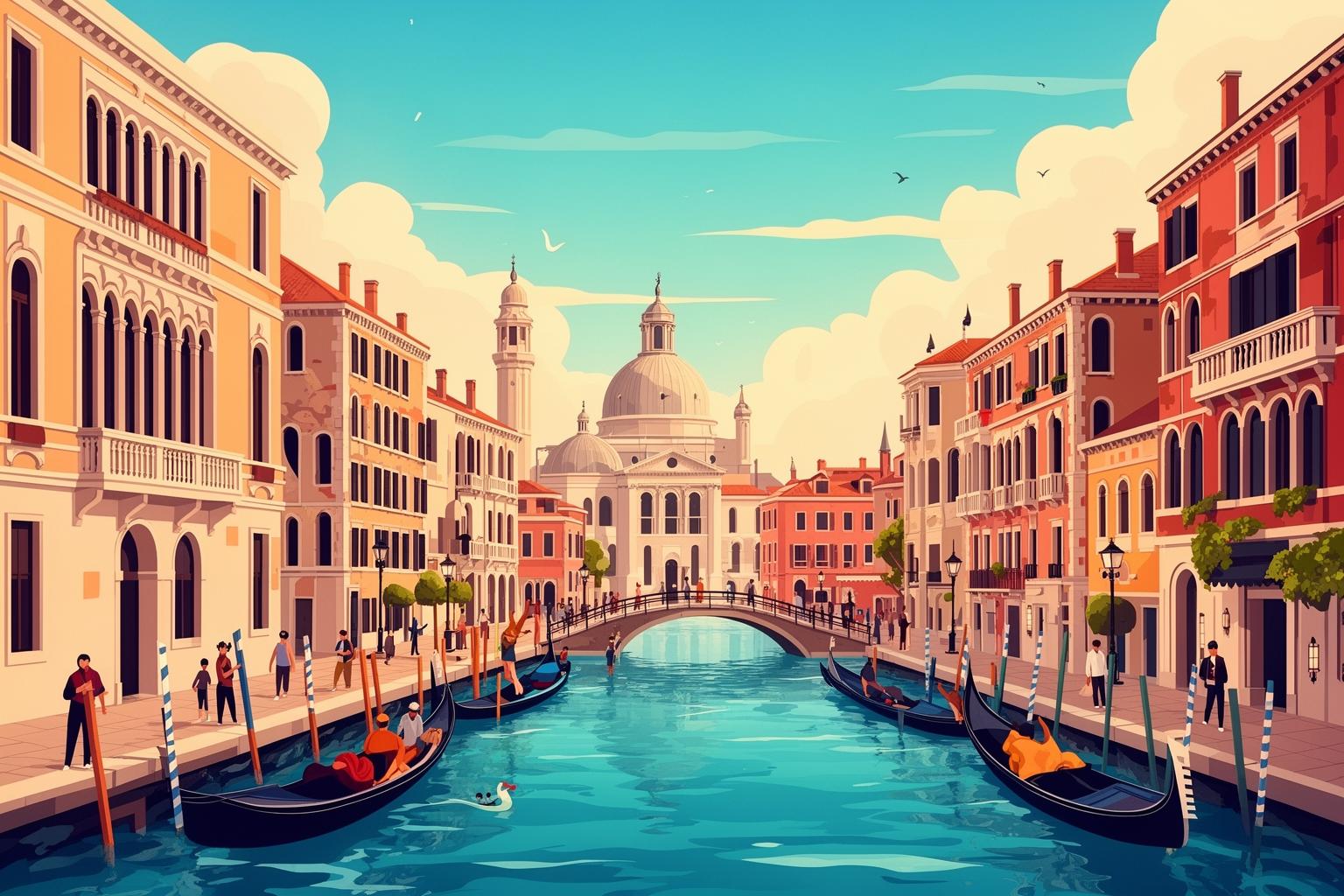
Although its screen time is brief compared to Tunisia and Tuscany, Venice also holds a small yet meaningful place in the cinematic journey of The English Patient. The choice of this location is especially poignant, adding an extra layer of literary and cinematic history to the film’s rich tapestry.
The Hotel des Bains
The setting used was the iconic Hotel des Bains on the Venice Lido. This historic hotel, a symbol of the Belle Époque, was renowned long before The English Patient as the main location of Luchino Visconti’s 1971 classic, Death in Venice. Its presence in Minghella’s film serves as a deliberate tribute to this tradition of cinematic romance and melancholy. The hotel’s faded splendor and its aura of being haunted by echoes of the past made it an ideal location. Closed for years, the hotel remains in a state of suspended animation as plans to convert it into luxury apartments have been delayed. For film pilgrims, this creates a bittersweet experience: although you cannot enter its storied halls, you can stand outside its gates on the Lido, gaze upon its beautifully decaying facade, and imagine the whispers of countless tales—both real and fictional—trapped within its walls.
Planning Your Own Epic Journey
Embarking on a pilgrimage to the sites featured in The English Patient requires some planning, as it spans two continents and involves very different types of travel. However, the reward is an experience that is both deeply personal and unforgettable.
When to Go: Seasons of Sun and Solitude
The ideal time to visit both Tunisia and Tuscany is during the shoulder seasons. Spring (April to June) and autumn (September to October) provide the most pleasant weather. In Tunisia, this timing helps you avoid the scorching, oppressive heat of summer, making desert exploration far more comfortable. In Tuscany, these seasons bring the landscape to life, with wildflowers blooming in spring and the grape harvest casting a golden glow over the hills in autumn. You’ll also encounter fewer crowds than during peak summer, allowing for a more reflective and intimate experience, especially at well-known spots like Pienza and Sant’Anna in Camprena.
Getting Around: From Desert Jeeps to Tuscan Roads
Each key location demands different transportation methods. In Tunisia, particularly for journeys into the Sahara to visit places like Onk Jemal and the salt flats, it’s strongly advised to hire an experienced local guide with a dependable 4×4 vehicle. They not only ensure your safety but also enhance your experience with local insights and stories. Conversely, in Tuscany, independence is crucial. Renting a car is almost essential. The pleasure of a Tuscan road trip lies in the journey itself—driving the winding cypress-lined roads of the Val d’Orcia, stopping spontaneously in small villages, and deliberately getting lost in the countryside’s beauty. The roads are excellent, giving you the freedom to linger as long as you wish by the monastery or wait for the perfect sunset over Pienza.
A Pilgrim’s Mindset: More Than Just Locations
This journey rewards a slower, more contemplative approach. It’s not about simply snapping a photo and checking off a site. To truly connect with the spirit of the film, immerse yourself in its world. Download Gabriel Yared’s hauntingly beautiful soundtrack and listen as you drive through the Val d’Orcia. Bring along Michael Ondaatje’s poetic novel and read passages aloud at the locations where they take place. Allow yourself moments of quiet reflection. Sit in the cloister of Sant’Anna and simply listen. Stand on a dune in the Sahara and feel the vastness of the world around you. By doing so, you turn a simple location tour into a profound experience, one that links you to the deep, resonant emotions that make The English Patient a timeless work of art.
Beyond the Frame: The Enduring Legacy of a Landscape

A journey through the world of The English Patient is one of contrasts. It is a voyage from the harsh, endless expanse of the desert to the gentle, vertical slopes of the Tuscan hills. The desert is where identities are shaped and consumed by a love as fierce and unforgiving as the sun. Tuscany, in turn, is where a new kind of love—marked by compassion, grace, and healing—brings about a final, tender peace. To traverse these landscapes is to grasp this duality on a deeply felt level. You experience the heat, passion, and desolation of the Sahara, then the cool, soothing embrace of the Italian countryside. The film’s brilliance lies in its power to reflect human emotion through these physical settings. Long after filming ended, these places continue to hold the story’s essence. They are not just backdrops; they are vessels of feeling, awaiting pilgrims to arrive, stand in the light, and remember the tale of a man who believed a woman was a country, and of a nurse who showed him the way home.