There’s a certain kind of cold that bites deeper than the thermometer reading. It’s a damp, bone-chilling cold that seeps from the concrete, a chill carried on the wind that whips down avenues and rattles the steel skeletons of elevated train lines. This is the cold of William Friedkin’s 1971 masterpiece, The French Connection. It’s a cold that defines the film’s soul, a tangible presence as real as Detective Jimmy “Popeye” Doyle himself. To embark on a pilgrimage to its filming locations is not just to visit a set; it’s to step into a time machine, to chase the ghosts of a New York City that was raw, unforgiving, and dangerously alive. The film’s genius lies in its authenticity, a gritty neo-realism that turned the bustling, decaying streets of New York and the sun-bleached alleys of Marseille into sprawling, unpredictable characters. These weren’t soundstages; they were living, breathing urban landscapes where the line between cinematic storytelling and documentary truth blurred with every screeching tire and every shadow-drenched stakeout. For the cinephile, the traveler, the urban explorer, walking these streets is an act of cinematic archeology, digging through the layers of time to touch the raw energy that made The French Connection an enduring icon of American cinema. It’s a journey that connects the two ends of the heroin pipeline, from the old-world charm of southern France to the frozen, unforgiving heart of a city on the edge.
For those captivated by the idea of exploring iconic urban film locations, this journey is part of a broader tradition of cinematic pilgrimage across Manhattan.
The Sun-Drenched Deceit of Marseille
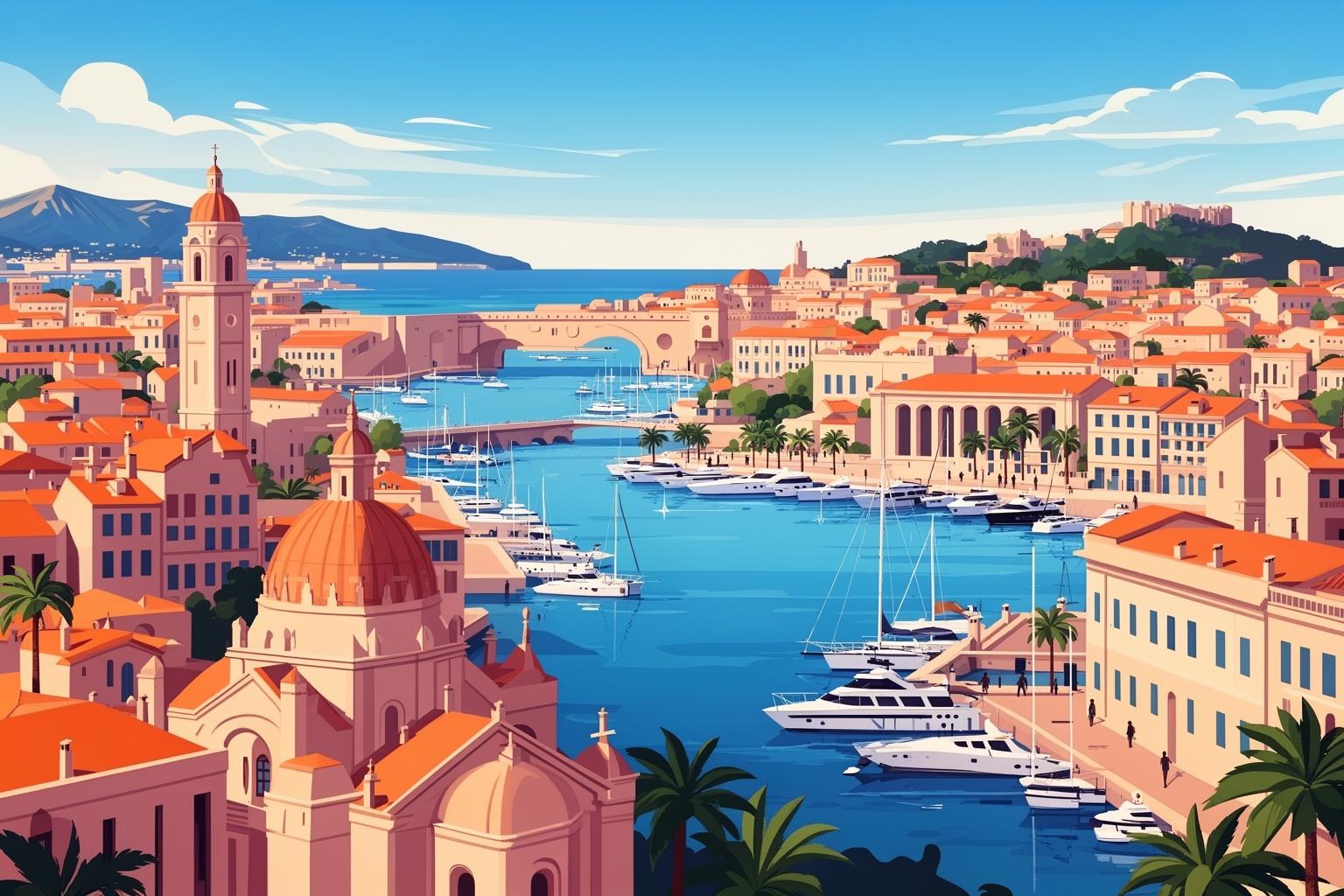
Before the grit and grime of New York City come into view, the story starts under the deceptively warm Mediterranean sun. Marseille is the origin, the wellspring. The film begins here, immediately presenting a world of contrasts. This is not the romanticized south of France; rather, it is a working port city, a melting pot of cultures and commerce, both lawful and illicit. The atmosphere is dense with history, where ancient stone intersects with the harsh realities of international trade. Director William Friedkin masterfully captures this duality, portraying a city that can be both beautiful and dangerous, often within the same frame.
The Port and the Setup
The Vieux-Port, or Old Port, is the vibrant heart of Marseille and the cinematic starting point of the drug trail. The film’s opening scenes utilize the bustling docks and waterfront to convey the scale of the operation. Freighters, fishermen, and constant movement create the perfect cover for criminal activity. Today, walking along the Quai du Port, the scene is more refined, lined with restaurants and pleasure yachts, but the essence endures. The scent of saltwater and diesel lingers in the air. The chorus of languages from sailors and tourists alike echoes the city’s long history as a gateway to the world. Standing here, one understands the logic of this connection; this is where the world convenes to trade, and where anything can be concealed in plain sight. You can almost envision French detective Alain Charnier, the suave and ruthless “Frog One,” directing his empire from a sunlit café, his calm exterior a chilling contrast to the chaos he’s about to unleash across the Atlantic.
Château d’If: A Meeting of Minds
One of the most evocative locations in Marseille is the historic Château d’If, the island fortress where Charnier meets with the drug syndicate’s financier. This is more than just a backdrop; it is a narrative masterpiece. The fortress, famously featured in Alexandre Dumas’ The Count of Monte Cristo, symbolizes isolation, conspiracy, and long-guarded secrets. Its stone walls have witnessed centuries of intrigue. Accessing it requires a short ferry ride from the Vieux-Port, a passage that feels like a deliberate disconnection from the modern world. As the boat nears the stark, rocky island, the fortress rises, imposing and unyielding. Walking its ramparts, you sense the weight of its history. The wind howls through the empty cells, and the view of Marseille across the water conveys a sense of detached power—precisely what the film’s characters experience. Surrounded by the ghosts of prisoners, both real and fictional, the deal is cemented here. For visitors, it offers a moment to link the film’s fictional plot with a very real and dramatic piece of French history. The atmosphere is heavy, a blend of sea spray and melancholy, a place where grand schemes are crafted amid the shadows of past tragedies.
Practical Tips for Marseille
Exploring Marseille calls for a spirit of wandering. The city is a maze of narrow streets that unexpectedly open into bright squares. The Calanques, stunning coastal inlets, provide a natural retreat and a fresh perspective on the region the film only hints at. Public transport, including the ferry to Château d’If, is reliable. The best way to soak in the city’s vibe is on foot, especially in the Le Panier district, the city’s oldest area, with its winding, hilly streets and artisan shops. This is the kind of neighborhood where you can imagine the story’s minor characters living, caught in the orbit of Charnier’s grand design. Allow yourself to get lost and stumble upon a hidden courtyard or a local market. It’s in these unscripted moments that you discover the true spirit of the city that birthed the French Connection.
Welcome to Popeye’s Kingdom: New York City’s Frozen Heart
When the film moves to New York, the color palette shifts, the temperature drops, and the pace accelerates to a frantic, anxious rhythm. Friedkin’s New York is not a city of famous landmarks and postcard scenes. Instead, it’s a place of overpasses, empty lots, and steam rising from manholes like breath from a subterranean beast. This is Popeye Doyle’s world—a character so deeply connected to his surroundings that imagining him anywhere else is impossible. His beat spans the entire city, from the affluent Upper East Side to the neglected industrial shores of the outer boroughs. Following in his footsteps reveals a New York that has mostly disappeared but whose spirit still haunts the modern metropolis.
The Westbury Hotel: Uptown Surveillance
The initial surveillance of the French drug smugglers and their American counterparts takes place in and around the Westbury Hotel, now the AKA Madison, on East 69th Street. This setting is a purposeful choice, positioning Popeye and his partner, Buddy “Cloudy” Russo, far from their usual rough neighborhoods. The Upper East Side, with its uniformed doormen, pristine awnings, and aura of quiet wealth, is hostile territory. It symbolizes the sophistication and resources of their targets. The stark contrast between the polished neighborhood façade and the scruffy, determined detectives lies at the heart of the film’s class and cultural clash. Visiting this area today, the opulence endures. The streets are cleaner, storefronts shine, yet the sense of being an outsider—if you don’t belong to that world—is still tangible. One can stand across the street, just as Popeye did, and sense the vast divide between the gritty reality of law enforcement and the secluded realm of international crime. It’s a powerful reminder that the fight in The French Connection spans the city’s profound social and economic chasms.
Little Italy & The Lower East Side: The Beat
Doyle and Russo’s natural environment is the tangled, chaotic streets of Downtown Manhattan. While the film is shot throughout the city, the essence of their daily grind feels rooted in neighborhoods like Little Italy and the Lower East Side. Here, the buildings are older and closer together, and the streets bustle with constant crowds. This is where they conduct their shakedowns, gather intel, and merge into the city’s fabric. A memorable scene centers on a stakeout at the “Wee Wee Hour,” a fictional bar. Though its exact location has faded over time, its spirit lives on in the dive bars that still scatter the Lower East Side. Exploring this area today requires a bit of imagination. The neighborhoods have gentrified considerably, with chic boutiques and trendy eateries replacing many of the old storefronts. Yet, the bones of the old city remain. Look up at the fire escapes crisscrossing the brick tenements, stroll down the narrow sidewalks of Mulberry Street, and you can still sense the compressed energy Friedkin captured so brilliantly. It’s a world where secrets are currency, and a conversation in a dimly lit bar can alter everything. This is Popeye’s domain—a king of a crumbling kingdom, fluent in the city’s secret language in a way his uptown foes never could.
Anatomy of a Legend: The Unforgettable Car Chase
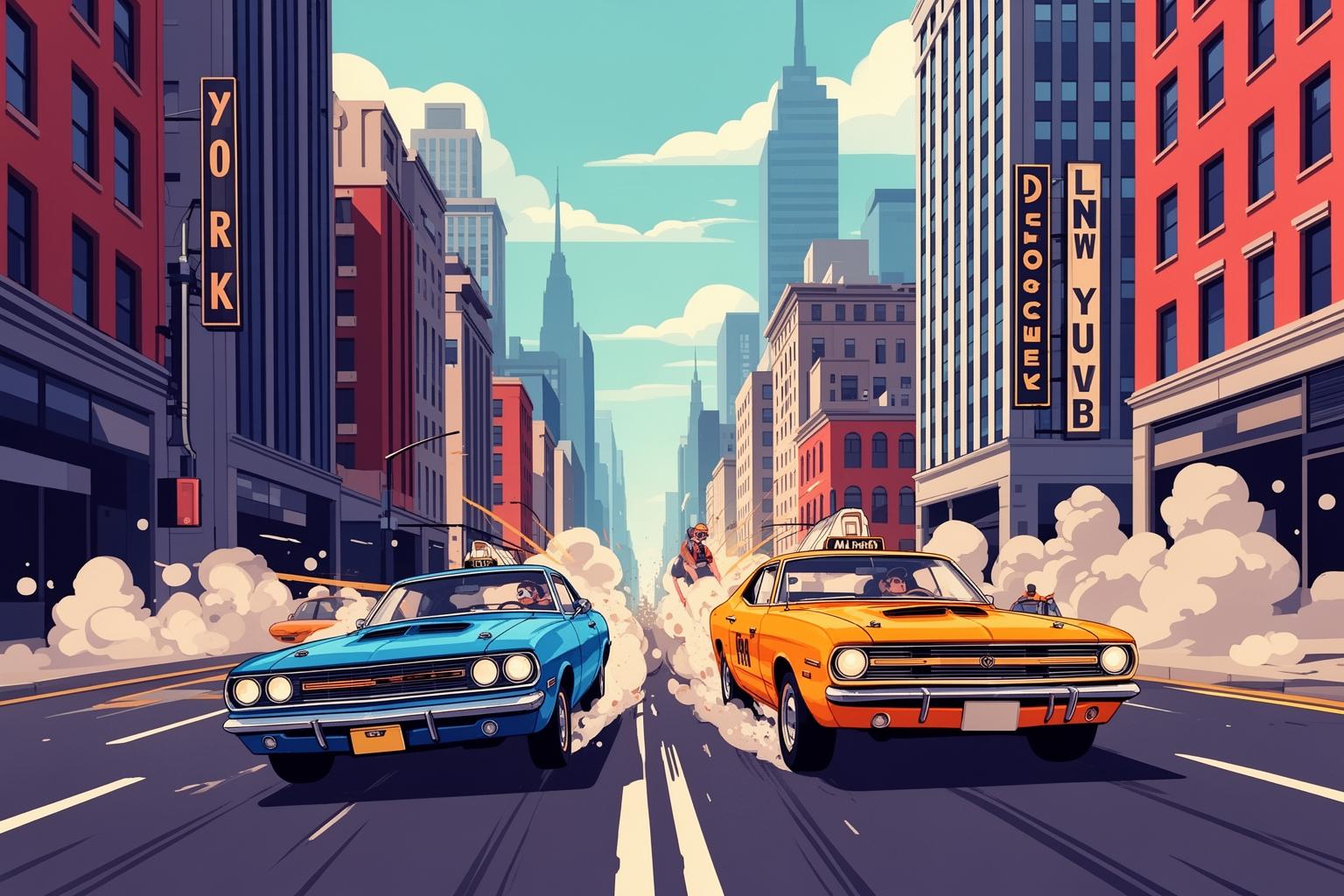
There are movie car chases, and then there is The French Connection car chase. It’s not just a sequence; it’s an event, a cinematic milestone that redefined the genre. Filmed without permits, amidst real traffic and pedestrians often mere feet from the action, it holds a raw, terrifying authenticity that remains unmatched. The chase is more than a thrilling set piece; it embodies the ultimate expression of Popeye Doyle’s obsessive, reckless nature. Following its path through Brooklyn’s neighborhoods is like undertaking a pilgrimage to a landmark of guerrilla filmmaking.
The Setup: Gravesend, Brooklyn
The sequence quietly begins in Gravesend, a residential area in southern Brooklyn. Sal Boca, one of the American conspirators, leaves his diner, initiating the tail. This neighborhood, with its modest brick houses and small businesses, symbolizes the mundane domesticity that conceals criminal activity. It’s worlds apart from the glamour of Manhattan or Marseille. Today, driving these streets, the neighborhood remains largely unchanged—still a working-class area of routine daily life. It is this very ordinariness that makes the eruption of violence so jarring. The chase starts here as a violation, a rupture in the fabric of normality. It is here Popeye crosses the line, seizing a civilian’s Pontiac LeMans and throwing the neighborhood into chaos.
Under the El Tracks: The Heart of the Beast
The core of the chase unfolds beneath the elevated BMT West End Line tracks, mainly along Stillwell Avenue and 86th Street in Bensonhurst. This location is the film’s most iconic backdrop. The massive, rusted steel El structure acts like a character itself, casting shadows and light over the street below, while the passing trains provide a thunderous, rhythmic soundtrack to the chaos. Popeye races in his car beneath the train where the hitman Nicoli attempts to flee. This stretch of Brooklyn represents the film’s soul. Visiting it offers a multi-sensory experience. The ground literally shakes as the D train rumbles overhead, producing an overwhelming clatter of steel on steel that drowns out conversation. Sunlight filters through the tracks in mesmerizing, strobe-like patterns. Walking or driving this route, you can identify key moments—the intersection where Doyle nearly crashes into a truck against traffic, the storefronts he careens past. The area under the 86th Street station is especially evocative, a chaotic hub of commerce and transit. Though shops have changed, the concrete and steel canyon setting remains the same. You sense Popeye’s desperation and tunnel vision; the rest of the world falls away, leaving only the car, the street, and the train overhead. Here, you grasp the filmmaking brilliance—Friedkin and his crew captured New York’s kinetic, perilous energy as never before.
The Sights and Sounds of the Chase Route
A pilgrimage here isn’t about locating a single plaque or marker; it’s about immersing in the atmosphere. Begin near the Bay 50th Street station and head northwest along Stillwell Avenue. As you near 86th Street, turn and continue beneath the tracks. Observe the pillars that Doyle skillfully weaves through. Imagine the boldness of filming such a sequence amid live traffic. The local community was largely unaware of the full scope of the stunts, making many pedestrian reactions in the film genuine. Today, Bensonhurst is a lively, diverse neighborhood where Italian bakery aromas mingle with scents from Chinese and Eastern European eateries. Life proceeds, noisy and bustling, under the constant shadow of the El. The best way to experience it is to ride the D train to stations like 25th Avenue or Bay Parkway and walk the streets below. Feel the vibration, hear the roar, and look up—you’re standing in the heart of cinematic history.
The Crash and Aftermath
The chase climaxes in a spectacular crash as the hijacked train collides with another at the 62nd Street station. Popeye arrives soon after, emerging from the street chaos to confront Nicoli on the station steps. This site, at the junction of Bensonhurst, Borough Park, and Mapleton, remains a major transit hub. Although renovated since 1971, the station’s core structure endures. Standing at the foot of the stairs to the platform, you can perfectly frame the shot where Popeye takes aim. It’s a sudden, brutal conclusion to the kinetic chase. The street noise gives way to a chilling stillness. Today, the area buzzes with buses, cars, and pedestrians converging. Its significance may be easy to overlook, but for those in the know, it’s hallowed ground—the place where the film’s most legendary sequence reaches its bloody, satisfying finale. It truly is the end of the line.
The Desolate Showdown on Wards Island
Following the visceral chaos of the car chase, the film’s climax unfolds in a location haunting in its desolation: a derelict factory on Wards Island. Separated from Manhattan by the Harlem River, Wards Island carries a somber history, having served as home to asylums, potter’s fields, and institutional facilities for centuries. This choice of location is deliberate. It’s a forgotten corner of the city, marked by ruin and decay, making it the ideal backdrop for the final, bleak confrontation between the police and the smugglers.
A Ruin with a View
The concluding shootout is a masterful blend of tension and geography. Popeye and the other detectives navigate the rubble and crumbling infrastructure of an abandoned industrial site, sharply contrasting with the bustling city that stands just across the water. The Manhattan skyline appears in the background of many shots, a silent, sparkling witness to the desperate fight unfolding in its shadow. The building itself was once part of the island’s old hospital complex and has long since been demolished. Yet the essence of the location remains. The island is still sparsely populated, dominated by parkland, athletic fields, and the remaining city facilities. The atmosphere is quiet, almost eerie. The wind sweeps across open fields, and the profound sense of being separate from the city, yet still adjacent to it, is palpable. This feeling of isolation heightens the power of the final scenes. It’s a lawless zone, a place where the city’s rules no longer hold, and where Popeye’s obsessive quest reaches its tragic, ambiguous conclusion.
Visiting Wards Island Today
Reaching Wards Island is an experience in itself. The main pedestrian access is the Wards Island Bridge, also called the 103rd Street Footbridge, which links the island to East Harlem in Manhattan. Crossing the bridge marks a dramatic shift. The noise of the FDR Drive fades away, replaced by the island’s quiet. Once on the island, visitors can explore the expansive Wards Island Park. Although the specific building featured in the film no longer exists, you can stroll along the waterfront and see the same sightlines. Standing on the shore, you can view the Triborough Bridge (now the Robert F. Kennedy Bridge) and the Upper East Side— the very backdrop to the film’s final, haunting gunshot. It is a reflective experience. In this quiet, forgotten place, one can contemplate the film’s dark themes: the cyclical nature of the drug trade, the moral decay of obsession, and the thin boundary between hero and anti-hero. The film’s final, iconic line—Doyle’s off-screen muttering as he wanders into the darkness—feels perfectly at home in this desolate landscape.
Your Field Guide to the French Connection Universe

Embarking on this pilgrimage calls for some planning and the right mindset. You’re not merely visiting places; you’re following a story that spans two continents and navigates the social layers of one of the world’s greatest cities. This journey rewards those with patience and a sharp eye.
Getting Around NYC
The New York City subway is your most vital tool. It acts as the city’s circulatory system and offers the best way to grasp its geography. To track the chase, the D train is your lifeline, running along the elevated West End Line through Brooklyn. For Manhattan destinations, a mix of walking and subway travel will cover all your needs. Get a MetroCard or use the OMNY tap-to-pay system and immerse yourself in the experience. The subway itself forms part of the film’s atmosphere—the screeching wheels, the diverse crowds, the underground grit—all contribute to the texture of Popeye’s New York.
Best Time to Visit
To truly capture the film’s iconic mood, the best time to visit New York is in late fall or winter. The cold, gray skies, steam rising from the streets, and your own visible breath in the air all add to the authentic French Connection experience. During these months, the city takes on a stark, haunting beauty. However, visiting in spring or fall offers more comfortable weather for the long walks needed to genuinely explore these neighborhoods. Marseille, on the other hand, is best enjoyed in late spring or early fall, when the Mediterranean sun is warm but not overpowering, making a stroll around the Vieux-Port or a ferry trip to Château d’If truly enjoyable.
A Word on Authenticity
Keep in mind these are not theme parks but living, breathing neighborhoods where people work and live. Bensonhurst isn’t a film set; it’s a community. The Upper East Side houses thousands of residents. Be a respectful observer. Support local businesses—grab a slice of pizza in Brooklyn, enjoy a coffee in a Little Italy café. The aim is to experience the city’s rhythm as it is today, while honoring the history lying just beneath the surface. The New York of The French Connection was a city in crisis, on the brink of bankruptcy. Today’s city is safer, cleaner, and more prosperous in many respects, yet the same defiant, resilient spirit that Friedkin captured on film still pulses at its heart.
Beyond the Frame: The Enduring Legacy of a City’s Soul
To walk the streets of The French Connection is to do more than merely retrace the footsteps of fictional characters. It is to engage with both the history of cinema and the history of a city. The film serves as a time capsule, preserving a New York that was dangerous, grimy, and on the edge, yet also brimming with a raw, undeniable energy. The locations are key—they are not passive backgrounds but active participants in the drama, shaping the characters and propelling the narrative forward. The elevated tracks in Brooklyn are as integral to the chase as the car itself. The desolate wasteland of Wards Island is the only place where Popeye’s journey could have ended.
When you stand on a street corner in Bensonhurst and hear the roar of the train overhead or feel the cold wind sweeping off the Harlem River on Wards Island, you connect with something essential about the film. You sense the authenticity that William Friedkin and his dedicated crew tirelessly sought to capture. You are no longer just an observer; you become a participant in the story, a ghost hunter tracing one of cinema’s most iconic figures. The connection, it turns out, was never only about a heroin shipment. It was about the unbreakable bond between a city and a story, a bond that remains as powerful and electrifying today as it was fifty years ago.