There’s a certain kind of magic that lives only in Paris, a spell woven from cobblestone, lamplight, and the ghosts of artists past. Woody Allen’s 2011 masterpiece, Midnight in Paris, isn’t just a film; it’s a love letter to this enchantment, a whimsical journey that argues the most beautiful city in the world is even more beautiful in the rain. It follows the nostalgic screenwriter Gil Pender as he wanders away from his soulless modern reality and stumbles, quite literally, into the Paris of the 1920s—the roaring, brilliant, and intoxicating era of his literary heroes. The film captures a universal longing for a “Golden Age,” a time we believe was more romantic, more meaningful than our own. But what Allen so brilliantly reveals is that Paris itself is the true Golden Age, a city where every street corner holds a story, and the past is never truly past. It’s a living, breathing museum, and the film serves as its most romantic guidebook. For the traveler, the dreamer, the cinephile, walking in Gil Pender’s footsteps is more than just a tour of filming locations. It is a pilgrimage. It’s an opportunity to blur the lines between screen and stone, to stand on the very steps where magic struck at midnight, to browse the same bookshops as Hemingway, and to feel, just for a moment, that you too could be swept away in a vintage Peugeot. This guide is your key to that journey. It’s an invitation to get lost, to explore, and to find your own golden hour in the City of Light, to see it not just as it is, but as it was, and as it always will be in the hearts of those who love it. Prepare to walk, to wonder, and to fall utterly, hopelessly in love with Paris, all over again.
If you’re captivated by the idea of cinematic pilgrimages, you might also enjoy exploring the wild landscapes of ‘Wild Tales’.
Monet’s Dreamscape: The Impressionist Prelude in Giverny
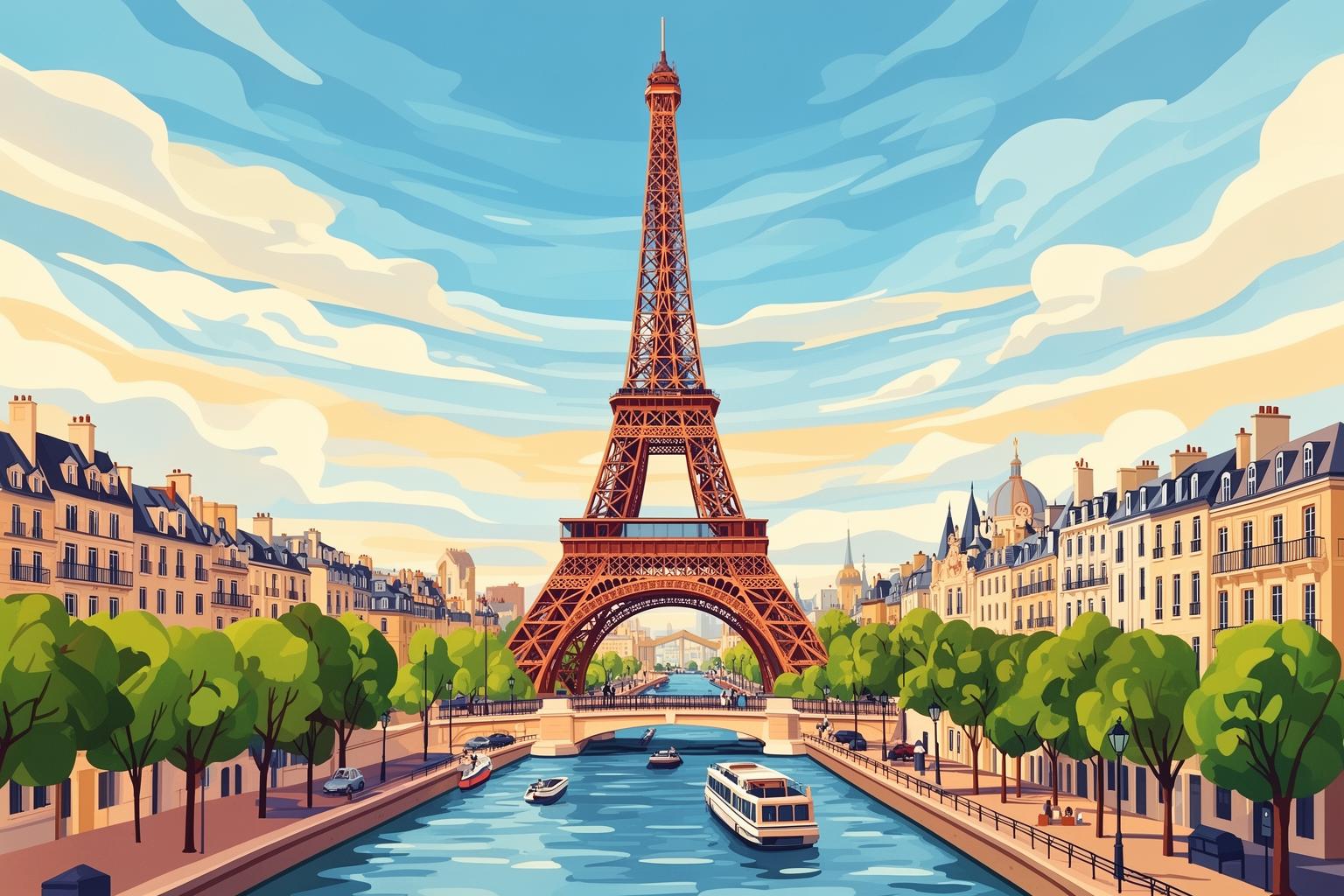
Our journey, like Gil’s, starts just beyond the city’s magnetic pull, in a place so rich with color and light it feels as though you’ve stepped right into a painting. The day trip to Giverny, where Claude Monet’s house and gardens are located, acts as the film’s aesthetic prologue. It is here, among the weeping willows and floating water lilies, that the gap between Gil’s romantic soul and the cynical pragmatism of his fiancée Inez and her insufferable friends first becomes evident. They see a pond; Gil sees the spark for an artistic revolution. Visiting Giverny is to fully embrace Gil’s perspective.
The Water Garden and Japanese Bridge
The moment you walk through the tunnel connecting the flower garden to the water garden, the atmosphere shifts. The air cools, shaded by bamboo and ancient trees, and the iconic Japanese bridge, draped in wisteria, comes into view. In the film, this is where Paul, the pseudo-intellectual, expounds on Impressionism. In reality, the bridge acts as a gateway. Standing on it, you gaze down at the very water lilies that captivated Monet—a living canvas constantly transformed by the passing clouds. The water’s surface mirrors the sky, trees, and the vibrant bursts of irises and peonies on the banks, creating a dazzling, beautiful mosaic. It’s nearly impossible not to share the awe that inspired Monet for decades. To fully capture this feeling, visit on a weekday morning to avoid the heaviest crowds. The light is gentler then, and you can find moments of solitude to simply stand and absorb the view, feeling the same breeze that once brushed Monet’s famous beard.
The Flower Garden and Monet’s House
Across the road lies the Clos Normand, the flower garden that bursts with deliberately arranged chaos before Monet’s pink-stuccoed, green-shuttered house. It’s a riot of tulips, roses, and poppies, set not in rigid beds but in vibrant blocks of color, like strokes on a painter’s palette. Walking these paths provides an overwhelming sensory experience. Inside the house, you can visit his studio, the surprisingly modern blue-and-white tiled kitchen, and his personal collection of Japanese prints that deeply influenced his art. Looking out from his bedroom window over the sea of flowers he cultivated, you gain a profound sense of the man who chose to create his own world of beauty. Traveling to Giverny from Paris is straightforward: take the train from Gare Saint-Lazare to Vernon, then a short shuttle bus or a pleasant walk. It’s a full day’s commitment, but essential for understanding the film’s visual language and the artistic spirit of France itself.
A Royal Detour: The Gilded Halls of Versailles
Before Gil discovers his 1920s paradise, he is first taken through another, much older vision of French grandeur: the Palace of Versailles. The film uses this iconic setting to emphasize Gil’s sense of alienation. As Paul drones on in the Hall of Mirrors, Gil’s eyes wander, seeking a more intimate, less ostentatious beauty. For visitors, Versailles is a breathtaking display of power and excess, a place so vast and lavish it borders on incomprehensible. The key is to experience it on your own terms, not Paul’s.
The Hall of Mirrors
Entering the Hall of Mirrors is a truly dazzling experience. The 357 mirrors lining one wall reflect the light streaming through the grand windows overlooking the gardens, creating an endless, shimmering corridor of gold and crystal. This is where the Treaty of Versailles was signed, ending World War I, a fact that lingers with palpable significance. The film’s brief scene barely captures the scale. To fully appreciate it, try to be among the first inside when the palace opens. For a few precious moments, you may find the hall nearly empty, allowing you to admire the sheer audacity of its design without being swept up in a crowd of tourists. Feel the history beneath your feet, the echoes of royal courts and world-altering politics.
The Gardens of Versailles
While the palace interior celebrates human ambition, the gardens embody mastery over nature. Designed by André Le Nôtre, they are an expansive masterpiece of geometric precision, grand canals, and hidden groves. Here, you can truly escape the crowds and connect with Gil’s contemplative spirit. Rent a rowboat on the Grand Canal for a fresh perspective, or lose yourself in the winding paths of the Queen’s Hamlet, Marie Antoinette’s rustic fantasy village. The gardens are so vast you can walk for hours and still uncover a new fountain or a secluded marble statue. It is in these quieter retreats, away from the main palace, that the true romance of Versailles reveals itself. It’s a different kind of magic from the gritty, intellectual Paris Gil longs for, but it is no less powerful—a dream of absolute monarchy expressed through marble, gold, and meticulously clipped hedges.
The Midnight Steps: Saint-Étienne-du-Mont
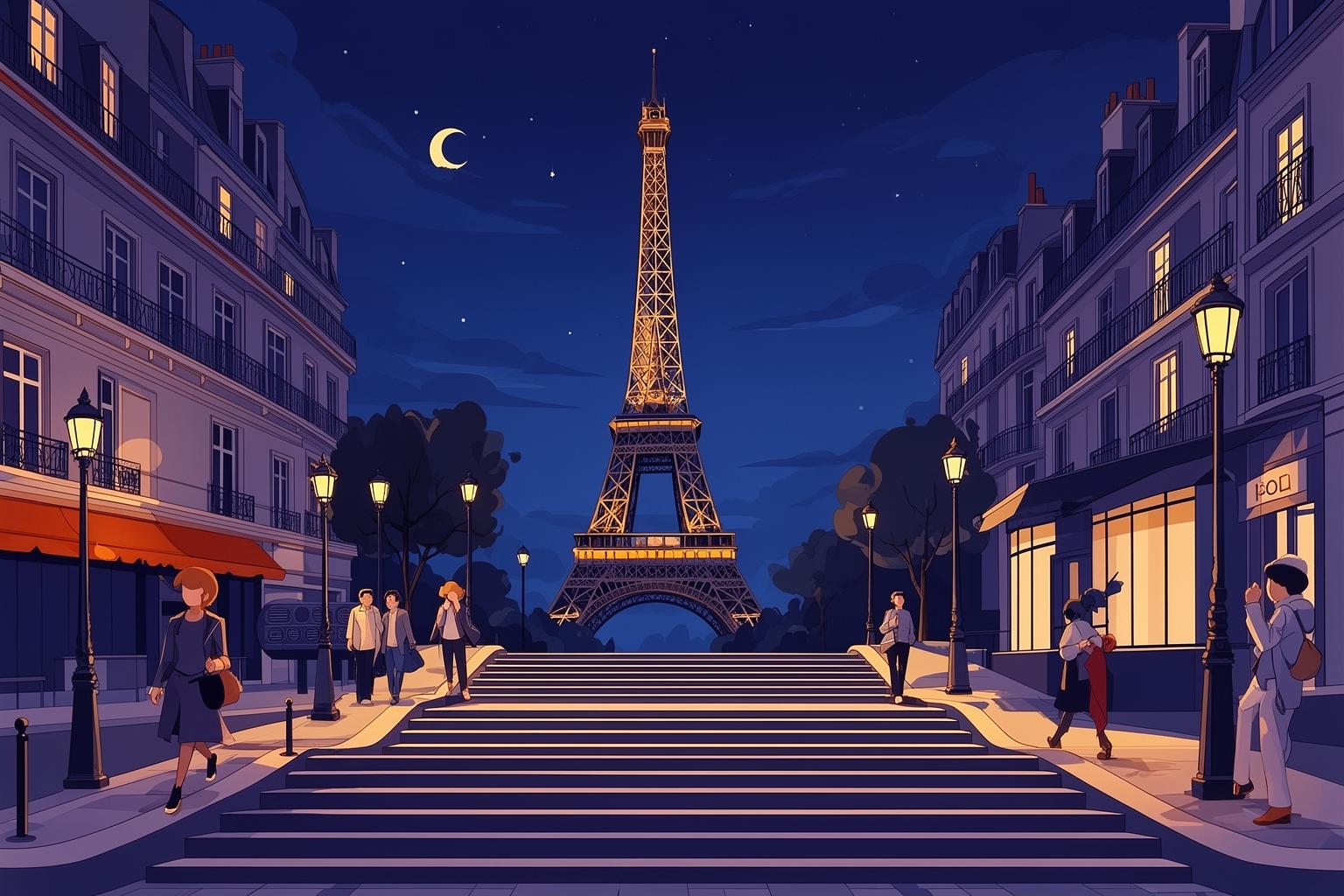
This is it—the holy grail for any Midnight in Paris pilgrim. The modest stone steps on the north side of the Church of Saint-Étienne-du-Mont serve as the film’s narrative heart, a gateway between centuries. Here, a tipsy and disillusioned Gil Pender takes a seat after leaving Inez and her friends behind, and as the church bells strike midnight, a 1920s Peugeot arrives, carrying a champagne-carrying group of Jazz Age revelers who will change his life forever. Visiting these steps offers a tangible connection to the film’s core magic.
Finding the Spot
Nestled in the 5th arrondissement, just behind the stunning Panthéon, the church itself is a marvel—a unique fusion of Gothic and Renaissance styles. However, the famous steps lie to the side, on Rue de la Montagne Sainte-Geneviève. Discovering them feels like uncovering a secret. By day, students from the nearby Sorbonne might be sitting here, reading or chatting. But the true pilgrimage must take place at night. As darkness descends and the streetlights cast a warm, yellow glow, the atmosphere shifts. The Latin Quarter’s tourist buzz quiets, and a serene anticipation sets in.
The Midnight Vigil
Sitting on those cool stone steps as midnight approaches is an experience like no other. The air grows still. You can hear the faint murmur of the city, but here, in this small corner of history, it feels peaceful. You gaze down the narrow, sloping street, half-expecting to see the headlights of a vintage car turn the corner. The church bells of Paris have a distinct, resonant tone, and when they begin to chime, it sends a thrill through your spine. For those brief moments, the fantasy feels astonishingly real. It’s an ideal spot for reflection, a place to ponder your own “Golden Age” and the magic of being present in a city so rich with history. For the best experience, bring a small flask of something warming, sit quietly, and let the city’s nocturnal energy wash over you. It’s a simple, profound, and absolutely essential part of this cinematic pilgrimage.
Labyrinth of the Mind: Wandering the Latin Quarter
Gil’s daytime explorations are a passionate affair with the winding streets and rich intellectual heritage of the Latin Quarter. This historic neighborhood on the Left Bank embodies the spirit of academic and bohemian Paris, characterized by a dense maze of narrow alleys, ancient universities, and bookstores that carry the scent of aged paper and brilliant ideas. Following Gil here is less about visiting specific landmarks and more about adopting his approach: wandering without a set destination and allowing the city to unveil itself naturally.
Shakespeare and Company: A Literary Haven
No literary journey through Paris is complete without stopping at this iconic English-language bookstore. In the film, Gil browses its shelves, a place he is instinctively drawn to. While the current shop isn’t the original one run by Sylvia Beach—the publisher of Ulysses and a gathering spot for the Lost Generation—it is its spiritual successor, established by George Whitman in 1951. It perfectly captures the same bohemian, inviting atmosphere. Inside, the shop is a charming chaos of books from floor to ceiling, narrow stairways, cozy reading corners, and the soft tapping of a resident writer’s typewriter upstairs. The motto above the door, “Be not inhospitable to strangers lest they be angels in disguise,” sums up its essence. Spend an hour getting lost among the stacks. Purchase a book and have it stamped with the store’s famous logo—a tangible piece of Paris’s literary legacy to take home.
Musée Rodin: Passion Sculpted in Stone
The film’s visit to the Musée Rodin is notable for yet another awkward lecture from Paul, as he corrects the expert guide on Auguste Rodin’s love life. However, the true highlight is the setting itself. Located in the Hôtel Biron, where Rodin lived and worked, the museum offers one of the most beautiful and tranquil art experiences in Paris. The real enchantment lies within the garden. As you stroll through the manicured grounds, you encounter some of Rodin’s most celebrated works, including the monumental “The Gates of Hell” and the iconic “The Thinker,” displayed outdoors. Find a bench near the rose bushes and simply sit, watching sunlight dance across the bronze and marble sculptures. It’s a place of deep emotion and quiet reflection, providing a calming contrast to the grandeur of the Louvre or Versailles. The juxtaposition of the raw, passionate sculptures with the serene garden creates a profound atmosphere that lingers long after you depart.
The Bouquinistes of the Seine
One of the film’s most significant discoveries takes place along the Seine’s banks. As Gil strolls past the legendary dark green stalls of the bouquinistes, the open-air booksellers, he finds Adriana’s diary—Picasso’s lover’s journal—which becomes his key to unlocking the past. This centuries-old tradition invites a leisurely walk along the quays, browsing the stalls, which is a quintessential Parisian experience. Here, you’ll uncover a treasure trove of secondhand books, vintage posters, old maps, and quirky prints. Take your time. Dig through the boxes. The real delight lies in the search, the chance of uncovering a hidden gem. The stretch along the Quai de Montebello, with its breathtaking view of Notre Dame, is especially evocative. It’s easy to imagine Gil’s excitement here—the sense that history isn’t confined to museums but lives vividly on the city streets.
A Night with the Lost Generation: Parties, Bistros, and Jazz
When the clock strikes twelve, Gil’s Paris shifts into a vibrant, chaotic, and endlessly fascinating realm of artists and writers. Tracing these 1920s haunts requires imagination, as many are either fictionalized or long gone. Yet their spirit endures in the neighborhoods they once energized.
The Party for Jean Cocteau (Musée des Arts Forains)
The first party Gil attends is a surreal, carnivalesque event set in what seems to be a magical vintage fairground. This remarkable location is real: the Musée des Arts Forains (The Fairground Arts Museum). Hidden in the Pavillons de Bercy, this private museum is a wonderland of Belle Époque carousels, automated musical instruments, and whimsical carnival games. It’s no typical museum; visits are usually guided tours where visitors are encouraged to ride the antique carousels and play the games. It perfectly captures the film’s dreamlike vibe, a place where reality feels suspended. Booking a tour here is essential for a truly unique and off-the-beaten-path Parisian experience. It feels exactly like stepping into one of Gil’s midnight adventures, full of magic and mechanical wonders.
Gertrude Stein’s Salon (27 Rue de Fleurus)
“You’re a writer. You need feedback. I’m taking you to Gertrude Stein.” This marks Gil’s entry into the true intellectual heart of 1920s Paris. The real salon at 27 Rue de Fleurus was the epicenter of modernism, where Stein, alongside her partner Alice B. Toklas, held court, critiqued manuscripts, and championed artists like Picasso and Matisse. Though the actual apartment is now a private residence, you can still visit the street and see the plaque marking this historic site. Standing outside the building in the quiet 6th arrondissement requires a bit of imagination, but you can sense the weight of conversations that once took place within those walls. Picture a young Hemingway, nervous and eager, presenting his work to the formidable Stein, or Picasso unveiling a groundbreaking new painting. It’s a place of great cultural importance, a quiet tribute to a woman who shaped 20th-century art and literature.
Classic Bistros and Brasseries (Le Polidor)
When Gil first meets Hemingway, it’s in a classic wood-paneled bistro. The scene was filmed at Le Polidor, a charming and historic restaurant near the Luxembourg Gardens that has been serving traditional French cuisine since 1845. What’s remarkable about Le Polidor is how little it has changed. With its red-checkered tablecloths, communal tables, and vintage decor, it feels genuinely old-world. It was a real haunt for writers like Victor Hugo, James Joyce, and, of course, Hemingway. Dining here is like delicious time travel. Order the boeuf bourguignon, pour a pitcher of house wine, and soak in the incredible atmosphere. You can almost hear the spirits of literary giants debating art and life over their absinthe.
Surreal Encounters and Belle Époque Dreams
As Gil’s journey unfolds, he ventures even further back in time, driven by his fascination with Adriana. This layering of history—from the 1920s to the 1890s Belle Époque—forms the film’s philosophical heart, suggesting that each generation yearns for a lost golden age.
The Surrealist Encounter (Deyrolle)
In one of the film’s most surreal and enchanting scenes, Gil attends a party with the surrealists: Salvador Dalí, Man Ray, and Luis Buñuel. Their discussion about a rhinoceros is delightfully absurd. The venue for this strange gathering is Deyrolle, a Parisian institution since 1831. It’s a breathtakingly unique place—part natural history museum, part cabinet of curiosities, part art installation. The ground floor serves as a garden shop, while upstairs reveals a wonderland of taxidermy. Lions, tigers, bears, zebras, and a kaleidoscope of butterflies are arranged in magnificent, lifelike displays. Beautiful, eerie, and utterly unforgettable, it’s entirely fitting that Gil would meet the masters of the irrational and subconscious here. This place challenges one’s perception of reality and is a must-visit for anyone drawn to the wonderfully strange.
A Walk Through Montmartre (Place du Tertre & Le Moulin Rouge)
Adriana’s golden age is the Belle Époque, and her Paris is the bohemian district of Montmartre. When she and Gil are whisked away in a horse-drawn carriage, they enter a world of starving artists and can-can dancers. Today, a stroll through Montmartre still evokes that feeling. Begin at the Basilica of Sacré-Cœur for sweeping views of the city. Then, wander into the Place du Tertre, which, despite being tourist-filled, remains alive with artists painting at their easels—a living tribute to the era when Picasso, Toulouse-Lautrec, and Modigliani worked there. Walk down the hill past the Moulin de la Galette, one of the last surviving windmills, famously painted by Renoir. And, naturally, no journey to that era is complete without seeing the iconic red windmill of the Moulin Rouge. Though now a lively nightlife hub, the spirit of the Belle Époque lingers in the steep, winding streets and hidden staircases of this romantic hill.
Maxim’s de Paris
Adriana’s dream reaches its peak at Maxim’s, the legendary Art Nouveau restaurant epitomizing glamour and sophistication during the Belle Époque. Here, she feels utterly at home, and Gil experiences his revelation: nostalgia is a trap, a rejection of the present. Maxim’s still stands on Rue Royale, its opulent facade a shining reminder of a bygone era. While dining there remains a lavish experience, visitors can also explore the Art Nouveau museum on the upper floors to admire the stunning period interiors. It’s a preserved jewel box from an age defined by artistic exuberance and a passion for life—the perfect setting for Gil’s final lesson.
The Bridges of Paris: Where Love and Life Converge
The River Seine serves as the lifeblood of Paris, with its bridges acting as the structural bones that hold the city together. They are places of passage, meeting, and reflection. In Midnight in Paris, these bridges provide the setting for some of the film’s most romantic and transformative scenes.
Pont Alexandre III
Featured in the film’s stunning opening montage, the Pont Alexandre III is arguably the most elaborate and beautiful bridge in Paris. Adorned with Art Nouveau lamps, cherubs, and winged horses, it links the Grand Palais and Petit Palais with Les Invalides. Crossing it, especially at sunset when the lights come on and the golden statues shimmer, allows one to experience Paris’ grand, imperial vision. The bridge offers breathtaking panoramic views in every direction. It is a place for grand gestures and cinematic moments, perfectly symbolizing the city’s unapologetic beauty.
Pont Neuf and Square du Vert-Galant
Gil and Adriana share a romantic moment near the Pont Neuf, the “new bridge” which is, ironically, the oldest standing bridge across the Seine. At the very tip of the Île de la Cité, they watch boats drift by before Adriana is drawn away by the Belle Époque carriage. At the island’s westernmost point, down a short flight of stairs, is the Square du Vert-Galant—a charming, willow-lined little park that juts into the river. It is a surprisingly tranquil and intimate spot, ideal for a quiet moment away from the city’s hustle. Resembling the prow of a great ship cutting through the Seine’s waters, it is one of the most romantic places in Paris.
The Final Scene: Pont des Arts
After Gil finally ends things with Inez and commits to his new life in Paris, he is walking home at night across a bridge when he encounters Gabrielle, the friendly French antique dealer. As rain begins to fall, she comments that Paris is at its most beautiful in the rain, echoing Gil’s sentiment from earlier in the film. He offers to walk her home, and they stroll off together into the shimmering night. This perfect, hopeful ending unfolds on the Pont des Arts. This pedestrian-only bridge offers one of the most iconic views in Paris, facing the Île de la Cité. Formerly famed for the thousands of “love locks” attached to its railings—now removed to preserve the structure—the romance remains. Standing here at night, with the city lights reflecting on the Seine’s dark waters, evokes the promise Gil ultimately embraces: that the best golden age is the one you’re living right now. Finding your own moment of connection here, especially if you’re lucky enough to be caught in a gentle Parisian rain, is the perfect way to conclude your pilgrimage.
Embracing Your Parisian Present
To pursue the ghost of Gil Pender through Paris is more than merely visiting a series of locations from a beloved film. It means embracing his way of seeing the city. It involves allowing yourself to get lost, to wander aimlessly, and to be open to the magic that emanates from the very stones of the streets. You might not be picked up by a 1920s Peugeot, but you will discover your own moments of temporal vertigo—whether in the quiet of a medieval church, the taste of a perfect croissant from a boulangerie that’s been there for a century, or the reflection of a centuries-old building on rain-slicked pavement. The ultimate message of Midnight in Paris is not that the past was better, but that the present is filled with the echoes of the past. Paris is the ideal city to learn this lesson. So walk. Walk until your feet ache. Sit at a café and watch the world go by. Browse the book stalls. Gaze at a painting until you feel you could step right into it. Stay out late. And if it starts to rain, don’t rush for cover. Just smile, and keep walking. After all, you’re in Paris. And it’s beautiful.