There’s a specific kind of heat that rises from the asphalt of Kissimmee, Florida. It’s a heavy, humid blanket, thick with the scent of afternoon rain, exhaust fumes, and the faint, sugary promise of theme park magic carried on the breeze. This is the air you breathe when you step into the world of Sean Baker’s 2017 masterpiece, The Florida Project. It’s a world painted in the vibrant, sometimes jarring, pastels of budget motels and discount gift shops, all living in the colossal shadow of Walt Disney World. For those of us touched by the film’s raw, unfiltered portrayal of childhood on the margins, this stretch of the US-192 highway is more than just a location; it’s a cinematic landscape that beckons. It calls for a pilgrimage not to a place of fantasy, but to a place of profound reality, where the dreams sold just a few miles away feel both tantalizingly close and impossibly far. This journey isn’t about seeing where a movie was made; it’s about feeling the heartbeat of the story, understanding the space that shaped Moonee, Halley, and the unforgettable community of the Magic Castle Inn. It’s about finding the extraordinary beauty in the ordinary, the vibrant life that flourishes in the cracks of a sun-bleached paradise. This guide is your map to that kingdom, a kingdom of ice cream dreams, purple walls, and the unbreakable spirit of summer.
If you’re inspired to embark on similar cinematic pilgrimages, you might also be interested in exploring the filming locations of ‘Central Station’.
The Lilac Heartbeat: The Magic Castle Inn & Suites
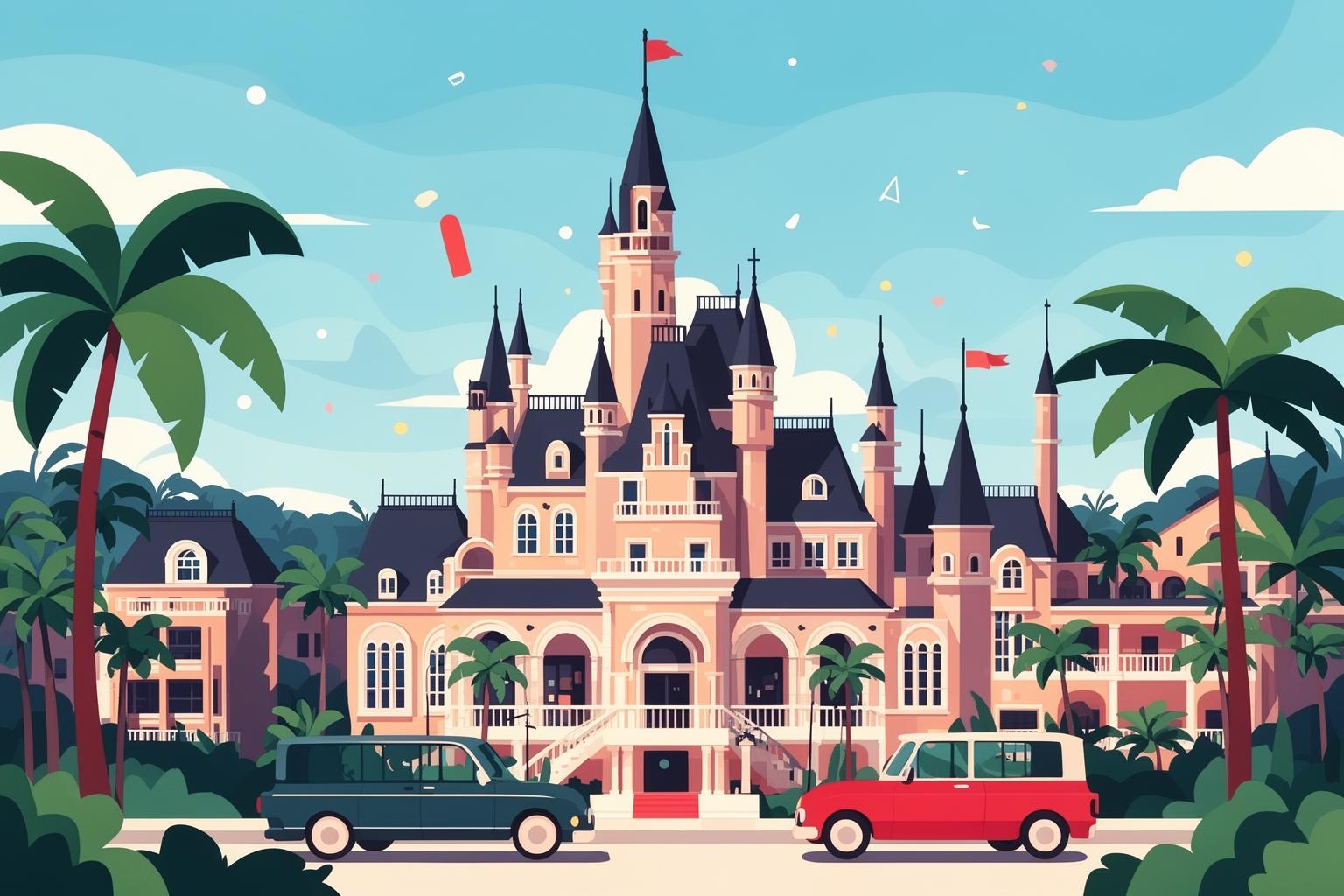
The essence of The Florida Project lies within the lilac-painted walls of a sprawling motel complex. In the film, it’s called The Magic Castle, a name filled with ironic charm. In reality, it is the Magic Castle Inn & Suites, a genuine location on the West Irlo Bronson Memorial Highway. Visiting this place is like stepping directly into the movie’s frame. The color is the first thing that strikes you — a shade of purple that seems to resist the relentless Florida sun, boldly standing out amid a sea of beige and faded pastels. This isn’t a set; it’s a living, breathing community, and understanding that is essential for any visitor.
The architecture embodies pure Floridian motel style. Open-air corridors encircle a central courtyard, their railings serving as the backdrop for countless scenes of childhood mischief and adult struggle. You can almost imagine Moonee and Scooty launching spitballs from the second-floor balcony, or Halley leaning over to call down to a friend. The swimming pool, a shimmering patch of turquoise, functions as the community’s town square — where friendships are formed, secrets exchanged, and the oppressive heat briefly forgotten. Standing by its edge, you can sense the echoes of the film’s joy and sorrow. This was Moonee’s entire world: both playground and sanctuary, its borders marked by the parking lot and the highway beyond.
Visiting the Magic Castle calls for a deep respect. Above all, it is a home. The residents are not actors, and their lives are not part of a tourist attraction. The best way to approach is with quiet observation. Park across the street or drive by slowly. Absorb the visual details: laundry hanging over railings, cars in various states of repair, satellite dishes aimed toward entertainment worlds far from their own. The office, poignantly portrayed in the film by Willem Dafoe’s weary Bobby, is a real place of business. Through its windows, you glimpse the everyday reality of running a motel that offers long-term shelter for families on the edge. It’s a powerful, humbling sight. The experience isn’t about a selfie; it’s about witnessing the resilience that Sean Baker captured so brilliantly on screen, feeling the tangible weight of a community holding on, day by day, beneath the purple walls of their castle.
The Artery of Dreams: Cruising the Irlo Bronson Memorial Highway
If the Magic Castle represents the heart of the film, then the US-192, the Irlo Bronson Memorial Highway, serves as its circulatory system. This vast, multi-lane road is a character in itself—a chaotic, captivating flow of commerce, tourism, and survival. To truly grasp the setting of The Florida Project, one must drive this stretch. Forget the interstate; this is the authentic route to the Magic Kingdom, a path paved not with gold but with cracked asphalt, faded billboards, and the lingering ghosts of tourism gone by.
The visual excess is deliberate and crucial to the film’s aesthetic. Giant, kitschy sculptures explode from the roadside. A towering wizard beckons visitors into a gift shop. An orange the size of a house promises fresh juice. Helicopters painted like sharks offer tours of a landscape that looks entirely different from above. This is the world Moonee and her friends explore with the unblemished eyes of children. To them, it is not a landscape of economic decline but a wonderland filled with bizarre castles, strange creatures, and endless adventures. Driving this road yourself, you start to see it through their perspective. The peeling paint on a medieval-themed restaurant adds to its charm. The garish neon signs transform into a beautiful, humming symphony of light against the humid twilight sky.
This highway narrates a tale of aspiration and decay. It was constructed to serve the flood of tourists heading to Disney World, lined with fantasy-themed motels and all-you-can-eat buffets. Over the years, as newer, shinier resorts were built closer to the parks, much of the 192 was abandoned. Tourists moved on, but the infrastructure endured, creating a unique ecosystem where weekly-rate motels became last-resort housing. The film captures this duality perfectly. You watch the constant stream of rental cars with hopeful families en route to Disney pass by Halley and Moonee, who live an entirely different reality. The highway links these two worlds while keeping them miles apart. It’s a place of constant motion, yet for motel residents, a place of profound stagnation—a cycle of rent payments and survival, all set against a backdrop of manufactured fun.
Icons of the Roadside
Along the US-192, certain landmarks stand out as key anchors in the film’s narrative. These aren’t just background details; they are milestones in Moonee’s epic summer adventures, each carrying special significance. Visiting them feels like turning the page of a beloved storybook.
The Sun-Kissed Orb: Orange World
Orange World is impossible to miss. This colossal spherical building, painted like a Florida orange and topped with a green leaf, stands as a relic of old Florida tourism—a pre-Disney attraction that has endured through its delightful absurdity. In the film, it serves as the backdrop for one of the most carefree scenes, where Bobby treats Moonee and her friends to ice cream. It symbolizes pure, unfiltered childhood joy, a sweet escape from their daily struggles. Visiting Orange World today feels like stepping back in time. The air inside is thick with the scent of citrus. You can buy kitschy souvenirs, fresh oranges, and, of course, the iconic orange-swirl ice cream. Savoring a cone beneath the shadow of the giant orange perfectly channels the film’s spirit of discovering magic in unexpected places. It stands as a testament to the lasting appeal of roadside attractions and a perfect pilgrimage stop.
The Swirling Summit: Twistee Treat
Another architectural marvel along the strip is the Twistee Treat. The building, shaped like a giant soft-serve ice cream cone, is a whimsical landmark impossible to overlook. It recurs in the film as a symbol of the sweet, simple pleasures Moonee and Halley pursue. It appears in the background as a constant, tempting promise on the horizon. For the characters, a visit to Twistee Treat is a luxury—a small victory. For visitors, it’s an indispensable experience. The menu is straightforward, the soft-serve creamy and cold, a perfect cure for the Florida heat. Standing at the walk-up window, you take part in a local ritual, sharing a space charged with cinematic significance. It’s more than an ice cream stand; it’s a beacon of childhood longing, a small, delicious slice of the American dream served in a cone-shaped building.
The Wizard’s Domain: The Gift Shops
Lining the US-192 are enormous, cavernous gift shops, often themed around fantastical ideas. One of the most memorable is the wizard-themed store where Halley hustles perfumes to tourists in the parking lot. These shops form a universe unto themselves. Inside, you’ll find a dizzying variety of Disney-adjacent merchandise, shark-tooth necklaces, gaudy t-shirts, and alligator heads. They are temples of consumerism, offering a discounted version of the fantasy available down the road. Walking their aisles, you can sense the desperation and resourcefulness behind Halley’s enterprise. She is trying to turn tourists’ longing for magic into rent money. These shops expose the stark economic realities of the area. They are the marketplace where dreams are packaged and sold and where characters like Halley must carve out a niche to survive. Exploring one is a sensory overload—the smell of plastic, the jumble of bright colors, the ambient noise of countless trinkets—and provides a deep understanding of the film’s economic backdrop.
The Unofficial Playgrounds: Landscapes of Freedom
While motels and gift shops characterize the man-made world of The Florida Project, the children’s true realm is found in the liminal spaces—the forgotten, overgrown pockets of nature and decay just beyond the highway. These are the places where their imaginations run free, far from the watchful eyes of adults. Discovering these areas is crucial to grasping the boundless freedom and inherent danger of Moonee’s world.
The Fields of Fallen Cows
Some of the film’s most poetic and serene moments occur in the open fields and pastures surprisingly close to the tourist strip. Here, Moonee, Scooty, and Jancey roam among grazing cattle, the pastoral landscape a stark contrast to the neon jungle of the 192. These scenes are visually stunning, capturing the soft, golden light of a Florida afternoon. The fields symbolize a kind of natural, untamed freedom. The children appear as small figures in a vast, open space, dwarfed by the sky and the ancient, patient presence of the cows. To find these fields today, take a short drive off the main highway—head south from the strip, and the landscape changes quickly. The sprawl yields to ranches and wetlands. While you might not locate the exact field from the film, you will find the same atmosphere. It’s a place of quiet reflection, where you can sense the deep, rural roots of Central Florida. It’s a reminder that before the theme parks and motels, this was a land of cowboys and cattle, a history still whispering just beyond the tourist corridor.
The Pastel Ruins: Abandoned Condos
Among the children’s playgrounds, the most hauntingly beautiful are the abandoned condominium complexes. These pastel-colored, decaying structures stand as ghosts of the 2008 housing crisis—monuments to failed investments and broken dreams. For the children, however, they become magical, empty castles to explore. They run through hollowed-out rooms, smashing things and crafting their own stories, their play a stark contrast to the real-world tragedy the buildings embody. These locations symbolize the region’s boom-and-bust cycle. Beautiful in their decay, their faded turquoise and coral walls catch the light in a way both eerie and enchanting. Visitors should note that exploring these structures is dangerous and illegal—often on private property and structurally unsound. The pilgrimage here is one of observation from a safe distance. Passing by these pastel skeletons, you can appreciate their cinematic impact and reflect on themes of decay and resilience. They stand as a powerful visual metaphor for the forgotten people and places of the Florida dream.
The Secret Swamps
Beyond the fields and ruins lies Florida’s primordial landscape: the swamp. The children in the film often venture to the edges of retention ponds and marshy areas, places teeming with unseen life. This is where the state’s true wildness endures. The air is thick with the chorus of insects and the occasional splash of something mysterious in the water. This landscape demands respect—a habitat for alligators and snakes, a world that existed long before any castles, magical or otherwise, were constructed. For outdoor enthusiasts, these pockets of nature are fascinating, showcasing the region’s incredible biodiversity. Visiting a local nature preserve or park, such as Kissimmee Lakefront Park, offers a safe way to experience this environment. You can observe towering cypress trees, wading birds, and perhaps even an alligator basking on a bank. This experience connects you to Florida’s deeper, wilder spirit—the untamable force of nature that the children in the film so instinctively understand and embrace.
The Unseen Kingdom: Disney’s Constant Shadow
Throughout The Florida Project, Walt Disney World looms as a constant, overwhelming presence, yet it remains almost entirely off-screen. It serves as the sun around which this small, struggling solar system revolves. Its influence permeates every aspect of the characters’ lives—from the tourist economy that both supports and fails them to the nightly fireworks that illuminate the horizon, a beautiful yet painful reminder of a world they cannot reach.
This intentional choice by Sean Baker is what gives the film much of its power. The fantasy is always just out of reach. The characters live in a place called the “Magic Castle,” but the real Magic Kingdom lies miles away, separated by an insurmountable economic divide. The pilgrimage for a fan of the film involves grasping this profound contrast. One of the most powerful ways to do that is by experiencing the fireworks from outside the park. Find a spot along US-192, perhaps in a supermarket parking lot or behind a restaurant, and wait for the show to begin. From afar, the explosions are silent, a beautiful, fleeting light show in the sky. You see exactly what Moonee and Halley would see. It’s a shared experience that feels both magical and deeply melancholic. You are witnessing the grand finale of a party to which you were never invited.
The film’s final, breathtaking scene is the only time we enter this forbidden kingdom. The frantic, handheld camera follows Moonee as she grabs Jancey’s hand and makes a desperate, imaginary run toward Cinderella’s Castle. This moment serves as the emotional climax of the pilgrimage—a cathartic release, a child’s reclamation of the magic long denied to her. While visitors can, of course, go to the Magic Kingdom, the true way to honor the film’s spirit is to consider what that castle represents. It stands as a symbol of ultimate childhood fantasy, a promise of a world where everything is perfect. The film asks us to hold onto that image while simultaneously acknowledging the harsh reality just outside its gates. This contrast lies at the heart of the story, and experiencing that geographical and emotional whiplash firsthand becomes an unforgettable part of the journey.
A Pilgrim’s Field Guide: Practicality and Etiquette
A journey into the world of The Florida Project is accessible, but it demands careful planning and, above all, a respectful attitude. This is not a theme park; it is a complex community worthy of thoughtful regard.
Getting Your Bearings
Your entry point to this world is Orlando International Airport (MCO). Renting a car from there is essential. The area around Kissimmee and the US-192 corridor is designed for cars. Public transportation options are limited, and the sites are spread out. With a car, you have the freedom to explore the strip at your own pace, stop to observe, and venture down the back roads where other film locations await.
Timing Your Visit
Central Florida’s climate features two dominant seasons: hot and hotter. Summer, from June through September, is extremely hot and humid, with frequent thunderstorms. This matches the film’s setting but can be physically taxing for visitors. The shoulder seasons—spring (March to May) and fall (October to November)—offer more moderate temperatures, with warm days and less intense humidity. Winter is also a good time to visit, providing mild, sunny weather, though it coincides with peak tourist season, so expect crowds.
A Place to Stay
Choosing where to stay is a nuanced decision. For the most immersive experience, consider lodging at the Magic Castle Inn & Suites itself or one of the many similar motels along the strip. However, this raises ethical concerns: these are more than tourist spots—they are people’s homes. If you stay there, be a respectful and quiet guest. Alternatively, a more comfortable and less disruptive choice is to stay in a standard hotel in Kissimmee or Lake Buena Vista and take day trips to the filming sites. This way, you can engage with the world of the film without intruding on residents’ lives.
Fueling the Adventure
To dine like a character in The Florida Project, embrace the highway cuisine. Fast food chains, waffle houses, and all-you-can-eat buffets are staples of the US-192 diet. A meal at a Waffle House, an iconic Southern American experience, is essential. And no pilgrimage is complete without a soft-serve cone from a Twistee Treat. For a more local taste, explore family-owned Latin American restaurants hidden in strip malls off the main highway, reflecting the diverse community that calls this area home.
On Respectful Pilgrimage
This cannot be emphasized enough: the most important part of your journey is to be a respectful observer. The people living in the motels along US-192 are not film characters, but real individuals, many facing serious economic challenges. Do not treat their homes like movie sets. Avoid taking intrusive photos of residents, especially children. If photographing the motels, keep your distance, such as from across the street. Be discreet and considerate. The aim is not to stare, but to understand. If you feel moved to help, consider donating to a local charity supporting homeless families in Osceola County, like the Community Hope Center. Let your cinematic pilgrimage be a positive force for the community that inspired the film.
The Enduring Soul of the Sunshine State
A journey to the filming locations of The Florida Project offers a movie pilgrimage unlike any other. It’s not about seeking glamour or fantasy. Instead, it’s about confronting a reality hidden in plain sight, a reality that exists in the shadow of the ‘Happiest Place on Earth.’ This journey invites you to look closer, to view the world with the same wide-eyed wonder and unflinching honesty as Moonee.
You leave Kissimmee with vivid colors etched into your memory: the defiant lilac of the Magic Castle, the striking orange of the gift shop, the deep green of the swamps, and the brilliant blue of the Florida sky. You depart with sounds lingering in your ears: the roar of traffic along the 192, the distant pop of fireworks, and the imagined laughter of children turning a parking lot into a universe of adventure. Most of all, you leave with a deep appreciation for the story Sean Baker told and the real people whose lives he honored. You come to realize that the ‘Florida Project’ is more than a movie title; it’s an ongoing experiment in survival and dreaming, a tribute to the resilience of the human spirit that discovers joy, beauty, and a touch of magic even on the sun-scorched edges of paradise.