San Francisco. The name itself rolls off the tongue like fog drifting over the Golden Gate. It’s a city of vertiginous hills, clanging cable cars, and a spirit that’s forever counter-culture, forever cool. But for a certain breed of cinephile, for anyone who feels a thrill at the sound of a rumbling V8 engine, San Francisco is more than just a city; it’s a co-star. It’s the concrete and asphalt playground where Lieutenant Frank Bullitt, embodied by the impossibly cool Steve McQueen, redefined the action movie forever. The 1968 masterpiece, Bullitt, isn’t just set in San Francisco—it is San Francisco. The film’s DNA is woven into the very fabric of its streets, its moody atmosphere baked into every frame. To walk these streets today is to step into a living, breathing film set, to chase the ghost of a cinematic legend. This isn’t just about finding spots on a map; it’s about feeling the pulse of the city that made the greatest car chase in history possible. It’s a pilgrimage to the altar of cool, a journey to hear the echoes of a Highland Green Mustang fastback tearing through the urban canyons. So, buckle up. We’re about to drop the clutch and dive headfirst into the world of Frank Bullitt. Prepare to explore the iconic filming locations, the hidden corners, and the enduring vibe of a city that became a legend’s perfect accomplice.
If you’re inspired to explore other cinematic pilgrimages, consider chasing the sun-drenched romance of “Call Me by Your Name”.
The Heart of the Chase: Russian Hill’s Asphalt Rollercoaster
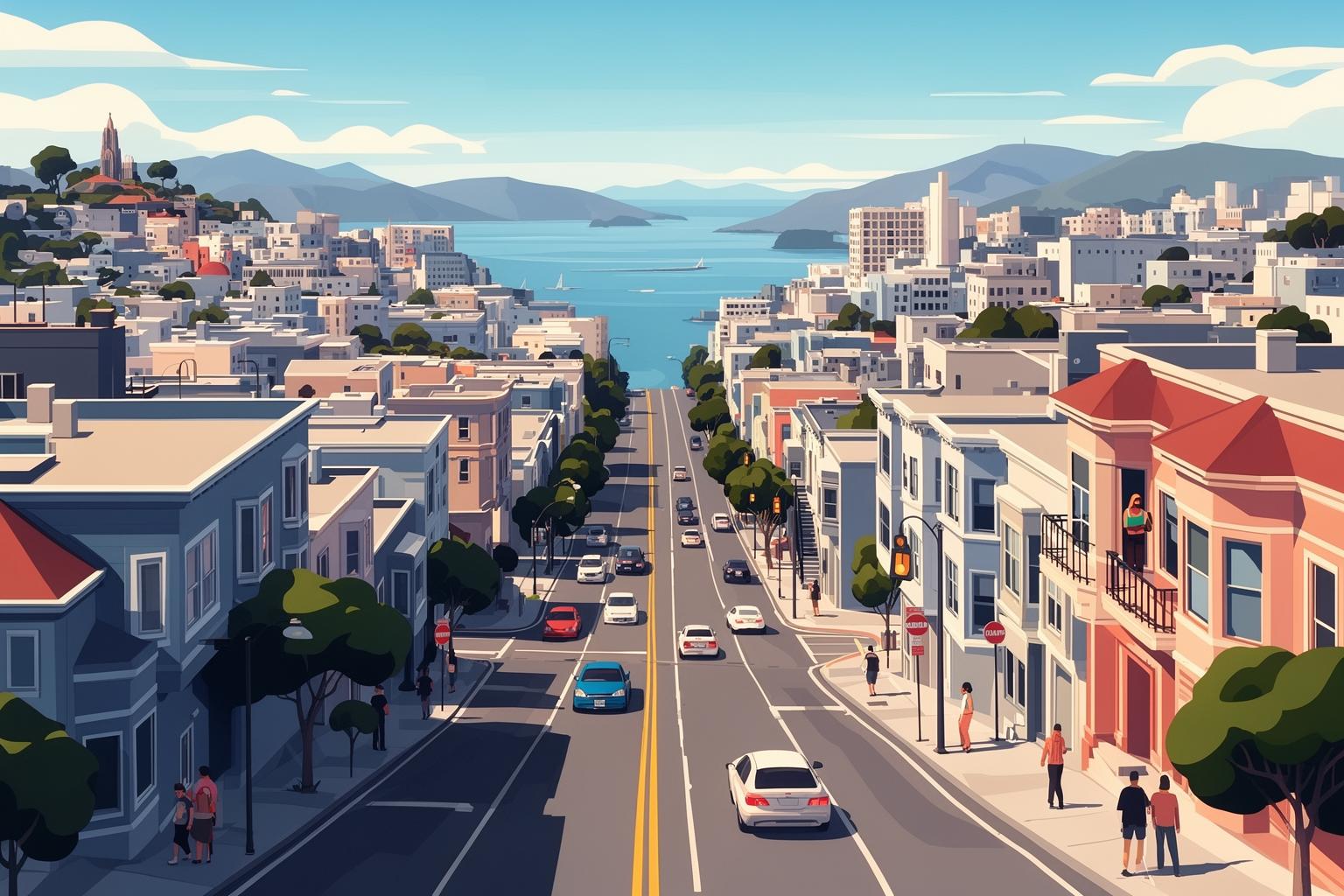
Let’s begin where the legend truly came to life—in the heart-pounding, gravity-defying opening moments of the chase. This isn’t merely a sequence; it’s a ten-minute ballet of steel and adrenaline that has become a landmark in cinematic history. The setting is the impossibly steep grid of Russian Hill and North Beach, where the streets feel less like roads and more like launch ramps to the sky. This is where the soul of Bullitt is deeply felt. Standing at the corner of Taylor and Vallejo means standing on sacred ground. Look down the steep incline. You can almost hear the roar of the 390-cubic-inch V8 as Bullitt’s Mustang crests the hill, its wheels briefly leaving the pavement in a moment of pure, unfiltered cinematic brilliance. The film captures this leap four times from varying angles, underscoring its visual impact. Today, the view remains just as stunning. The deep blue of the San Francisco Bay sparkles in the distance, with Alcatraz Island resting quietly in the water. The air carries the steady clang-clang of the Powell-Hyde cable car, a soft, constant soundtrack to the city. The atmosphere here is a striking contrast. It’s a quiet, upscale residential area, filled with beautifully preserved Victorian houses painted in a vivid palette of colors. Yet, it’s also a bustling tourist hotspot, with visitors pouring off cable cars, cameras ready, hoping to capture the same magic director Peter Yates created over fifty years ago. When you’re here, pause for a moment. Close your eyes and imagine: the black Dodge Charger R/T in the rearview mirror, McQueen’s steely gaze, the screech of tires as the cars fishtail around the corner onto Filbert Street. It’s a sensory experience. You feel the cool bay breeze, see the dramatic landscape, and hear in your mind the symphony of destruction that made this location legendary. For the fullest experience, walk the route. Feel your calves burn as you climb the hills, gaining a newfound respect for the skill and sheer courage of the stunt drivers who brought this scene to life. This isn’t simply a filming spot; it’s the epicenter of the seismic shock Bullitt sent through the world of action cinema.
The Southern Stretch: Guadalupe Canyon’s High-Speed Finale
After the claustrophobic, jump-filled intensity of the city streets, the chase bursts into the wide-open spaces south of San Francisco. This is where the hunt reaches its fever pitch and fiery finale. The location is Guadalupe Canyon Parkway, a winding road that snakes through the hills, connecting San Francisco to Brisbane. The shift in scenery is dramatic and deliberate. We leave behind the dense, vertical world of Russian Hill for a more rugged, untamed landscape. The roads widen, the turns sweep broadly, and the sense of speed grows even more intense. Here, the Mustang and the Charger truly stretch their legs, their powerful engines reverberating off the golden-brown hills. Driving this route today feels like stepping back in time. While the city has changed, these hills have remained largely the same. To get the full experience, having a car is essential. Renting a modern Mustang is a popular choice for enthusiasts, allowing you to tap into some of the power Frank Bullitt wielded. As you navigate the curves, you can imagine the film’s iconic shot: the low-angle camera capturing the cars as they race through the turns, dust kicking up from the shoulder. The most notorious spot on this route is, of course, where the chase ends. The hitmen in the Charger lose control, veer off the road, and crash into a gas station, triggering a spectacular explosion. While the gas station was a set built specifically for the film, the crash site can be pinpointed near the intersection with Carter Street. Standing there, you sense the scene’s finality. It starkly contrasts with the almost playful energy of the city chase. Here, the stakes feel higher, and the conclusion much more brutal. It’s a testament to the film’s pacing that it transitions so seamlessly between two such different settings. A practical tip for visitors: drive this route on a clear weekday morning to avoid traffic. The views from the parkway are breathtaking, offering panoramic sights of San Bruno Mountain and the southern bay. It’s an opportunity to see a rawer, more elemental side of the Bay Area, perfectly reflecting the primal nature of the film’s legendary climax.
Living the Bullitt Life: The Lieutenant’s Personal San Francisco
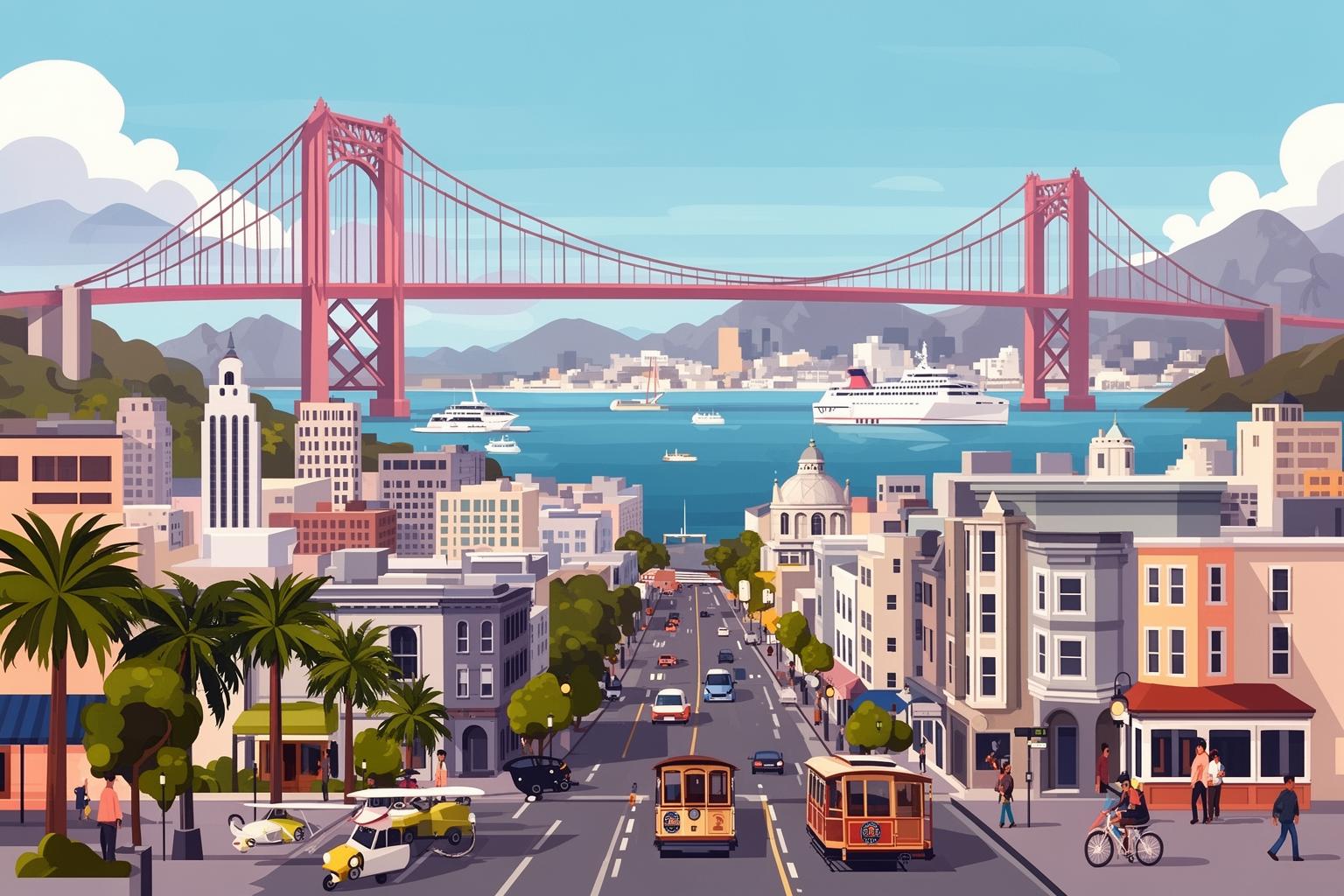
Bullitt is more than just its legendary chase scene. It’s a moody, atmospheric neo-noir that captures a portrait of a man and his city. Frank Bullitt’s San Francisco is a place of quiet reflection, sudden violence, and understated cool. To truly grasp the film, you need to visit the spots where he lived, worked, and prowled the city’s shadows. These places offer a deeper, more intimate connection to the character and the era.
The Nob Hill Hideaway: Bullitt’s Apartment
Perched high on the prestigious Nob Hill, at 1153 Taylor Street, stands the handsome brick apartment building where Frank Bullitt called home. This location perfectly embodies the character’s persona. It’s classic, elegant, and exudes a quiet confidence, much like McQueen himself. The building, known as the “Nob Hill Apartments,” looks almost identical to how it appeared in 1968. From across the street, you can easily imagine Bullitt pulling up in his Mustang, the city lights shimmering below. As this is a private residence, it’s important to be respectful—this isn’t a place for loud reenactments but for quiet observation. Take note of the intricate architectural details and the way the bay windows overlook the city. This prime piece of San Francisco real estate suggests Bullitt was a man of means, yet he lived simply and unassumingly. The neighborhood itself enhances the mood. Just a block away sits the majestic Grace Cathedral, its Gothic spires reaching skyward. The area is steeped in old-world charm and history. Visiting Bullitt’s apartment offers a sense of the man behind the badge—a solitary figure dwelling among the city’s elite, always somewhat apart. It’s a powerful, grounding setting that adds a richer layer to your pilgrimage.
The Corner Market: A Glimpse of Everyday Life
A few blocks from his apartment, at the corner of Clay and Taylor, is another key location that humanizes the super-cool detective. This was the spot for the corner store where Bullitt, worn out after a long day, stops to buy a stack of TV dinners. In the film, it was called the “Albert L. Hammond Co. Groceries.” Today, the charming Le Beau Market occupies the same place. Stepping inside feels like a delightful blend of past and present. The market maintains a classic neighborhood grocery atmosphere, a warm contrast to impersonal supermarket chains. You can pick up a delicious sandwich or a hot coffee and sit outside, watching the cable cars roll by. Though brief, this scene is significant—it reveals Bullitt’s routine, his quiet moments away from the chaos of his job. Visiting Le Beau Market lets you share in that routine. It’s a simple gesture, but buying a coffee where Frank Bullitt purchased his dinner creates a tangible, relatable link to the film. It’s one of the easiest and most enjoyable stops on any Bullitt tour, a perfect spot to recharge and soak up the authentic Nob Hill vibe before moving on.
The Gritty Side of Town: The Hotel Daniels Stakeout
To experience the other side of Bullitt’s world, venture to the Mission District. The film’s tragic catalyst—the murder of the star witness, Johnny Ross—occurs at the fictional “Hotel Daniels.” The actual exterior shots were filmed at the then “Sunshine Hotel” on 27th Street and Bennington Street near Cesar Chavez Street. This neighborhood contrasts sharply with the polished elegance of Nob Hill. The Mission is vibrant, eclectic, and alive with culture. It’s rich in Latino heritage, known for its striking murals, bustling taquerias, and bohemian spirit. The hotel scene is tense and gritty, and the setting reflects that perfectly. It’s a more down-to-earth, working-class area. While the building itself has changed over time, the overall vibe of the neighborhood offers insight into the tougher side of Bullitt’s beat. After locating the spot, take some time to explore the Mission. Wander through Clarion Alley or Balmy Alley to admire the powerful, politically charged street art. Grab a mission-style burrito from La Taqueria or El Farolito. Visiting this site provides important contrast. It reminds you that Bullitt’s San Francisco wasn’t only about stunning views and thrilling car chases; it was also about dark alleyways and cheap hotels where real crimes unfolded. It completes the picture of the city as a complex, multifaceted character in its own right.
More Than Locations: Capturing the Bullitt Vibe
A true Bullitt pilgrimage is more than just ticking off a list of locations. It’s about fully immersing yourself in the unique atmosphere that the film so brilliantly captured. Peter Yates didn’t use San Francisco simply as a backdrop; he made the city an active character in the story. Its distinct personality—marked by dramatic landscapes, ever-present fog, and a cool, detached vibe—is the secret element that elevates the film to a timeless classic. To genuinely complete your journey, you must attune yourself to this essence and see and feel the city through Bullitt’s perspective.
The San Francisco Soundtrack
Consider the film’s soundscape. Beyond Lalo Schifrin’s iconic jazzy score, the movie is alive with the city’s ambient noises. The most prominent is the steady, rhythmic clanging of cable car bells—a sound as emblematic of San Francisco as the Golden Gate Bridge. As you stroll the hills of Nob Hill and Russian Hill, let that sound envelop you; it is the city’s heartbeat. Then there’s the distant wail of foghorns out on the bay, a lonely, melancholic tone that perfectly complements the film’s noir atmosphere. The city’s topography also shapes a unique auditory experience. Notice how a car engine echoes while climbing a steep street or how sirens bounce off buildings in the dense downtown corridors. These sounds created Bullitt’s rich sonic world, and they remain for you to discover today.
A Modern Pilgrim’s Itinerary
To bring it all together, here’s a suggested itinerary for your day. Begin your morning in Nob Hill, where the soft light and quiet streets set a calm mood. Visit Bullitt’s apartment on Taylor Street, then stroll down to Le Beau Market for coffee and a pastry, soaking in the serene residential vibe. From there, board the Powell-Hyde cable car—it’s not just a mode of transport but a moving viewpoint that takes you through the heart of the chase scenes. As you descend the hills, you’ll pass key intersections. Disembark near Lombard Street and walk the chase route in Russian Hill. For lunch, head to North Beach, the city’s historic Italian neighborhood, for some outstanding food. In the afternoon, it’s time to drive: pick up a rental car and head south to Guadalupe Canyon Parkway. Enjoy the open road, feeling the contrast with the tight urban streets. As sunset approaches, make your way to the Mission District. Wander the vibrant street art as the golden hour light bathes the colorful murals, then settle in at a local taqueria for an authentic San Francisco dinner. This route lets you experience the city’s diverse facets, moving from the polished heights of Nob Hill to the gritty, artistic core of the Mission—just as Bullitt himself did.
Practical Tips for Your Bullitt Tour
Embarking on a pilgrimage through Frank Bullitt’s San Francisco is an unforgettable experience, though a bit of preparation can make all the difference. The city has its own distinctive rhythm and challenges, and knowing them ahead of time will help make your journey smoother and more enjoyable.
Getting Around the City
San Francisco is a compact city, but its hills are no joke. Walking is ideal for exploring downtown and Nob Hill, allowing you to uncover hidden details and fully appreciate the architecture. Public transportation is excellent—the Muni system of buses and streetcars can take you almost anywhere. And, of course, riding a cable car is essential; it’s a key part of the Bullitt experience and the most exciting way to tackle the hills. However, to relive the full chase, especially the Guadalupe Canyon Parkway section, renting a car is necessary. Be warned: driving in San Francisco can be challenging. The hills are steep, parking is difficult, and traffic can be heavy. But for true fans, the thrill of driving those iconic streets yourself is well worth it. Just remember to curb your wheels when parking on a hill—it’s the law!
Best Time to Visit
San Francisco is a year-round destination, but the best weather usually comes in the fall. September and October often bring the warmest, sunniest days, known as “Indian Summer.” The summer months—June, July, and August—are frequently cool and foggy, especially in the mornings and evenings. The famous fog, affectionately called “Karl” by locals, can appear at any time, adding a perfectly atmospheric noir vibe to your adventure. Spring is lovely as well, with clearer skies and blooming flowers. Whenever you visit, be prepared for changing temperatures.
Dress Like a Local (or Like Bullitt)
The top rule for dressing in San Francisco is to layer. The weather can shift from warm and sunny to cold and windy within a single block. A t-shirt, sweater or fleece, and a light jacket will serve you well. Comfortable walking shoes are a must. And if you want to fully embrace the spirit of the city, why not channel a bit of Frank Bullitt? A classic turtleneck, dark trousers, and a stylish jacket not only look great in photos but are also practical for the city’s cool climate. It’s the perfect way to honor the king of cool.
A Note on Respectful Pilgrimage
Remember that many Bullitt filming locations—including Bullitt’s apartment and the houses along the chase route—are private homes and businesses. Residents and workers there are accustomed to fans visiting, but it’s crucial to be courteous guests in their neighborhood. Keep your voice down, avoid trespassing on private property, and don’t block sidewalks. The goal is to celebrate the film’s legacy without disrupting the daily lives of locals. A respectful attitude helps ensure these locations remain accessible and welcoming to future generations of fans.
The Enduring Legacy of the Chase
Why does Bullitt continue to hold such a powerful sway over our collective imagination more than fifty years later? It’s because the film captured something essential and timeless about the relationship between man, machine, and environment. The chase scene wasn’t merely a gimmick; it was a raw, visceral experience that felt stunningly real because, in many ways, it truly was. The absence of a musical score during the sequence, the authentic sounds of engines and screeching tires, and the use of real city streets—all combined to create an immersive sensation rarely seen before and seldom matched since. Standing on a San Francisco hill, you realize the city wasn’t just a backdrop; it was the obstacle course, the playground, and the silent, watchful character driving the action to its limits. The film secured Steve McQueen’s place as a cultural icon and turned a 1968 Ford Mustang into an object of universal desire. It forged an enduring, unbreakable link between a movie and a city. So, as your pilgrimage draws to a close, take one last look down a steep, fog-kissed street. Listen for the faint echo of a V8 engine. Frank Bullitt’s San Francisco isn’t simply a series of locations on a map. It’s a feeling. It’s an attitude. It’s the everlasting spirit of cool—and it’s still here, waiting for you to discover it.