Some films you watch. Others, you experience. Ari Folman’s “Waltz with Bashir” is a plunge into the deep end of the latter—a cinematic fever dream that pulls you through the fractured, unreliable corridors of memory. It’s a documentary, yet it’s animated. It’s a war story, yet it unfolds like a surrealist poem. The film chronicles Folman’s own unsettling quest to recover his suppressed memories as a young Israeli soldier during the 1982 Lebanon War, a journey that leads him, and us, to the horrific Sabra and Shatila massacre. A pilgrimage to the “locations” of such a film is unlike any other. You aren’t searching for a specific street corner where a camera was placed. You are searching for the phantom limbs of history, for the echoes of events that transpired on the very ground beneath your feet. It’s a journey that spans two nations locked in a complex, painful embrace—Israel and Lebanon. It’s a walk through the sun-drenched, vibrant streets of modern Tel Aviv, where the quest begins in a noisy bar, and a somber passage through the resilient, scarred, and beautiful city of Beirut, where the dream shatters into unbearable reality. This is not just a tour; it is an act of bearing witness, a deep dive into the geography of trauma and the remarkable human capacity for both forgetting and remembering. It’s about understanding how a place can hold a memory, long after the world has tried to move on.
This kind of cinematic pilgrimage, seeking the echoes of history in modern landscapes, is a powerful way to engage with films that grapple with memory and national trauma.
The Tel Aviv Awakening: Fragments of a Forgotten War
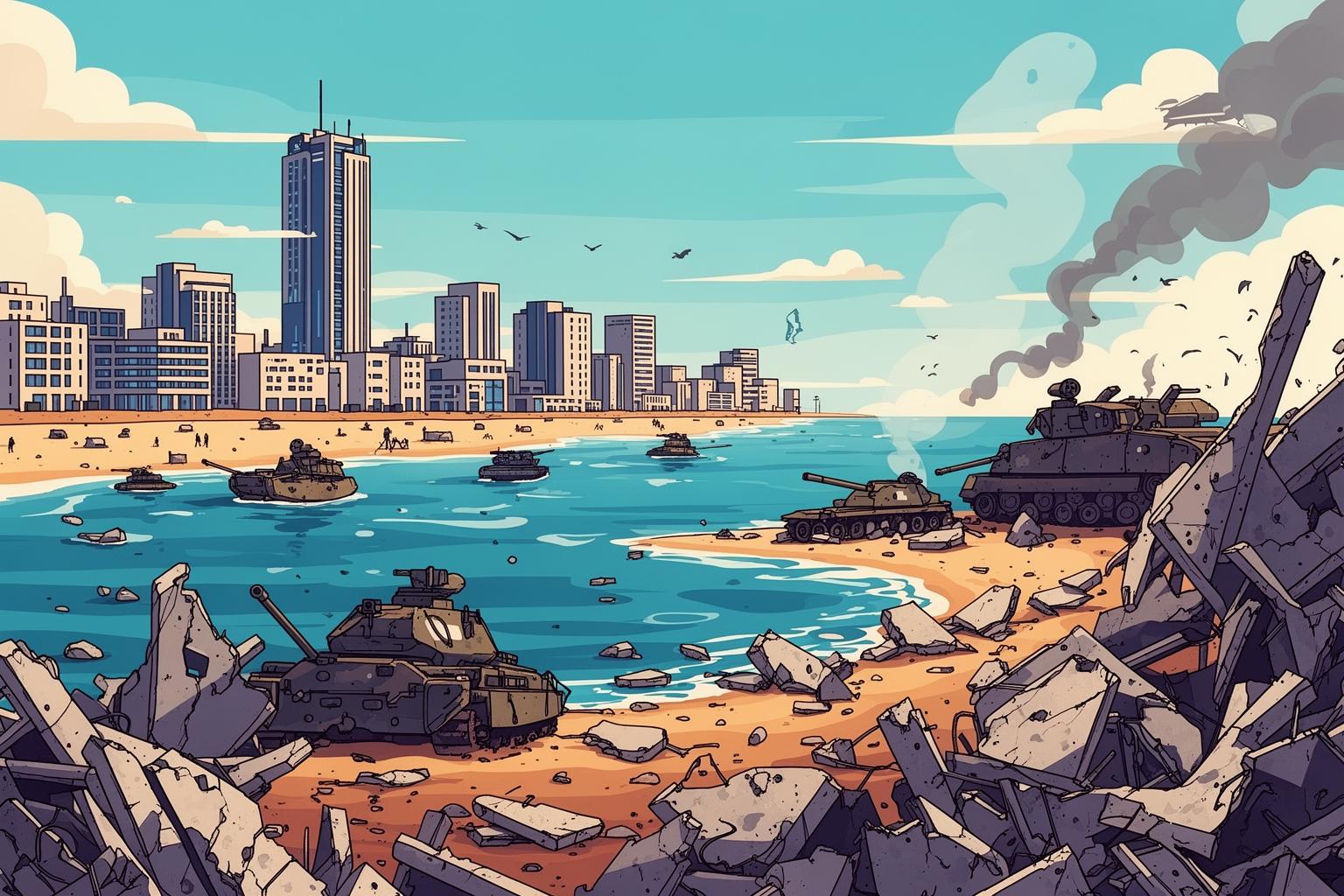
The journey of “Waltz with Bashir” starts not on a battlefield, but within the heart of modern Israel. In the film, Tel Aviv acts as an anchor to the present—a world of sleek glass skyscrapers, bustling traffic, and the relentless energy of a city that refuses to pause. It is here, inside this bubble of relentless modernity, that Ari Folman faces the vast emptiness in his memory. The city itself takes on the role of a character—a lively, almost defiantly ordinary backdrop against which the surreal and fragmented war flashbacks stand in stark contrast. Walking through Tel Aviv with Folman’s quest in mind means encountering this profound duality firsthand.
The city brims with life. The morning sun glistens on the iconic white Bauhaus facades along Rothschild Boulevard, a UNESCO World Heritage site, where cyclists and electric scooters navigate effortlessly between pedestrians savoring expertly brewed cappuccinos. The air carries the salty scent of the nearby Mediterranean mixed with the enticing aroma of falafel sizzling at street stalls. This is today’s Tel Aviv: cosmopolitan, creative, and forward-looking. It exists in a near-perpetual state of sunlit optimism, sharply contrasting the dark, ochre-and-khaki tones of Folman’s recovered memories.
The Bars and Cafes: Echoes of the Past
Folman’s investigation is intensely personal, unfolding not in archives or official offices but within the quiet intimacy of bars and the relaxed vibe of cafes. He reconnects with old comrades—now therapists, engineers, and entrepreneurs—spread throughout Israel. These dialogues, charged with a raw, graphic-novel intensity, drive the film’s narrative. To fully engage with this aspect of the journey, one must dive into Tel Aviv’s famed cafe culture. Find a seat in a bustling cafe along Sheinkin Street, known for its bohemian-chic atmosphere, or in a dimly lit bar in the Florentin district, the city’s gritty, artistic core. While nursing a Goldstar beer or a strong coffee, it’s easy to imagine the weight of the conversations once held in similar settings—men piecing together a shared past that haunts each differently. Here, the modern world creates space for the old to resurface. The clinking of plates, the murmur of voices, the steady pulse of music from a nearby speaker together form the soundtrack of a city rich with stories, many left unspoken.
A City of Contrasts and Memory
Beyond the trendy cafes, Tel Aviv’s soul emerges in its contrasts. A brief stroll from the gleaming skyscrapers brings you to the ancient port city of Jaffa (Yafo). Here, limestone alleys whisper stories spanning millennia. The sea breeze carries diverse scents—spices from the flea market, the salt from fishing nets, the fragrance of bougainvillea cascading over stone walls. Jaffa is a place where time feels layered and palpable, offering a historical depth that reminds visitors that this land has long been a crossroads of conflict and culture. Exploring the artists’ quarter, with galleries and studios nestled within historic buildings, feels like a dialogue between past and present—a motif that deeply aligns with the film’s temporal shifts.
For first-time visitors, a simple walk along the Tayelet, the city’s beachfront promenade, is indispensable. Stretching for miles, it links the modern northern hotels with Jaffa’s ancient stones to the south. Watching the sunset paint the sky in shades of orange and violet while waves rhythmically crash along the shore reveals the city in its most tranquil form. It is this very sea—the Mediterranean—that acts as a gateway to the war memories in Folman’s mind. This contrast is central to grasping the film’s psychological landscape. Tel Aviv is not just the journey’s starting point; it is the subconscious from which buried trauma must surface. It is the life constructed upon silence.
Crossing the Border: The Dreamlike Invasion
One of the most striking and unsettling elements of “Waltz with Bashir” is its portrayal of the Israeli invasion of Lebanon. The film presents this journey not as a calculated military campaign, but as a slow, hallucinatory drift into another realm. The soldiers, barely out of their teens, appear as passengers in a surreal dream, drifting through a landscape that is simultaneously beautiful and threatening. A crucial point for anyone wishing to follow this path is a harsh geopolitical reality: direct travel between Israel and Lebanon is impossible. The borders are sealed. Thus, this part of the pilgrimage is not physical but imaginative and historical, piecing together the visual and emotional tapestry that Folman masterfully weaves.
The Hallucinatory Seascape
The film is marked by recurring images of the sea. Perhaps the most memorable is the scene where Folman and his comrades emerge from dark waters onto a Lebanese beach, greeted by the chaos of war under the ghostly glow of flares. The Mediterranean coastline, stretching from northern Israel into Lebanon, serves as the tangible link between these two worlds. Though you cannot cross the border, you can stand on Israel’s northern beaches near Rosh Hanikra, where stunning white chalk cliffs meet turquoise waters. Gazing north toward the unseen Lebanese coast, one begins to sense the close physical proximity and the vast political divide that separates these lands. The sea, a seemingly endless expanse of beauty, becomes a symbol of the porous boundary between consciousness and subconsciousness, peace and war, life and death. The film uses this natural element to evoke a sense of disorientation. The soldiers are unmoored, drifting into a conflict they barely comprehend, with the sea serving as their gateway into the nightmare.
The Road to Beirut: A Journey Through an Animated Landscape
As Israeli forces advance deeper into Lebanon, the film’s landscape transforms. Folman animates the journey with haunting beauty. Soldiers’ tanks and armored personnel carriers roll past tranquil orange groves, the fruit glowing like lanterns in the dusty air. They move through Lebanese villages, some untouched, others marred by past conflicts. The animation captures the soldier’s subjective experience: a fragmented series of vignettes seen through the narrow slit of a vehicle. This segment of the journey centers on grasping the historical context. The 1982 invasion, called Operation Peace for Galilee, involved Israeli forces pushing north along the coastal road towards Beirut. The film’s visuals, with their rich colors and stark shadows, convey the strange mix of boredom, fear, and surreal detachment soldiers often describe. Visiting northern Israel or the southern regions of Lebanon near Beirut (separately, of course), one can witness the raw elements of these animated scenes: red earth, ancient olive trees, and the light falling across the hills. The film reminds us that this sun-drenched, beautiful landscape was the backdrop for immense human suffering—a land that holds the memory of convoys, checkpoints, and the rumble of engines that shattered the rural silence.
Beirut: The Heart of the Nightmare
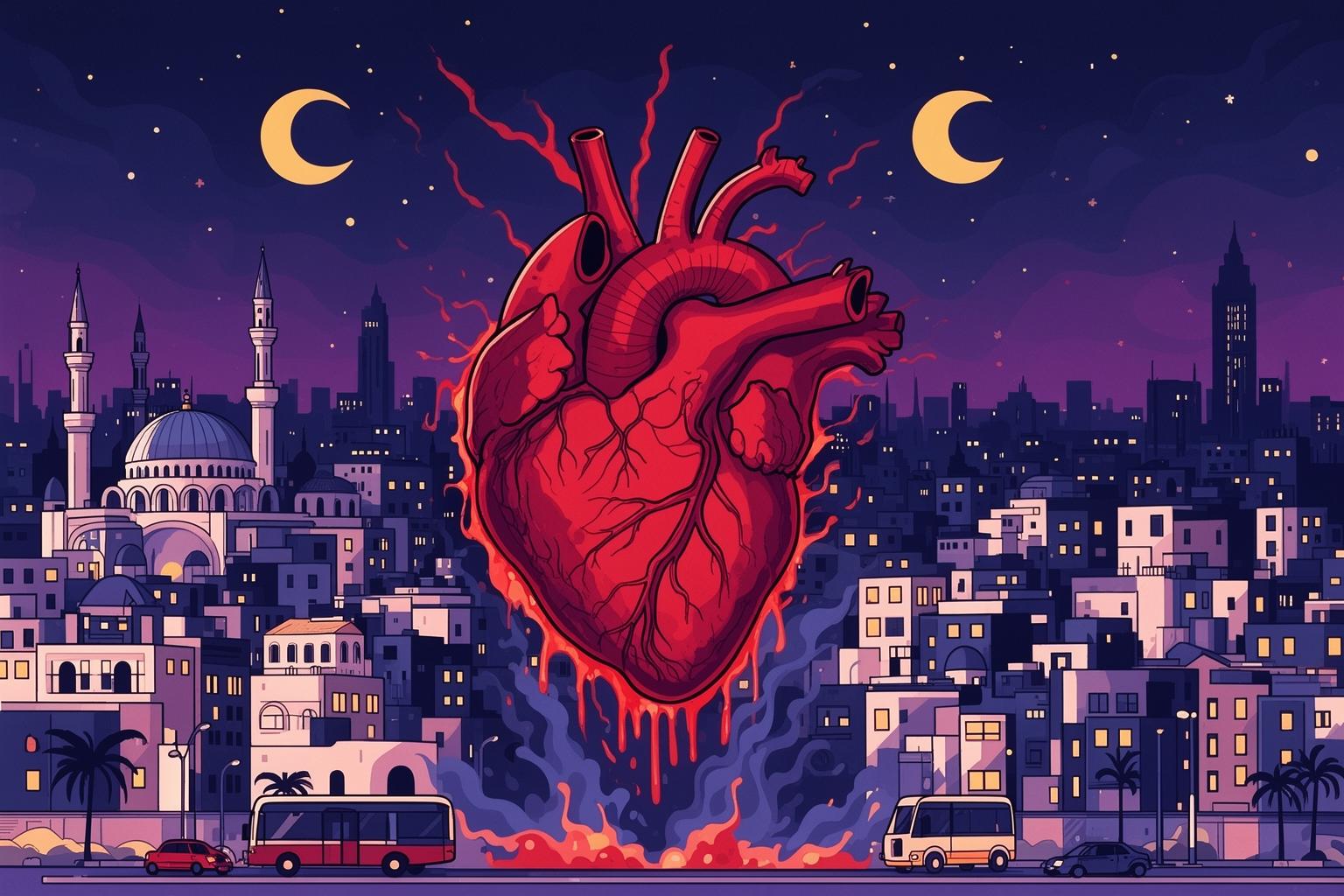
If Tel Aviv represents the present, Beirut embodies the past that refuses to be forgotten. The city serves as the film’s climax and the endpoint of Folman’s painful journey toward the truth. In 1982, Beirut was torn apart by a multifaceted civil war, transforming from a glamorous, cosmopolitan playground into a deadly urban battleground. Today, Beirut stands as a testament to resilience, painstakingly rebuilt, yet its history remains woven into its very fabric. Visiting Beirut in the context of “Waltz with Bashir” means confronting the film’s devastating conclusion directly, requiring sensitivity, respect, and a readiness to listen to the city’s complex narrative.
The Siege and the City
The film portrays Beirut under siege, with Israeli forces positioned on the hills overlooking the city and at the international airport. Soldiers, including Folman, observe the city from a distance, viewing it as an exotic, dangerous prize. The iconic scene of them lounging on the beach with the beleaguered city skyline behind them captures their detachment and the surreal nature of their situation. To better understand this perspective, visiting the hills around Beirut is enlightening. From these vantage points, one can see the dense urban sprawl pressed against the sea, a mix of modern skyscrapers and older, traditional neighborhoods. The city’s geographical containment and layout were crucial in the tragic unfolding of the war. Modern Beirut resonates with a symphony of sounds: the call to prayer from mosques blending with church bells, the continuous honking of traffic, and the lively hum of countless cafes and bars. The city pulses with vibrant energy. Yet, walking through areas like Hamra Street—once the intellectual and cultural center of the Arab world—reveals layers of history. Buildings scarred by bullets stand side-by-side with chic new boutiques, a silent, constant reminder of the civil war. This contrast defines Beirut—a city that celebrates in defiance of its tragic past, a place of deep sorrow and unyielding joy.
The Sabra and Shatila Camps: Bearing Witness
This is the most challenging and vital part of the pilgrimage. The Sabra and Shatila camps, located in Beirut’s southern suburbs, are the site of the 1982 massacre that marks the film’s horrifying climax. It is the memory Folman’s mind struggled so fiercely to suppress. The massacre was executed by the Christian Phalangist militia, allies of Israel, following the assassination of their leader, President-elect Bashir Gemayel. Israeli forces, controlling the area, surrounded the camps and lit flares into the sky, illuminating the slaughter. Folman’s recovered final memory is of himself as a young soldier, firing those very flares, unknowingly complicit.
Visiting the camps today demands the utmost gravity. This is no tourist site but a living, breathing, and deeply impoverished neighborhood home to Palestinian and Syrian refugees. It is a place of memory, trauma, and remarkable resilience. The most respectful way to visit is with a knowledgeable local guide who can provide context, navigate narrow alleyways, and ensure your presence is unobtrusive. Photography requires sensitivity; always ask permission and be prepared to be declined. The atmosphere is heavy with history. The cramped streets form a chaotic maze of tangled electrical wires, makeshift homes, and small shops. Walls are adorned with political murals, portraits of martyrs, and graffiti telling stories of struggle and identity. The Martyrs’ Cemetery stands as a solemn, powerful memorial to the victims. Standing there, reading names and dates, is profoundly moving. It is here that the film’s animated dream world dissolves. Folman famously ends by transitioning from animation to archival news footage of the massacre’s aftermath—a gut-wrenching refusal to offer the viewer any artistic distance. To stand in Sabra and Shatila is to stand at the core of that reality. It is to understand this was no dream; it happened here.
A City Reborn: Exploring Modern Beirut
After the somber visit to the camps, it is vital to experience Beirut’s other facets to appreciate the city’s full story. Its capacity for renewal is nothing short of miraculous. Spend an evening in the vibrant neighborhoods of Gemmayzeh or Mar Mikhael, where beautifully restored Ottoman-era buildings now house a dazzling array of art galleries, innovative restaurants, and lively bars. Walk along the Corniche, the city’s seaside promenade, and watch families enjoying the sunset, just as they do in Tel Aviv. It is a powerful symbol of shared humanity. Visit the National Museum of Beirut, which itself stood on the frontline during the civil war and has been lovingly restored. Its collection of ancient artifacts narrates Lebanon’s deep and rich history, far predating its modern conflicts. Exploring these parts of the city is not an act of ignoring the past but a tribute to the indomitable spirit of a people who refuse to be defined solely by their trauma.
The Psychology of Place: Memory, Trauma, and Animation
To journey through the landscapes of “Waltz with Bashir” is to understand that the film’s true setting extends beyond Israel or Lebanon, delving instead into the human mind. The physical locations serve as reflections of an inner world, shaped and distorted by trauma and the passage of time. Ari Folman’s decision to use animation was a masterstroke, the only medium capable of authentically capturing the fluid, unreliable, and often surreal nature of a recovered memory.
Why Animation?
The film’s distinctive visual style, characterized by sharp, dark lines, flat planes of color, and dreamlike movement, is not merely a stylistic choice; it is the expression of trauma. Memory is not an accurate recording but a reconstruction filled with gaps, inventions, and emotional hues. The animated landscape enables Folman to present the world as he felt it, rather than as it objectively was. The sky might turn a sickly yellow from the glow of a flare. A giant, naked woman might rise from the sea to carry a soldier to safety. Dogs might run in packs, their eyes glowing with primal terror. These are not literal events, but they resonate emotionally as truth. Animation grants Folman the freedom to project his psychological state onto the physical world. Thus, when you visit the actual locations, you encounter the raw material that the mind transformed into these powerful images. You see the beach and recall the giant goddess. You see Beirut’s dense urban landscape and remember the chaotic, terrifying waltz.
The Echo of the Waltz
The film’s title alludes to a scene in which a soldier, caught in a hail of sniper fire in the streets of Beirut, grabs his machine gun and fires wildly in every direction, spinning in a grim dance of death. Surrounding him are massive posters of the recently assassinated Bashir Gemayel, his smiling face providing a grotesque backdrop to the violence. This “waltz” serves as a perfect metaphor for the senseless, insane choreography of war. While you may not find the exact street corner of this scene, you can sense the environment that spawned it. Walking through the dense, narrow streets of a neighborhood like Achrafieh in Beirut, you are enclosed by balconies, windows, and rooftops—a sniper’s ideal perch. You feel the claustrophobia, the exposure from all sides. The city’s verticality and density become characters in their own right. The waltz reflects the individual’s mad response to an overwhelming and incomprehensible environment. It marks the moment the soldier’s psyche fractures, merging with the chaos of the city around him.
A Traveler’s Guide to a Difficult Journey
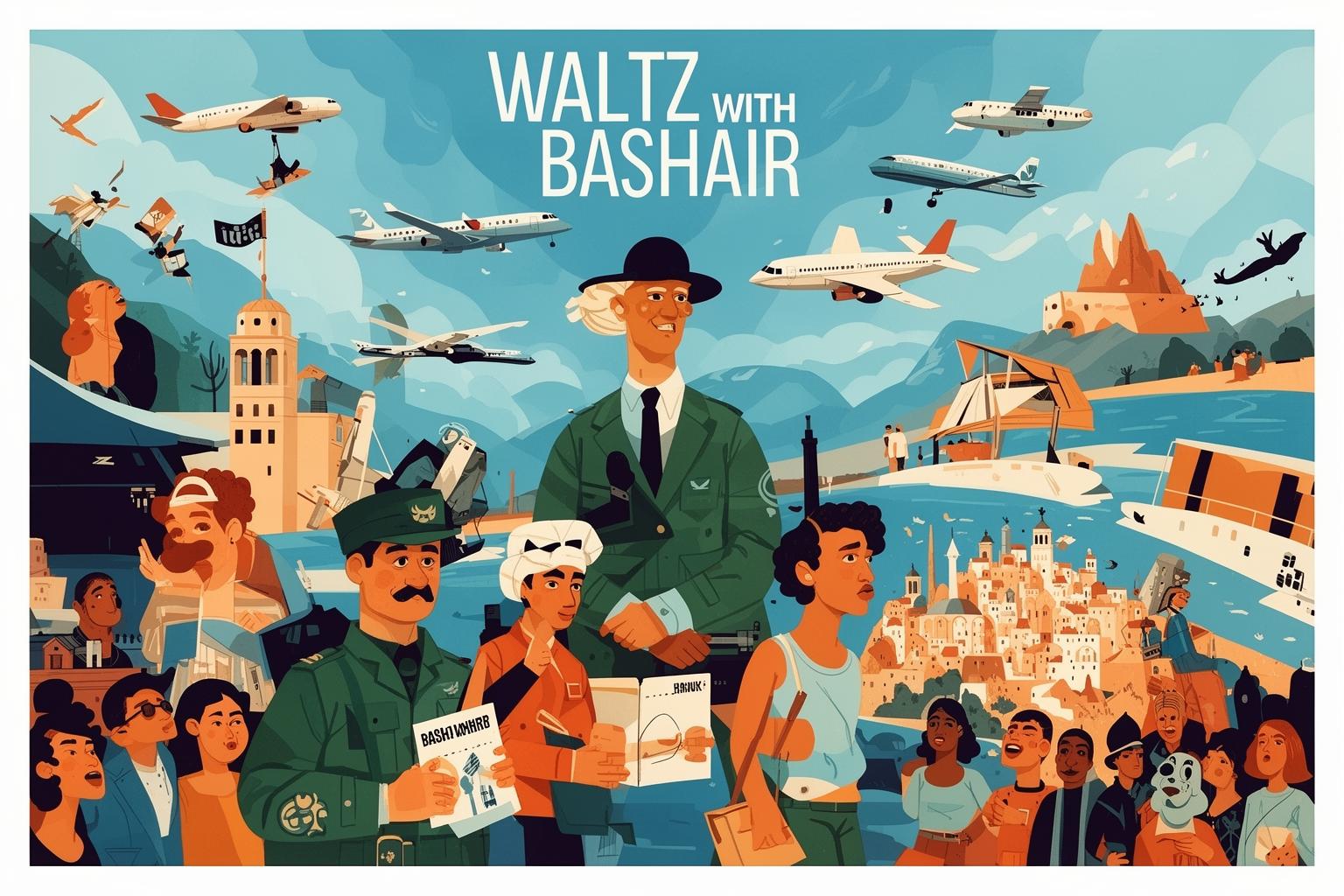
Embarking on a pilgrimage inspired by “Waltz with Bashir” demands careful planning, cultural sensitivity, and a keen awareness of the complex political realities in the region. This journey is far from simple or straightforward, yet it offers profound rewards for the thoughtful traveler.
Navigating the Geopolitical Landscape
It bears repeating: direct travel between Israel and Lebanon is not possible. The two countries remain officially at war, and the border is closed. Any sign of travel to Israel, such as an Israeli stamp in your passport, will prevent entry into Lebanon and many other Arab nations. Israeli authorities often accommodate by stamping a separate piece of paper upon request, but it is vital to check the latest regulations before you travel. To visit sites in both countries, you must plan two separate trips, flying from Israel to a third country such as Cyprus, Jordan, or Turkey before proceeding to Lebanon, or vice versa. Always consult your home country’s travel advisories for both destinations, as the security situation can be unpredictable.
Visiting Israel: Tel Aviv and Beyond
Tel Aviv is a modern, accessible city with Ben Gurion Airport serving as a major international gateway. The city is relatively compact and can be explored on foot, by bike, or using the excellent public buses and shared taxis (sheruts). English is widely spoken. The best periods to visit are spring (April-May) and autumn (September-October), when the weather is mild. Summers tend to be hot and humid, while winters can be cool and rainy. Immerse yourself in the city’s pace: enjoy long, leisurely breakfasts at cafes, spend afternoons on the beach, and experience the vibrant nightlife.
Visiting Lebanon: A Journey with Purpose
Beirut rewards travelers who are curious and respectful. Upon arrival at Beirut-Rafic Hariri International Airport, be prepared for immigration officials to inquire about any previous travel to Israel. Honesty is essential, but any evidence of travel to Israel will result in denial of entry. Once in the city, ride-sharing apps and licensed taxis are the easiest mode of transportation. Modesty in dress and behavior is appreciated, especially at religious sites or in more conservative areas. Learning simple Arabic phrases such as “Marhaba” (Hello) and “Shukran” (Thank you) will be warmly welcomed. When visiting sensitive sites like the Sabra and Shatila refugee camps, hiring a local guide is not only recommended but essential for both understanding and respecting the community. Lebanese cuisine is a highlight of any visit; be sure to savor the diverse mezze, grilled meats, and fresh seafood.
The Ethics of Memory Tourism
Visiting sites marked by conflict and tragedy carries significant ethical responsibilities. Often called “dark tourism,” this practice should focus on education and remembrance rather than voyeurism. When visiting places like the camps in Beirut, act as a silent, respectful witness. Listen more than you speak. Support the local community by hiring local guides and purchasing items from local shops. Recognize that you are a guest in a living space where people endure the lasting effects of the history you have come to learn about. Your visit can be a meaningful act of solidarity and refusal to let the past fade—as long as it is undertaken with humility and compassion.
“Waltz with Bashir” is a film that penetrates deeply into the soul and leaves an enduring impact. It compels us to confront uncomfortable truths about war, memory, and complicity. Traveling to the real locations depicted in its animated narrative extends this experience powerfully. The journey spans from the sunlit, determined present of Tel Aviv to the haunted, resilient heart of Beirut. It involves standing on a beach and imagining soldiers coming ashore or walking through a street hearing the faint echo of a terrible waltz. This pilgrimage offers no easy answers or simple catharsis. Instead, it provides a profound and deeply human connection to a story that needed telling and a past that must never be forgotten. It reminds us that the world is layered, every city functions as a living museum, and often the most important act of a traveler is simply to bear witness.