
Authored by Li Wei
Nine years after we left them on a Parisian balcony, and eighteen years after a fateful train ride from Budapest, Richard Linklater brought us the final, sun-drenched chapter of a cinematic love story that defined a generation. “Before Midnight” finds Jesse and Celine, now in their early forties with twin daughters in tow, navigating the complex realities of long-term partnership, faded romance, and the heavy weight of shared history. The film trades the youthful idealism of Vienna and the rekindled passion of Paris for something far more potent and real: a six-week summer holiday on the Peloponnese peninsula in southern Greece. This landscape, ancient, rugged, and breathtakingly beautiful, becomes more than just a backdrop; it’s a silent character, a crucible where their relationship is tested by the relentless Mediterranean sun and the ghosts of their past selves. This is not just a travel guide; it is an invitation to walk in their footsteps, to feel the Grecian heat on your skin, and to listen for the echoes of their conversations in the quiet olive groves and cobblestone streets. We will journey through the idyllic coastal villages, the majestic ruins, and the luxurious resort that framed the film’s most poignant and powerful moments. It’s a pilgrimage for lovers of the film, yes, but also for anyone who understands that love, like the ancient Greek ruins dotting the landscape, is a beautiful, complicated, and enduring structure that requires constant excavation and rediscovery. Prepare to immerse yourself in the world of Messenia, a region where every sunset feels like a scene from a movie and every winding road holds the promise of a profound conversation.
If you’re inspired to embark on a cinematic pilgrimage of your own, consider chasing the sun along the iconic route of “Little Miss Sunshine”.
The Heart of the Film: Kardamyli and the Mani Peninsula
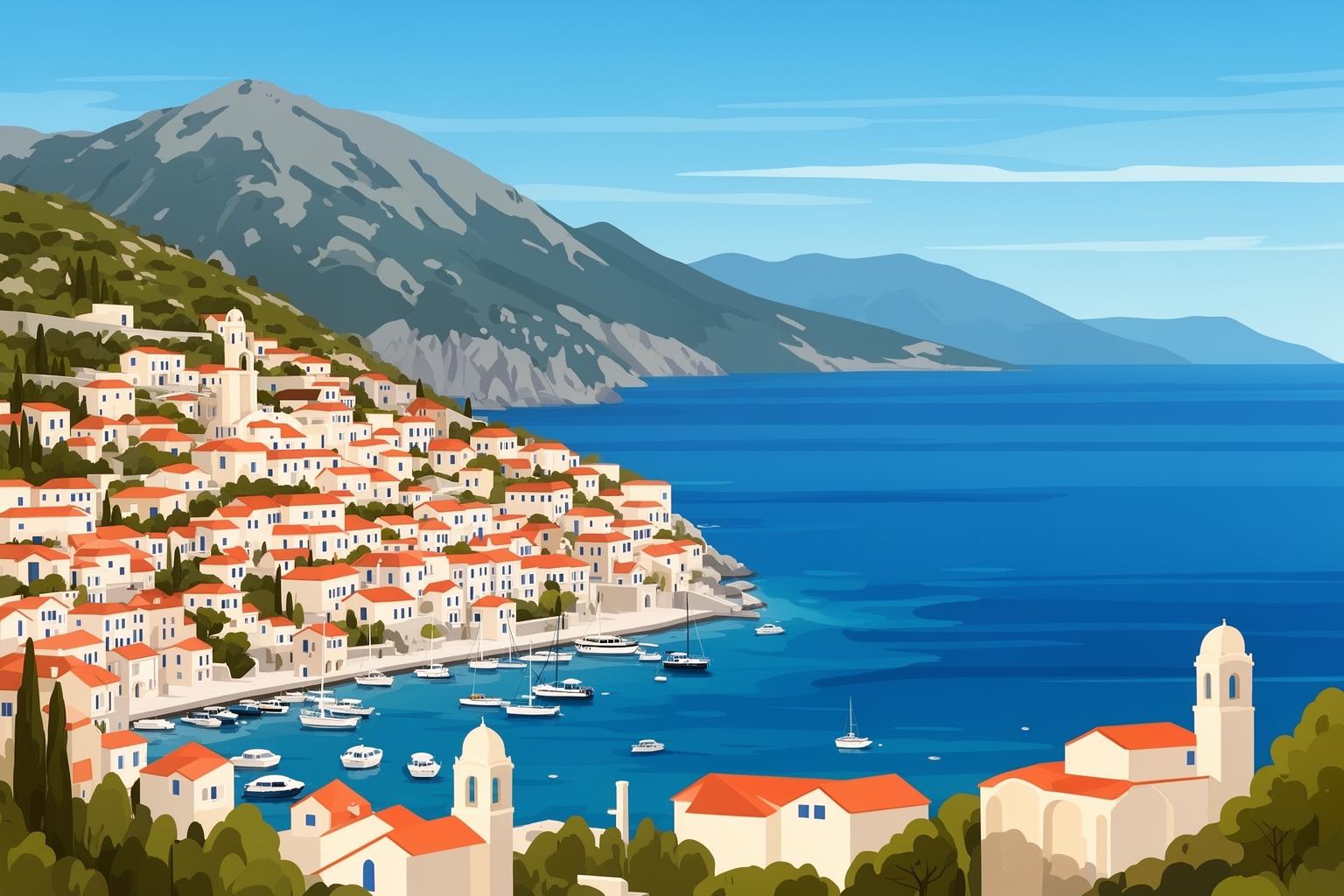
The essence of “Before Midnight” lies in the sleepy, irresistibly charming coastal village of Kardamyli. Nestled on the Mani Peninsula, a wild and historically rebellious stretch of land jutting south into the Mediterranean, Kardamyli is where the film’s languorous summer takes place. This is not the Greece of bustling, whitewashed islands overrun by cruise ships. Instead, it embodies a deeper, more elemental Greece. The village is dramatically set between the imposing Taygetos mountains and the deep blue waters of the Messenian Gulf. The air here is distinct, heavy with the fragrance of wild oregano, salt, and blooming bougainvillea. Life moves slowly, paced by the rising and setting of a sun that seems to shine a bit more fiercely here. Stone houses topped with terracotta tiles cascade down the hillside, their gardens brimming with olive and cypress trees. The beaches aren’t vast stretches of sand, but intimate coves dotted with smooth white pebbles, caressed by water so clear that every stone on the seabed is visible. This is the world Jesse and Celine inhabit during their summer retreat—a seemingly perfect paradise that quietly sets the stage for their internal struggles. The town itself feels like a perfectly preserved secret, a place where time has softened every edge, making it the ideal backdrop for a story about two people confronting the sharp truths of their shared past. It’s in the quiet moments here—a knowing glance over breakfast, a stroll to the local bakery, a dip in the sea—that the film captures the deep, lived-in comfort of their life together, a comfort that is soon to be disrupted.
Patrick Leigh Fermor’s Villa: A Writer’s Haven
The heart of the characters’ Greek summer, the magnificent villa where they stay with their host Patrick, is steeped in literary and bohemian heritage. This is the actual home of the renowned British travel writer and adventurer, Sir Patrick Leigh Fermor. Located just outside Kardamyli in the hamlet of Kalamitsi, the house is a stunning example of rustic modernism, designed by Fermor in collaboration with architect Nikos Hatzimichalis. It is a sprawling stone estate built harmoniously into the landscape, its walls embracing the gentle slope down to a private stretch of sea. The film offers tantalizing glimpses of its enchantment: sun-dappled courtyards, cool stone-floored interiors lined with thousands of books, and most famously, the grand terrace overlooking the water. On this very terrace unfolds one of the film’s most unforgettable scenes: a long, meandering alfresco dinner. Here, Jesse and Celine, surrounded by friends across generations, engage in an expansive conversation about love, sex, life, and mortality. The atmosphere is intoxicating. As the sun sets, casting a golden glow over the olive trees, the characters toast with wine, share stories, and debate the nature of human connection. The Fermor house is more than just a location—it is an intellectual and spiritual sanctuary. It symbolizes a life devoted to art, conversation, and deep engagement with the world, a life Jesse, a writer himself, deeply yearns for. For any pilgrim to the region, this villa is a treasure. Following Fermor’s death, the property was bequeathed to the Benaki Museum, which now manages it. The villa can be rented for stays, offering a rare chance to live within the film’s world, or visited during scheduled tours. Standing on that terrace is to sense the presence of both the fictional characters and the extraordinary real-life figure who created this refuge.
Wandering Through Old Kardamyli
Beyond the villa’s sanctuary, the film tracks Jesse and Celine on a series of walks through Kardamyli, continuing the trilogy’s hallmark of profound conversations unfolding against a shifting backdrop. These scenes mainly take place in Palia (Old) Kardamyli, a historic, partly abandoned settlement perched on the hill just above the modern village. Walking here is like stepping through a portal to another era. The charming coastal town gives way to a fortified cluster of medieval tower houses, a testament to Mani’s famously fierce and independent heritage. The air becomes still and quiet, with only the hum of cicadas and the crunch of footsteps on ancient stone paths breaking the silence. Jesse and Celine meander through narrow, winding alleys, their dialogue fluidly shifting from lighthearted banter to the first signs of serious conflict. The camera follows them past the striking 18th-century Byzantine church of Agios Spyridon, its bell tower a well-known local landmark. The stone walls, crumbling in places and overgrown with persistent greenery, serve as a powerful visual metaphor for their relationship—a structure that is old, strong, and deeply entwined, yet showing hints of wear and fragility. Visiting Old Kardamyli allows you to trace their steps precisely—you can stand where they paused, pass under the archways they crossed, and admire the sea views they gazed upon. It’s a quiet, reflective experience that lets you feel the weight of history—both the region’s and the characters’—that permeates the film. The atmosphere is saturated with romantic melancholy, an ideal setting for contemplating the movie’s core themes of time, memory, and the enduring, often challenging, journey of love.
Beyond Kardamyli: Exploring the Messenian Landscape
While Kardamyli serves as the film’s emotional heart, the story broadens and gains life as the characters explore the expansive Messenian landscape. The film is marked by car journeys along serpentine coastal roads, presenting breathtaking views that are as vital to its texture as the renowned dialogue. These drives are not mere transitions but scenes in their own right—mobile settings for some of the most raw and realistic conversations ever portrayed about marriage and parenthood. The region’s striking geography—with its rugged cliffs dropping into turquoise waters and hills blanketed by a silver-green sea of olive groves—offers a stunning, constant backdrop. To truly embark on a “Before Midnight” pilgrimage, exploring this terrain is crucial, as it’s in these broader spaces that the characters face the vastness of history alongside the intimate confines of their own lives.
The Ancient Ruins of Messene
One of the film’s most visually and thematically important excursions takes Jesse, Celine, and their friends to the archaeological site of Ancient Messene. This is not merely a quick tourist stop but a moment for the film to reflect on its grandest themes. Unlike more famous ruins such as the Acropolis, Ancient Messene is an extensive, remarkably well-preserved city complex nestled in a serene, bowl-shaped valley. As the characters wander through the massive stadium, amphitheater, and remains of temples and public buildings, their conversation naturally turns to time, legacy, and the ephemeral nature of human effort. Jesse, the romantic novelist, sees stories etched in the stones, while Celine, the pragmatic environmentalist, perceives the long, slow march of history that overshadows their individual concerns. The location itself is awe-inspiring—you can walk the length of the ancient stadium where athletes once competed or sit on stone theater seats and imagine performances of long ago. The sheer scale and preservation provide a visceral feeling of a living, breathing classical city. The film uses this setting masterfully, contrasting the monumental permanence of the ruins with the fragile, fleeting nature of the characters’ lives and relationships. For visitors, a trip to Ancient Messene is a profound experience. It’s best to follow the film’s example and visit in the gentle light of late afternoon, when crowds thin and the stones glow warmly. The site invites contemplation, making it a perfect place to consider the film’s central question: in the grand sweep of history, what significance does one small love story truly hold?
The Drive and the ‘Time Machine’ Conversation
Perhaps the most quintessential moments of the entire “Before” trilogy unfold inside a car. The long, continuous take of Jesse and Celine driving back to the villa after dropping his son, Hank, at the airport, is a masterpiece of filmmaking and a brutally honest portrayal of a modern relationship. As they navigate the twisting roads of the Mani Peninsula, their conversation shifts from playful teasing to deep, entrenched resentments, touching on career regrets, parenting responsibilities, and the yearning to be seen and valued by one’s partner. The scenery outside the car windows is relentlessly beautiful, starkly contrasting the emotional claustrophobia building within. The drive highlights the spectacular coastal highway running south from Kalamata toward Kardamyli and beyond. To fully experience this part of the pilgrimage, renting a car is not optional but essential. It offers the freedom to retrace the journey, feel the tight bends of the road, and stop at the many scenic viewpoints to admire the same breathtaking vistas that accompany Jesse and Celine’s emotional revelations. Here, the landscape feels almost like a character—wild, untamed, and unforgiving, much like the truths the couple begins to voice. The drive is also an opportunity to reflect on the film’s famous ‘time machine’ fantasy—if given the chance, would you change anything? As you drive this road, with the deep blue sea on one side and rugged mountains on the other, it’s easy to sense traveling through a landscape that acts as a kind of time machine—a place where the ancient past and the present moment continually engage in dramatic dialogue.
The Final Act: Pylos and the Westin Resort Costa Navarino

For its dramatic and emotionally intense third act, the film relocates westward from the rustic Mani Peninsula to the more developed and refined coastline near Pylos. This geographic shift reflects a notable change in tone. The laid-back, communal, bohemian atmosphere of Kardamyli gives way to the secluded, modern luxury of an upscale resort. The setting grows more closed-off, compelling Jesse and Celine into a confrontation they can no longer avoid. Pylos itself is a beautiful, historic port built around the stunning Navarino Bay, the site of a decisive 19th-century naval battle that contributed to Greek independence. Its waterfront is dotted with cafes and tavernas, and a large, tree-shaded central square offers a warm, vibrant ambiance. Yet, it is a specific spot just outside this charming town that serves as the crucible for the film’s climax.
A Night at ‘The Hotel Room’
Their friends give Jesse and Celine a night away from the children at a luxury hotel, a gesture meant to rekindle their romance. The hotel is the real-life Westin Resort, Costa Navarino, a vast five-star complex famous for its world-class golf courses, pristine pools, and sleek, minimalist design. The contrast with Patrick Leigh Fermor’s soulful, history-rich villa is striking. Their hotel room, though beautiful and lavish, feels anonymous and impersonal. It lacks the warmth and lived-in character of the villa, creating a sterile, pressure-cooker environment perfect for the argument that has been building throughout the film. The renowned 30-minute hotel room scene is a raw, unflinching, and painfully realistic portrayal of a relationship in crisis. All their pent-up resentments, frustrations, and disappointments spill forth within the suite’s pristine, beige walls. The luxury intended as a romantic escape becomes a gilded cage. For fans and visitors, Costa Navarino stands as a major landmark. Staying at the resort is costly but offers the chance to experience the exact setting of the film’s climax. Visitors can walk the manicured grounds, dine at the restaurants, and, if booking a similar suite, stand where Jesse and Celine’s relationship was pushed to its limits. The resort embodies a very different side of Greece than Kardamyli—a modern, globalized, and meticulously curated world that ultimately feels alien to the messy, authentic connection the couple struggles to preserve.
The Walk of Reconciliation: Pylos Harbor
Following the devastating fight, Jesse finds Celine at an outdoor cafe along Pylos’s waterfront. This is where the film’s final, hopeful scene unfolds. The setting is vital to the resolution. They are no longer confined by the sterile hotel room; they have stepped back into the real, living world. The gentle night air, the soft glow of streetlights, the clinking of glasses from nearby tavernas, and the quiet lapping of water against the harbor wall combine to create an atmosphere of calm and possibility. Using his charm and wit, Jesse seeks to bridge the gap between them, weaving a fantasy linked to his ‘time traveler’ persona. As they sit at the table and then gradually walk along the harbor, the tension begins to ease. The Pylos waterfront offers the open space they need to reconnect. Though a public setting, they carve out their own private world within it—a skill they have honed over two decades. This final walk has become a pilgrimage for many. Visitors can easily emulate it: spend an evening in Pylos, find an outdoor cafe by the harbor, and simply watch the world pass by. Then take a slow stroll along the water’s edge. It is here, in this simple, beautiful place, that the film leaves us with a glimmer of hope, suggesting that even after the harshest storms, love can find a way to begin again, one tentative step at a time.
A Practical Guide to Your ‘Before Midnight’ Pilgrimage
Setting out to visit the filming locations of “Before Midnight” is about more than merely sightseeing; it’s about fully immersing yourself in the ambiance and rhythm of life in Messenia. This part of Greece enchants the soul, and with some thoughtful planning, you can experience its charm in a way that feels both genuine and deeply connected to the film’s essence. The secret is to embrace the unhurried pace, giving yourself time to converse, reflect, and simply be present in the breathtaking surroundings, just as the characters did.
Getting There and Around
The easiest entry point to the area is Kalamata International Airport (KLX), which receives seasonal flights from many European cities. From there, Kardamyli is roughly an hour’s drive. Another option is Athens International Airport (ATH), which has more consistent international flights year-round. The drive from Athens to Kardamyli takes about three to four hours, offering a scenic route across the Peloponnese. To fully explore the film’s locations, renting a car is essential. Public transportation is limited, and having a car lets you freely navigate the winding coastal roads, uncover hidden coves, and travel at your own pace between Kardamyli, Ancient Messene, and Pylos. Driving in the Mani Peninsula can be an adventure with narrow, cliffside roads, but the stunning views make it well worth the effort.
When to Visit
To experience the idyllic, sunlit yet pleasantly mild atmosphere depicted in the film, the best times to visit are late spring (May and June) or early autumn (September and October). During these months, the weather is warm and sunny, the sea ideal for swimming, and the landscape lush and vibrant. You’ll also avoid the heavy crowds and intense heat of July and August. This creates a more relaxed experience, closer to the languorous summer holiday shown in the movie. The light during these shoulder seasons is especially beautiful, perfect for photography or simply soaking in the views from a seaside taverna.
Embracing the Messenian Pace
The most crucial advice for this journey is to slow down. “Before Midnight” is a film based on long takes and even longer conversations. Life in Messenia moves at a similar tempo. Don’t rush from one spot to another. Instead, allow unstructured time in your schedule. Spend an entire afternoon on a pebble beach with a good book. Linger for hours over a lunch of fresh fish drizzled with local olive oil. Take aimless walks without a fixed destination. Sit at a café in Kardamyli’s main square and watch the world pass by. The magic of this region, and of the film itself, lies in these quiet, in-between moments. By adopting the local pace, you move beyond being a tourist who checks off sites to becoming a traveler who truly connects with the soul of a place.
The Enduring Magic of Messenia

Watching “Before Midnight” is like being transported not only into the lives of two cherished characters but also into the very heart of a landscape as timeless and intricate as their love story. Choosing Messenia as the film’s setting was a brilliant decision. This land, rich in myth and history, feels vividly connected to the ancient world. The sun-bleached ruins, twisted thousand-year-old olive trees, and rugged, unyielding mountains create a perfect metaphorical backdrop for a relationship that has lasted nearly two decades. The breathtaking beauty of the Greek coast provides a poignant contrast to the raw, messy, and deeply honest human drama that unfolds, reminding us that even amid stunning surroundings, life’s toughest conversations remain essential. The magic of this journey lies in experiencing that very contrast. You will be overwhelmed by the sheer beauty of the Messenian Gulf, while simultaneously reflecting on the complexities of your own life and relationships. Jesse and Celine’s story shows that romance isn’t about flawless perfection; it’s about discovering moments of grace, humor, and connection amidst the inevitable chaos of a shared life. To visit these places is to walk through both chaos and beauty, to stand where they fought and forgave, and to gain a deeper appreciation for the enduring, imperfect, and magnificent journey of love itself.