
Life, as a certain beloved philosopher once told us from a park bench, is like a box of chocolates. You never know what you’re gonna get. The 1994 film Forrest Gump offered this simple yet profound wisdom, capturing the hearts of millions and embedding itself into the fabric of American culture. It was more than a movie; it was a sweeping, sentimental journey through the latter half of the 20th century, seen through the impossibly innocent eyes of its protagonist. Forrest, with his unwavering loyalty and accidental presence at pivotal historical moments, didn’t just tell us a story—he ran, rowed, and stumbled his way across the American landscape, turning real-world locations into iconic touchstones of his incredible life. This journey wasn’t confined to a Hollywood backlot. It unfolded across the sun-drenched avenues of the South, the majestic deserts of the West, and the hallowed halls of Washington D.C. To follow in Forrest’s footsteps is to embark on a pilgrimage, not just to filming locations, but into the very heart of the American story he so beautifully narrated. This guide is your map, your invitation to sit on that bench, to run down that open road, and to see the world as Forrest saw it: a place of endless possibility, profound connection, and unexpected grace. From the fictional town of Greenbow, Alabama, to the reflective waters of the Lincoln Memorial, we will trace the path of a man who proved that anyone, no matter how simple, can live a life of consequence. Prepare to discover the tangible places that brought this cinematic fable to life, and in doing so, perhaps rediscover a piece of America’s soul, and your own.
If you’re inspired to explore other cinematic pilgrimages, consider the visceral journey through Rio’s cinematic underbelly.
The Heart of Greenbow, Alabama: Varnville, South Carolina
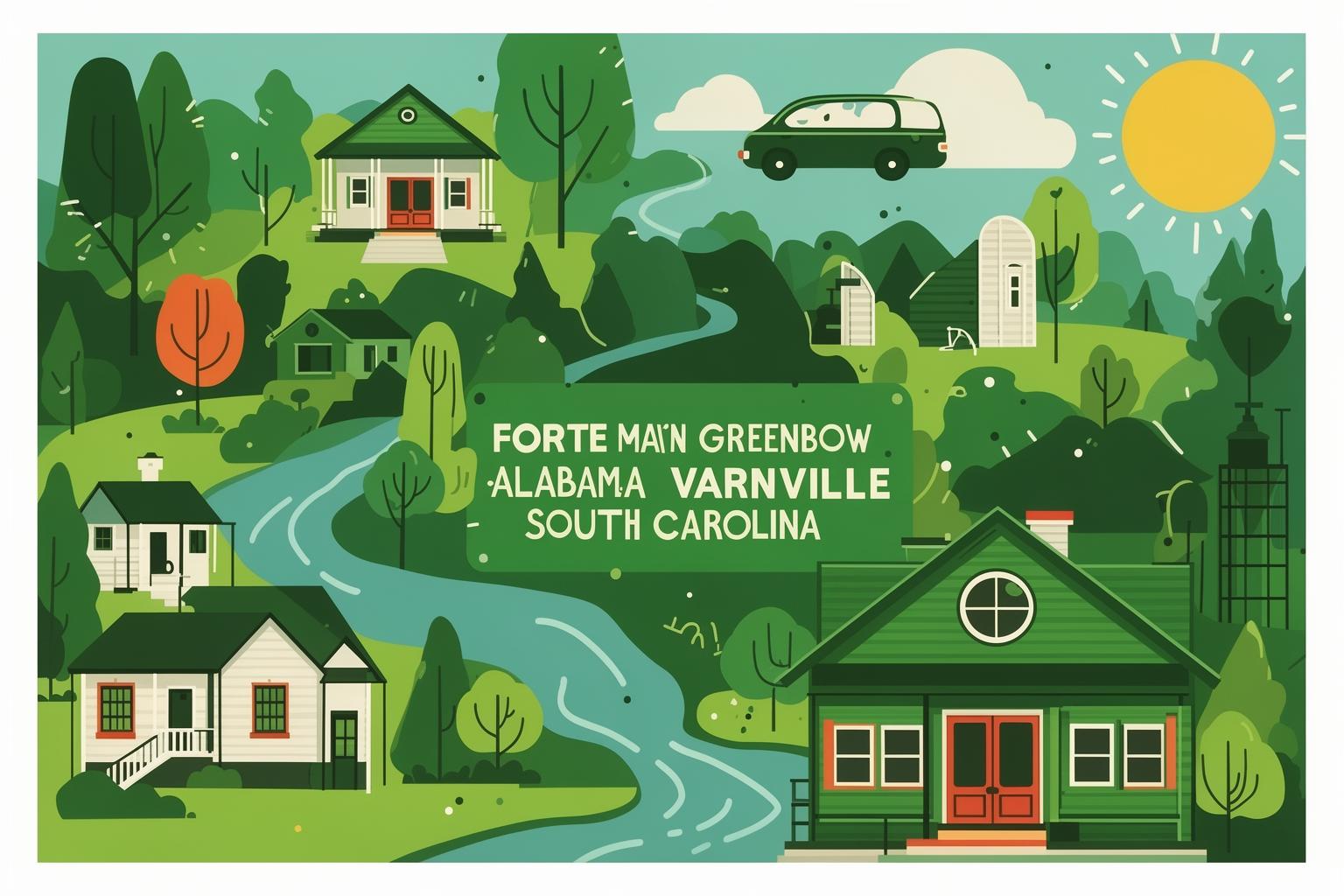
Forrest Gump’s story both begins and ends in the fictional town of Greenbow, Alabama, which exists in our collective memory as the epitome of a Southern small town. It is the cradle of his childhood, the foundation of his steadfast moral compass, and the safe harbor to which he always returns. Yet, to discover the true Greenbow, one must journey not to Alabama, but to the Lowcountry of South Carolina. The filmmakers found the perfect embodiment of their vision in and around the small town of Varnville, a place rich in Southern charm and quiet history. Its tranquil streets, classic architecture, and lush greenery offered an authentic setting that grounded Forrest’s extraordinary life in a believable and relatable reality. Varnville and its surrounding areas became the canvas for the early, formative scenes of Forrest’s life—from his mother’s boarding house to his momentous first encounter with Jenny Curran.
Gump’s Boarding House
The Gump Boarding House stands as arguably the most significant location in the film. It is more than a home; it serves as a sanctuary and a school of life run by the indomitable Mrs. Gump. It is where Forrest learns his most important lessons about life, destiny, and the truth behind “stupid is as stupid does.” The expansive, welcoming farmhouse—with its broad porch and surrounding oaks—was a set constructed specifically for the movie. It was built on part of the Bluff Plantation, a private property just south of Varnville. The filmmakers selected this site for its picturesque isolation and its quintessential Southern aesthetic. The house was meticulously crafted to appear as if it had stood for generations, silently witnessing the Gump family’s history. After filming finished, the house was dismantled because it was hastily built and not up to code. Today, nothing remains of the structure. The land where it once stood is now an open field, bordered by the same majestic trees that shaded Forrest and his mother. Though the exact site is not visitable, driving the rural roads of Colleton and Hampton Counties allows you to feel the atmosphere the filmmakers aimed to capture. The air is thick with the scent of pine and damp earth; the landscape is a patchwork of fields and forests; and the timeless quality that defined the Gump home permeates the entire region. The house may be gone, but the spirit of the place—the sense of a safe haven amid a chaotic world—lingers in the South Carolina Lowcountry.
The School Bus Stop
“You can’t sit here.” The rejection from his peers on the school bus is one of the film’s earliest and most poignant moments, starkly emphasizing Forrest’s otherness. But it is quickly followed by one of the most pivotal invitations of his life: “You can sit here if you want.” Jenny Curran’s simple act of kindness on that dusty roadside marks the beginning of their lifelong, complicated bond. This iconic scene, which truly launches their shared journey, was filmed on a quiet, unassuming stretch of road. The location lies on private land within the same Bluff Plantation where the Gump house was built. The dirt road where Forrest waits for the bus, shaded by a sprawling oak, is a quintessential image of rural Southern life. While the exact tree and spot are not publicly accessible, the character of the location is reflected in countless similar backroads in the area. These roads, often unpaved and lined with ancient, moss-draped live oaks, form a canopy that filters the harsh Southern sun, creating dappled, dreamlike light. It is a landscape that feels both beautiful and lonely, perfectly capturing Forrest’s childhood experience. Traveling these roads allows one to understand his sense of isolation, but also to appreciate the profound impact a single friendly voice could have in such a quiet world. The bus stop was more than just a place to catch a ride; it was the intersection of two destinies, a simple patch of dirt where the most important relationship in Forrest’s life began.
Downtown Greenbow
The town of Greenbow, where Forrest learns to dance, runs from bullies, and witnesses the daily rhythms of Southern life, was brought to life in downtown Varnville, South Carolina. Main Street in Varnville served as the primary filming location for the town’s commercial district. The filmmakers were drawn to its preserved mid-century architecture, which needed very little set dressing to convincingly portray a small Alabama town from the 1950s and 60s. Walking down Main Street today, one can still recognize the storefronts and buildings featured in the film. The spot where a young Forrest, wearing leg braces, is captivated by a television in a store window playing Elvis Presley remains intact. The scene where an older Forrest, now a local hero, is offered a haircut at the barbershop was filmed in a real, functioning barbershop. Many local businesses and residents served as extras, adding authenticity to the scenes. Varnville exudes a quiet, unhurried charm; it’s a town where time seems to move a little slower—a place of front-porch conversations and neighborly waves. This atmosphere was vital to the film, as Greenbow needed to feel like a real, tangible place—a constant in Forrest’s ever-changing life. Varnville provided that anchor. Visiting here is like stepping back in time, offering a glimpse into the kind of community that shaped the unshakeable character of Forrest Gump.
A Bench in Savannah: Chippewa Square, Georgia
If Greenbow represents the heart of Forrest’s world, then a simple park bench in Savannah, Georgia, serves as its soul. From this vantage point, Forrest recounts his life story to an ever-changing audience of strangers, weaving an extraordinary tale of love, loss, and serendipity. This narrative device stands as one of the film’s most ingenious elements, and its physical location, Chippewa Square, has become one of the most iconic filming sites in cinematic history. Savannah, with its romantic gothic charm, manicured squares, and canopy of Spanish moss, offers the ideal, slightly surreal backdrop for Forrest’s incredible yet profoundly human story. The city itself assumes the role of a character, its timeless beauty mirroring the enduring spirit of Forrest.
The Storytelling Bench
The bench where Forrest waits for the bus, box of chocolates in hand, was placed on the north side of Chippewa Square, facing Bull Street. From this spot, he could observe the passing world, each new visitor on the bench a chance to share a chapter of his life. Yet, visitors to Chippewa Square today will not find the famous bench in its original place. It was a movie prop, one of four used during filming, as Savannah’s historic squares did not originally feature benches arranged that way. After filming concluded, one of the original benches was donated to the city and is now displayed at the Savannah History Museum, where guests can view it and even sit on it for photos. The location where the bench once stood in Chippewa Square is now a small garden plot, but the site is unmistakable. Standing there, you can still see the view Forrest enjoyed: the historic Savannah Theatre to the right, the Independent Presbyterian Church off in the distance, and the statue of General James Oglethorpe, Georgia’s founder, at the square’s center. The lack of the bench hardly diminishes the magic of the spot. The square itself remains a peaceful oasis, shaded by majestic live oaks. The air carries the gentle hum of the city, the clip-clop of horse-drawn carriages, and the fragrance of blooming magnolias. It invites reflection—a perfect place to sit and ponder one’s own life story. Though the bench resides in a museum, the spirit of storytelling remains deeply rooted in the fertile ground of Chippewa Square.
Experiencing Savannah
A visit to Chippewa Square offers a chance to fully immerse yourself in the enchanting city of Savannah. This is a destination best enjoyed unhurried. Walking allows you to lose yourself in its grid of 22 historic squares, each with a distinct personality and charm. From Chippewa, a short stroll leads to Forsyth Park, with its iconic fountain and expansive green spaces, or northward toward the Savannah River, where cobblestone streets and historic warehouses line River Street. The city’s architecture is a stunning fusion of Georgian, Regency, and Gothic Revival styles, featuring hidden courtyards, intricate ironwork, and grand facades at every turn. To truly capture Savannah’s atmosphere, consider a guided walking tour, perhaps one centered on its famous ghost stories, whispered by ancient trees and historic homes. The best seasons to visit are spring or fall, when the weather is mild and the city’s flora is vibrant. For newcomers, one piece of advice: slow down. Embrace the Southern pace. Find a bench in any square, listen to the city’s rhythms, and let its history and beauty envelop you. Forrest chose this city to tell his story for good reason. Savannah is a city of stories, where past and present coexist in a beautiful, wistful dance—much like the memories Forrest shares from his spot on the bench.
Run, Forrest, Run!: The Cross-Country Journey
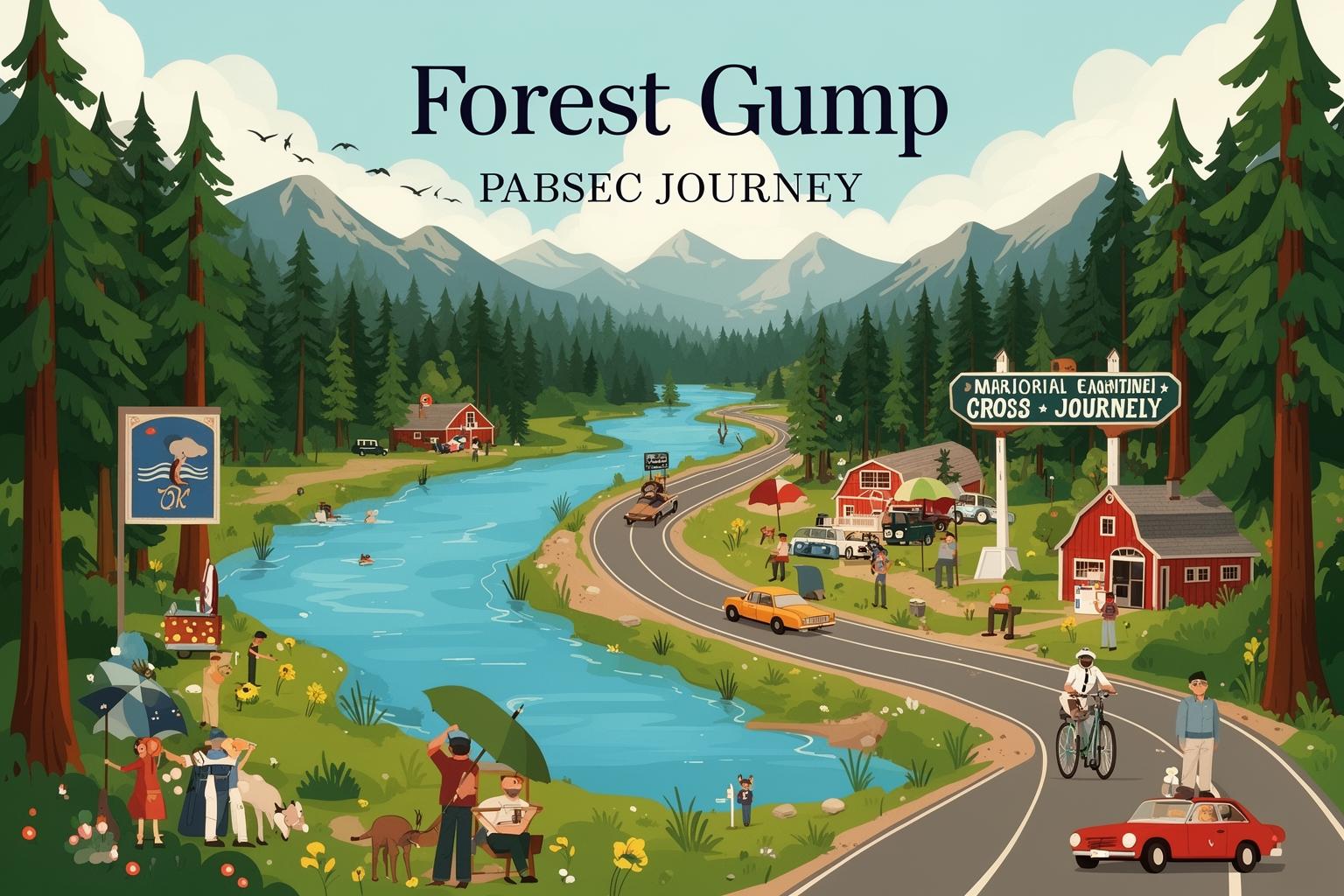
“That day, without any particular reason, I decided to go for a short run.” With this straightforward statement, Forrest Gump begins one of the most iconic cinematic journeys ever captured. His cross-country run, which lasts three years, two months, fourteen days, and sixteen hours, serves as a visual metaphor for his passage through grief and confusion following Jenny’s loss. This montage highlights the stunning diversity and vastness of the American landscape, transforming Forrest from a local hero into a national legend. The epic sequence was achieved not through digital effects but by filming on location across the United States, from the southern coastal bridges to the grand vistas of the West. Tracing Forrest’s running route is, in essence, a comprehensive tour of America itself.
The Starting Point: South Carolina’s Lowcountry
Forrest’s run begins in the familiar southern region. One of the journey’s earliest and most memorable images shows him running across a graceful arched bridge—the Woods Memorial Bridge in Beaufort, South Carolina, a charming coastal town near other “Greenbow” locations. This swing bridge, a classic feat of civil engineering that opens to allow tall ships to pass, connects downtown Beaufort to the sea islands and is instantly recognizable by its distinctive structure. As Forrest runs across this bridge, with the Lowcountry’s marshlands and waterways unfolding on either side, he symbolically leaves the safety of his known world, venturing into the great unknown. Beaufort itself is worth a visit. It is South Carolina’s second-oldest city, rich with stunning antebellum architecture and history. The area’s natural beauty—its winding rivers, vast salt marshes, and ancient oaks draped in Spanish moss—is captivating. Visiting Woods Memorial Bridge offers more than a photo opportunity; it allows one to feel the salt air and imagine that moment of pure, unthinking momentum that launched Forrest on his epic quest.
Monument Valley: The Turning Point
“I’m pretty tired. I think I’ll go home now.” After years on the road, Forrest’s run abruptly ends in one of the world’s most majestic and cinematic landscapes: Monument Valley. Situated on the Utah-Arizona border within the Navajo Nation, this vast desert scene is renowned for its towering sandstone buttes rising dramatically from the valley floor. The precise spot where Forrest stops, with a long, straight road trailing behind him and the iconic buttes visible in the distance, lies along U.S. Route 163 Scenic and has since become known as Forrest Gump Point. Standing here offers a truly awe-inspiring experience. The vast scale is almost unimaginable, and the desert’s colors—deep reds, burnt oranges, dusty purples—shift throughout the day, creating a dynamic and mesmerizing display. This location perfectly suits the end of Forrest’s run, being both vast and deeply spiritual, fitting for a moment of profound clarity. Reaching Monument Valley is a pilgrimage through some of the most remote and beautiful parts of the American Southwest. For visitors: the best photographic light is at sunrise or sunset. Respect that this land belongs to the Navajo people, and take time to learn about the culture and history of the Diné who call this sacred place home. More than a filming site, Forrest Gump Point invites reflection on the journey traveled and the quiet certainty of choosing where to head next.
Other Iconic Running Locations
Forrest’s run weaves together numerous locations across the country. While South Carolina and Monument Valley mark the start and end, several other places contribute to the visual majesty of his journey. In one scene, he tackles a hairpin turn on a winding mountain road filmed on Grandfather Mountain in North Carolina, famous for its dramatic curves and breathtaking Blue Ridge Mountain views. Visiting here, especially during fall’s fiery foliage, is unforgettable. The park boasts hiking trails, a nature museum, and the renowned Mile High Swinging Bridge. Another striking shot shows Forrest running with a pristine lake and snow-capped peaks behind him, filmed near St. Mary Lake in Glacier National Park, Montana. The iconic Going-to-the-Sun Road offers access to this alpine paradise, showcasing some of North America’s most spectacular scenery. These locations were chosen deliberately, representing the diverse beauty of the American landscape, from the rolling Appalachians to the rugged Rockies. They illustrate that Forrest’s run wasn’t merely about covering distance; it was about experiencing the vast and glorious natural heritage of the nation. Visiting these spots calls for a dedicated road trip—a true Forrest Gump-style adventure—with rewards of unforgettable views and lasting memories.
From College Football to the Vietnam War
Forrest’s life was marked by a series of improbable transformations, with the film brilliantly employing diverse locations to highlight these dramatic changes in his identity. He evolved from a small-town boy wearing leg braces to a lightning-fast college football star, and then from an All-American athlete to a soldier fighting in the jungles of Vietnam. These chapters of his life, which took him far from Greenbow, were shot in locations that skillfully doubled for their intended settings, demonstrating the filmmakers’ creativity.
University of Alabama: Los Angeles Memorial Coliseum
“Run, Forrest, run!” gains new significance when Forrest discovers his extraordinary speed enables him to outrun his bullies and run directly onto the University of Alabama’s football field. His unlikely rise as a star kick returner for the Crimson Tide, eventually leading to a meeting with President Kennedy, is a pivotal part of his journey. However, the scenes showing the massive stadium and roaring crowds were not filmed in Tuscaloosa. Instead, the filmmakers used the historic Los Angeles Memorial Coliseum in California as a stand-in for Alabama’s Bryant-Denny Stadium. Opened in 1923, the Coliseum has a rich history of its own, having hosted two Summer Olympics (1932 and 1984) and countless major sporting events. Its grand, classical architecture provided the impressive scale needed for the football sequences. To simulate a packed Alabama stadium, the crew filmed a small portion of the crowd and then used digital compositing techniques—innovative at the time—to replicate them, filling the entire stadium. The on-field action, with Tom Hanks’s head digitally superimposed on the body of a real college football player, was seamlessly integrated with archival footage of actual Alabama games. Visiting the L.A. Coliseum today is like stepping into sporting history. You can take a tour of the facility, stand on the field, and imagine the roar of the crowd—both real and cinematic—that has echoed through its storied walls.
The Jungles of Vietnam: Hunting Island, South Carolina
The shift from the football stadium’s cheers to the terrifying chaos of the Vietnam War is one of the film’s most striking and effective sequences. Forrest’s time in Vietnam, where he befriends his closest companion Bubba and meets his commanding officer Lieutenant Dan, is a harsh and transformative experience. To recreate the dense, humid jungles of Southeast Asia, the production team returned to South Carolina, specifically Hunting Island State Park. Located near Beaufort, Hunting Island is a semi-tropical barrier island blanketed with palm trees, dense maritime forest, and extensive wetlands. Its lush, untamed terrain served as an ideal stand-in for Vietnam. The scenes of Forrest’s platoon trudging through rice paddies, pushing through dense jungle foliage, and coming under fire were all filmed there. The climactic napalm explosion was a carefully controlled practical effect, so large it required coordination with the FAA. Today, Hunting Island State Park is a popular spot for nature enthusiasts. It features pristine beaches, a historic lighthouse that visitors can climb for panoramic views, and miles of hiking trails weaving through the same forests where the Vietnam scenes were shot. Walking these trails, you can still sense the thick, humid air and hear the buzz of insects, offering a small, sensory glimpse into the environment the soldiers endured. It’s a place of remarkable natural beauty, providing a stark contrast to the horrors of war so convincingly portrayed on screen.
Washington D.C.: A Stage for History

Throughout his life, Forrest Gump repeatedly finds himself at the heart of American history, and this is most evident in Washington D.C. The nation’s capital serves as the backdrop for some of his most memorable and quintessentially Forrest encounters with the forces shaping the country. From the Civil Rights movement to the anti-war protests and the Watergate scandal, Forrest acts as an unwitting Zelig-like figure—a simple man on a grand historical stage. The filmmakers utilized the city’s iconic monuments and landmarks to anchor these extraordinary events in a tangible reality.
The Anti-War Rally at the Lincoln Memorial
One of the most emotionally charged scenes in the entire film takes place at the Lincoln Memorial and its Reflecting Pool. After returning from Vietnam as a decorated war hero, Forrest is unintentionally pushed onto the stage at a massive anti-war rally. Spotting Jenny in the crowd, he wades into the Reflecting Pool, and they share a tearful, unforgettable embrace. This scene perfectly embodies the turbulent spirit of the era and the lasting power of their love. The filming of this sequence was a masterful feat of cinematic illusion. Although it appears as if hundreds of thousands of protesters are present, the production only employed about 1,500 extras, who were strategically repositioned between takes to create the impression of a much larger crowd, later enhanced digitally in post-production. The Lincoln Memorial, with the solemn statue of Abraham Lincoln watching over, provides a powerful and dignified backdrop. This site has hosted many of America’s most significant speeches and demonstrations, including Martin Luther King Jr.’s “I Have a Dream” speech, which Forrest also witnesses in the film. Visiting the National Mall today is a profound experience. Standing on the steps of the Lincoln Memorial, gazing out over the long, shimmering Reflecting Pool toward the Washington Monument, you can feel the weight of history. It’s impossible not to be moved by the significance of the location and to imagine Forrest and Jenny—two small figures in a vast historical tapestry—finding each other at the heart of a divided nation.
The Watergate Hotel
Forrest’s remarkable knack for being in the right place at the right time leads him to one of history’s greatest political scandals. While staying at the Watergate Hotel after meeting President Nixon, he calls security to complain about men with flashlights in the building across the way who are disturbing his sleep. Unwittingly, Forrest sets in motion the discovery of the Watergate break-in, which would eventually force Nixon’s resignation. The film incorporates real news footage of the scandal, cleverly inserting Forrest into the story. Although the interior shots of Forrest’s hotel room were filmed on a set, the exterior scenes feature the actual Watergate Hotel, a striking architectural complex overlooking the Potomac River. The hotel has embraced its notorious history and is now a luxury destination. While guests cannot book the exact room Forrest occupied (since it was a set), visiting the area offers a tangible connection to this pivotal moment in American politics. A stroll around the Watergate complex allows visitors to appreciate its distinctive curved design and reflect on the unlikely twist of fate that placed a man like Forrest Gump at the center of such a momentous event. It highlights a core theme of the film: history is shaped not only by powerful figures in shadowy rooms but also by ordinary people making late-night calls about a flickering light.
The Bubba Gump Shrimp Company: A Legacy Born
“Anyway, like I was sayin’, shrimp is the fruit of the sea.” Forrest’s vow to his fallen friend Bubba becomes the cornerstone of the next chapter in his life. The founding of the Bubba Gump Shrimp Company is a story about honoring a promise, discovering purpose after loss, and achieving incredible success through simple hard work and a bit of luck (thanks to Hurricane Carmen). This chapter of Forrest’s journey unfolds against the scenic shrimping communities of the American South.
The Shrimp Boat Docks: Shem Creek, South Carolina
When Forrest purchases his first shrimping boat, the “Jenny,” he embarks on his new career in Bubba’s hometown of Bayou La Batre, Alabama. However, the scenes featuring Forrest and the legless Lieutenant Dan struggling to catch shrimp were actually filmed around Shem Creek in Mount Pleasant, South Carolina, just across the Cooper River from Charleston. Shem Creek has long been the center of the local shrimping industry, and its docks remain lined with working trawlers. The filmmakers selected this location for its genuine, weathered character and lively maritime atmosphere. The docks, shrimp boats, and surrounding marshlands offered an ideal backdrop for Forrest’s fresh endeavor. Today, Shem Creek is a lively and popular destination. While still an active commercial fishing hub, it also hosts a range of waterfront restaurants and bars where visitors can enjoy fresh seafood while watching shrimpers come and go. A walk along the Shem Creek boardwalk provides picturesque views of the creek and surrounding marshes, where dolphins and pelicans are often spotted. Visiting Shem Creek, it’s easy to picture Forrest at the helm of his boat, learning the trade he knew nothing about, steadfastly keeping a promise made in a distant jungle.
Forrest and Lieutenant Dan’s Success
The rise of the Bubba Gump Shrimp Company is a testament to determination. After weeks of hauling in nothing but old tires and trash, Forrest and Lieutenant Dan’s boat becomes the only shrimping vessel in the area to survive Hurricane Carmen. With their competitors wiped out, they suddenly gain a monopoly on the shrimp market and make their fortune. This journey from hardship to remarkable success is one of the film’s most uplifting storylines. But the impact of the Bubba Gump Shrimp Company goes far beyond the movie screen. In 1996, inspired by the film, the first Bubba Gump Shrimp Co. restaurant opened in Monterey, California. The concept was hugely successful and has since expanded into a worldwide chain of family-friendly seafood restaurants. Each location is a heartfelt tribute to the movie, filled with memorabilia, props, and design features that immerse guests in Forrest’s world. The menu, naturally, features plenty of shrimp, and the servers even quiz diners on movie trivia. Though not a filming location, visiting a Bubba Gump Shrimp Co. restaurant has become part of the Forrest Gump pilgrimage for many fans. It’s a place where the fictional world created by the filmmakers becomes a real-world experience, offering everyone a taste of Forrest’s extraordinary success story.
Final Resting Places: Love and Loss
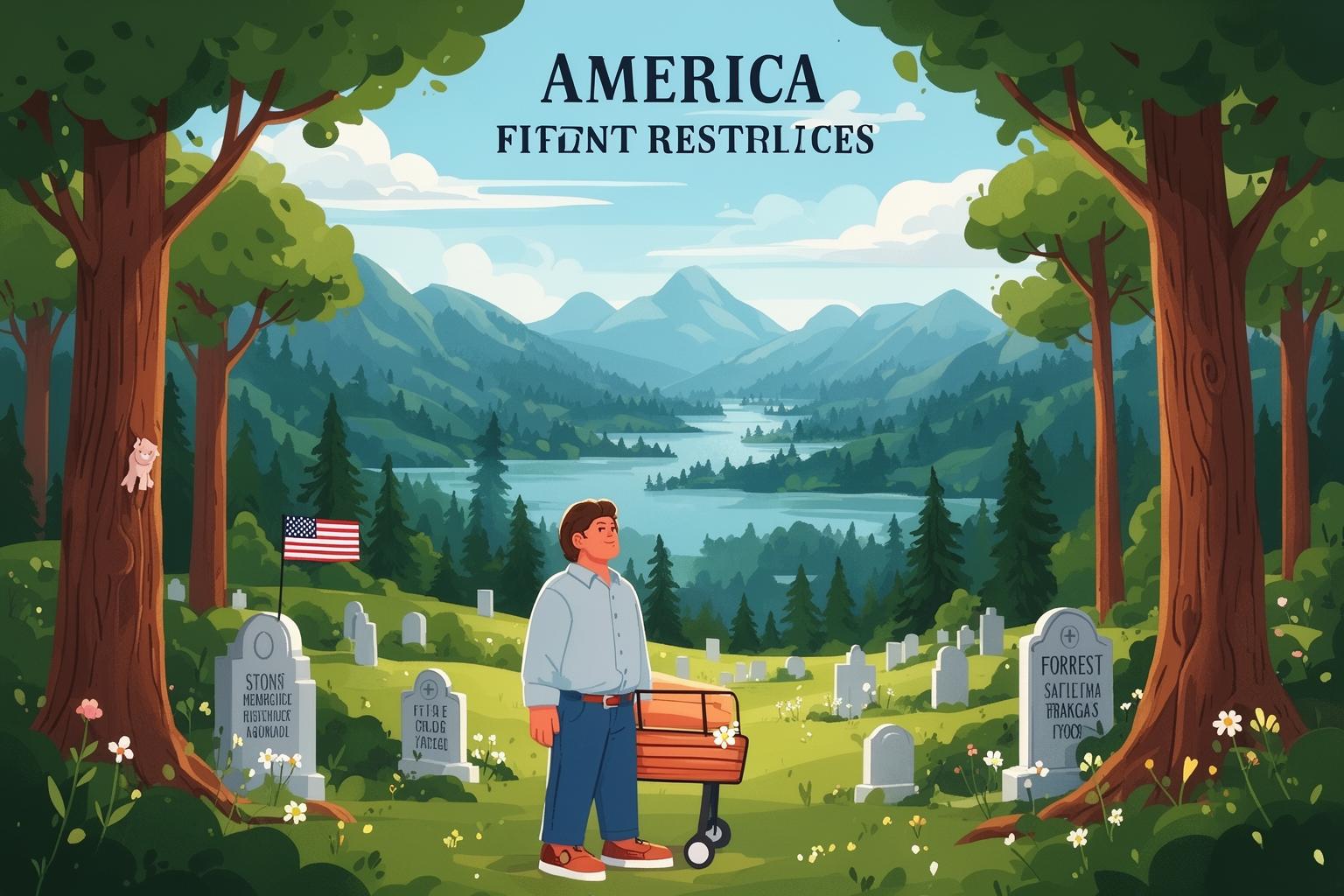
The final act of Forrest Gump offers a poignant reflection on life’s full circle. It addresses love, marriage, illness, and death, bringing Forrest’s remarkable journey to a place of quiet, bittersweet closure. The locations featured in these concluding scenes are filled with a sense of peace and natural beauty, serving as a serene backdrop for the film’s most emotional moments.
Jenny’s Grave and Forrest’s Tree
Following a brief, happy marriage, Jenny succumbs to an unspecified virus, leaving Forrest to raise their son, Forrest Jr. The scene where Forrest speaks to Jenny at her grave, beneath a magnificent, solitary oak tree, stands as one of the film’s most heartbreaking and moving moments. He updates her on their son’s life and contemplates his own understanding of destiny and chance, delivering a monologue that beautifully captures his life philosophy. This iconic tree and Jenny’s gravesite were filmed on the same private property where the Gump Boarding House was constructed: the Bluff Plantation near Varnville, South Carolina. The tree, a large and perfectly shaped live oak, was selected for its archetypal beauty and its sense of timeless strength and endurance. It stands as a silent, living monument to Forrest’s enduring love for Jenny. As the location is on private land and not open to the public, this likely helps preserve its sacred, untouched feeling in our imagination. Although we cannot stand beneath its branches, the image of Forrest under that tree—a father finding the strength to carry on—remains etched in cinematic memory as a powerful symbol of love’s persistence despite profound loss.
Forrest Jr.’s School Bus Stop
The film concludes where it began: at a school bus stop. In a beautifully symmetrical final scene, Forrest sits with his son, Forrest Jr., waiting for the same school bus that once carried him and Jenny. The feather, which appeared at the film’s start, floats down to land at his feet before drifting away again, symbolizing the unpredictable and beautiful randomness of life. This scene completes Forrest’s journey, transforming him from the cared-for child into the caring father. The final bus stop scene was filmed on a quiet, tree-lined road near Savannah, Georgia, close to where the opening bench scenes were shot. The location is simple and idyllic, representing the peaceful, settled life Forrest has finally attained. The contrast between this moment and his own first day of school is striking. Whereas he was once an outcast, his son is now a confident and accepted child, ready to begin his own path. The film’s closing image, of Forrest waiting patiently as the bus drives away, is one of quiet triumph. He has navigated extraordinary challenges and emerged not only intact but as a loving father and a good man, at peace with the course his life has taken, ready for whatever the future holds.
A Pilgrim’s Practical Guide
Embarking on a Forrest Gump location tour offers a unique way to experience America. It’s a road trip that passes through various regions, climates, and historical settings. Thoughtful planning is essential to fully enjoy this cinematic pilgrimage. A practical method is to organize the locations by region, since they are scattered across the country.
Planning Your Forrest Gump Tour
Your trip will likely center around three main hubs: the South Carolina/Georgia Lowcountry, Washington D.C., and the American West. For the Southern portion, flying into Savannah/Hilton Head International Airport or Charleston International Airport is recommended. Renting a car is crucial, as the filming sites are spread out in rural areas. You can stay in Savannah or Beaufort and take day trips to Varnville, Hunting Island, and the various scenic routes featured in the movie. Allow at least three to four days to explore this area at a relaxed pace. The Washington D.C. segment can be easily explored on foot or by using the city’s excellent public transit. A couple of days should suffice to visit the Lincoln Memorial, the National Mall, and the vicinity of the Watergate complex. The Western sites, especially Monument Valley and Grandfather Mountain, require a more focused road trip. Monument Valley is quite remote; the nearest major airports are in Phoenix, Las Vegas, or Salt Lake City, each a considerable drive away. Plan to spend at least one night in or near the valley to experience both sunset and sunrise. Grandfather Mountain can be included in a broader road trip along the Blue Ridge Parkway. The ideal time for this pilgrimage is spring or fall, to avoid the intense summer heat of the South and West, as well as possible winter road closures in the mountains.
Beyond the Locations: Embracing the Gump Spirit
Visiting the Forrest Gump filming locations should be more than just ticking off photo stops. It’s an opportunity to embrace the spirit of the film itself. Channel Forrest’s openness and curiosity. Engage with locals in Varnville or Beaufort; you might even meet someone who was an extra in the movie. Take a spontaneous detour down a country road. Sit on a bench in a peaceful square and simply watch the world go by. Avoid overpacking your itinerary. Leave space for spontaneity and those unexpected moments of connection and discovery that Forrest’s life was full of. The film reminds us that life’s most meaningful experiences often arise when we least expect them. So, when you’re standing at Forrest Gump Point in Monument Valley, don’t just snap a photo and walk away. Take a deep breath. Feel the vastness of the landscape and the smallness of your place within it. Reflect on your own journey, the roads you’ve traveled, and the people you’ve met along the way. This pilgrimage is a chance to see America through a new perspective, to appreciate its rich diversity, and to be reminded of the simple yet profound truths that Forrest Gump so eloquently, if unintentionally, shared with us all.
Conclusion

To follow in the footsteps of Forrest Gump is to embark on a journey through a landscape both real and mythic. The filming locations, scattered throughout the United States, are more than mere settings; they serve as repositories of memory, places where a cherished cinematic tale met the tangible world. From the quiet, moss-covered streets of the South to the majestic grandeur of the West, each site holds a fragment of Forrest’s story and, by extension, a piece of the American narrative. At Chippewa Square, you can almost hear the gentle rhythm of his voice recounting his life. Standing on the edge of Route 163 in Monument Valley, you can sense the profound silence that marked the conclusion of his epic run. This pilgrimage offers a unique way to connect with a film that has touched countless lives, but it is also something more. It is an invitation to appreciate the beauty in the everyday, to find meaning in the unexpected, and to remember that even the most unlikely journey begins with a single step—or, in Forrest’s case, a single, determined run. As you explore these places, you may realize that life truly is like a box of chocolates. The journey itself is the reward, a sweet and unpredictable adventure waiting to be savored. And you never, ever know what you’re gonna get.