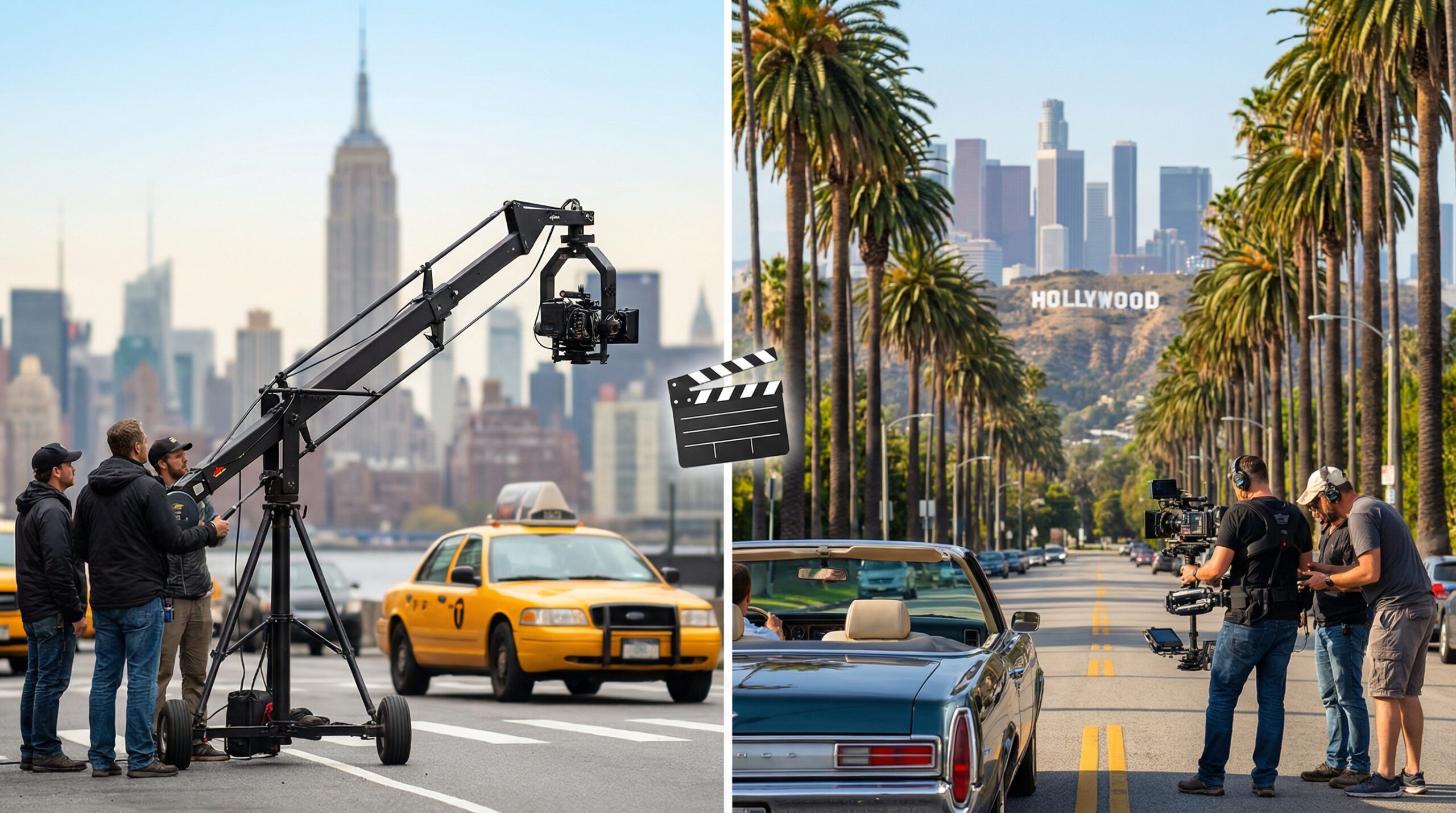
There are films that wash over you, and then there are films that live inside you, long after the credits roll. Noah Baumbach’s Marriage Story is firmly in the latter camp. It’s a cinematic masterpiece that charts the seismic, heart-wrenching dissolution of a marriage between Charlie Barber, a brilliant New York theater director, and Nicole, a gifted actress ready to reclaim her identity. The story is a raw, unflinching look at love, loss, and the brutal mechanics of separation. But beyond the powerhouse performances of Adam Driver and Scarlett Johansson, the film’s two primary settings—New York City and Los Angeles—emerge as powerful, symbolic characters in their own right. They are more than just backdrops; they are the geographical manifestations of Charlie and Nicole’s diverging lives, dreams, and identities. New York is history, density, and shared past. Los Angeles is space, sunshine, and an uncertain future. To walk the streets where their story was filmed is to step into the very heart of their conflict, to feel the pull of two coasts and the emotional chasm that opens between them. This is a pilgrimage not just to movie locations, but to the tangible spaces that held one of the most poignant love stories of our time.
This cinematic pilgrimage to the heart of a story’s conflict is a journey shared by other powerful films, such as the real and reel locations of Hotel Rwanda.
New York: The World of Charlie

New York, as depicted through the cinematic lens of Marriage Story, is a world shaped by brick, ambition, and history. It is the universe Charlie has carefully constructed for himself and, by extension, for his family. The city is shown not as a glamorous, tourist-friendly hub but as a lived-in, intimate environment defined by the daily routines of its residents. It’s the subway commute, the familiar warmth of a neighborhood bar, the vibrant disorder of an off-Broadway theater. The color scheme is subdued, the spaces are close-knit, and the atmosphere carries the heavy weight of a shared existence. Viewing New York through the film’s perspective, we sense both the comfort of routine and the suffocating feeling of a world that has become too small for one of its central characters. The city holds the intricate, beautiful mosaic of the Barber family’s history, and visiting its locations feels like paging through a deeply personal photo album just before the final chapter begins.
The Hallowed Halls of Theater
At the core of Charlie’s New York is his theater company, Avant-Garde. This is his realm, the place where his genius is unquestioned and his vision reigns supreme. While the company is fictional, the exterior shots firmly root us in the heart of Broadway. The marquee featured belongs to the Stephen Sondheim Theatre on West 43rd Street, a grand and historic venue that instantly lends credibility to Charlie’s professional standing. However, the intimate, gritty interiors where rehearsals and performances unfold were filmed at the historic Orpheum Theatre in the East Village. This choice is inspired; the Orpheum is an off-Broadway landmark and former longtime home of Stomp. It exudes a raw, creative energy that perfectly matches the experimental spirit of Charlie’s work. Standing outside either theater, you can feel the pulse of New York’s artistic vitality. The Theater District buzzes with the excitement of opening nights and applause, while the East Village radiates an edgier vibe, reflecting the city’s enduring avant-garde heart. The film uses these settings to depict a world where Charlie is king, built on collaboration and shared passion—a stark contrast to the isolation he will eventually confront.
The Park Slope Brownstone: A Life Contained
The center of their shared existence is their apartment in Park Slope, Brooklyn. This is not the sleek, minimalist space of a Manhattan power couple but a home overflowing with books, toys, and the comfortable clutter of family life. The film utilized a real apartment on 6th Avenue, and the selection of Park Slope carries deep significance. This neighborhood embodies a particular Brooklyn intellectual-artistic domesticity. Its tree-lined streets, stately brownstones, and community-oriented spirit represent a stable and nurturing setting—the perfect environment for a family. Walking through Park Slope today, you can feel the very energy the film captures: a neighborhood filled with strollers and bookstores, farmers’ markets and quiet Sunday mornings. The apartment itself, with warm wood tones and a lived-in atmosphere, becomes a museum of their love story. Every corner holds a reminiscence. This is where they raised their son, hosted cast parties, and set the rhythm of their lives. When Nicole chooses to leave, she is not simply departing from an apartment but dismantling this entire, self-contained world. For anyone visiting, a stroll through Park Slope offers a glimpse of the life they built and the profound weight of the decision to leave it behind.
A Final Subway Ride Together
One of the film’s most poignant and unforgettable scenes is the subway ride home following the tense first meeting with a mediator. As Charlie, Nicole, and Henry travel together, a heavy silence lingers among them. Charlie imagines them as the last passengers on the train, a silent, solitary family unit moving through the dark tunnels beneath the city. This moment encapsulates the essence of New York. The subway is the great equalizer, a place of forced closeness and deep anonymity. It is where countless stories briefly converge. Filmed on an actual MTA train, the scene captures the unique sadness of a late-night ride, with flickering lights and the steady rhythm of wheels on tracks. It portrays a profound disconnection—two people who know each other intimately now strangers sitting side by side. Their journey symbolizes their path forward: moving in the same direction but emotionally far apart. It is a quiet, heartrending portrait of an ending set against one of New York’s most iconic backdrops.
The Last Song at the Knickerbocker
After a particularly grueling day in his legal fight, Charlie finds refuge in the one place he truly belongs: surrounded by his theater company at a piano bar. This powerful scene, in which he delivers a raw, emotional rendition of Stephen Sondheim’s “Being Alive” from the musical Company, was shot at the Knickerbocker Bar & Grill. Located near Union Square, the Knickerbocker is a New York institution—a classic steakhouse and jazz club with a timeless, sophisticated ambiance. With its dark wood, leather banquettes, and grand piano that has witnessed countless stories, the venue perfectly reflects Charlie himself—established, old-school, and deeply intertwined with the city’s cultural fabric. His singing is a heartfelt cry, a moment of devastating self-awareness in front of a community that reveres him. Visiting the Knickerbocker today, one can almost hear the echoes of that performance. It is a place to soak in classic New York’s atmosphere, imagine tales shared over drinks and music, and appreciate the setting of one of modern cinema’s most unforgettable emotional climaxes.
Los Angeles: The World of Nicole
If New York is a closed-in realm of history and shadows, Los Angeles stands as its opposite: a vast, sun-bleached expanse of boundless possibility and daunting openness. For Nicole, it signifies a return home, an opportunity to reconnect with her family and revive a career she once put aside. For Charlie, it feels like an alien world. The film skillfully employs the city’s geography to heighten his sense of disorientation. The endless freeways, the uniform rental apartments, and the impersonal corporate offices all combine to make him feel insignificant and powerless. The light in Los Angeles is distinct—brighter and harsher—revealing the fractures in their relationship with unforgiving clarity. The atmosphere is one of fleeting encounters and professional dealings. It’s a city built on image and industry, and as Charlie moves through its unfamiliar terrain, we witness his once stable and defined world dissolving into the California haze. Touring the L.A. locations of Marriage Story offers an exploration of this fractured new reality, a passage through the spaces where the final, painful act of their separation unfolds.
A Sun-Drenched Cage in Windsor Square
Nicole’s refuge and Charlie’s temporary prison is her mother’s house in Los Angeles’s Windsor Square neighborhood. This is where Nicole and Henry stay, embodying a particular vision of the idyllic Southern California lifestyle. The house is bright, airy, and flooded with light, featuring a backyard swimming pool and ample space to breathe—a sharp and immediate contrast to the cozy but cramped Brooklyn apartment. Windsor Square is a historic and affluent area known for its large, elegant homes and manicured lawns. It feels safe, suburban, and worlds away from the creative grit of Charlie’s New York. Yet, for Charlie, this sunlit paradise is a cage. He is a guest in his own life, sleeping on a pull-out couch and struggling to bond with his son in a space that isn’t his. The house symbolizes Nicole’s support network and her path to independence, while for Charlie it serves as a constant, painful reminder of all he’s lost. A drive through Windsor Square, lined with palm trees and imposing houses, powerfully conveys the lifestyle Nicole is reclaiming and the unfamiliar territory Charlie must inhabit.
The Theaters of War: The Lawyers’ Offices
The divorce transforms their personal conflict into a professional battle, with the lawyers’ offices serving as the battlefields. Each office reflects the lawyer’s personality and approach, scattered across various business districts in Los Angeles, further underscoring the city’s fragmented nature.
Nora Fanshaw’s Sleek Century City Fortress
Nora Fanshaw, Laura Dern’s impeccably styled and fiercely effective lawyer, works out of a strikingly modern office in Century City. This district is the epicenter of L.A.’s corporate power, a cluster of gleaming skyscrapers housing the city’s premier law firms, talent agencies, and financial institutions. The atmosphere is polished, luxurious, and intimidating. Nora’s office, with its minimalist design, floor-to-ceiling windows, and stunning views, showcases her success and power. It’s a space that aims to make clients feel secure and opponents feel small. The clean lines and uncluttered surfaces mirror her sharp, no-nonsense legal style. When Nicole meets her there, she steps into a world of female power and strategic combat. Visiting Century City, one can sense that intense energy. It’s a place of ambition and influence—a perfect setting for the lawyer orchestrating Nicole’s legal liberation.
Bert Spitz’s Humble Pasadena Haven
In stark contrast to Nora’s corporate stronghold is Bert Spitz’s office, portrayed by Alan Alda as a gentle, semi-retired family lawyer. Located in Pasadena, a city with a quieter, more historic, and less flashy reputation than Beverly Hills or Century City, Bert’s office feels warm, cluttered, and profoundly human. Filled with family photos, stacks of books, and well-worn furniture, it seems less like a weapon and more like a sanctuary. This environment perfectly reflects Bert’s approach: emphasizing humanity over tactics, encouraging compromise and understanding. The scene where he shares a personal story with Charlie stands as one of the film’s most tender moments and could only take place in such a setting. It represents an older, more compassionate way of dealing with conflict—a path Charlie ultimately abandons. Choosing Pasadena, away from L.A.’s ruthless legal hubs, highlights Bert’s role as an outsider to the harsh system.
Jay Marotta’s Aggressive Beverly Hills Perch
When Charlie seeks a tougher approach, he turns to Jay Marotta, played with fierce energy by Ray Liotta. Jay’s office is situated in Beverly Hills, the center of wealth, fame, and aggressive deal-making. The space is exactly as expected: sleek, masculine, and designed to radiate dominance. It functions as a high-powered command center for a legal predator. The atmosphere is one of pure intimidation. Beverly Hills carries an air of untouchable success, and Jay’s office is the legal equivalent of a Rodeo Drive boutique—exclusive, expensive, and ruthless. This location completes the trilogy of L.A.’s legal worlds, tracing Charlie’s descent from Bert’s empathetic approach to Nora’s corporate strategy, and ultimately to Jay’s scorched-earth tactics.
The Beige Box: An Apartment for an Argument
The emotional climax of the film—the brutal, no-holds-barred argument between Charlie and Nicole—occurs in the most impersonal setting of all: Charlie’s temporary L.A. apartment. This isn’t a home; it’s a beige box. The apartment is sterile, sparsely furnished, and utterly lacking in personality. It’s a corporate rental, designed for transient occupants, making it the perfect, claustrophobic stage for their rage and despair to finally explode. The generic art on the walls, the bland furniture, the soulless layout—they all emphasize Charlie’s profound sense of displacement. He has no roots here, no history. The apartment is a non-place, and within its anonymous walls, social niceties are stripped away, leaving only the raw, painful truth of their fractured love. While this scene was filmed on a meticulously crafted soundstage, it perfectly captures the feel of many L.A. apartment complexes—functional, uniform, and temporary. It stands as the ultimate symbol of Charlie’s lonely, unmoored existence in this new city.
Finding Life in Everyday L.A.
Beyond these key dramatic locations, the film skillfully uses everyday Los Angeles settings to anchor the story and highlight the cultural shift. We see Charlie navigating a Gelson’s Market, an upscale Southern California grocery store, while under the watchful eye of a custody evaluator. This scene is a masterclass in quiet desperation, turning the mundane task of grocery shopping into a high-stakes performance. We watch him driving endlessly on freeways and boulevards—a quintessential part of the L.A. experience that underscores his isolation and the city’s overwhelming scale. Finally, the film’s poignant closing sequence depicts the family trick-or-treating. Now separated into two units—Nicole with her new partner, and Charlie with his own place—they navigate the festive neighborhood streets, crossing paths and sharing a moment with their son, finding a new, bittersweet balance. Set against the backdrop of a classic American suburb on Halloween, this final scene affirms that life, in all its messiness, goes on. They have discovered a way to exist separately in a city that both tore them apart and ultimately became a new kind of home.
A Geography of the Heart

Tracing the footsteps of Charlie and Nicole reveals that Marriage Story is as much about place as it is about people. New York and Los Angeles serve not as interchangeable backdrops but as the physical containers of the couple’s past and future. New York held their shared identity, a world they constructed together, rich with memory and creative energy. Los Angeles represented a blank slate, a sunlit space for personal reinvention, yet also a barren landscape of isolation and conflict. Exploring the quiet streets of Park Slope, the bustling Knickerbocker Bar & Grill, the towering structures of Century City, or the calm suburban lanes of Windsor Square offers a deeper, more tangible connection to the film’s emotional journey. You sense the weight of Charlie’s world in New York and the unsettling lightness of Nicole’s in L.A. These locations are more than mere filming sites; they frame a universal story of love, loss, and the painful, messy, and ultimately hopeful process of starting anew. They form a geography of the heart, charted along America’s coasts.