There’s a certain kind of magic that lives in the black-and-white frames of old films, a ghost of a time and place that feels both impossibly distant and intimately familiar. For anyone who has ever felt the sting of misunderstood youth, the desperate yearning for freedom, there is François Truffaut’s 1959 masterpiece, Les Quatre Cents Coups—The 400 Blows. This isn’t just a film; it’s a cinematic heartbeat, a raw, poignant love letter to the defiant spirit of a boy named Antoine Doinel and the sprawling, indifferent city that became his playground, his classroom, and his cage: Paris. To walk the streets where Antoine ran, dodged, and dreamed is to do more than just visit film locations. It is a pilgrimage into the soul of the French New Wave, a journey back to a Paris that was less a city of postcard romance and more a labyrinth of cobblestone, shadows, and fleeting opportunities. We follow the phantom footsteps of a boy who represents the universal struggle of growing up, a journey that culminates not in a grand resolution, but in a haunting, unforgettable gaze into the vast, unknowable sea. This is not a tour of monuments, but of moments—the small corners of Paris that held the weight of a young boy’s world. Prepare to see the City of Light through a different lens, the one Truffaut so masterfully crafted, and discover the enduring rebellion that still echoes in its arrondissements.
For a similar cinematic pilgrimage through a different city and era, explore our guide to the Berlin of Good Bye, Lenin!.
The Heart of the Rebellion: Montmartre’s Winding Streets
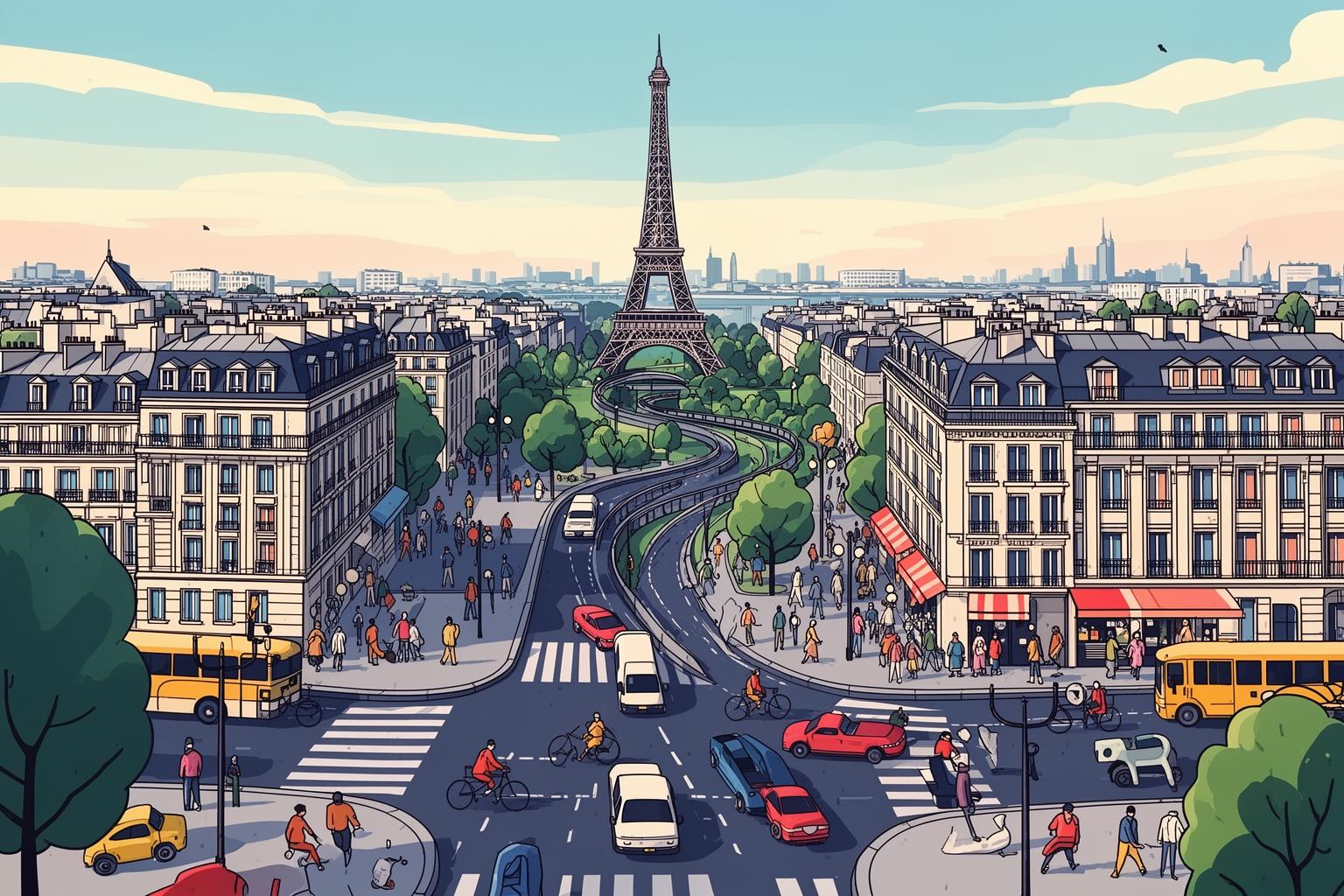
Every tale of rebellion requires a starting point, a confined space from which to break free. For Antoine Doinel, this place was the gritty, lively, and constantly buzzing neighborhood bordering Montmartre and the 9th arrondissement. This is not the romantic, artist-populated Montmartre seen on Sacré-Cœur postcards. Through Truffaut’s lens, we see a different facet: the working-class reality, the cramped apartments stacked tightly, and the daily cacophony that both sustains and stifles. It’s a world of narrow corners and tight staircases, where the vast city’s promise lies just beyond the next block—a constant lure for a boy restless at heart. Here, in the shadow of Paris’s grand landmarks, Antoine’s small, personal revolution was born, driven by the friction between his oppressive home environment and the thrilling freedom of the streets.
Antoine’s Apartment: A Cage with a View
The film situates Antoine’s family apartment in a space that feels authentically Parisian in its charming discomfort. While the exact location remains a matter of cinematic lore, the exteriors suggest the area around 77 Rue de Vintimille or nearby Rue de Douai in the 9th arrondissement, just steps from the bustling Place de Clichy. Visiting this neighborhood today, you immediately sense the atmosphere Truffaut captured. It’s a symphony of urban sounds: the rumble of the Métro beneath your feet, lively chatters from brasseries, and the rush of city traffic. The buildings are classic Haussmannian, their ornate balconies and tall windows hinting at grandeur that sharply contrasts with the cramped, tense living conditions inside Antoine’s home. The apartment in the film feels more like a hallway than a home, a claustrophobic space where Antoine sleeps in a sleeping bag in the entryway—a physical symbol of his marginalization within his family. Walking these streets and looking up at the rows of windows, imagine a small boy peering out, not seeing a home but a launchpad. The area near Place de Clichy is a major transport hub, a crossroads. For Antoine, it marked the gateway to his escapes, the boundary where his confined domestic world ended and the vast, unpredictable city began.
The School of Hard Knocks: A Lesson in Truancy
Equally defining as home was his school—the site of his most overt defiance. The school scenes were shot at what is now Lycée Jacques-Decour, but the entrance Antoine uses, where he and his friend René Laurent famously decide to skip class, is on the quiet, unassuming Rue Milton. Discovering this street feels like uncovering a secret. It’s a short, typically Parisian lane in the 9th, lined with stern, institutional architecture that embodies discipline and order. The façade is imposing, with heavy doors and barred windows resembling a fortress more than a school. It’s here that Antoine, when asked for his absence note, invents the death of his mother—a lie that rapidly unravels his life. Standing on Rue Milton, one can almost hear the school bell, which for Antoine was less a call to learning than a summons to conformity. The film powerfully depicts the strict, almost militaristic education system of the era. The rote memorization, harsh punishments, and lack of personal understanding all fuel Antoine’s desire to be anywhere but there. Visiting this spot is a poignant reminder that for some, the greatest lessons aren’t taught within classroom walls, but are learned on the streets, in cinemas, and through life’s hard-won experiences.
A City as a Playground: Antoine’s Parisian Escapades
When Antoine slips away from home and school, Paris undergoes a transformation. It stops being just a collection of destinations and becomes a living, breathing entity—a vast, exhilarating playground ready to be explored. In these moments of freedom, Truffaut’s camera follows Antoine with lyrical grace, capturing the pure, unfiltered joy of a boy discovering his city on his own terms. The Grand Boulevards, the historic cinemas, the formal gardens—these are not mere backdrops; they act as co-conspirators in his quest for autonomy. It is within these spaces that we see Antoine not as a delinquent, but as an urban explorer, a young connoisseur of culture absorbing the art, literature, and cinema that his formal education withholds from him. This is the Paris that nurtures his soul, even as the rest of his world seeks to crush his spirit.
The Grand Boulevards and Cinematic Dreams
Cinema is Antoine’s true church, his sanctuary. It is where he finds solace, inspiration, and a window into worlds beyond his own. One of the most iconic scenes shows Antoine and his family attending a movie. While the specific theater is not explicitly named and may have been a set, it symbolizes the glorious cinema culture of Paris in the 1950s. The city’s Grands Boulevards were historically lined with magnificent movie palaces—temples of celluloid dreams. To capture this spirit, a film pilgrim might visit a historic cinema like Le Grand Rex, with its stunning Art Deco design, or stroll near the Champs-Élysées to find surviving theaters that echo this golden era. The atmosphere in these places today still carries a sense of reverence and escapism. One can easily imagine Antoine sitting in the dark, his face illuminated by the flickering images on screen, utterly transported. For him, films were more than mere entertainment; they served as education and moral guidance. Truffaut, a devoted cinephile who spent his youth in the darkness of Parisian theaters, infuses these scenes with a palpable love for the medium. Visiting one of Paris’s old cinemas is to connect directly with this legacy, and to understand how, for a boy like Antoine, a two-hour film could offer more freedom than a lifetime on the streets.
A Moment of Culture: The Palais-Royal
Antoine’s appreciation of art extends beyond the screen. In a pivotal and beautifully filmed sequence, he walks through the elegant arcades of the Jardin du Palais-Royal. It is here, in this calm oasis of high culture just a stone’s throw from the Louvre, that he is drawn to a production still from Satyajit Ray’s film Pather Panchali displayed outside a theater. The image resonates with him, telling another story of a child navigating a challenging world. The Palais-Royal itself is a stunning setting. Its symmetrical gardens, quiet fountains, and covered walkways feel worlds away from the chaotic energy of Antoine’s neighborhood. Walking through the arcades today, one senses a refined history. The space is both grand and intimate—a place for quiet contemplation—and it is easy to picture Antoine wandering here, feeling drawn toward a world of art and intellect that seems so distant. This scene is crucial because it reveals Antoine not merely as a troublemaker, but as a sensitive, intelligent boy with a deep appreciation for beauty. His small acts of theft and defiance are often intertwined with a genuine passion for literature and culture, a complexity that makes his character so enduring.
The Stolen Balzac
This cultural yearning finds its strongest symbol in Honoré de Balzac, the great novelist whose life’s work, The Human Comedy, chronicled Parisian society in all its dimensions. Antoine creates a makeshift shrine to Balzac in his room, lighting a candle that accidentally sets the whole thing ablaze, resulting in a slap from his father and another step in his downward spiral. Later, in a misguided bid to secure his future, he and René steal a typewriter from his stepfather’s office. The office itself is generic, representing the mundane world of adult work, but the act is deeply symbolic. Antoine attempts to use a tool of literature, a machine for creating stories, as a means to write his own escape plan. The plan fails, and he struggles to return the heavy machine—a burden both literal and metaphorical. This connection to Balzac is a direct nod from Truffaut. Like Balzac’s young, ambitious protagonists who came to Paris seeking fortune, Antoine is a product of his environment, a keen observer of the city’s hypocrisies and possibilities. He is a modern figure in a long tradition of Parisian literary characters, navigating the city’s complex moral landscape.
The Descent: From Play to Punishment
For every moment of joyful escape, there is an equal moment of capture. The city that once served as a playground gradually unveils its harsher edges and its bureaucratic machinery of control. As Antoine’s small acts of rebellion grow bolder, so does the reaction from the adult world. Truffaut skillfully shifts the film’s tone, with the settings reflecting this change. The open, liberating spaces of Paris give way to confined, impersonal rooms where Antoine’s fate is determined by indifferent adults. The camera becomes more stationary, the framing tighter, mirroring Antoine’s shrinking world. This stage of the journey takes us to the places where childhood ends, where the system asserts its authority and the last remnants of freedom are taken away.
The Police Station: A Child Within the System
After his stepfather reports him for stealing the typewriter, Antoine is brought to a police station. The scenes depicting his processing rank among the most heart-wrenching in cinema history. He is fingerprinted, photographed, and locked up with adult criminals. The exact location of the commissariat is thought to be in the 1st or 2nd arrondissement, near the former market district of Les Halles. Visiting that area reveals a dense network of streets where the architecture is often austere and official. The key is not the particular building but the atmosphere it conveys: the cold, impersonal face of institutional justice. Truffaut shoots these sequences with stark, documentary-like realism. The famous tracking shot of Antoine being driven through Paris streets at night in a police van is devastating. City lights flash across his tear-streaked face; the Paris he loves is now seen through a wire mesh screen. He is no longer a city explorer; he has become its prisoner. This sequence offers a powerful critique of a system that treats a troubled child as a hardened criminal, opting for punishment instead of understanding.
The Observation Center: The Final Stage
The last chapter of Antoine’s Parisian journey takes him completely away from the city. He is sent to a centre d’observation for troubled youth, located on the outskirts near the sea. The journey itself carries meaning. We see him inside a vehicle, leaving behind the familiar stone buildings and busy streets of Paris for a more isolated, rural landscape. This physical distance from the city marks his total loss of freedom. The center is a place of strict order, a stark, functional facility designed to confine and control. The open world of opportunities that Paris embodied is replaced by a closed system of fences and rules. From this place of ultimate confinement, Antoine will make his final, desperate attempt at freedom—a run that becomes one of the most iconic closing scenes in film history.
The Final Run: The Unforgettable Escape to the Sea
It all boils down to this: a single, uninterrupted shot of a boy running. Escaping the youth detention center during a football game, Antoine Doinel runs with no clear destination, driven solely by an instinct for freedom. He sprints past fields and through sparse woodlands until, at last, he reaches his goal: the sea. This iconic final sequence was filmed on the windswept beaches of Normandy, likely near Villers-sur-Mer or Honfleur. It marks a profound shift in landscape and a powerful conclusion to his journey.
The Shores of Normandy: A Vast and Ambiguous Freedom
After the dense, vertical maze of Paris, the Normandy coast reveals a sprawling horizontal emptiness. The sky stretches vast and gray, the sea extends to an endless horizon, and the beach is a broad, empty expanse of sand. Standing on one of these beaches today, especially on a cloudy, off-season day, you can still sense the exact atmosphere Truffaut captured. The air is chilly, the wind relentless, and the sound of the waves forms a constant, rhythmic roar. It’s a landscape both liberating and intimidating. Antoine runs until he can run no more, his feet finally touching the cold waters of the English Channel. He has reached the continent’s edge—the ultimate destination. But what he finds is not a simple, joyous conclusion. The sea is not a welcoming embrace; it is a cold, indifferent force of nature. It symbolizes a freedom so vast it becomes terrifying. There is nowhere left to run.
That Final, Haunting Freeze-Frame
In the film’s closing moments, after dipping his feet in the ocean, Antoine turns around. He looks back, and in doing so, gazes directly into the camera. Directly at us. Truffaut freezes the frame on his face—a face filled with a complex blend of defiance, confusion, fear, and uncertainty. It stands as one of cinema’s most powerful and revolutionary endings. By breaking the fourth wall, Truffaut dismantles the illusion of fiction and confronts the audience head-on. We have witnessed his journey, and now we become implicated in his fate. What will become of him? The film provides no answers. The freeze-frame leaves him suspended in time, forever the boy on the edge of the world, caught between a past he has escaped and a future shrouded in uncertainty. It’s a question mark that has haunted viewers for decades, ensuring Antoine Doinel’s story never truly concludes.
A Truffaut-Inspired Parisian Itinerary
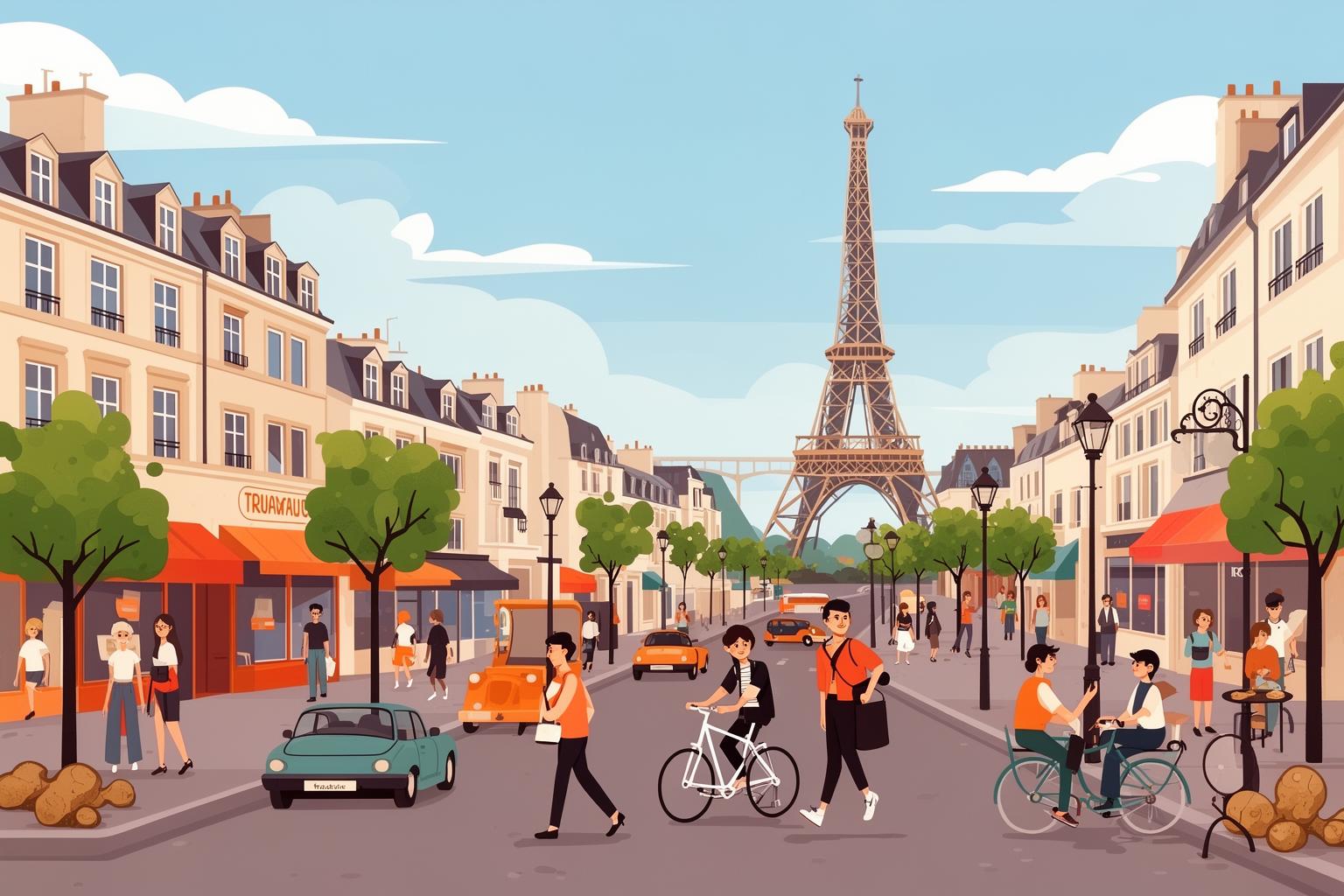
To truly connect with The 400 Blows, you must walk. The film is a symphony of movement, and experiencing its locations means retracing Antoine’s steps and feeling the city’s rhythm beneath your own feet. A self-guided tour isn’t about ticking off a list of addresses but about capturing a feeling, a mood, and an era. It’s about seeing Paris not just as a tourist, but as an explorer, just like Antoine.
Crafting Your Own “400 Blows” Walk
Begin your journey where Antoine’s did, at Métro Place de Clichy. This lively intersection is the perfect starting point to dive into the energetic, slightly chaotic world of the 9th arrondissement. From there, stroll down Rue de Vintimille and Rue de Douai, soaking in the atmosphere of his neighborhood. Head south to Rue Milton to view the imposing facade of his school and sense the weight of its institutional presence. From the 9th, make your way toward the city’s heart. You might take the Métro, imagining Antoine hopping the turnstiles. Your destination is the 1st arrondissement. Spend some time in the tranquil Jardin du Palais-Royal, wandering the arcades and envisioning Antoine’s moment of cultural awakening. From there, it’s a short walk to the Grands Boulevards. Find a classic cinema—whether or not you go inside—and appreciate its role as a temple of dreams. As you walk, notice the details: the ironwork on balconies, the typography on vintage shop signs, the way light filters down narrow streets. Allow yourself to get lost. Antoine’s Parisian spirit is found not on the main avenues, but in hidden passages and quiet side streets.
Beyond the Film: Experiencing Nouvelle Vague Paris
To deepen your pilgrimage, expand beyond The 400 Blows to embrace the wider world of the French New Wave. Truffaut and his contemporaries used Paris as their personal film set. Walk along the Champs-Élysées and imagine Jean-Paul Belmondo and Jean Seberg in Godard’s Breathless. Explore the Latin Quarter, the city’s intellectual heart and a frequent backdrop for New Wave films. Most importantly, visit the Cinémathèque Française. Co-founded by Henri Langlois, this institution was the film school for Truffaut, Godard, and their generation. It was their sanctuary, library, and source of inspiration. Today, it houses a magnificent museum of film history and screens classic films daily. A visit here is the perfect way to honor the cinephile spirit at the heart of The 400 Blows, linking Antoine’s love of cinema to the real-world movement his story helped ignite.
The Enduring Legacy of Antoine’s Paris
Decades have passed since Antoine Doinel made his final dash to the sea. The Paris of 1959 has transformed in countless ways. The black-and-white city captured in Truffaut’s film now bursts with vibrant color. Yet, the emotional landscape of Antoine’s world remains remarkably unchanged. The streets he once walked still resonate with the universal tale of youthful rebellion, the quest for identity, and the bittersweet pangs of growing up in a world that seems to offer no place for you. The 400 Blows endures because it captured something essential about Paris: a city of profound contrasts. It is a place of immense beauty and crushing indifference, of artistic freedom and rigid social order, of romantic dreams and harsh realities. To follow in Antoine’s footsteps is to see the city in all its complexity. It means understanding that every grand monument casts a long shadow, within which countless personal stories unfold. The film invites us not merely to look at Paris, but to truly see it, to feel its heartbeat, and to recognize the defiant, hopeful, and eternally youthful spirit of Antoine Doinel that still runs free through its timeless streets.