They say the land itself is a character in The Revenant, a silent, sprawling, and unforgiving protagonist that pushes Hugh Glass to the very brink of existence. It’s a canvas of brutal beauty, where frostbitten pines claw at a steel-grey sky and rivers roar with the fury of a thousand winters. Director Alejandro G. Iñárritu and cinematographer Emmanuel Lubezki didn’t just find locations; they hunted for landscapes that held the very soul of survival, places that would test not only their characters but their entire cast and crew. They chased the fading light, endured sub-zero temperatures, and moved an entire production across continents just to capture the authentic breath of the 19th-century frontier. This isn’t a journey to a film set; it’s a pilgrimage to the raw, untamed heart of the Earth, to the very places where Leonardo DiCaprio’s legendary performance was forged in ice and grit. For those of us moved by the film’s staggering visuals, to walk these grounds is to understand the story not just with our eyes, but with the chill on our skin and the vast, humbling silence in our ears. It’s a quest to stand where giants of cinema captured lightning in a bottle, surrounded by the majestic, indifferent wilderness that made it all possible.
This quest to stand where cinematic giants captured lightning in a bottle mirrors the journey of uncovering the real-world locations of The Case of Hana & Alice.
The Canadian Crucible: Forging The Revenant in Alberta and British Columbia
The vast majority of the film’s soul was captured amid the formidable peaks and valleys of Western Canada. This was not a choice made for convenience but a deliberate quest for authenticity. Iñárritu sought a world untouched by modern influence, a primordial landscape reflecting Hugh Glass’s internal and external struggles. He found it in the expansive, protected wilderness of Alberta’s Kananaskis Country and the dense, misty forests of British Columbia. Filming there was a battle against the elements, relying solely on natural light, which gave the crew only a few hours each day to capture their scenes. The resulting footage is breathtaking, not due to digital effects, but because it’s genuine. The biting wind, deep snow, and immense mountains all contributed to an immersive approach that pushed the actors to deliver raw, visceral performances. This constitutes the core of the pilgrimage—the land that bled onto the screen.
Where Man Met Beast: The Squamish Valley, British Columbia
Perhaps the most indelible scene in our collective memory is the bear attack, a moment of horrifying intimacy and realism that’s difficult to watch and impossible to forget. While much of the film was shot in Alberta, this crucial sequence was brought to life in the damp, moss-draped forests of British Columbia’s Squamish Valley. The environment here contrasts with the sharp, rocky peaks of the Rockies. It’s a temperate rainforest dense with ancient cedars and Douglas firs, where the air is heavy with moisture and the ground is covered in ferns and decaying leaves. This dense, nearly claustrophobic setting was ideal for the attack. Towering trees block the sky, creating a trapped feeling, while the valley’s frequent mist adds a primal, eerie atmosphere. It’s a place that feels ancient and alive, where one can almost hear the forest breathe.
Walking in Glass’s Footsteps
Visiting the Squamish Valley today offers a profound connection to the intensity of that scene. The area is a haven for outdoor lovers, crisscrossed by hiking trails leading deep into similar wilderness. The Elfin Lakes trail and routes around the Stawamus Chief provide stunning views and an immersive forest experience. The air smells of damp earth and pine, and the profound silence, interrupted only by rustling leaves or a raven’s call, reminds you of your vulnerability before nature. For film pilgrims, it’s less about finding an exact tree or clearing and more about absorbing the atmosphere. A word of caution: this is active bear territory. Black bears and grizzlies are genuine residents, not props. Traveling in groups, making noise on trails, carrying bear spray—and knowing how to use it—are necessities, not suggestions. The raw power shown on screen is very real here, and respecting it is key to survival.
The Icy Escape: The Kananaskis and Bow Rivers, Alberta
Following the mauling, Glass’s desperate journey is defined by water. He is carried, he crawls, and ultimately escapes his pursuers by plunging into the turbulent, icy rapids of a wild river. These gripping sequences were filmed on stretches of the Kananaskis and nearby Bow Rivers, both within greater Kananaskis Country. These are not gentle, winding streams but powerful glacial rivers fed by meltwater from the Rocky Mountains. The water’s startling turquoise hue is beautiful but deceptive, masking bone-chilling temperatures and dangerous currents. In the film, the cold is palpable; spray freezes on rocks and on Glass’s beard. The filmmakers chose these rivers for their raw, untamed power—a perfect metaphor for the frontier’s unforgiving nature.
Riding the Modern Rapids
For today’s traveler, these rivers offer a range of experiences. Adventure seekers can enjoy guided whitewater rafting tours on the Kananaskis River, providing a safe yet thrilling encounter with the same class of rapids Glass faced. Equipped with wetsuits and expert guides, this experience is a luxury Hugh Glass never had. The water’s force as your raft bucks and plunges delivers a humbling and unforgettable thrill. For a calmer experience, canoeing or kayaking on gentler sections of the Bow River, especially near Canmore, offers breathtaking views of surrounding peaks like the iconic Three Sisters. Alternatively, hiking trails along the riverbanks, such as the Bow River Loop, let you find quiet spots to contemplate the immense power flowing nearby. Summer, from June to August, is the best time for water activities when the weather is warmer, though the water remains shockingly cold.
The Frontier Outpost: Stoney Nakoda Nation Land in Morley, Alberta
The Revenant is filled with echoes of the past, from the fortified fur-trading post of Fort Kiowa to the temporary camps of the Arikara tribe. These essential sets were not staged on a studio backlot but constructed with historical accuracy on the lands of the Stoney Nakoda First Nation in Morley, a town between Calgary and the mountains. This choice was meaningful, grounding the production in a place with a profound indigenous history. Morley’s expansive plains and rolling foothills offered a vast and exposed backdrop. The production team collaborated closely with First Nations advisors and cast numerous local actors, striving for authenticity that honored the cultures portrayed. Although the Fort Kiowa and camp sets were temporary and later removed, the spirit of the place endures.
A Deeper Cultural Journey
Visiting Morley focuses less on spotting specific film locations and more on understanding the story’s historical and cultural context. The land itself, with the Rockies rising dramatically to the west, tells tales of trade routes, nomadic life, and survival predating European fur trappers by millennia. Though the film sets are gone, travelers can drive scenic highways through the region, taking in panoramic views that served as the film’s backdrop. For deeper insight, visitors can explore nearby Cochrane, which hosts historical sites linked to ranching and frontier life, or visit cultural centers to learn about the rich history and living cultures of the Stoney Nakoda and other Treaty 7 nations. It’s a reminder that frontier stories go beyond Hollywood narratives—they are woven into the land and its people.
The Desolate Expanse: Fortress Mountain and the Canadian Badlands
Some of the film’s most hauntingly beautiful imagery depicts Glass struggling through immense snow-covered landscapes, a tiny figure dwarfed by their vastness. Many of these high-altitude winter scenes were filmed at Fortress Mountain Resort, a former ski area in Kananaskis Country. Its remote location and high elevation ensured deep, pristine snow and the windswept, desolate look Iñárritu wanted. The iconic scene where a starving Glass encounters a bison herd being decimated by wolves was also filmed against these vast plains, creating a powerful tableau of life and death in the wilderness. The production even brought its own bison herd for the shot. In contrast to the mountains, some scenes were reportedly shot amid the otherworldly landscape of the Canadian Badlands near Drumheller, known for its unique rock formations called hoodoos and stark, layered canyons that resemble an alien planet more than Alberta.
Exploring Two Worlds
These two locations offer vastly different yet equally compelling experiences for travelers. Fortress Mountain, though not currently fully open for public skiing as before, is accessible through cat-skiing operations and to backcountry enthusiasts equipped for avalanche terrain. During summer, it becomes a haven for alpine hikers seeking solitude and breathtaking views. The sense of isolation there is profound; standing on a ridge overlooking a sea of peaks evokes the overwhelming awe and insignificance Hugh Glass likely felt. The Badlands, conversely, are easily accessible. A trip to Drumheller lets you walk among hoodoos, explore fossil-rich canyons, and visit the renowned Royal Tyrrell Museum of Palaeontology. It’s a journey back in time—not just to the fur-trapping era but to the age of dinosaurs. Experiencing these contrasting landscapes—the snow-drenched mountains and the arid, fossilized canyons—offers a full appreciation of the diverse, dramatic canvas Alberta provided for the film.
Chasing Winter to the End of the World: Ushuaia, Argentina
In a twist of fate that has since become legendary in filmmaking lore, the Canadian winter deserted the production. An unseasonably warm spell, known as a Chinook, melted the snow in Alberta, leaving Iñárritu without the cold, desolate landscape needed to film the climax. Determined to maintain his vision of natural realism, he made the bold decision to pause production and relocate his entire crew thousands of miles south to the very tip of South America. They pursued winter and found it in Ushuaia, Argentina, a city that proudly calls itself “El Fin del Mundo” – The End of the World. This daring choice highlights the filmmakers’ dedication and underscores the crucial role the environment played. The film required real snow, real cold, and a landscape that felt like civilization’s edge.
The Final Duel: The Olivia River, Tierra del Fuego
The brutal and exhausting final duel between Hugh Glass and John Fitzgerald was shot in the harsh, windswept terrain of Tierra del Fuego National Park, specifically on the banks of the Olivia River. The scenery here contrasts sharply with the Canadian Rockies. The mountains are jagged and bare, the trees stunted and twisted by relentless Patagonian winds, and the overall atmosphere conveys profound, haunting desolation. It feels like a place where the world ends. Filming the fight scene in the freezing river water was grueling for the actors, but the result is a climax that feels thoroughly earned and agonizingly real. The stark, primal beauty of the Patagonian landscape offers the perfect unforgiving stage for the story’s violent conclusion.
A Journey to the Planet’s Edge
Visiting Ushuaia is an adventure in itself. As the southernmost city in the world and the primary gateway to Antarctica, it offers unique experiences. For film enthusiasts, a trip to Tierra del Fuego National Park is essential. There, you can hike trails with stunning views of the Beagle Channel and surrounding subpolar forests. The “End of the World Train” offers a scenic ride into the park, following an old convict railway route. Boat tours on the Beagle Channel allow glimpses of sea lions, penguins, and the iconic Les Eclaireurs Lighthouse. The feeling of being in Ushuaia is distinctive; there’s a palpable sense of standing at a frontier, the last outpost before the vast, icy wilderness of the South Pole. Standing on a riverbank here, with cold wind biting your face, you sense the same raw, untamed energy that Iñárritu pursued all the way to the bottom of the world.
The American Interlude: Kootenai Falls, Montana, USA
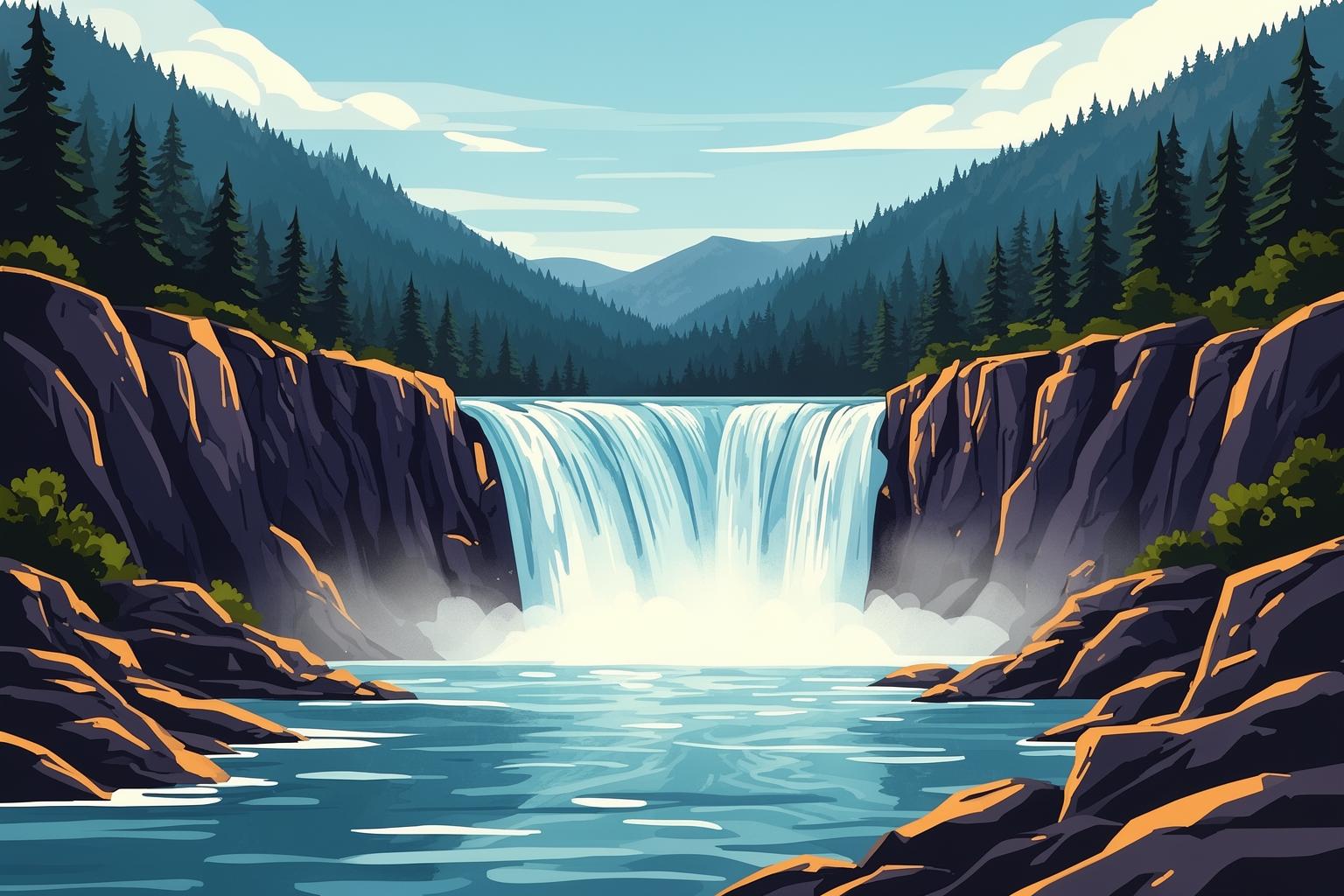
While Canada and Argentina provided the majority of the film’s landscapes, one of the most spectacular moments was captured in the United States, specifically in Montana—the very state where much of Hugh Glass’s true journey occurred. The breathtaking scene in which Glass, chased by Arikara warriors, rides his horse off a cliff into the thick canopy of a pine tree, followed by his plunge down a massive waterfall, was filmed at Kootenai Falls near the town of Libby. This powerful cascade on the Kootenai River is among the largest free-flowing waterfalls in the state. The production selected this location for its raw, explosive energy and the dramatic beauty of the surrounding canyon. It’s a brief yet unforgettable sequence that highlights the sheer, violent force of nature Glass faced at every turn.
Witnessing the Power of the Falls
In contrast to the remote Canadian and Argentinean sites, Kootenai Falls is notably accessible. Situated just off a major highway, the area features a well-maintained trail system that leads visitors down to the falls and to a famous swinging bridge spanning the canyon, offering spectacular views. Standing on that bridge, feeling the spray and hearing the thunderous roar of the water below, is a visceral experience. It’s easy to understand why this spot was chosen. The power is tangible. It serves as a perfect pilgrimage site for those who lack the time or resources for an extended trip into the Canadian wilderness but still want to connect with the film’s stunning natural environment. It’s a concentrated dose of the wildness that defines The Revenant.
A Pilgrim’s Practical Field Guide
Setting out to visit The Revenant‘s filming sites requires more than a map; it demands careful preparation and a profound respect for the natural environments you will encounter. These are not amusement parks but wild regions that require caution and attentiveness.
Selecting Your Season
Your experience will vary greatly depending on when you go. To see the landscape as it appears in the film—a realm of snow, ice, and stark magnificence—you should visit between December and March. However, this period brings significant challenges: frequent road closures, dangerously low temperatures, and many trails that are inaccessible without specialized winter gear such as snowshoes or skis. This trip is suited for those who are experienced and well-equipped. Visiting in summer, from June to September, offers a very different experience. With the snow melted, fields of wildflowers and turquoise lakes emerge. Hiking, canoeing, and wildlife watching are at their best, and most areas are generally accessible. Though you won’t witness the film’s icy scenery, you’ll enjoy the breathtaking grandeur of the landscapes in a more comfortable and accessible way.
Preparing for the Wilderness
No matter the season, packing appropriately is crucial. Mountain weather can shift suddenly. The key is layering: a moisture-wicking base layer, a warm mid-layer like fleece or down, and a waterproof, wind-resistant outer shell. Sturdy, waterproof hiking boots with strong ankle support are essential. Even in summer, a warm hat and gloves are advisable for cool evenings and high altitudes. In winter, thermal underwear, insulated pants, and heavy-duty winter boots are necessary. Bear spray is vital safety equipment in the Canadian Rockies—purchase it upon arrival and learn how to carry it so it’s immediately accessible. This is your final safeguard in a place where you enter the territory of large predators.
Exploring the Wilderness
Public transportation won’t get you to these spots. Renting a dependable vehicle is absolutely necessary. To access the backroads of Kananaskis Country or to handle possible snowy conditions during shoulder seasons, a 4×4 or an SUV with good ground clearance is highly recommended. Calgary International Airport (YYC) serves as the primary gateway to the Canadian Rockies locations and is about a 90-minute drive from the core filming sites. For Ushuaia, you’ll need to fly into Malvinas Argentinas International Airport (USH). Roads in these remote areas can be rough, and cell service is often unreliable or absent. Always travel with a full gas tank, extra food and water, and a physical map as backup to your GPS.
A Spirit of Respect
Your journey carries responsibility. These pristine environments are delicate. Follow Leave No Trace principles: carry out all you bring in, stay on marked trails, and avoid disturbing wildlife. Never feed wild animals as it endangers both you and them. This trip also takes you through the traditional territories of many Indigenous peoples. Travel with humility and respect for the deep history of the land. Recognize that you are walking through a living culture, not merely a film location. This mindset will elevate your trip from a simple location tour to a richer and more meaningful experience.
Echoes in the Wilderness
To journey through the landscapes of The Revenant is to grasp the film on a cellular level. It’s to feel the biting wind that Iñárritu insisted was a character, to witness the overwhelming scale of the mountains that dwarfed Hugh Glass, and to hear the roar of the rivers that threatened to engulf him. This is more than just a collection of filming locations; it’s a tapestry of some of the most formidable and awe-inspiring wilderness remaining on the planet. Standing in the quiet of Kananaskis, with only the sound of wind rustling the pines, or feeling the spray of Kootenai Falls on your face, you connect with the film’s central theme: the indomitable power of nature and the terrifying, beautiful, and ultimately triumphant struggle for survival within it. You arrive seeking the ghost of a film, but you leave having found the very real and enduring spirit of the wild.