The roar of an approaching train is a sound of arrival, of departure, of connection. It’s a rhythmic, metallic pulse that scores the daily lives of millions. But for those who have experienced Yeon Sang-ho’s masterpiece, Train to Busan, that sound is forever laced with a thread of heart-stopping dread. The film didn’t just redefine the zombie genre; it welded its apocalyptic horror to the very infrastructure of modern South Korea, turning the sleek, efficient KTX high-speed rail into a speeding vessel of claustrophobic terror. It was a story of survival measured in kilometers per hour, a desperate sprint toward a rumored sanctuary. For fans of the film, the journey from Seoul to Busan has become more than just a trip—it’s a pilgrimage. This is not a journey to find the undead, but to stand in the real, breathing spaces that were so masterfully transformed into a canvas of chaos. It’s an exploration of the line between the mundane and the monstrous, a chance to walk the platforms and concourses where humanity made its last stand. We will trace the path of Seok-woo and his daughter Su-an, not through a landscape of ruin, but through the vibrant, bustling reality of the locations that gave the film its chilling authenticity. Prepare to see these places not as they were in the film, but as they are now, and to feel the powerful echoes of the story that unfolded there. This is your ticket to the real-world locations behind the global phenomenon, a guide to the stations and cities that became the silent, concrete characters in Train to Busan.
If you’re inspired to explore more cinematic journeys, consider embarking on a road trip through the real-life locations of Erin Brockovich.
Echoes in the Concourse: Daejeon Station
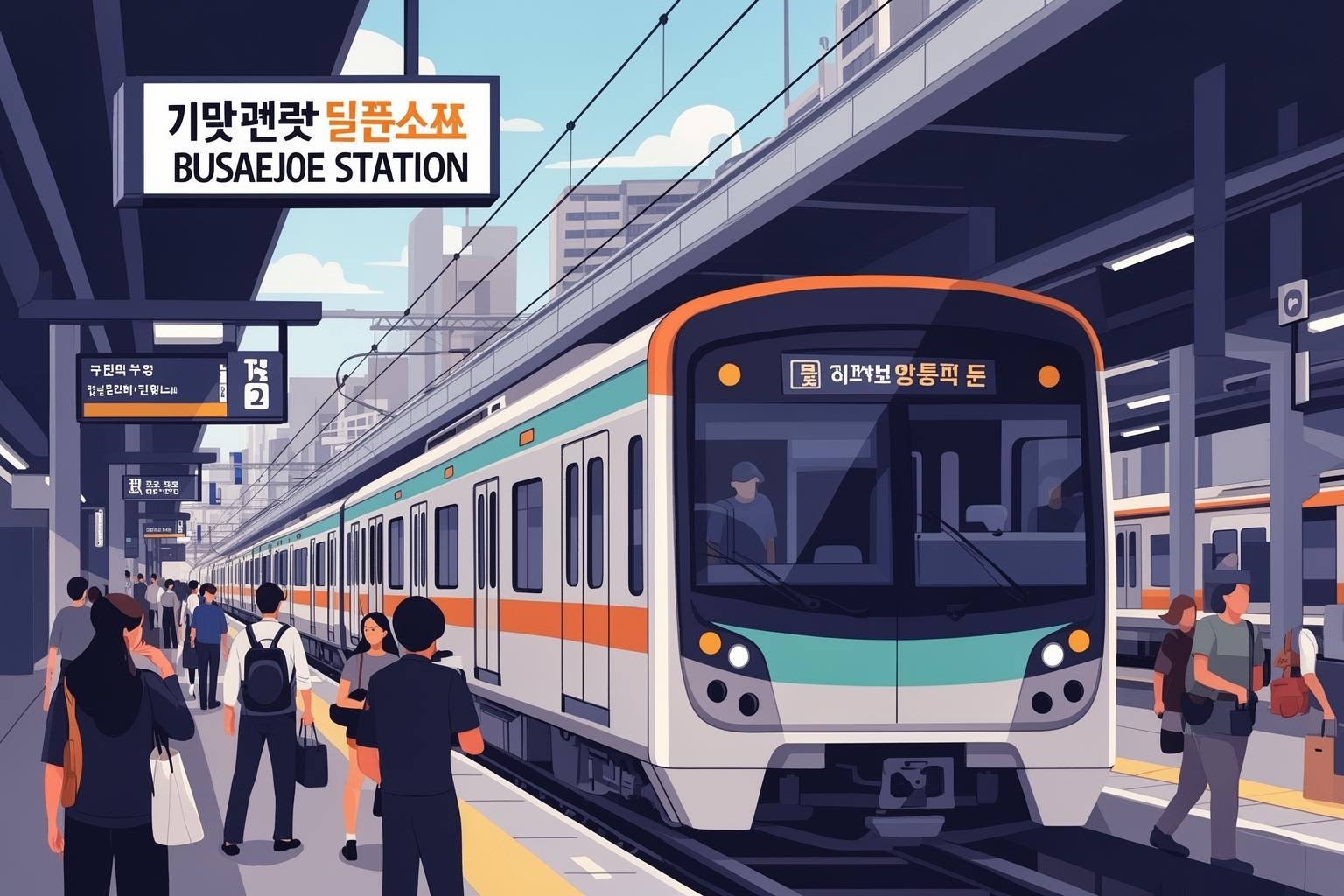
Every story of this scale features a turning point, a moment when a localized crisis bursts into an undeniable catastrophe. In Train to Busan, that moment ignites on the platforms of Daejeon Station. On screen, it’s a scene of harsh shock. The passengers, buoyed by a fragile hope that the military has secured the city, step onto the platform only to walk into an ambush. The soldiers, once symbols of order, become a writhing, ravenous horde. The pristine station, a symbol of safety, transforms into a slaughterhouse beneath the cold, indifferent gaze of its own architecture. The sequence is a masterclass in tension and release, brutally confirming there is no easy escape and that the world they knew is truly gone.
A Tale of Two Stations
To stand inside the real Daejeon Station today is to encounter a profound sense of cognitive dissonance. The air resonates not with screams, but with polite, melodic chimes announcing arrivals and the gentle hum of a thousand conversations. Sunlight streams through the vast, arched glass ceiling, casting patterns across the polished floors where commuters pull rolling suitcases and families share snacks from the station’s many vendors. It is the epitome of modern efficiency and civic life. Daejeon is known as the Silicon Valley of South Korea, a city of science, research, and innovation. The station mirrors this identity—it is clean, orderly, and forward-looking. This vibrant reality makes the film’s transformation of the space all the more striking. The filmmakers saw beyond the peaceful facade and recognized the inherent drama in the architecture. The long, exposed platforms, multiple levels, and labyrinthine corridors—these were not just functional features of a transit hub; they were the ideal ingredients for a set piece of unparalleled horror. They cloaked this modern marvel in shadow and dread, filling its wide-open spaces with a terrifying swarm that turned every pillar into a potential hiding place and every escalator into a death trap. The station’s very modernity, its sterile and impersonal atmosphere, was weaponized to heighten the inhumanity of the infected. The glass walls that offer scenic city views became transparent barriers, allowing characters to witness unspeakable horrors without the slightest hope of intervention.
A Photographer’s Perspective
As a photographer, stepping into Daejeon Station feels like entering a waking dream. My mission is to find the film’s ghosts, to locate the angles and frames Yeon Sang-ho used to construct his world of terror. I am drawn to the escalators, imagining the desperate ascent of Sang-hwa and his pregnant wife, Seong-kyeong. The camera in the film looks upward, making the climb seem impossibly long, the machinery devouring its way toward an uncertain fate. In reality, the ride is smooth and brief. I stand on the platform where the train doors opened to reveal the nightmare. I close my eyes, trying to replace the sound of a departing KTX with the film’s chilling score. The challenge is capturing the duality of the place. A wide shot reveals a gleaming, functional space; but a tighter frame, focused on the stark geometry of a concrete pillar against the steel tracks, can evoke feelings of isolation and dread. The light is different, naturally. The film favored a cold, blue-gray palette, while the station today is bathed in the warm, neutral light typical of public spaces. Yet as evening falls and artificial lights take over, casting long shadows across the concourse, a flicker of that cinematic menace returns. You realize that the difference between a place of transit and a place of terror lies simply in lighting, sound, and the stories we choose to tell inside its walls.
Practical Pilgrimage: Visiting Daejeon
Visiting Daejeon Station is straightforward for any traveler in South Korea. It is a major stop on the Gyeongbu line for the KTX, easily accessible from Seoul in about an hour. The station itself is a destination, featuring numerous shops and restaurants. To truly soak in the atmosphere, arrive during off-peak hours, perhaps mid-morning on a weekday, when crowds are lighter. This allows you to wander the platforms and concourse with a greater sense of space, letting your imagination fill in the cinematic details. Afterward, explore Daejeon itself. A short walk or taxi ride will take you to Eunhaeng-dong, the city’s downtown shopping district, known for its Sky Road—a massive LED screen canopy that puts on a spectacular light show after dark. For a taste of local culture, visit the Yuseong Foot Spa, where you can soothe your feet in natural hot spring water for free. The contrast between the film’s fictional chaos and the city’s actual peaceful offerings is what makes this pilgrimage so rewarding.
A Fleeting Sanctuary: East Daegu Station
The narrative rhythm of a great thriller relies on the shifting tides of hope and despair. After the utter calamity at Daejeon, Train to Busan offers both its characters and audience a faint glimmer of hope. News reports indicate that Daegu has successfully held back the outbreak, designating it as a fortified sanctuary. When the train arrives at East Daegu Station (Dongdaegu Station), there is a collective, tentative sigh of relief. The station seems deserted, eerily silent yet seemingly safe. However, this quietness is not a sign of security, but rather the suffocating stillness of a trap ready to snap shut. This fleeting illusion of safety shatters in the most horrifying manner, resulting in one of the film’s most heartrending separations and a frantic rush back to the supposed refuge of the train.
Cinematic Deception and Modern Wonders
If Daejeon Station epitomized blatant chaos, Dongdaegu Station represented psychological terror at its finest, and its real-world counterpart couldn’t be more different. Dongdaegu Station is far more than a train station; it is an immense multi-purpose complex. Rebuilt and expanded, it connects seamlessly with the Shinsegae Department Store, a vast temple of commerce and entertainment, featuring an aquarium, a rooftop theme park, and a multiplex cinema. Walking through the Dongdaegu complex immerses you in the apex of contemporary South Korean consumer culture. The air is fragranced and climate-controlled, the lighting gentle and welcoming, while the soundscape hums with soft pop music, the murmur of shoppers, and cheerful staff greetings. This atmosphere stands in stark contrast to the dark, deserted, and menacing station portrayed in the film. The filmmakers selected this location and stripped it of its character, emptying the halls, extinguishing vibrant lights, and replacing the bustling noise with an unsettling silence. The vast, empty expanse of the real station, built to hold tens of thousands, becomes a cavernous, echoing space that magnifies every footstep and terrified breath. The long, gleaming corridors that normally lead to designer stores and gourmet eateries transform into shadowy passages towards impending doom. This cinematic transformation powerfully illustrates that the most effective horror often emerges from corrupting places we associate with safety, community, and everyday life.
Capturing the Contrast
From a photographer’s perspective, Dongdaegu presents a captivating challenge. The aim is not to mimic the film’s visuals — an impossible task amid the throngs of people — but to capture the essence of the film’s illusion within the lively reality. I seek out liminal spaces — service corridors, empty stairwells, quiet corners of the parking garage. In these overlooked corners of the massive complex, away from the polished main concourse, one finds textures likely pursued by the film’s production designers: stark concrete walls, exposed pipes, the distant hum of machinery — these elements resonate more closely with the film’s gritty aesthetic. Reflections also draw my focus. The endless glass surfaces of the department store allow for complex, layered compositions. A photo of a family laughing in a café, mirrored in a window that also reveals the cold, impersonal steel framework of the station, can narrate the story of two Dongdaegus: the real and the imagined. The true artistry lies in revealing the melancholy within grandeur, the trace of isolation amid a crowded place. It’s about capturing the feeling evoked by the film rather than a literal depiction.
Practical Pilgrimage: Experiencing Dongdaegu
Like Daejeon, Dongdaegu Station is a key hub on the KTX line, making it an easy stop on a journey from Seoul to Busan. For the visiting pilgrim, my advice is to embrace the station’s dual nature. Arrive and let yourself be carried along by the vibrancy of the Shinsegae complex. Enjoy a meal at one of its many excellent restaurants, browse the shops, perhaps visit the aquarium. Experience its modern marvels firsthand. Then, as your KTX departure time draws near, find a quiet bench on one of the less crowded platforms. Watch the tracks and notice the lengthening shadows. Observe how the station empties and fills with each arriving and departing train. It is in this in-between, the relative stillness amid the flurry of passengers, that you best connect with the eerie silence first encountered by the film’s characters. This serves as a reminder that any place, no matter how vibrant, holds the potential for quiet and solitude.
The End of the Line: Busan’s Gritty Backdrop
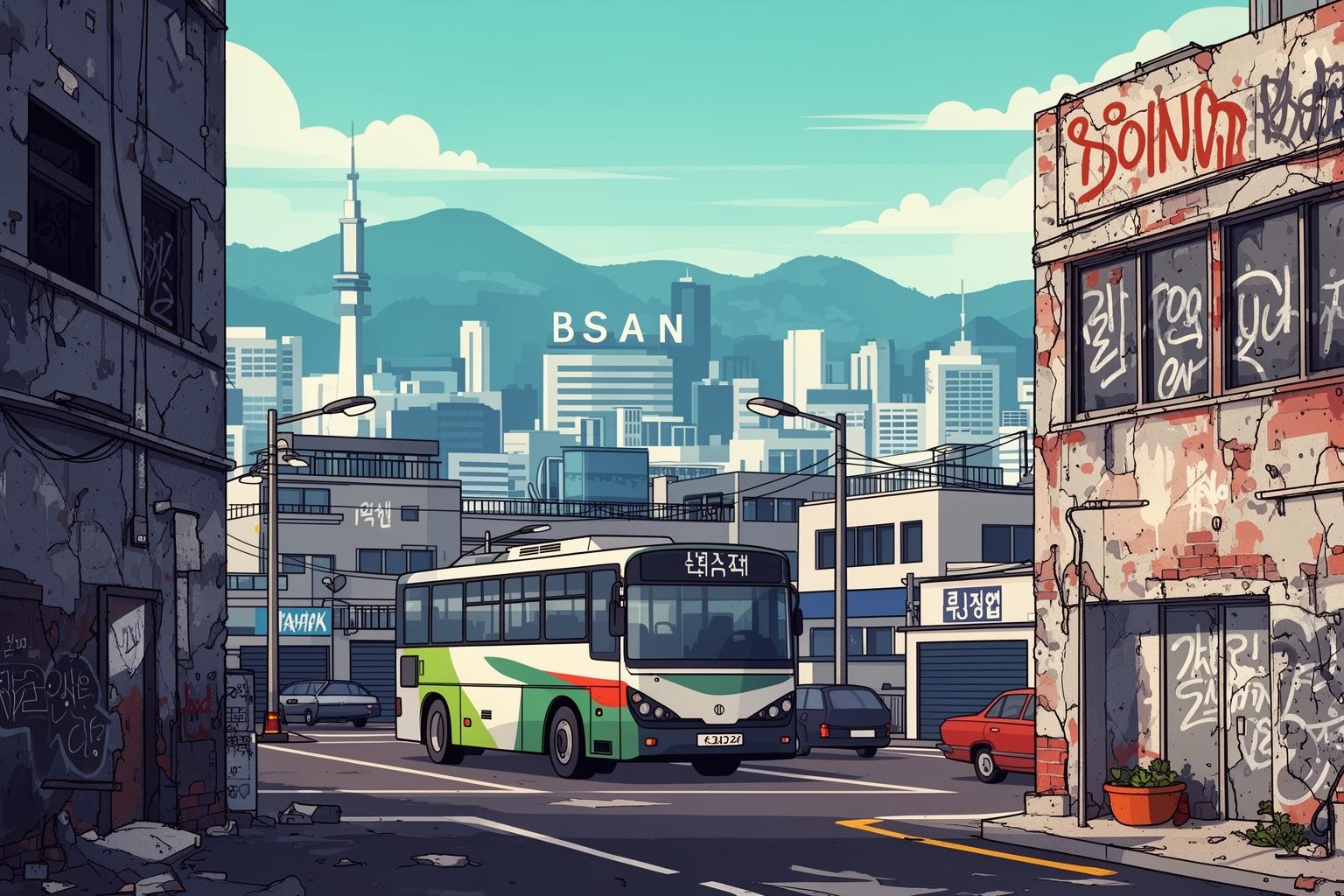
Busan. The name echoes like a mantra throughout the film, a whispered promise of salvation. It is the destination, the endgame—the only place rumored to be safe from the apocalypse ravaging the country. The entire story races toward this southern port city. Yet the Busan that survivors reach is far from the vibrant, sunny tourist spot seen in postcards. Instead, they arrive at the industrial outskirts, a landscape of freight yards, shipping containers, and abandoned tracks. The final scenes take place not in a gleaming new station, but within the gritty, weathered surroundings of the Busanjin Station area—a place that feels raw, authentic, and steeped in a century of labor and history. The film’s climax is brutal, poignant, and heartbreakingly human, with its choice of location playing a vital role in its impact.
Beyond the Tracks: The Busan Film Commission
Before exploring the final outdoor locations, it’s important to recognize the core of the film’s production, much of which occurred within Busan’s world-class studio facilities. The most visceral, claustrophobic, and superbly choreographed sequences—the desperate fights through zombie-infested passenger cars, the agonizing crawl on the luggage racks, the close-quarters combat—were not filmed on a moving train. Instead, they were created on meticulously reconstructed KTX car sets at studios such as the Busan Film Commission. This controlled setting allowed filmmakers to move cameras in ways impossible on a real train, to light scenes for maximum dramatic effect, and to enable stunt performers and actors to safely perform complex action scenes. The train’s interior serves as the film’s primary setting and a character in its own right. The tight quarters, the repetitive rows of seats, the narrow aisle—all form a perfect pressure cooker for drama. Constructing these interiors on a soundstage allowed full control over every detail, from flickering overhead lights to blood spattering on windows. Busan’s status as a UNESCO City of Film is more than merely a title; it reflects the infrastructure and talent that make productions like Train to Busan possible. The city is not only the film’s destination but, in many ways, its birthplace.
Finding Beauty in the Grit
As a photographer exploring the area around Busanjin Station, I feel an immediate, strong connection to the film’s closing moments. This is a different side of Busan, far removed from the neon lights of Seomyeon or the sandy shores of Haeundae Beach. This is the city’s working core. The air itself feels heavier—the scent of salt from the nearby port mingling with the metallic tang of the railway. The visual landscape is defined by rust, peeling paint, and graffiti. It’s a symphony of industrial textures. I find myself drawn to the railway lines— not the sleek, high-speed KTX tracks, but the older, weathered freight yard rails vanishing into weeds and shadows. Here, the film’s desperate reality feels most vivid. You can frame an image of a lone, abandoned freight car silhouetted against a gray sky, or the intricate geometry of track switches leading nowhere, and it resembles a production still from the movie. The beauty here is unconventional; it’s the stark, honest beauty of function and decay. It serves as the perfect visual metaphor for the survivors at journey’s end: battered, worn, but still standing. The final walk through the tunnel is one of modern cinema’s most tense sequences, and while there are many tunnels in the area, the real power lies in the atmosphere of the landscape itself—a landscape that feels forgotten, existing on the fringe of the shining metropolis.
Practical Pilgrimage: The Port City
Arriving at the Busanjin Station area is straightforward via the Busan Metro system—it’s on Line 1. Once you emerge, you enter a neighborhood that feels distinctly different from the main Busan Station area where the KTX terminates. This is the final stop for pilgrims. I recommend walking the streets, observing the architecture, and heading toward the rail yards. Be respectful, as these remain active industrial zones, but you can capture the essence from public roads and overpasses. To complete the experience, balance this gritty exploration with a visit to the more polished side of Busan’s film culture. Stop by the Busan Cinema Center, the striking home of the Busan International Film Festival (BIFF), with its iconic, massive cantilevered roof. Witnessing this architectural marvel after traversing the industrial landscapes of Busanjin perfectly captures the city’s remarkable range. It is both a hardworking port and a glamorous global cinema hub—a complex, deeply resonant final stop on any Train to Busan pilgrimage.
Crafting Chaos: The Art of the Zombie Apocalypse
A journey through the filming locations of Train to Busan showcases the filmmakers’ remarkable talent in transforming ordinary settings into terrifying arenas. However, the film’s essence lies not only in its locations but also in its groundbreaking portrayal of monsters and its steadfast focus on the human drama at its heart. To truly appreciate this pilgrimage, one must also recognize the unseen artistry that brought the apocalypse to life—an art that elevates the film from a simple thriller to a cinematic masterpiece.
The KTX Experience: More Than Just a Destination
At the core of the story is the train itself: the Korea Train eXpress, or KTX. As a marvel of engineering, it symbolizes South Korea’s rapid modernization and technological advancement. It links the nation’s major cities with incredible speed and efficiency, shortening distances and bringing the country closer together. In the film, this emblem of progress and connection is transformed into a speeding coffin, a delicate vessel of civilization hurtling through a world engulfed in chaos. The very qualities that make the KTX convenient in reality—its speed, enclosed space, and fixed route—turn into its most terrifying traits on screen. There is no escape, no turning back, only an unstoppable forward drive towards a destination that may not even exist. For any fan undertaking this pilgrimage, riding the actual KTX from Seoul to Busan is an indispensable part of the experience. Purchase your ticket, find your seat, and as the train slides away from the station, feel the astonishing smoothness of its acceleration. Watch Seoul’s urban landscape fade into tunnels, rice paddies, and mountains. The journey itself becomes a moving meditation on the film. Every plunge into darkness within a tunnel sends a spark of the movie’s suspense. Each stop at a station, however peaceful, echoes the film’s underlying dread. This ride connects you to the characters’ experience in a visceral way that merely standing on location cannot. You become not just an observer but a passenger on the line to Busan.
The Symphony of the Infected
It’s impossible to discuss Train to Busan without honoring the infected. These are not the slow, shambling zombies of traditional horror. They are fast, agile, and terrifyingly erratic. Their movements form a grotesque mimicry of life, marked by broken, twisted postures and an unnerving, bird-like speed. This distinctive physical language was crafted through intense collaboration among choreographers and the many stunt performers and actors who portrayed the horde. They practiced meticulously to create movements that felt simultaneously chaotic and coordinated, transforming the infected swarm into a single, monstrous entity. This attention to detail is what makes the zombie attacks so viscerally impactful. They don’t just bite; they convulse, climb, and hurl themselves with reckless abandon that feels disturbingly real. This artistry is a fundamental part of the film’s fabric, and while it isn’t visible on location, understanding the level of craft involved deepens the appreciation of the final film and the settings where these performances unfolded.
The Last Stop: More Than Just a Movie
To travel through the real-life locations of Train to Busan is to embark on an intriguing exploration of contrasts. It’s a journey that juxtaposes the calm, orderly reality of South Korea’s public transportation system with the chaotic frenzy of cinematic fiction. Standing on a sunlit platform in Daejeon, you recall the swarm. Wandering through a sparkling shopping complex in Daegu, you remember the crushing silence. Breathing in the salt and steel near Busanjin, you sense the heavy weight of the survivors’ last desperate steps. This pilgrimage powerfully attests to the magic of filmmaking—the capacity to transform ordinary transit spaces into stages for epic struggles for survival. It shows how architecture, light, and sound can be crafted to evoke unbearable tension and deep emotion. More than that, it connects you to modern South Korea, inviting you to ride its trains, explore its cities, and witness the vibrant, peaceful, and resilient nation that thrives beyond the film’s frame. For the characters, the train to Busan was a desperate escape from a dying world. For today’s traveler and film enthusiast, it is a journey into the heart of a living world filled with creativity, culture, and connection. While the story on screen may have ended in tragedy and a glimmer of hope, the journey it inspires is one of discovery, appreciation, and a renewed respect for the everyday places that serve as the backdrop for extraordinary tales.