Los Angeles. The name itself is a story, a sun-bleached promise shimmering on the horizon. It’s the city of dreams, the land of celluloid heroes and golden opportunities. But peel back that veneer, scratch beneath the glamorous surface, and you’ll find another L.A. – a city of shadows, of whispered secrets and broken promises, a place where the California sun casts long, dark shadows. This is the Los Angeles of James Ellroy, the brutal, beautiful, and corrupt world brought to life with breathtaking perfection in Curtis Hanson’s 1997 neo-noir masterpiece, L.A. Confidential. The film is more than just a crime story; it’s a portrait of a city at a crossroads, a post-war paradise teetering on the brink of moral decay. It captures a fleeting moment in the early 1950s when the glamour of the Golden Age of Hollywood collided with the city’s dark, sprawling underbelly of organized crime and police corruption. For those of us captivated by its intricate plot, its morally ambiguous characters, and its intoxicating atmosphere, the city itself becomes the most compelling character of all. To walk its streets is to walk through the pages of Ellroy’s novel and the frames of Hanson’s film. This isn’t just a location hunt; it’s a pilgrimage. It’s an urban hike into the heart of a bygone era, a journey to find the ghosts of Bud White, Ed Exley, and Lynn Bracken, who still haunt the historic corners of their city. We’ll trace their steps, from the imposing halls of power in Downtown to the seductive hideaways of Hollywood, uncovering the real-life stages where this epic tale of ambition and deceit was told. This is your guide to the living, breathing sets of L.A. Confidential.
If you’re captivated by the idea of cinematic pilgrimages, you might also enjoy exploring the iconic filming locations of Dances with Wolves.
The Heart of the Corruption: Downtown L.A. and City Hall
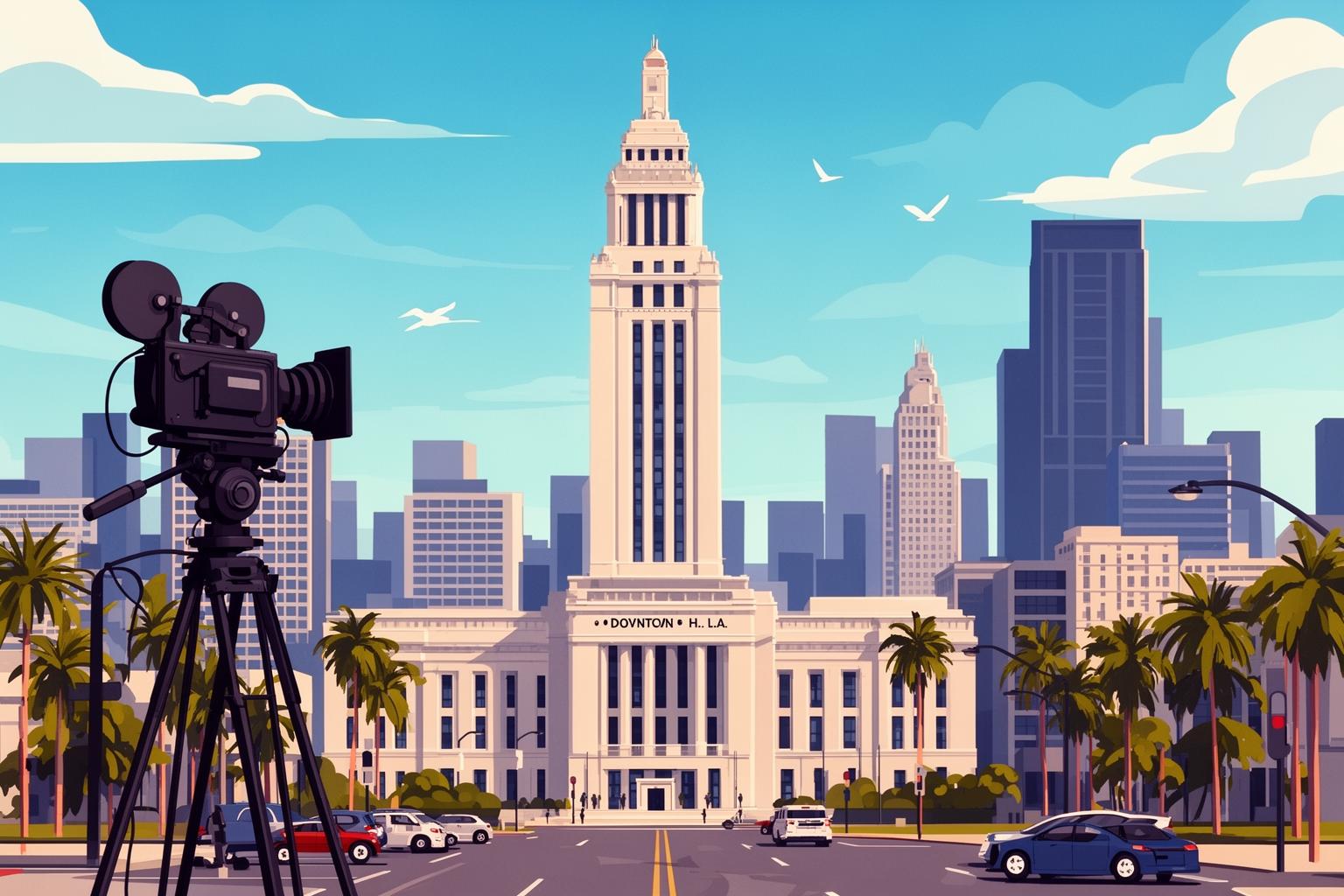
Every great noir tale requires a corrupt system—a rotten core from which decay spreads—and in L.A. Confidential, that core is the Los Angeles Police Department. The film’s opening scenes position Downtown L.A. as the epicenter of power, law, and the blatant disregard for both. This is the realm of Captain Dudley Smith, the charming Irish cop with a serpent’s tongue, and the ambitious Lieutenant Ed Exley, who believes he can reform the city from within. To truly grasp the weight of the institution they inhabit, your journey must commence here, amid the concrete canyons and historic facades of Downtown Los Angeles.
Los Angeles City Hall: A Monument to Power and Deceit
The most iconic symbol of civic authority in the film is the magnificent Los Angeles City Hall. Its towering, pyramid-capped spire dominates the skyline and serves as the primary exterior for the LAPD’s headquarters at Parker Center. When Ed Exley strides up its steps, or Captain Smith holds a self-congratulatory press conference on its lawn, the building transcends mere backdrop; it stands as a symbol of the institutional power that the characters strive to uphold, manipulate, or dismantle. Director Curtis Hanson used its grandeur to highlight the stark contrast with the sordid dealings unfolding within its fictional walls. The pristine, white concrete of its Art Deco design, reaching piously skyward, masks the moral decay festering within the police department it represents.
Visiting City Hall today offers an experience that bridges fiction and reality. Completed in 1928, it stood as the tallest building in the city for decades—a testament to L.A.’s ambition. Approaching from Grand Park, its impressive scale is undeniable. The concrete used in its construction was sourced from all 58 California counties, symbolizing its service to all residents—a bitter irony given the film’s events. Although it remains an active government building, it is remarkably accessible to the public. After passing a security check, you can explore the grand rotunda and even take an elevator to the 27th-floor observation deck. This is a must-visit for any guest. The panoramic view is stunning, stretching from the San Gabriel Mountains to the Pacific Ocean. From this vantage point, you can gaze upon the city as Ed Exley dreamed of doing—seeing it all laid out before you, a sprawling map of secrets and opportunities. It’s the perfect place to begin your exploration, gaining an overview before descending into the city’s shadowy depths.
The Pacific Electric Building: The Real Victory Motel
Although the climax of L.A. Confidential unfolds at the fictional Victory Motel, a seedy, dilapidated inn, the intense interior scenes where Bud White and Ed Exley make their desperate stand were actually filmed inside one of Downtown L.A.’s most historic and elegant buildings: the Pacific Electric Building at 6th and Main. This choice adds an intriguing layer to the film’s narrative. Once the bustling hub of the city’s Red Car trolley system—the largest electric railway in the world—the building represented a brighter, more connected vision of Los Angeles. By the 1950s, as the film depicts, that system was being dismantled in favor of freeways and private cars, and the building’s glory had begun to fade. Hanson skillfully used the decaying grandeur of its interiors—the soaring ceilings, the forgotten details—to create the claustrophobic, desperate atmosphere of the Victory Motel shootout. The ghosts of L.A.’s optimistic past silently witness its violent, cynical present.
Today, the Pacific Electric Building has been transformed into residential lofts. Visitors can no longer walk the hallways where Bud White and Ed Exley battled for their lives. However, its exterior remains a stunning example of Beaux-Arts architecture. Standing across the street, you can admire its commanding facade, intricate details, and imagine the contrast between its original purpose and its cinematic one. The ground floor frequently hosts retail shops and restaurants, offering a glimpse into its vast interior spaces. It serves as a powerful reminder of how L.A. continually reinvents itself, building new dreams atop the foundations of old ones—a theme that resonates deeply with the film’s exploration of identity and constructed reality.
Hollywood’s Gilded Cage: Glamour, Vice, and Broken Dreams
If Downtown represents the film’s core of institutional corruption, Hollywood embodies its essence of personal decay. This is the realm of Lana Turner and Johnny Stompanato, gossip rags like Hush-Hush, and Lynn Bracken’s meticulously crafted illusion. It’s where dreams are created and marketed, and where the boundary between celebrity and criminal, fantasy and reality, dangerously blurs. The Hollywood settings in L.A. Confidential are steeped in this seductive atmosphere of artifice.
Crossroads of the World: A Ship Sailing on Sunset
One of the film’s most visually distinctive locations is the Crossroads of the World on Sunset Boulevard. This architectural marvel serves as the backdrop for Bud White’s tense confrontation with the real-life gangster Johnny Stompanato, Lana Turner’s abusive boyfriend. Designed in the Streamline Moderne style and opened in 1936, the building is unforgettable. Its central structure resembles a futuristic ocean liner, complete with portholes and railings, seemingly sailing through a sea of smaller, village-like shops. Conceived as America’s first modern outdoor shopping mall, it was a utopian vision of a global marketplace. Its optimistic and whimsical design offers an ironic contrast to the dark dealings unfolding in the film. The fantasy of Hollywood commerce sets the stage for its brutal reality.
Today, Crossroads of the World no longer functions as a shopping center but houses private offices for the music and entertainment industries. While browsing shops is no longer possible, the entire complex is open to visitors during business hours. Walking through its pedestrian pathways feels like stepping onto a forgotten movie set. The architecture acts as a time capsule, preserving a piece of 1930s futurism in the heart of modern Hollywood. It’s an essential photo spot for any film pilgrim, a place where the quirky, ambitious spirit of old Hollywood remains tangible. Standing where Bud White stood, one can sense the clash of two eras: the bright promise of the architecture and the dark cynicism of the story.
The Frolic Room: A Neon-Soaked Dive
No noir film is complete without a dark, smoky bar where secrets are exchanged over whiskey. In L.A. Confidential, one of the key watering holes is the Frolic Room, a legendary dive bar next to the Pantages Theatre on Hollywood Boulevard. This is where Dudley Smith and his crew celebrate following the bloody Christmas Eve brawl, and where the film’s cynical narrator, Hush-Hush editor Sid Hudgens, hunts for gossip. The Frolic Room is not a set; it’s an authentic bar that has served Hollywood’s saints and sinners since 1934. Its neon sign shines as a beacon in the Hollywood night, promising cheap drinks and zero judgment.
Stepping inside the Frolic Room feels like entering a time warp. The space is small, dimly lit, and appears unchanged for seventy years. The walls feature an extraordinary mural of Golden Age caricatures—including Albert Einstein, Clark Gable, and Charlie Chaplin—painted by the celebrated artist Al Hirschfeld. The worn red leather booths, thick atmosphere of history, and stiff drinks create one of the most immersive locations on the pilgrimage. Sitting in a booth, ordering a beer, you can almost feel the film’s ghosts around you. It’s easy to imagine Dudley holding court in the corner or Sid scribbling notes on a napkin. This living piece of noir history continues to thrive on the gritty, authentic vibe that made it an ideal filming location. For first-time visitors, a stop here is essential—it’s an opportunity to drink in the true spirit of old Hollywood’s underside.
Boardner’s by La Belle: A Classic Hollywood Watering Hole
While the Frolic Room has its own distinct character, the filmmakers required additional bar interiors to flesh out the world of cops, criminals, and movie stars. For many such scenes, they turned to another Hollywood institution: Boardner’s. Located just off Hollywood Boulevard, this bar offers a slightly more spacious and refined, yet equally moody, atmosphere. Its dark wood paneling, low lighting, and labyrinthine layout create the quintessential noir setting. It’s easy to imagine Ed Exley meeting a shady informant here or Lynn Bracken waiting discreetly in a secluded booth. Boardner’s has been a Hollywood fixture since the 1940s, a favored haunt for writers, actors, and industry insiders. Its history is steeped in the kind of real-life drama that James Ellroy fictionalized.
Like the Frolic Room, Boardner’s provides an authentic experience. You can order a classic cocktail at its long, polished bar or find a quiet table in one of its many cozy nooks. The bar also features a charming, secluded back patio, offering a brief respite from the intensity of the noir world. Visiting in the evening, as the lights of Hollywood begin to glow, is the best way to absorb its ambiance. It feels less like a tourist attraction and more like a neighborhood secret, a place that holds countless stories within its walls. Having served as a backdrop for numerous films and TV shows, Boardner’s boasts a timeless, cinematic quality. It’s a location that doesn’t just look the part—it lives it.
The Shadowy Suburbs: Where Secrets Lie Buried
Beyond the public realms of Downtown and Hollywood, the true drama of L.A. Confidential unfolds in the quiet, manicured suburbs. It’s within these closed doors of elegant homes and on unassuming street corners of sleepy neighborhoods that the city’s deepest secrets lie hidden and its most shocking violence bursts forth.
Lynn Bracken’s Spanish Oasis: Chasing a Counterfeit Dream
Lynn Bracken, the Veronica Lake doppelgänger at the center of Pierce Patchett’s upscale prostitution ring, resides in a home that reflects her character as much as her flawlessly styled hair. Her house serves as a sanctuary, a stage, and a cage. It’s where she enacts the fantasy of domestic bliss for her clients and where both Bud White and Ed Exley fall for the woman behind the facade. The house had to be impeccable, embodying the Hollywood dream, and location scouts found the perfect fit at 501 Wilcox Avenue. This stunning Spanish Colonial Revival home sits in Hancock Park, a wealthy, historic neighborhood known for its grand, impeccably preserved estates from the 1920s.
Driving through Hancock Park feels like stepping into another world. The broad, tree-lined streets and sprawling, stately homes create a veneer of flawless suburban calm—exactly why it offers such a potent backdrop for the film’s dark narrative. The Wilcox Avenue house is a private residence, so visiting it requires the utmost respect. You can’t go inside or linger too long outside, but a slow drive-by lets you appreciate its beauty and cinematic significance. You’ll notice the arched windows, terracotta roof tiles, and lush landscaping that built Lynn’s secluded world. It stands as a powerful visual metaphor for the film’s central theme: the beautiful, meticulously crafted surfaces that conceal a far more complex and often perilous reality.
The Nite Owl Cafe Massacre: The Spark That Ignited the Story
The catalyst for the entire saga is the brutal, seemingly random massacre at the Nite Owl Cafe. This horrific event sets the plot in motion and drives the three central cops onto a collision course. Although “Nite Owl” suggests a classic, neon-lit diner, the filming took place in a defunct coffee shop at the corner of Bellevue Avenue and North Edgemont Street in Silver Lake. The production transformed this unremarkable spot into a 24-hour greasy spoon, creating one of modern cinema’s most unforgettable crime scenes.
Today, visiting this corner can feel oddly anticlimactic yet deeply moving. The original Pat’s Coffee Shop building is gone, replaced by a newer construction. It’s just a typical street corner in a quiet, mostly residential neighborhood. There’s no plaque or marker commemorating the cinematic violence that occurred here. For true fans, however, that absence enhances its power. Standing on the spot invites you to summon your imagination, to overlay the film’s gritty black-and-white opening onto sunny California reality. It underscores how violence can erupt in the most mundane settings. The contrast between the peaceful neighborhood and the memory of the film’s explosive opening is haunting—a testament to the transformative power of filmmaking to turn ordinary places into sacred sites for cinephiles.
The Real Spirit: The Formosa Cafe
While the Nite Owl was a dressed set, another iconic Hollywood establishment played a key role: the Formosa Cafe. This is where Ed Exley, in a moment of sharp investigation, confronts gangster Mickey Cohen’s enforcer Johnny Stompanato regarding his connection to Lana Turner. Unlike the Nite Owl, the Formosa is a genuine, historic Hollywood landmark, located in West Hollywood adjacent to the former United Artists studio lot. Opened in 1939, it was a favored haunt of stars like Humphrey Bogart, Frank Sinatra, and Marilyn Monroe. Its history is woven into the very fabric of the Hollywood the film portrays.
Following a period of closure and careful restoration, the Formosa Cafe has been returned to its original splendor and is an absolute must-visit. Stepping inside feels like entering a film noir. The interior is a blend of red leather, dark wood, and vintage photographs of its famous patrons. The main dining area is housed in an original Pacific Electric Red Car trolley, a beautiful tribute to the city’s history. It’s the perfect spot to conclude a day of pilgrimage. You can sit in a booth once occupied by a movie star, order a classic cocktail like an Old Fashioned, and immerse yourself in the richly authentic atmosphere. It feels less like a themed restaurant and more like a museum you can sip in. Here, the world of L.A. Confidential comes alive—a tangible connection to the glamour and danger of Hollywood’s Golden Age.
The Final Showdown: The Victory Motel Revisited
All the threads of conspiracy, corruption, and violence in L.A. Confidential come together in a single, bloody climax at the dilapidated Victory Motel. It is here that Bud White and Ed Exley, having finally set aside their differences, make their final stand against Captain Dudley Smith and his band of corrupt officers. This sequence is a masterclass in tension and action—a brutal dance of gunfire and betrayal within the decaying rooms of a forgotten building.
The Abandoned Stronghold: The Lincoln Heights Jail
The filmmakers required a location that could evoke a sense of urban decay and claustrophobic dread for the Victory Motel shootout, and they found it in the abandoned Lincoln Heights Jail. This sprawling Art Deco complex, situated just east of the L.A. River, served multiple roles in the film. Its cellblocks provided the setting for the notorious “Bloody Christmas” beatings early in the story, establishing the LAPD’s capacity for brutality. However, its true starring role was as the interior of the Victory Motel. The jail’s long, crumbling corridors, peeling paint, and barred windows offered the perfect backdrop for the film’s explosive finale.
Constructed in 1931, the Lincoln Heights Jail has a lengthy and rich history. It housed prisoners for over three decades before closing in 1965. Since then, its eerie, atmospheric interiors have made it a sought-after filming site for everything from music videos to blockbuster films. It is generally not open for public tours, which only adds to its mystique. However, you can view its imposing exterior from the street. It towers over the neighborhood—a concrete ghost emitting a palpable sense of history and despair. Its future is a frequent subject of debate in Los Angeles, with proposals ranging from demolition to redevelopment as artist lofts or a community center. For now, it remains a dormant giant, a silent witness to a century of the city’s history, both real and imagined. Seeing it in person, even just from outside, is a powerful experience, connecting you to the raw, violent energy of the film’s unforgettable conclusion.
Living the Noir Lifestyle: Tips for Your L.A. Confidential Pilgrimage
Touring the L.A. Confidential locations is more than simply ticking off spots on a map. It’s about immersing yourself in the film’s mood and atmosphere. With a bit of planning and the right mindset, you can fully appreciate your journey into L.A.’s noir history.
Crafting Your Itinerary
Los Angeles is a sprawling city, and having a car is essential—not just for convenience but also thematically fitting. Cars are central to mid-century L.A.’s identity, with much of the film’s action taking place on its boulevards and freeways. Organize your days by neighborhood to avoid spending too much time in traffic. Devote one day to Downtown locations like City Hall and the Pacific Electric Building. Another day can be spent exploring Hollywood spots such as Crossroads of the World, the Frolic Room, Boardner’s, and the Formosa Cafe. Dedicate a third day to a scenic drive through residential areas, visiting Hancock Park to see Lynn Bracken’s house, then heading to Silver Lake to reflect on the site of the Nite Owl. This method turns the journey from a hectic race into a considered exploration.
The Right Soundtrack and Mindset
To truly embrace the experience, prepare a playlist for your drives. Jerry Goldsmith’s Oscar-nominated score for the film is an ideal starting point, with its jazzy, melancholic themes setting the perfect tone. You might also compile a playlist of 1950s jazz and pop—the kind of music Bud White and Ed Exley would have heard on their car radios. As you travel, notice the details Hanson so vividly captured: the afternoon sun piercing the smog, tall palm trees outlined against the fading sky, neon signs flickering on at dusk. L.A. noir revolves as much around light and shadow as it does around plot. Look for the city’s remaining Googie architecture, classic diners, and historic movie palaces. See the city not only as it is now, but as it once was—a landscape of ghosts and memories.
Beyond the Film: Other Noir Haunts
Your journey needn’t end with just the film’s locations. Los Angeles is full of places that share the same dark, romantic spirit. Enjoy a steak and a martini at Musso & Frank Grill on Hollywood Boulevard, a restaurant open since 1919 and favored by writers like Raymond Chandler and F. Scott Fitzgerald. Visit the Bradbury Building in Downtown, a Victorian architectural gem with wrought-iron staircases and a skylit atrium—the perfect setting for the sci-fi noir Blade Runner. Take a nighttime drive along Mulholland Drive and watch the endless city lights sparkle below, a glittering expanse concealing countless stories. Each of these sites adds depth to your understanding of the city’s complex character—the very essence L.A. Confidential conveyed so expertly.
Off the Record, On the QT, and Very Hush-Hush
To follow the footsteps of L.A. Confidential is to uncover the hidden history of a city constantly trying to erase its past. This journey reveals that the Los Angeles of the 1950s—the city of corruption, ambition, and cinematic dreams—is not completely gone. It remains in the architecture of a forgotten downtown building, in the neon glow of a Hollywood dive bar, and in the quiet, sunlit streets of a neighborhood where everything seems perfect on the surface. These places are more than mere backdrops; they serve as portals, allowing us to step beyond the screen and into the world that Curtis Hanson and James Ellroy so skillfully crafted. Standing on a street corner where a fictional crime occurred or having a drink in a bar where a cinematic deal was made, you realize the film’s power stems from its authenticity. It didn’t simply create a fantasy version of 1950s L.A.; it uncovered the real, surviving fragments of that time and breathed new life into them. So go ahead, explore. Conduct your own investigation. The clues are all there, waiting in the shadows for you to discover them. The story of L.A. Confidential is the story of Los Angeles itself, and it’s far from finished.