
Some stories are not just watched; they are felt. They resonate deep within your bones, their echoes lingering long after the credits roll. Gabriele Muccino’s 2006 masterpiece, The Pursuit of Happyness, is one such film. It’s a raw, unflinching, and ultimately triumphant chronicle of a man who refuses to drown in the sea of his circumstances. Will Smith’s portrayal of Chris Gardner, a father fighting for a sliver of a dream against the crushing weight of homelessness, is a tour de force. But there is another character in this film, one whose presence is felt in every frame: the city of San Francisco. The city is not merely a backdrop; it is the arena, the obstacle course, and the silent witness to Chris’s profound struggle. Its steep hills are a metaphor for his uphill battle, its glittering skyline a constant reminder of the world he is trying to break into, and its cold, foggy nights a reflection of his deepest despair. To walk these streets is to trace the map of his journey, to stand in the very spots where he faced failure and found fortitude. This is more than a movie location tour; it’s a pilgrimage. It’s an exploration of the human spirit’s resilience against the stunning, unforgiving, and beautiful canvas of San Francisco. Prepare to follow the echoes of a story that continues to inspire millions, a journey through the heart of a city that promises everything if you’re just willing to chase it.
If you’re inspired to explore other cinematic cities, consider a pilgrimage through the gritty Los Angeles of Reservoir Dogs.
The Heart of the Hustle: The Financial District
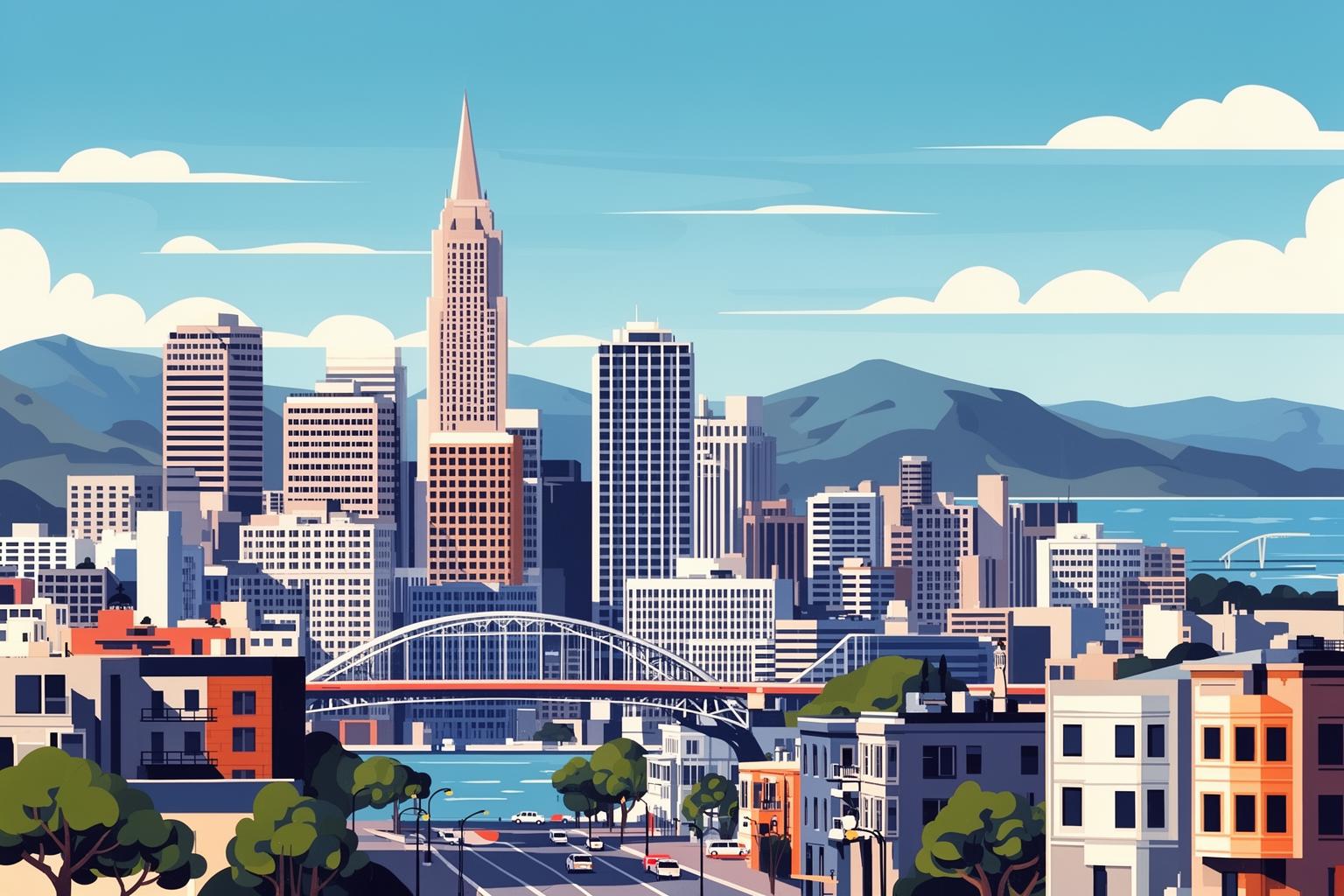
Chris Gardner’s professional rise starts here, amid the towering concrete and glass canyons of San Francisco’s Financial District. This is the heartbeat of ambition, a place where fortunes can be made or lost in an instant. Standing on California Street, gazing up at the formidable 555 California Street, the former Bank of America Center, you are exactly where Chris’s life began to shift. The air carries a distinct energy—vibrant with a charged sense of purpose. On a weekday, the streets flow with tailored suits and focused faces, the steady click of heels on pavement creating a city-wide rhythm of commerce. You can almost sense the pressure, the vastness of the world Chris was desperate to break into.
Here unfolds the iconic Rubik’s Cube moment. Picture Chris, burdened by his cumbersome bone density scanner, spotting Dean Witter executive Jay Twistle. In a bold act of sheer audacity, he shares a cab and, instead of delivering a simple pitch, solves the puzzle that had puzzled Twistle for weeks. This moment serves as a perfect metaphor: in a world of complex, seemingly unsolvable challenges, Chris shows a natural talent for recognizing patterns and bringing order to chaos. Standing here, you can truly grasp the courage it took. The building towers above, a symbol of corporate might meant to intimidate. Yet, on these very steps, a man with nothing but belief in himself made his first significant impression. The Financial District’s architecture plays a crucial role; its sharp lines and soaring heights frame Chris as a small, solitary figure amid giants. Director Gabriele Muccino skillfully uses these visuals to emphasize his isolation and the magnitude of his ambition.
To fully experience the atmosphere, visit during the lunch rush on a Tuesday or Wednesday. The energy is tangible. Find a spot in the plaza around the building and observe. Watch the flow of people, hear the distant clang of a cable car climbing the hill, and feel the cool wind whip through the skyscrapers. This is the world Chris longed for—not for wealth itself, but for what it symbolized: security, stability, and a future for his son. It’s a powerful place to start your journey, a real and visible starting line for a race against seemingly impossible odds.
A Fleeting Home: Russian Hill and The Tenderloin
San Francisco is a city of striking contrasts, a mosaic of neighborhoods each with its own distinct character. The film harnesses this duality to vividly portray the fragility of Chris Gardner’s existence, caught between the hope of stability and the harshness of its absence. Two neighborhoods embody this opposition: the scenic slopes of Russian Hill and the rough, unforgiving streets of the Tenderloin.
The View from Taylor Street
Early in the film, we see Chris, his then-wife Linda, and young Christopher living at their apartment on 1161 Taylor Street in Russian Hill. This setting epitomizes the cinematic essence of San Francisco. The street’s steep incline is stunning, the famous cable car clattering by with its nostalgic bell ringing out. From here, you can glimpse the San Francisco Bay, a narrow band of sapphire blue framed by charming, historic buildings. This apartment symbolizes the life Chris struggles desperately to hold onto. It is a home, a foundation, a place of relative stability. It offers a view, a sense of belonging, and the feeling of being woven into the city’s beautiful fabric.
Russian Hill exudes an atmosphere of established charm and tranquil wealth. The architecture is exquisite, featuring Victorian and Edwardian houses painted in a spectrum of colors alongside classic mid-century apartment blocks. Walking these streets feels like stepping into a postcard. Yet for Chris, this beauty is tinged with anxiety. This is the life slipping away from him. Rent is overdue, the landlord grows impatient, and the once-peaceful clang of the cable car becomes a haunting reminder of a world progressing without him. When visiting, take a moment to reflect on this contrast. The physical exertion of climbing these hills mirrors Chris’s daily struggle, a relentless, draining effort to move forward.
The Grit of the Tenderloin
When that life finally falls apart, Chris and his son end up in the Tenderloin. The film shows them staying in a transient hotel—offering refuge but little comfort. The Tenderloin is one of San Francisco’s most complex and demanding neighborhoods, and the film confronts its harsh realities head-on. Visiting this area demands a mindset different from the tourist-friendly beauty of Russian Hill. It is a place marked by visible poverty, addiction, and mental health challenges. Yet it is also a neighborhood with a profound, resilient history and a vibrant community of artists and activists.
What the film portrays so powerfully is the sense of vulnerability. For Chris, the Tenderloin is stripped of the safety nets he once depended on. Its streets are loud, chaotic, and unpredictable. The film uses this setting to illustrate the depth of his fall and the loss of dignity that accompanies poverty. It is a raw, unfiltered depiction. When visiting, respect and awareness are essential. This is not merely a film backdrop; it is home to thousands. The best way to understand it is within context—perhaps by visiting during the day and learning about local organizations like Glide Memorial Church, which play vital roles in the community. The stark contrast between the sunlit hills of Taylor Street and the shadowed alleys of the Tenderloin embodies the film’s core conflict as expressed through the city’s geography. It is the divide between dream and reality, a chasm Chris Gardner must navigate every day.
The Desperate Chase: Chinatown’s Labyrinth
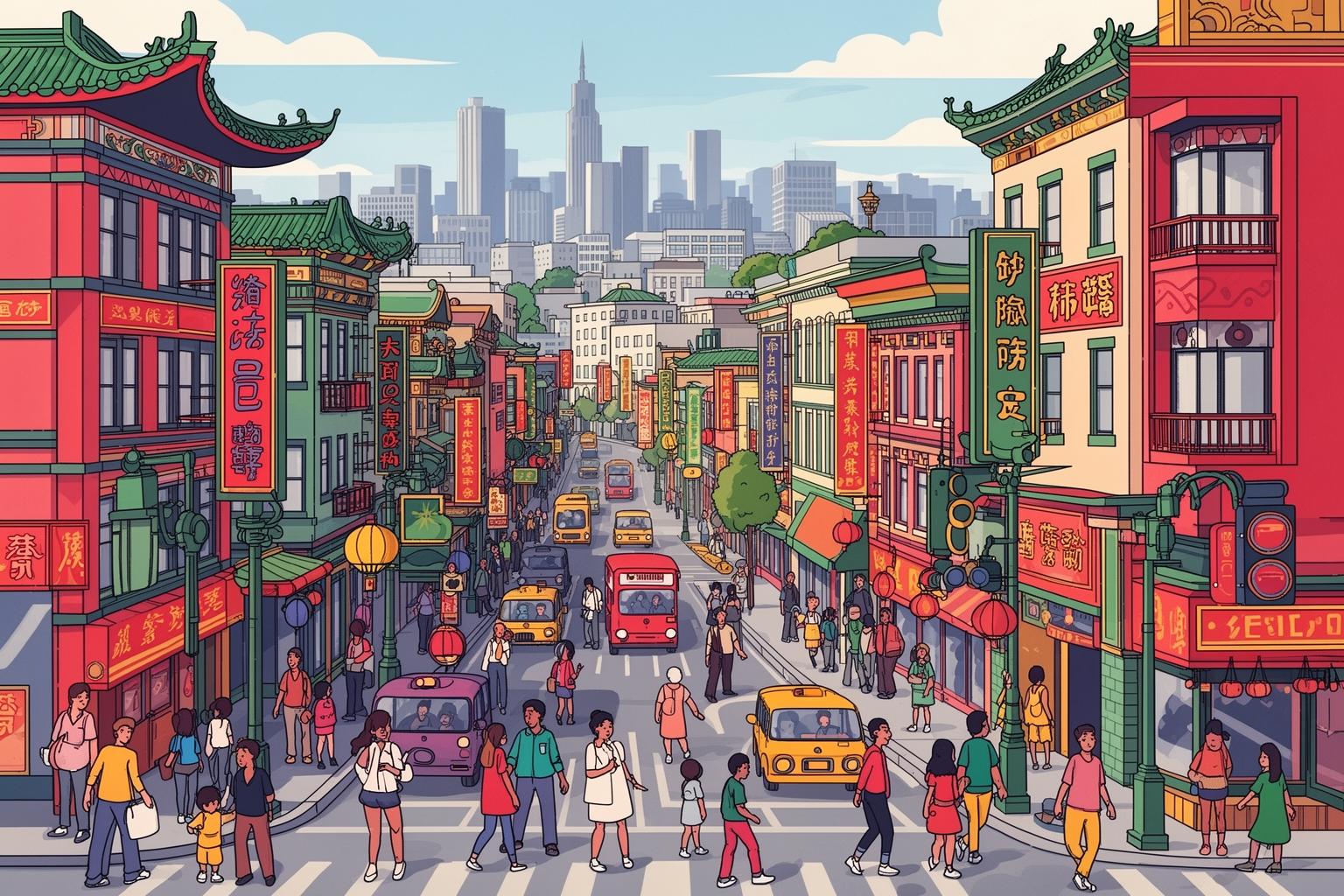
Every hero embarks on a quest, an object they must guard at all costs. For Chris Gardner, that object is his bulky, last-of-its-kind bone density scanner. It is both his burden and his sole hope, the one tangible asset he believes can lift him out of his financial tailspin. The scenes where this valuable machine is stolen, and Chris is forced to give chase, unfold against the vibrant, chaotic, and utterly immersive backdrop of San Francisco’s Chinatown.
Ross Alley, one of the city’s oldest alleys, serves as a key stage for this frantic pursuit. To step into this alley is to be transported elsewhere. The air is thick with aromas from nearby restaurants and the sweet, warm scent of the Golden Gate Fortune Cookie Factory, which has been operating here for decades. Red lanterns hang overhead, casting a warm glow on the colorful murals that decorate the brick walls. It’s a sensory overload in the best sense. The narrowness of the alley creates a sense of compression, of being trapped in a maze. This is exactly why it makes the perfect setting for Chris’s chase. He isn’t just pursuing a person; he’s navigating a labyrinth, a physical representation of the confusing and obstacle-ridden path his life has taken. He bumps into people, dodges carts, and desperately scans the crowded street, his panic intensified by the enclosed, bustling surroundings.
The chase spills onto the main thoroughfares of Grant Avenue and Stockton Street, where the energy multiplies tenfold. Grant Avenue is the tourist-centric heart of Chinatown, marked by its iconic Dragon Gate and souvenir shops. Stockton Street, however, is where the community truly lives and breathes. It’s a bustling corridor of fresh produce markets, butcher shops, and herbalists. The sounds of Cantonese and Mandarin fill the air, mingling with the rumble of city buses. For Chris, this environment becomes another character, another obstacle. It is a tide of humanity he must fight against—a world of people busy with their own lives, unaware of the life-or-death importance of his quest.
When exploring Chinatown, try to see it through his eyes. Feel the urgency. Notice how the crowd’s density can feel both exhilarating and suffocating. The chase through Chinatown is a microcosm of his entire struggle: a frantic, breathless, and relentless effort to reclaim the one thing that offers him a chance. It’s a testament to his refusal to give up, even when the odds—and the whole city—seem to be working against him.
Finding Sanctuary in the City’s Green Lungs
In a life marked by constant stress and uncertainty, moments of peace shine like precious jewels. For Chris and Christopher, these moments are often discovered not within a home, but amidst the vast, green stretches of San Francisco’s parks. These public spaces become their private refuges, places where the harsh realities of their lives can, for a brief time, be kept at bay through imagination and the simple beauty of nature.
A Time Machine in Golden Gate Park
One of the film’s most touching and heartbreakingly beautiful scenes unfolds after Chris and his son find themselves locked out of their motel room along with all their belongings. With nowhere else to turn, they wander into Golden Gate Park. There, clutching the bone density scanner that has caused him so much anguish, Chris performs a deeply moving act of fatherly love. He transforms the device, a symbol of his struggles, into a time machine. He spins a fantasy for his son, a game in which they hide from dinosaurs in a prehistoric cave. This “cave” is actually a public restroom at a BART station, but the spark of this imaginative escape is kindled within the park.
Golden Gate Park is a vast, enchanting space, larger than New York’s Central Park. It is a world unto itself, featuring windmills, a bison paddock, peaceful lakes, and groves of towering eucalyptus trees. Strolling through the park, one can easily find the kind of open, grassy meadow where this scene might have been filmed. The atmosphere is one of calm and retreat. The city’s noise fades away, replaced by the rustling of leaves and birdsong. It is here that Chris offers his son a gift more precious than any home: a fleeting moment of childhood innocence, a protective shield of imagination against a frightening reality. The park embodies the mind’s power to create sanctuary, a theme central to Chris’s endurance. It reminds us that even when you have nothing, you still possess creativity, love, and the ability to shape the world for your child.
The Echoes of Candlestick Park
The bond between father and son is also beautifully captured in the scene at Candlestick Park, the former stadium of the San Francisco 49ers. Chris uses one of his few connections to get tickets, giving his son a glimpse into the world of American spectacle and joy. High up in the stands, they spend a few hours simply as a normal father and son enjoying a football game. It is a moment of connection, a shared happiness that rises above their difficult circumstances.
Today, Candlestick Park no longer exists. The iconic stadium was demolished in 2015 to make way for new development. A visit to the Candlestick Point area now feels very different. It has become a pilgrimage to a memory, a place of echoes. This, in itself, powerfully reflects the film’s themes. Life moves forward. Cities evolve. The places that hold our most meaningful memories may disappear. But the significance of those moments remains. Standing on the site, gazing out over the water, one is reminded of the legacy of the place and the fleeting nature of things. For Chris, the game represented a brief escape, yet the memory of that day with his son became a lasting source of strength. The park’s demolition does not erase that; it merely turns the location into a tribute to the enduring power of shared experience.
The Lowest Point: The Humility of Glen Park Station
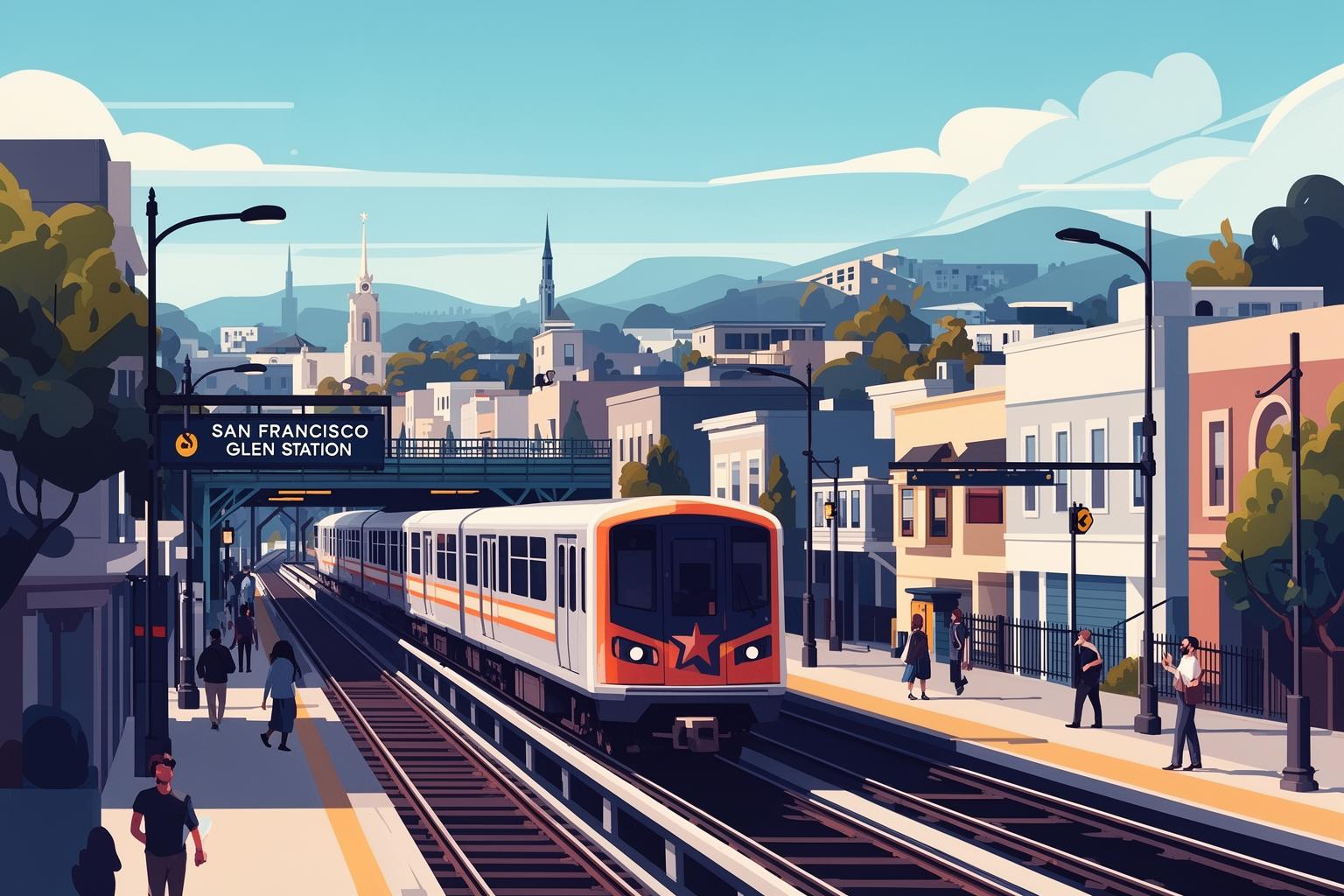
There is a scene in The Pursuit of Happyness so powerful and devastatingly real that it becomes ingrained in the memory of every viewer. It is the moment when Chris Gardner, having exhausted every option and with nowhere else to turn, locks himself and his sleeping son in the bathroom of a BART station. This is the lowest point, the absolute rock bottom. The location for this crucial scene is the Glen Park BART station, a choice that makes the moment even more profound.
Glen Park is not a grand, central station like those downtown. It is a neighborhood stop, a functional, unremarkable piece of public infrastructure nestled in a quiet residential area. Its design reflects its era—brutalist concrete, simple signage, and an air of sterile utility. There is nothing special about it, and that is exactly the point. The horror of Chris’s situation is not unfolding in some dramatic, cinematic slum; it is happening in a place thousands of ordinary commuters pass daily, completely unaware of the human tragedy occurring in a locked restroom.
Visiting Glen Park Station is a somber experience. As you descend the escalators into the cool, underground space, the city’s noise fades into the hum of the tracks and occasional, echoing announcements. Locate the restrooms. Stand outside the door. It is a humbling and deeply moving experience. Imagine the desperation. Chris, a man of great pride and intelligence, is reduced to seeking shelter on a cold, tiled floor, his foot braced against the door, tears streaming down his face as people knock, oblivious to the man inside whose world has utterly collapsed. He covers his son’s ears, shielding him not only from the noise but from the shame of their situation. It is a moment of complete and total sacrifice—the act of a father protecting his child at the expense of his own dignity.
The station’s cold, impersonal atmosphere starkly contrasts with the overwhelming warmth of Chris’s love for his son. The fluorescent lights are harsh, the surfaces hard, yet in that small, locked space, his paternal devotion creates a pocket of safety. A visit to this location is not about taking photos. It is about quiet reflection. It’s about recognizing that the most significant battles are often fought in the most mundane of places and that a person’s true strength is revealed not when they are at the top, but when they are at their absolute lowest, with nothing left to hold onto but love.
A Glimmer of Hope: Glide Memorial Church
In the depths of their struggle, a slender yet crucial lifeline emerges for Chris and Christopher: Glide Memorial Church. Situated in the heart of the Tenderloin, Glide is more than just a place of worship; it is a renowned and radical hub for social justice and community support in San Francisco. For the Gardners, it signifies the promise of a warm bed, a simple meal, and a safe night’s rest—basic human needs that had once felt like unattainable luxuries.
The film faithfully captures the daily routine of desperation that defined this chapter of their lives. Every afternoon, Chris would rush from his unpaid internship in the Financial District, pick up his son from daycare, and hurry to Glide to join the line. The line was always long—a quiet, tense queue of people hoping to secure one of the limited spots for the night. Missing the cutoff meant another night on the streets, in a bus station, or seeking refuge in a public restroom. This daily race against time is one of the film’s most tense and gripping sequences, underscoring the precarious edge on which they lived.
A visit to Glide Memorial Church provides a meaningful connection to the reality behind the film. Unlike many other locations, Glide is not merely a backdrop; it is a living, breathing institution that continues the work shown in the movie every day. The building itself stands as a beacon in the neighborhood. You will likely witness the line for daily meals—a tangible reminder of the persistent challenges of poverty and food insecurity in the city. The atmosphere here exudes proactive compassion and resilience.
To truly grasp the spirit of the place, consider attending one of Glide’s renowned Sunday Celebrations. These are not traditional church services but joyous, inclusive gatherings filled with music, celebration, and messages of love and social action. Here, you can see firsthand the community that has served as a sanctuary for many of San Francisco’s most vulnerable residents over the decades. It places the film in a broader context. Chris Gardner’s story is extraordinary, but his struggle was far from unique. Glide Memorial Church stands as a tribute to the countless stories of hardship and hope unfolding daily on San Francisco’s streets. It transforms a movie pilgrimage into a moment of social consciousness and deep appreciation for the real-world institutions that offer hope when it is needed most.
The Final Walk to Victory: Alameda’s Main Street

Every struggle requires a resolution, a moment of catharsis where pain and perseverance finally pay off. In The Pursuit of Happyness, that moment arrives with quiet, overwhelming power. After months of relentless hardship, Chris Gardner is summoned to the office of his superiors at Dean Witter. He is offered the job. He exits the building, not with a loud shout of joy, but with a look of stunned, tearful relief. He fades into the anonymous downtown crowd, quietly applauding himself—a solitary, private triumph amid the bustling city. However, this final, victorious walk does not occur in the heart of San Francisco’s financial district, but across the bay on the charming, sunlit streets of Alameda.
The filmmakers chose Park Street in Alameda for this pivotal final scene, and the decision is brilliant. Alameda feels worlds apart from the intense, vertical energy of San Francisco. It’s a city with a slower pace, a small-town charm, and beautifully preserved Victorian and Art Deco architecture. After the grit, grime, and anxiety of Chris’s journey through San Francisco’s toughest neighborhoods, arriving in Alameda feels like an exhale. It’s a place of normalcy and peace. The wide sidewalks, classic storefronts, and warm California sunlight all evoke the sense that he has finally reached not just a new job, but a new life.
To get there, you can take a ferry from San Francisco, a journey that is itself a wonderful experience, offering stunning views of the Bay Bridge and city skyline. As you step onto Alameda island, you immediately sense the change in atmosphere. Park Street is the city’s main commercial boulevard, lined with local shops, theaters, and restaurants. Walking the same path Chris took, you can feel the release. The struggle is over. The pursuit has come to an end. This is the promised land.
Adding another layer of profound meaning to this scene is the cameo by the real Chris Gardner. As Will Smith’s character walks down the street, a well-dressed man passes by, and they share a brief, knowing glance. That man is the true inspiration for the story. It’s a powerful, symbolic passing of the torch—a moment when the film acknowledges the real person whose incredible life made the story possible. Walking down Park Street, you are not just retracing the steps of a fictional character; you are walking on ground that honors the triumph of a real man, a victory made all the sweeter by the extraordinary journey it took to reach it.
Capturing the Spirit of Happyness: Your Own SF Journey
A pilgrimage to the sites featured in The Pursuit of Happyness offers an unconventional and profoundly rewarding way to explore San Francisco. It takes you away from the usual tourist spots like Fisherman’s Wharf and Alcatraz and immerses you in the authentic, vibrant core of the city, with all its complexity and charm. This is a journey meant to be walked and felt. The city’s landscape is deeply intertwined with the emotional trajectory of Chris Gardner’s story, and to grasp one, you must experience the other.
Consider shaping your journey around themes. Start in the Financial District, the heart of the dream. Sense the scale, ambition, and the cold, glass-and-steel environment of the world Chris aimed to master. From there, follow his moments of hope and hardship by riding a cable car up the steep slope to Russian Hill, then reflecting on the stark contrast of the Tenderloin. Lose yourself in the colorful, sensory maze of Chinatown, capturing the urgency of his pursuit. Find a moment of calm, as he did, in the lush expanse of Golden Gate Park, a place for imagination and pause.
Next, prepare for the emotional centerpiece of your pilgrimage. Take the BART to Glen Park station for a quiet, reflective ride. This experience goes beyond sightseeing; it’s about witnessing the film’s profound expression of human vulnerability and paternal love. Finally, cross the bay to Alameda by ferry. Feel the sea breeze and watch the San Francisco skyline—the stage of Chris’s struggle—fade into the distance. Walk down Park Street, embracing the sense of peace and arrival. This marks the perfect, hopeful conclusion.
Wear comfortable shoes. San Francisco is famously hilly, and walking its streets is the best way to truly feel the physical and symbolic climbs that underscore Chris Gardner’s journey. Be ready for the city’s unpredictable weather; fog can descend rapidly, a fitting metaphor for the uncertainty Chris faced daily. Most importantly, move through these neighborhoods with empathy and respect. These are not just film locations—they are communities where people live, work, and persevere. This journey is about connecting to a powerful human story that celebrates the resilience of the human spirit. San Francisco was Chris Gardner’s crucible. It pushed him to his limits but also held the key to his redemption. As you walk in his footsteps, you’ll discover that the pursuit—the relentless, hopeful, courageous act of moving forward—is the destination itself.