There are journeys that nourish the body, and then there are journeys that feed the soul. A trip to Oaxaca, the sprawling, sun-drenched heart of Southern Mexico, is unequivocally the latter. This is not merely a destination; it is a pilgrimage. It is a sacred passage for anyone who believes that food is a language, that tradition is a treasure, and that the earth itself can be tasted in a single sip. Here, in the cradle of Zapotec and Mixtec civilizations, history is not confined to museums. It breathes in the fragrant steam rising from a pot of mole, it whispers in the rustle of corn husks, and it burns with a clear, clean fire in a dram of artisanal mezcal. The city, a UNESCO World Heritage site, pulses with a rhythm that is both ancient and vibrantly alive. Its colonial-era cathedrals, painted in hues of ochre and terracotta, stand sentinel over cobblestone streets where the true religion is flavor. To come to Oaxaca is to seek an understanding of Mexico in its most potent, undiluted form. It is to surrender to a world where a recipe is an heirloom and a spirit is a sacrament, a place where every meal tells a story that stretches back for millennia. This is a journey into the very soul of flavor, a quest to understand the magic woven from chile, maize, and agave.
For those whose own pilgrimages are guided by literature, consider a journey into the lyrical landscapes of Han Kang’s Korea.
The Seven Scriptures: A Devotion to Mole
To discuss Oaxacan cuisine is to start and finish with mole. This is not the simple, one-dimensional sauce you might be familiar with from other regions. In Oaxaca, mole is a symphony—a complex and profound culinary art form that stands as the pinnacle of Mexican cooking. It is a sacred scripture composed of spices, chiles, nuts, and time. There are seven distinct moles that make up the canon of Oaxacan gastronomy, each a universe of flavor unto itself, each with its own story, personality, and ritual. Embarking on a journey to understand them is like studying ancient texts; it demands patience, an open palate, and deep respect for the hands that craft them. These sauces are not made quickly. Their creation is a labor of love, an alchemical process that can span days, involving careful charring, grinding, and simmering of dozens of ingredients—a tradition often passed down from grandmother to mother to daughter over generations.
Mole Negro: The Dark Heart of Oaxaca
If any mole holds the status of high priest, it is Mole Negro. It is the most complex, revered, and arguably the most misunderstood of the seven. Its color is a deep, dramatic black, akin to polished obsidian, and its aroma is an intoxicating mix of smoke, sweetness, and spice. The ingredient list speaks to its intricacy, often including over thirty components. It begins with a careful selection of chiles—primarily chilhuacle negro, mulato, and pasilla—that are meticulously toasted to develop smoky depth without bitterness. The complexity deepens with the addition of nuts like almonds and pecans, seeds such as sesame and pumpkin, and a medley of spices including cloves, cinnamon, and allspice. Fruits like plantains and raisins provide a subtle, underlying sweetness. Yet, the soul of Mole Negro lies in two key elements: hoja santa, an aromatic herb lending a unique anise-like flavor, and a hint of Oaxacan chocolate, which enriches the sauce with depth without overt sweetness. Tasting a genuine Mole Negro is a transformative experience. It is velvety on the tongue, with layers unfolding slowly: smoke first, then a wave of spice, followed by dark, fruity sweetness, finishing with a lingering, earthy complexity. Traditionally served over turkey or chicken, it is the undisputed star of weddings, baptisms, and the Day of the Dead—a sauce for celebration and remembrance.
The Spectrum of Flavors: Beyond the Negro
While Mole Negro reigns supreme, the other six moles are royalty in their own right, each offering a distinct glimpse into the Oaxacan palate. To fully appreciate the region’s culinary genius, one must explore this entire spectrum.
Mole Rojo and Coloradito
Often grouped together but distinct, Mole Rojo and Coloradito highlight the brighter, fruitier side of the chile spectrum. Mole Rojo, or red mole, is a vibrant, spicy sauce that gets its heat from guajillo and ancho chiles. It is less complex than Negro but no less delicious, presenting a more direct and fiery character. Coloradito, meaning ‘little red one,’ is its slightly sweeter, milder cousin. It incorporates mashed plantains and a touch of chocolate, producing a brick-red sauce with a satisfying thickness and a flavor profile that balances the heat of ancho and guajillo with gentle, fruity sweetness. It is remarkably versatile, pairing beautifully with pork or enchiladas.
Mole Amarillo and Mole Verde
These are the fresh, herbaceous moles, evoking the green valleys of Oaxaca. Mole Amarillo, or yellow mole, is unique in that it contains no nuts or chocolate. Its vibrant hue comes from the yellow chilcostle or guajillo chile, and its flavor is shaped by fresh herbs such as hoja santa and pitiona. It is a lighter, more broth-like sauce, often thickened with masa (corn dough) and served with vegetables and chicken. Mole Verde is even more intensely herbal. This brilliant green blend of fresh tomatillos, jalapeños, and potent herbs like epazote, cilantro, and parsley is bright, tangy, and zesty—a perfect expression of spring in a bowl, frequently served with pork or chicken.
The Enigmatic Duo: Chichilo and Manchamanteles
These two are perhaps the most unique and challenging for the unaccustomed palate. Mole Chichilo is the rarest of the seven, an assertive and intensely smoky mole. Its hallmark is the use of burnt avocado pits and the dark, nearly black chilhuacle negro chile, both charred to an extreme degree. The result is a profoundly savory, slightly bitter, deeply aromatic sauce with a thin consistency—an acquired taste cherished by connoisseurs. At the opposite end of the spectrum is Manchamanteles, which translates to ‘tablecloth stainer.’ This sweet and savory fruit-based mole is a brilliant crimson stew that combines the spice of chorizo and ancho chiles with the sweetness of pineapple, plantain, and sweet potato. It is a joyous, festive dish that perfectly captures the Oaxacan love for bold, contrasting flavors.
The Distilled Soul: A Pilgrimage for Mezcal
If mole is Oaxaca’s sacred food, mezcal is its sacred spirit. To reduce it to merely a smoky tequila is a serious misjudgment. Mezcal is simultaneously an agricultural product, an artisanal craft, and a cultural foundation. Each bottle encapsulates the story of the particular agave it came from, the land it grew on, the hands of the maestro mezcalero who made it, and the traditions of the village that created it. This spirit’s heartland is found in the dusty valleys and rugged mountains around Oaxaca City, where small, family-operated distilleries called palenques have crafted it for centuries using largely unchanged methods. Immersing oneself in this world is essential to truly understand the spirit of the region.
From Earth to Bottle: The Agave’s Journey
Mezcal’s magic starts with the agave plant, or maguey. Unlike the blue weber agave used for tequila, mezcal can be produced from dozens of agave varieties, each adding unique characteristics to the final spirit. The most common, Espadín, is a cultivated agave known for its versatility and sustainability, yielding mezcals that are often bright, citrusy, and subtly smoky. Yet, the real adventure is in discovering the wild agaves, or silvestres.
For example, there is Tobalá, a small, prized agave growing in rocky, high-altitude terrain, producing a floral, fruity, and complex spirit. Then, there is Tepeztate, a wild agave maturing over up to thirty years, its large sprawling leaves frequently seen by the roadside. Its mezcal is intensely herbaceous, peppery, and mineral-driven—a powerful expression of its harsh environment. Another is Madrecuishe, a tall, stalk-like agave yielding a dry, earthy, and vegetal spirit. Tasting these varieties is much like a wine tasting, with terroir—soil, altitude, rainfall—playing a crucial role, all reflected in each bottle.
The Ritual of Creation: A Visit to a Palenque
Witnessing mezcal’s creation is like stepping back in time. The process is rustic, demanding, and deeply spiritual. It begins with the jimador harvesting mature agave, skillfully removing the spiky leaves to expose the heart, or piña. These piñas, weighing up to hundreds of pounds, are then cooked over several days in a large conical pit oven dug into the earth, lined with river stones, and fueled by wood—this imparts mezcal’s signature smokiness. The aroma of roasting agave—a sweet, caramelized smoky scent—permeates the air of mezcal-producing villages.
Once cooked, the softened piñas are crushed to a pulp, traditionally by a large stone wheel, the tahona, pulled by a horse or donkey. This mash is placed into large open-air wooden vats with water and left to ferment naturally with wild airborne yeasts. The bubbling, pungent fermentation is a living process, guided by the maestro’s intuition. Finally, the fermented liquid, or tepache, undergoes double distillation in small copper or clay pot stills over a wood fire. The maestro expertly makes the ‘cuts,’ separating the heads and tails from the heart, or corazón, of the spirit. Observing this ancient interplay of earth, fire, water, and air is a profound experience and a tribute to the enduring power of tradition.
How to Drink Mezcal: Sipping with Respect
In Oaxaca, mezcal is not consumed as a quick shot. It is a spirit meant to be savored and contemplated. Served neat in a small clay cup called a copita or in a glass vessel called a veladora, the proper way to drink it is with besos, or little kisses. You take a tiny sip, swirl it around your mouth to adjust your palate, then slowly savor the next sip. It is often accompanied by slices of orange, lime, or grapefruit sprinkled with sal de gusano, a salt blended with ground agave worms and chiles. This is no gimmick; the saltiness and spice perfectly enhance the mezcal’s complex flavors. When drinking with a mezcalero, you may see them pour a little of their first sip onto the ground as an offering to Mayahuel, the Aztec goddess of agave—a gesture of gratitude to the earth for its gift.
The Living Pantry: Markets and Street Stalls
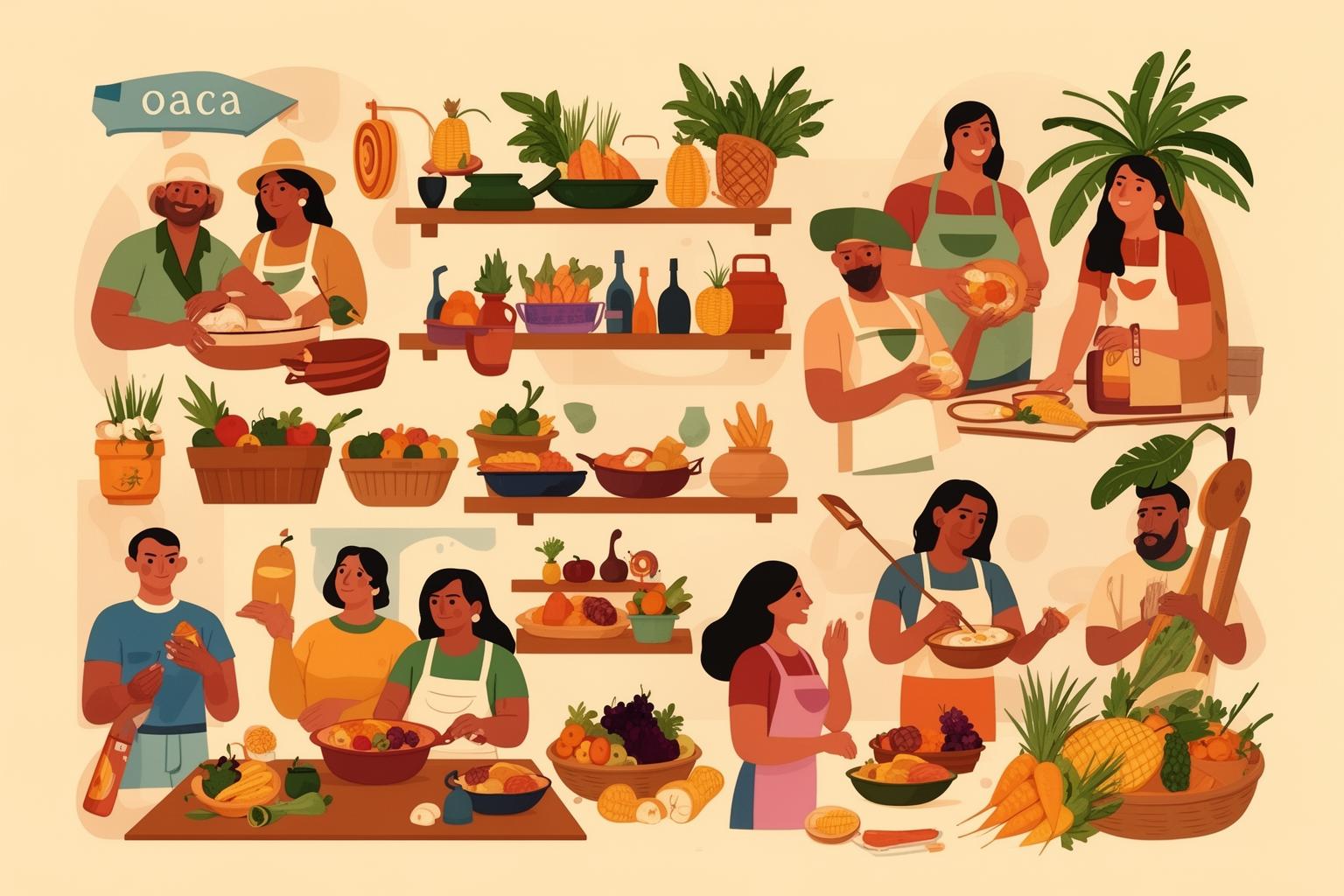
To genuinely connect with the culinary essence of Oaxaca, you must dive into its markets. These are far more than mere places to buy groceries; they are the vibrant, chaotic, and utterly captivating heartbeats of the city. The two primary central markets, Mercado Benito Juárez and Mercado 20 de Noviembre, are essential destinations. They offer a riotous sensory experience, a maze of narrow aisles overflowing with the rich bounty of the Oaxacan landscape.
A Feast for the Senses: Exploring the Mercados
As you enter Mercado Benito Juárez, you are immediately immersed in a world of color and sound. Mountains of chiles in every imaginable shape and shade of red greet you, from the tiny, fiery chile de árbol to the large, smoky pasilla oaxaqueño. Pyramids of fresh produce, exotic tropical fruits, and bundles of fragrant herbs fill the stalls. Vendors call out, offering samples of queso Oaxaca, the renowned string cheese artfully wound into large balls. You’ll find sections devoted to chocolate, sold in hard discs ready for melting into hot chocolate or using in mole. And then there are the chapulines—grasshoppers—piled high in baskets, toasted and seasoned with garlic, lime, and chile. For the adventurous, they’re a crunchy, savory, and surprisingly delightful snack.
Right next to Benito Juárez lies Mercado 20 de Noviembre, the city’s main food market. The air here is thick with the aroma of cooking food. This is the place to eat and experience Oaxacan cuisine in its most genuine and unpretentious form. You’ll find vendors selling everything from the seven moles to hearty soups and fresh fruit juices. But the market’s standout feature is the Pasillo de Humo, or Hall of Smoke. This narrow alley is lined on both sides with charcoal grills. You select your preferred cut of thinly sliced beef (tasajo), pork (cecina), or chorizo from a butcher’s stall and hand it over to the grill masters. They throw it onto the scorching grates, and within minutes, it returns perfectly cooked and smoky. You then move on to other vendors to gather tortillas, salsas, grilled onions, and peppers to assemble your ideal meal, enjoyed at long communal tables in the lively, smoky hall. It is an experience of unfiltered, pure joy.
The Corn-Paved Streets: Tlayudas and Tejate
Beyond the markets, Oaxaca’s streets reveal their own culinary wonders. At night, the city glows with street carts, many specializing in the Tlayuda. Often called an Oaxacan pizza, the tlayuda is truly much more. It begins with a large, thin, and crispy corn tortilla, slathered with a layer of refried beans and asiento (unrefined pork lard). It is then topped with shredded Oaxaca cheese, cabbage, and your choice of meat. Finally, it is folded in half and toasted over charcoal until the cheese melts and the tortilla turns perfectly crisp and smoky. It’s a hearty, satisfying, and essential Oaxacan delight.
During the day, watch for women carrying large, brightly painted clay pots selling Tejate, a pre-Hispanic drink that is both refreshing and nourishing. Known as the ‘drink of the gods,’ it is made from toasted maize, fermented cacao beans, mamey fruit seeds, and flor de cacao. These ingredients are ground into a fine paste, then mixed with water by hand until a thick, foamy layer rises to the top. Served cold, it is an earthy, floral, and subtly sweet beverage that offers a direct taste of the region’s ancient heritage.
Weaving the Narrative: Culture, Art, and Practicality
A pilgrimage to Oaxaca is incomplete without immersing yourself in the culture that shapes and enriches its cuisine. The food did not emerge in isolation; it is the result of a rich history, a breathtaking natural environment, and a deeply artistic people.
The Heart of the City: Zócalo and Santo Domingo
Oaxaca’s main square, the Zócalo, serves as the city’s communal living room. Shaded by towering laurel trees, it is a lively center surrounded by cafes, government offices, and the city’s cathedral. It’s an ideal spot to sit down, enjoy a coffee or beer, and watch life unfold. Just a few blocks to the north stands the Templo de Santo Domingo de Guzmán, a stunning example of Mexican Baroque architecture. Its interior is almost entirely adorned with intricate gold leaf and sculpted plaster, reflecting the wealth and artistry of the colonial period. Next to the church is the Centro Cultural Santo Domingo, housed in the former monastery, which includes the Museo de las Culturas de Oaxaca. This museum offers essential context for your visit, with extraordinary displays of Mixtec and Zapotec artifacts, including the exquisite treasures uncovered at the nearby Monte Albán archaeological site.
The Artisan Valleys: A Deeper Connection
To fully grasp Oaxaca’s artistry, venture into the nearby valleys, where many villages focus on specific crafts. A short journey to Teotitlán del Valle reveals the world of Zapotec weavers, who produce magnificent wool rugs using natural dyes made from cochineal, indigo, and marigolds. In San Bartolo Coyotepec, artisans craft the renowned barro negro—a distinctive and beautiful black pottery style. Visiting these villages is more than shopping; it’s a chance to meet the artisans, observe their techniques, and appreciate the profound cultural importance of their work. This dedication to creating beautiful, handcrafted items slowly and thoughtfully mirrors the spirit found in the kitchen of a cocinera preparing mole or a mezcalero distilling agave.
Practical Guidance for the Culinary Pilgrim
When to Go
Oaxaca is wonderful year-round, but two times are especially notable. The Guelaguetza festival in July is a grand celebration of Oaxacan culture, featuring traditional dances and music from across the state. It’s a lively, though busy, time to visit. Even more enchanting is the period around Día de los Muertos (Day of the Dead) at the end of October and start of November. The city comes alive with marigold-covered altars (ofrendas), beautifully adorned cemeteries, and a vivid atmosphere of celebration and remembrance. It’s a deeply moving moment to experience Oaxacan traditions firsthand.
Getting Around
Oaxaca City’s historic center is highly walkable. For excursions to the surrounding valleys, you can hire a private driver for the day, join a tour, or take the colectivos (shared taxis), which offer a more adventurous and budget-friendly option.
Where to Eat and Drink
For an in-depth exploration of mole, restaurants such as Casa Oaxaca, Criollo, and Las Quince Letras serve exquisite, refined versions. However, don’t overlook humble market stalls and street vendors, where you’ll often find the most soulful and authentic dishes. For mezcal, specialized tasting rooms known as mezcalerías provide the best experience. In Situ, Mezcaloteca, and Cuish are fantastic spots that emphasize education, offering guided tastings to help you navigate the vast world of agave spirits. The key is to ask questions and show curiosity. The people of Oaxaca take immense pride in their culinary heritage and are eager to share their knowledge.
A Final Word of Advice
Come with an open mind and an empty stomach. Be ready to slow down. The finest things in Oaxaca—a complex mole, a perfectly distilled mezcal, a handwoven rug—require time. This is not a place to rush; it is a place to savor, listen, and allow the profound and ancient spirit of the land to unfold before you, one delicious bite and one respectful sip at a time.
An Aftertaste of Wonder
Leaving Oaxaca is never simple. You carry it within you. You carry the lingering smokiness of a fine mezcal on your palate, the intricate, layered memory of an impeccable mole negro, the faint crunch of a toasted chapulín. But beyond that, you carry a feeling. It is a sense of connection to something genuine, something deeply rooted in the earth and the history of its people. As someone who seeks out the stories woven into cultural traditions, I discovered in Oaxaca a living library where every dish is a chapter and every drink a verse. The pilgrimage is not just to a geographical place but to a state of being—one where life is lived with flavor, color, spirit, and profound respect for the gifts of the land. It’s a journey that transforms not only what you eat but also how you see the world, reminding you that the most sacred things are often those patiently, lovingly, and skillfully crafted by hand.