
There are films that entertain, films that thrill, and then there are films that gently take your hand and guide you to a quiet, profound understanding of life itself. Yojiro Takita’s Academy Award-winning masterpiece, Departures (Okuribito), is one such film. It’s a story that unfolds not with grand gestures, but with the subtle grace of a final, respectful bow. It follows Daigo Kobayashi, a young cellist whose orchestra dissolves, forcing him to return to his hometown in Yamagata Prefecture. There, he stumbles into the world of nokan, the traditional Japanese art of encoffinment, preparing the deceased for their final journey with meticulous care and profound dignity. The film is a meditation on life, death, homecoming, and the quiet beauty found in misunderstood rituals. But the story’s soul isn’t just in its characters; it’s deeply rooted in the very soil, rivers, and snow-dusted landscapes of Yamagata, the film’s silent, powerful protagonist. To journey here, to walk where Daigo walked, is not merely a tour of filming locations. It is a pilgrimage, an opportunity to feel the film’s heartbeat, to breathe the same crisp air, and to find a deeper connection to its universal themes. This is not just about seeing where a movie was made; it’s about experiencing the world that made the movie possible, a place where the cycle of seasons mirrors the cycles of our own lives, and where every landscape holds a story of farewell and new beginnings. Welcome to the Shonai region of Yamagata, the stage for a story that continues to echo in the hearts of millions around the world.
Just as this journey to Yamagata offers a profound connection to Departures, you can explore another deeply moving cinematic pilgrimage by walking the haunting filming locations of Paradise Now.
Sakata City: Where Daigo’s New Life Begins
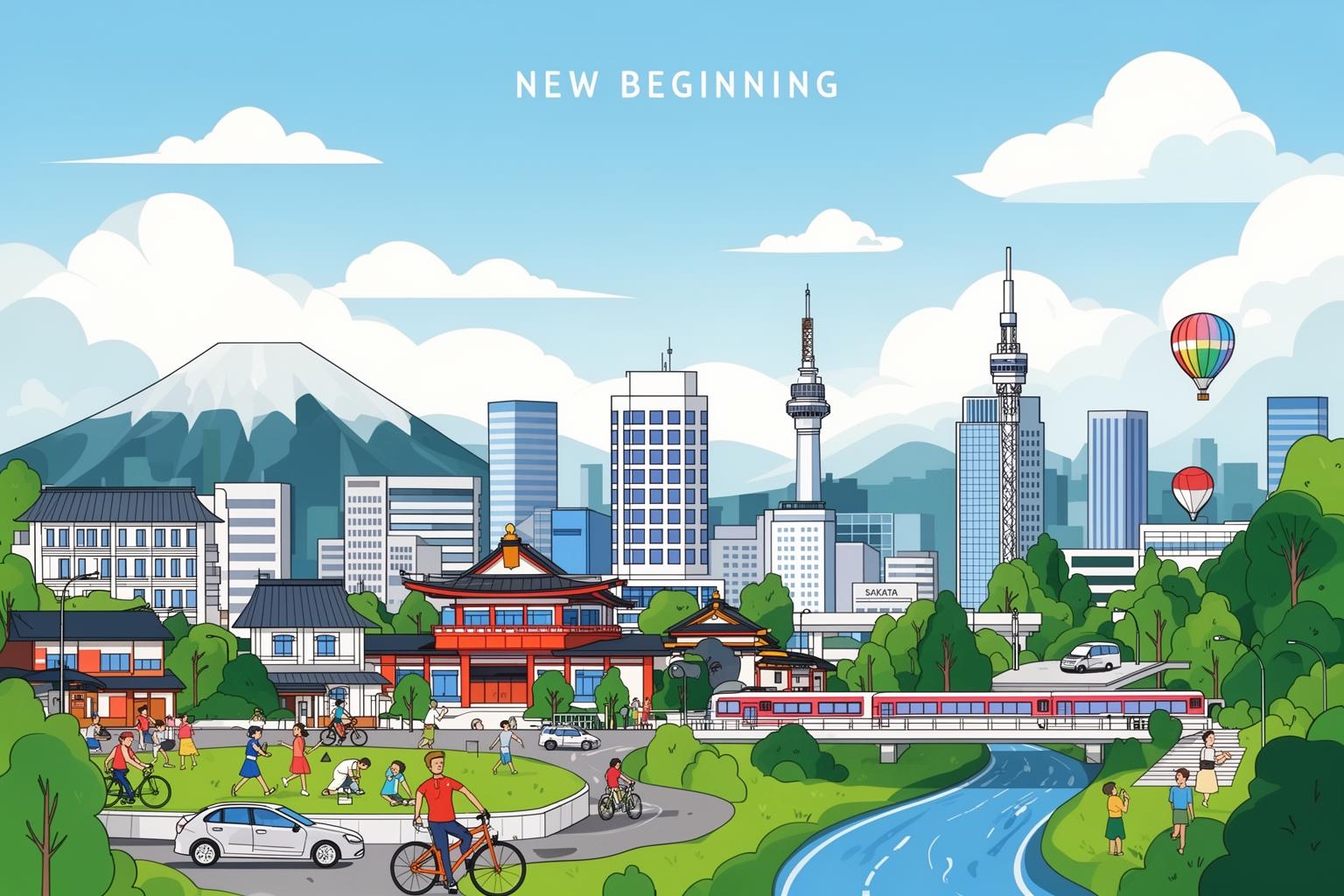
The journey into the world of Departures fittingly begins in Sakata, a historic port city on the coast of the Sea of Japan. This is not a bustling metropolis like Tokyo, from which Daigo escaped. Instead, Sakata follows a different rhythm, one shaped by the changing seasons and the constant presence of the sea. The air here feels distinct—cleaner, infused with a subtle mix of salt and earth. As you stroll through its quiet streets, the layers of history are palpable, from the affluent merchants of the Edo period to the quiet endurance of a modern regional town. This serene setting forms the backdrop for Daigo’s profound transformation, a place where he sheds the identity of a failed musician to discover a deeper, more meaningful purpose. The city itself emerges as a character, its understated elegance and quiet dignity reflecting the very rituals Daigo comes to embrace.
The NK Agent Office: A Gateway to a Hidden World
Among all the locations in Sakata, none holds greater significance to the film’s narrative than the building that housed the NK Agent office. In reality, this is a historic restaurant called Kappo Obata, and approaching its weathered wooden facade feels like stepping directly into a scene from the film. Situated in a quiet area of central Sakata, the building exudes a timeless aura. The dark wood, intricate latticework, and slightly imposing yet refined structure immediately transport you. It’s here that Daigo, under the impression he’s applying for a job at a travel agency (believing “departures” referred to something else entirely), opens the door to his new fate.
Today, the building is lovingly preserved and open to the public as a museum dedicated to the film. Entering feels both surreal and deeply moving. The ground floor has been painstakingly restored to replicate the NK Agent office exactly as it appeared on screen. President Sasaki’s desk remains in its familiar place, cluttered with the tools of his trade. You can almost hear his gruff yet kind voice, picture him matter-of-factly eating a piece of fried chicken while discussing the delicate nature of his work. The attention to detail is remarkable—from the paperwork scattered across the desks to the vintage telephone. It doesn’t feel like a set; it feels like a genuine, lived-in space, momentarily frozen in time.
As you move through the room, props from the film are carefully displayed: the pristine white coffins, the ceremonial tools, and even the infamous training DVD Daigo watched with a mix of horror and fascination. Standing in this room, you sense the weight of Daigo’s initial reluctance and the gradual awakening of his understanding. It was here that he faced his own prejudices about death and began to appreciate the profound beauty and significance of the nokanshi’s work. The air seems charged with the memory of that transformation. It’s a quiet space, and visitors often find themselves speaking softly—not due to any formal rule, but out of a mutual respect for the gravity and calmness of the place.
Climbing the steep, narrow staircase to the second floor reveals another dimension of the experience. Here, production stills, the film’s script, and numerous awards—including the coveted Oscar statuette for Best Foreign Language Film—are on display. Viewing these artifacts adds a fascinating layer, reminding visitors of the incredible artistry and dedication behind this cinematic masterpiece. Yet, the true magic remains downstairs, in that office, where the boundary between fiction and reality fades. It’s a space to linger, to sit on one of the tatami mats, and reflect on the film’s message about finding purpose in the most unexpected places. For any fan of Departures, the former Kappo Obata stands as the undeniable heart of the pilgrimage, where the story feels vividly alive.
Sakata Minato-za: The Stage of a Silent Concerto
A short walk from the NK Agent office lies another Sakata treasure and a key film location: the Sakata Minato-za. This is Japan’s oldest surviving wooden movie theater, a striking relic from a bygone era. In the film, it serves as the defunct cinema once run by Daigo’s friend Yamashita’s family and the setting for one of the film’s most poignant and visually stunning scenes. Here, Daigo, longing for his cello, mimes playing Bach’s “Ave Maria” on the instrument he was forced to sell. The camera sweeps over the empty, dust-laden seats as his wife, Mika, watches quietly, the silent music filling the vast space with unspoken emotion.
Visiting the Minato-za is like stepping back in time. Built in 1887, the building commands a powerful presence. Its architecture beautifully merges Japanese and Western styles, reflecting the cultural exchanges characteristic of this port town. Inside, nostalgia fills the air. Plush velvet seats, an ornate proscenium arch, and the faint, sweet aroma of aged wood and popcorn transport visitors to cinema’s golden age. Though no longer in regular operation, the theater is lovingly maintained by local volunteers and often open for tours and special screenings. If fortunate, you might even stand on the very stage where Daigo had his moment of quiet reflection.
Standing in the empty auditorium, gazing up at the stage, it’s impossible not to recall that scene. One can almost sense the phantom notes of the cello lingering in the air. The location was chosen perfectly. The theater—a place once alive with stories and emotion—now sits silent, a beautiful vessel of memories. It symbolizes Daigo’s own life: a performer’s career seemingly ended, yet the music still alive within him. It also represents Sakata itself, a town with a rich past now living a quieter existence. Visiting the Minato-za is not just about seeing a film set; it’s about honoring cultural preservation and sensing the echoes of countless stories—both real and imagined—that have unfolded within its historic walls.
The Shonai Plain: Landscapes of Memory and Meaning
While Sakata sets the urban backdrop for Daigo’s journey, the true spirit of Departures lies within the vast, stunning landscapes of the surrounding Shonai Plain. This fertile stretch, nestled between the Sea of Japan and the revered Dewa Sanzan mountains, serves as the canvas on which the film expresses its deepest emotional tones. The scenery is marked by sweeping rice paddies that shift from a vibrant, shimmering green in summer to a golden sea in autumn. Towering over the horizon is the majestic Mount Chokai, its frequently snow-capped summit standing as a constant, watchful presence over the life and death stories unfolding below. Director Yojiro Takita employed this landscape with remarkable artistry, making it an indispensable part of the film’s narrative.
The Stone Letter Riverbank: Gekko River
One of the most resonant symbols in Departures is the “stone letter” (ishibumi), a practice of expressing emotions through the selection of a stone, a silent form of communication Daigo recalls from his childhood with his estranged father. The place where Daigo rediscovers this memory and finds a stone letter he once received is a simple, unassuming riverbank along the Gekko River in Yuza, just north of Sakata. This scene represents the emotional heart of the film, a quiet moment of reconciliation with a painful and misunderstood past.
Locating this exact spot can be a small adventure, but it is undoubtedly rewarding. The riverbank is not a prominent tourist site with signs or markers. It is simply a tranquil stretch of nature, which is its true power. To reach it, you travel through idyllic countryside, passing by farms and small homes. The area is recognizable by a small, arched bridge and the gentle curve of the river. Clear water flows over a bed of smooth, grey stones of various shapes and sizes. Standing here, with the sound of flowing water and the whisper of wind through the reeds, the hectic modern world seems to fade away.
Take a moment to stroll along the water’s edge and gather a few stones. Feel their weight, texture, and temperature. In this simple act, you connect directly with the film’s central metaphor. What emotions would this stone express? Smoothness for peace? A rough surface for hardship? An unusual shape for a treasured memory? It is a powerful, meditative experience. This is where Daigo ultimately begins to understand his father and, in turn, himself. It is a place of quiet reflection, inviting you to consider your own relationships and the messages—spoken or silent—that have shaped your life. The beauty of this location lies in its simplicity. It reminds us that the most profound moments often occur not within grand halls, but in the quiet, humble corners of the natural world.
The Symphony of Snow and Swans: Mogami River
Yamagata is renowned for its heavy snowfall, and winter transforms the Shonai Plain into a realm of stark, monochrome beauty. The snow in Departures serves as more than just a seasonal backdrop; it symbolizes purity, stillness, and the quiet blanket that covers the world before spring’s renewal. This imagery perfectly encapsulates the peace and dignity the nokanshi brings to the departed. One of the film’s most memorable sequences captures this winter splendor: a flock of swans gliding gracefully on the Mogami River amidst gently falling snow. Daigo observes this scene from a bridge, a serene moment offering him peace amid the emotional challenges of his new profession.
This scene was filmed along the great Mogami River, which winds through the heart of Yamagata. In winter, from late October to March, thousands of whooper swans migrate here from Siberia, transforming stretches of the river into a breathtaking sanctuary. Witnessing this spectacle is like experiencing the film’s poetry firsthand. The best vantage point to see the swans is near the Mogami River Swan Park in Sakata, where you can stand on the riverbank and watch these magnificent white birds against the snowy landscape.
There is a profound tranquility in this experience. The world seems to fall silent, save for the gentle lapping of the river and the occasional call of a swan. Watching them, you come to understand Daigo’s quiet awe. The swans, returning year after year, embody the enduring cycles of nature, a comforting and steady rhythm amid a world of change and loss. A winter visit to Yamagata offers a completely different—and perhaps even deeper—pilgrimage experience. The cold air, the muted silence of snow, and the graceful dance of the swans create an atmosphere of deep introspection. It is a journey to the quiet, white heart of the film, where nature’s beauty brings solace and a powerful reminder of life’s persistence.
The Sacred Ritual: Understanding the Nokanshi’s World

Departures did more than narrate a touching story; it cast a compassionate light on the profession of the nokanshi, a role often misunderstood and stigmatized in Japan. The film’s impact lies in its detailed, respectful portrayal of the nokan ceremony, presenting it not as a grim duty, but as an art form—a final act of love and care offering comfort to grieving families. To fully appreciate the film’s settings, one must also grasp the cultural context of this sacred ritual. The journey extends beyond physical locations to an exploration of the traditions that Daigo comes to embrace.
The Public Bathhouse: A Community’s Final Farewell
One of the most poignant and pivotal ceremonies in the film is held for the owner of a local public bathhouse, or sento. This scene is significant because it marks one of the first occasions when Daigo’s work is openly recognized and valued by the community, including his wife, who witnesses the ceremony for the first time. The exterior scenes of the bathhouse were shot at the Tsurunoyu in Tsuruoka, a city south of Sakata. Although the bathhouse itself has since been demolished, the spirit of sento culture it embodied remains essential to understanding the film’s world.
Public bathhouses have long been the heart of Japanese neighborhoods. They serve not only for hygiene but as spaces for community, conversation, and connection. They are places where neighbors exchange gossip, form friendships, and where social boundaries often dissolve. The bathhouse owner in the film was a cherished figure, a pillar of her community. Her death represents a loss deeply felt by all. The nokan ceremony for her, performed before family and neighbors, is a public expression of grief and remembrance. It highlights the nokanshi‘s role not only in caring for the deceased but also in helping the living process their sorrow and bid a meaningful farewell.
When visiting the Shonai region, try to experience a functioning local sento. It will provide a tangible sense of the community ambiance depicted in the film. The warmth of the water, the echoes of voices, and the simple, unpretentious architecture offer a connection to the everyday life of the people here. Understanding the role of the sento allows for a deeper appreciation of that scene. It was not merely about preparing a body; it was about honoring a life that had touched many, in a place central to her world. This underscores the nokanshi’s profound social role: guiding a community through the process of farewell.
The Weight of Homecoming: Daigo’s Childhood Home
Daigo’s journey is a classic tale of homecoming. He leaves his hometown for the city with dreams of success, only to return in perceived failure and disgrace. His return forces him to face his past, especially his complicated relationship with his parents and the home he once abandoned. The house he inherits is a traditional Japanese countryside home, filled with both cherished and painful memories. It is here he practices his nokan skills on his wife, rediscovers his father’s record collection, and ultimately finds peace and belonging.
The exterior shots of Daigo’s home were filmed at Kannon-ji Temple in the town of Yuza. While the building itself is part of a private residence and not accessible to the public, visitors can explore the surrounding area. Walking through this quiet neighborhood offers a glimpse into the world Daigo returned to—a place where time slows, traditions endure, and family histories are inscribed in the very landscape. The atmosphere conveys profound peace and stability, contrasting sharply with the transient, competitive world of a professional orchestra in Tokyo.
The theme of furusato, or hometown, is deeply rooted in Japanese culture. It symbolizes a place of origin, a source of identity, and a sanctuary always open for return. Daigo’s story is about reconnecting with his furusato, not only physically but also emotionally and spiritually. By embracing a traditional local profession, he puts down roots in a way his life as a traveling musician never allowed. His journey powerfully reminds us that sometimes moving forward requires first going back—confronting the ghosts of our past and rediscovering the value in the places and traditions we once left behind. A walk through Yuza invites reflection on this universal theme of homecoming and the often-surprising paths we take to find our true place in the world.
A Pilgrim’s Practical Guide to the Shonai Region
Embarking on a pilgrimage to the world of Departures is an incredibly fulfilling experience, but it does require some planning, especially for international travelers. The Shonai region lies off the main tourist route of the Tokyo-Kyoto-Osaka corridor, which is exactly what makes it so unique. Here is some practical guidance to help you create a smooth and meaningful journey.
Reaching the Destination: Access and Transportation
Your main base for this pilgrimage will be Sakata City. The most efficient way to get to the Shonai region from Tokyo is by air or rail.
Shonai Airport (SYO) is the nearest airport, with daily flights from Tokyo’s Haneda Airport (HND). The flight takes just over an hour, followed by a 30-minute bus ride to central Sakata. This is often the quickest and most convenient option.
Alternatively, you can take the Joetsu Shinkansen (bullet train) from Tokyo to Niigata Station and then transfer to the Inaho Limited Express train, which runs along the scenic coastline to Sakata. The entire journey takes about four hours but offers stunning views of the countryside and the Sea of Japan, providing a wonderful way to relax and transition into the slower pace of Yamagata.
Once in the Shonai region, transportation within the area is the next consideration. While central Sakata locations, such as the NK Agent office and Minato-za theater, are walkable, many of the most picturesque spots, like the Gekko River and viewpoints of Mount Chokai, are scattered across the countryside. For maximum flexibility and the freedom to explore at your own pace, renting a car is highly recommended. Rental agencies are available near Sakata Station and Shonai Airport. Driving here is relatively stress-free, with well-maintained roads and lighter traffic than in major cities. Be sure to obtain an International Driving Permit before your trip.
If you prefer not to drive, a combination of local trains, buses, and taxis can get you to most destinations, though this requires careful schedule planning. The JR Uetsu Main Line connects Sakata, Yuza, and Tsuruoka, but buses to more rural areas may be infrequent. Taxis are a good solution for reaching specific, hard-to-access locations from the nearest train stations.
Savoring the Experience: Local Cuisine and Culture
A pilgrimage is a journey of the senses, and the cuisine of the Shonai region is a vital part of the Departures experience. Food carries a subtle but meaningful role in the film, symbolizing life, community, and simple joys. Recall the scene where President Sasaki remarks on the exquisite taste of shirako (pufferfish milt), saying, “It’s a cruel fate to be so tasty”? This appreciation of food is deeply rooted in the local culture.
Shonai is renowned as one of Japan’s great agricultural regions. The rice grown on the plains is considered among the best in the country. Its proximity to the Sea of Japan means an abundance of fresh seafood. Be sure to try the local sushi and sashimi, as the quality is exceptional. In winter, yellowtail and cod are specialties. The area is also known for its variety of local vegetables, called densho yasai, cultivated for generations.
For an authentic experience, visit a local izakaya (Japanese-style pub) in the evening. Here you can sample regional sake—Yamagata is a renowned sake-producing prefecture—and a selection of small dishes showcasing the finest local ingredients. It’s a wonderful way to connect with the community and enjoy the flavors that define this region. Don’t hesitate; even if there is a language barrier, a smile and pointing to something appealing will usually be met with warm hospitality. These shared meals, much like in the film, often reveal the true spirit of the place.
Choosing Your Season: Best Time to Visit
The Shonai landscape transforms dramatically throughout the year, each season offering a unique perspective on the world of Departures.
- Winter (December to February): This season is most emblematic of the film. The area is covered in deep, quiet snow, echoing the monochrome tones of many scenes. It’s the time to see swans on the Mogami River and experience the profound stillness of the landscape. Be prepared for cold weather and potential travel delays due to heavy snow. Driving can be challenging if you’re not accustomed to winter conditions.
- Spring (April to May): As the snow melts, the region bursts into color. This is the season of cherry blossoms, which frame rivers and castle ruins in delicate pink and white. The air is fresh, filled with the promise of renewal—mirroring the film’s themes of new beginnings.
- Summer (June to August): The rice paddies become a vast, shimmering carpet of bright green under the summer sun. The landscapes are lush and vibrant. It is a season of festivals and energy, revealing a livelier side of the region.
- Autumn (October to November): Many consider this the most beautiful season. The rice fields turn a dazzling gold, ready for harvest, and the mountainsides burst into fiery reds, oranges, and yellows. The air is crisp and clear, offering spectacular views of Mount Chokai. This season of harvest and transition beautifully reflects the contemplative mood of the film.
Ultimately, there is no wrong time to visit. Your choice depends on which aspect of the film’s atmosphere you most want to experience. Regardless of the season, the timeless beauty of the Shonai Plain is sure to leave a lasting impression.
Beyond the Silver Screen: Embracing the Spirit of Shonai

While the filming locations of Departures are the primary attraction, your pilgrimage will be greatly enhanced by exploring other cultural and natural treasures of the Shonai region. These sites may not have appeared on screen, yet they share the profound spiritual and historical roots that give the film its strong sense of place. Immersing yourself in the broader culture of Shonai will deepen your appreciation of the world that shaped Daigo’s story.
The Sacred Peaks: Dewa Sanzan
Overlooking the Shonai Plain are the Dewa Sanzan, the three sacred mountains of Haguro, Gassan, and Yudono. For more than 1,400 years, these mountains have been a spiritual center for Shugendo, a unique form of Japanese mountain asceticism that blends Shinto and Buddhist beliefs. A pilgrimage to these mountains is a journey of spiritual renewal. Mount Haguro, the most accessible of the three, is renowned for its striking five-story pagoda, a National Treasure rising from a dense forest of ancient cedar trees. The stone stairway ascending the mountain comprises 2,446 steps, and climbing it offers a meditative experience. Walking this path, surrounded by towering silent trees, you can sense a connection to the cycles of life, death, and rebirth that are fundamental to both the mountain faith and the themes of Departures. Visiting here adds a profound spiritual dimension to your journey.
A Legacy of Rice: Sankyo Soko Storehouses
In the heart of Sakata, along the Niida River, stands the Sankyo Soko—a magnificent row of twelve traditional wooden storehouses built in 1893. These were used to store rice before it was shipped nationwide, bearing witness to Sakata’s history as a thriving center of the rice trade. The black-plastered walls, double roofs designed for insulation, and the row of graceful zelkova trees planted to shade the buildings from the sun create a striking and picturesque scene. Today, one of the storehouses serves as a museum dedicated to the history of rice and the Shonai region. Strolling along this historic waterfront, you can sense echoes of the town’s prosperous past. It offers a richer context for the economic realities of the region—the world to which Daigo returned—where tradition and history remain visible in the architecture and landscape.
Meditations on Life: Kamo Aquarium
For a different kind of contemplative experience, consider visiting the Kamo Aquarium in the nearby city of Tsuruoka. This world-renowned aquarium specializes in jellyfish and holds the Guinness World Record for the largest number of jellyfish species exhibited. The main attraction, the “Jellyfish Dream Theater,” is a vast circular tank filled with thousands of moon jellyfish, illuminated by soft, ethereal light. Watching these creatures drift gracefully and aimlessly through the water is mesmerizing and profoundly calming. It offers a moment of introspection, encouraging reflection on the strange and beautiful forms life can take. In many ways, it perfectly complements the themes of Departures—discovering profound beauty and a sense of peace in observing the quiet, mysterious rhythms of life.
An Encore for the Soul
A journey to the filming locations of Departures is far more than just cinematic tourism. It serves as an invitation to slow down, observe, and reflect. It offers a chance to stand by a riverbank feeling the weight of a stone in your hand, to sit in a historic theater imagining the ghost of a cello’s melody, and to drive through landscapes so stunning they ache with quiet poetry. The Shonai region of Yamagata is not merely the film’s backdrop; it is its heart. The dignity, resilience, and deep connection to the cycles of nature found in the people and the land are the very qualities Daigo Kobayashi embraced in his work as a nokanshi.
You arrive seeking Daigo’s story, but you leave with a deeper understanding of your own. The film teaches that every departure, every ending, holds its own kind of beauty and grace. A pilgrimage to this serene corner of Japan reaffirms that lesson at every turn. It reminds us that meaning can be found in tradition, solace in nature, and enduring beauty in the simple, respectful act of saying goodbye. Though the final notes of Daigo’s cello may have faded from the screen, here, in the whispering winds of the Shonai Plain, the music continues to play.