The world of cinema has its hallowed grounds, places where stories so powerful were etched into celluloid that the very air seems to vibrate with their memory. Few sagas command such reverence as Francis Ford Coppola’s masterpiece, The Godfather Part II. It’s a film that’s more than a story; it’s a modern myth, a sprawling epic of power, family, and the corrosion of the human soul. To trace its locations is to embark on a pilgrimage, a journey that spans continents and generations, from the sun-scorched earth of Sicily where a young boy’s destiny was forged in tragedy, to the shadowy corridors of power in New York, and finally to the cold, pristine shores of Lake Tahoe, where a king reigned over a lonely empire. This is not merely a tour of film sets. It is a quest to stand in the very footsteps of Vito and Michael Corleone, to feel the weight of their world, and to see how Coppola transformed real places into the unforgettable landscape of his American tragedy. This guide is your passage into that world, an invitation to step through the screen and experience the grit, the glory, and the ghosts of The Godfather Part II.
For those inspired by this cinematic pilgrimage, you can also explore the real-world locations of Black Hawk Down.
The Soul of Sicily: Walking in Vito Corleone’s Footsteps
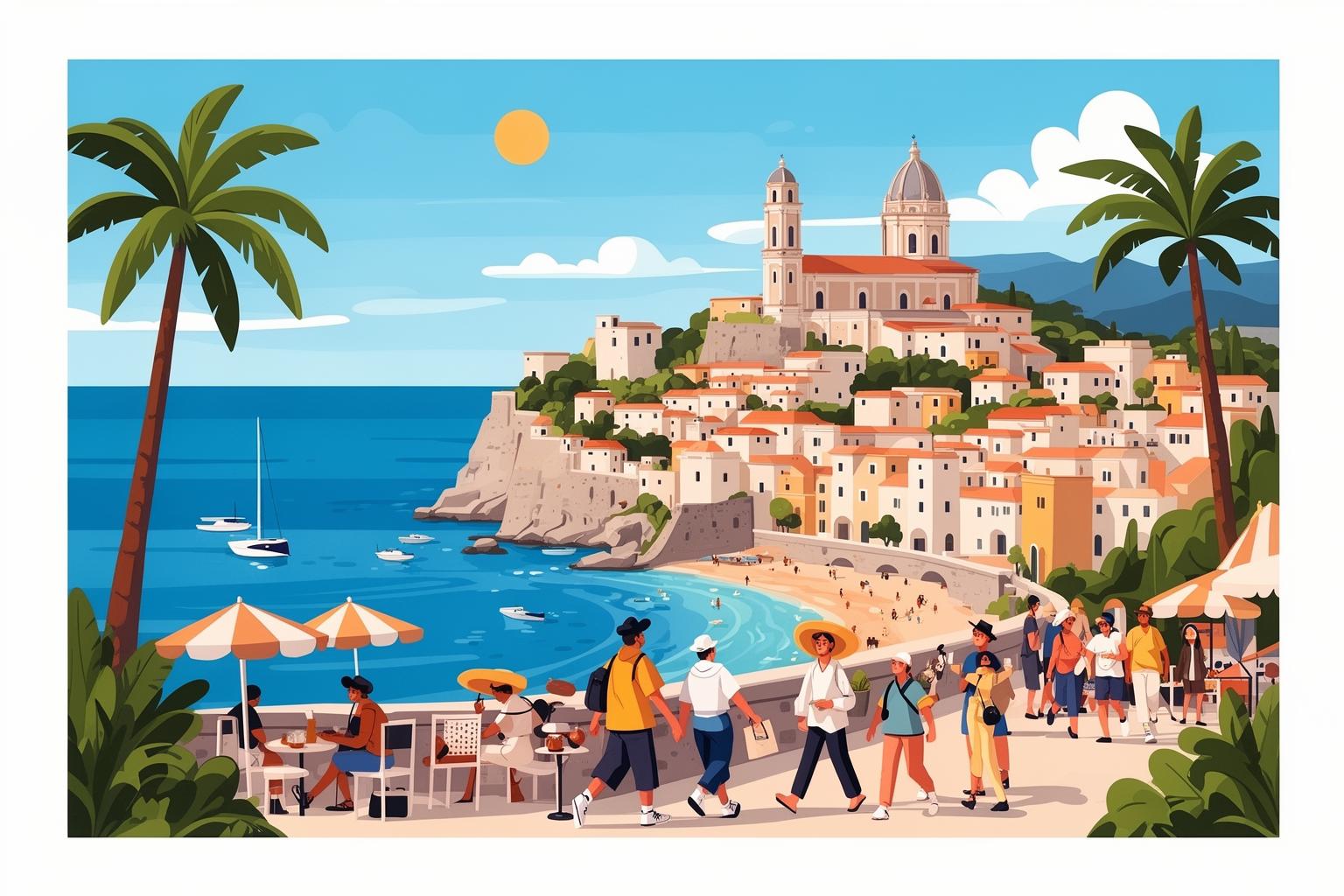
The Sicilian segment of The Godfather Part II serves as the film’s vibrant core—a lyrical yet brutal flashback that shapes every dark choice Michael makes in the present. Here, we witness the origins of Vito Andolini, a boy scarred by tragedy who rises to become the formidable Don Corleone. However, to discover this Sicily, one must look beyond the town bearing his name. By the 1970s, the real Corleone had grown too modern and developed to convincingly represent the early 20th century. Coppola, a master of atmosphere, sought locations untouched by time, where ancient stones whispered history’s secrets. He found such places not in a single town but across several breathtaking mountain villages east of Palermo, chiefly the magnificent pair of Forza d’Agrò and Savoca.
Beyond Corleone: Discovering the Authentic Sicilian Settings
Visiting these villages today feels like stepping into a dream. They are places of profound silence and breathtaking beauty, clinging to hillsides with panoramic views of the Ionian Sea. The air is rich with the scent of wild herbs and citrus blossoms, and life slows to a gentle, unhurried rhythm. This is the Sicily Coppola envisioned: a land of stark contrast, of sun-drenched beauty and deep, foreboding shadows. Among winding cobblestone streets and ancient churches, one begins to truly understand the world that shaped Vito Corleone—a world where family means everything, honor is more valuable than gold, and revenge is a vow passed through generations. The journey into these hills is the crucial first step for any true Godfather pilgrimage, a voyage back in time to the saga’s very source.
Forza d’Agrò: The Heart of Young Vito’s World
Forza d’Agrò is, in many ways, the spiritual heart of young Vito’s story. This stunning medieval village, with its crumbling Norman castle and labyrinthine streets, served as the primary backdrop for the Corleone portrayed in the film. Wandering its lanes feels less like touring a movie set and more like exploring a living museum. The town is remarkably well preserved, requiring little imagination to strip away modern elements and see it as Coppola did: a place of ancient traditions and unspoken laws. The atmosphere is cinematic, charged with dramatic tension between the serene beauty of the landscape and the violent history depicted onscreen. Every corner turned reveals another movie frame—a stone archway or steep staircase—that instantly transports you into Vito’s world.
The Cattedrale di Maria Santissima Annunziata e Assunta
Dominating the main piazza stands the Cattedrale di Maria Santissima Annunziata e Assunta, a beautiful church dating back to the 15th century. This spot hosts one of the film’s most pivotal and heartbreaking scenes. It is in the square before this very church that the young, orphaned Vito, hidden in a sack on the back of a donkey, escapes the clutches of Don Ciccio, the local chieftain responsible for murdering his family. You can stand on the very steps where Don Ciccio’s men searched for the boy, the last of the Andolinis. The church’s weathered façade and the vast square feel charged with cinematic memory. Visiting today, one finds a profound stillness. Early morning or late afternoon offers the best light, when golden rays slant across the stone, deepening shadows and highlighting intricate architectural details. It’s a moment for quiet reflection on the journey of the small boy who fled from here and the powerful man he became.
The Streets of Corleone
The remainder of Forza d’Agrò served as the broader canvas for Vito’s hometown. The street portraying his childhood home lies a short walk from the piazza. Although the exact doorway is unmarked, the entire lane—with its rustic stone walls and narrow passage—is instantly recognizable. As you explore, you’ll notice the archway where Don Ciccio’s men patrolled and the steep, winding alleys revealing the fabric of daily life. The best way to experience it is simply to get lost—put the map away and let curiosity guide you through the labyrinthine streets. You will sense the palpable closeness of a tight-knit community, a place where everyone knows each other and secrets run as deep as the afternoon shadows. Standing in these quiet streets, far removed from modern noise, you feel the compelling narrative of the film come alive around you.
Savoca: Echoes of Michael’s Sicilian Exile
While Forza d’Agrò provides the backdrop for Vito’s youth in Part II, the nearby village of Savoca features some of the most iconic Sicilian locations from across the trilogy, mainly The Godfather Part I. No pilgrimage is complete without visiting these sites, closely tied in fans’ imagination and geographically near, making them a natural extension of the journey. Savoca shares the same timeless, hilltop charm as its neighbor, offering breathtaking views and an atmosphere that seems suspended in time. Here, Michael, exiled, reveals a different side of himself and falls in love with the beautiful Apollonia—an idyllic yet brief chapter before tragedy strikes.
The Unforgettable Bar Vitelli
Few places in Sicily are as famous among Godfather fans as Bar Vitelli. Nestled at the entrance of the 18th-century Palazzo Trimarchi, this charming bar is where Michael, accompanied by his bodyguards, first meets Signor Vitelli and requests his daughter Apollonia’s hand in marriage. The bar today is a living shrine to the film—perfectly preserved and almost identical to its on-screen appearance. You can walk through the famous beaded curtain, sit at the very table where Al Pacino spoke, and see walls adorned with photographs and memorabilia from the production. The atmosphere is surreal—a tangible link to cinematic history. Ordering a lemon granita and sitting on the terrace overlooking the serene valley below, you can almost hear the gentle strum of a mandolin. It’s an essential experience, capturing the romantic yet fateful tone of Michael’s time in Sicily.
Chiesa di San Nicolò: A Wedding on the Hill
A short, scenic walk uphill from Bar Vitelli brings you to the Chiesa di San Nicolò, a 13th-century church with a simple, rustic façade. This church served as the setting for Michael and Apollonia’s beautiful, traditional wedding. The walk itself enhances the experience, as you follow the path of the wedding procession with the stunning Sicilian landscape unfolding around you. The church is humble yet beautiful, embodying the region’s enduring faith and traditions. Standing at its entrance, gazing back down the path toward the village, you can vividly imagine the joyous celebration. It’s a moment of pure cinematic bliss—love and hope placed in stark contrast to the violence that surrounds it. For visitors, it offers peace and one of Savoca’s best viewpoints to savor the island’s immense beauty.
Fiumefreddo di Sicilia: The Villa of Tragedy
While the hill towns provide the communal soul of the film, Michael’s private estate lies nearer the coast, nestled among citrus groves near Fiumefreddo di Sicilia. This is a place of isolation and opulence—a gilded cage where Michael is intended to be safe but ultimately encounters tragedy.
Castello degli Schiavi: Don Tommasino’s Estate
The magnificent Baroque villa featured as Don Tommasino’s estate and later Michael’s refuge is the Castello degli Schiavi. This 18th-century gem, with its ornate stonework and iconic arched entrance, appears in both Part I and Part II. Here, Michael courts Apollonia, and it is in the courtyard that she is tragically killed by a car bomb meant for him. The villa remains private property, still owned by the Platania family who hosted Coppola and his crew decades ago. Visiting is a rare privilege. Though generally closed to the public, tours can sometimes be arranged through dedicated Godfather tour companies or by contacting the owners directly. Stepping onto these grounds is an incredible experience. The current Baron Platania, a gracious host, often shares personal filming stories. Seeing the courtyard, the well, and the famous arched gate firsthand is a powerful moment, connecting visitors directly to one of the most shocking and formative events in Michael Corleone’s life.
New York, New York: The Rise of a Don
From Sicily’s ancient traditions, the story leaps to the chaotic, striving energy of turn-of-the-century New York. This crucible is where Vito Andolini transforms into Vito Corleone—a world of tenement buildings, bustling street markets, and newfound opportunity. Coppola skillfully recreated this bygone era, turning modern city streets into a believable vision of the past, a place where an immigrant’s American dream could be built, brick by brick, through cunning, community, and ruthless ambition.
The Lower East Side: A New American Dream
Coppola selected the Lower East Side, specifically the East Village, to represent the Little Italy of the 1910s and ’20s. This area, with its historic tenement buildings and dense layout, preserved an architectural character perfect for the period. The production team went to great lengths to dress the streets, bringing in pushcarts, vintage cars, and period-specific signage to erase the modern world and breathe life into the past. Today, walking through these neighborhoods offers a fascinating blend of history and vibrant contemporary culture.
East 6th Street: The Genco Pura Olive Oil Company
The operational heart of Vito’s growing empire, the Genco Pura Olive Oil Company, was portrayed on East 6th Street, between Avenue A and Avenue B. This storefront is where he builds both his legitimate business and shadow empire. It’s on this very street that the grand Festa di San Rocco takes place, and where, in a masterful sequence, Vito stalks Don Fanucci across the rooftops before assassinating him, securing his place as a new power in the neighborhood. Today, the block has changed considerably. Now a lively part of the East Village, it is filled with trendy restaurants and bars. The specific storefront no longer exists, but the tenement buildings lining the street are the same ones shown in the film. Standing on the sidewalk and looking up at the fire escapes and rooftops, you can sense the echoes of that cinematic moment—the joyous celebration on the street below contrasted with the cold, calculated violence unfolding above. For the best experience, visit on a weekday afternoon to appreciate the architecture without weekend crowds, then explore the surrounding area, which remains one of New York’s most dynamic neighborhoods.
Ellis Island’s European Stand-In
One of the film’s most moving sequences shows young Vito Andolini arriving at Ellis Island, sick with smallpox and quarantined, alone in a new world. He sits in a stark white room, gazing out the window at the Statue of Liberty while singing a Sicilian lament. It’s a powerful image of immigrant isolation and resilience. In an intriguing bit of cinematic magic, these scenes were not filmed at the real Ellis Island at all.
Trieste, Italy: A Port of New Beginnings
Coppola discovered the perfect location to represent the grand, imposing interior of the Ellis Island processing center in an unexpected place: the old fish market, or Pescheria Vecchia, in Trieste, a beautiful port city in northeastern Italy. The building’s vast, arched hall and industrial yet elegant architecture offered the scale and atmosphere of institutional power he sought. Today, this historic building has been repurposed as a stunning art and exhibition space called the Salone degli Incanti. Visitors can freely enter and stand in the massive hall, appreciating the very space where the memorable quarantine scenes were filmed. Its high ceilings and large windows overlooking the Adriatic Sea evoke a profound sense of passage and history, making it a fascinating and unexpected stop on a Godfather tour.
Sacred Ground and Sinister Pledges
The interplay of the sacred and the profane is a central theme in The Godfather saga. Coppola frequently contrasts the solemn rituals of the Catholic Church with the brutal machinations of the Corleone family business, a tension most potent in New York’s cathedrals.
Old St. Patrick’s Cathedral
While the famous baptism scene from Part I was filmed on the West Coast, Part II uses the authentic historic Old St. Patrick’s Cathedral in Nolita, Manhattan. The church and its grounds appear during the sequence depicting Anthony Corleone’s First Communion. As Michael stands as a devoted father in the holy ceremony, his mind is elsewhere, orchestrating the assassinations of his rivals. The cathedral itself, a beautiful Gothic Revival structure completed in 1815, is a peaceful oasis amid a bustling city. Surrounded by high brick walls, its courtyard and cemetery feel like a separate world. Visitors today can enter the hallowed space and feel the immense weight of that cinematic contrast. The church remains an active place of worship, so visitors should be respectful, yet it is open to the public. It provides a place to reflect on the film’s profound exploration of faith, hypocrisy, and the darkness lurking behind a veneer of piety.
The Tahoe Empire: Power and Paranoia

As the narrative progresses into the late 1950s, the Corleone family’s power base shifts westward to the shores of Lake Tahoe. This location serves as a deliberate and striking contrast to the gritty streets of New York and the ancient soil of Sicily. Tahoe is beautiful, sterile, and isolated. Its clear, crystalline waters and towering mountain peaks create a gilded cage for Michael Corleone. Within his fortified estate, he has reached the height of American success, yet he remains more isolated and paranoid than ever. The stunning landscape only emphasizes the ugliness of his deteriorating soul.
Fleur du Lac: The Corleone Compound
To bring the iconic Corleone family estate to life, the filmmakers selected a magnificent private property on Lake Tahoe’s western shore in California. Known as Fleur du Lac, this estate was originally the summer residence of industrialist Henry J. Kaiser. Its collection of stone buildings and prime lakeside setting made it the ideal foundation for Coppola to craft Michael’s stronghold.
Filming the Unfilmable
The production team built several essential structures for the film, including the main gatehouse, the surrounding wall, and the famous boathouse where Fredo meets his tragic fate. These enhancements transformed the expansive estate into a believable, self-contained world. After filming ended, the original estate was redeveloped and is now Fleur du Lac Estates, an exclusive, private luxury condominium community. Kaiser’s original stone structures, visible in the film, remain intact and serve as the community’s clubhouse and meeting spaces.
Visiting the Iconic Estate
Fans hoping to visit this legendary site should note that Fleur du Lac is a private, gated community with no public land access, and trespassing is strictly forbidden. The best way to view the estate is from the lake. Several Lake Tahoe companies offer boat tours, many of which point out the famous property. From the water, viewers get a spectacular and respectful vantage point, seeing the original stone boathouses and the grand residences now occupying the grounds. This lakeside perspective, framed by the deep blue water and the towering Sierra Nevada mountains behind it, offers perhaps the most cinematic view of the estate. It is a breathtaking scene that strongly evokes Michael’s lonely reign.
Washington’s Corridors of Power
Much of Part II’s tension unfolds during the Senate committee hearings, where Michael is investigated for his criminal activities. These scenes are intense, claustrophobic, and filled with sharp legal and verbal battles. Though set in Washington D.C., their actual filming location reveals another example of Coppola’s cinematic resourcefulness.
The Location Deception
Since filming inside the real United States Capitol was impossible, the production team sought a fitting substitute for the grand and imposing Senate hearing room. While many interior shots were filmed on carefully constructed soundstages, crucial scenes featuring opulent corridors of power were shot at a famed Hollywood site: the Greystone Mansion in Beverly Hills, California. This sprawling Tudor Revival mansion has been a filmmaker favorite for decades, its rich wood-paneled rooms and marble floors making a convincing backdrop for wealth and authority. The hallways where senators and lawyers confer were filmed within its elegant interiors. Today, Greystone Mansion & Gardens is a public park managed by the City of Beverly Hills. Although the mansion’s interior is frequently closed for filming or private events, the stunning formal English gardens are regularly open to visitors free of charge. The city occasionally offers special tours of the mansion interior; checking their official website is essential for any film enthusiast visiting Los Angeles. It’s a unique opportunity to walk the same halls where Michael Corleone’s fate was decided.
Practical Pilgrim’s Almanac: Planning Your Godfather Journey
Embarking on a pilgrimage to the filming locations of The Godfather Part II is a deeply fulfilling experience, though it requires some preparation to maximize your time. These sites are scattered across continents and exist in vastly different settings, each presenting unique logistical challenges and attractions.
When to Go: Following the Cinematic Seasons
Choosing the right time to visit can significantly enhance your trip. For Sicily, the shoulder seasons of spring (April to June) and early fall (September to October) are perfect. The weather is mild, the scenery is vibrant, and you avoid the intense heat and large crowds of summer. New York City shines in spring and fall as well, when temperatures are comfortable for the extensive walking needed to explore neighborhoods like the East Village. Lake Tahoe’s peak season is summer (June to August), when the weather is warmest, the lake is most inviting, and boat tours are fully operational. Fall visits can also be stunning, with fewer tourists and vivid autumn foliage.
Getting Around: From Sicilian Hills to Tahoe Shores
Transportation requires careful thought. In Sicily, renting a car is essential rather than just recommended. The filming locations such as Forza d’Agrò and Savoca are small hill towns that are difficult, if not impossible, to reach conveniently via public transit. Driving gives you the freedom to explore at your own pace, but be ready for narrow, winding roads and make sure you have reliable GPS. In New York City, the situation is reversed. A car becomes more of a burden than a help. The city’s extensive subway system, paired with walking, is the most efficient and authentic way to navigate. For both Lake Tahoe and Beverly Hills, a car is necessary. The sites are spread out and public transit options are limited, so having a vehicle allows you to fully appreciate the lake’s natural beauty and the expansive Los Angeles area.
A Tour or a Solo Adventure?
Deciding whether to join a guided tour or explore on your own depends on the location and your travel preferences. In Sicily, a specialized “Godfather Tour” can be incredibly worthwhile. Local guides offer fascinating behind-the-scenes stories and can often secure access to private sites like the Castello degli Schiavi. This option reduces the stress of navigating challenging roads and ensures you don’t miss any important spots. In New York and California, solo exploration is simple and convenient. The locations are public and easily found via map searches, enabling you to soak in the atmosphere at your own rhythm, making for a more personal and reflective pilgrimage.
The Lasting Echo: Why These Places Still Resonate
Visiting the filming locations of The Godfather Part II allows one to grasp, on a deeply visceral level, how place itself becomes a character. These settings are far more than simple backdrops; they actively shape the narrative, influencing both the story and the souls of its characters. The ancient, sun-drenched hills of Sicily serve as the origin of everything—a land rich with roots, inexorable history, and the primal codes of honor and vengeance that define Vito’s life. The bustling, determined streets of New York form the crucible where ambition is forged, a new world filled with opportunity and peril where Vito builds his empire. Meanwhile, the cold, majestic beauty of Lake Tahoe represents the final act: a pristine prison of power, a landscape reflecting the profound and tragic isolation of Michael’s soul. Standing in these places, you sense the resonance of Coppola’s vision—the sun that warmed young Vito, the gritty pavement of New York underfoot, and the piercing wind sweeping across the lake. To walk these grounds is to step through the screen and touch the heart of a masterpiece. It is an unforgettable journey, a cinematic pilgrimage, and for any true fan of the saga, an offer that simply cannot be refused.