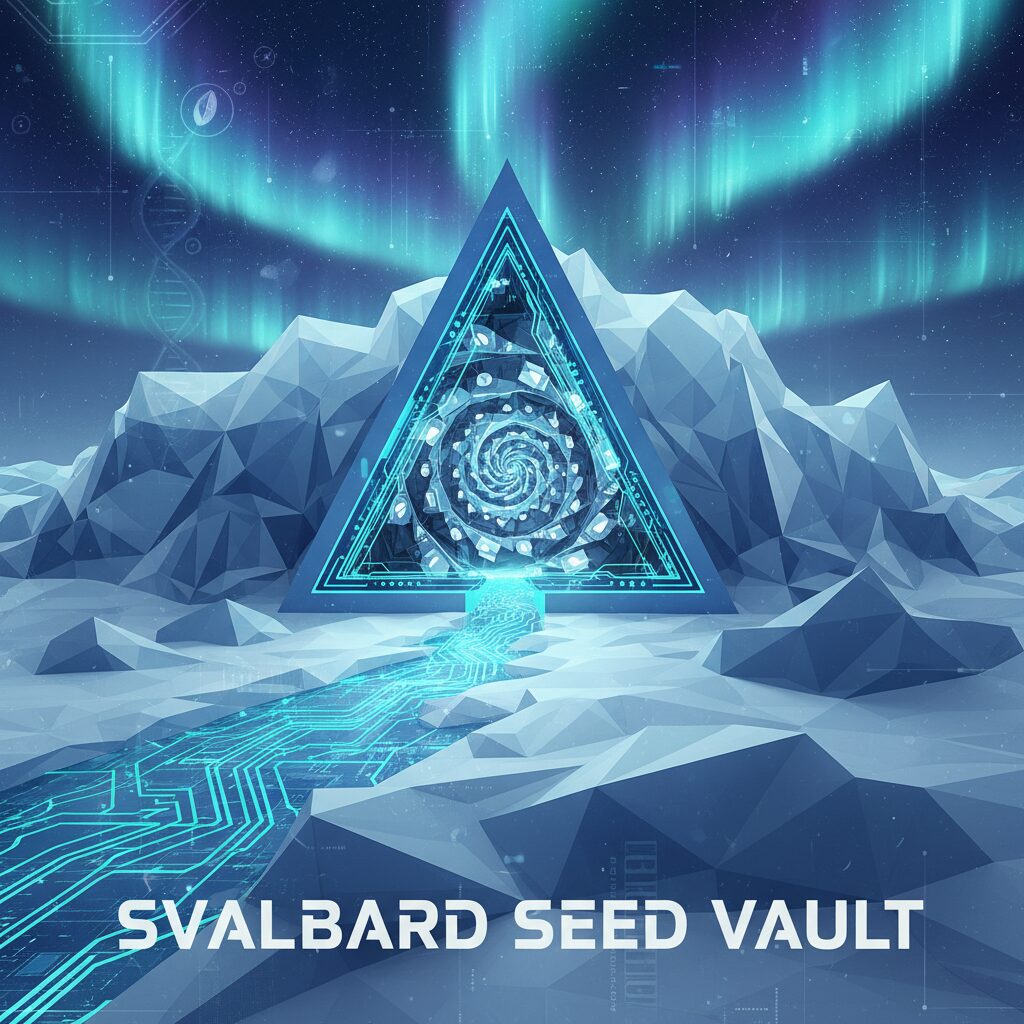
The world has its cathedrals, its monuments to gods and kings, structures of stone and glass reaching for the heavens. But on a remote Arctic island, halfway between mainland Norway and the North Pole, humanity has built a different kind of cathedral. It is not a monument to the past, but a quiet, resolute promise to the future. It is the Svalbard Global Seed Vault, an ark of life nestled deep within the permafrost of a mountain, a silent guardian of the world’s agricultural heritage. This isn’t a journey you take for sandy beaches or bustling cityscapes; this is a pilgrimage to the edge of the world, to a place where the stark, frozen landscape mirrors the profound gravity of its purpose. It’s a journey to witness a symbol of hope, a testament to human foresight standing against the biting wind and the vast, unforgiving polar expanse. Here, in the realm of the polar bear and the midnight sun, you come face to face with the quiet hum of preservation, the rhythmic pulse of life held in frozen suspension, waiting for a tomorrow we hope will never come but must always prepare for. Standing before its iconic, glowing entrance, you feel a profound sense of scale, not just of the immense icy wilderness around you, but of the immense responsibility we carry as custodians of our planet’s biodiversity. It’s a chilling, beautiful, and utterly unforgettable experience.
While this journey is a pilgrimage to a place of profound global importance, you can also embark on a pilgrimage to explore the cinematic dreamscape of Los Angeles.
The Journey to the End of the World
The journey to Svalbard begins well before your feet touch the frozen ground. It starts with the flight, a mesmerizing passage over the jagged, snow-tinged spine of the Norwegian mainland, which soon gives way to the deep, steely blue of the Barents Sea. Gradually, white specks appear, growing into vast, fractured expanses of sea ice. The world below transforms into an abstract painting of white and blue, a landscape so pure and primordial it feels as though you are flying back in time. The plane banks, and through the window, you see it: Spitsbergen, the largest island of the Svalbard archipelago, a breathtaking panorama of sharp, black peaks, or nunataks, piercing immense glaciers that flow like frozen rivers toward the sea. The sensation is one of arriving at a fortress of nature, a place that allows human presence but is by no means tamed by it. Landing at Svalbard Airport, Longyear, is an experience itself. As the world’s northernmost airport with regular public flights, its single runway is flanked by the fjord on one side and a towering mountain on the other. Stepping off the plane, the air strikes you. It’s not just cold; it’s a pure, crystalline cold that feels as if it’s cleansing your lungs. It’s thin, sharp, and carries the scent of snow and ancient ice. This is your welcome to the High Arctic.
Longyearbyen: The Arctic Outpost
From the airport, a brief bus ride brings you into Longyearbyen, the main settlement and administrative center of Svalbard. The town is full of fascinating contradictions. Rows of brightly colored wooden houses stand on stilts deeply driven into the permafrost, vibrant splashes of reds, blues, and yellows against the monochrome backdrop of the surrounding mountains. This isn’t just for looks; it’s a practical measure to prevent the buildings’ heat from melting the permanently frozen ground beneath, which would cause them to sink. The town feels like a frontier outpost, a community built on resilience and profound respect for nature’s power. You’ll see snowmobiles parked outside homes like cars, and the sight of locals walking into the supermarket or pub with a rifle slung over their shoulder quickly becomes familiar. This is not for show; it’s a legal requirement and a vital safety measure. Beyond the town’s limits lies the realm of the polar bear, whose population outnumbers the humans. The town itself is a safe zone, but the rule highlights the reality of life here: you are a guest in a wild, untamed land.
Longyearbyen is a melting pot of cultures. Originally a coal mining town founded by American John Munro Longyear in 1906, it has grown into a hub for Arctic research, higher education, and adventure tourism. You’ll hear a dozen languages spoken in the local pub, a mix of Norwegian students, international scientists, rugged tour guides, and curious travelers—all drawn to this unique place at the top of the world. The town also operates under some unusual laws born from its extreme environment. It is famously said to be “forbidden to die” in Longyearbyen. While more a practical guideline than a strict law, the permafrost prevents bodies from decomposing, so those with terminal illnesses are typically flown to the mainland for their final days. Similarly, there is no maternity ward, so expectant mothers travel to the mainland weeks before their due date to give birth. These rules add to the mystique of a place so deeply tied to the cycles of the earth.
The Feeling of Arrival
Your first full day in Longyearbyen is a sensory reset. Depending on the season, you will be wrapped in one of two extremes. Arrive during the polar summer, from late April to late August, and you experience the midnight sun. The sun never sets, tracing a slow, 24-hour arc across the sky. This endless daylight can be disorienting, blurring the line between day and night, but it also fills you with a strange energy, an urge to explore at all hours. The light at 2 a.m. is a soft, golden glow that bathes the mountains in an ethereal radiance—a photographer’s dream. Conversely, arriving during the polar night, from late October to mid-February, means plunging into a world of constant twilight and darkness. The sun never rises above the horizon. This is not pitch-black darkness; when the sky is clear, the snow-covered landscape reflects faint light from the moon and stars, creating a realm of soft blues and deep indigos. This is aurora borealis season, when curtains of green, pink, and violet light dance silently across the sky in a cosmic ballet. Silence is the other defining feature. It is a deep, profound quiet rare in the modern world, broken only by the howl of the wind, the distant bark of a sled dog, or the satisfying crunch of your boots on the dry, packed snow. It’s a silence that invites introspection and a deeper connection to the raw, powerful environment surrounding you.
The Pilgrimage to the Vault
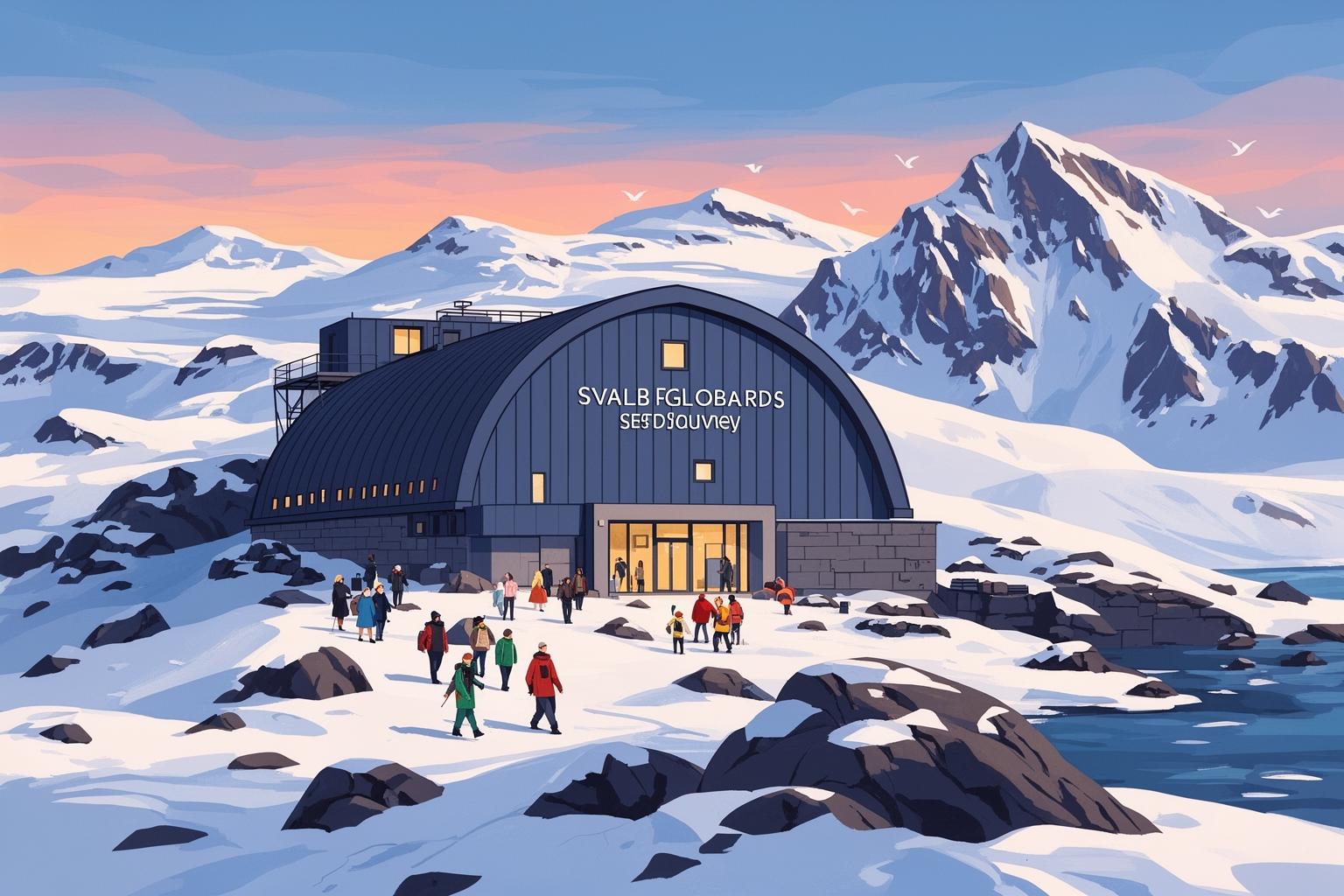
Your primary mission—the purpose of this epic journey—is to visit the Svalbard Global Seed Vault. It is essential to set your expectations correctly from the outset: you will not be allowed inside. This is not a tourist attraction with a visitor center, gift shop, or guided interior tours. The vault is a functional, high-security facility—a fail-safe repository for the world’s agricultural biodiversity. The pilgrimage is not about gaining entry to the sanctum but about bearing witness to its existence, standing at its threshold, and reflecting on its profound significance. The trip to the vault covers just a few kilometers from the center of Longyearbyen, yet it feels like a solemn procession. While you can take a taxi for a quick and easy journey, walking is recommended to fully appreciate the experience, provided the weather is safe. As you leave behind the last buildings of the town, you begin a gentle ascent along the road cut into the side of the mountain called Platåberget. With each step, the sounds of the town fade, replaced by the whistle of the Arctic wind. The landscape unfolds, revealing breathtaking views of Longyearbyen below, the Adventfjorden, and the jagged peaks across the water. The vastness of the wilderness becomes overwhelmingly apparent, making you feel exquisitely small—a tiny speck in an immense, white world.
A Monument of Hope, Not a Tourist Attraction
Approaching the vault, anticipation builds. You round a bend in the road, and there it stands. Smaller and more understated than the dramatic photos suggest, yet its presence is immense. The design is starkly beautiful—a narrow concrete wedge driven deep into the frozen heart of the mountain. It feels less like a building and more like a piece of minimalist sculpture, a human-made object both contrasting with and harmonizing with its natural surroundings. There are no grand signs or elaborate welcomes—just the concrete portal, a sturdy steel door, and the knowledge of what lies 120 meters inside the mountain: millions of seeds from around the world, cryogenically preserved, embodying the agricultural heritage of countless generations.
First Impressions: The Concrete Wedge
The vault’s most striking exterior feature is the stunning art installation illuminating its entrance. Created by Norwegian artist Dyveke Sanne, “Perpetual Repercussion” consists of a network of fiber-optic cables, polished steel triangles, and mirrors that capture and reflect ambient light. During the polar summer, it glistens under the midnight sun, a shimmering beacon against the dark rock of the mountain. Yet it is during the polar night that the artwork truly comes alive, emitting a soft, ethereal turquoise-green glow that pulses gently, as if breathing within the frozen darkness. This cold, beautiful light cuts through the polar night, symbolizing the life preserved inside—a whisper of green in a world of white and black. Standing before it in the deep, silent cold, watching the light flicker against falling snow, is a meditative and deeply moving experience, as if standing at the entrance to something sacred.
The Atmosphere at the Threshold
Standing on the platform before the vault’s main door, the wind whips around you, a constant reminder of the Arctic’s power. You are exposed, a guest amid extreme natural forces. This exposure is integral to understanding the vault’s purpose. It exists here because of this cold, this isolation, this geological stability. You can place a hand on the cold concrete entrance, feeling the faint hum of the cooling systems within, connecting to the monumental effort it represents. It is a collaboration of nations—a project that transcends politics and borders, a repository of hope. Gazing out from the vault, your eyes sweep over the fjord and distant glaciers. You recall the first and only seed withdrawal, when researchers from the International Center for Agricultural Research in the Dry Areas (ICARDA), whose seed bank in Aleppo, Syria, was damaged by civil war, requested duplicate seeds. The vault performed precisely as intended, supplying the genetic resources needed for restoration. This is not an abstract concept for a remote, apocalyptic future; it is a living, breathing project already safeguarding our food supply. That knowledge transforms this site from mere curiosity into a place of profound reverence.
Understanding the Ark: Why Svalbard?
The selection of Svalbard for this crucial global project was deliberate. The archipelago offers a unique combination of geological, political, and geographical benefits, making it the perfect site for a secure, long-term storage facility. This choice was guided by scientific insight, foresight, and a measure of geopolitical prudence. Governed by the distinctive 1920 Svalbard Treaty, which grants Norway sovereignty while allowing signatory countries equal rights to conduct commercial activities, it functions as a demilitarized zone—a rare example of international cooperation in a strategically sensitive region—providing politically stable and neutral ground for such an important global asset.
The Ideal Freezer
The main reason for selecting this particular mountain near Longyearbyen is its permafrost. The vault is excavated deep into rock that has remained frozen for thousands of years, serving as a natural freezer. Seeds inside are maintained at a constant -18°C (-0.4°F) by industrial freezers powered by locally sourced coal. Yet, the design’s brilliance lies in its passive safety: should power fail, the surrounding permafrost, which stays around -3°C to -4°C (25°F), is cold enough to preserve seed viability for decades or even centuries. This acts as an enormous natural backup system. Additionally, the site is geologically stable, with minimal background radiation and virtually no tectonic activity. Positioned 130 meters above current sea level, the vault remains well protected from any potential sea-level rise due to climate change, even under extreme projections. It is a fortress crafted by nature and improved by human ingenuity, designed to endure the tests of time and disaster.
A Global Partnership
It is important to note that while Norway owns the facility, the seeds inside belong to the depositing institutions. The vault functions like a bank’s safe deposit box: gene banks worldwide send duplicates for safekeeping, and only the original institutions have access to their seeds. This arrangement operates under a tripartite agreement between the Norwegian Ministry of Agriculture and Food, the Global Crop Diversity Trust (Crop Trust), an independent international organization, and the Nordic Genetic Resource Center (NordGen), which manages daily operations. This framework guarantees that the vault remains a genuinely global resource and a service to the global community. It stands as a rare and inspiring model of long-term international collaboration, where nations have set aside differences to pursue a shared goal: preserving our common agricultural heritage for all humanity, indefinitely.
Life Beyond the Vault: Exploring Longyearbyen and its Surroundings
A visit to the Seed Vault itself may only take a few hours, but the journey to Svalbard presents a vast array of Arctic adventures. The true enchantment of this place reveals itself when you venture beyond the relative comfort of Longyearbyen and immerse yourself in the expansive, untamed landscapes that characterize the archipelago. The experiences available are distinctly shaped by the seasons, each offering a completely different yet equally stunning version of the Arctic.
The Polar Summer: Adventures in the Midnight Sun
During the midnight sun, Svalbard becomes a land of endless activity and life. Snow melts from the lower valleys, unveiling a surprising tundra covered with hardy mosses, lichens, and delicate, resilient wildflowers such as the Svalbard poppy. The sea ice breaks apart, opening waterways for exploration, while migratory birds return by the millions, their calls filling the air. This is the season for adventure under a sun that never sets.
Hiking and Trekking
The mountains around Longyearbyen provide remarkable hiking opportunities. A popular and rewarding trek is the ascent of Platåberget, the mountain that hosts the Seed Vault. From its flat-topped summit, you are treated to panoramic views of the town, the vast Isfjorden, and the glaciers beyond. Another classic hike is up Sarkofagen, offering a dramatic ridge walk with breathtaking vistas. It is absolutely vital to remember that you cannot simply wander alone. Any travel beyond the central town area requires the company of a professional guide equipped with a rifle and flare gun for polar bear protection. These guides are not only for safety; they are expert storytellers, geologists, and biologists who can interpret the landscape and bring Svalbard’s history and ecology to life.
Boat Trips on Isfjorden
Summer is the perfect time to take to the water. A boat tour on the vast Isfjorden is a journey through a world of ice and wildlife. You will cruise past sheer cliffs teeming with seabirds such as Brünnich’s guillemots and puffins. You might spot the whiskered face of a curious seal breaking the surface or, if lucky, the spout of a minke or fin whale. Many tours head toward massive glacier fronts like Esmarkbreen or Billefjorden. The thunderous crack and roar of a colossal ice chunk calving from the glacier into the sea is a visceral and humbling reminder of nature’s power. These excursions often include visits to other settlements. A trip to Barentsburg offers a fascinating glimpse into a functioning Russian coal mining community—a small piece of Russia surviving in the High Arctic. Even more surreal is a visit to Pyramiden, a former Soviet mining town abandoned almost overnight in 1998, left as a perfectly preserved ghost town. Walking its empty streets, with a statue of Lenin still gazing over the glacier, feels like stepping into a Cold War time capsule. It’s an eerie, melancholic, and utterly captivating place.
The Polar Night: A World of Auroras and Ice
When winter darkness falls, Svalbard does not sleep; it awakens to a different kind of magic. The snow-covered landscape becomes a canvas for the moon, stars, and the celestial dance of the Northern Lights. The cold intensifies, the silence deepens, and the spirit of adventure takes on a thrilling new dimension. This is the season for those drawn to the sublime beauty of the dark.
The Northern Lights Spectacle
Svalbard ranks among the best places on Earth to witness the aurora borealis. The long polar night provides an extended dark canvas, maximizing your chances to see this incredible display. On a clear night, you can step just outside town, away from the faint glow of streetlights, and watch the spectacle unfold. It often begins as a faint, milky-white arc across the sky, easily mistaken for a cloud. Then it shifts and brightens, erupting into vibrant curtains of emerald green, sometimes edged with pinks and purples, that ripple and flow overhead. Lying on your back in the silent, freezing snow while watching this cosmic light show is an experience beyond words, connecting you to the vast and mysterious forces of the universe.
Ice Caving
One of Svalbard’s most unique winter adventures is ice caving. Each summer, meltwater carves intricate tunnels deep within the glaciers. When winter returns, these channels freeze over, creating a magical underground world. Wearing a helmet and headlamp, you follow a guide to the cave’s entrance, often a small hole in the snow. You slide inside and enter a breathtaking cavern of shimmering blue ice. The walls are encrusted with intricate ice crystals that glitter like diamonds in the beam of your light. The silence inside the glacier is complete. It is an otherworldly experience—a journey into the frozen heart of an ancient river of ice.
Dog Sledding and Snowmobiling
For centuries, dog sledding was the sole method of travel across the vast Arctic snowfields. Today, it remains one of the most soulful ways to experience the wilderness. The excitement starts at the kennel, with the cacophony of dozens of eager huskies barking and howling, keen to run. Once harnessed, they settle into a working silence, their paws padding softly on the snow, their breath misting the cold air. Mushing your own dog team across a frozen valley, with only the sound of sled runners and dogs’ panting, is an unforgettable way to connect with the landscape. For those wanting to cover more ground, snowmobiles offer a thrilling, modern alternative. Guided snowmobile safaris can take you deep into the wilderness, to the east coast where polar bears are more commonly sighted, or to mountain tops for breathtaking views over the dark, frozen fjords.
Practicalities for the Arctic Adventurer
Svalbard is not a place you can visit impulsively. It demands thorough planning, a sufficient budget, and a strong respect for its harsh environment. Handling the practical details properly will make your trip not only unforgettable but also safe and comfortable.
When to Go
Your time in Svalbard will be shaped by the season you select. There is no definitive “best” period; it fully depends on what you wish to experience.
- Polar Summer (late May to August): This season features the midnight sun and is perfect for hiking, kayaking, boat excursions, and wildlife viewing. Temperatures are at their warmest, usually just above freezing. It’s the busiest time for tourists, so book flights, accommodations, and tours early.
- “Sunny Winter” (March to mid-May): Many locals regard this as the most enjoyable time of year. The sun returns, illuminating the endless snow-covered landscapes with stunning light, while the snow remains thick and stable, ideal for snowmobiling, dog sledding, and ski touring. Days grow longer, and the light is enchanting.
- Polar Night (November to January): This season appeals to those wanting to experience the mysterious darkness and the best chances of witnessing the Northern Lights. It is the coldest and darkest period, offering a unique and profound experience. Many outdoor activities like ice caving and dog sledding are still possible, guided by powerful headlamp beams.
What to Pack
In the Arctic, there is no bad weather, only improper clothing. Layering is essential. Avoid cotton completely because it retains moisture and will leave you cold.
- Base Layer: High-quality wool (merino is ideal) long underwear for both top and bottom, which wicks moisture away from your skin.
- Mid Layer: A fleece or down jacket for insulation.
- Outer Layer: A windproof and waterproof jacket and pants to shield you from the elements.
- Footwear: Insulated, waterproof boots with excellent grip are crucial since your feet will get cold first.
- Accessories: A warm wool or fleece hat covering your ears, a neck gaiter or balaclava to guard your face against the wind, warm mittens (warmer than gloves), and thick wool socks.
- Other Essentials: Sunglasses (the snow’s glare is intense even in winter), sunscreen, a quality camera with spare batteries (cold drains them quickly), and a reusable water bottle.
Safety First: The Polar Bear Rule
This cannot be emphasized enough: the danger from polar bears is very real. There are more polar bears than people in Svalbard, and these apex predators are a serious threat. It is illegal to leave settlements without a qualified person armed with a rifle and means to deter bears, such as a flare gun. Never attempt solo exploration. Always book tours with reputable, professional guides who are highly trained in polar bear safety and will ensure your adventure is exciting for the right reasons. Follow their instructions without hesitation. This is the key rule for a safe and respectful visit to this wild land.
A Final Echo of the Ice
Departing from Svalbard is a strange and reflective experience. As your plane ascends, you glance down once more at the jagged peaks and the endless ice—a landscape of raw and fierce beauty. You carry with you the memory of the biting wind, the sight of the glowing vault entrance against the polar night, and the profound silence of the frozen valleys. A journey to the Svalbard Global Seed Vault is more than just an extreme travel adventure; it is an encounter with one of the most vital and hopeful projects of our time. It is a trip that compels you to consider time on a different scale—geological time, agricultural time, human time. You arrive as a tourist, drawn by the novelty of the world’s northernmost town and the enigmatic “doomsday” vault. You leave as a witness, with a deeper appreciation for the fragility of our world and the remarkable power of human foresight. The Arctic’s starkness leaves a lasting impression, a reminder of the quiet, resilient life that endures against all odds—both in the tundra flowers beneath the snow and in the precious seeds resting peacefully within the heart of the mountain.