There are writers who create worlds, and then there are writers who reveal them. Carlos Fuentes belonged to the latter, a literary titan whose ink flowed with the very lifeblood of Mexico. He was a novelist, an essayist, a diplomat, a public intellectual—a man of the world who never lost the compass pointing back to his spiritual home. To read Fuentes is to walk the streets of a city that is both ancient and hurtling toward the future, to feel the humid breath of history on the coast, and to understand a nation’s soul through its paradoxes. This is not just a journey to see places; it is a pilgrimage to feel the pulse of a legacy, to stand where he stood and see the world through the kaleidoscopic lens of his imagination. We’ll wander through the sprawling, magnificent chaos of Mexico City, the true protagonist of his first great novel. We will breathe the salt-laced air of Veracruz, a port of arrivals and departures that shaped the nation’s destiny. We will even cross borders, following his own cosmopolitan path, to understand how seeing the world allowed him to see Mexico with profound clarity. This is an invitation to step inside the pages of his work, to trace the footsteps of a giant, and to discover the vibrant, complex, and utterly unforgettable Mexico that Carlos Fuentes gave to the world.
Much like this journey through the landscapes of Carlos Fuentes, you can also explore the deep connection between an author and their city by walking the literary labyrinth of Elena Ferrante’s Naples.
The Genesis: Mexico City’s Enduring Embrace
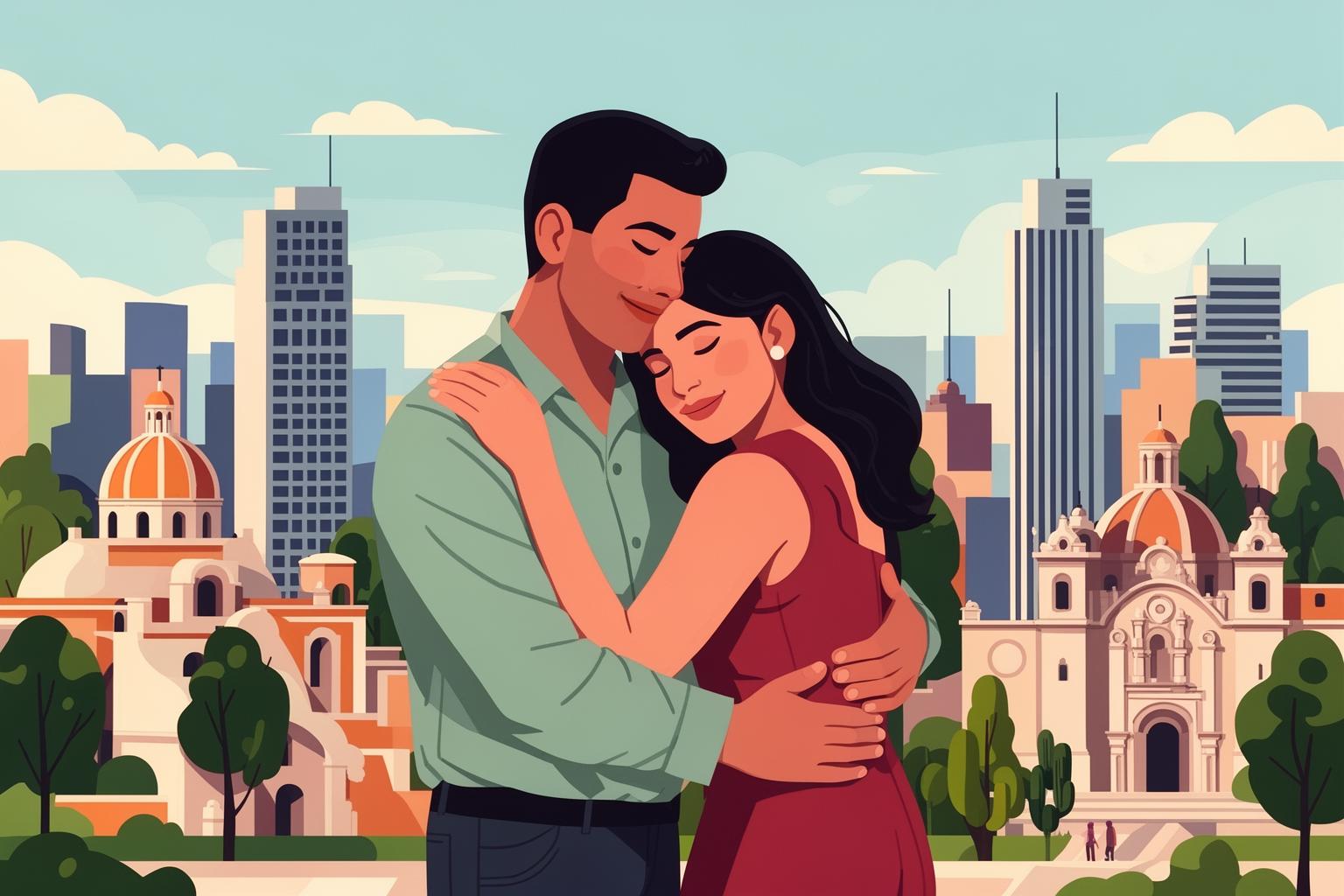
Carlos Fuentes may have been born in Panama City as the son of a diplomat, but his spirit was shaped in the highlands of Mexico, within the vast and vibrant expanse of its capital. Mexico City, or CDMX as it is known today, was more than just a backdrop for him; it was a character—a living being, a force of nature. To truly understand Fuentes, one must first strive to understand this city, where the ruins of an Aztec temple stand shadowed by a Spanish cathedral, and where the hum of a billion lives merges into a singular, deafening, and beautiful roar. His bond with this place was primal, a lifelong love affair he chronicled with both sharp criticism and steadfast devotion. It is here, in this basin encircled by volcanoes, that our journey genuinely begins.
A Diplomat’s Son, A City’s Child
Picture a young boy, having spent his early years amid the orderly environment of Washington D.C., arriving in the city that would come to define him. This was Fuentes’s experience. He returned to Mexico at sixteen, and the city left a lasting imprint on him. The neighborhoods of Colonia Roma and Condesa, with their elegant Art Deco and Neoclassical mansions nestled alongside bustling apartment buildings, became his stomping grounds. These are not merely locations; they are atmospheres. Walking through Roma today, one can still feel it. The wide, tree-lined boulevards, the tranquil parks like Parque México with its open-air theater, the ornate facades of buildings that have witnessed a century of change—this was the landscape of his formative years. It was worlds apart from the sterile halls of power he had known abroad. It was a realm of vivid sensations: the scent of gardenias spilling over a garden wall, the call of a street vendor selling tamales, the distant sound of a mariachi band rehearsing. This sensory tapestry is deeply woven into the fabric of his prose. He learned to read the city not as a map, but as a poem, rich with hidden rhymes and intricate rhythms.
The Palaces of Knowledge: UNAM and the Formation of a Mind
Every great writer has an intellectual crucible, and for Fuentes, one of the most significant was the National Autonomous University of Mexico (UNAM). This institution is more than a university; it is a city unto itself—a sprawling campus that is a UNESCO World Heritage site and a monument to Mexico’s mid-century modernist vision. Visiting the central campus is to be struck by the immense power of art as a public declaration. The library, designed by Juan O’Gorman, is a stunning mosaic, its ten-story façade narrating the entire history of Mexico in millions of colored stones. The rectory tower is ablaze with murals by the renowned David Alfaro Siqueiros. This was where Fuentes studied law, but more importantly, where he immersed himself in the intellectual and artistic currents electrifying the nation. The Mexican Revolution remained a fresh memory, its ideals—and betrayals—debated with fiery passion within these halls. The muralist movement, which Fuentes encountered on these walls, taught him an essential lesson: art could and should engage with history, politics, and the identity of a people. It was a visual manifesto he would soon translate into literature, crafting his own murals with words.
Where the Air is Clear: The Literary Soul of the Capital
No single work captures the essence of Fuentes’s Mexico City like his explosive debut novel, La región más transparente (Where the Air Is Clear). Published in 1958, it was a literary earthquake. Prior to this, Mexican literature often focused on rural life and revolutionary history. Fuentes dragged it, kicking and screaming, into the modern urban present. The novel’s title is deeply ironic, taken from Alexander von Humboldt’s description of the Valley of Mexico—a vision of pristine nature long since swallowed by smog and concrete. The book’s protagonist is not a single person, but the city itself: a sprawling, multifaceted character voiced by a dizzying chorus of bankers and taxi drivers, faded aristocrats and aspiring artists, cynical intellectuals and indigenous laborers. To read the book is to be thrust into the city’s bloodstream.
Walking in the footsteps of its characters is an exhilarating way to experience CDMX. Begin at the Zócalo, the vast central square and the nation’s political and spiritual heart. Feel the weight of centuries beneath your feet. This is the core of power that Fuentes relentlessly dissects. From there, stroll down the bustling Madero street toward the Palacio de Bellas Artes, the opulent white marble palace of culture. Imagine his characters meeting for coffee or a drink in the historic cafes of the Centro Histórico, such as Café de Tacuba or Bar La Ópera, with its famous bullet hole in the ceiling, reportedly left by Pancho Villa. Then explore the chic boulevards of Polanco and the bohemian streets of Roma. You will witness the city’s stark contrasts—the very engine of Fuentes’s narrative. He reveals that Mexico City is not a single place, but a thousand different cities layered upon one another, coexisting in a state of constant, vibrant friction.
Veracruz: The Salt-Stained Roots of History
If Mexico City embodied Fuentes’s mind, then Veracruz was his blood. This port city on the Gulf of Mexico, with its sultry, tropical air and complex history, symbolized the nation’s roots and its often-painful encounters with the outside world. It was the landing site of Hernán Cortés and the Spanish conquistadors, occupied by the French and the Americans, and has always served as Mexico’s gateway—a place of ongoing collision and fusion, where cultures both clash and blend, and where history is not a distant notion but a humid, tangible presence. Fuentes’s family traced their roots to Veracruz, and he felt a deep connection to its distinctive character, a fusion of Caribbean languor and resilient spirit.
Gateway to the World, Keeper of the Past
Arriving in Veracruz brings a noticeable change in tempo. The intense high-altitude rhythm of Mexico City gives way to a slower, more melodic pace of life. At the heart of the city lies its zócalo, or Plaza de Armas, which comes alive every evening. Beneath the arches of the surrounding portales, couples dance the danzón to the music of live marimba bands, their graceful, measured steps perfectly mirroring the city’s blend of tradition and spontaneity. The air is thick with the aroma of strong coffee from the famed Gran Café de la Parroquia and the salty scent of the Gulf. This is a city that thrives outdoors, its identity shaped by the sea. Fuentes was captivated by the idea of the port as a permeable membrane—through Veracruz flowed new ideas, new peoples, and new conflicts, forever altering the nation’s destiny. It embodies the eternal dialectic in Mexican identity that so preoccupied him: the tension between the indigenous soul and foreign influence, between protecting what is native and embracing the wider world.
Echoes of History and the Clash of Cultures
Although few of his major novels are set entirely in Veracruz, its spirit permeates Fuentes’s work. The themes of foreign intervention, cultural identity, and the burden of history that define the port’s story are the very issues Fuentes revisits time and again. In a novel like The Old Gringo, which delves into the mysterious disappearance of American writer Ambrose Bierce during revolutionary Mexico, this cultural clash emerges vividly. The American’s idealism and naiveté collide with the harsh realities of the Mexican conflict. This is Veracruz’s story on a grand scale: the encounter between the confident outsider and the complex, often impenetrable soul of Mexico. To grasp this history fully, a visit to the fortress of San Juan de Ulúa is indispensable. This imposing stone structure, situated on an island in the harbor, has served as a fortress, prison, and presidential palace. Its walls have borne witness to pirate assaults, foreign invasions, and the suffering of political prisoners. Standing on its ramparts, gazing back at the city while the warm Gulf breeze stirs the air, one can sense the layers of history that Fuentes so masterfully unearthed in his writing. It becomes clear that in Mexico, the past is never truly past; it remains a constant, living presence.
A Global Citizen: The World as a Mirror to Mexico
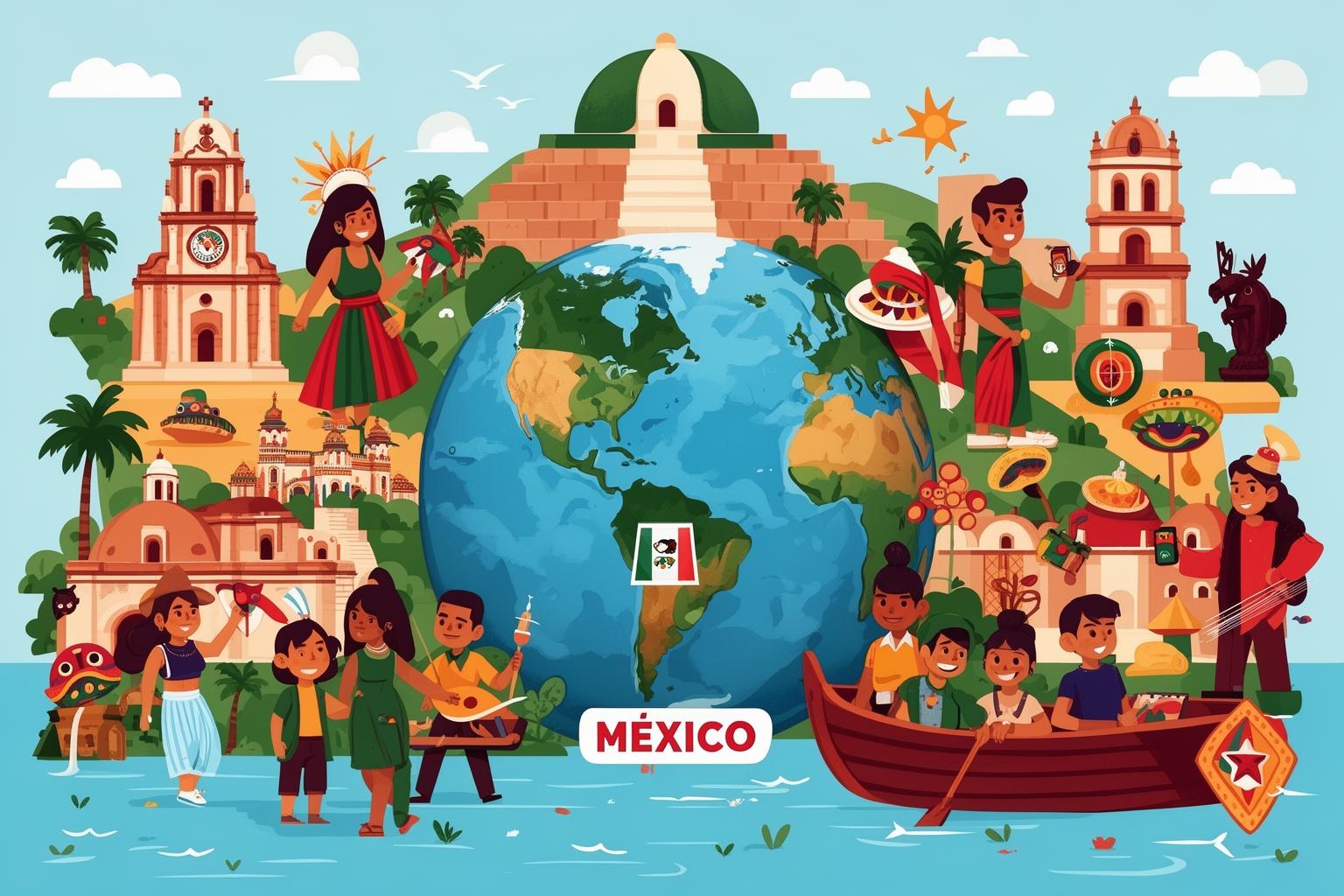
Fuentes embodied the true cosmopolitan spirit. Growing up as a diplomat’s son and later serving as a diplomat and professor himself, he felt equally at ease in a Parisian café or a London library as he did in a Mexico City cantina. Yet his travels were never a means of escaping his identity; instead, they deepened his understanding of it. By observing Mexico from afar, he gained a distinctive and powerful perspective on its contours, complexities, and global position. This international viewpoint is fundamental to his work, and tracing his global journey uncovers another dimension of his brilliance.
Washington D.C. and the Northern Perspective
Fuentes spent his formative years, from age six to twelve, in Washington D.C. It was there that he mastered flawless, unaccented English and developed a passion for American cinema, a love that would shape the cinematic, rapid-cut style of his writing. Living at the heart of American power gave him deep, firsthand insight into the United States—its strength, ideals, and its complex, often contradictory relationship with Mexico. This experience instilled in him a duality that became central to his work: the capacity to see the world from both sides of the border. While he grasped the American perspective, his soul remained intensely Mexican. This duality lent his writing on U.S.-Mexico relations unmatched authority and subtlety. He was not merely an observer; he had lived this reality. His early cultural immersion shielded him from narrow nationalism, nurturing instead a lifelong dedication to dialogue and mutual understanding, even as he maintained a sharp critique of American foreign policy.
Parisian Cafés and the Latin American Boom
In the 1960s, Paris attracted intellectuals and artists worldwide, becoming a key meeting place for writers destined to revolutionize literature. It was here that the Latin American “Boom” began, a literary movement featuring figures like Gabriel García Márquez of Colombia, Mario Vargas Llosa of Peru, Julio Cortázar of Argentina, and Carlos Fuentes of Mexico, who all rose to global prominence. Picture them gathered in a café in the Latin Quarter—perhaps Les Deux Magots or Café de Flore—surrounded by cigarette smoke and lively discussions. They debated politics, analyzed literary techniques, and forged a collective identity as Latin American writers. Paris offered them both distance and community, encouraging bold new ambitions. No longer confined to national labels, they became part of a continental movement. This European chapter was crucial, legitimizing their work internationally and empowering them to experiment with form and language, confident the world was finally ready to hear their stories in their own voice.
London’s Fog and Academic Contemplation
Later, Fuentes took on academic roles at prestigious institutions including Cambridge in the UK. His time in London provided yet another contrasting stage for his Mexican identity. The ancient, mist-cloaked English landscapes, Cambridge’s venerable halls, and the reserved British culture created a serene environment for reflection. During this intellectually rich period, he produced some of his most profound essays and delivered the influential Massey Lectures. In London’s relative calm, removed from Latin America’s political and social turbulence, he distilled his thoughts on history, myth, and the novel. He contrasted the cyclical, mythic concept of time prevalent in Latin American culture with the linear, progressive notion dominant in the Anglo-Saxon world. This juxtaposition between his sunlit, passionate homeland and England’s foggy, intellectual atmosphere sharpened his understanding of both. It reinforced his conviction that Mexico’s greatest strength lay in its rich, complex, and often contradictory cultural heritage.
The Labyrinth of Power: Places of Politics and Myth
At the heart of Carlos Fuentes’s work lies an unyielding examination of power. He was captivated by its allure, its corrupting influence, and its profound connection to Mexican history. From the Aztec emperors to the Spanish viceroys, and from revolutionary caudillos to contemporary presidents, he analyzed the figures who have held power in Mexico, often revealing how their personal ambitions both shaped and were shaped by the nation’s fate. To delve into Fuentes’s world is to encounter the physical centers of this power, places steeped in the drama of history.
The National Palace and the Weight of History
No symbol of power in Mexico is more potent than the Palacio Nacional, the vast government building dominating the eastern side of Mexico City’s Zócalo. Constructed largely from the stones of Moctezuma’s palace, it represents layers of conquest. However, its true treasure—and a key to understanding Fuentes—is found within its main staircase and along the corridors of the second floor. Here lie Diego Rivera’s monumental murals, offering an expansive, epic depiction of Mexican history. Walking these halls is like reading a story painted on the walls: the idyllic pre-Columbian era, the harshness of the Spanish conquest, the upheaval of the revolution, and the hope of a socialist future. What Rivera achieved with paint, Fuentes accomplished with words. He perceived history not as a sequence of dates but as a living, breathing mural filled with heroes, villains, and tragic figures. His novels, especially The Death of Artemio Cruz, reflect this broad perspective, sweeping across decades of personal and national history to demonstrate how the past continuously resurfaces in the present. The National Palace stands as a physical embodiment of this concept—a place where the ghosts of history coexist with contemporary bureaucrats.
Artemio Cruz’s Final View: A Fictional Pilgrimage
The Death of Artemio Cruz stands as one of Fuentes’s masterpieces, a powerful depiction of a corrupt tycoon and political boss who, on his deathbed, revisits critical moments of his life. Artemio Cruz emerges from the Mexican Revolution, a man who once fought for its ideals but ultimately betrayed them for personal advantage. His life narrative mirrors the story of modern Mexico’s broken promises. Though his deathbed serves as a fictional realm, his recollections transport the reader to authentic locations and historical moments. We journey to the revolution’s battlefields, the dusty provincial towns, the haciendas seized and redistributed, and the smoke-filled back rooms of Mexico City where political power was won and lost. Following Artemio’s path is a way to grasp the moral complexity that Fuentes believed was central to the Mexican political system. His story offers a cautionary tale about how the quest for power can corrupt both the soul of an individual and a nation. Reading this novel provides a unique perspective on the country—where every grand monument and provincial plaza tells a tale of struggle, ambition, and compromise, the very forces that drove Artemio Cruz’s rise and fall.
A Traveler’s Guide to Fuentes’s Universe

Embarking on a literary pilgrimage through Carlos Fuentes’s Mexico offers an incredibly rewarding experience. It elevates a simple trip into a profound, multi-layered journey. It’s more than just sightseeing; it’s about viewing the city through a novelist’s lens, uncovering the stories woven into the streets, and feeling the heartbeat of a culture that inspired timeless works. Here is some practical advice for creating your own adventure into his world.
Crafting Your Own Itinerary in Mexico City
Mexico City is vast, so it’s best to explore it neighborhood by neighborhood. Dedicate at least a full day to the Centro Histórico. Begin at the Zócalo, taking in the Cathedral and the National Palace. Imagine the city as it appears in Where the Air Is Clear, a whirlwind of energy drawing people from all corners of the country. From there, visit the Palacio de Bellas Artes and the nearby Alameda Central park. For a glimpse of literary life, seek out historic bookstores like Librería Porrúa, located beautifully just behind the Cathedral. In the evening, step into a classic cantina such as Bar La Ópera or Salón Tenampa in Plaza Garibaldi to soak up the atmosphere that sparked so many late-night conversations.
On another day, focus on Colonia Roma and Condesa—neighborhoods made for walking. Meander the streets, admiring the stunning architecture. Enjoy a coffee at an outdoor café on Avenida Ámsterdam in Condesa, a perfect oval street following the path of a former racetrack. Visit the Casa Lamm Cultural Center in Roma, a magnificent mansion that often hosts art exhibitions, to experience the neighborhood’s refined, artistic spirit. This is the more intimate, residential side of Fuentes’s city, the world he knew as a young man.
Beyond the Capital: A Taste of Veracruz
Traveling from Mexico City to Veracruz is straightforward. A comfortable first-class bus takes about five to six hours, offering captivating views as you descend from the high central plateau to the tropical coast. Alternatively, a short flight will get you there in about an hour. Once in Veracruz, the key is to slow down. The main highlight is the evening ritual at the Plaza de Armas. Find a seat at one of the cafes beneath the portales, order a “lechero” at the Gran Café de la Parroquia (be sure to clink your glass with your spoon to summon the waiter with the hot milk), and simply watch the city wake up. Stroll the Malecón (the seaside promenade), visit the imposing San Juan de Ulúa fortress, and don’t miss indulging in the local seafood, some of the best in Mexico. The atmosphere is the true draw—the music, the sea breeze, and the deep sense of history.
Reading on Location: Pairing Books with Places
To fully enrich your journey, bring the right books—it’s essential for any literary traveler. While exploring Mexico City’s many facets, there is no better companion than Where the Air Is Clear. Its fragmented, choral narrative perfectly complements the city’s vibrant chaos. Carry a copy of The Death of Artemio Cruz when you visit the Zócalo and National Palace. Standing at the heart of power, the novel’s themes of history, memory, and corruption resonate deeply. For a more surreal, atmospheric experience, read the short, haunting novella Aura before wandering the old baroque streets of the Centro Histórico. Its ghostly, dreamlike tone will transform how you see the city’s aging facades. Reading Fuentes in the very places he wrote about turns the text from mere words into a living, breathing experience. The city’s sounds and scents become part of the story, and the story itself becomes a guide to its hidden soul.
The Unending Journey
To follow in the footsteps of Carlos Fuentes is to recognize that the journey never truly ends. His world is not a fixed map of places to be ticked off but a living, constantly evolving landscape of ideas, histories, and human passions. The Mexico City he depicted is always reinventing itself, yet the essence he captured—its energy, contradictions, and resilience—persists. The historical presence of Veracruz still lingers in the humid air. The global conversation he advocated for is more pertinent now than ever. Fuentes showed us that to genuinely understand a place, one must read its stories, heed its ghosts, and embrace its complexities. His legacy lies not only in his books but also in the invitation they offer: to look deeper, question authority, and uncover the universal human drama unfolding on the streets of a specific place. So stroll the boulevards, sit in the plazas, listen to the music, and read. You will discover that Carlos Fuentes remains there, speaking through the city’s endless murmur, his voice an inseparable part of the place he cherished and shared with the world.