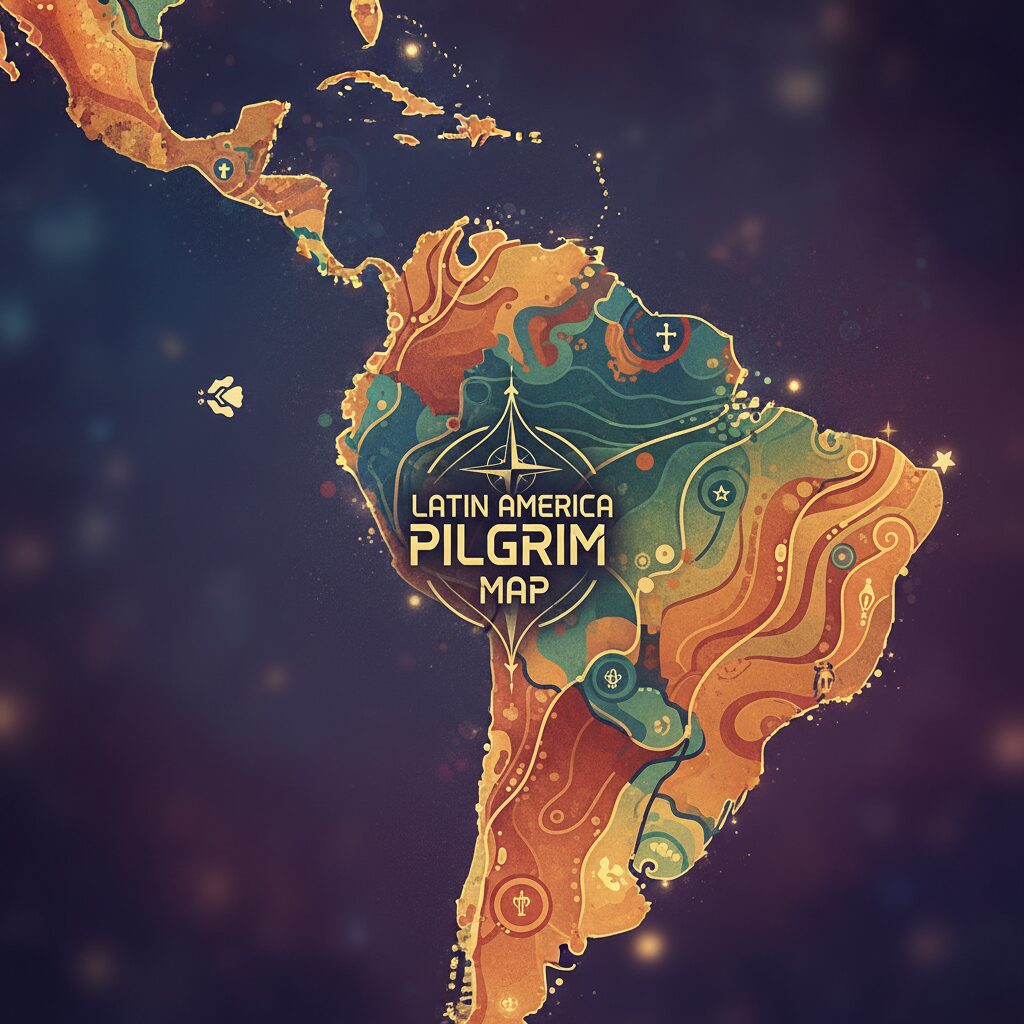
Some writers build worlds from pure ether, spinning fantasy from the threads of imagination. Others are cartographers of the human soul, mapping its treacherous landscapes onto the grid of the real world. Mario Vargas Llosa, the Peruvian titan of letters and Nobel laureate, is a master of this latter art. To read his work is to walk the sweltering streets of Piura, to feel the damp, gray melancholy of Lima, to navigate the labyrinthine corridors of power and passion that define not just a nation, but the very essence of the human condition. His novels are not just stories; they are coordinates, points on a map that trace a life of fierce intellect, restless wandering, and an unwavering commitment to the power of fiction. Embarking on a journey through the places that shaped him and his work is more than a simple tour. It is a pilgrimage, a conversation with a literary giant held across continents and decades. It’s an act of tracing the ink from the page back to the very pavement, the very air, that gave it life. From the white volcanic stone of his birthplace to the storied cafes of Paris and the grand avenues of Madrid, this is a quest to understand the geography of a genius, to see the world through the piercing gaze of one of the 20th century’s most essential voices.
This quest to understand the geography of a genius is part of a rich tradition of literary pilgrimages, where readers seek the landscapes that shaped the world’s great authors.
Peru: The Primordial Ink
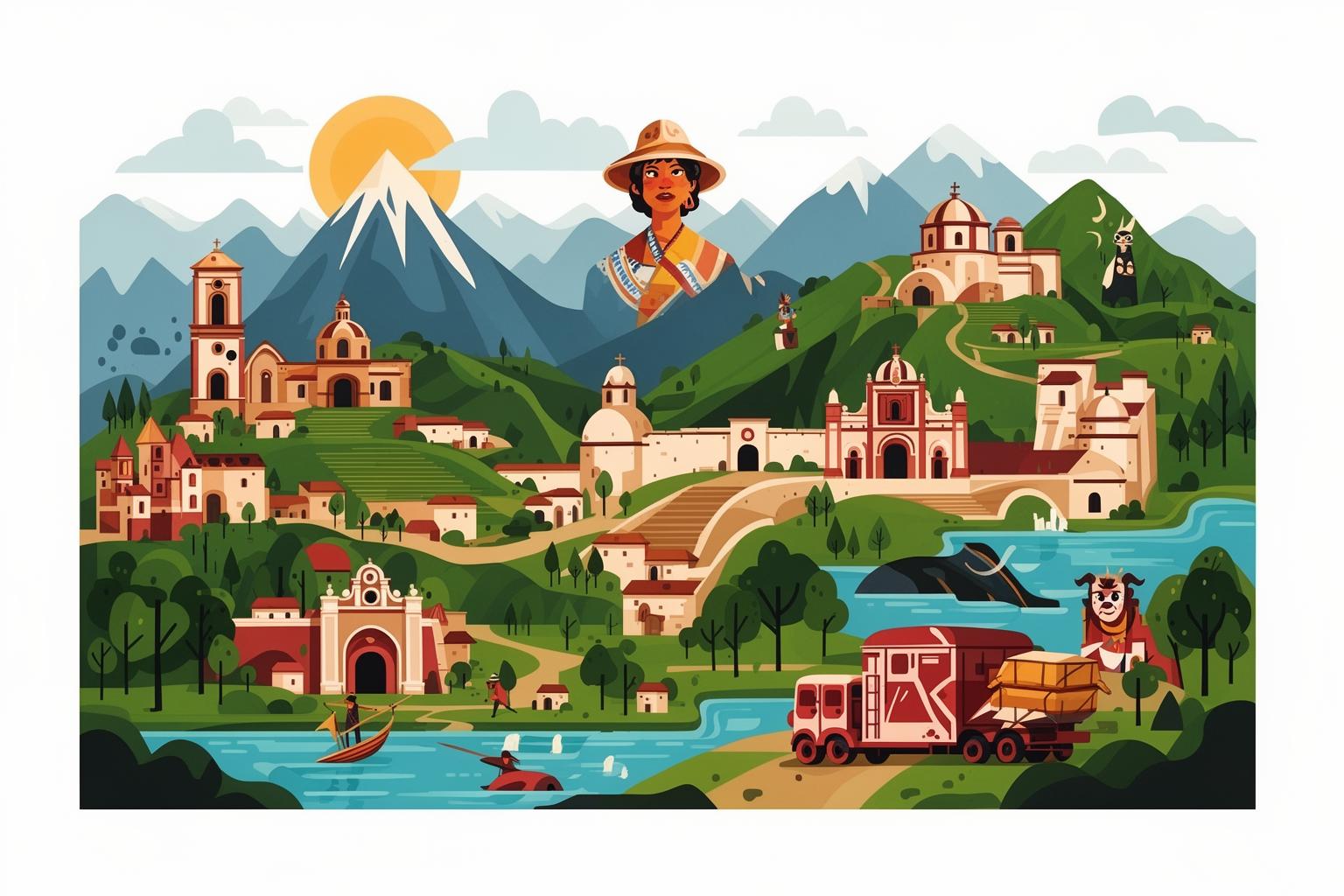
Every story begins at a starting point, a ground zero from which everything else expands. For Mario Vargas Llosa, that center is Peru. It is the country he has analyzed, criticized, fled, and loved with a fierce intensity that permeates every page he has ever written. It is the source of his anger, nostalgia, characters, and deepest inquiries about society, power, and identity. To understand Vargas Llosa, one must first grasp the complex, contradictory, and beautiful fabric of his homeland. The journey starts here, beneath the Andean sun and coastal mist, in the very soil that nurtured his literary roots.
Arequipa: The White City of Beginnings
There is a strong pride in Arequipa, a city constructed from the radiant white volcanic stone known as sillar. It shines under the Andean sun, stark and striking against the deep blue sky, overseen by the majestic, conical shape of the Misti volcano. This city feels both ancient and formidable, a place of legal traditions and rebellious spirits. It was here, on Avenida Parra, that Jorge Mario Pedro Vargas Llosa was born in 1936. The city’s character—its resolute independence and its formal, nearly baroque social structures—serves as a fitting prologue to the writer’s own persona.
Your pilgrimage properly begins at the Casa Museo Mario Vargas Llosa, his birthplace, now converted into an immersive museum. This is far from a dusty artifact display. The experience is a high-tech, deeply intimate journey. Moving through room to room, you are guided by holographic images and evocative audio narratives, often in the author’s own voice. One moment you are in his childhood bedroom, witnessing the fears and dreams that would later fuel his fiction. The next, you stand in a recreation of his study, surrounded by shadows of his most iconic characters. The museum masterfully captures the dialogue between life and art. You see family photos, early report cards, the first tentative manuscripts, and begin to understand how the boy from Arequipa transformed into a global literary figure. The atmosphere inside is one of reverent curiosity—a space where the boundary between the creator and his creation feels remarkably thin.
Beyond the museum, Arequipa itself serves as a living text. Stroll through the Plaza de Armas, one of South America’s most beautiful squares, its sillar arches glowing pink at sunset. Imagine a young Vargas Llosa absorbing the city’s rigid social hierarchies, whispered gossip, and public dramas unfolding in its stately courtyards. Visit the Santa Catalina Monastery, a vast enclave of color and shadow, a city within a city that reflects the deep influence of Catholicism and colonial history on the Peruvian psyche, themes he repeatedly explored. The air in Arequipa is thin and crisp, the light piercingly clear. It feels like a city of conviction, a fitting birthplace for a writer whose prose is marked by precision and moral intensity.
A Pilgrim’s Guide to Arequipa
To truly experience Arequipa, you must walk its streets. Its historic center is a UNESCO World Heritage site, and its pedestrian-friendly avenues offer a delightful exploration. The best time to visit is during the dry season, from April to November, when skies are clear and views of Misti remain unobstructed. A practical tip for visitors is to acclimate slowly to the altitude (around 2,335 meters or 7,661 feet). Take it easy on your first day, drink plenty of water, and try the local coca tea. Don’t just visit the museum; bring a book of his essays or his memoir, A Fish in the Water, to a café in Plaza de Armas. Read his words in the city that first shaped his voice—it’s a powerful, almost mystical experience.
Lima: The Gray Beast, The Infinite City
If Arequipa was the formal prologue, Lima was the sprawling, chaotic, and endlessly captivating main text of Vargas Llosa’s early life. He called it “Lima the horrible,” yet it is the city that haunts his greatest works—a muse he could neither fully embrace nor ever truly escape. The city mirrors Peru itself: a place of stark contrasts, where elegant colonial balconies crumble beside modern glass towers, and where persistent coastal fog, the garúa, envelops everything in a melancholic gray haze. This is the setting of The Time of the Hero, Conversation in the Cathedral, and Aunt Julia and the Scriptwriter.
Your literary exploration of Lima should start in Miraflores. This upscale district, with manicured parks and cliffside views of the Pacific, was Vargas Llosa’s youthful playground. It’s the world of the “pituco” society kids he both belonged to and examined. Walk along the Malecón, the long boardwalk tracing the cliffs, and you can almost see cadets from the Leoncio Prado military academy sneaking cigarettes, their anxieties blending with the salty air. Sit in Parque Kennedy, home to many stray cats, and feel the setting of countless scenes from Aunt Julia—a world of radio soap operas and emerging artistic ambition.
From Miraflores, a short trip takes you to Barranco, Lima’s bohemian district. With its colorful mansions, clifftop bars, and the iconic Bridge of Sighs (Puente de los Suspiros), Barranco has long been a haven for artists and writers. It represents a freer, more creative side of Lima, counterbalancing the rigid social structure of Miraflores. Here, you can sense the heartbeat of the city’s artistic life, a world Vargas Llosa longed to join as a young man.
However, to grasp the core of his work, one must go further. A visit to Universidad Nacional Mayor de San Marcos, the oldest university in the Americas, is crucial. Walking its historic cloisters, you feel the weight of centuries of intellectual and political history. Here, Vargas Llosa studied law and literature, immersing himself in fervent political debates and existential ideas that shaped his worldview. This place marked his intellectual awakening.
The most intense pilgrimage site is the Colegio Militar Leoncio Prado in Callao. This is the real-life setting of his explosive debut novel, La ciudad y los perros (The Time of the Hero). The fortress-like school stands as a monument to the brutal, hyper-masculine, hierarchical world he depicted with such raw force. Though entry is restricted, standing outside its gates, gazing at the disciplined façade, you can feel the novel’s oppressive atmosphere. It represents a microcosm of Peruvian society—a crucible where innocence is crushed and harsh realities forged. This experience ignited his rebellion against the establishment and launched his literary career.
Lastly, there is the near-mythical quest for “The Cathedral.” The bar from Conversación en La Catedral (Conversation in the Cathedral), where Santiago Zavala and Ambrosio have their marathon dialogue, was a real place—a humble dive near the city’s municipal slaughterhouse. Though the original bar no longer exists, the spirit of the novel—its sprawling, soul-searching exploration of a generation’s failures and the corrupting nature of power—permeates Lima. The novel asks, “At what precise moment had Peru destroyed itself?” Standing in the busy, complex, resilient heart of downtown Lima, you sense that question still lingers.
A Pilgrim’s Guide to Lima
Lima is a vast metropolis that demands planning to navigate. Use ride-sharing apps like Uber or Cabify for safe, efficient travel between districts. The city’s culinary scene is world-renowned, so intersperse your literary visits with stops at traditional cevicherías or upscale restaurants. For first-time visitors, a walking tour of the historic center is essential to appreciate colonial architecture. A small tip: embrace the garúa. Don’t be discouraged by gray skies. That atmospheric mist is Lima’s true light—the filter through which Vargas Llosa perceived his city. Accept it, and you will see his novels come alive.
Piura: The Desert’s Blazing Furnace
North of Lima, where the landscape gives way to arid desert, lies Piura. This is a city of relentless heat and vibrant, resilient culture. Vargas Llosa spent part of his childhood here and later returned as a young journalist. The experience profoundly shaped his imagination, marked by the region’s harsh beauty and complex social dynamics. This is the primordial setting of one of his most ambitious novels, La casa verde (The Green House).
Today’s Piura is a bustling commercial center, but the essence captured by Vargas Llosa remains. You can sense it in the oppressive midday heat that drives residents indoors for siestas. You can see it along the Chira River, a lifeline threading through the desert. The novel’s two main worlds—the urban Piura and the distant, wild Amazon jungle—are linked through characters and themes of exploitation and survival. To understand the novel, you must feel the place. Visit the Plaza de Armas, shaded by ancient tamarind trees, and imagine the world of Sergeant Lituma and the “Inconquistables.”
The real “Green House” was a brothel, a central point in the town’s social life; while the physical building no longer exists, its legend was absorbed into the city’s identity by the novel. Exploring Piura is less about pinpointing landmarks and more about absorbing atmosphere. It is about understanding how the desert environment shapes human desire and destiny—a core theme in the book. Here, Vargas Llosa developed his talent as a social observer, learning to listen to the marginalized and to trace the complex connections between city and lawless frontier.
A Pilgrim’s Guide to Piura
To visit Piura is to accept its climate. Dress lightly, wear a wide-brimmed hat, and stay well hydrated. The region is famed for its distinctive cuisine, including the dry stew seco de chavelo. The best way to experience Piura is to engage with locals, explore markets, and take a trip to nearby Catacaos, known for its crafts and picanterías. This journey into northern Peru’s soul offers a world far removed from Lima’s cosmopolitan gloss and is essential for appreciating the vast scope of Vargas Llosa’s national canvas.
Europe: A Continent of Reinvention
Escaping what he perceived as the stifling confines of Peruvian society, Vargas Llosa relocated to Europe in the late 1950s. While this move was a typical rite of passage for a Latin American intellectual, for him it was more than just an escape. Europe became a workshop—a place where he gained the distance, perspective, and creative community needed to transform the raw materials of his Peruvian experience into monumental works of literature. The streets of Paris, Madrid, and London served as the backdrop for his evolution from a promising young writer into a leading figure of the Latin American Boom.
Paris: The Boom’s Laboratory
In the 1960s, Paris attracted writers, artists, and revolutionaries from across the globe. For the young Vargas Llosa, who arrived on a scholarship to study, it represented everything Lima was not: a city of intellectual freedom, artistic fervor, and boundless possibility. Settling in the Latin Quarter, the historic student area, he penned The Time of the Hero and The Green House in cramped apartments and smoky cafés.
Today, walking through the 5th and 6th arrondissements is to trace the paths of Vargas Llosa and his contemporaries—Gabriel García Márquez, Julio Cortázar, Carlos Fuentes. This was the crucible of the Boom, the literary explosion that propelled Latin American literature onto the global stage. Picture Vargas Llosa engaged in heated discussions at Les Deux Magots or Café de Flore, not as a tourist but as a young artist crafting a new literary language. Stop by the iconic Shakespeare and Company bookstore, a sanctuary for English-speaking writers that reflected the district’s international spirit. Wander the streets surrounding the Sorbonne, where the energy of student activism and intellectual discourse would have surged beneath his feet.
Paris offered Vargas Llosa a vital gift: perspective. Viewing Peru from a distance allowed him to perceive its structures, myths, and pathologies with fresh clarity. The city was his laboratory for experimenting with form and technique, inspired by European modernists like Flaubert and Faulkner, whose lessons he applied to his own vivid, native material. The Latin Quarter’s atmosphere remains charged with creativity and intellectual vitality, where the echoes of literary giants still hover. It’s impossible to overstate how pivotal this period was—here, Mario Vargas Llosa, the Peruvian writer, became Vargas Llosa, the universal novelist.
A Pilgrim’s Guide to Paris
The best way to explore the Latin Quarter is on foot, allowing for serendipitous discoveries amid its winding medieval streets. While the famous cafés are often busy, it’s worthwhile to pause for coffee and soak in the history. For a more intimate experience, seek out the lesser-known cafés tucked away on side streets. A visit to the Jardin du Luxembourg provides a peaceful spot for reading and reflection—an ideal place to imagine the writer taking a break from his intense work. The key to this pilgrimage is to slow down: don’t just sightsee; find a bench, open one of his books written in this city, and let the Parisian setting merge with the Peruvian world on the page.
Madrid: The Second Homeland
If Paris was his laboratory, Madrid became his library and forum. Vargas Llosa’s connection to Spain and its capital is profound and layered. He first lived there as a student and later returned, eventually acquiring Spanish citizenship in 1993. Madrid symbolizes a different chapter in his life—one of established renown, political involvement, and an enduring bond with the Spanish language.
A visit to Vargas Llosa’s Madrid might include a stroll down the grand Paseo del Prado, stopping at the world-class museums that represent the refined culture he cherished. More importantly, it means appreciating his place within the Spanish intellectual tradition. A trip to the neighborhood housing the Real Academia Española—the ultimate guardian of the Spanish language—is essential. Vargas Llosa’s induction into this prestigious institution marked his towering stature within the Hispanic literary world.
Madrid is where his public role as an intellectual and political commentator grew more prominent. The city’s vibrant tapas bars and tertulias (intellectual gatherings) offered the perfect venues for his vigorous defense of liberalism and democracy. Unlike Lima’s gray melancholy or Paris’s bohemian intensity, Madrid exudes a grounded, lively energy. It is a capital that embraces its history with ease, balancing royal grandeur with neighborhood intimacy. For Vargas Llosa, it became a stable home base from which he continued to observe and write about the world, including his beloved yet troubled Peru.
A Pilgrim’s Guide to Madrid
To experience Madrid authentically, embrace its rhythm: enjoy a long lunch, take a late afternoon stroll through Retiro Park, and dine late into the evening. The city’s public transport is excellent, but its central neighborhoods are best explored on foot. Explore the Barrio de las Letras (Literary Quarter), once home to giants of the Spanish Golden Age like Cervantes. This quartier celebrates its literary heritage and offers a fitting space to reflect on Vargas Llosa’s contributions to that grand tradition. To deepen your connection with his Madrid, read his later essays or novels such as The Discreet Hero, which—though set in Peru—was written from the perspective of a man who had made a new home across the Atlantic.
London: The Anglo-Saxon Interlude
Vargas Llosa’s years in London, where he taught at King’s College and Queen Mary, represent another dimension of his cosmopolitan identity. While London was not a major setting in his fiction like Lima or Paris, it played an important role as an intellectual vantage point. It provided a distinct cultural and linguistic context, a bridge to the Anglo-Saxon world that further expanded his horizons.
Strolling through Bloomsbury, with its garden squares and academic institutions, one can picture him as a respected professor, distanced from Latin America’s political upheavals and Europe’s cultural conflicts. London was a place for contemplation and scholarship, a city where he engaged with a different literary tradition and introduced his work to a new audience. This period underscored his role not only as a fiction writer but as a global intellectual—someone who moved fluidly between different worlds and languages. It cemented his status as a truly international figure, whose concerns extended well beyond national borders.
The Journey’s End
Following the footsteps of Mario Vargas Llosa means embarking on a journey across the globe and through the turbulent history of the 20th century. It involves witnessing how a place can shape a writer’s soul, and how that writer, in turn, can forever transform a place for his readers. You begin in the proud, sunlit streets of Arequipa, sensing the emergence of a formidable spirit. You traverse the complex, fog-laden realities of Lima, the city that serves as the vibrant, wounded heart of his work. You experience the creative flame of Paris, the dignified intellectualism of Madrid, and the contemplative calm of London. Each city represents a chapter in his life and provides a key to unlocking the rich, challenging, and deeply human worlds he has crafted.
This journey is not about finding the man himself, but about uncovering the powerful alchemy through which geography turns into literature. It’s about standing on a street corner in Miraflores or the Latin Quarter and suddenly grasping a character’s motivation, a novel’s structure, a story’s fury or its tenderness. You come to understand that his true map is not composed of cities and borders, but of the universal struggles for freedom, love, integrity, and power. To follow his path is to learn how to read the world as he does: with an unflinching gaze, a passionate heart, and the steadfast belief that storytelling is a vital, necessary act of both defiance and life itself.