Art isn’t just something you hang on a wall; it’s a journey, a conversation, a vibration that echoes through time and space. For Wassily Kandinsky, the Russian pioneer who painted the first abstract watercolor, this was a profound truth. His life was a pilgrimage, a relentless quest for what he called the “inner necessity”—the spiritual truth that lies beneath the surface of the visible world. To truly understand Kandinsky is to follow in his footsteps, to walk the same cobblestone streets, breathe the same mountain air, and feel the pulse of the cities that shaped his revolutionary vision. This isn’t just about seeing his paintings in a museum; it’s about experiencing the world that gave them birth. We’ll trace his path from the gilded onion domes of Moscow to the bohemian cafes of Munich, from the tranquil shores of a Bavarian lake to the stark, geometric utopia of the Bauhaus, and finally, to the elegant boulevards of Paris. It’s a journey that reveals how an artist can absorb the energy of a place and transform it into a symphony of color and form, a universal language that still speaks to us today. Join me as we step into the frame and explore the landscapes, both external and internal, of one of modern art’s greatest masters.
Kandinsky’s quest for spiritual truth through art shares a profound kinship with the pilgrimage of Fujishima Takeji, another artist who sought the sublime in light and landscape.
Moscow’s First Symphony: Echoes of a Russian Soul
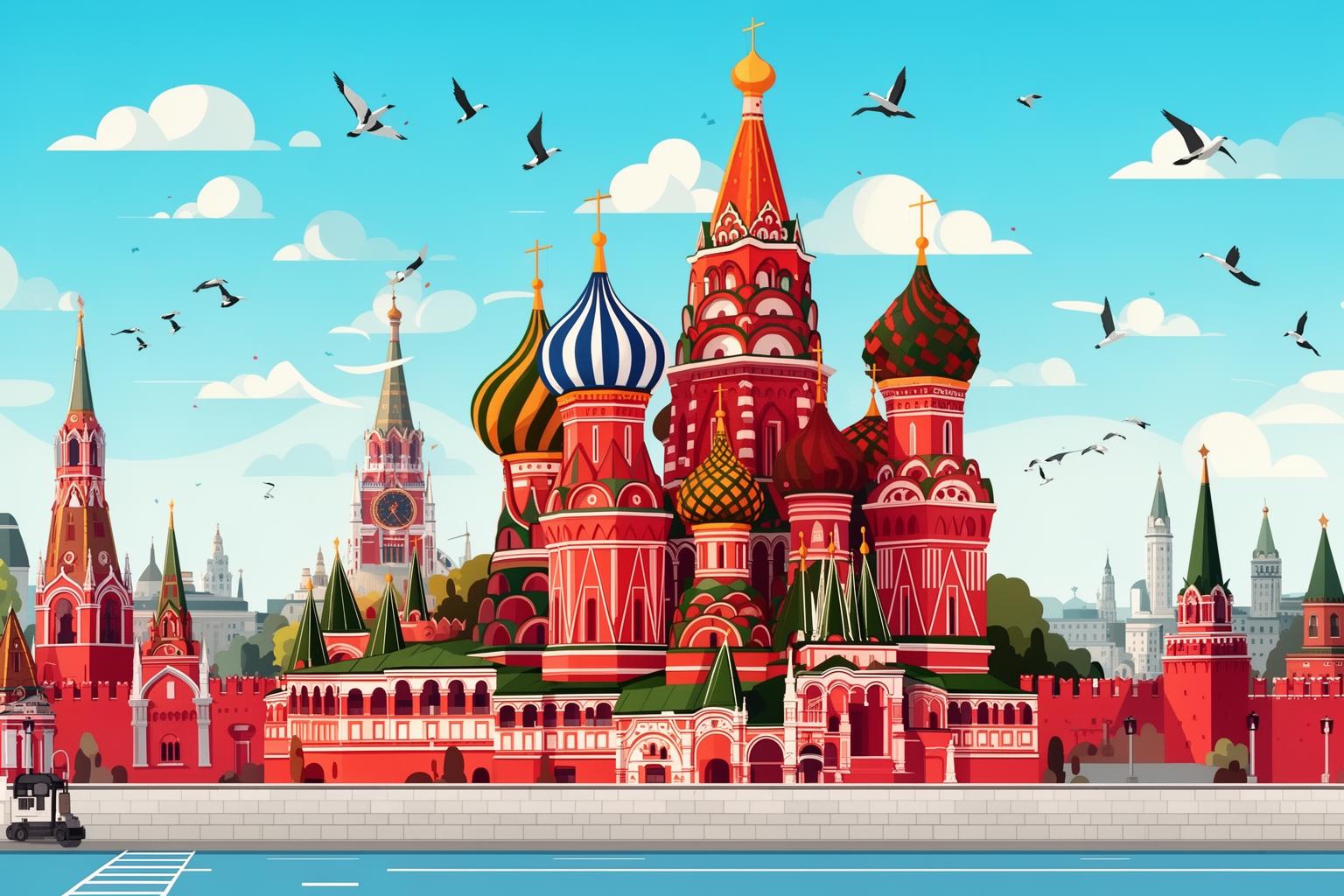
The story of Kandinsky begins—and, in a sense, comes full circle—in Moscow. It is a city of striking contrasts, where ancient, gleaming churches stand alongside stark Soviet-era monoliths, a place where fairy tale and formalism collide. This environment was the primordial soup of his artistic consciousness. Born in 1866 into a cultured and affluent family, his Moscow was a sensory feast. The deep, resonant tolling of church bells, the riot of colors found in traditional folk costumes, the intricate designs on lacquered boxes—these were not merely childhood memories but the foundational notes of his future symphonies painted on canvas.
The Formative Years: Law, Ethnography, and a Fateful Encounter
It is fascinating to consider that the father of abstract art was once set on becoming a law professor. Kandinsky excelled as a student at the University of Moscow, yet his soul was moved by different forces. A pivotal moment occurred during an ethnographic expedition to the Vologda province. Entering a traditional peasant home, an izba, he was overwhelmed. Every surface—the walls, furniture, ceiling—was adorned with vibrant, swirling folk art. He described the sensation as if he were living inside a painting, a place where the boundaries of reality dissolved into pure color and form. This experience sowed a seed: the notion that art could be an immersive, all-encompassing realm, a world unto itself.
The decisive moment came in 1896 at a Moscow exhibition. He encountered one of Claude Monet’s Haystacks paintings. At first, he failed to grasp the subject, seeing only a dazzling composition of color and light—an object of extraordinary, almost otherworldly beauty. The realization that a painting’s power could transcend its subject was revelatory. It gave him the courage to forsake a promising legal career at age thirty and move to Munich, the artistic heart of Europe, to become a painter.
Walking Through Kandinsky’s Moscow
To capture the spirit of his youth, one must wander the streets of old Moscow. Stroll along the Arbat, once the center of the city’s intellectual and artistic life. Picture a young Kandinsky, perhaps debating law and philosophy, while absorbing the city’s unique visual rhythm. Visit the Tretyakov Gallery—not only for its collection of Russian art that he studied but also to view his own works from his later return to Russia. Standing before his paintings inspired by Moscow, one can sense the city’s energy—the chaotic, dynamic, and deeply spiritual force he channeled. The air of Moscow, especially in the historic core, still carries a weight of history and a sense of unfolding drama, intrinsically linked to the powerful compositions he would later create.
The Colors of Tradition: Folk Art’s Lasting Impression
The impact of Russian folk art, or lubok, cannot be overstated. These popular prints, known for their bold outlines and flat, brilliant colors, taught him a visual language free from academic realism’s constraints. It was a language of emotion, symbolism, and immediacy. Echoes of this tradition remain in the souvenir markets at Izmaylovo, where vibrant nesting dolls and painted boxes seem to resonate with the same energy that captivated Kandinsky. He perceived in this art a direct line to the soul, untouched by intellectual pretense. This spiritual honesty was what he spent his life striving to recapture in his own work, peeling away the non-essential to reveal the pure, resonant core.
The Revolutionary Return: Art for a New World
Kandinsky returned to Moscow in 1914 as World War I began and remained through the upheaval of the Russian Revolution. This period was marked by great hardship and extraordinary creative energy. The avant-garde believed they could forge a new world through art. Kandinsky emerged as a central figure, organizing museums and teaching at new state-sponsored art institutions such as Vkhutemas. He sought to create a science of art—a universal grammar of form and color. Yet, the collectivist, utilitarian ideals of the new Soviet regime eventually conflicted with his profoundly personal, spiritual approach. Pressure mounted for art to serve a solely social function—an imposition his free spirit could not endure. In 1921, he left his homeland for the last time, accepting an invitation to teach at a groundbreaking new school in Germany: the Bauhaus.
Munich’s Bohemian Heartbeat: The Birth of the Blue Rider
If Moscow was the overture, then Munich was the explosive first movement in Kandinsky’s artistic life. Around the turn of the 20th century, the Bavarian capital attracted artists, writers, and thinkers alike. It was a city brimming with new ideas—a place where tradition and rebellion thrived in the streets and beer halls. For Kandinsky, Munich represented freedom. It was where he left his past behind, embraced his true vocation, and found the community that would help him reshape art history.
Schwabing: The Artist’s Quarter
Kandinsky made his home in Schwabing, a district often compared to the Montmartre of Munich. Even today, though much more gentrified, Schwabing maintains a leafy, sophisticated charm. You can stroll through its streets, past the Art Nouveau (or Jugendstil, as it’s called here) facades, and sense the creative energy that once permeated the area. Imagine Kandinsky walking to the Academy of Fine Arts or meeting fellow artists in a smoke-filled café, passionately debating the future of painting. This was his world—a bubble of intellectual and artistic ferment. He co-founded an art school called Phalanx, where he not only taught but also met a brilliant young student and partner in both life and art for over a decade: Gabriele Münter.
As a visitor, the best way to absorb the atmosphere is to follow their example. Find a café near the university, order a coffee, and simply watch the world go by. While most of the early 1900s haunts have disappeared, the spirit of intellectual curiosity and artistic flair remains. It’s a place that invites you to slow down, observe, and contemplate—the very mindset essential for artistic creation.
A Practical Pilgrimage: The Lenbachhaus Today
No pilgrimage to Kandinsky’s Munich is complete without visiting the Städtische Galerie im Lenbachhaus. This museum is the ultimate destination. Housed in an elegant Italianate villa with a striking modern extension, it boasts the world’s largest collection of art from the Blue Rider group. This extraordinary collection is largely thanks to a generous donation by Gabriele Münter, who, on her 80th birthday in 1957, gifted the city hundreds of works by Kandinsky and his circle that she had protected and hidden during the Nazi era.
Entering the Blue Rider rooms is an experience that surpasses a typical museum visit. You are instantly submerged in a wave of color. Here are the iconic paintings you’ve only seen in books, glowing with an intensity that reproductions can never convey. You witness Kandinsky’s rapid progression, from his early, jewel-like landscapes inspired by Russian fairy tales to the explosive, near-abstract works of 1913. You stand before masterpieces like Composition VII, a swirling, chaotic yet perfectly balanced vortex of color and form, feeling the raw power of an artist at the height of his creative genius. Allow yourself plenty of time here—this is no place to rush. Find a bench, sit down, and let the paintings speak to you. Notice the interplay of colors, the rhythm of the lines, the emotional depth of each piece. It’s a profoundly moving experience that connects you directly to the artist’s spiritual journey.
The Spiritual in Art: A Manifesto Takes Shape
It was in Munich that Kandinsky wrote his groundbreaking theoretical work, Concerning the Spiritual in Art. He argued that art must express the artist’s inner life and that color could affect the human soul directly, much like music. For him, yellow was the color of a trumpet blast—sharp and piercing—while blue was the sound of a cello—deep and celestial. This was a revolutionary idea: that painting could be like music, a non-representational art form communicating pure emotion.
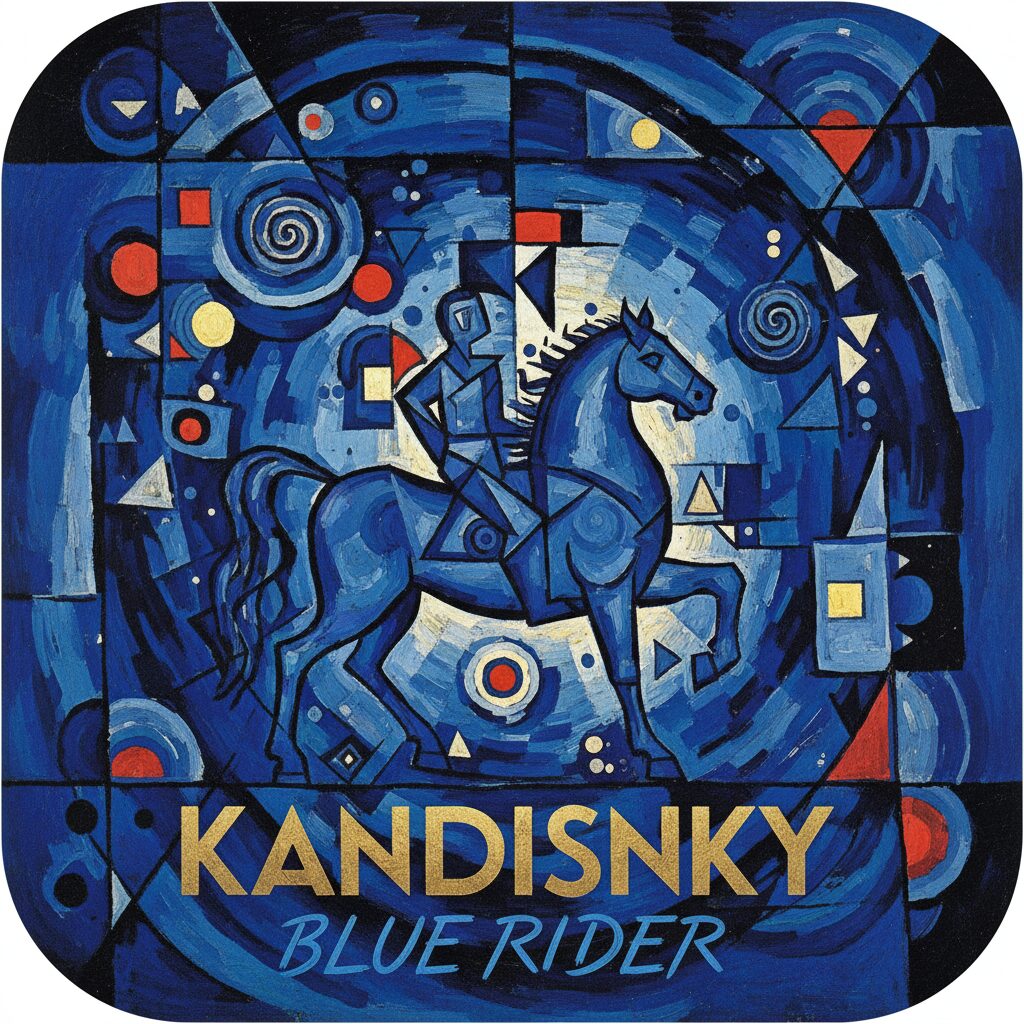
This philosophy became the foundation of the Blue Rider (Der Blaue Reiter) group, which he founded with his friend, the German painter Franz Marc. The name itself is poetic, blending Marc’s love of horses, Kandinsky’s affection for riders, and the spiritual symbolism of the color blue. They weren’t united by a strict style but by a spiritual alliance of artists who believed in art’s expressive, mystical power. Their almanac and exhibitions showcased a diverse range of works—from professional painters to folk art and children’s drawings—all valued for their authentic, unfiltered expression. This ethos of creative openness and spiritual exploration was born in the vibrant, intellectual climate of pre-war Munich.
Murnau’s Kaleidoscopic Dream: Where Abstraction Bloomed
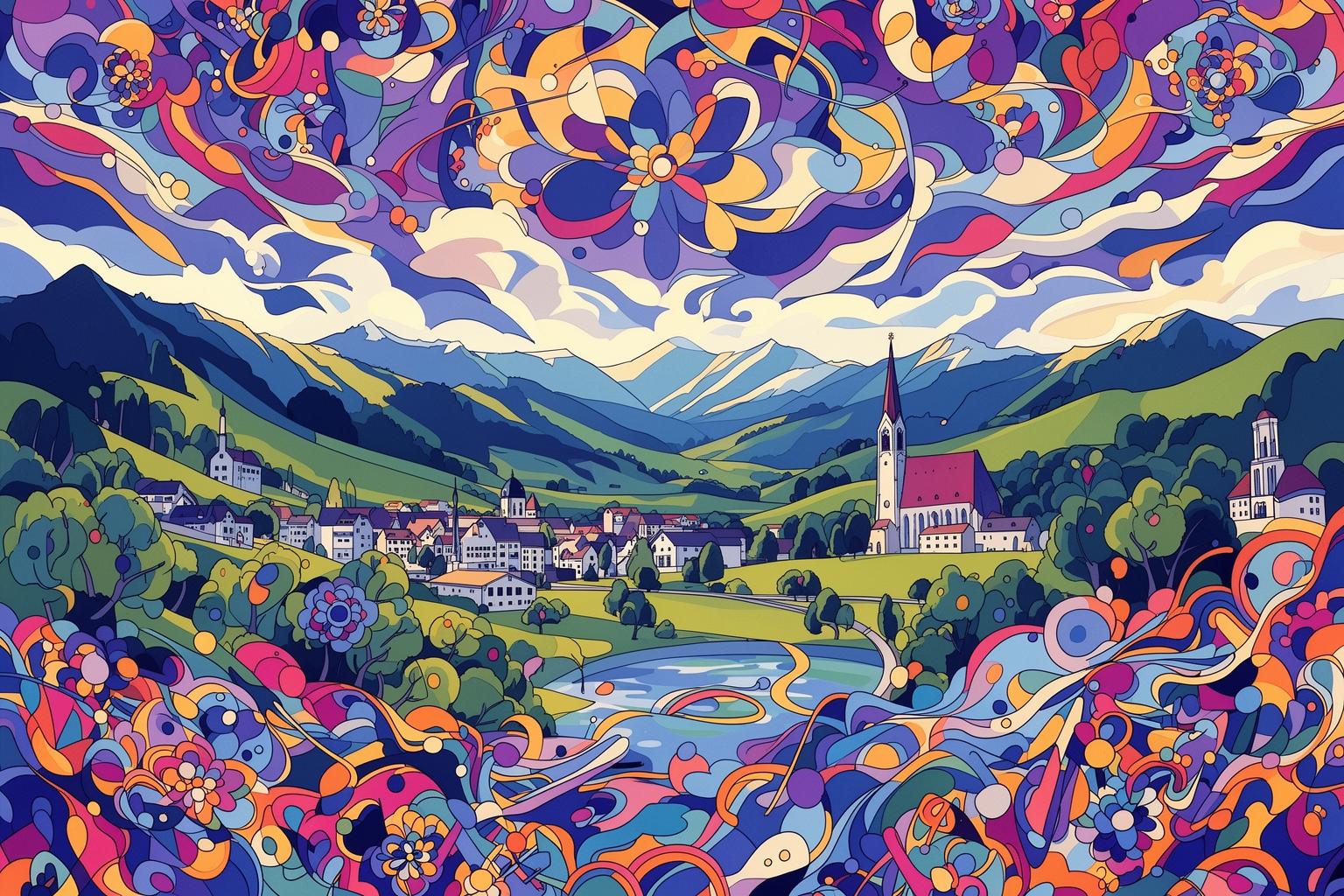
Just an hour’s train ride south of Munich lies a landscape that transformed everything for Kandinsky. The small market town of Murnau am Staffelsee, nestled in the foothills of the Bavarian Alps, became his open-air laboratory. It was here, during the summers spent with Gabriele Münter between 1908 and 1914, that his art took a monumental leap forward. The muted tones of his earlier work gave way to a burst of pure, unadulterated color. The journey from Munich’s urban intensity to Murnau’s pastoral calm is a journey into the core of Kandinsky’s breakthrough.
The “Russians’ House”: A Sanctuary of Color
In 1909, Münter purchased a small house in Murnau that would become their creative refuge. The locals called it the “Russenhaus”—the Russians’ House. Today, it is known as the Münter-Haus and is preserved as a museum, a time capsule of their life together. Visiting this house provides an intimate experience. It’s not a grand villa but a quaint, modest home. What makes it remarkable is that the artists’ touch is everywhere. They painted the furniture with folk-art-inspired motifs, filled the rooms with their artwork, and created a space that was itself a piece of art.
Standing in the compact rooms, you can sense their presence. You can gaze out the very window Kandinsky looked through when he painted his famous series View from the Window of the Gasteiger House. The view of the church and mountains remains, instantly recognizable. It’s a powerful moment of connection, bridging the century that separates you from the artist. You realize how directly he transformed the world around him into his new, vibrant visual language. The house itself became a canvas, a testament to their shared belief in merging art and life.
Capturing the Bavarian Light
The landscape around Murnau is simply breathtaking. The air is crisp, the light has a distinctive clarity, and the colors are vivid. The deep green of the meadows, the sapphire blue of Lake Staffelsee, the dramatic purple and white of the distant Alpine peaks—this was the palette Kandinsky embraced. He would pack his easel and paints and head into the countryside, painting with feverish intensity. His Murnau landscapes burst with color. He flattened perspectives, outlined forms in bold black strokes, and allowed color to free itself from descriptive realism. A mountain could be pink, a shadow bright blue. What mattered was not capturing the literal scene but its emotional and spiritual essence—its inner sound.
To truly appreciate this, take a walk around Staffelsee or hike one of the gentle trails nearby. The best times to visit are late spring or summer, when wildflowers bloom, or early autumn, when the foliage turns gold and crimson. Find a spot, sit quietly, and observe. Notice how the light transforms the colors of the mountains and water. You’ll begin to see the world as Kandinsky and Münter did—not as a collection of objects but as a dynamic tapestry of colored shapes and emotional vibrations.
Hinterglasmalerei: The Magic of Painting on Glass
One key influence on Kandinsky’s development in Murnau was the local tradition of Hinterglasmalerei, or reverse-glass painting. This folk art technique involves painting on the back of a glass pane, so the image is viewed through it. The process compels the artist to work in reverse, applying details and outlines first, then filling in larger blocks of color. This method naturally leads to simplified forms and luminous, intense colors, as light shines through the glass. Kandinsky and Münter were captivated by it. They collected local examples and began creating their own glass paintings. This practice helped push Kandinsky further toward abstraction, encouraging him to think in terms of pure color fields and bold, simplified shapes. It was another instance of his drawing inspiration from a seemingly “primitive” art form to unlock a fresh, modern mode of expression.
The Bauhaus Laboratory: Geometry, Order, and the Soul
After permanently leaving Russia, Kandinsky’s path led him to what is perhaps the most influential art and design school of the 20th century: the Bauhaus. This marked a dramatic change. While Murnau emphasized romantic, spiritual expression inspired by nature, the Bauhaus focused on structured, analytical investigation of the fundamental elements of art and design. It embodied utopian ideals, where art was intended to merge with technology and society to create a better future. Kandinsky, one of the school’s most renowned “Masters,” began a new chapter in his work, characterized by geometry and theoretical precision.
Weimar’s Grand Vision: A New Unity of the Arts
The Bauhaus was initially based in the elegant, classical city of Weimar. Starting in 1922, Kandinsky taught foundational courses on abstract form and led a mural painting workshop. The atmosphere in Weimar was charged with post-war idealism and a drive to cultivate a new kind of artist-craftsman. Kandinsky’s teaching concentrated on what he termed the “grammar” of painting, investigating the psychological qualities of fundamental shapes: the stability of the square, the dynamism of the triangle, the tranquility of the circle. His own artwork mirrored this new emphasis. The turbulent, apocalyptic canvases of his pre-war period gave way to cooler, more controlled compositions where circles, triangles, and lines hovered in a celestial, cosmic space. Visiting the original Bauhaus University buildings in Weimar, one can still sense the weight of that ambition—the spirit of a revolutionary endeavor to reinvent the modern world through design.
The Masters’ Houses in Dessau
In 1925, political pressures compelled the Bauhaus to relocate to the industrial city of Dessau. There, the school’s iconic identity was truly established. Its founder and architect, Walter Gropius, designed a striking new campus of glass, steel, and concrete, along with a series of cubic, white houses for the school’s masters, including one for Kandinsky and his wife, Nina. Visiting the Masters’ Houses today is a vital pilgrimage for enthusiasts of modernism. They stand as radical declarations of architectural principles—machines for living, as the expression goes.
Stepping inside Kandinsky’s restored home is a revelation. Each room was painted in accordance with his specific color theories. The dining room, for instance, was a serene white and pale yellow, while his studio featured a complex interplay of black, white, and gray. He was crafting a total environment, a three-dimensional realization of his paintings. As someone fascinated by the crossroads of fashion, art, and interior design, I found this utterly enthralling. It’s one thing to read about his theories; it’s another to inhabit a space designed to evoke the emotional power of color and form. This stands as a testament to the Bauhaus ideal of the Gesamtkunstwerk, the total work of art.
A Modernist Pilgrim’s Guide: Visiting the Bauhaus Sites
Traveling between Weimar and Dessau allows you to follow the school’s own evolution. Both cities host UNESCO World Heritage sites connected to the Bauhaus. In Dessau, be sure to join a guided tour of the main school building. Moving through the workshops, the auditorium, and ascending the famous staircase provides a tangible sense of the school’s daily life and creative vitality. For a fully immersive experience, you can even spend the night in a room at the former student dormitory, the Prellerhaus. Though spartan, it offers an unmatched connection to the spirit of this legendary institution. Visiting the Bauhaus is less about emotional catharsis and more about intellectual enrichment. It refreshes the mind and deepens one’s appreciation for the remarkable precision and thoughtfulness behind Kandinsky’s geometric period.
Parisian Elegance: The Final, Biomorphic Act

The rise of the Nazi party in Germany brought an end to the Bauhaus, which they denounced as “degenerate art.” In 1933, Kandinsky was once again forced to flee, ultimately settling in Paris, the undisputed art capital. Approaching seventy, he began the final chapter of his life and art in the tranquil, upscale suburb of Neuilly-sur-Seine. This move sparked yet another transformation in his style, representing a concluding synthesis of his lifelong explorations.
A New Beginning in the City of Light
Paris in the 1930s was a dazzling yet highly competitive scene. Although Kandinsky was respected, he was no longer the revolutionary force he had been in Germany. Cubism and Surrealism dominated the art world, leaving his geometric abstraction somewhat out of sync. He found a creative community among other abstract artists but remained relatively isolated. His life in Neuilly was quiet and studio-centered. He and Nina lived in an apartment with a beautiful view of the Seine, which he enjoyed from his balcony studio.
To truly grasp the spirit of this period, a stroll through Neuilly-sur-Seine proves more insightful than a visit to Paris’s bustling center. It is a calm, residential area marked by refined tranquility, a stark contrast to the revolutionary fervor Kandinsky experienced in Munich and Moscow. This sense of peaceful contemplation and an inward world flourishing in a serene setting is evident in his late works.
The Evolution of Form: From Geometry to the Cosmos
His Parisian paintings are remarkable. The rigid geometry from his Bauhaus years softened and transformed into whimsical, organic shapes. His canvases feature biomorphic, amoeba-like forms, embryonic shapes, and celestial symbols drifting against pastel-hued, atmospheric backgrounds. Works such as Sky Blue convey a joyful playfulness, evoking microscopic worlds or distant galaxies. He experimented with materials, blending sand into his paint to achieve new textures. This final style was a beautiful fusion, combining the organic freedom of his early abstractions with the compositional rigor of his Bauhaus period. It was as if he had simultaneously zoomed in to the origins of life and out to the cosmos, discovering a shared visual language between the two.
Finding Kandinsky in Modern Paris
The top place to view Kandinsky’s late work is the Centre Pompidou. The museum’s outstanding collection, largely donated by his widow Nina, ranks among the three most significant holdings of his art worldwide, alongside the Lenbachhaus in Munich and the Guggenheim in New York. The Pompidou’s radical “inside-out” architecture offers a fittingly modern backdrop for his work. Viewing his Parisian paintings there, you can trace the final arc of his career—a summary of his entire journey: the colors of Moscow, the energy of Munich, the structure of Dessau, all refracted through a serene, playful Parisian lens. When visiting, take the external escalators to the top floor for a panoramic view of the city. Seeing Paris’s rooftops spread out below offers a moment of perspective—a fitting way to reflect on the vast inner world of an artist who spent his life mapping the cosmos of the soul.
The Inner Necessity: Kandinsky’s Enduring Journey
Tracing Wassily Kandinsky’s journey across Europe is more than an art history tour; it is a lesson in perception. From the folk-art-adorned houses of Russia to the sunlit landscapes of Bavaria, from the disciplined workshops of the Bauhaus to a quiet studio overlooking the Seine, every place he lived left a lasting impression on his soul and, in turn, on his canvas. He absorbed the sounds, colors, and spiritual energies of his environment and transformed them into a revolutionary language meant to touch the viewer’s spirit directly.
His life was one of movement, marked by both forced migrations and voluntary pilgrimages, always seeking a place where his art could thrive freely. This ongoing process of becoming is woven into the work itself, which never settled into a comfortable, predictable pattern. It continuously evolved, questioned, and reached beyond the visible. To follow in his footsteps is to realize that art is not created in isolation; it responds to the world, engaging in a dialogue between inner and outer landscapes. It reminds us to keep our eyes and hearts open to the world’s boundless potential for inspiration, ready to discover our own symphony of color in the everyday journey.