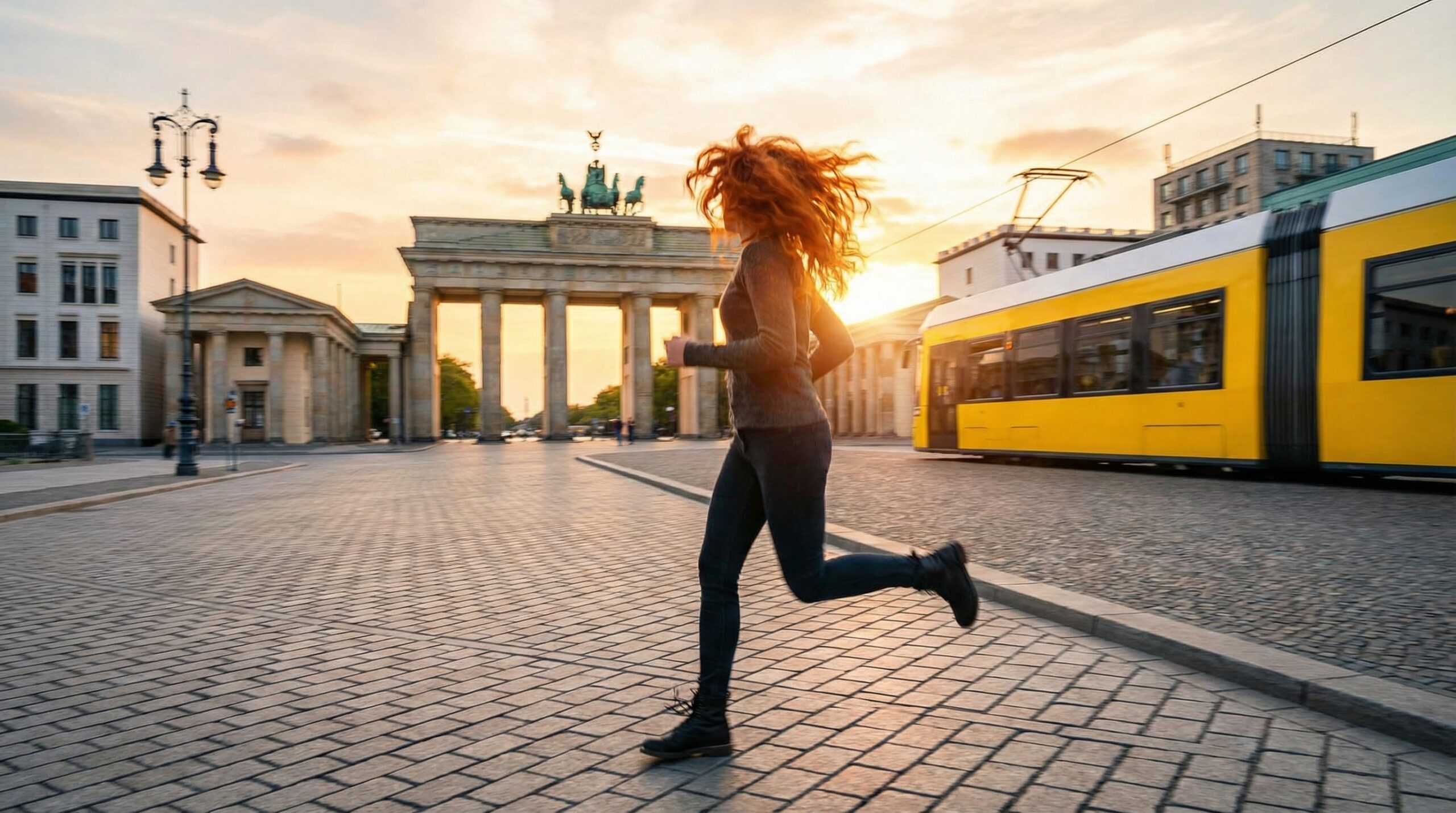
Berlin. The name itself is a rhythm, a beat that echoes through history, a city that has died and been reborn a dozen times over. In the cinematic world, few films have captured this pulsating, relentless energy quite like Tom Tykwer’s 1998 masterpiece, Lola rennt, or Run Lola Run. It’s a kinetic explosion of sight and sound, a ninety-minute adrenaline shot that uses the German capital not merely as a backdrop, but as a sprawling, breathing character in its own right. The film dropped like a cultural thunderclap, its split-screens, techno soundtrack, and philosophical musings on chance and destiny redefining what independent cinema could be. For those of us who felt its impact, the streets Lola pounded in her iconic Doc Martens became hallowed ground, a map of possibilities etched into the urban landscape. This isn’t just a guide to filming locations; it’s an invitation to feel that same breathless urgency, to trace the footsteps of a flame-haired heroine against the very concrete and steel that shaped her desperate sprint against time. It’s a journey into the heart of a city that, much like Lola, is always running, always changing, and always offering a second, or even a third, chance. To follow her path is to see Berlin through a unique, high-octane lens, to discover the quiet corners and grand boulevards that played their part in a cinematic revolution. Prepare to run.
If you’re inspired to explore other cinematic pilgrimages, consider the soaring landscapes of Blue Thermal.
The Pulse of a Reunified City: Berlin as a Canvas
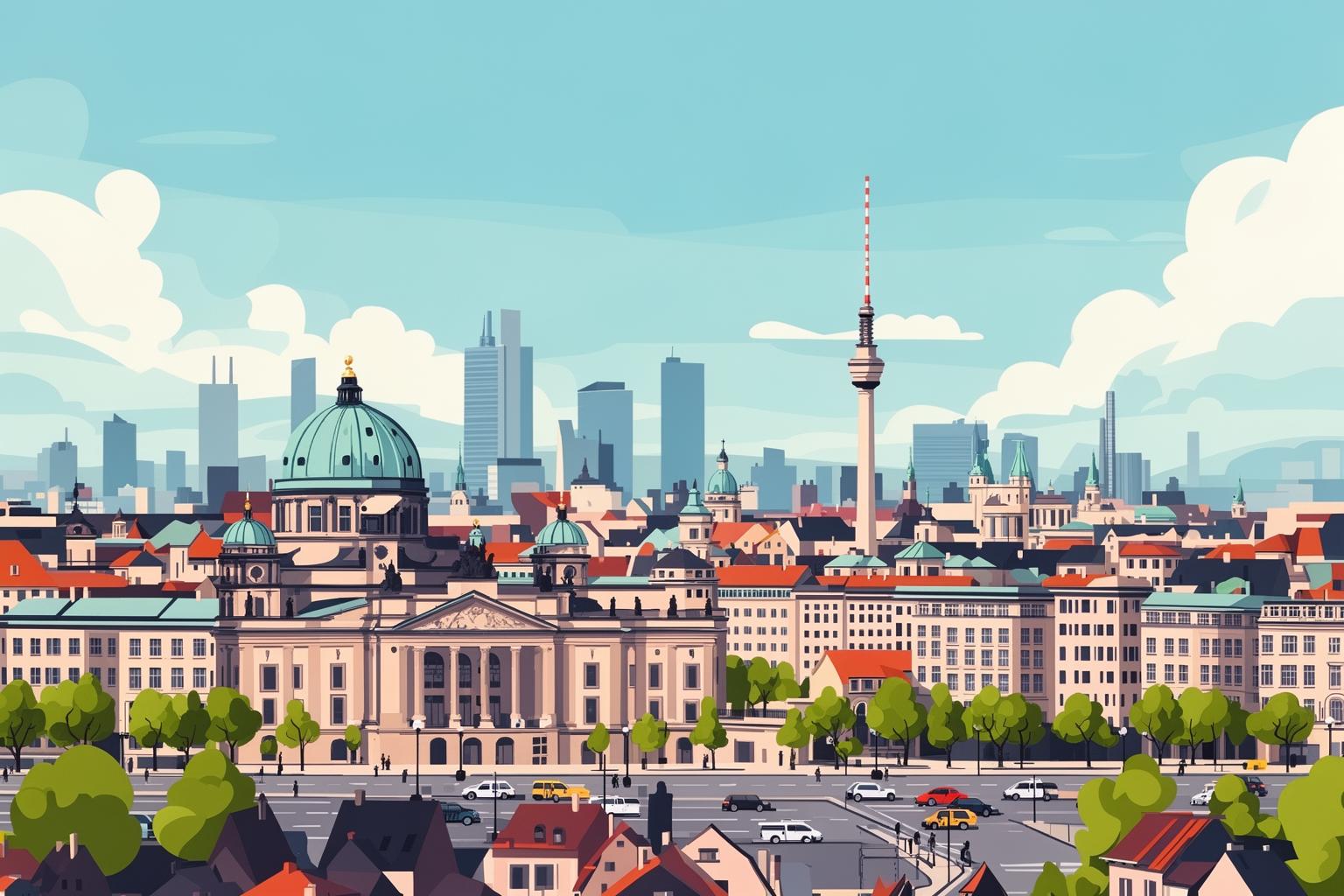
To grasp the Berlin of Run Lola Run, you need to turn back the clock to the late 1990s. The Wall had been down for less than ten years, and the city was a raw, chaotic, and thrilling patchwork of emerging identity. It was a place of tangible transition, a scarred terrain stitched together by cranes and creativity. The atmosphere pulsed with a powerful blend of historical gravity and future-oriented optimism. Tom Tykwer didn’t merely film in this city; he channeled its intense, fragmented energy. He painted with a mix of pre-war elegance, Soviet-era austerity, and the bright promise of the new millennium. The Berlin portrayed isn’t a postcard; it’s a living entity, a labyrinth of brick and glass where every turn holds the potential to alter the future. Tykwer skillfully transforms the urban landscape into a video game level, with Lola as the protagonist navigating a world of chance meetings and pivotal moments. He deliberately combined locations from different neighborhoods, crafting a fictionalized Berlin that matches the film’s frenetic tempo. A run that begins in Mitte might cross a bridge in Friedrichshain and conclude in Charlottenburg within seconds. This geographic manipulation is not a continuity mistake; it serves as the film’s central idea. It implies that in this new, unified Berlin, all points connect, every path is open, and the city itself is a fluid, shapeable reality driven by will and speed. The architecture takes on an active role in the story. The stark, repetitive facades of GDR-era buildings evoke a sense of oppressive uniformity, while the ornate details of older constructions whisper of a forgotten, more romantic past. The ever-present construction cranes in the skyline of that time were more than a fact of life; they symbolized the ongoing reconstruction of both the city and Lola’s own destiny with each repeat run.
The Starting Line: Lola’s Apartment on Albrechtstrasse
Finding the Red Door
Every frantic sprint begins somewhere, and for Lola, it starts at the apartment she shares with her boyfriend, Manni. The building used for the exterior shots of her apartment is located at Albrechtstrasse 13-14 in the elegant district of Mitte, just a short distance from the Spree River and the Friedrichstraße train station. Today, the street exudes a calm sophistication, far removed from the film’s tense opening. The building itself, a classic Berlin Altbau with its stately cream facade and ornate balconies, remains instantly recognizable. The iconic dark wooden door through which Lola bursts onto the street is still in place, a silent gateway to a cinematic moment. Mitte is Berlin’s historic core, where the legacy of Prussian history blends with contemporary art galleries, upscale boutiques, and bustling cafés. Standing on the pavement of Albrechtstrasse, this contrast is deeply felt. You can almost hear the phone slamming down, sense the phantom pulse of techno music starting, and picture a crimson-haired girl bursting onto the sidewalk, with her entire world compressed into a fleeting twenty minutes. The street is often quiet, allowing you to immerse yourself in the atmosphere without the distraction of tourist crowds, making it a personal and meaningful first stop on this pilgrimage. It feels less like a movie set and more like a genuine home, which is why the film’s domestic urgency resonates so strongly.
A Photographer’s Perspective
From a photographer’s standpoint, what stands out about Albrechtstrasse is the quality of the light. The tall, graceful buildings create shifting canyons of shadow and shafts of sunlight throughout the day. The texture of the aged facade, with its subtle imperfections and historical layers, tells its own story. I find myself framing the shot, drawn especially to that formidable door. It is more than just an entrance; it’s a threshold between Lola’s private life and the public chaos of the city she must navigate. The challenge lies in capturing not only the architecture but also the underlying energy of the location. You can photograph the door, the windows, the street sign, but the real artistry is in conveying the feeling—the potential for sudden, explosive motion that the film injected into this otherwise serene street. I suggest visiting in the late afternoon, during the ‘golden hour’ when warm light washes over the buildings, casting long shadows and highlighting the intricate ironwork on the balconies. It’s a moment of quiet that provides a beautiful, ironic contrast to the chaos that unfolded here.
Practical Notes for Your Visit
Reaching Albrechtstrasse is very straightforward. It’s just a short walk from the S-Bahn and U-Bahn station Friedrichstraße, a key transport hub. This makes it an ideal first or last stop when exploring Berlin’s central sights. Keep in mind that this is a private residence. While the locals are used to visitors, it is essential to be respectful. A quick photo from the sidewalk is perfectly fine, but lingering for long periods or attempting to enter the building is not appropriate. The charm of this location lies in its integration into a living neighborhood. After paying homage to Lola’s starting point, take some time to explore nearby. Follow the Spree River, cross the Weidendammer Brücke for a classic view of the Bode Museum, or wander through the many small galleries and independent shops that line Mitte’s side streets. This district offers a wealth of Berlin culture, with Lola’s apartment serving as a unique and fitting entry point to its discovery.
The Iconic Dash: Across the Oberbaumbrücke
A Bridge Between Worlds
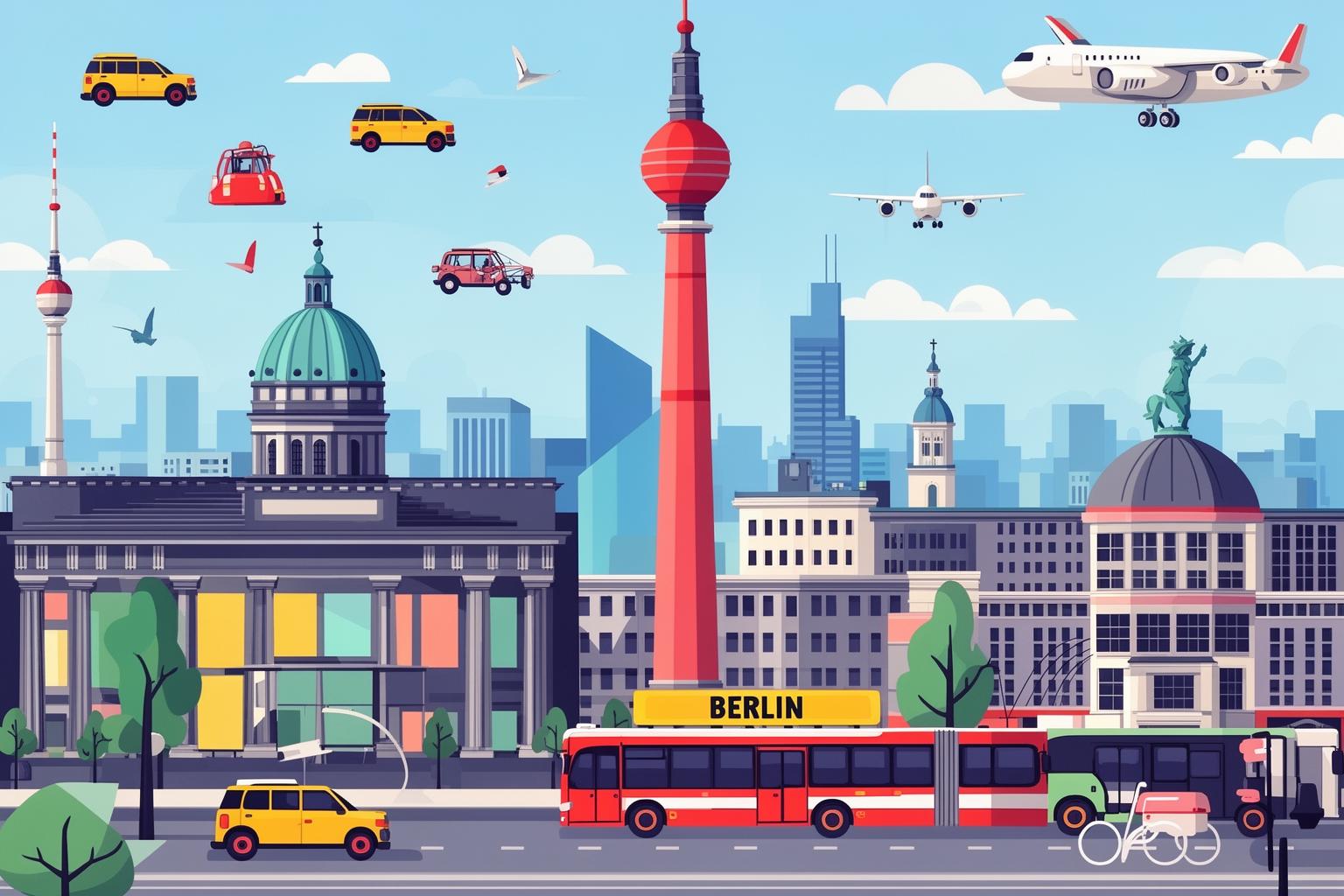
If there is one image that captures the visual essence of Run Lola Run, it is Lola sprinting across the majestic Oberbaumbrücke. This double-decker bridge, with its striking red-brick Gothic towers and graceful arches, serves as more than just a crossing over the Spree River; it stands as a profound symbol of Berlin’s history. It links the districts of Kreuzberg and Friedrichshain, once divided by the Wall, representing West and East Berlin respectively. In the film, Lola’s run across this bridge acts as a powerful visual metaphor. She literally traverses a former divide, her urgent pace reflecting the city’s own path toward reunification and healing. Tykwer captures this sequence with breathtaking energy, the camera following her determined figure as the yellow cars of the U1 U-Bahn line rattle on the tracks above. The bridge assumes the role of a character in this moment, its monumental structure framing her small, intense form against the expansive Berlin sky. It’s pure cinematic poetry, where setting, action, and theme merge flawlessly. The bridge symbolizes connection, a literal and figurative link between two separate worlds, a concept central to the film’s exploration of how one person’s actions can resonate and connect with many others.
Capturing the Energy
Walking the Oberbaumbrücke today means stepping directly into that vibrant energy. The bridge is a bustling artery, alive with pedestrians, cyclists, cars, and the iconic yellow trains. The views are breathtaking from every angle. To the west, the modern city skyline rises, marked by the towering TV Tower on the horizon. To the east, the river widens, and the famous “Molecule Man” sculpture emerges, three figures appearing to walk on water. The bridge itself acts as a canvas for street artists and a stage for buskers, whose music supplies a real-world soundtrack to your journey. For photographers, the Oberbaumbrücke is a treasure. The symmetrical arches create striking leading lines that draw the viewer’s eye deep into the frame. The contrast between the weathered red bricks of the towers and the cool blues of sky and water is visually mesmerizing. The real challenge lies in capturing the sense of constant motion. Using a slightly slower shutter speed to blur passing trains or cyclists while keeping the bridge’s structure crisp can produce a dynamic image that honors the film’s kinetic style. Don’t linger only in the center; walk its entire length, explore viewpoints from below on both the Kreuzberg and Friedrichshain sides, and feel the vibration as the U-Bahn rumbles overhead. It’s a multi-sensory experience that connects you directly to the heart of the film.
Visitor’s Guide to the Bridge
The Oberbaumbrücke is easily reached from two major U-Bahn stations: Schlesisches Tor on the Kreuzberg (western) side and Warschauer Straße on the Friedrichshain (eastern) side. Visiting at different times of day presents distinct experiences. Early morning offers softer light and fewer crowds, making for a more reflective walk. Sunset, however, is when the bridge truly shines. The setting sun bathes the brick towers in a warm, golden glow, and the sky erupts with color, creating a dramatic backdrop fit for a film finale. A visit to the bridge is not complete without exploring what lies at each end. On the Friedrichshain side, you’ll find the East Side Gallery, the longest remaining segment of the Berlin Wall, now transformed into an open-air art gallery featuring over a hundred murals. It’s a powerful and moving historical record. On the Kreuzberg side, you can immerse yourself in the vibrant, multicultural vibe of one of Berlin’s most famous neighborhoods, known for its exceptional street food, bohemian bars, and eclectic shops. You could easily spend an entire day exploring the areas surrounding this singular filming location.
The Heist and the Hustle: A Tour of Central Berlin
Manni’s Desperate Call: The Ghost of a Phone Booth
Lola’s run begins with Manni’s frantic call from a phone booth after losing 100,000 Deutsche Marks on the subway. This key scene took place near the corner of Französische Strasse and Charlottenstrasse, placing it close to one of Berlin’s most magnificent squares, the Gendarmenmarkt. Naturally, the phone booth itself no longer exists—an artifact from a pre-smartphone era. Its absence serves as a poignant reminder of how cities change and how technology once thought permanent can disappear, leaving only a ghost on the corner. Yet, the location still carries a tangible tension. Standing there today, surrounded by the Neoclassical grandeur of the Gendarmenmarkt, presents a striking contrast. The square is home to an architectural trio of extraordinary beauty: the Konzerthaus (Concert Hall), flanked by the twin French Cathedral (Französischer Dom) and German Cathedral (Deutscher Dom). The atmosphere exudes stately calm and cultural refinement, the complete opposite of Manni’s sweaty, desperate panic. This very contrast enhances the scene’s impact. His raw, street-level crisis unfolds against a backdrop of immense historical and cultural power, emphasizing his and Lola’s insignificance within the city’s grand narrative and making their personal struggle all the more gripping.
The Supermarket Sprint and the Casino Win
The film’s story drives Lola and Manni to desperate acts, including a supermarket robbery. Like much of the film’s geography, this was a composite setting. The store’s exterior was a “Bolle” supermarket on Osnabrücker Straße, located in a more residential area—less a destination for fans but a testament to the filmmakers’ commitment to finding the perfect look. The interior shots were filmed elsewhere, a common cinematic technique. More central to the plot, and easier for visitors to appreciate, is the site of Lola’s astonishing casino victory. Her cathartic, glass-shattering scream and improbable win at the roulette table were shot in the now-defunct casino at the base of the Forum Hotel on Alexanderplatz. The hotel remains, a towering landmark now operating as the Park Inn by Radisson Berlin Alexanderplatz. Although the casino has vanished, Alexanderplatz itself remains a vibrant, chaotic hub of Berlin life. This extensive public square reflects GDR-era ambition, dominated by the iconic Fernsehturm (TV Tower) and the World Clock (Weltzeituhr). The square is a whirlwind of trams, trains, shoppers, and tourists—a place of endless motion and intersecting lives. It’s the perfect backdrop for a story about chance, where countless individual destinies cross paths every minute. Visiting Alexanderplatz, one can feel part of a vast, unpredictable system, a sensation at the core of Run Lola Run.
The Shattering Scream at Bebelplatz
One of the film’s most powerful auditory and supernatural moments occurs when Lola, in a moment of pure desperation, emits a scream so intense it shatters the glass of a nearby office building. This scene is set on the historic and solemn Bebelplatz. While the film primarily uses the square for its impressive acoustics and grand architecture, visitors should also recognize its profound historical significance. Bebelplatz was the site of the notorious Nazi book burning on May 10, 1933. Today, a subtle yet deeply moving memorial lies embedded in the cobblestones: the “Empty Library” by Micha Ullman. This underground room, lined with empty white bookshelves and visible through a glass plate in the ground, symbolizes the cultural void left by the destruction of 20,000 books. Although the film doesn’t explicitly reference this history, Lola’s scream for freedom and a second chance—her voice of protest against unjust fate—resonates powerfully in this location. This layer of meaning, perhaps unintended, adds a chilling depth to the scene. Visiting Bebelplatz is essential, not only for its role in the film but for its place in the collective conscience of the city and the world.
Exploring the Heart of Historic Berlin
These central spots—Gendarmenmarkt, Alexanderplatz, and Bebelplatz—form a triangle in the heart of historic Berlin, all within easy walking distance. A practical route is to start at Alexanderplatz (accessible by nearly every form of public transport), then walk west along the grand boulevard Unter den Linden toward Bebelplatz, and finally head a few blocks south to the Gendarmenmarkt. Along the way, you’ll pass other notable landmarks like the Berlin Cathedral and Museum Island. Each square highlights a different facet of Berlin’s identity. If you visit in winter, the Gendarmenmarkt transforms into one of Europe’s most beautiful Christmas markets, adding a festive charm to your film pilgrimage. Taking time to sit at a café in the square and watch the city drift by allows you to reflect on the many layers of history—from Prussian kings to Nazi atrocities to the fictional sprint of a girl with red hair—that have all unfolded on this very ground.
The Unseen Threads: Minor Locations and the Spirit of the Run
Stitching the City Together
A closer look at the film uncovers a tapestry crafted from dozens of smaller, less obvious locations that Tykwer used to create his hyper-kinetic portrayal of Berlin. For example, the sequence where an ambulance crashes through a large pane of glass was shot near the Deutsche Oper in the western district of Charlottenburg, a significant distance from the other central sites. The various “flash-forward” scenes, depicting the future lives of the people Lola encounters, were filmed throughout the city, from quiet residential streets to lively market squares. The recurring character of the cyclist whose bike is stolen appears on several bridges, including the Monbijoubrücke near Museum Island. This geographical patchwork is deliberate. It emphasizes that the film’s Berlin is a state of mind, a psychological map rather than a literal one. The city is reshaped to meet the emotional and narrative demands of the story, compressing distance and time to align with Lola’s singular determination. Chasing down every one of these minor locations would be a daunting task, but knowing they exist adds another layer of appreciation for the film’s craftsmanship. It underscores the filmmaker’s ultimate control over his urban environment, bending the city to his vision.
The True Pilgrimage: It’s About the Movement
In the end, a genuine Run Lola Run pilgrimage is about much more than simply standing still and photographing buildings. It’s about embracing the film’s essential principle: movement. The most authentic way to experience Lola’s Berlin is to move through it. Don’t merely take the U-Bahn from one point to another; walk. Feel the pavement beneath your feet, the cadence of pedestrian signals, the rush of cyclists zooming past. Even better, rent a bike for the day and navigate the city’s excellent network of bike lanes. This lets you cover more ground while staying connected to the street-level energy of the city. Another great way to capture the film’s spirit is to buy a BVG day pass and use it to its fullest. Hop on a U-Bahn train, ride a few stops, get off at a random station, and explore. Then catch a tram or a bus. This mimics the film’s jump-cut editing style and its theme of chance meetings. You might uncover a hidden courtyard, an amazing coffee shop, or a piece of street art you would otherwise never have seen. The pilgrimage is not a checklist to tick off but an experience to be lived. It’s about feeling the city’s pulse in your veins, forging your own path, and discovering your own version of Berlin, guided by the ghost of Lola’s run.
Beyond the Finish Line: Lola’s Berlin Today
The Berlin of today is not the exact same city Lola ran through more than twenty years ago. The construction cranes of the 90s have been replaced by gleaming new buildings, phone booths have disappeared, and neighborhoods have evolved. Some of the gritty, post-Wall edge has been mellowed by time and gentrification. Yet this constant state of change is the very essence of Berlin. The city, like Lola, never stops running and never stops reinventing itself. To walk these streets is to partake in a dialogue between past and present, to witness the cinematic image layered over contemporary reality. The Oberbaumbrücke still stands as a powerful symbol of unity, Gendarmenmarkt continues to be a pocket of breathtaking elegance, and the spirit of creative chaos thrives in the city’s art scene and nightlife. The film captured a specific, electrifying moment in Berlin’s history, but the energy it showed—that relentless forward motion, that belief in the power of one person to shape their own destiny—is embedded in the city’s enduring identity. A journey through Lola’s Berlin serves as a reminder that the world is a web of infinite possibilities, that every second matters, and that sometimes, the only choice is to take a deep breath and run.