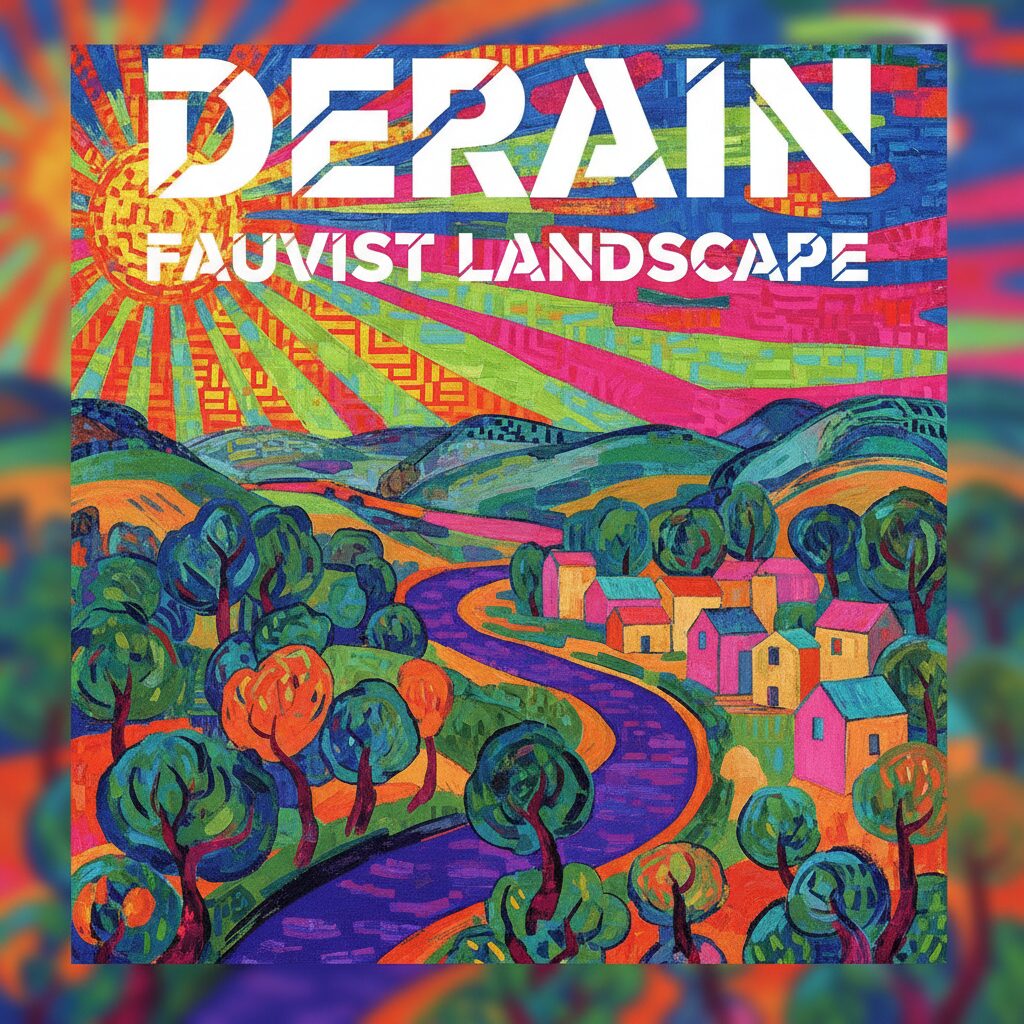
There are journeys that trace lines on a map, and then there are journeys that trace the contours of a revolution. To follow in the footsteps of André Derain is to embark on the latter. He was an architect of Fauvism, a co-conspirator in color, a man who looked at a landscape and saw not what was there, but what it felt like. He and his contemporaries, giants like Henri Matisse and Maurice de Vlaminck, didn’t just paint pictures; they detonated color bombs on canvas, forever changing the trajectory of twentieth-century art. Their movement, Fauvism—a name flung as an insult, meaning “the wild beasts”—was a declaration of emotional truth over visual reality. They chased a feeling, a raw, untamed energy, and they found it not in the sterile confines of a studio, but out in the world, under the searing Mediterranean sun, in the misty haze of the London Thames, and along the gentle, shimmering banks of the Seine where it all began.
This is not just a story about art history. It’s a travelogue of the soul, a pilgrimage to the very sources of that wild, chromatic fire. We’ll journey to the places that shaped Derain, from the suburban tranquility of his youth to the sun-drenched fishing village that became the crucible of a new art form. We will stand where he stood, see the light that he saw, and try to understand how these specific coordinates on the globe could ignite such a radical vision. It is a quest to discover how a bridge, a harbor, or a simple bend in the road can become a manifesto. It’s an invitation to see the world not just as it is, but as it could be, drenched in pure, unapologetic color. Before we set off on this vibrant path, let’s orient ourselves with the key locations that defined André Derain’s artistic map.
If you’re captivated by artistic pilgrimages that explore how place shapes vision, you might also be drawn to a journey through the polka-dotted universe of Yayoi Kusama.
The Seine’s Cradle: Chatou and the Birth of a Vision
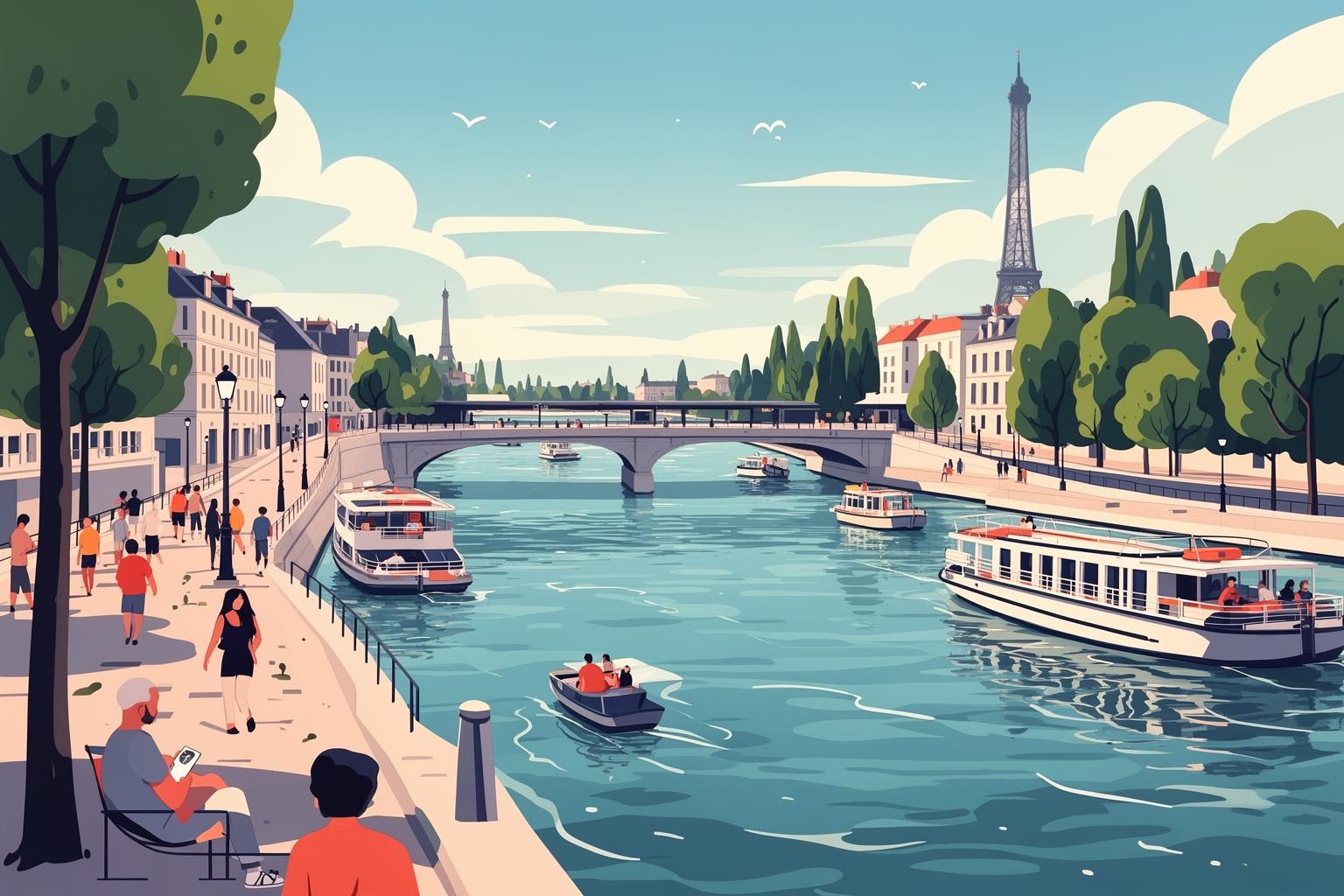
Every explosion has a point of origin, a place where elements converge and pressure begins to build. For Fauvism, one of its key ignition points was a tranquil, picturesque suburb just west of Paris: Chatou. This was André Derain’s hometown, characterized by the gentle, silvery curves of the Seine river. In the late nineteenth century, it served as a beloved retreat for Parisians, filled with riverside restaurants, boating gatherings, and sun-dappled afternoons immortalized by Impressionists like Renoir. But by the time Derain reached adulthood, a new, more rebellious energy was stirring along these same banks—an energy that aimed not only to capture a fleeting impression of light but to channel its raw emotional intensity.
A Suburban Studio and a Restless Friendship
The story of Chatou is closely linked to the tale of Derain’s formative friendship with Maurice de Vlaminck. They met by chance, two young, aspiring painters united by a shared disdain for the rigid, academic art of the salons. They were artistic soulmates, brimming with restless creative energy. Together, they founded what would later be called the “School of Chatou,” a grand title for their modest, shared studio on the Île de Chatou. This island, a strip of land in the middle of the Seine, became their creative laboratory. Here, they conducted experiments, pushing color and form to new extremes. Picture the atmosphere: the creak of wooden floorboards, the sharp scent of turpentine and oil paint, and the ever-present, shimmering river just outside the window, its surface a shifting canvas of reflected light and shadow. They were inspired by Nietzsche’s philosophies, driven by Van Gogh’s passion, and fueled by a fierce desire to create art that was direct, instinctual, and alive.
Their paintings from this period throb with vibrant, youthful energy. In works like Derain’s “The Bridge at Le Pecq” (1904), the Fauvist spirit soars. The bridge is not depicted in realistic tones of stone and steel; instead, it appears as a bold slash of red against a swirling river of blues, greens, and yellows. The trees are not simply green; they burst forth in explosions of emerald and lime. This was not the soft, hazy Seine of the Impressionists. Rather, this was the Seine as a channel of pure energy—its colors heightened, its forms simplified, its very essence distilled into a jolt of visual electricity. They painted the sensation of the river, the joy of a sunlit day, the vibrant rhythm of their suburban surroundings.
A Pilgrim’s Guide to Modern Chatou
Visiting Chatou today is like a journey through time. Although the town has grown, the spirit of that artistic crucible endures, woven into the landscape. Getting here is remarkably easy; a short ride on the RER A train from central Paris takes you to the Chatou-Croissy station in about twenty minutes. From there, a pleasant, leafy walk leads you toward the river—the ultimate destination for any artistic pilgrim.
At the heart of the experience is the Île des Impressionnistes. Though the name honors an earlier generation, this island was Derain and Vlaminck’s domain. Walking its paths is like retracing their daily route to the studio. Find a quiet spot on the riverbank and simply watch the water. Notice how the light shifts, the reflections of sky and trees fragment and reshape with the current. This was the raw material they worked with. You can almost sense the restless energy that inspired them to pick up their tubes of pure cobalt and cadmium yellow.
While their original studio no longer stands, the island is home to the Restaurant Fournaise, a well-known haunt of Renoir and his circle, offering a tangible link to the area’s artistic heritage. Crossing the Pont de Chatou—the modern descendant of the very bridge they painted—you gain a vantage point both contemporary and deeply historic. The trick is to look beyond the modern cars and buildings and see the fundamental forms they observed: the bridge’s arc, the riverbank’s line, the mass of the trees. For a first-time visitor, the best advice is to come on a sunny day. The way the Parisian light—sometimes soft and diffuse—touches the water is magical. In those brilliant reflections, you will find the lingering spark of Fauvism’s first flame.
The Fauvist Crucible: Collioure, Where Color Exploded
If Chatou was the initial spark, Collioure was the blazing inferno. In the summer of 1905, an invitation from Henri Matisse drew André Derain south to a small, lively fishing village nestled along the Mediterranean coast where the Pyrenees cascade into the sea. This world was far removed from the gentle greens and blues of the Seine. Collioure was, and remains, a place of sensory excess. It was here, in this crucible of intense light and color, that Fauvism was truly born. Derain himself later described the experience as transformative, a “trial by fire” that burned away all their previous notions of painting, leaving something new, pure, and shockingly bold.
A Summer of Glorious Artistic Anarchy
Picture arriving in Collioure in 1905. The air is thick with the scents of salt, pine, and drying anchovies. The sun is a tangible presence, bleaching stone walls and heightening every color to an intense pitch. The boats in the harbor, the barques catalanes, boast brilliant primary colors—cobalt blue, cadmium yellow, vermilion red. The terracotta roofs glow like embers against the deep azure of sky and sea, while the surrounding hills form a tapestry of ochre earth and deep green cork oaks. For painters already experimenting with color, this setting was a revelation. It felt as though the landscape itself was granting permission to be daring, to be wild.
Working side-by-side in a frenzy of creative energy, Derain and Matisse pushed each other toward new heights of boldness. They began to use color not to depict objects but to convey emotion. Shadows were no longer grey or black; they could be slashes of ultramarine or violet. The beach sand might be pink, the sea orange, a tree trunk a vivid red. Paint was applied straight from the tube in thick, energetic strokes, leaving patches of raw canvas exposed. This was art of pure sensation. In Derain’s iconic “The Drying Sails,” the scene is broken into planes of exhilarating color. The sails blaze with yellow and pink, the water is a mosaic of green and blue, and the whole composition is tied together with a rhythm of bold, dark outlines. This was painting as celebration—a visual shout of joy. When these works were shown at the Salon d’Automne in Paris later that year, a critic, stunned by their raw intensity, infamously dubbed them the work of les Fauves—the wild beasts. The name stuck, and a movement was born.
Walking the Chemin du Fauvisme
What’s truly remarkable about Collioure is how accessible this revolutionary moment remains. The town has embraced its artistic legacy by creating the “Chemin du Fauvisme,” or the Path of Fauvism. This open-air museum and walking tour is a must for any visitor. Scattered throughout the town, in the very spots where Derain and Matisse set up their easels, are weatherproof reproductions of the paintings they made that summer. It’s an incredibly powerful experience. Standing on the edge of the Plage de Boramar, you can view the reproduction of Derain’s “View of Collioure,” then lift your eyes to see the same church tower, the same curve of the bay, the same Château Royal atop the hill. The perspective matches perfectly.
This direct comparison lets you see the world through their eyes. You begin to grasp their choices. You see the bell tower of Notre-Dame-des-Anges and understand why it’s rendered in blocks of pink and orange. You observe the shimmering, almost blinding reflection of the sun on the water and recognize why they abandoned realism for pure, dazzling color to capture that sensation. The walk meanders through the winding, narrow streets of the old town, past the bustling harbor, and up to views overlooking the entire scene. It’s a dialogue with the past, a conversation with the spirits of two artistic giants.
A Taste of the Catalan Coast
A trip to Collioure is a feast for every sense. To fully enjoy it, consider visiting in the shoulder seasons—late spring or early autumn—when the weather is still lovely, the light is magnificent, and the summer crowds have dispersed, giving you space to breathe and reflect. The town’s Catalan identity is strong, reflected in its cuisine. Be sure to sample the local anchovies, a regional delicacy for centuries, and savor a glass of Banyuls, a rich, sweet fortified wine produced in the nearby terraced vineyards. For another perspective, take a boat trip along the Côte Vermeille. Viewing the town from the water, with its cluster of colorful houses nestled between sea and mountains, provides a final, stunning affirmation of why this place became the cradle of a color revolution.
London’s Moody Canvas: A Fauvist Eye on the Thames
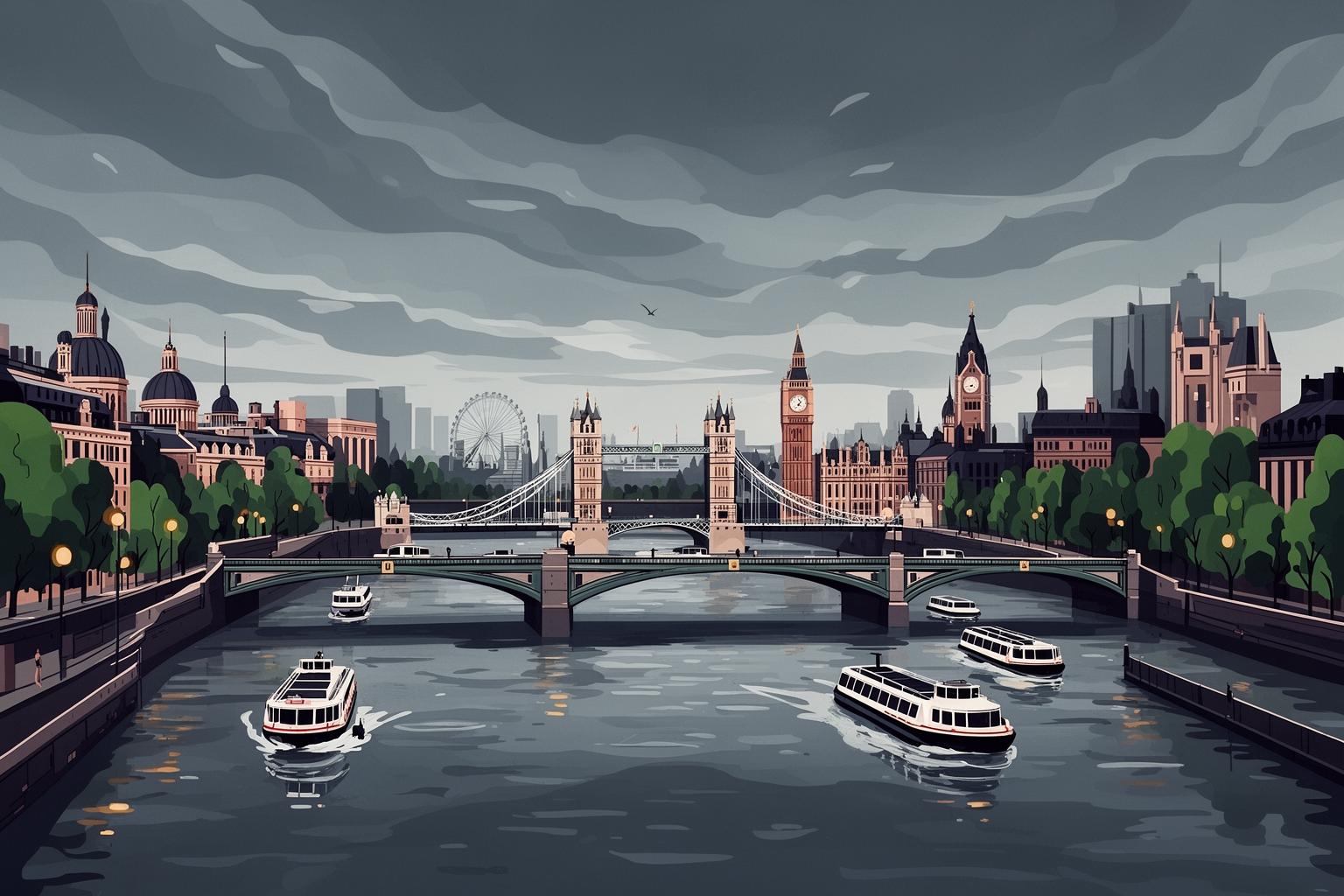
After the intense sun-drenched vibrancy of Collioure, André Derain’s next major artistic journey led him to a setting of strikingly different nature: London. In 1906, the forward-thinking art dealer Ambroise Vollard, who had championed Cézanne and Picasso, approached Derain with a proposal. Recognizing an opportunity, he commissioned the young Fauve to create a series of London cityscapes, aiming to capture the market that Claude Monet had so successfully engaged with his own ethereal, impressionistic depictions of the Thames just a few years prior. Derain accepted, crossing the Channel and exchanging the sharp Mediterranean light for the pearly, fog-filled atmosphere of the British capital. The outcome was not a mere imitation of Monet’s work, but a bold Fauvist reinterpretation of the modern metropolis—a city portrayed with a palette of impossible, joyful color.
From Mediterranean Sun to Industrial Haze
The contrast was stark. London was the vast, industrial core of an empire. Its air hung heavy with coal smoke and mist, a softening veil that blurred edges and softened colors. Its landmarks were monumental, solid, and rich with history: the Gothic spires of the Houses of Parliament, the massive stone arches of its bridges, and the endless, churning traffic of boats, barges, and steamers on the Thames. Whereas Monet found poetic mystery in the fog, dissolving form into light, Derain perceived something quite different. He saw a stage for a dynamic, modern spectacle, choosing to paint not with the muted greys and browns of reality, but with the vibrant, emotive colors of his Fauvist vision.
He tackled the London landscape with the same chromatic passion he had unleashed in Collioure. In his masterpiece, “Charing Cross Bridge, London,” the sky is not dull grey but a wild swirl of yellow, orange, and green. The Thames itself is not a muddy brown but a sparkling river of turquoise, sapphire, and emerald, punctuated with strokes of pure pink and red to capture reflections of the sky and nearby buildings. The bridge, trains, boats—all are depicted in bold, simplified forms outlined with strong, dark lines. He wasn’t painting the fog; he was capturing the energy beneath the fog. He conveyed the rumble of the trains, the chug of tugboats, the constant, rhythmic heartbeat of the city. It was London seen through a kaleidoscope, a familiar scene transformed into something thrillingly new and electric.
A Fauvist’s Walking Tour of the Thames
To explore Derain’s London is to take a classic stroll along the city’s aquatic core. Most of his paintings were created from viewpoints along the Victoria Embankment on the north bank and the South Bank opposite. A perfect contemporary pilgrimage would begin near Westminster Bridge, in the shadow of Big Ben (which Derain also portrayed in vivid color). From there, walk east along the Victoria Embankment. This riverside path offers exactly the views Derain captured. You will gaze across the water towards the South Bank and ahead to the Hungerford Bridge and the Golden Jubilee Walkways, the modern successors to the Charing Cross railway bridge that so captivated him.
As you walk, try to see the scene through a Fauvist perspective. Observe how the light, even on a cloudy day, fractures the water into a thousand different hues. Notice the bold reds of the double-decker buses crossing Waterloo Bridge, or the bright hulls of the tourist boats. Derain invites us to discover the color lurking in plain sight. Crossing the river via one of these bridges to the South Bank offers another set of iconic views, looking back toward the grand buildings of the Embankment. For a truly dynamic perspective, consider taking a Thames Clipper, the city’s river bus service. Gliding on the water, you’ll see the bridges and skyline from the same low angle as the boats in Derain’s paintings. It’s a wonderful way to sense the rhythm and motion that he so brilliantly conveyed on canvas. And while in the city, a visit to the Tate Modern, itself a landmark on the South Bank, is essential, as its collection often features major works from this revolutionary era of modern art.
The Pull of Cézanne: L’Estaque and the Path to Cubism
An artist’s journey is rarely straightforward. After experiencing the explosive, untamed freedom of Fauvism, André Derain felt drawn toward something more solid and structured. This quest led him, in 1906, to another town on the Mediterranean coast just west of Marseille: L’Estaque. But this was not just another Collioure. L’Estaque held a different significance—it was the sacred ground of Paul Cézanne, the Post-Impressionist master who had spent years dissecting its landscape to uncover the geometric forms beneath nature’s surface. By coming to L’Estaque, Derain, alongside his contemporary Georges Braque, wasn’t merely seeking a new subject but was also paying homage to a spiritual predecessor while grappling with his immense legacy. This period marked a pivotal turning point, moving away from the pure emotional color of Fauvism toward the structured, analytical realm of Cubism.
In the Shadow of a Modern Master
L’Estaque reveals a distinct side of Provence. It is more rugged and industrial than the picturesque fishing villages to the east. Here, the deep red soil and striking rock formations stand in contrast to the stark lines of factories and the industrial haze drifting from the port of Marseille. Pine trees twist up the hillsides, while simple, cubic houses climb the steep slopes. For an artist like Cézanne, it was an ideal landscape for exploring his theories about reducing nature to cylinders, spheres, and cones. For Derain, arriving after the master’s death, it represented a place to reconsider his own artistic direction.
The landscape’s influence, along with Cézanne’s presence, is immediately evident in the paintings Derain created here. The wild, impulsive brushwork reminiscent of Collioure and London begins to settle. Though still vibrant, the colors become more muted and grounded in the earthy tones of the region—ochres, terracottas, and deep greens. In works like “The Turning Road, L’Estaque,” the emphasis shifts from pure color to form and structure. The landscape breaks down into simplified geometric planes; houses turn into blocks, trees into cylinders, and the road becomes a bold, curving line guiding the viewer’s eye through the scene. The emotional intensity of Fauvism is being balanced by a new intellectual discipline. One can sense Derain thinking, analyzing, and constructing his compositions much as Cézanne had done. This was a crucial transitional phase—the moment when the untamed creativity of the wild beast began to think like an architect.
Finding Cézanne’s Spirit in Modern L’Estaque
Today, L’Estaque is a district (the 16th arrondissement) of the sprawling city of Marseille, yet it has preserved a distinctive, village-like charm. It is less polished than many Côte d’Azur destinations, which only adds to its authenticity—a working-class port with a proud artistic heritage. For the art pilgrim, visiting here is deeply rewarding. Much like Collioure, the town features a “Painters’ Trail,” where information panels with reproductions mark scenic viewpoints favored by Cézanne, Derain, Braque, and others.
Following this trail is the best way to explore. It winds up hillside roads offering breathtaking views of the Bay of Marseille, instantly recognizable from the famous paintings. From these vantage points, you see the same mix of red-tiled roofs, green pines, and blue waters, framed by the industrial cranes of the distant port. This landscape of striking contrasts clearly attracted artists striving to forge a new, modern vision. The atmosphere here differs from Collioure; it’s less about purely aesthetic delight and more about history and artistic endeavor. It feels like a place of serious work. As a practical tip for the hungry traveler, L’Estaque is renowned for its local street food. Be sure to seek out stalls offering panisses (crispy chickpea flour fritters) and chichis frégi (long, sugar-dusted donuts)—the perfect fuel for a day spent walking in the footsteps of giants.
The Final Chapter: A Return to Classical Order
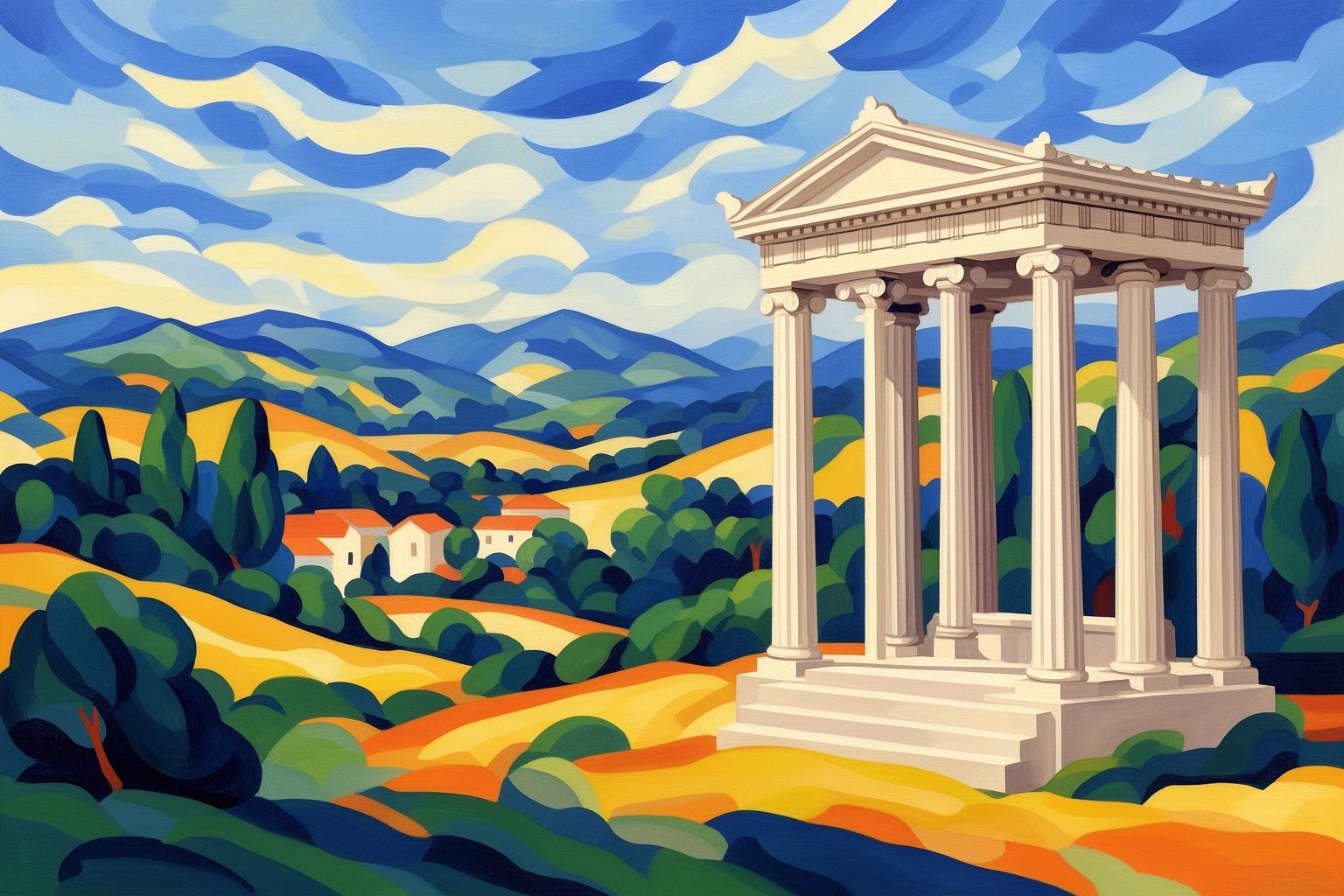
An artist’s life is a long and winding journey, where the fiery passion of youth often softens into the reflective glow of maturity. André Derain’s artistic path was no different. After the radical bursts of Fauvism and his brief explorations into Cubism, his direction shifted unexpectedly. In the years following the First World War, he deliberately distanced himself from the avant-garde movements he had helped pioneer. He embarked on a deeply personal quest, looking back to the great masters of the past—to the classical calm of Raphael, the intense drama of Caravaggio, and the stark realism of Courbet. This later stage of his career, often called his “Gothic” or “classical” period, is sometimes neglected but is crucial for understanding the full arc of his life. His journey concluded not in a bustling, sunlit port, but in the quiet, wooded countryside of the Île-de-France.
Chambourcy and the Pursuit of Timelessness
In 1935, Derain purchased a house, La Roseraie, in the village of Chambourcy, a peaceful location not far from where his artistic journey had begun in Chatou. This became his home and studio for the remainder of his life, until his death in 1954. The move symbolized an inner transformation. He turned away from the shocks of the new and sought a connection to something more enduring and timeless. His art from this era reflects that shift. The vibrant colors of his youth gave way to a more muted, tonal palette. He created portraits, still lifes, and mythological scenes with a newfound seriousness and realism. While these works puzzled and even disappointed some of his avant-garde contemporaries, for Derain, this was not a retreat but a conscious decision. He was charting his own course, independent of changing fashions, aiming to create art that was solid, lasting, and grounded in the great European painting tradition.
Visiting Chambourcy today offers a peaceful contrast to the vibrant energy of Collioure or London. It is a place for reflection on an artist’s complete life. Though his house is a private historical monument, the village conveys the serene, rustic atmosphere he chose for his final years. Strolling through the nearby Forest of Marly, one can imagine him drawing inspiration from the twisted shapes of the ancient trees, a motif he frequently revisited in his later sketches and paintings. This closing chapter completes the journey. It reminds us that an artist’s bond with place isn’t always about dramatic inspiration; sometimes it’s about finding a quiet refuge, a spot where a lifetime of experience can be synthesized into a final, enduring statement.
Our journey chasing the Fauvist flame has taken us from the riverbanks of a Paris suburb to the glowing light of the Mediterranean, from the industrial haze of London to the Cézannian hills of Provence, and finally, to a quiet country home. To follow André Derain is to witness the birth of modern art and to see how a specific place, at a specific time, can ignite a revolution. It stands as a powerful reminder that art is not created in isolation; it emerges from the world—its light, water, friendships, and a brave new way of seeing. Perhaps the greatest lesson of this pilgrimage is an invitation to open our own eyes, to observe the familiar landscapes of our lives, and to seek out the hidden colors, emotional truths, and wild, untamed beauty that Derain and the Fauves so boldly unleashed upon the world.