Some films wash over you. Others burrow deep, leaving an indelible mark on your soul. Bong Joon-ho’s 2003 masterpiece, Memories of Murder, is firmly in the latter camp. It’s more than a crime thriller; it’s a haunting elegy for an era, a searing character study, and a chilling examination of futility and obsession. The film’s power lies not just in its gripping narrative, based on the true story of the Hwaseong serial murders, but in its suffocating, poignant atmosphere. That atmosphere is a character in itself, built from the very soil, wind, and concrete of its filming locations. To journey to these places is to chase the ghosts of the film, to walk through the physical embodiment of its beautiful, terrifying soul. It is a pilgrimage into the heart of a modern classic, a trip through the vast, golden reed fields, the claustrophobic tunnels, and the dust-caked streets that gave the story its unforgettable texture. These are not just backdrops; they are the silent witnesses to one of cinema’s most profound tragedies. Prepare to step through the screen and into the melancholic landscapes of rural South Korea, where the beauty of the scenery only serves to deepen the shadows of the story it tells.
If you’re drawn to cinematic pilgrimages that explore the profound connection between place and memory, you might also appreciate a journey through the haunting landscapes of ‘Son of Saul’.
The Whispering Plains: Heart of the Film’s Despair
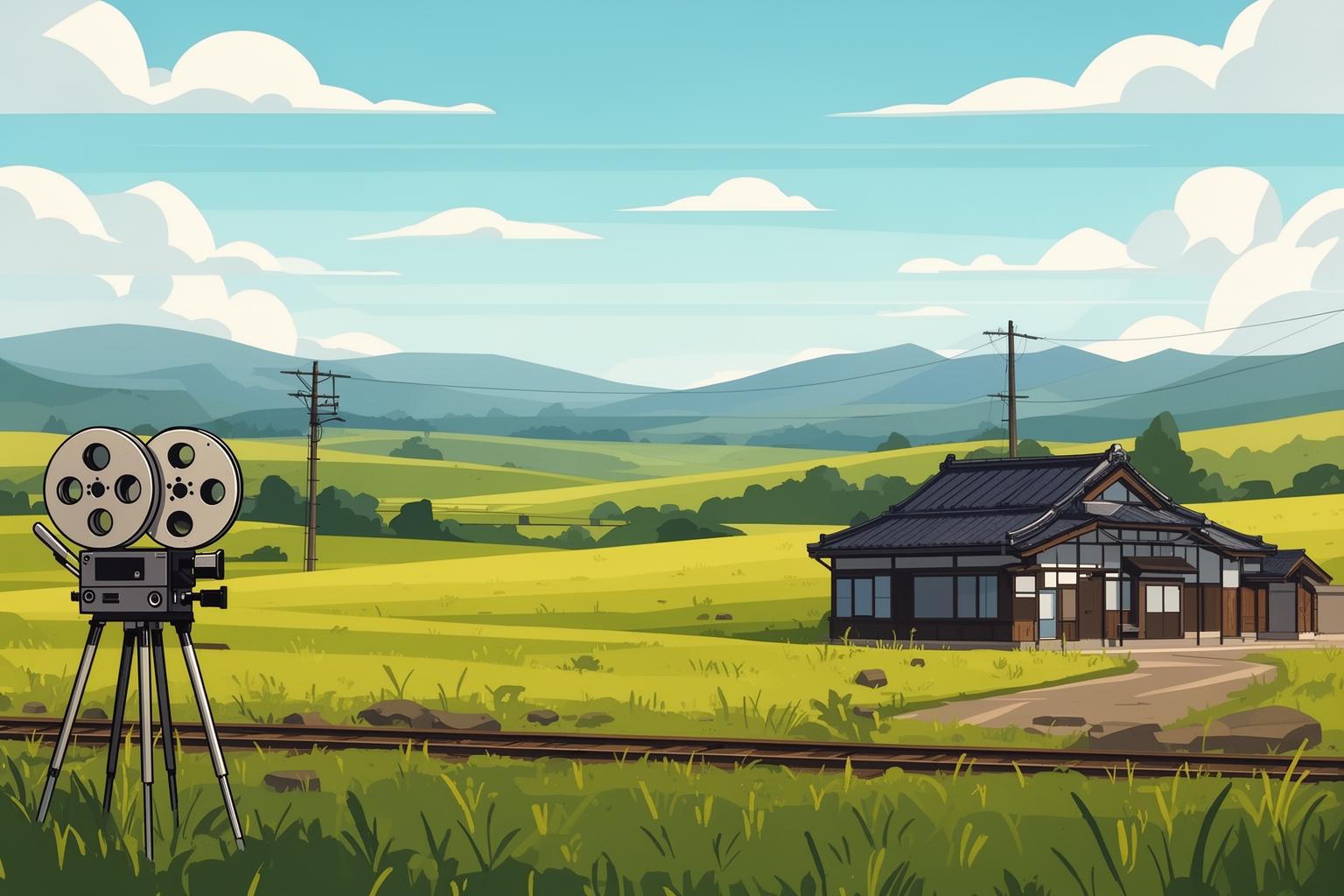
The soul of Memories of Murder lies in its expansive, sighing fields of reeds. These landscapes, stretching endlessly beneath an eternally overcast sky, are the film’s most iconic and emotionally charged settings. They serve as the backdrop for the harrowing opening, the grim discoveries, and the unforgettable final gaze. Standing in these fields, one feels the full weight of the film’s core theme: a beautiful yet indifferent nature silently witnessing human darkness. Most of these scenes were shot in the countryside of Jeolla Province, particularly near Jeongeup and Buan, where the rural scenery still resonates with the 1980s era Bong Joon-ho painstakingly recreated.
The Golden Sea of Reeds
Recall the opening scene: a young boy wanders through a shimmering golden field, a dragonfly resting on his finger, blissfully unaware of the horror mere feet away. This moment introduces us to a world marked by the stark contrast between childhood innocence and brutal reality. It’s the very field where Detective Park Doo-man (Song Kang-ho) first arrives, tumbling clumsily down an embankment into the crime scene that will consume him. These fields are not just a location; they are the story’s living canvas. Their hues shift with the narrative’s tone—from the sun-bleached gold of that first day to the muted, withering browns of the film’s later, more desperate moments.
Finding the exact location is part of the pilgrimage—it’s no marked tourist spot. The area most often mentioned lies near Okjeongho Lake in Jeongeup. The journey itself, winding through country roads where rice paddies give way to endless reed plains, feels like stepping into a cinematic world. You leave the modern behind and enter the film’s timeline. The arrival is subtle—no plaques or signs, only the wind, the rustling of countless dry stalks, and the vast, silent sky. It’s a profound experience, evoking the same sense of scale and isolation the characters must have felt, as you scan the horizon searching for something that isn’t there.
The Atmosphere of Solitude
To truly grasp the film’s essence, timing your visit is key. Autumn is undoubtedly the ideal season. From late October through November, the reeds turn that perfect cinematic gold, catching the low, mellow afternoon sunlight in a way that is both beautiful and deeply melancholic. The air is crisp, and stillness settles over the landscape, broken only by the sound of the wind. This season perfectly mirrors the film’s aesthetic—a world shifting from summer’s vibrant green into a period of decay and dormancy.
Standing there, you understand Bong Joon-ho’s choice. The vastness of the fields is overwhelming. This is a place where secrets can vanish without a trace, where someone can disappear into nothingness. The beauty is disarming. You may find yourself capturing stunning photographs of light filtering through the reeds, only to be reminded of the grim story that unfolds here. This duality captures the film’s power: horror doesn’t always lurk in dark alleys or haunted houses—it often unfolds in the most open, sunlit, and beautiful places. First-time visitors are advised to wear sturdy shoes, as the terrain can be uneven, and you’ll want the freedom to explore off the main paths to find your own perfect vantage point, to feel truly alone with the landscape and its memories.
The Final Gaze
This same landscape frames the film’s closing scene, one of modern cinema’s most powerful endings. Years later, a changed Park Doo-man returns to the field’s edge, drawn back to the place of his greatest failure. He peers into a drainage pipe, where a young girl tells him another man was there just moments before, recalling something from long ago. The camera then moves in on Song Kang-ho’s face as he breaks the fourth wall, staring directly at the audience, into the eyes of the real, uncaught killer. Standing in that field, you feel the echo of that gaze. You stand on ground steeped in unresolved tension. The story concludes, but the feeling lingers, heaviest here in this endless sea of reeds. It’s a place of profound silence, yet if you listen closely, you can almost hear the past whispering the never-answered questions carried on the ceaseless wind.
Echoes in the Underpass: A Portal to Fear
If the reed fields symbolize the vast, indifferent backdrop of the tragedy, the tunnel stands as its claustrophobic, heartbeat-quickening focal point. It serves as a place of transition, a dark conduit linking one rural area to another, and is the setting for some of the film’s most suspenseful and visually arresting scenes. This iconic underpass, where victims took their final steps and a chilling glimpse of the killer nearly appears, pulses with cinematic dread. The actual tunnel is situated in Jangseong County, Jeollanam-do, reflecting the production’s dedication to choosing locations with an inherently unsettling character.
The Architecture of Dread
It’s not an elaborate structure—just a simple, functional piece of rural infrastructure: a concrete underpass carrying a local road beneath railway tracks. Yet through Bong Joon-ho’s lens, it transforms into a cathedral of fear. The curved ceiling, damp-streaked concrete walls, and the stark geometric interplay of light and shadow all heighten its menacing atmosphere. Upon visiting, the first thing that strikes you is the sound. Every footstep, whisper, and drop of water echoes and amplifies, creating a natural soundscape instantly recognizable to fans of the film. The acoustics are a vital part of the tunnel’s power. During the day, rectangular openings at either end frame the bright green or golden countryside in sharp contrast to the gloomy interior, forming a potent visual metaphor for the darkness lurking just beneath everyday life’s surface.
The texture of this place is tangible. You can run your hand along the cold, rough concrete—the very surface that bore witness to so much tension in the film. The tunnel feels like a relic, a structure that has absorbed the sorrow of the story played out within it. It is a liminal space, neither here nor there, where normal rules seem suspended. This quality makes it an ideal setting for the killer’s hunting ground.
Reliving the Tension
The most famous scene linked to this location is the rainy night stakeout. Detectives Park and Seo Tae-yoon (Kim Sang-kyung) lie in wait, hoping to catch the killer in the act. The tension is nearly unbearable, culminating in the shocking realization that the suspect they are pursuing is not the man they seek. Yet the tunnel’s most haunting moment occurs when a victim walks home on a rainy night. She enters the darkness, and as a train rumbles overhead, its lights flash through the gaps, briefly revealing a figure behind her. It’s masterful filmmaking, and standing in the tunnel, you can easily visualize the sequence. You can feel the sudden chill as light from a passing car sweeps across the walls, and the rumble of a real train overhead sends vibrations through your entire body. It is an immersive experience that connects you directly to the film’s carefully crafted suspense. Visiting after dusk—though not for the faint-hearted—offers the most atmospheric experience, but a strong flashlight is essential.
A Photographer’s Dream
For photographers and cinephiles, the Jangseong tunnel is a must-visit spot. Its stark symmetry and the way it frames the landscape allow for striking compositions. The contrast between deep interior shadows and the bright exterior world produces dramatic, high-contrast images. Early morning or late afternoon light offers the most compelling angles, casting long shadows that creep into the tunnel’s entrance. Long-exposure shots at night can capture ghostly trails of passing cars, creating images that seem lifted right from the film’s frames. When visiting, keep in mind that this is a functioning road. Though traffic is usually light, it’s important to stay alert and prioritize safety. Move aside for oncoming vehicles and avoid setting up tripods in the middle of the road. The best photographs often emerge by using the tunnel’s walls and curves as leading lines, guiding the viewer’s eye toward the brightly lit exit—a symbolic promise of escape from suffocating darkness.
A Town Frozen in Time: The 1980s Village Set
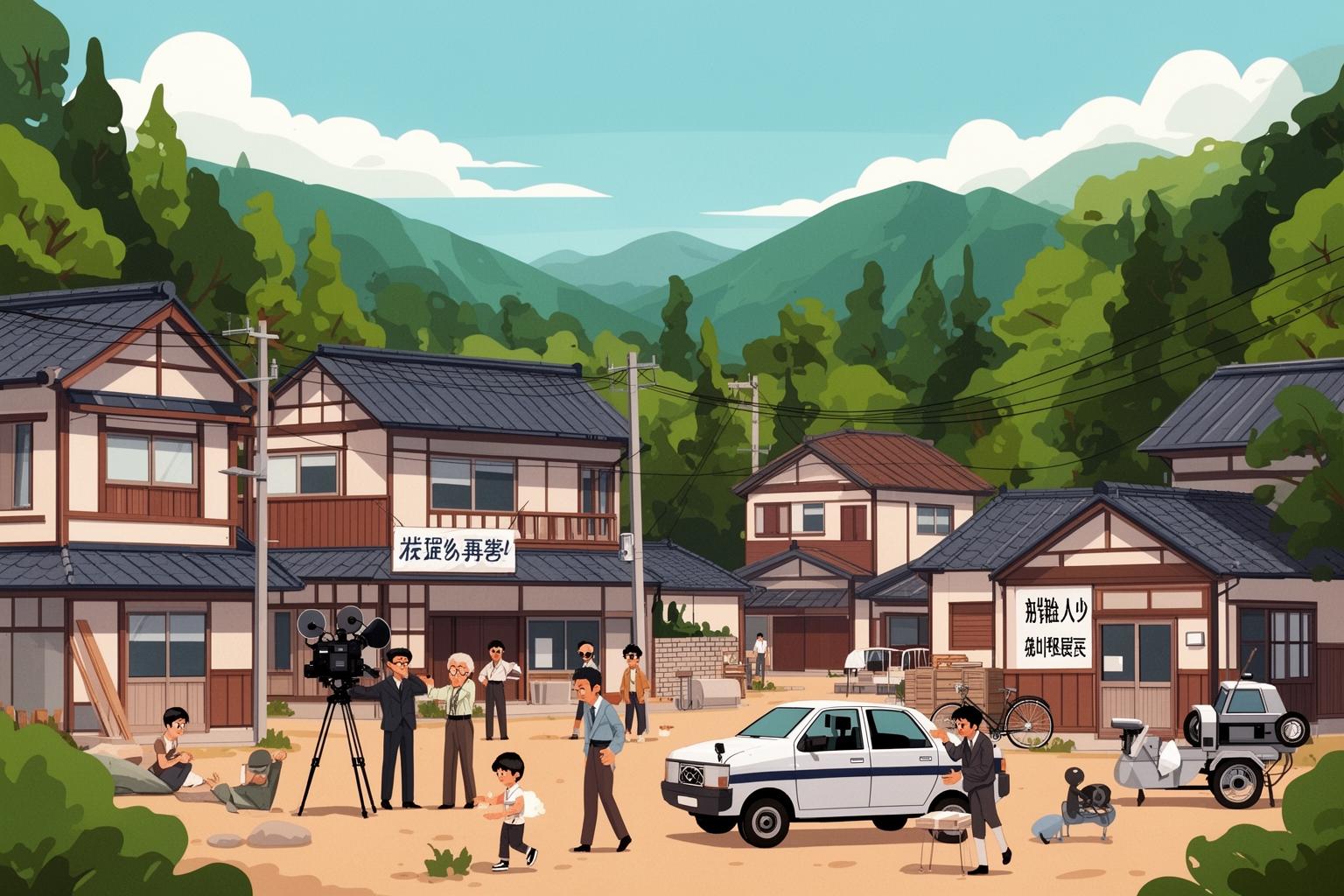
While the natural landscapes gave the film its soul, the town scenes anchored it in a specific time and place. Recreating the look and atmosphere of a provincial Korean town in 1986 was an enormous challenge. The real Hwaseong had evolved into a modern city, bearing little resemblance to the rural community of the past. To address this, Bong Joon-ho and his production team chose a distinctive location: the Hapcheon Image Theme Park in Gyeongsangnam-do. This expansive, open-air studio, designed to replicate various periods of Korean history, became the main setting for the film’s investigation, providing a tangible world for the detectives to inhabit.
The Illusion of an Era
Hapcheon Image Theme Park is a filmmaker’s dream. It features meticulously recreated streets and buildings from the Japanese colonial era of the 1920s up to the 1980s Seoul cityscape. For Memories of Murder, the production team skillfully utilized and adapted these existing sets, adorning them with period-specific props, signage, and political posters to evoke the oppressive atmosphere of South Korea under Chun Doo-hwan’s military dictatorship. Stepping onto this set is a disorienting experience—you physically step back in time. The dust feels real, the faded paint on storefronts seems authentic, and the narrow, unpaved alleyways instantly transport you to the film’s world. Here, the incredible attention to detail in the production design becomes clear. Every element, from a car model to the font on a barbershop sign, was carefully selected to reinforce the period setting and the story’s themes.
Walking in Detective Park’s Footsteps
Many of the film’s most memorable interior and exterior town scenes were shot here. You can stroll down the same dusty main street where the detectives relentlessly chased suspects. You can stand in front of the building that served as their chaotic, overwhelmed police station, the center of the faltering investigation. One of the most recognizable locations is the local barbershop, where a key suspect worked and a tense confrontation occurs. While the interiors might be modified for different productions, the facades and the overall street layout remain intact. It’s a surreal scavenger hunt, matching the buildings before you with your memory of the scenes. You can almost hear the detectives shouting, the town’s emergency siren blaring, and the melancholic music from the radio echoing through the film. This is where the human drama unfolded—the arguments, desperate brainstorming sessions, moments of flawed logic, and brutal intuition. Standing in these streets, you gain a fresh appreciation for the performances, realizing that the actors navigated a fully immersive environment that undoubtedly fueled their exceptional work.
Beyond Memories of Murder
A visit to Hapcheon Image Theme Park offers more than just a pilgrimage for fans of a single film. It is a journey through a century of Korean history and cinema. The park serves as a popular filming site for numerous other well-known Korean movies and dramas, including Taegukgi: The Brotherhood of War, Assassination, and Mr. Sunshine. Exploring the various sections of the park is captivating. You can shift from the 1980s provincial town to the grand colonial-era architecture of 1940s Seoul in just minutes. This gives a broader understanding of the visual language of Korean cinema. For first-time visitors to South Korea, it’s an incredibly efficient and enjoyable way to see physical recreations of historical periods that have largely vanished from the country’s rapidly modernizing cities. Plan to spend at least half a day here. The park is extensive, and you’ll want time to wander, get lost in the alleyways, and absorb the unique atmosphere of each distinct era represented. It’s a living museum of film history, with Memories of Murder among its most celebrated exhibits.
The Forgotten Landscapes: Quarry and Railway
Beyond the main, iconic locations, Memories of Murder is composed of a tapestry of smaller, yet equally evocative, rural settings. These places—the desolate quarry, the solitary railway tracks, the dirt paths winding through the countryside—contribute to the film’s pervasive sense of unease and isolation. They serve as the spaces in between, the connective tissue of the narrative, where crucial evidence is discovered, and the vast, indifferent landscape seems to mock the detectives’ desperate quest for order and justice. These sites are scattered across the Jeolla and Gyeongsang provinces, and seeking them out transforms a simple location tour into an authentic road trip through the heart of the Korean countryside that Bong Joon-ho chose as his canvas.
Scars on the Land: The Quarry’s Role
The quarry appears in a key sequence where the detectives, acting on a dubious tip from a shaman, dig for the killer’s body, only to have their hopes crushed. It’s a scene of desperate folly, and the location itself serves as a potent visual metaphor. A quarry is a wound in the earth, a place where the landscape has been violently torn open. Its raw, gray, and lifeless appearance stands in stark contrast to the golden reeds and green rice paddies. It feels industrial, unnatural, and desolate—a perfect reflection of the crimes’ ugliness. Pinpointing the exact quarry used for filming can be difficult, as many such sites exist in rural Korea, but the search itself is enlightening. Driving through the countryside, you’ll notice these scars on the hillsides, each evoking the film’s mood: a sense of rawness and disruption. It serves as a reminder that the investigation was not merely a series of events but a process that left its own scars on the land and the men involved.
The Iron Veins of the Countryside
Train tracks are a recurring visual motif throughout the film. They cut through the landscape, symbolizing a connection to the wider world, to the capital city of Seoul where Detective Seo originates, and to a modernity that feels far removed from the provincial setting. Yet, they are also sites of grim discovery and deep loneliness. The film’s first victim is found near the tracks. The iconic tunnel, too, lies beneath them. Walking along a stretch of these rural railway lines is to tap into this feeling. Flanked by overgrown weeds and wildflowers, the tracks extend endlessly in both directions. The silence is profound, broken only by the distant rumble of an approaching train. There is a sense of melancholy and transience here. People pass through on their way somewhere else, but for the community at the heart of the story, escape is impossible. They remain trapped, haunted by a presence that moves through their town like a phantom train in the night. When exploring these tracks, exercise caution. These are active railway lines, and safety must be your foremost concern. Use a safe crossing point and never linger on the tracks when a train is approaching.
A Mosaic of Rural Korea
What a pilgrimage to these locations reveals is that Bong Joon-ho didn’t rely on one perfect town or field. He and his crew crafted a mosaic of rural South Korea, selecting individual elements from various regions to build their fictionalized 1980s world. The journey between the tunnel in Jangseong, the fields in Jeongeup, and the village set in Hapcheon is a multi-hour drive through authentic landscapes. This road trip forms an essential part of the experience. You’ll pass small farming communities, observe farmers working their fields, and drive along narrow roads that seem lifted directly from the film. This journey immerses you in the atmosphere the director aimed to capture. It’s a slow, contemplative experience that allows the film’s mood to seep in gradually. You begin to see the world through the film’s perspective, noticing subtle details—a crumbling wall, a rusted piece of farm equipment, a solitary persimmon tree against the sky—that give the Korean countryside its unique and poignant character.
Bridging Fiction and Reality: The Shadow of the Real Hwaseong
A pilgrimage to the filming locations of Memories of Murder is an exploration of cinematic art, yet it is impossible to separate the film from the horrific reality that inspired it. The Hwaseong serial murders were a traumatic national event that left a profound scar on the South Korean psyche. Recognizing the difference between the fictional world crafted for the film and the actual history is a crucial and deeply moving part of the journey. This understanding adds a layer of seriousness to the experience, transforming it from mere appreciation of film craft into a solemn act of remembrance.
A Necessary Distinction
It is essential for any visitor to realize that the film was not shot in the city of Hwaseong itself. By the early 2000s, Hwaseong, located in Gyeonggi Province near Seoul, had undergone considerable development. It had evolved into a modern, bustling city filled with apartments and industry, unrecognizable from the rural farming community it was in during the 1980s. Bong Joon-ho deliberately chose to shoot in the less developed, visually preserved landscapes of the Jeolla and Gyeongsang provinces. His aim was not geographical accuracy but emotional and atmospheric authenticity. He sought locations that still looked and, more importantly, felt like the 1980s. The wide-open fields, the old-fashioned infrastructure, and the pervasive sense of isolation he found there were crucial to constructing the film’s world. This artistic choice stands as a testament to his vision as a director. He understood that the story’s power resided in its mood and texture, and he searched the country to find the physical elements necessary to evoke that feeling.
A Story’s End
For decades, the film’s ending—featuring Detective Park’s haunting stare into the camera—also stood as the real-world conclusion: the killer remained unidentified. The case was a painful, unresolved chapter in Korean history. However, in 2019, thanks to advances in DNA technology, the real killer, Lee Choon-jae, was identified. Already serving a life sentence for another crime, he confessed to all the Hwaseong murders as well as several others. This discovery offered a sense of closure, albeit delayed, to the victims’ families and to the nation at large. This knowledge profoundly alters the experience of visiting the filming locations. The film’s theme of futility now carries the added understanding that justice, in some form, ultimately arrived. Detective Park’s final gaze is no longer an empty stare but a look back at a ghost who finally has a name. This real-world resolution does not lessen the film’s impact; rather, it enriches it. The pilgrimage becomes not just an appreciation of cinema’s artifice but an encounter with real human tragedy and the enduring reach of forensic science.
The Power of Place
Ultimately, reflecting on the relationship between the real Hwaseong and the film’s chosen locations underscores the essence of Bong Joon-ho’s artistry. He employs place not simply as a backdrop, but as a storytelling medium. The golden reeds are not merely beautiful; they visually symbolize a radiant world where horrific events occur. The dark tunnel is not just a passageway; it embodies fear and the unknown. By visiting these sites, you are not simply seeing where a movie was filmed; you are entering a carefully crafted emotional landscape. You are sensing the world exactly as the director intended you to feel it. The wind across the Jeongeup fields carries the film’s melancholy. The echo within the Jangseong tunnel resonates with its tension. This is the magic of a cinematic pilgrimage: it bridges the gap between audience and art, allowing you, for a time, to walk within the very heart of the story.
Planning Your Cinematic Journey: A Traveler’s Guide
Embarking on a pilgrimage to the sites of Memories of Murder is not a simple day trip. It demands a multi-day road journey filled with planning, patience, and a spirit of adventure. These locations are spread across hundreds of kilometers of rural South Korea, far removed from the typical tourist routes of Seoul and Busan. Yet, the effort is richly rewarded with an experience that is far deeper and more immersive than a standard tour. Here is some practical advice to help you shape your journey into the world of the film.
The Essential Tool: Your Own Four Wheels
To be clear: renting a car is not merely a suggestion; it is essential. Public transportation to these remote rural areas is limited and infrequent, making it nearly impossible to visit multiple locations in one day. Having a rental car gives you the freedom and flexibility to travel at your own pace, to linger where moved, and to discover unexpected sights along the way. Driving in South Korea is generally straightforward for most international visitors—roads are well-maintained, and signage often includes English. However, for navigation, it’s crucial to use a Korean app like Naver Maps or Kakao Maps, as Google Maps offers limited driving directions in South Korea. Download one of these apps before you go and familiarize yourself with its interface. A car also allows you to stop in small towns for authentic local meals, an experience missed when relying on buses or trains.
Timing is Everything: The Seasons of Mood
As noted earlier, autumn (late October to November) is the ideal season for the classic Memories of Murder atmosphere. The golden reeds, crisp air, and soft, angled light perfectly mirror the film’s dominant aesthetic. However, each season brings its own unique charm. Spring offers lush greenery and a sense of renewal, creating a stark, almost unsettling contrast to the film’s dark themes. Summer is vibrant and full of life, though it can be hot and humid, with reeds showing a deep green rather than gold. Winter can be stark and beautiful with bare trees and a quiet stillness, though cold temperatures and potential snow may complicate travel. Consider the mood you wish to experience: do you want to embody the film’s melancholy, or see these places in a different, perhaps more hopeful, light?
What to Bring for the Journey
Packing for this trip is about practicality and preparation. Sturdy, comfortable walking shoes are indispensable, as you’ll be navigating uneven paths, fields, and country roads. A good camera is essential, and if you’re serious about photography, bring a variety of lenses—a wide-angle for sweeping landscapes and a prime lens for village details. A portable power bank for your phone is invaluable, especially when using it for navigation all day. Since you’ll be in remote areas, pack snacks and water for your car. Perhaps most importantly, consider downloading Memories of Murder to your tablet or laptop. Watching a scene and then seeing the very location before you is a powerful experience that deepens the connection and enhances your memory.
Language and Logistics
In major cities like Seoul, English is generally sufficient. In rural areas of Jeolla and Gyeongsang provinces, this is less often the case. Learning a few basic Korean phrases will go a long way and will be appreciated by locals. Simple greetings like “Annyeonghaseyo” (Hello) and expressions of thanks like “Gamsahamnida” (Thank you) are a good place to start. Translation apps like Papago are also very useful for reading menus or asking for directions. When booking accommodation, consider staying in smaller cities such as Jeonju or Gwangju, which serve as convenient bases for day trips to the locations while providing comfortable lodging in the evenings. Embrace the journey itself—the drives between sites are not just transit but an essential part of the pilgrimage, offering a chance to witness the authentic, ever-changing beauty of the Korean countryside.
This journey is more than simple sightseeing. It is an active immersion into one of the most powerful films ever made. It is an opportunity to feel the wind that swept through its scenes, stand on the ground where its unforgettable story unfolded, and develop a deeper appreciation of the artistry and history that created this masterpiece. The ghosts of Memories of Murder await, not in theaters, but out among the whispering fields and echoing tunnels of the Korean landscape. Go and find them.