The chicken runs. A frantic, feathered blur against sun-bleached concrete, it dodges bare feet and weaves through a maze of narrow alleyways. The beat drops, a pulsating samba rhythm kicks in, and we are thrown headfirst into the chaotic, vibrant, and brutally unforgiving world of Cidade de Deus—the City of God. For millions around the globe, this electrifying opening sequence was their first introduction to the raw energy of Rio de Janeiro’s favelas. Fernando Meirelles’ 2002 masterpiece wasn’t just a film; it was a cultural explosion, a cinematic gut-punch that painted a portrait of life, love, and turf warfare with a palette of searing colors and unrelenting honesty. It became a global phenomenon, etching its characters—Rocket, the aspiring photographer; Li’l Zé, the terrifyingly ambitious gangster—into the annals of film history. But for the traveler, the art lover, the seeker of stories, the film presents a tantalizing pilgrimage. It beckons you to find the real streets where these narratives unfolded, to walk in the footsteps of its characters, and to understand the truth behind the fiction. Yet, the journey to find the film’s locations is a story in itself, a peeling back of layers that reveals a truth more complex and compelling than the movie itself. The first surprise for many is that the City of God depicted on screen is not the real Cidade de Deus. The search for the film’s soul leads you not to one place, but through a constellation of communities across Rio, each with its own rhythm, its own history, and its own heart. This is not just about finding a backdrop; it’s about discovering the living, breathing city that inspired and hosted one of the most powerful films ever made. It’s a journey into the spirit of resilience, creativity, and the undeniable pulse of life that thrives in the face of adversity. Before we dive into the cinematic labyrinth, let’s ground ourselves in the place that gave the story its name: the real City of God.
This journey of cinematic pilgrimage is not unique to Rio, as seen in the exploration of Berlin’s Cold War history through its film locations.
The Myth and Reality of a Filmic Universe
To grasp the pilgrimage, one must first appreciate the director’s choices. The film, adapted from Paulo Lins’ expansive novel, sweeps through decades, following the lives of young men caught in the currents of poverty and crime. Its strength lies in its authenticity—a sensation so vivid you can nearly taste the street food and feel the oppressive heat radiating from the pavement. This realism was carefully constructed but demanded a safe and controlled environment for the cast and crew, many of whom were non-professional actors drawn directly from favela life. The real Cidade de Deus during the late 1990s and early 2000s, when the film was developed and shot, was engulfed in the very conflicts the movie aimed to depict. It was deemed too dangerous and volatile for a major film production. The filmmakers needed a setting that looked and felt authentic, yet where they could tell their story without putting their team at risk or disrespecting an ongoing, real-life struggle.
Why Not Film in the Real City of God?
The choice to shoot elsewhere stemmed from pragmatism and respect. Fernando Meirelles and co-director Kátia Lund were deeply dedicated to a narrative that honored the essence of the source material, which was itself founded on years of sociological study and Lins’ personal experiences in the community. Turning a location suffering from active gang violence into a movie set would have been both logistically unfeasible and ethically problematic. The production was a massive endeavor, involving complex camera rigs, lighting setups, and coordinating hundreds of people. Such an operation would have been an intrusive disruption in a community already struggling with daily security issues. Moreover, the filmmakers sought a specific aesthetic—to visually represent the housing project as it appeared during the 1960s, 70s, and 80s. They required locations that could be adapted and modified to reflect the passage of time, a creative control difficult to exercise in the real, ever-changing Cidade de Deus. The solution was to craft a composite, a cinematic favela pieced together from various sites across Rio that collectively captured the spirit, appearance, and atmosphere of the story.
The Creation of a Cinematic Favela: Cidade Alta
The main stand-in, the film’s primary setting, is a housing project called Cidade Alta, situated in Rio’s North Zone neighborhood of Cordovil. Visually, it was an ideal fit. Like the real Cidade de Deus, Cidade Alta is a conjunto habitacional—a government-planned housing complex characterized by repetitive, low-rise apartment blocks. The stark, modernist-inspired geometry of these buildings, with their uniform windows and exposed concrete, provided the perfect backdrop for the film’s gritty tone. Throughout the movie, scenes of Rocket navigating courtyards, the Tender Trio plotting heists, and Li’l Zé’s terrifying ascent to power take place largely amid Cidade Alta’s architecture. The production team skillfully aged and weathered the location, applying murals, graffiti, and scattering life’s debris to create a world that felt lived-in and worn down by decades of hardship it was meant to embody. Visiting Cidade Alta today is a surreal experience for fans of the film. While it remains a functioning community with its own unique identity, the visual echoes of the movie are everywhere. You can stand in the open plazas and imagine frantic soccer games, see the long, straight roads that became the backdrop for tense standoffs, and look up at rows of windows, each holding its own story, just as Rocket viewed them through his camera lens. It’s a place that feels both familiar and strikingly new—a testament to the transformative power of cinema.
Walking Through the Frames: Key Filming Locations Unveiled
While Cidade Alta served as the film’s structural backbone, the essence of City of God was enriched by the spirit of other, older neighborhoods of Rio. The filmmakers sought out locations that could evoke various moods and eras, from the almost innocent beginnings of the 60s to the intense conflicts of the 80s. This cinematic quest leads the intrepid traveler to some of Rio’s most historic and visually striking communities, offering a perspective of the city far removed from the tourist postcards of Christ the Redeemer and Sugarloaf Mountain.
The Streets of the Tender Trio: Echoes in Morro da Providência
For the film’s earlier scenes, portraying a more rustic and less developed favela, production moved to Morro da Providência. This site holds profound historical significance, widely regarded as Rio’s very first favela. Founded in the late 19th century by soldiers returning from the Canudos War with no place to live, its history marks the origin of all Rio’s hillside communities. Visually, it contrasts sharply with Cidade Alta’s planned grid. Here, the homes appear organic, seemingly growing from the steep hillside. The alleyways, or becos, are narrow and winding—a labyrinth of brick, concrete, and corrugated iron that creates a sense of intimacy and enclosure. It was on these historic streets that the filmmakers captured the world of the Tender Trio—Shaggy, Clipper, and Goose—in the 1960s. These scenes radiate a sepia-tinged warmth, evoking a simpler, though still perilous, time. Walking through Providência today feels like stepping back into history. The views from above offer a breathtaking panorama of the city and its port. The community is vibrant with art, most notably the photographic installations of artist JR’s “Women Are Heroes” project, featuring giant portraits of local women pasted on building facades, their powerful gazes watching over the neighborhood. Exploring Providência, ideally with a local guide, provides insight into the historical roots of favela life and the visual texture that gave the film’s opening scenes their nostalgic, almost mythical quality.
The Beach of Dreams and Despair
The beach in Rio is far more than just a stretch of sand; it functions as the city’s great equalizer, its public square, its stage. In City of God, the beach symbolizes a space of escape, a brief relief from the claustrophobic favela environment. It’s where characters dream of a different life, romance blooms, and the wider world beyond the housing projects feels tantalizingly close. Scenes set on the iconic shores of Copacabana and Ipanema provide a stark visual contrast to the gritty realism of the film’s main setting. The bright, saturated colors, endless stretches of blue ocean, and sun-drenched bodies evoke a sense of freedom and possibility. Yet, this paradise is always tinged with the darkness of a world they can’t entirely leave behind. On the edge of this idyllic realm, deals are made and destinies decided. For the traveler, visiting these beaches is an essential Rio experience. But with the film in mind, it takes on a deeper dimension. Watching groups of kids expertly playing futevôlei evokes memories of the boys from the movie. Hearing vendors calling out, selling mate and biscoitos globo, becomes part of the film’s living soundtrack. The beach turns into a liminal space, a bridge between postcard-perfect beauty and the complex social realities the film so boldly explores. It is a place to reflect on Rio’s duality—a city of breathtaking beauty and profound inequality, often existing side by side.
Beyond the Sand: The Underbelly of Paradise
The film’s narrative occasionally spills beyond the favela and the beach into the broader city—the asfalto (asphalt), as locals call it. These scenes—robberies, drug deals, fleeting moments in the formal city—were shot in various neighborhoods, including parts of Rio’s bustling Centro and Santa Teresa. The filmmakers selected locations with a timeless, slightly worn-down atmosphere, colonial-era buildings with peeling paint and grand but decaying facades. These settings highlight the characters’ alienation when outside their own environment. They become ghosts in a city that overlooks them, existing in the shadows of its grand architecture. Exploring these areas adds another dimension to the pilgrimage. Santa Teresa, with its charming, winding cobblestone streets, iconic yellow tram, and bohemian art scene, feels worlds away from the film’s violence, yet its sloping hills and eclectic architecture provided a versatile backdrop. Walking through Centro on a weekday lets you feel the kinetic energy the film captured—the rush of humanity, the anonymity that can be both freeing and perilous. These locations remind us that City of God’s story is not separate from Rio’s story; it is deeply woven into the fabric of the entire metropolis.
The Real Cidade de Deus: A Post-Film Renaissance
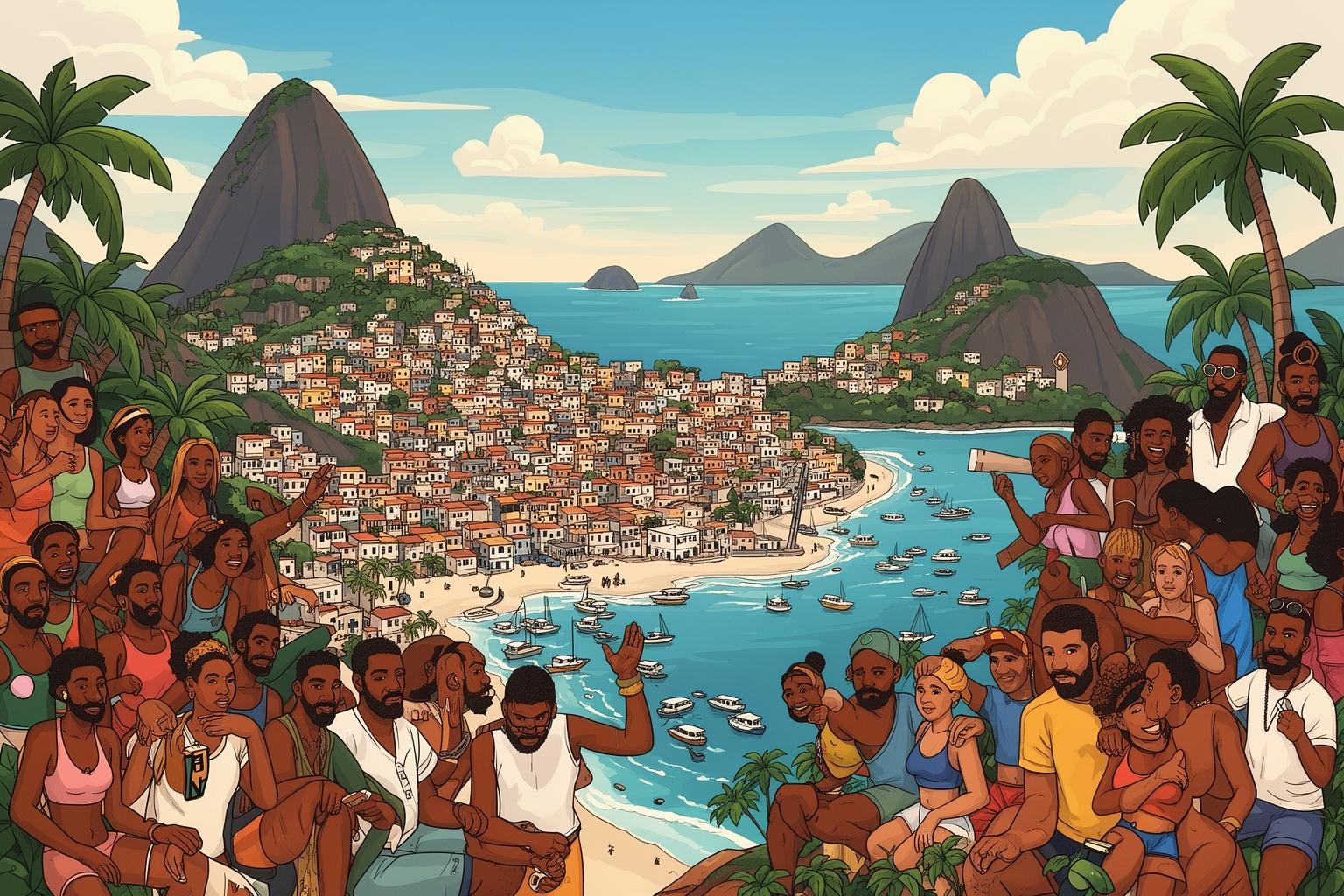
Although the film was not actually shot there, no pilgrimage would be complete without both understanding and, when done properly, visiting the real Cidade de Deus. The movie’s worldwide success thrust the community into an intense and often uneasy international spotlight. For decades, the name was synonymous with violence and poverty, but suddenly it also became a symbol of remarkable artistic achievement. This paradox has shaped the neighborhood’s path over the last twenty years, fueling a complex process of transformation, community empowerment, and ongoing challenges.
From Notorious Neighborhood to Community Hub
The real Cidade de Deus was founded in the 1960s as part of a government initiative to eliminate favelas from Rio’s wealthy South Zone and relocate residents to the city’s outskirts. This forced displacement created a community cut off from jobs and infrastructure, setting the stage for the social issues that would later afflict it. For years, it was a place neglected by the state and feared by outsiders. However, the film changed the narrative. Although the attention it brought was double-edged, it also attracted NGOs, social activists, and artists. Since the film’s release, a wave of community-driven projects has emerged. Boxing gyms, ballet schools, theater groups, and music workshops have all been established with the aim of providing young people alternatives to the life of crime portrayed in the movie. The community has actively sought to reclaim its own story, showing the world that it is a place of talent, culture, and resilience—not merely the violent stereotype shown on screen. Visiting the real Cidade de Deus today through a responsible tour reveals this inspiring spirit of renewal. You see children heading to capoeira lessons, you hear the rhythms of a samba school rehearsing, and you can explore art studios and cultural centers that serve as vibrant creative hubs.
The Ethics and Experience of Favela Tourism
Touring a favela as a visitor involves complex ethical considerations. It is essential to avoid what is often disparagingly called “poverty tourism”—exploitative visits that treat communities and their residents as spectacles. Yet, when conducted ethically and respectfully, tourism can be a powerful positive influence, offering direct economic support to the community and fostering cross-cultural understanding. The key lies in choosing your guide and tour operator carefully. The best favela tours are led by residents themselves. These guides do more than show you landmarks; they share their homes, their stories, and their perspectives. They might take you to a local restaurant to sample authentic feijoada, introduce you to a neighborhood artist, or explain the history behind a striking piece of street art. A good tour should feel like being welcomed into a friend’s neighborhood, not like a safari. It’s about human connection, not voyeurism. It’s an opportunity to listen, learn, and challenge your own assumptions. By selecting a community-based tour, your money stays within the local economy, supporting the very families and initiatives striving to build a brighter future—one that looks very different from the past portrayed in the film.
A Traveler’s Guide to the Cinematic Heart of Rio
Setting out on a pilgrimage inspired by City of God requires more than just a map of locations; it demands a mindset of respect, curiosity, and awareness. It’s an adventure that will lead you deep into the cultural heart of Rio, but must be approached with intelligence and sensitivity.
Navigating with Care and Awareness
Rio is a city of contrasts, and while it is warm and vibrant, it’s crucial to stay mindful of your surroundings, especially when exploring less-traveled areas. The security situation in many neighborhoods can change quickly; what is safe one day may not be the next. This makes connecting with a local guide not merely advisable but essential for this journey.
Safety First: A Woman’s Perspective
As a traveler, particularly as a woman, blending in is your strongest protection. This isn’t about concealment, but about showing respect for the local culture. Choose casual, comfortable clothing. Avoid expensive jewelry, flashy watches, and high-end cameras that could attract unwanted attention. Carry your belongings in a secure, cross-body bag worn in front of you. Always ask permission before photographing anyone, especially children—a simple smile and a gesture toward your camera communicates universally. Remember, you are a guest in someone’s home, and the community’s rules take precedence over any tourist guidebook. Your local guide serves as both your cultural interpreter and security advisor. They understand local dynamics, know which streets to take or avoid, and can navigate complex social etiquette. Trust their expertise fully. Carry a small amount of cash in an easily accessible pocket for minor purchases, keeping your remaining money and cards safely tucked away. Learning a few basic Portuguese phrases—bom dia (good morning), por favor (please), obrigada (thank you, when spoken by women), com licença (excuse me)—goes a long way in expressing respect and fostering friendly interactions.
The Best Way to Explore: Tours vs. Independent Travel
To be absolutely clear: first-time visitors should not explore the favelas featured in the film, such as Cidade Alta and Providência, independently. These are complex urban environments where outsiders can easily get lost or encounter danger. The only responsible way to undertake this pilgrimage is by hiring a reputable, resident-led tour guide. When selecting a tour company, ensure it explicitly states its community ties. Do they employ local guides? Do they reinvest part of their profits into social projects? Check reviews from previous travelers. A quality tour emphasizes cultural exchange and education over mere spectacle. Many tours are customizable, so don’t hesitate to tell your guide you are interested in City of God filming locations; they can often share personal stories or highlight spots with insights beyond what any online guide might offer.
Immersing Yourself in the Culture
This journey engages all your senses as much as your sight. The true spirit of these communities lives in their food, music, and art. It’s through shared experiences that you’ll find your deepest connection to both the film’s world and the reality of today.
The Flavors and Sounds of the Community
Ask your guide to take you to a local boteco or restaurant, where you will discover the most authentic and flavorful Brazilian cuisine. Try the national dish, feijoada, a hearty black bean and pork stew typically served on Saturdays. Taste pastéis, deep-fried pastries filled with savory ingredients, or a bowl of rich, energizing açaí. Rio’s soundscape is a constant, infectious rhythm, especially vibrant in the favelas. You’ll hear funk carioca, a genre born right in these neighborhoods, pulsating from speakers. Samba and bossa nova’s gentle, melodic notes drift through open doorways. Music here is more than entertainment; it’s a means of expression, protest, and celebration. Let yourself be moved. The visual art is powerful, too. Community walls, particularly in Providência, are adorned with vivid, masterful graffiti and murals—not mere vandalism, but outdoor galleries telling community stories, honoring local heroes, protesting social injustice, and celebrating Afro-Brazilian culture. Take time to appreciate them and ask your guide about the artists and their meanings.
When to Visit: Seasons and Events
Rio is a destination for any time of year, but the best periods to visit are arguably spring (September to November) or autumn (April to May), when the weather is pleasant and crowds are lighter compared to the peak summer months of December to February. Summer can bring intense heat, humidity, and heavy rain. Plan tours mostly in the morning to avoid the harsh midday sun. If your visit coincides with the run-up to Carnival, you may have the amazing opportunity to attend a local samba school rehearsal. This immersive experience showcases the extraordinary talent and community spirit behind the world’s most famous parade. It’s a joyful, powerful expression of resilience and creativity defining these communities.
This pilgrimage, inspired by a film about crime and survival, ultimately reveals a story far greater. It challenges you to look beyond headlines and cinematic frames to discover the humanity and vibrancy thriving in unexpected places. The celluloid ghosts of Rocket and Li’l Zé don’t lead to a tragic end, but to a living, breathing world of art, music, and unyielding spirit. The true City of God is not a place of inescapable fate but a tribute to the power of community and the relentless pursuit of a better tomorrow. Walking these streets teaches you that the most compelling stories are not those that finish but those still unfolding every day, beneath the brilliant Brazilian sun.