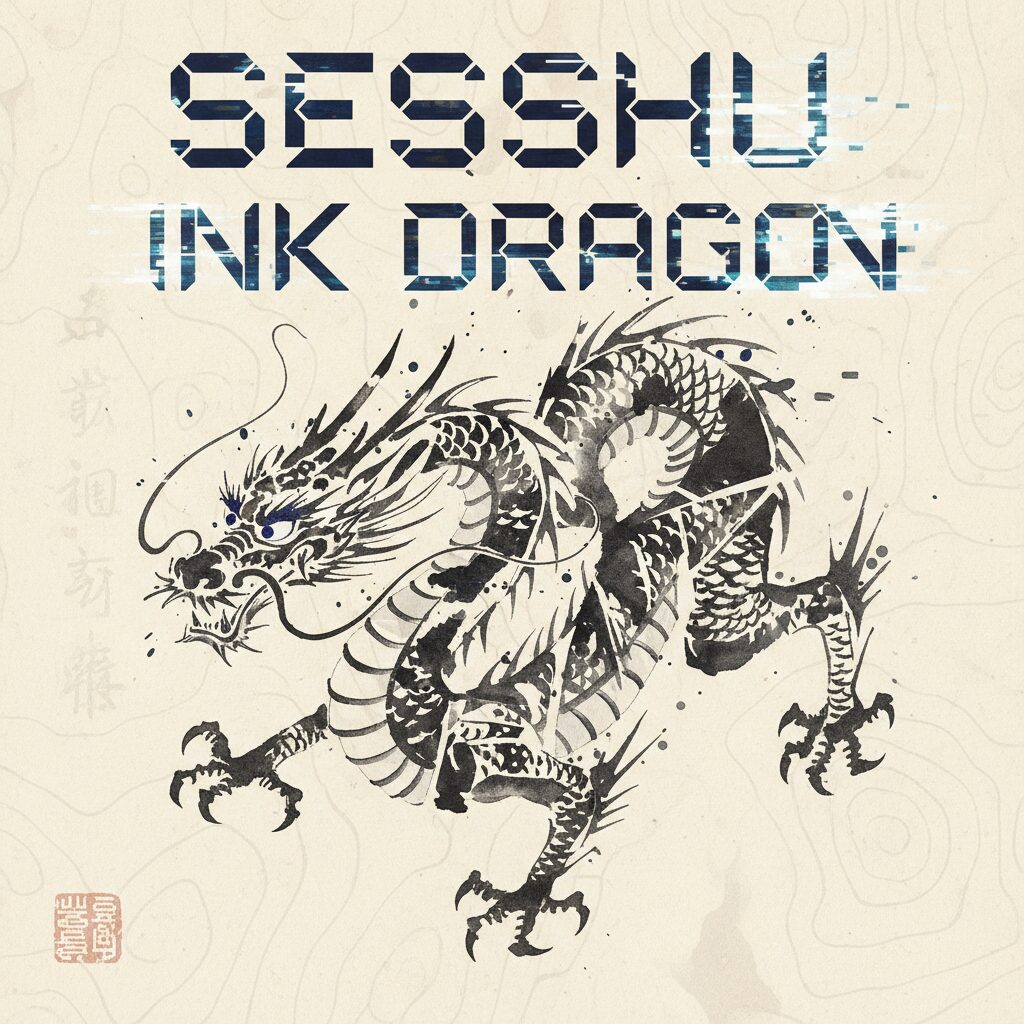
There’s a power in the empty space. A world contained in a single, decisive stroke of a brush. In Japan, the art of sumi-e, or ink wash painting, is more than just a technique; it’s a philosophy, a meditation captured on paper. And no name resonates with more thunderous silence in this world than Sesshu Toyo. To walk in his footsteps is to journey not just across the landscapes of western Japan, but into the very heart of the Muromachi period, a time of profound turmoil and explosive creativity. We’re not just visiting temples and gazing at gardens; we’re tracing the path of a master who bent the rigid lines of Chinese tradition into something uniquely, fiercely Japanese. Sesshu wasn’t just a painter; he was a Zen monk, a traveler, a diplomat, and a force of nature whose influence still ripples through the cultural bedrock of this country. His life was a pilgrimage, from the quiet hills of his boyhood to the bustling courts of Imperial China, and back to the rugged coastlines that inspired his final, transcendent works. This journey is an invitation to see Japan through his eyes, to feel the granite strength in his painted mountains, and to find the quiet stillness in the void he so expertly commanded. It’s a path that leads from Okayama to Kyoto, finds its soul in Yamaguchi, and reaches its crescendo in the misty vistas that gave birth to his greatest masterpieces. Let’s chase the ink dragon together.
If you’re inspired by this journey into the soul of a master, you might also enjoy tracing the path of another great artist, Utagawa Hiroshige.
The Boy and the Pillar: Dawn in Bitchu
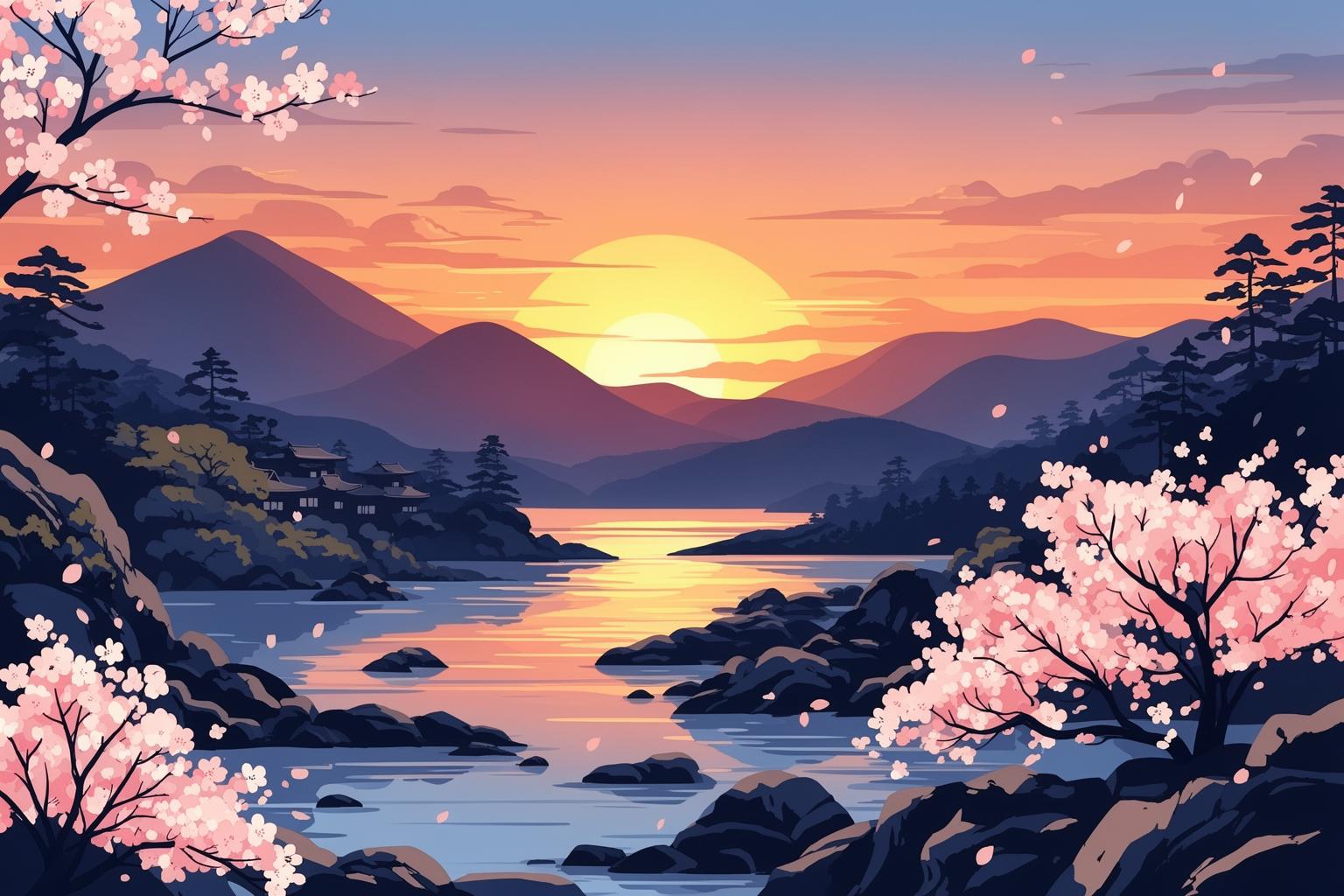
Our story begins not in a majestic capital, but in the rolling, serene heartland of what was once Bitchu Province, now part of Okayama Prefecture. This is a land rich with ancient tales and understated beauty, where the rhythm of life moves closely with the changing seasons. It was here, around the year 1420, in Akahama, that Sesshu was born. To visit this region today is to enter a landscape that feels gentle and foundational. The sharp, dramatic peaks seen in his later paintings are nowhere to be found here; instead, there are fertile plains and verdant hills that nurture, rather than challenge. It is the ideal starting point to understand the man before the legend.
Hofukuji Temple: The Cry of a Young Genius
Deep in the city of Soja lies Hofukuji Temple, a site that holds the most famous legend from Sesshu’s childhood. This is where he was sent as a boy to begin his training as a Zen monk. Hofukuji is not a vast or renowned complex like the temples of Kyoto; it carries a humble, profound stillness. Walking through its grounds, you sense a deep-rooted history, with the air heavy from the scent of aged timber and damp moss. The wooden halls are dark and cool, and the silence is broken only by the chirping of cicadas in summer or the rustle of dry leaves in autumn.
Here unfolds the iconic tale. The young Sesshu, it is said, was more captivated by painting than by his Zen lessons. As punishment for his disobedience, his master tied him to one of the temple’s main pillars. Left alone, the boy began to weep. When the master returned later, he was startled to see what appeared to be a rat at the boy’s feet and feared the child had been bitten. But as he drew closer, he realized the rat was not real. Using only his tears as ink and his toe as a brush, the young Sesshu had drawn a stunningly lifelike rodent on the wooden floor. The master was so amazed by this raw, irrepressible talent that he untied the boy and from that day forward allowed him to paint.
Standing in the main hall of Hofukuji, you can still see the pillar where he was reportedly tied. Whether the story is entirely factual remains a subject of historical debate, but its impact is unquestionable. It speaks to a talent so immense it could not be contained, a creative force capable of emerging from the simplest elements—even sorrow. When you touch the smooth, worn wood of that pillar, you connect with the origin of Japan’s greatest painter. You can almost envision the defiant boy, his mind already alive with images of landscapes and creatures, finding his first canvas in the most unexpected of places. For the best experience of Hofukuji, visit on a quiet weekday morning. The air is crisp, and the absence of crowds lets the temple’s spirit speak more clearly. Listen to the gentle creak of the floorboards and imagine the soft swish of a small toe, painting a masterpiece out of tears.
The Spirit of Soja
Beyond Hofukuji, the surrounding area of Soja offers a window into the pastoral world that shaped Sesshu’s early years. This is an excellent region to explore by bicycle. Rent one near Soja Station and ride along the Kibi Plain, a historic route dotted with ancient burial mounds (kofun) and tranquil shrines. The landscape is dominated by rice paddies, vibrant green in early summer and a golden sea in autumn. This is the raw material of the Japanese aesthetic—simplicity, harmony with nature, and a profound sense of time. While Sesshu would later become renowned for his dramatic Chinese-style landscapes, the gentle contours of the Kibi Plain served as his first lesson in seeing the world as an artist. It is a quiet beauty, one that does not shout but rather whispers its secrets to those who take the time to listen. This is the calm before the storm of his artistic revolution.
The Crucible of Kyoto: Forging a Master at Shokokuji
Every great artist requires a crucible—a place of intense learning and competition where raw talent is forged into refined skill. For Sesshu, that crucible was Kyoto, the magnificent, chaotic, and culturally vibrant imperial capital. In the early 15th century, he traveled to the city and joined Shokokuji Temple, a towering center of Zen Buddhism and the undisputed heart of Japan’s art world. To truly understand Sesshu, one must grasp the environment of Shokokuji during the Muromachi period.
Shokokuji was more than just a temple; it functioned as an academy, a political hub, and a gallery, all under the influential patronage of the Ashikaga shogunate. It was among the five great Zen temples of Kyoto, with its halls filled with the brightest minds of the era. Here, Zen philosophy was intimately intertwined with art. Painting was a meditative act—a means to express the inexpressible and capture the essence of enlightenment in strokes of ink. The temple served as a direct conduit for the latest cultural trends from China’s Song and Yuan dynasties, boasting an unparalleled collection of Chinese masterpieces.
Under the Shadow of a Giant: Studying with Shubun
At Shokokuji, Sesshu became a disciple of Tensho Shubun, the most esteemed painter of his generation. Shubun was a master of a softer, more lyrical style of ink painting, heavily influenced by Chinese models. Learning from him was akin to studying physics under Newton. Sesshu would have dedicated years to disciplined practice—grinding his own ink, mastering the precise way to load a brush, and most importantly, copying the works of Chinese masters. This practice was not regarded as mere imitation but as a profound mode of learning, internalizing the rhythm, balance, and spirit of a masterpiece until it became part of one’s own artistic identity.
Visiting Shokokuji today, the echoes of this intense artistic world remain palpable. Although much of the original complex was lost in the fires of the Onin War—a devastating civil conflict that later forced Sesshu from the capital—the rebuilt structures and serene gardens still radiate intellectual and spiritual weight. Stroll through the expansive grounds, past the towering Sanmon gate and the Dharma Hall with its magnificent dragon ceiling painting. The atmosphere is scholarly and contemplative, seemingly designed for deep focus. Imagine a young Sesshu here, surrounded by priceless art, engaged in fierce debates about aesthetics and philosophy with fellow monks, his mind and brush sharpened to a razor’s edge. He was not just learning to paint landscapes; he was discovering a new way to see the world, filtered through the profound and paradoxical lens of Zen.
The Onin War and a Westward Escape
Kyoto’s cultural golden age was not meant to endure. In 1467, the city erupted into the Onin War, a decade-long conflict that reduced much of the capital to ashes. Shokokuji itself became a battlefield. For an artist, such destruction and chaos were unbearable. This turmoil compelled Sesshu, now a master in his own right, to seek patronage elsewhere. He left the smoldering ruins of Kyoto behind and journeyed westward to a city rapidly emerging as Japan’s new cultural center: Yamaguchi.
Visiting Kyoto with Sesshu in mind offers a unique perspective. While you can admire famed temples like Kinkakuji (The Golden Pavilion) and Ginkakuji (The Silver Pavilion)—both closely tied to the Ashikaga shogunate and the culture Sesshu inhabited—remember the impermanence that defined his time there. His experience in Kyoto was one of immense creation and devastating destruction. It taught him that beauty is fragile and stability a luxury. This insight profoundly shaped the rugged, resilient, and powerful art he would go on to create in his new home.
The Western Capital: Sesshu’s Renaissance in Yamaguchi
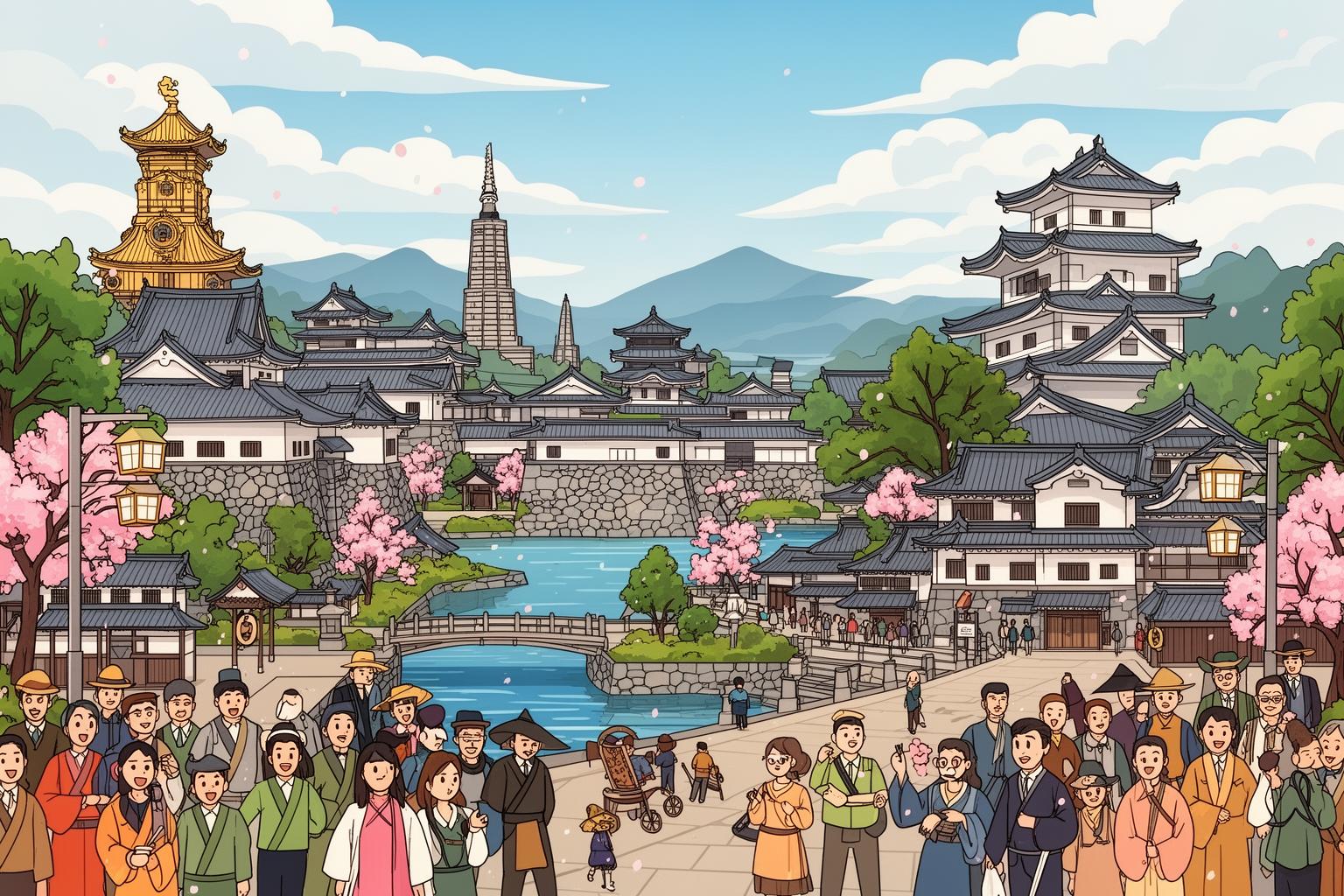
If Kyoto was Sesshu’s university, then Yamaguchi was his grand studio, his sanctuary, and the place where he truly became Sesshu. In the mid-15th century, leaving the war-torn capital for Yamaguchi was not a retreat to the provinces but a strategic move to the most vibrant and prosperous city in western Japan. Under the brilliant and worldly Ouchi clan, Yamaguchi was flourishing. Its lords were not only powerful warriors but also astute diplomats and passionate patrons of the arts. They encouraged lucrative trade with Korea and Ming China, and their city became a cosmopolitan hub where international influences blended with Japanese tradition. It was nicknamed the “Kyoto of the West,” and for a time, it surpassed the original.
For Sesshu, this proved to be the ideal environment. The Ouchi clan recognized his genius and granted him the freedom and resources to create. He established his own studio there, which he named Unkokuan, the “Cloud Valley Hermitage.” The name itself conjures the image of a master painter dwelling among the misty mountains he so loved to portray. Yamaguchi served as his base of operations for nearly forty years. It was from here that he embarked on his most important journey and where he solidified his revolutionary style.
Joeiji Temple: A Garden of the Mind
To discover the soul of Sesshu in Yamaguchi, you must visit Joeiji Temple. Quietly nestled against a forested hill on the city’s edge, this temple houses a garden regarded as a masterpiece of landscape design and widely believed to have been designed by Sesshu himself. Known as the Sesshu-tei, this garden is not a mere collection of pretty plants; rather, it is a three-dimensional ink wash painting—a physical manifestation of his artistic and philosophical principles.
As you approach, the first sensation is a profound sense of peace. The garden is a chisen-kanshoshiki-teien, a “pond-appreciation-style garden,” designed to be viewed from the temple’s main hall, like a framed painting. The pond, shaped like the Chinese character for “heart” (心), forms the center of the composition. Around it, carefully chosen rocks are arranged to represent Buddhist cosmology and the landscapes of China. A small, rocky peninsula juts into the water, its jagged forms evoking the powerful, angular brushstrokes of Sesshu’s mountain paintings. The far bank is a curtain of green, with maples and pines creating a backdrop that spectacularly changes with the seasons. In spring, cherry blossoms add an ephemeral pink touch. In summer, the greens grow deep and lush. In autumn, the maples burst into flame with crimson and gold, perfectly reflecting in the pond’s still water. In winter, a dusting of snow transforms the scene into a monochrome sumi-e world.
Sit on the temple’s veranda, upon the cool, smooth tatami mats. This is the intended viewpoint. Let your eyes roam. Notice how the composition directs your gaze from the “crane island” to the “tortoise island,” symbols of longevity. Observe how the rocks are not merely placed but seem to rise organically from the earth with dynamic energy. This is Sesshu’s genius. He was not simply arranging scenery; he was channeling nature’s vital energy, known as ki. The garden is simultaneously complex and simple, meticulously planned yet appearing utterly natural. It offers a space for meditation, a landscape that calms the mind and invites contemplation. You can spend hours here, watching the changing light, feeling the breeze, and understanding, on a visceral level, the world Sesshu sought to capture with his brush.
Exploring the Ouchi Legacy
Beyond Joeiji, the spirit of Sesshu and his patrons, the Ouchi clan, permeates Yamaguchi. Visit Ruriko-ji Temple, with its stunning five-storied pagoda, a national treasure and a symbol of the Ouchi clan’s cultural peak. This pagoda would have been a familiar sight to Sesshu. As you stroll through the modern city, you will find street names and small monuments referencing its glorious past. The Yamaguchi Prefectural Museum of Art houses an important collection, including a replica of the famous Long Scroll of Landscapes (Sansui Chokan), a monumental work whose original is a National Treasure. Seeing this masterpiece, even as a replica, allows you to appreciate the epic scale of Sesshu’s vision—a sprawling journey through the seasons and landscapes of an idealized world, a world he perfected here in Yamaguchi.
Visiting Yamaguchi offers a less crowded, more intimate connection to Japan’s history than Kyoto. It is a city that wears its heritage with quiet pride. Spend a day wandering, imagining a bustling city filled with merchants from the mainland, artists, poets, and scholars, all under the patronage of a clan that created a brilliant, though short-lived, cultural renaissance. It was in this fertile ground that Sesshu prepared for the journey that would forever change the course of Japanese art.
The Voyage to the Source: Sesshu in Ming China
A master, regardless of their greatness, must ultimately return to the source of their knowledge. For any serious Japanese ink painter in the 15th century, that source was Ming China. Despite his mastery and renown in Japan, Sesshu harbored a deep longing to witness its landscapes and learn from the artists of the land that originated the entire sumi-e tradition. In 1467, the year the Onin War began, Sesshu, at 47 years old, joined a trade mission sent by the Ouchi clan and voyaged to the mainland. This two-year journey would become the most transformative experience of his artistic career.
A Journey of Discovery and Disillusionment
Sesshu’s trip was not that of a modest learner. He traveled as a respected guest artist and cultural envoy, his reputation preceding him. His main destination was Beijing, the splendid capital of the Ming Dynasty. He received the great honor of painting murals in the Ministry of Rites, placing him at the heart of the Chinese imperial bureaucracy. He was exposed to the vast scale of the imperial court, its elaborate rituals, and its extensive art collections. He also traveled, notably to the grand Zen monasteries near Ningbo, a major cultural hub.
Though he sought teachers in China, he encountered disappointment. He famously stated that he found no living painters in China worthy of being his master. This was not arrogance. To him, the state of professional painting at the Ming court had become rigid and academic, lacking the spiritual vitality found in the earlier Song and Yuan masters he admired. He realized that the true masters he sought were long gone. Thus, he shifted his focus to a different mentor: Nature itself.
He sketched China’s vast, dramatic landscapes, which differed greatly from Japan’s gentler scenery. He observed towering, mist-cloaked mountains, expansive rivers, and the immense scale of the continent. He absorbed the grandeur and raw power of the Chinese mainland, which infused his artistic consciousness. He learned not from the court painters, but from the land itself and from the spirits of ancient masters whose works he studied in temple collections. This direct communion with Chinese nature and classical art, beyond contemporary teachers, enabled him to forge a direct connection to the very essence of ink painting.
The Return and the Revolution
Upon returning to Japan in 1469, Sesshu was a transformed artist. His brushwork gained new strength and confidence. His compositions became bolder, more dynamic, and more angular. While he absorbed the monumental scope of Chinese landscapes, he began interpreting them through a uniquely Japanese sensibility and Zen-inspired energy. He brought back not only new techniques, but a renewed authority. Having visited the source, he now felt free to break the conventional rules.
Sesshu’s journey to China is a vital yet intangible chapter of his pilgrimage. You cannot visit the exact places he saw, but the influence of his travels can be felt in every subsequent work he created. Standing before one of his later paintings in a museum in Tokyo or Yamaguchi, you witness a fusion of two cultures. You see the mountains of China filtered through the mind of a Japanese Zen master. His trip affirmed his own path. He ventured to China to learn but returned with the understanding that his own vision was the one he must pursue. This realization unleashed the full power of his genius and paved the way for his most iconic and revolutionary masterpieces.
The Brush Transcendent: In the Presence of Masterpieces
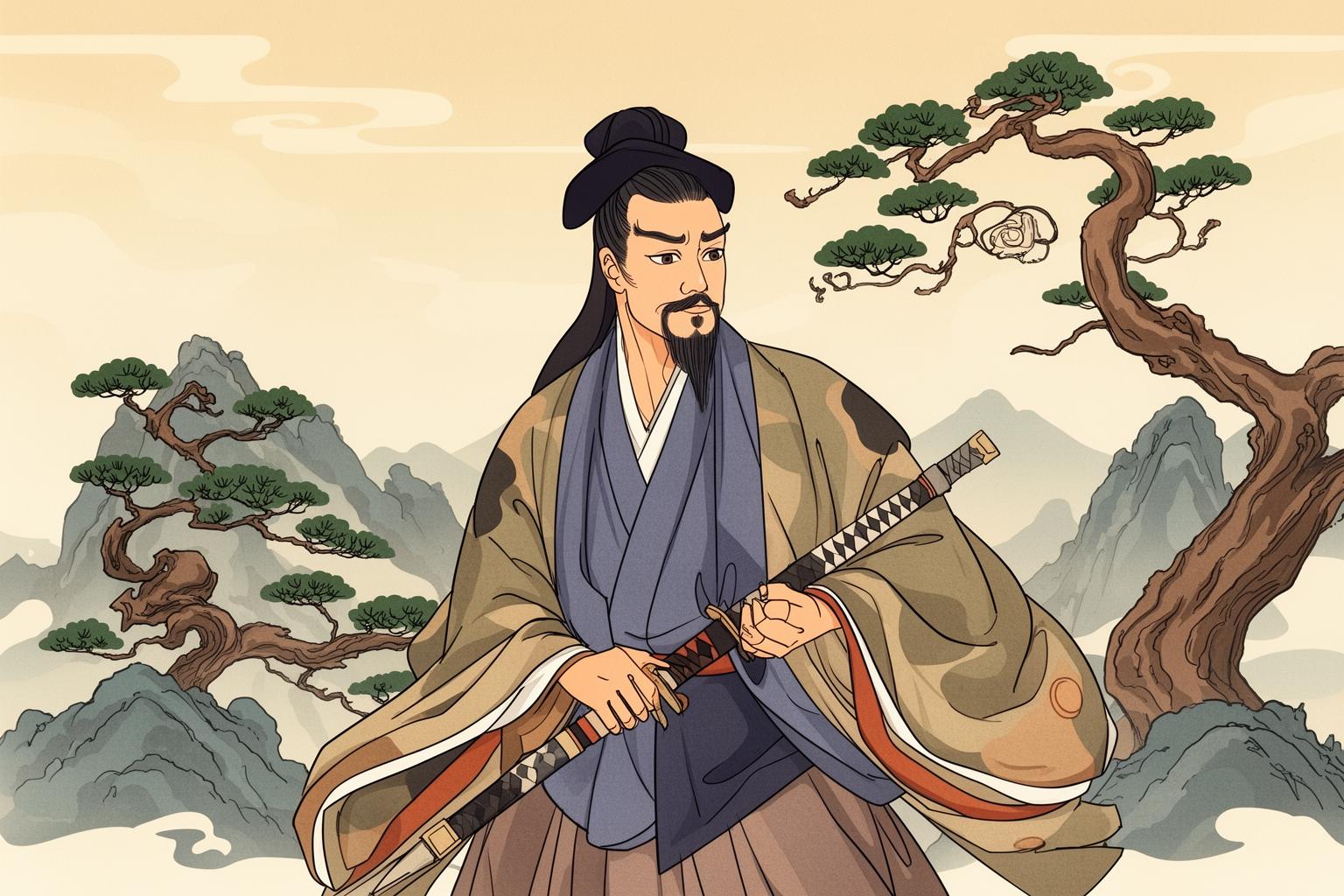
Tracing Sesshu’s physical journey is enlightening, but a pilgrimage in his name remains incomplete without encountering the profound power of his actual work. His paintings go beyond mere depictions of landscapes; they are seismic events on paper. They become battlegrounds of ink and emptiness, where jagged lines carve mountains and soft washes of grey evoke infinite mist. Standing before a Sesshu, one feels the earth’s tectonic plates shift—a sensation both exhilarating and deeply centering. Two of his works, in particular, represent the pinnacle of his art and are connected to specific, real locations in Japan that can still be visited today.
Amanohashidate: The View from Heaven
In the northern part of Kyoto Prefecture, far from the bustling city, lies a place of legendary beauty: Amanohashidate, the “bridge to heaven.” This stunning, three-kilometer-long sandbar, blanketed with thousands of pine trees, stretches across the deep blue waters of Miyazu Bay. It is regarded as one of Japan’s three most scenic views and was the subject of one of Sesshu’s most famous and detailed paintings.
Sesshu’s “View of Amanohashidate” is a breathtaking panoramic scroll offering a bird’s-eye view that captures the entire scene with remarkable precision and artistic flair. To truly appreciate this work, one must first experience the place itself. The best way to see Amanohashidate as Sesshu did is to take a chairlift or monorail up the mountainside on either side of the bay. From the south side, the view from Amanohashidate View Land is spectacular. Here, visitors are encouraged to perform matanozoki—to turn their back to the view, bend over, and look at it from between their legs. This perspective causes the sea and sky to swap places, making the sandbar appear like a green dragon soaring to the heavens.
From the north side, Kasamatsu Park offers an equally stunning, more traditional vantage point. It is near here that Sesshu is believed to have made the preliminary sketches for his masterpiece. Standing at this overlook, with the crisp sea air on your face and the expansive, beautiful landscape spread before you, you can compare the view directly with the painting. The accuracy is astonishing. You can identify Chion-ji Temple at the southern end of the sandbar and Kono Shrine at the northern end. Yet, it is not a photograph. Sesshu took reality and heightened it. He flattened the perspective, rearranged elements for compositional balance, and infused the entire scene with a dynamic energy a simple snapshot could never capture. His pine trees are not just trees; they possess individual character, conveyed through quick, calligraphic strokes. His water is not mere water; it is a living surface, its texture suggested by the empty space of the paper itself.
Visiting Amanohashidate after seeing the painting, or vice versa, is a profound experience. It teaches how a great artist perceives—not just what is present, but the underlying structure, the essential spirit of a place. Spend a full day here. Walk or cycle across the pine-covered sandbar, feel the sand beneath your feet, and listen to the waves. Then ascend the mountain to view it all from above. You will leave with a deeper understanding of how Sesshu could look upon a real, physical place and see a vision of heaven.
The Birth of “Broken Ink”: Haboku Sansui
Perhaps Sesshu’s most radical work is not a depiction of a specific place but an outburst of pure technique and Zen spirit. The “Haboku Sansui” (Broken Ink Landscape), painted in 1495 when he was 75 years old, is a National Treasure housed in the Tokyo National Museum. This is not a painting you find in the landscape but one you must make a pilgrimage to see in person if the opportunity arises (it is displayed only on rare occasions).
Haboku, or “broken ink,” is a technique where the artist employs quick, seemingly chaotic splashes and strokes of ink, allowing the image to emerge from abstraction. In this scroll, a landscape materializes from a misty void. A jagged cliffside, a small boat with a fisherman, a sake shop nestled at the base of the mountains—they are all suggested with a minimum number of brushstrokes. Much of the paper remains untouched, yet this emptiness is not empty. It is filled with atmosphere, mist, water, and air. The painting feels as if it was created in a single, breathless moment of inspiration. It represents the culmination of a lifetime of practice, a moment where technique is so ingrained that the artist transcends it entirely.
This painting embodies the Zen ideal of shunkan no bi—the beauty of a single moment. It is spontaneous, powerful, and deeply spiritual. Though it does not depict a real place, its spirit can be found in the quiet Zen temples Sesshu inhabited, such as Joeiji in Yamaguchi or the temples from his final years. It is the product of countless hours of silent meditation, contemplating the nature of existence until it could be expressed in a single, explosive burst of ink. Viewing it reminds us that Sesshu’s ultimate journey was an inward one. He traveled across Japan and China, but the most important landscapes he explored were those within his own mind.
The Final Brushstrokes: Sesshu’s Twilight in Iwami
An artist’s final years often become a time of reflection, a phase where the flames of ambition settle into the warm embers of wisdom. For Sesshu Toyo, this twilight was not spent in a bustling cultural hub but in the quiet, rugged province of Iwami, now western Shimane Prefecture. After his extensive travels and influential role in Yamaguchi’s art scene, he sought the support of the local Masuda clan. In this remote part of Japan, framed by mountains and the wild Sea of Japan, Sesshu created some of his last masterpieces and left his enduring legacy in the form of two exquisite temple gardens.
Traveling to Masuda today is truly like stepping off the beaten path. This region is not overrun with tourists; it is a land rich in history, dotted with small fishing villages, and marked by a leisurely pace of life. It feels like a fitting place for a master in his later years—a setting to contemplate nature’s eternal rhythms far from the noise of the courts. Here, you encounter a different Sesshu—not the revolutionary artist, but the venerable old master and Zen sage.
Manpukuji Temple: The Island of the Mind
At the heart of Masuda lies Manpukuji, a temple that honors Sesshu as its founding priest. Its main attraction is the stunning garden crafted by Sesshu in his final years. While it shares design principles with his garden at Joeiji in Yamaguchi, the atmosphere here is subtly different—more intimate, more personal, and contemplative.
Like Joeiji’s garden, it is intended to be viewed from the temple’s main hall. A central pond is dotted with carefully placed rocks, including a “Crane Island” and a “Tortoise Island,” classical symbols of longevity and immortality. But what makes this garden unique is its backdrop: it employs shakkei, or “borrowed scenery.” The garden’s layout seamlessly incorporates the forested hill behind the temple, creating the illusion that the garden stretches infinitely into the natural landscape. This masterful blending of the man-made and the natural embodies a core principle of Japanese garden design.
Sitting on the temple veranda, gazing out at the garden, one can sense the quiet wisdom of an artist who has witnessed much. The rocks are solid and confident. The spatial flow is serene and harmonious. The rustling wind in the borrowed scenery’s trees becomes part of the experience. Sesshu is said to have designed the garden as a representation of Buddhist paradise—a perfect miniature world. Visiting on a tranquil afternoon, with sunlight filtering through leaves and casting shifting shadows on moss and rocks, you can truly believe it. This is a space crafted for peace, a final serene statement from a life brimming with creativity.
Ikoji Temple: A Universe in Stone
A short distance away stands another temple, Ikoji, which also features a garden attributed to Sesshu. While Manpukuji’s garden is lush and pond-centered, the garden at Ikoji is a karesansui, or dry landscape garden. Here, no water is present. Instead, the entire universe is represented by stones, gravel, and moss.
This garden is a striking work of abstraction. White gravel is raked to evoke the vast expanse of the ocean, while clusters of rocks rise from this sea like mountainous islands or sacred peaks. The garden serves as a Zen koan in stone, inviting viewers to look beyond the literal and perceive the essence of nature. It echoes the principles behind Sesshu’s “Broken Ink” paintings—the power of suggestion, the value of negative space, and the ability to communicate profound ideas with minimal elements.
Visiting these two gardens in Masuda offers a beautiful closure to Sesshu’s life. You witness his art in both its most expansive and most distilled forms. Manpukuji presents a full, rich world of ponds and borrowed scenery, while Ikoji offers that same world reduced to its purest essence: rock and emptiness. This contrast testifies to Sesshu’s incredible range and deep Zen insight. The journey that began with a boy sketching a rat with his tears in Okayama ends here, in a silent, eternal stone landscape in Shimane. It is a powerful and fitting conclusion to a pilgrimage in his honor.
A Traveler’s Guide to the Ink Wash World
Embarking on a journey through Sesshu’s Japan offers an incredibly rewarding experience, taking you through some of the most beautiful and historically rich regions of the country. Here is some practical advice to guide you on this artistic pilgrimage.
Planning Your Route
Sesshu’s life spanned a broad area across western Honshu. It’s best to approach the journey in geographical segments. You might begin in Okayama, then travel west to Yamaguchi and Masuda (Shimane), before looping back to Kyoto and finally heading north to Amanohashidate. The Sanyo Shinkansen (bullet train) line will be your key connection, linking major hubs like Okayama and Shin-Yamaguchi. From these stations, local trains and buses will take you to the more remote temples and sites.
- Okayama & Soja: Fly into Okayama Airport or arrive via the Shinkansen at Okayama Station. Soja, home to Hofukuji Temple, is just a short and scenic ride on the local Hakubi or Kibi Line. Renting a bicycle at Soja Station is highly recommended for exploring the Kibi Plain.
- Yamaguchi: The Shinkansen stops at Shin-Yamaguchi Station. From there, it’s a 20-minute local train ride to Yamaguchi Station in the city center. Joeiji Temple and Ruriko-ji Temple are easily reachable by the loop bus serving the main tourist spots.
- Masuda (Shimane): This is the most remote destination. From Shin-Yamaguchi, take the Shinkansen to Shin-Iwakuni or Hiroshima, then transfer to a bus or a combination of local trains traveling up the coast. Alternatively, the JR Yamaguchi Line offers a scenic but slower journey through the mountains. Once in Masuda, Manpukuji and Ikoji are best accessed by local bus or taxi.
- Kyoto & Amanohashidate: Kyoto is a major Shinkansen hub. Shokokuji Temple lies in the northern part of the city. To reach Amanohashidate, take a limited express train (such as the Hashidate) from Kyoto Station. The trip takes about two hours, offering stunning views of the countryside. Upon arrival, a mix of ferries, cable cars, and walking will take you to all key viewpoints.
When to Go
Each season brings its own charm to Sesshu’s landscapes.
- Spring (March-May): Cherry blossoms add a delicate layer of beauty, especially in Yamaguchi and Kyoto. The weather is mild, perfect for walking.
- Summer (June-August): The greens are vividly lush. Gardens at Joeiji and Manpukuji are at their peak verdancy. Prepare for heat and humidity.
- Autumn (October-November): This is arguably the most breathtaking season. The fiery hues of the maple leaves at Joeiji, Manpukuji, and around Amanohashidate create scenes reminiscent of a painting. The air is crisp and clear.
- Winter (December-February): Crowds thin, and a light dusting of snow can transform the gardens and landscapes into a monochrome sumi-e painting. It is a time of deep stillness.
A Final Piece of Advice
Don’t rush from site to site just to check them off your list. The true essence of Sesshu’s art lies in quiet contemplation. At each temple garden, take your time. Sit on the veranda. Breathe deeply. Observe the changing light. Listen to the sounds of nature. Try to see the world as he might have—not as a collection of objects, but as a dynamic flow of energy. Allow the emptiness of the space to speak to you. This journey is as much about discovering inner peace as it is about following in the footsteps of a great artist. In the quiet spaces between mountains, temples, and brushstrokes, you may find exactly what you came seeking.