Hello there, I’m Megumi, and from my little corner of Tokyo, I get to plan events that connect people with the vibrant pulse of Japan. But sometimes, the most profound connections aren’t found in a bustling festival, but in the quiet, sun-drenched canvases of an artist who lived a century ago. Today, I want to take you on a different kind of journey, a pilgrimage—or as we call it, a seichi-junrei—into the life and landscapes of Fujishima Takeji, one of the fathers of modern Western-style painting in Japan. This isn’t just about visiting museums; it’s about walking the same paths he walked, feeling the same sea breeze, and seeing the light that inspired a revolution in Japanese art. We’ll travel from the volcanic shores of his southern birthplace to the sacred coast where he captured the sunrise, and through the hallowed halls of Tokyo’s art scene where he forged his legacy. Fujishima’s story is a vivid tapestry woven with threads of tradition and bold innovation, and by tracing his steps, we get to see Japan through his brilliant, light-filled eyes. It’s a journey that reveals how a place can shape a soul, and how an artist, in turn, can forever shape our perception of a place. Let’s begin our quest to chase the light he so masterfully captured.
This journey is part of a broader tradition of artistic pilgrimage, much like exploring the surrealist world of Leonora Carrington.
The Volcanic Cradle: Kagoshima’s Fiery Hues

Our story begins at the southernmost tip of Kyushu, in a land shaped by fire and sea: Kagoshima. This was the birthplace of Fujishima Takeji, the former Satsuma Domain, a region famous for its fierce samurai spirit, intellectual curiosity, and dramatic, almost mythical, landscape. To truly understand Fujishima, you must first grasp the elemental power of Kagoshima. You sense it the moment you arrive. The air itself feels different—thicker, carrying the faint, earthy scent of volcanic soil and the sharp tang of salt from Kinko Bay. Always dominating the horizon is the majestic, ever-present silhouette of Sakurajima, an active volcano that exhales plumes of ash and smoke into the sky, a constant reminder of nature’s untamable force.
The Land of Ash and Light
Picture a young Fujishima growing up here in the late 19th century. He would have watched Sakurajima’s moods change with the weather, its slopes painted in the soft lavenders of dawn and the fiery oranges of sunset. He would have felt the ground tremble with its faint rumblings. This raw, dynamic environment was more than just a backdrop; it was a living force that permeated his artistic consciousness. The vibrant, almost aggressive colors in his later works, the striking contrasts between light and shadow—their origins were undoubtedly planted here, in this land of stark beauty. The deep blues of Kinko Bay set against the dark volcanic rocks, the brilliant green of fields nourished by fertile ash, the incandescent glow of the sun setting behind the volcano—this was his first palette.
Walking in His Footsteps Today
A modern visit to Kagoshima is a sensory immersion. A great place to begin is the Sengan-en Garden, a stunning traditional garden once belonging to the powerful Shimazu clan. As you wander its paths, you’ll see how the garden masterfully employs the principles of shakkei, or “borrowed scenery,” integrating the view of Sakurajima and Kinko Bay directly into its design. Standing there, you can feel the same awe that residents have experienced for centuries. It is a place where human artistry and natural grandeur blend as one. You can almost imagine a young Fujishima sketching here, striving to capture the immense scale of the volcano on a small sheet of paper.
To experience the city’s rhythm, take a ferry across the bay to Sakurajima itself. The brief ride offers a breathtaking perspective of the city against the volcanic slopes. On the island, you can walk along lava-scarred trails, visit observation points with panoramic views, and even enjoy a foot bath fed by natural hot springs. The very ground feels alive. It is this primal energy, this closeness to the earth’s raw power, that sets Kagoshima apart from any other place in Japan. It is a sensation of being on the edge, a place of creation and destruction, a theme that resonates in the dramatic tension of Fujishima’s art.
Discovering His Early Vision
To see how this landscape inspired his early work, a visit to the Kagoshima City Museum of Art is indispensable. Located in the heart of the city, this museum features an excellent collection of local artists, with a special focus on those from the Satsuma Domain, including Fujishima and his mentor, Kuroda Seiki. Here, you can follow his artistic development. You may find early pieces where the brushstrokes are still tentative, yet the fascination with light and the local scenery is already evident. Viewing his paintings of Kagoshima in Kagoshima is a profound experience. The colors on the canvas suddenly resonate perfectly; you have just seen them in the sky, on the water, and in the soil of the surrounding land.
A Traveler’s Note
Kagoshima is easily reached by its own airport or via the Kyushu Shinkansen (bullet train). The best times to visit are spring, for the cherry blossoms, or autumn, for the clear, crisp air and comfortable temperatures. Summer can be hot and humid, but it is also when the greenery is most lush. While there, be sure to sample the local cuisine, such as kurobuta (black pork) and fresh seafood from the bay. It is all part of experiencing the unique character of the place that first shaped this master artist.
Forging an Artist in the Capital: Tokyo’s Ueno Park
If Kagoshima was the cradle that nurtured Fujishima’s early talent, Tokyo was the forge where it was shaped and refined. In 1884, driven by ambition, he moved to the vibrant capital—a city undergoing the dramatic and exhilarating transformations of the Meiji Restoration. As Japan opened its doors to the world, nowhere was this cultural fusion more evident than in Tokyo. It was here that Fujishima first encountered Western art, or Yōga, a discovery that would shape the course of his life. His journey brings us to a particularly lush and symbolic center of this change: Ueno Park.
The Heart of a Cultural Awakening
Today, Ueno Park is an expansive sanctuary of nature and culture, home to temples, shrines, a zoo, and an impressive array of world-renowned museums. But in Fujishima’s era, it meant even more. It stood as the nucleus of Japan’s artistic and intellectual renaissance. At its center was the Tokyo School of Fine Arts (now Tokyo University of the Arts), which Fujishima eventually attended. This institution led the heated debate within the art community: How should Japan modernize its artistic heritage? Should it preserve classical styles or adopt Western techniques and perspectives? Fujishima and his peers were at the forefront of this artistic revolution.
Walking through Ueno Park today, you can still sense the gravity of that past. The grand, Western-inspired architecture of the museums contrasts vividly with the traditional designs of Kaneiji Temple and Toshogu Shrine nearby. It embodies the cultural conversation that Fujishima lived daily. As you stroll beneath the ancient camphor trees, imagine the park alive with aspiring artists, writers, and thinkers passionately debating their nation’s cultural future. The air must have been charged with possibility and intellectual energy.
A Journey Through Artistic Heritage
No visit to Ueno is complete without exploring the institutions that carry this legacy forward. Begin at the Tokyo National Museum, Japan’s oldest and largest museum. While its core collection centers on traditional Japanese art, understanding this background is essential to appreciating the revolutionary nature of Yōga. Next, visit the Tokyo Metropolitan Art Museum, which features a diverse range of exhibitions. Yet, the true heart of this artistic pilgrimage lies near the grounds of Tokyo University of the Arts.
There, you’ll find the Kuroda Memorial Hall. This small, graceful building honors Kuroda Seiki, Fujishima’s mentor and the pivotal figure who introduced Western academic painting to Japan. Viewing Kuroda’s works reveals the foundation upon which Fujishima developed his own style. Kuroda brought the brilliance of French Impressionism to Japan, and Fujishima refracted that light through a distinctly Japanese perspective. The hall offers a quiet, reflective space, directly connecting visitors to the artist’s guiding influence.
The Spirit of Ueno
The atmosphere of Ueno Park shifts with the seasons. In spring, it transforms into a sea of pink and white as countless cherry trees bloom, attracting large crowds for hanami (flower viewing) celebrations. It is joyful, lively, and stunningly beautiful. In autumn, the ginkgo trees turn a vivid gold, creating a serene setting perfect for contemplative walks. Throughout the year, the park mirrors Tokyo itself—a place where history and modernity, nature and human creation, tranquility and vibrancy coexist. You can sit by Shinobazu Pond, watching summer lotuses bloom, feeling peaceful—only to be reminded of the city’s pulse by the soft rumble of a nearby Yamanote Line train. This blend of calm and dynamism embodies the spirit of Tokyo, the same spirit that fueled Fujishima’s ambition and expanded his artistic vision.
A Traveler’s Tip
Ueno is a major transportation hub, easily reachable from anywhere in Tokyo. Plan to spend a full day here; there is simply too much to see for a quick visit. A good approach is to choose one or two museums to explore deeply, then allow yourself to wander leisurely along the park’s paths. Pick up a bento box from a nearby convenience store or department store basement and enjoy lunch by the pond. This simple, local experience lets you savor the atmosphere that has inspired artists for over a century.
A European Sojourn: The Light of Paris and Rome
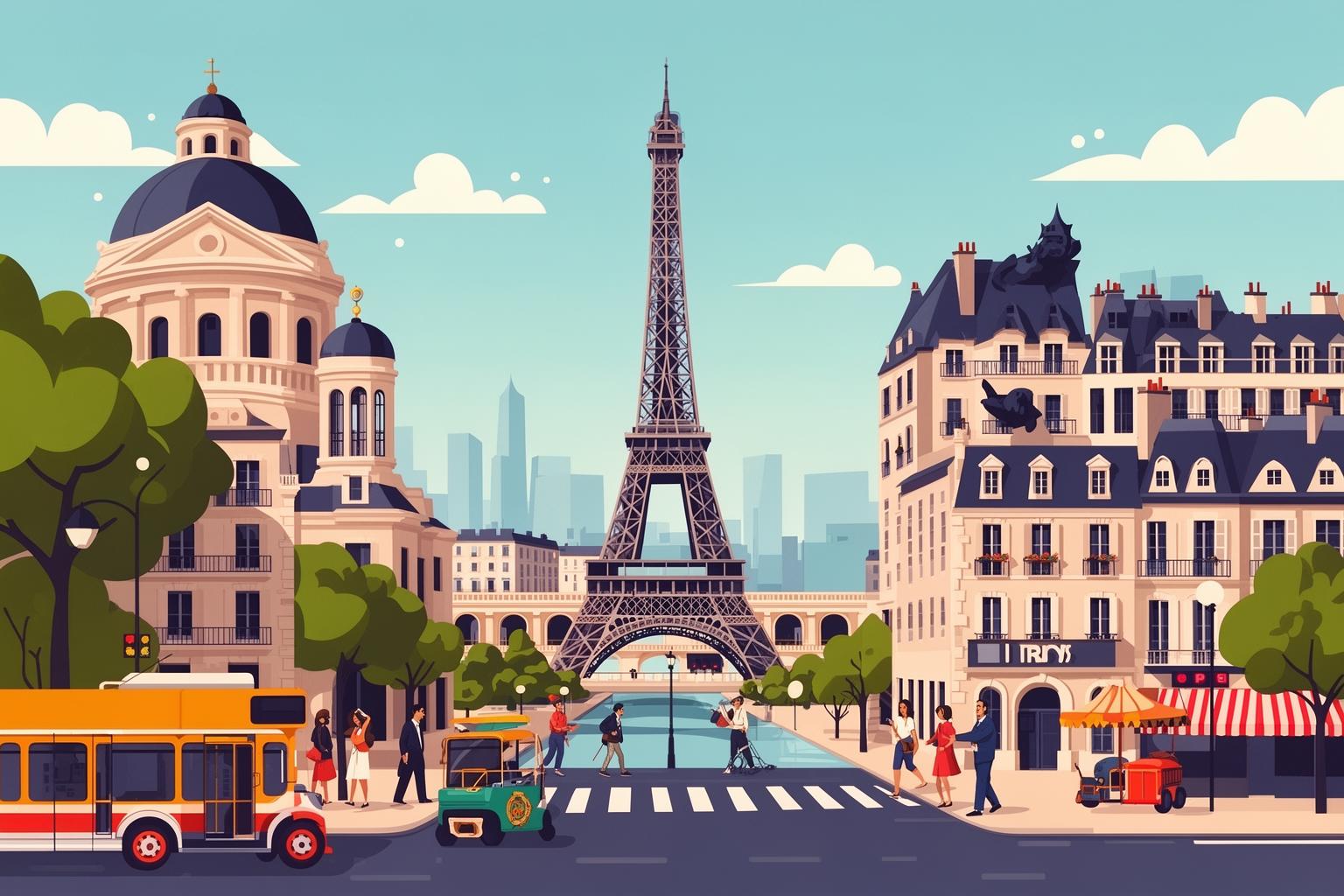
No artist’s journey is complete without a pilgrimage to the wellsprings of their inspiration. For a Japanese painter in the early 20th century adopting Western styles, this meant one destination: Europe. In 1905, sponsored by the Japanese government, Fujishima traveled abroad—an expedition that would profoundly transform his art and secure his status among the great modern Japanese masters. While our physical pilgrimage remains in Japan, appreciating his time in Paris and Rome is vital to fully grasping the depth and complexity of the works awaiting us in Tokyo’s museums. This European sojourn was an unseen, yet deeply significant, chapter of his life.
The Allure of Paris
Upon arriving in Paris, Fujishima was immersed in the epicenter of the art world. This was the city of the Impressionists, Post-Impressionists, and Fauves. The air was thick with the scent of oil paint and turpentine, and cafés buzzed with avant-garde ideas. He studied under Fernand Cormon, a distinguished academic painter, but his true education occurred within galleries and salons. He stood before masterpieces, studying their techniques, composition, and most importantly, the use of light. He was especially captivated by the Impressionists’ emphasis on capturing transient moments and the shifting qualities of natural light—a sensibility he had nurtured since his youth in Kagoshima. In France, however, he gained a new visual language to express this: how to make colors resonate, how to build form not just with outlines but with vibrant, pure patches of color.
The Grandeur of Rome
Following Paris, he journeyed to Italy, where the art of the Italian Renaissance deeply moved him. In Rome, he encountered a distinct kind of artistry—monumental scale, classical harmony, and idealized human forms. The works of Raphael and Michelangelo taught him about compositional power, the elegance of the human figure, and the timeless allure of classical aesthetics. This experience tempered the Impressionists’ fleeting, light-focused style with solidity, grace, and enduring grandeur.
This blend of French modernism and Italian classicism became the cornerstone of his mature style. It’s evident in his renowned portraits from this period: faces rendered with delicate, almost ethereal light reminiscent of the Impressionists, paired with classical poses that exude quiet dignity and monumental presence drawn from Renaissance models. He was not simply imitating Western art; he was thoughtfully integrating these influences, crafting a unique hybrid entirely his own.
The Birth of a Masterpiece in a Foreign Land
Perhaps the most iconic piece from this era is “Reminiscence of the Tempyo Era” (1902), painted before his journey but clearly reflecting his engagement with Western art. After returning to Japan, these influences grew even more nuanced and sophisticated. Viewing his post-European works in a Japanese museum reveals a cultural dialogue on a single canvas. The subject may be a woman in a kimono or a Japanese landscape, but the play of light on silk, the sitter’s psychologically charged gaze, and the confident, visible brushstrokes are the gifts he brought back from Europe. His travels abroad equipped him with the tools to re-envision his own culture, enabling him to depict the soul of Japan with a fresh, modern, and international voice. It serves as a reminder that sometimes, you must leave home to truly understand where you belong.
The Sacred Coast: Capturing Divinity in Mie
After embracing the artistic traditions of the West and refining his skills in Tokyo’s intellectual center, Fujishima’s journey led him to a place of profound spiritual importance—a location where Japan’s ancient beliefs converge with the untamed power of the Pacific Ocean: the coast of Ise in Mie Prefecture. It was here, overlooking the vast sea, that he created one of his defining masterpieces, “Sunrise over the Eastern Sea.” This segment of our pilgrimage brings us to the very spot where he stood, to witness the same natural wonder he transformed into a national treasure.
The Wedded Rocks of Futami
This particular site is Futami Okitama Shrine, a small yet deeply significant sanctuary renowned for the Meoto Iwa, or the “Wedded Rocks.” These two sacred rocks—one large, representing the husband, and a smaller one symbolizing the wife—are linked by a massive shimenawa, a sacred rope made from rice straw. They embody the union of the creator deities Izanagi and Izanami and, by extension, represent the sanctity of marriage and the harmonious connection between humanity and nature. For centuries, pilgrims en route to the great Ise Jingu, Japan’s most sacred Shinto shrine, would pause here first to purify themselves in the bay’s waters. The whole area is imbued with a tangible sense of reverence and ancient tradition.
Standing on the shore before dawn, it’s easy to see why Fujishima was so enthralled. The air brims with anticipation. The only sounds are the rhythmic crashing of waves against rocks and the calls of seabirds. As the sky lightens—from deep indigo to soft violet and then blazing orange—the silhouette of the Wedded Rocks emerges against the brightening horizon. Then, the sun rises. On certain days, especially near the summer solstice, it ascends directly between the two rocks, a celestial event that feels like a divine confirmation. It is a moment of pure, unfiltered beauty and spiritual power.
Translating Spirit into Paint
Fujishima’s painting, “Sunrise over the Eastern Sea,” is more than a mere representation of this scene; it is a manifestation of its spirit. He conveys the sun’s first rays with thick, vibrant strokes of gold, yellow, and orange. The waves are not serene but a churning, forceful surge, depicted in deep blues and greens, with crests catching the new light in flashes of white. You can almost feel the spray and hear the roar. The painting is a symphony of light and motion. It is a testament to his brilliance that he was able to translate such an overwhelming sensory and spiritual experience onto canvas. Drawing on techniques he mastered in Europe—expressive brushwork and intense attention to light—he applied them to a subject that is quintessentially Japanese. The result is a work that feels both modern and timeless, a perfect fusion of his life’s journey.
Experiencing the Sunrise Yourself
To fully complete this stage of the pilgrimage, you must witness the sunrise at Meoto Iwa firsthand. The town of Futami is a quiet, charming seaside community, easily reachable from the city of Ise. Many local ryokans (traditional inns) are familiar with guests waking early for the sunrise and can offer schedules and advice. The best time to see the sun rise between the rocks is from May to July. In winter, the full moon rises between them instead, providing an equally magical spectacle. After sunrise, take a stroll around the shrine grounds. You’ll discover countless small frog statues, regarded as lucky charms because the word for frog, kaeru, is a homophone for “to return,” symbolizing the safe return of a person or something lost. It’s a charming detail that adds to the unique character of the place.
A Traveler’s Note
While in the region, a visit to Ise Jingu is essential. It encompasses two main shrines—the Naiku (Inner Shrine) and Geku (Outer Shrine)—along with over a hundred smaller ones. Walking the ancient forest paths to the main sanctuaries offers a profoundly moving and serene experience. The entire Ise-Shima area is a beautiful place to explore, with its rugged coastline, pearl cultivation, and delicious seafood. It is a part of Japan that feels intimately connected to its spiritual heritage, a perfect setting to reflect on the intersection of art, nature, and divinity that defined Fujishima’s work.
The Legacy in Frames: Where to Witness Fujishima’s Vision
Our journey through the landscapes that influenced Fujishima Takeji ultimately brings us indoors, to the serene, climate-controlled spaces where his life’s work is carefully preserved for future generations. Tracing his steps through Kagoshima, Ueno, and Mie provides essential context, but it is in front of his actual paintings that we experience the most direct connection with the artist himself. Tokyo, the city where he established his career, remains the prime location to view a comprehensive collection of his masterpieces. Let us enter the museums that mark the final, indispensable stops on our exploration.
The Artizon Museum: A Contemporary Treasure
Situated in the refined business district of Kyobashi, just a short walk from Tokyo Station, the Artizon Museum awaits. Formerly known as the Bridgestone Museum of Art, it reopened in 2020 within a sleek, cutting-edge building. The museum’s collection offers an impressive survey of Western and Japanese modern art, a passionate endeavor of the Ishibashi family, founders of the Bridgestone tire company. This is arguably the finest place to encounter a high concentration of Fujishima’s significant works. The museum’s lighting is flawless, allowing the vivid colors and delicate textures of his paintings to radiate. Here, you may find yourself face-to-face with his graceful portraits, where the influence of his European studies is prominently showcased. The fabrics appear to shimmer, and the sitters engage you with a psychological depth that was groundbreaking in its era. You might also view his breathtaking landscapes, capturing the light of Japan through an Impressionist lens. The Artizon offers an ideal setting, placing his work in conversation with the French masters who inspired him, making clear both the connections and the unique path he carved.
The National Museum of Modern Art, Tokyo (MOMAT): The Authoritative Perspective
For an alternative viewpoint, visit the National Museum of Modern Art, Tokyo—MOMAT—located on the perimeter of the Imperial Palace grounds. As a national institution, MOMAT presents the official narrative of modern Japanese art from the Meiji period to today. Viewing Fujishima’s work here positions him squarely within this historical framework. His paintings hang alongside those of his contemporaries, rivals, and students. This context is invaluable. You can trace the development of Yōga, observe the various factions and styles, and appreciate Fujishima’s distinct contributions. The permanent collection is arranged chronologically, allowing you to walk through the decades and witness the transformation of Japanese art. MOMAT likely houses some of his most historically important pieces. The experience may feel less intimate than at the Artizon, yet it is broader in scope, offering a comprehensive understanding of the artistic environment he influenced and led. The museum’s location also offers scenic views of the palace moat and gardens, providing a peaceful respite after your artistic immersion.
Returning to the Roots: The Kagoshima City Museum of Art
To complete our journey, we return to the Kagoshima City Museum of Art. While the greatest masterpieces are found in Tokyo, this museum holds the key to his beginnings. Here, you can connect the mature artist with the young boy who grew up beneath Sakurajima’s shadow. The collection emphasizes artists from the region, making the experience of viewing his work here feel like a homecoming. The museum itself is a warm and inviting space. After exploring Tokyo’s grand institutions, visiting this regional museum feels intimate and grounded. It serves as a touching reminder that no matter how far he traveled or how much international recognition he gained, Fujishima was, at his core, a man of the volcanic south, his vision forever shaped by the fiery landscapes of his youth.
A Museum-Goer’s Tip
When visiting museums in Japan, pay attention to the exhibition schedules. Major works are often rotated to protect them from light damage, and special exhibitions may feature loans from other collections. It’s always wise to check the museum’s website in advance to see what is on display. Many museums provide excellent audio guides in English, offering deeper insights into specific works. Also, be sure to browse the museum shops, which frequently stock beautiful art books, postcards, and prints, allowing you to take a small piece of Fujishima’s light home with you.
A Pilgrim’s Path: Crafting Your Own Fujishima Journey
Embarking on a seichi-junrei for an artist like Fujishima Takeji is more than a list of destinations; it’s about crafting an experience that lets you connect with his spirit. You’ve explored the key sites—the volcanic birthplace, the academic forge, the sacred coast, and the halls of legacy. Now, let’s thread these elements into a possible itinerary, a route you can follow to create your own personal pilgrimage. The charm of this journey lies in its flexibility; you can tailor it to your own pace and interests, whether you have a few days or several weeks.
The Tokyo-Centric Approach: Immersing in Art
If your time is limited or your main focus is on viewing the art itself, a trip centered on Tokyo is deeply fulfilling. You might spend a full day in the Ueno area, beginning with a morning stroll through the park to sense its history, visiting the Kuroda Memorial Hall, then spending the afternoon immersed in the extensive collections of the Tokyo National Museum or the Tokyo Metropolitan Art Museum. On another day, explore the city’s heart by visiting the Artizon Museum in Kyobashi for its exceptional collection of his works, followed by a visit to MOMAT near the Imperial Palace to place him within the broader context of Japanese modern art. This condensed pilgrimage offers a compelling narrative, from his days as a student to his enduring legacy, all set within the vibrant fabric of Japan’s capital.
The Golden Route: From Capital to Coast
For a richer, more diverse experience, consider blending Tokyo with the sacred coast of Mie. This path lets you witness both the completed masterpieces and the raw natural inspirations behind them. After exploring the museums of Tokyo, take the Shinkansen to the Ise-Shima region. Stay overnight in a traditional inn in Futami or Toba. Rise early to visit Meoto Iwa and watch the sunrise that so deeply inspired Fujishima. The contrast between the quiet, contemplative mood of a museum gallery and the overwhelming, sensory experience of that sunrise is profoundly moving. It brings the paintings to life in a way that mere viewing cannot. This journey bridges the artist’s hand with the divine landscape that influenced it, offering deep insight into his creative process.
The Grand Tour: A Journey Through a Lifetime
For the definitive pilgrimage, embark on a grand tour covering all three key regions—Tokyo, Mie, and Kagoshima—an unforgettable adventure. This route traces the chronological and spiritual journey of Fujishima’s life. Begin in Kagoshima, experiencing the primal energy of his birthplace. Feel the heat of the volcanic land and observe the dramatic hues that shaped his initial palette. From there, head north to Tokyo, following his path as a determined young man making his mark. Dive into the city’s artistic heritage and witness the culmination of his life’s work. Finally, continue to Mie as a spiritual finale, visiting the sacred coast to grasp the deeper, philosophical roots of his art. This all-encompassing journey is a true immersion, a deep exploration of both an artist’s soul and that of the nation he so eloquently portrayed. It’s a long trek, but one that richly rewards the traveler with a layered, nuanced appreciation of Fujishima Takeji’s world.
A Final Piece of Advice
Whichever route you choose, allow time for quiet reflection. Sit on a bench in Ueno Park and sketch. Find a café overlooking Kinko Bay and watch the smoke drift from Sakurajima. Stand on the shore at Futami long after sunrise and simply listen to the waves. Fujishima was a master observer, a man who found depth in the play of light on water and the subtle shifts of color in the sky. To walk in his footsteps is not just to visit the places he went, but to see as he saw: with patience, curiosity, and a heart open to the world’s beauty.
The Echo of an Artist’s Brush
Our pilgrimage comes to an end. We have traveled from the southern tip of Kyushu to the spiritual heart of Honshu and through the vibrant cultural veins of Tokyo. We have stood on volcanic coastlines, walked through sacred forests, and quietly admired canvases alive with color and light. We have pursued the spirit of an artist and, in doing so, uncovered a deeper, more personal Japan. The world of Fujishima Takeji is not bound to the past; it endures in the fiery sunsets over Kagoshima, in the scholarly ambition that still fills the air of Ueno Park, and in the timeless spectacle of the sunrise over the Wedded Rocks of Ise.
Fujishima’s life and work mark a pivotal chapter in Japanese history—a period of profound change, when a nation was redefining itself amid rapid modernization. He moved through this complex era with grace and brilliance, adopting new Western techniques while preserving the unique sensibility, deep reverence for nature, and subtle elegance so characteristic of Japan. His paintings serve as bridges between realms: between Japan and the West, between tradition and innovation, and between the physical world and the spiritual.
As you leave the final museum, the images will remain with you. More than that, the essence of the places will linger. The next time you witness a stunning sunrise, you might recall the swirling waves at Ise. The next time you feel the pulse of a great city, you may remember the aspiring artists of Ueno. Following an artist’s journey is a beautiful way to travel, teaching you to observe more keenly and feel more deeply. It offers a fresh perspective through which to view the world. Fujishima Takeji spent his life chasing the light, and by tracing his path, we too are invited to do the same—to seek beauty, find inspiration in the world around us, and carry a bit of that light with us long after our journey ends.