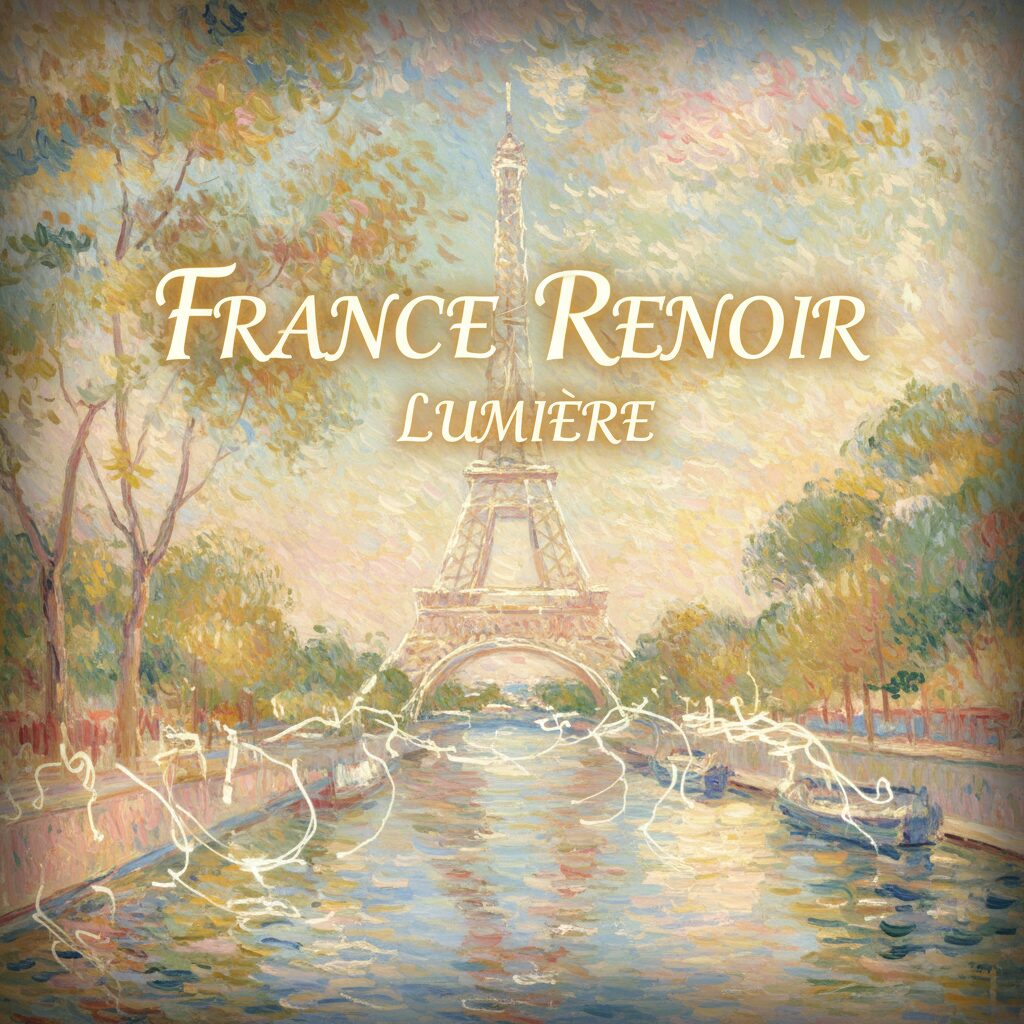
Hello, dreamers and art lovers! It’s Sofia, here to whisk you away on a journey that’s less about destinations and more about stepping directly into a world of shimmering light, rosy cheeks, and pure, unadulterated joy. Today, we’re tracing the footsteps of a master who painted happiness itself: Pierre-Auguste Renoir. His canvases are not just paintings; they are windows into moments of blissful, everyday life, captured with a revolutionary spirit and a palette that seemed to bottle sunshine. Our adventure is a pilgrimage through the very landscapes that nurtured his genius, from the bustling, bohemian hills of Paris to the sun-drenched olive groves of the French Riviera. This isn’t just a history lesson; it’s an invitation to see the world through his eyes, to feel the warmth of the same sun, and to discover the vibrant, living scenes that he so lovingly immortalized on canvas. We’ll wander through the cobblestone streets where Impressionism was born, relax by the riverside spots that inspired masterpieces, and find tranquility in the southern haven where he spent his final, prolific years. Prepare to immerse yourself in a story told through color, light, and the enduring beauty of France. This journey is a vibrant tapestry, weaving together art, history, and the simple pleasure of being alive—a true Renoir experience.
If you enjoyed this artistic pilgrimage through France, you might also appreciate a similar journey through the world of Pieter Bruegel the Elder.
Montmartre: The Bohemian Heartbeat of Impressionism
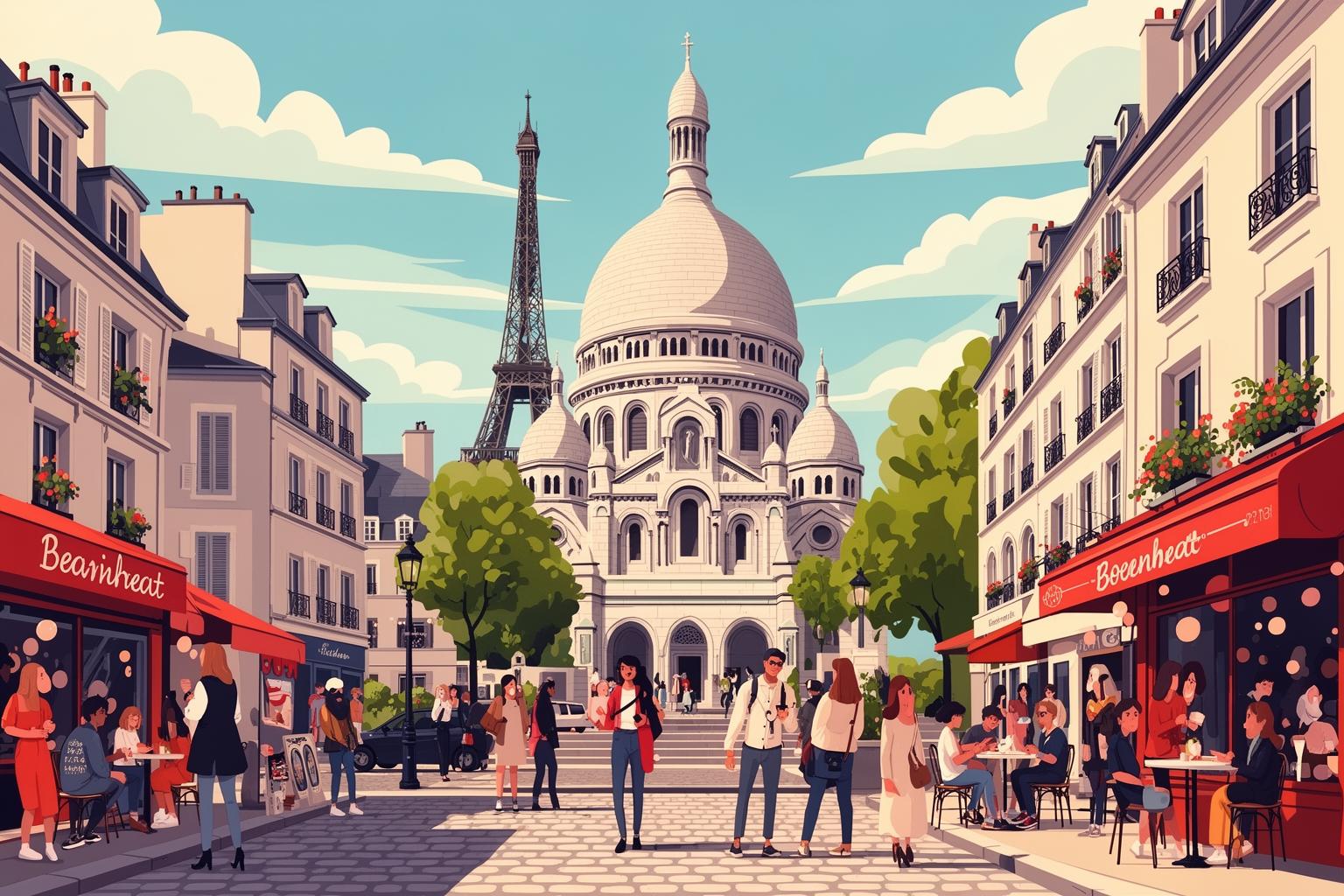
Our story begins, as many artistic revolutions do, in Paris—but not the grand, Haussmannian Paris with its wide boulevards and imposing monuments. Instead, we venture into the winding, village-like streets of Montmartre. In the late 19th century, this hilltop neighborhood was worlds apart from the bustling city center below—a rustic landscape dotted with windmills, vineyards, quarries, and dance halls, where cheap rent and an even more affordable lifestyle attracted artists, writers, and dreamers like moths to a flame. This was the crucible of Impressionism, and for Renoir, it served as both a home and an open-air studio, a place where life and art were joyfully and messily intertwined.
Strolling through Montmartre today still feels like stepping back in time. The cobblestones seem to echo with the footsteps of artistic giants, and around every corner, you can almost hear the soft strains of an accordion and the lively chatter of spirited debates spilling from a café. It was here that Renoir discovered his voice, focusing his painterly gaze on the everyday people and fleeting moments that defined this bohemian haven. He had little interest in stiff, formal portraits or grand historical scenes; rather, he sought to capture the pulse of modern life—the joie de vivre of ordinary Parisians at leisure. The atmosphere remains electric with creative energy, a feeling that persists on its slopes despite the influx of tourists. To truly sense it, one must wander away from Place du Tertre’s main square, lose oneself in the ivy-clad lanes, and imagine a young Renoir, easel in hand, searching for the perfect dance of sunlight through the leaves.
Le Moulin de la Galette: A Dance of Light and Laughter
Few paintings capture Renoir’s spirit more fully than Bal du moulin de la Galette. This masterpiece, a swirling, sun-dappled snapshot of a Sunday afternoon dance, embodies Montmartre’s soul on canvas. The scene was set in a genuine open-air dance hall, nestled between two of Montmartre’s last surviving windmills. It was a gathering place for working-class Parisians to dance, drink, and flirt beneath acacia trees, and Renoir, who lived nearby, was a frequent observer.
He didn’t merely paint the scene—he inhabited it. Setting up his easel on location, a groundbreaking act at the time, he was determined to capture the fleeting interplay of light and movement. He persuaded friends—fellow artists, models, and local workers—to pose, creating a composition that feels both spontaneous and expertly orchestrated. Look closely at the painting, and you see every detail: dappled sunlight filtering through the canopy, illuminating smiling faces and shimmering dresses; the sense of motion in the dancing couples; the intimate conversations unfolding at the tables. It is a symphony of blue, pink, and violet, celebrating community and simple joy.
Visiting the site today calls for a bit of imagination. Though the original dance hall no longer stands, one of the windmills, also named Moulin de la Galette, remains proudly in place, now part of a private home and a stylish restaurant. Located on Rue Lepic, it still holds the energy of the past. The best way to connect with the painting’s spirit is to follow its subjects’ example: find a nearby café, order a glass of wine, and watch the world pass by. The light still filters through the plane trees in much the same way, and the laughter of passersby offers a contemporary soundtrack to Renoir’s timeless scene. For a truly magical experience, visit in the late afternoon when golden hour bathes the streets, and you will understand exactly what Renoir was chasing.
The Musée de Montmartre: A Hidden Garden and a Studio’s Ghost
For a more tangible link to Renoir’s time in Montmartre, a visit to the Musée de Montmartre is essential. Tucked away from the busiest streets, this museum is a hidden treasure, housed within one of the hill’s oldest buildings—the Bel Air House. More than a museum, it was once a lively creative hub. Renoir rented a studio here for a period, a modest space that birthed several major works, including Bal du moulin de la Galette and The Swing.
The museum offers a fascinating glimpse into Montmartre’s bohemian past, but for devoted Renoir admirers, the real enchantment lies outside. Step into the gardens behind the museum and you are transported. These three lovingly restored gardens, named in Renoir’s honor, overlook the sloping vineyards of Montmartre’s Clos Montmartre—the city’s last active vineyard. It was in a garden much like this that Renoir painted The Swing, capturing a playful moment among a woman on a swing, a man leaning against a tree, and a curious little girl. Surrounded by lilacs, roses, and lush greenery, with the northern Parisian view stretching out below, you can almost feel the painting come to life. The atmosphere is one of serene rustic charm—a peaceful refuge from urban bustle. It’s easy to see why Renoir found such inspiration here. The light is soft, filtered through leaves, and the air is fragrant with flowers. It is an ideal spot for quiet reflection, a place to sit on a bench and imagine the artist at work, dabbing his brush to capture the rosy glow on a model’s cheek.
A practical tip for visitors: buy your tickets online in advance to avoid queues, especially during peak season. Allow yourself at least a couple of hours to explore not only the museum’s collection but to linger fully in the gardens. They form the heart of the experience and offer some of the most photogenic and peaceful views in all of Montmartre.
Along the Seine: Reflections of a Changing City
The River Seine was the lifeblood of Paris, a shimmering artery pulsating with commerce, leisure, and the rhythm of urban life. For the Impressionists, it served as an endless source of inspiration. The constantly shifting reflections on the water’s surface, the interplay of light and shadow beneath the bridges, the steam rising from boats, and the lively crowds along the banks all provided the perfect subject for their pursuit of capturing fleeting moments of modernity. Renoir, alongside his contemporaries, was repeatedly drawn to the river, painting its moods from the heart of the city to the growing suburbs.
La Grenouillère: Where Impressionism Took a Swim
Just a short train ride from the city center, on the Seine at Croissy-sur-Seine, lay a popular riverside resort called La Grenouillère, fondly nicknamed the “frog pond.” This vibrant spot, with its floating café, boat rentals, and bathing areas, was the place for Parisians seeking relief from the summer heat. In the summer of 1869, Renoir and his close friend Claude Monet set up their easels side by side on the riverbank, beginning a painting campaign that would become a pivotal moment in art history.
Together, they aimed to capture the chaotic, sparkling scene before them: bobbing boats, fashionable bathers, and most importantly, the dazzling, fragmented reflections of light on the rippling water. To achieve this, they developed a new visual language—quick, broken brushstrokes, bold patches of unmixed color, and a focus on the overall impression of the moment rather than precise detail. The paintings they created here are considered foundational works of Impressionism. Comparing Renoir’s La Grenouillère with Monet’s depiction of the same scene offers a fascinating insight into their emerging styles. Renoir’s figures are softer and more solid, with a clear interest in the human element and the joy of the social scene. Monet, by contrast, emphasized the pure optical effects of light and water, his figures almost dissolving into the shimmering surroundings.
Though the original La Grenouillère no longer exists, the spirit of the place endures. You can visit the island of the Chaussées in Croissy-sur-Seine, where reproductions of the famous paintings are displayed exactly where the artists once stood. The Musée de la Grenouillère in Croissy provides historical context and brings the era to life. The best way to experience this is by strolling along the riverbanks, perhaps renting a small boat, and watching the light dance on the water. The atmosphere is now far more tranquil, a peaceful suburban retreat, but the wide, reflective surface of the Seine remains, a direct link to that revolutionary summer. It serves as a powerful reminder that some of the greatest artistic breakthroughs occur not in a formal studio, but outdoors, with a friend, pursuing a shared vision.
The Bridges and Banks: A Parisian Promenade
Back in Paris itself, Renoir often focused on the Seine’s urban landscape. He painted the Pont des Arts with its delicate arches, and the bustling Pont Neuf, the city’s oldest bridge. In his painting Pont Neuf, Paris (1872), he captures the vibrant energy of the city. Unlike Monet, who might have concentrated solely on atmospheric effects, Renoir fills his canvas with a lively cast of characters: top-hatted gentlemen, ladies with parasols, soldiers, and merchants, all going about their day. He is said to have painted the scene from a second-floor window of a café overlooking the bridge to achieve the perfect vantage point, demonstrating his dedication to capturing the authentic flow of life.
Walking across the Pont Neuf today is a quintessential Parisian experience. The bridge links the Right and Left Banks with the Île de la Cité, offering magnificent views of the Louvre, the Conciergerie, and river traffic. To channel Renoir, find a spot to lean against the stone parapet and simply observe. Watch the bateaux-mouches glide by, notice the mix of locals and tourists crossing the bridge, and see how the light shifts on stone and water throughout the day. This vibrant, living panorama is what captivated Renoir. A delightful way to spend an afternoon is to walk from the Pont Neuf along the quays, perhaps browsing the famous green boxes of the bouquinistes (second-hand booksellers) that line the riverbanks. This is the Paris Renoir knew and loved, a city of endless visual poetry waiting to be discovered.
Essoyes: A Rural Retreat of Intimate Moments
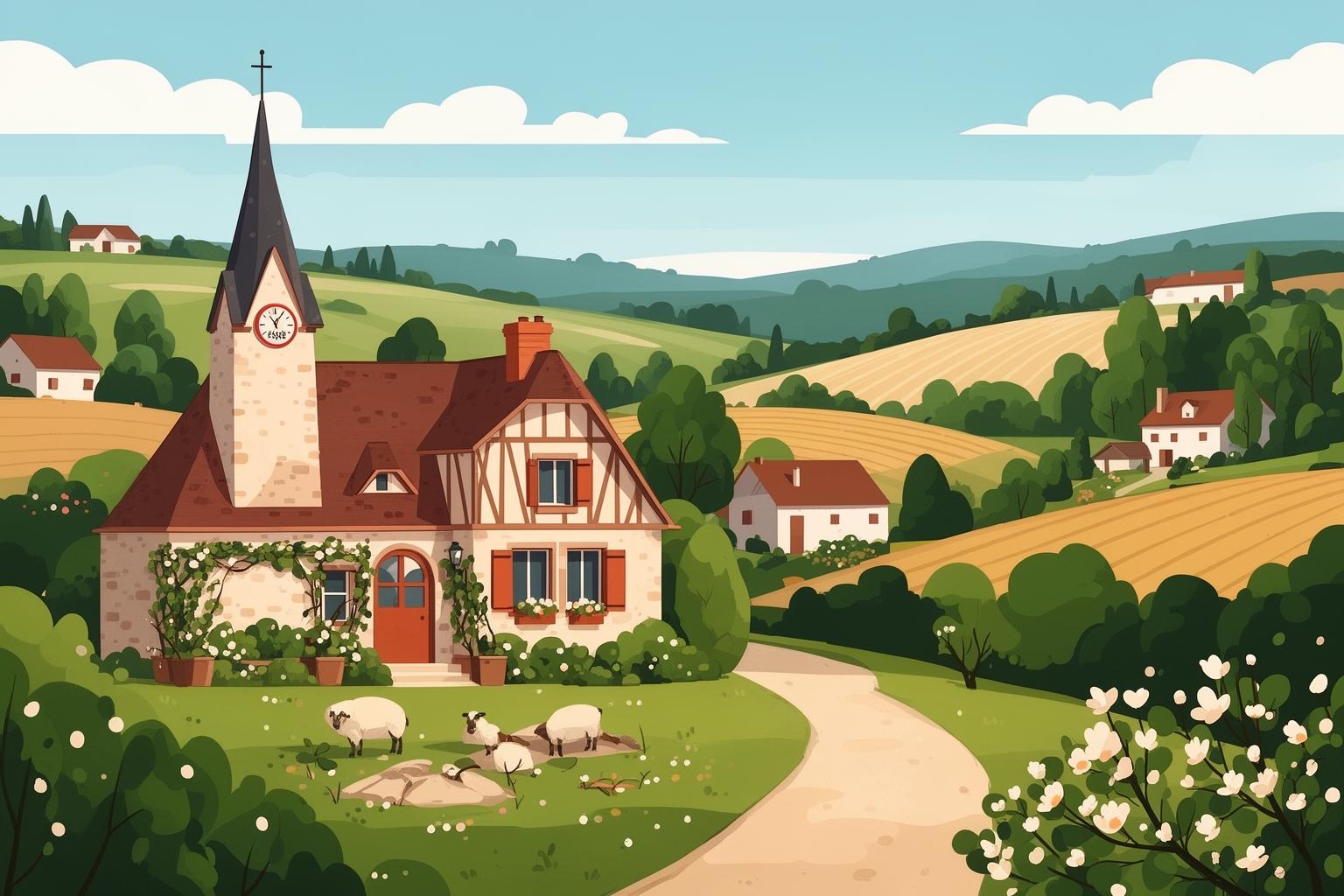
While Paris influenced Renoir’s early career, the small village of Essoyes in the Champagne region became his refuge—a place of family, heritage, and profound artistic renewal. This was the hometown of his wife, Aline Charigot, one of his favorite models. After they married, they began spending summers there and eventually purchased a house. Essoyes stood in stark contrast to the bustling energy of Paris. It was a simple, rural setting of rolling hills, abundant vineyards, and the gentle flow of the Ource river. Here, Renoir’s art gained a new sense of intimacy and warmth. His focus shifted from the public spectacle of Parisian leisure to the private, tender moments of domestic life: his children playing in the garden, local women bathing in the river, and the tranquil beauty of the surrounding landscape.
Visiting Essoyes today feels like stepping into one of these later paintings. The village has carefully preserved its connection to the artist, establishing a cultural center called “Du Côté des Renoir,” which serves as an ideal starting point for any pilgrimage. Life here moves slowly and peacefully, governed by the rhythms of the vine. The light has a soft, golden hue, quite different from the sharp, bright light of the south. It’s a place that invites you to slow down and notice the small details—the colors of flowers in a window box, the texture of an aged stone wall, the sound of the river—that so captivated Renoir.
The Renoir Family Home: Reflections of Domestic Joy
At the heart of any visit to Essoyes is the Renoir family home. Purchased by the town and lovingly restored, the house is now open to visitors, offering an intimate glimpse into the artist’s life. This is not a formal museum but a home, and it truly feels that way. You can wander through the rooms where his children grew up, see the dining room where the family gathered for meals, and glimpse Aline’s kitchen. The house is filled with personal belongings, furniture, and reproductions of photographs, which together create a vivid sense of presence. You can almost imagine the sounds of laughter and conversation.
What strikes visitors most is its modest and unpretentious nature. It’s a cozy country house, not the grand villa one might expect of a world-famous artist. This speaks volumes about Renoir’s character and his affection for a simple life. Standing in his bedroom and looking out onto the garden he so often painted, you feel a profound connection to the man behind the art. It’s a deeply moving experience that provides context for his later works in a way that a traditional museum gallery cannot. A helpful tip for your visit: take time with each room. Read the informational panels, rich with family stories, and try to imagine the daily rhythms of life within these walls.
The Atelier and Gardens: Living Canvases of Green and Gold
At the bottom of the garden, Renoir had a special studio built. This was his private workspace, filled with the gentle northern light he preferred for his portraits and still lifes. The studio has been preserved exactly as he left it, complete with his wheelchair (he struggled with severe rheumatoid arthritis in his later years), his easel, and several of his final, unfinished canvases. It is a sacred space. Standing there, you sense the immense dedication of an artist who continued to create masterpieces despite chronic pain, famously having a paintbrush tied to his crippled hands to keep working. It stands as a testament to his belief that art was as essential as breathing.
The garden itself is another living canvas. It slopes down towards the river, forming a beautiful, informal space that feels more like a cherished family yard than a meticulously maintained park. This is where he painted his sons, Jean and Claude, and the family’s beloved nanny, Gabrielle Renard, who became one of his most important models. You can also follow a short, signposted walk through the village to the Ource river, visiting the exact spots where Renoir painted his famous series of bathers. The river remains clear and gentle, shaded by trees, and remarkably little has changed in the landscape. Essoyes offers a unique chance to see not only the scenery Renoir captured but also to understand the emotional and familial context that gave his later work such depth and tenderness.
Cagnes-sur-Mer: A Final Canvas of Olive Groves and Sea
As Renoir’s arthritis worsened, he sought the warmth and healing light of the Mediterranean. He discovered the French Riviera and, in 1907, purchased an estate named Les Collettes in the hills of Cagnes-sur-Mer. This would become his final home, his earthly paradise, and the backdrop for the magnificent culmination of his artistic journey. The light in the South of France was a revelation for him—vastly different from the soft, silvery light of the Seine or the gentle glow of Champagne. Here, the sun was intense and the colors vibrant. His palette brightened, bursting with fiery reds, vivid oranges, and shimmering yellows, echoing the sun-baked earth, the azure sea, and the riot of flowers blooming in his garden.
The atmosphere in Cagnes-sur-Mer, especially in the medieval hilltop village of Haut-de-Cagnes, is enchanting. It’s a labyrinth of narrow, flower-lined streets, vaulted passageways, and charming squares, all offering breathtaking views of the Mediterranean. This marked Renoir’s final chapter, yet it was far from a decline. It was a time of remarkable productivity and stylistic development, during which he returned to classical themes, painting sensuous, monumental nudes that seemed to merge with the timeless, sun-drenched landscape surrounding them.
Les Collettes: The Sanctuary of an Aging Master
Les Collettes is more than just a house; it is a tribute to nature and beauty. When Renoir acquired the property, it was earmarked for development, and its magnificent, centuries-old olive trees were at risk of being destroyed. He purchased the land specifically to save them. These ancient, gnarled trees, with their silver-green leaves, became central subjects in his late works. They symbolized endurance, life, and the classical Arcadian landscape he envisioned.
The farmhouse he built on the estate is simple and elegant, designed to blend harmoniously with its natural surroundings. The true heart of Les Collettes, however, lies in the garden and the olive grove. Walking among these trees today is like stepping into a Renoir painting. The way the intense southern light filters through their leaves, casting a mosaic of light and shadow on the ground, is captivating. You can find the exact spot where he set up his outdoor studio, a glass-enclosed space that allowed him to paint outdoors regardless of the weather. From there, he enjoyed a panoramic view stretching from Cap d’Antibes to the rolling hills beyond—a landscape he painted repeatedly, in every season and light.
The atmosphere at Les Collettes is one of deep peace and tranquility. It feels suspended in time, infused with the artist’s gentle spirit. It is here that you can fully appreciate the final phase of his work, his “pearly period,” where figures and landscape seem to merge into a shimmering haze of color. He was no longer merely depicting a scene; he was capturing the very essence of light and life itself.
The Renoir Museum Today: Stepping into the Frame
Today, Les Collettes is the Musée Renoir, one of the most evocative artist’s homes to visit. The house and studios are preserved with an impressive collection of his personal belongings. You can see his easels, palettes still bearing dabs of paint, family photographs, and, most poignantly, the specially adapted wheelchair and equipment that enabled him to continue working despite his physical challenges. The museum also features a small but exquisite collection of his paintings and sculptures from this period, allowing visitors to appreciate the art in the very environment where it was created.
My recommendation for visiting is to dedicate a full morning or afternoon to the experience. Don’t rush. Begin with the house, then explore the studios, but reserve the most time for the gardens. Bring a sketchbook or a camera, or simply settle on a bench beneath one of the olive trees. Listen to the cicadas, feel the warmth of the sun, and watch the light shift. The museum offers guided tours, which provide excellent historical context, but there is also great value in a quiet, reflective stroll. Visiting Les Collettes completes the essential puzzle in understanding Renoir’s lifelong search for beauty. It is here, in this sun-drenched haven, that you truly sense the triumphant culmination of his journey.
A Parisian Museum Tour: Curated Encounters with Renoir

After exploring the landscapes that inspired him, our pilgrimage concludes where many of his masterpieces now reside: the magnificent museums of Paris. Viewing his works gathered together, after having walked in his footsteps, is a deeply moving and enriching experience. You perceive them not merely as beautiful objects, but as the culmination of his experiences, as memories of light and laughter from Montmartre, the Seine, and the South.
Musée d’Orsay: The Temple of Impressionism
Housed in a beautifully transformed Beaux-Arts railway station, the Musée d’Orsay is the world’s premier museum for Impressionist and Post-Impressionist art. Its collection of Renoir’s works is simply breathtaking. Here, you will encounter Bal du moulin de la Galette, and after visiting Montmartre, you’ll experience a surge of recognition. You’ll see it with fresh eyes, understanding the actual place, the real people, and the revolutionary spirit that brought it to life. Other must-see works include The Swing, which will transport you back to the gardens of the Musée de Montmartre, and the radiant Nude in the Sunlight, a perfect example of his mastery in capturing light on skin. The sheer scale and quality of the collection are astounding. To avoid the largest crowds, consider visiting on a weekday morning or during their late-night openings on Thursdays. The fifth-floor Impressionist gallery is the main attraction, so you might want to start there before the crowds gather.
Musée de l’Orangerie: Intimacy and Later Works
Tucked within the Tuileries Garden, the Musée de l’Orangerie is best known for Monet’s monumental Water Lilies. However, downstairs it houses the exceptional Jean Walter and Paul Guillaume Collection, which includes an outstanding selection of Renoir’s later works. This is the ideal place to appreciate the evolution of his style after visiting Essoyes and Cagnes-sur-Mer. Here you will discover lush portraits, sensuous nudes, and vibrant still lifes from his “pearly” and late periods. Works such as Gabrielle with a Rose and Claude Renoir as a Clown highlight the intimate, familial focus of his art and the rich, warm palette he embraced in the south. The Orangerie is a smaller, more intimate museum than the Orsay, offering a quieter, more contemplative viewing experience. The juxtaposition of his art alongside that of artists he influenced, like Picasso and Modigliani, also provides fascinating context.
Musée Marmottan Monet: A Collector’s Passion
Though primarily dedicated to its namesake, Claude Monet, the Musée Marmottan Monet is a treasure trove for any admirer of Impressionism. Situated in a peaceful residential neighborhood, this elegant mansion holds an unexpectedly rich collection, including several exquisite Renoirs. Because it is a little off the main tourist path, a visit here feels more like being a guest in a private collector’s home. It offers a chance to see his work in a different, more personal environment. It serves as a beautiful final stop—a quiet moment to appreciate the breadth of a career that spanned decades and styles, yet was always united by one singular, unwavering vision: to fill the world with beauty, light, and joy.
Our journey through Renoir’s France draws to a close, but the impressions of light and color will linger long after. From the lively dance halls of Paris to the peaceful olive groves of the Riviera, we have walked through the very scenes that fueled a lifetime of creativity. Renoir taught us that beauty lies not only in grand subjects but also in fleeting, everyday moments: a shared laugh, the warmth of the sun on skin, the simple pleasure of a family gathering. To follow in his footsteps is to learn to see the world with more vibrant eyes, to find the art in the ordinary, and to carry a little of his radiant joie de vivre with you, wherever you go. So go forth and chase your own light.