To trace the life of Willem de Kooning is to embark on a pilgrimage across landscapes of profound contrast, from the industrial grit of a Dutch port town to the luminous, water-laced shores of Long Island. He was a titan of Abstract Expressionism, a painter who wrestled with form and chaos, figure and ground, creating a body of work that pulses with the raw energy of his own experience. But his canvases were never created in a vacuum. They are maps of his world, saturated with the light, noise, and feeling of the places he called home. De Kooning’s genius was not just in what he saw, but in how he translated the rhythm of a city street, the salt-tinged air of the coast, and the ghosts of his own memory into pure, electrifying paint. This journey isn’t just about visiting locations on a map; it’s about stepping into the environments that fueled his vision, walking the paths he walked, and perhaps, for a moment, seeing the world through the eyes of an artist who forever changed the way we look at painting. It is a quest to find the “glimmer,” that elusive, fleeting moment of recognition and beauty he chased his entire life, a glimmer that still lingers in the streets of New York and the windswept dunes of the East End.
Much like de Kooning’s quest for the glimmer, you can explore the landscapes that shaped another titan of modern art in our journey through the life and landscapes of Pablo Picasso.
Rotterdam: The Forging Ground
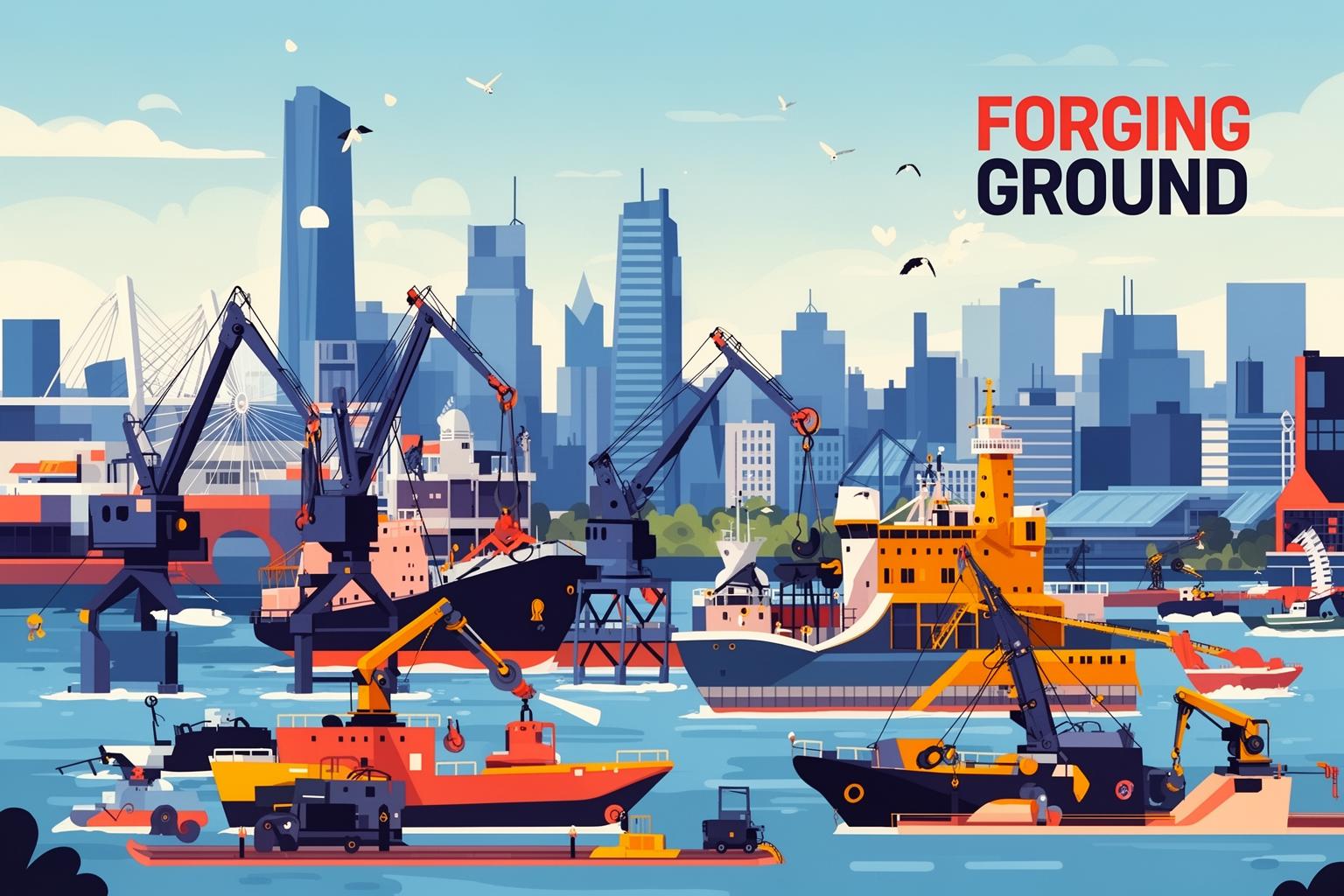
The story begins in Rotterdam, a city shaped by commerce and sea spray. Born in 1904, Willem de Kooning entered a world of hard edges and working-class realities. This was not the idyllic Holland of tulips and windmills; instead, it was a city of docks, cranes, and the ceaseless flow of international trade. The air was heavy with the scent of coal and brine, light filtered through an industrial haze. His parents, Leendert and Cornelia, operated a bar, and their turbulent relationship cast a long shadow over his childhood, instilling in him a sense of instability and conflict that later emerged in the dynamic tension of his paintings. This early environment was a crucible, forging a sensibility attuned to structure, labor, and the raw materials of life. The city’s very framework—its canal grids, solid architecture, and pragmatic character—imprinted upon him a respect for craft and form.
His artistic journey began here, not in a bohemian studio, but through a practical apprenticeship. At twelve, he started working for Gidding & Zonen, a leading commercial art and decorating firm. For eight years, he learned the trade from the ground up: sign painting, gilding, woodworking. At the same time, he attended night classes at the prestigious Rotterdam Academy of Fine Arts and Techniques, now proudly renamed the Willem de Kooning Academie. There, he received a rigorous, traditional education, mastering draftsmanship, anatomy, and perspective. This classical foundation was the bedrock on which his later radical abstractions were built. He learned the rules so thoroughly that he could later break them with intention and authority.
The Echoes of the Port
To walk through modern Rotterdam is to witness a city reborn from the ruins of World War II, yet the spirit of de Kooning’s era remains. A visit to the Oude Haven, the Old Harbor, with its historic ships and waterside terraces, offers a glimpse into the maritime world that surrounded him. Picture a young de Kooning, absorbing the powerful shapes of ship hulls, the tangle of rigging against a gray sky, the reflections of light on moving water. These early visual cues—bold lines, interlocking forms, muted color palettes—can be seen as the deep grammar of his later work. The Museum Boijmans Van Beuningen, though undergoing renovation, holds works by the artist and provides context for his Dutch roots, placing him within a lineage of Northern European masters like Rembrandt and Mondrian, artists who also wrestled with light, shadow, and the structure of reality.
For today’s visitor, the best way to connect with this part of his life is to wander. Explore the harbor area, feel the damp North Sea wind, and visit the Willem de Kooning Academie to see the institution that gave him his formal start. The city’s atmosphere is one of resilience and innovation, a place that looks forward without forgetting its tough, industrial past. It’s a sensibility de Kooning carried with him throughout his life: a blend of old-world craftsmanship and a relentless drive toward the new.
The American Dream: Stowaway to Manhattan
In 1926, at just 22 years old, de Kooning made a life-changing decision. Inspired by a romantic vision of America—its skyscrapers, endless opportunities, and vibrant jazz age energy—he boarded the SS Shelley as a stowaway. After a harrowing journey, he arrived not in the dazzling metropolis of his dreams, but in Newport News, Virginia. The shift was stark. Over the next year, he worked as a house painter, first in Virginia and then in Hoboken, New Jersey, a tough port town across the river from Manhattan’s glittering skyline. This time was a harsh introduction to immigrant life, marked by struggle and manual labor that deepened his connection to the tangible world of paint, wood, and plaster.
Finally, in 1927, he crossed the Hudson River and entered the city that would become both his ultimate muse and adversary: New York. The Manhattan of the late 1920s and 1930s was a city of dizzying highs and desperate lows. It was the era of the Harlem Renaissance, the rise of the Empire State Building, and the devastating Great Depression. For a young artist, it was an overwhelming symphony of visual stimuli. The unyielding grid of the streets, the noise of traffic, fleeting glimpses of faces in the crowd, and the dramatic interplay of light and shadow between towering buildings—all fueled his artistic imagination.
The Urban Canvas: The Downtown Scene
De Kooning immersed himself in the downtown art world, a lively ecosystem of studios, cafes, and galleries clustered around Greenwich Village, Chelsea, and Union Square. This became his university. He forged a crucial friendship and mentorship with Arshile Gorky, another immigrant artist who introduced him to European modernism and the works of Picasso, Miró, and Ingres. The city itself became a studio without walls. De Kooning was a walker and observer, absorbing the city’s restless energy on his daily journeys. He later said, “Even when I am not working, I am in a state of agitation.” That agitation was New York’s pulse.
During the Depression, the WPA Federal Art Project offered a lifeline, providing him with a salary to paint. This support allowed him to shift from commercial work to focus fully on his art. He shared studios and ideas with a generation of artists—Franz Kline, Jackson Pollock, Mark Rothko—all seeking a new American visual language to express the anxieties and exhilaration of modern life. Their legendary debates and revelry at spots like the Cedar Tavern in Greenwich Village are now art history lore. It was a crucible of intellectual and creative energy, where Abstract Expressionism was forged.
Studio Sanctuaries: Where Chaos Took Form
De Kooning’s studios were battlefields where he contended with the canvas. Though he moved often, his most iconic New York studios were on Fourth Avenue and later at 831 Broadway near Union Square. These were far from pristine, minimalist spaces. They were gritty, paint-splattered laboratories, walls covered with drawings, ashtrays overflowing, and the debris of creation everywhere. Harsh light filtered through large, grime-streaked industrial windows. In these chaotic lofts, he produced some of his most groundbreaking works, including the controversial and monumental “Woman” series.
These paintings are inseparable from their urban origins. The aggressive brushstrokes, scraped-away paint layers, jarring colors, and the fierce, almost violent energy of the figures mirror the city’s relentless cycle of construction and destruction. The toothy grins of his “Women” were inspired by cigarette ads, their bodies a collage of urban experience—both alluring and grotesque. He painted the psychological landscape of modern life as it unfolded in the streets of Manhattan.
Walking the Grid Today
A contemporary journey through de Kooning’s New York requires imagination, as the city is ever-changing. Begin in Chelsea, where he had an early studio on West 22nd Street. Now dominated by elite art galleries, the neighborhood was once more industrial and residential. Walk east toward Union Square, once the vibrant heart of his world. The building at 831 Broadway still stands, now home to luxury lofts. Stand across the street and picture the light flooding into his fourth-floor studio, where he painted masterpieces like “Excavation.” Continue south to Greenwich Village and find where the old Cedar Tavern once stood on University Place. Though the bar is gone, the neighborhood’s bohemian spirit remains. This walk isn’t about finding exact landmarks but about sensing the rhythm of the grid, the flow of crowds, and the dense architecture that profoundly shaped his vision. To fully appreciate his New York work, one must visit the great museums that house it: the Museum of Modern Art (MoMA), the Whitney Museum of American Art, and the Metropolitan Museum of Art. There, standing before his massive canvases, the energy of his New York truly comes alive.
Academic Interlude: The Air of Black Mountain
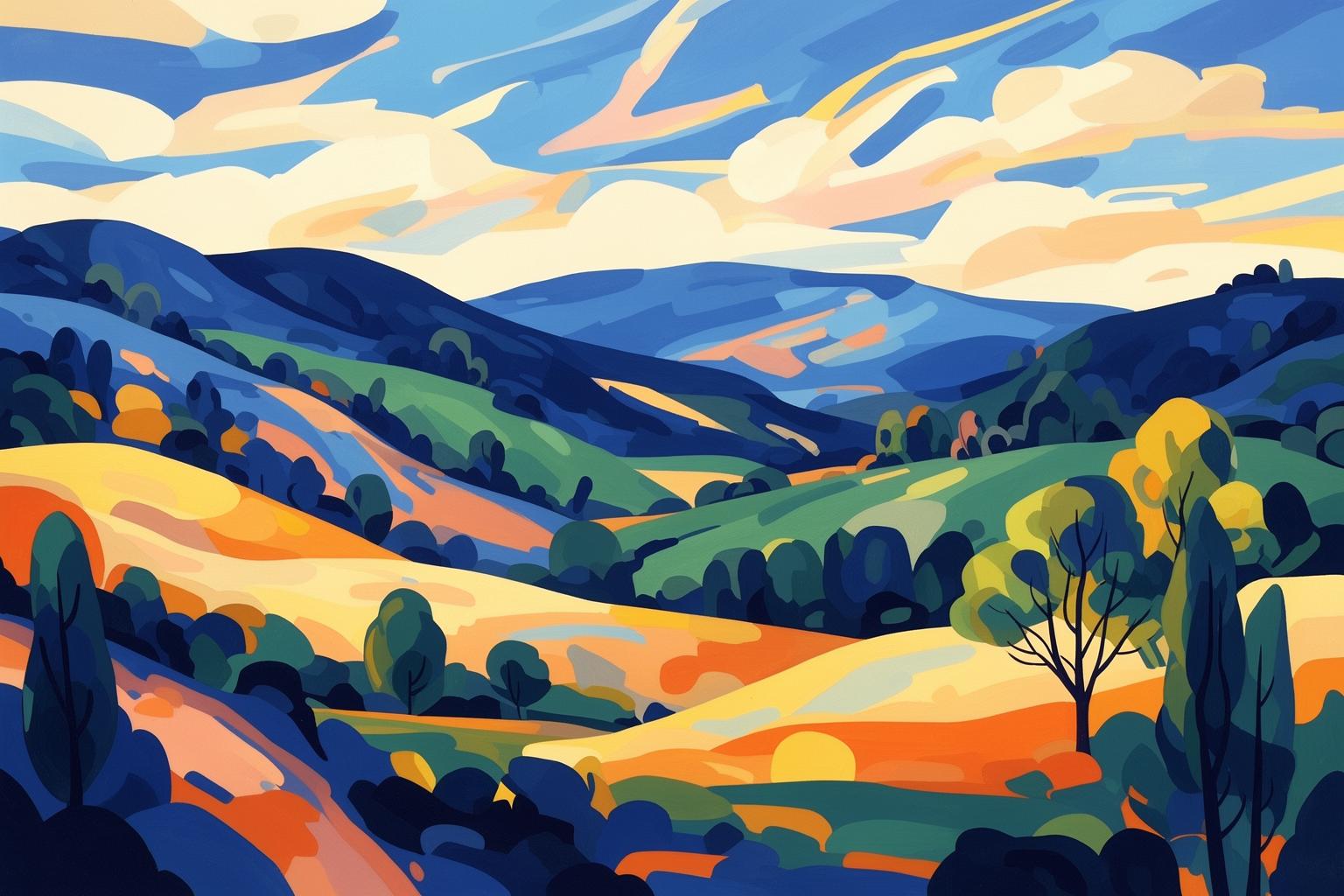
In the summer of 1948, de Kooning took a break from the urban frenzy by accepting an invitation from Josef Albers to teach at Black Mountain College near Asheville, North Carolina. This was no typical university; it was a radical, experimental community nestled in the Blue Ridge Mountains, where boundaries between disciplines blurred and collaboration was key. There, de Kooning found himself among a constellation of avant-garde thinkers, including composer John Cage, choreographer Merce Cunningham, and inventor Buckminster Fuller. It was a think tank shaping the future of American culture, far removed from the gritty, competitive New York art scene.
The experience proved both stimulating and challenging for him. Not a natural teacher, he often felt insecure about his intellectual abilities among such company. Still, the change of environment was profound. He traded the vertical thrust of skyscrapers for the rolling, horizontal lines of ancient mountains. The frantic, artificial lights of the city gave way to the soft, diffused glow of a Southern summer. This rural interlude brought new visual and sensory stimuli. It was during this period that he created his “Asheville” painting, a work that, while still abstract, exhibits a different kind of spatial complexity, with a more organic, landscape-inspired rhythm.
The Southern Light and Its Influence
The atmosphere at Black Mountain was one of creative freedom combined with intellectual rigor. Though already a mature artist, de Kooning absorbed new perspectives and the serene natural surroundings, which undoubtedly influenced his consciousness. It offered a vital contrast to his urban experience—a moment of reflection that may have sown the seeds for his later, more pastoral works. The landscape itself—its lushness, humidity, and ancient, quiet presence—provided a distinct subject matter characterized less by immediate, nervous energy and more by deep, underlying structures.
For those interested in this chapter of his life, a visit to the Asheville area is essential. Although Black Mountain College closed in 1957, its legacy lives on at the Black Mountain College Museum + Arts Center in downtown Asheville. The original Lake Eden campus is now Camp Rockmont, a boys’ summer camp, but it occasionally hosts events related to the college’s history. The real pilgrimage, however, is to immerse oneself in the landscape: drive the Blue Ridge Parkway, hike the mountain trails, and experience the unique quality of Appalachian light. This region remains a haven for artists and craftspeople, and its creative spirit—so central to the Black Mountain ethos—is still palpable. It is a place to understand the part of de Kooning that sought refuge from chaos, a part deeply connected to the natural world.
The Final Act: The Light of Springs, East Hampton
By the early 1960s, Willem de Kooning had become an art world superstar, but the demands of fame and the intensity of New York City were wearing on him. He longed for space, solitude, and above all, a different kind of light. He found what he sought in Springs, a quiet, unpretentious hamlet in East Hampton on Long Island’s South Fork. Having visited the area for years, attracted by the unique community of artists who had settled there—including his friends Jackson Pollock and Lee Krasner—he purchased a small house on Accabonac Road in 1961 and relocated there permanently in 1963, leaving behind the city that had shaped him for over three decades.
This move signified the start of the final—and arguably most transcendent—phase of his career. The East End landscape became his new collaborator. It was not a dramatic, mountainous terrain but a flat, subtle environment of potato fields, scrub pines, marshlands, and sandy beaches. The standout feature was the light—a brilliant, shimmering, water-reflected light that continuously changed with the tides, seasons, and weather. He once said, “I have to be in a certain place… the light in Easthampton is beautiful.” He had discovered his ultimate subject.
Building a Cathedral of Light
Upon moving to Springs, de Kooning’s main project was constructing a new studio. He devoted nearly a decade to designing and building it himself with help from assistants. The finished structure, located on Springs Fireplace Road, was an architectural masterpiece—a space perfectly designed for creating his art. It is a vast, barn-like building featuring a soaring, butterfly-roof-inspired ceiling and enormous north-facing windows that flood the interior with cool, consistent, indirect light. The primary studio is immense, a 50-by-40-foot room with 24-foot ceilings, enabling him to work on several large-scale canvases simultaneously. He referred to it as “a light-trap.”
This studio was more than a workspace; it was a sanctuary where he could control his environment and fully immerse himself in his creative process. The contrast with his cramped, chaotic New York lofts was striking. Here, there was room to think, move, and view his work from a distance. The serene, light-filled atmosphere profoundly influenced his painting. His palette brightened, incorporating the blues of sky and sea, the yellows of sand, and the whites of clouds. His brushstrokes became more fluid and lyrical, and his compositions more open and airy. The frantic, urban anxiety of his earlier work gave way to a sublime, elemental energy. He was no longer painting the figure in the city; he was capturing the feeling of light on water and the sensation of moving through a landscape.
The Pilgrim’s Destination: Visiting the Studio and its Surroundings
Today, the Willem de Kooning House and Studio is preserved by the Willem de Kooning Foundation and open for scheduled tours by appointment. For admirers of his work, this represents the ultimate pilgrimage. Standing in that magnificent space is a deeply moving experience. The studio remains largely as he left it, with his custom-built oversized easel, his painting trolley stocked with jars of pigment mixed with safflower oil and water, and massive canvases leaning against the walls. One can sense his presence in the room and observe the subtle shifts of light he so carefully orchestrated. It offers a rare opportunity to step inside the artist’s mind and understand the conditions behind his sublime late works.
To fully appreciate the experience, one should explore the surrounding landscape that inspired him daily. Take a drive or bike ride to Louse Point or Accabonac Harbor, places he frequented. Walk along the beach and notice how the light fractures on the water’s surface, how the sky and sea merge at the horizon. This is the visual language of his later paintings. Visit the nearby Pollock-Krasner House and Study Center, the former home of his friends and contemporaries, to gain a fuller sense of the thriving artistic community here. The Parrish Art Museum in Water Mill and East Hampton’s Guild Hall also hold significant collections of his work and contextualize the region’s rich artistic history. A trip to Springs is a journey into the heart of de Kooning’s late vision, where art and nature became one.
The Legacy in Museums
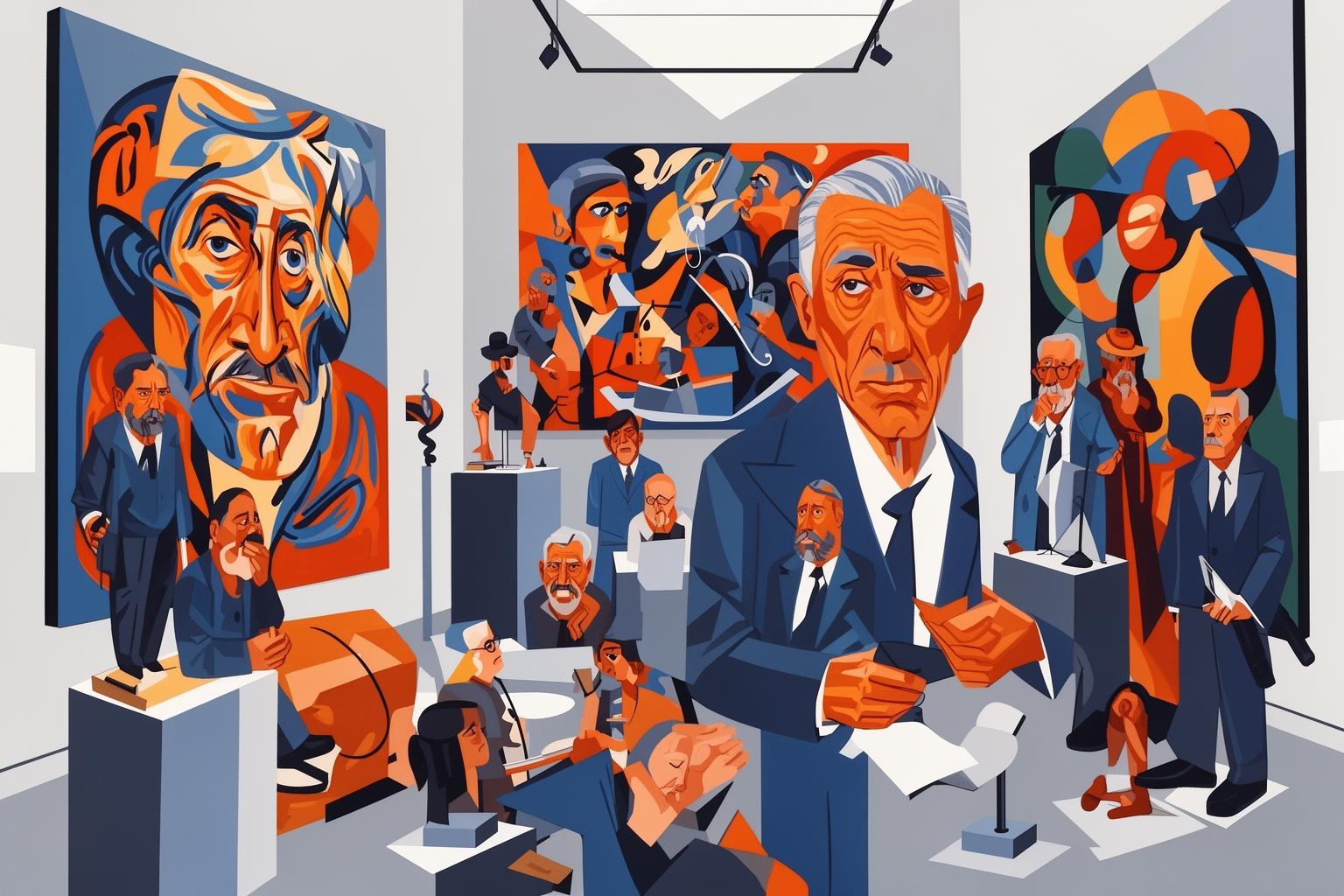
While physically visiting the places that influenced de Kooning offers valuable context, the ultimate encounter with his genius occurs when standing before the paintings themselves. His life’s work, a testimony to his relentless journey, is preserved in the collections of the world’s most prestigious museums. These institutions serve as the final stops on the de Kooning pilgrimage, the sacred spaces where the energies of Rotterdam, New York, and Springs are vividly captured on canvas.
New York’s Treasures
New York City, where he spent many formative years, remains the central hub for viewing his most iconic works. The Museum of Modern Art (MoMA) houses an impressive collection, including the monumental “Woman I,” a painting he famously reworked over two years, demonstrating his obsessive creative process. MoMA’s holdings span his entire career, allowing visitors to follow his progression from early figurative pieces to his dynamic abstractions. The Whitney Museum of American Art, with its focus on American artists, provides another vital perspective, featuring works like “Door to the River,” which reveals his shift toward the landscape-inspired canvases of his Long Island period. The Metropolitan Museum of Art also showcases key paintings, situating him within the broad sweep of art history—a context he, as a student of the old masters, would have valued.
A Global Reach
Beyond New York, his impact resonates worldwide. The Art Institute of Chicago houses “Excavation,” arguably one of the most significant paintings of the 20th century. This vast, intricate canvas, completed in 1950, presents a dense network of abstract forms that perfectly capture the anxious energy and fragmented reality of post-war urban life. In Washington, D.C., the Hirshhorn Museum and Sculpture Garden holds a notable collection of his later, more lyrical works. Bringing his story full circle, the Stedelijk Museum in Amsterdam provides a European anchor, with a rich collection that reconnects him to his Dutch roots and the artistic traditions he both embraced and challenged. Visiting these museums is more than viewing artworks on walls; it is engaging in a dialogue across time, experiencing the lasting power of an artist who infused his entire life’s experience into his creations.
The Enduring Glimmer
To follow the path of Willem de Kooning is to journey from a realm of shadow into one of light. This journey begins in the industrious, port city of his birth, passes through the electric, chaotic grid of his adopted home, and culminates in the tranquil, elemental beauty of his coastal retreat. Each place left a lasting impression, supplying the raw material for an art that was never fixed, but always evolving. He was an artist of process, for whom the struggle was the purpose, and the journey itself the destination.
His life shows that where we are is deeply connected to what we create. The crowded tenements of Manhattan gave rise to the claustrophobic intensity of the “Woman” series, just as the open skies and shimmering waters of Long Island inspired the fluid, light-filled abstractions of his later years. He absorbed the world through his senses, translating its rhythms, textures, and energies into a new and radical visual language. To understand his work is to recognize this profound bond with place. So, after leaving the quiet, reverent space of the museum, step into the city streets. Feel the sea breeze on your face. Seek out the fleeting “glimmer” he spent his life pursuing. It remains there—in the reflection on a puddle after rain, in the slant of sunlight between buildings, in the endless horizon where water meets sky. De Kooning showed us how to see it, and for that, the pilgrimage is always worthwhile.