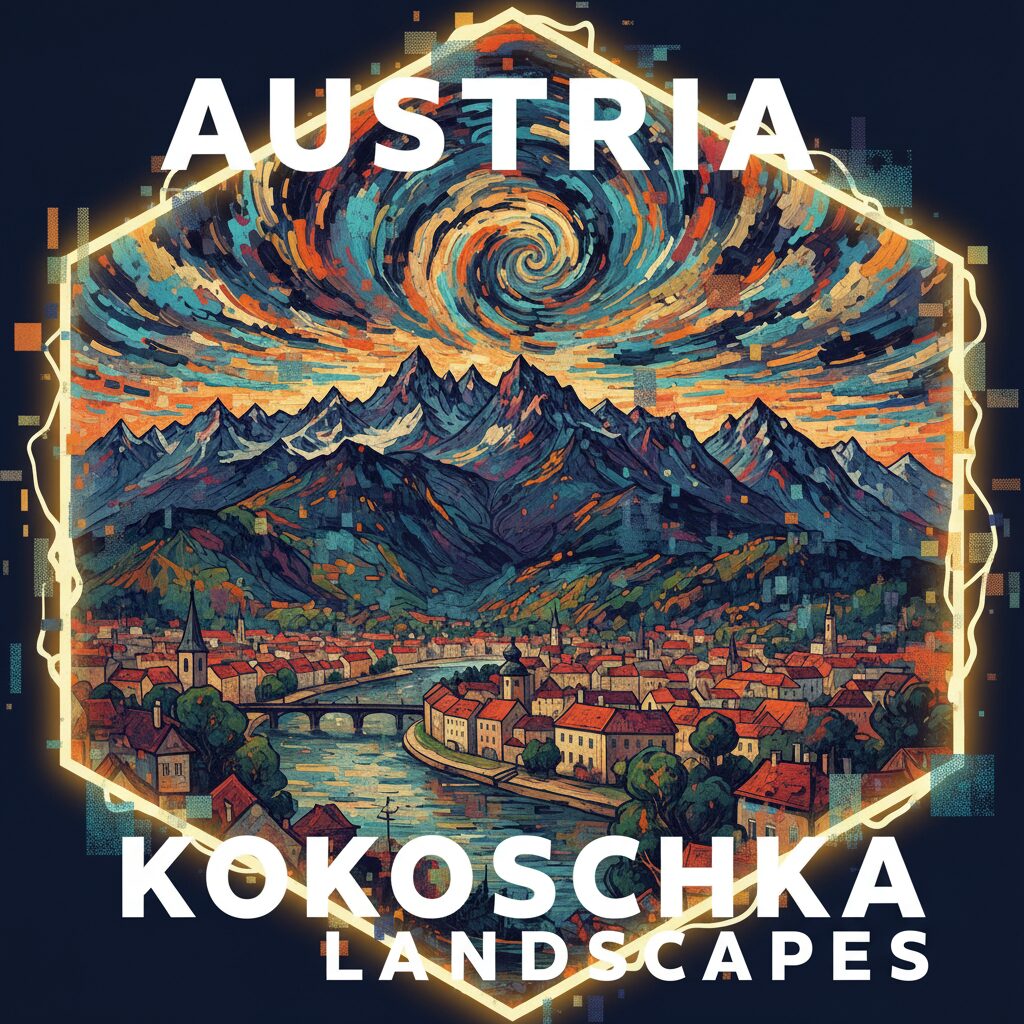
There are artists whose work hangs pristine on a gallery wall, contained within the gilded edges of a frame. And then there are artists like Oskar Kokoschka, whose life and art spill over every boundary, a thundering, passionate storm that swept across the continent of Europe, changing the face of portraiture and landscape forever. To follow Kokoschka is not merely to trace a line on a map; it is to embark on a pilgrimage through the seismic shifts of the 20th century, from the fading waltz of Imperial Vienna to the Blitz-scarred skies of London. It’s a journey into the very soul of Expressionism, a raw, unflinching exploration of the human psyche painted with the ferocity of a tempest and the tenderness of a lover’s touch. We will walk the same cobblestones, stand before the same river views, and feel the phantom electricity of a world that both forged and feared him. This is not just an art history tour; it’s a sensory immersion into the world as seen through the eyes of a true visionary. We begin in the heart of Europe, where a network of rivers, cities, and borders defined his turbulent existence, a life lived in a perpetual state of creative motion.
This journey through Kokoschka’s world is a form of artistic pilgrimage, much like tracing the footsteps of Botticelli through Florence.
The Danube’s Cradle: Pöchlarn, the Beginning
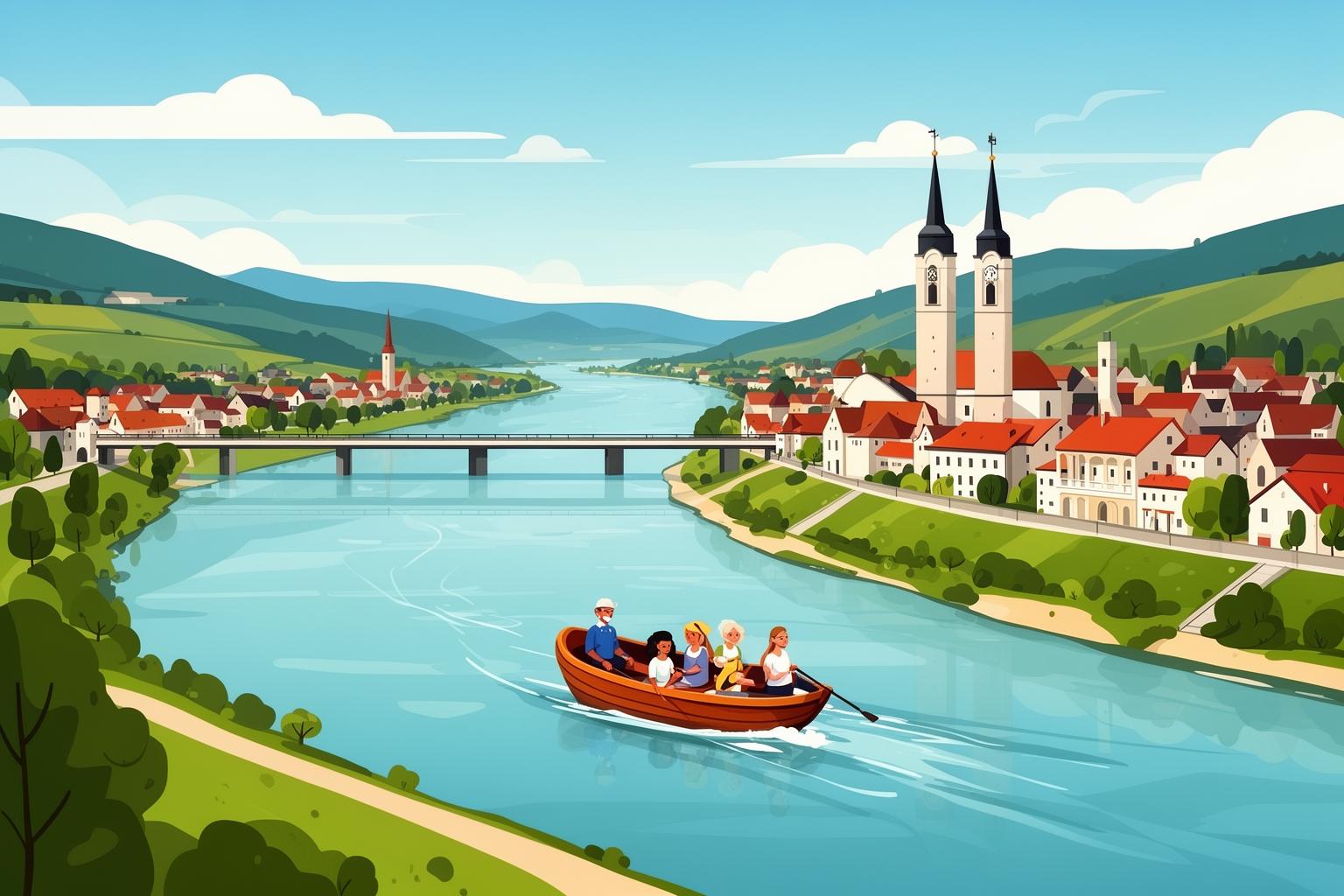
Every great river begins at a source, a quiet spring from which its powerful currents emerge. For Oskar Kokoschka, that source is Pöchlarn, a tranquil town resting on the banks of the Danube in Lower Austria. Visiting Pöchlarn today means stepping into a landscape of gentle yet enduring strength. The river, broad and steady, has sustained this region for thousands of years, silently bearing witness to the rise and fall of empires. It’s a place that feels deceptively peaceful, sharply contrasting with the turbulent energy that would later characterize its most renowned native. Born here in 1886, Kokoschka’s story starts in a house that still stands, now a museum bearing his name, the Kokoschka-Haus. As you move through its rooms, you don’t just see early sketches or family photos; you sense the roots of his creative vision taking hold. The light shimmering off the Danube, the ancient stones tied to the Nibelungen saga embedded in local legend—it’s all present. His father was a goldsmith, a craftsman whose work required precision and an eye for detail, yet whose life was shadowed by financial uncertainty. This contrast, the balance between order and disorder, appears to have shaped young Oskar from the start. The atmosphere in Pöchlarn is one of quiet history. It’s not a bustling city, but a place for contemplation. The best way to experience it is by strolling along the riverbank, perhaps at dusk, when the water glows like liquid gold, and imagining a young boy gazing at that same view, his mind already alive with images that would one day astonish the world. Practical tip for visitors: Pöchlarn is a scenic and easily accessible day trip by train from Vienna. Spend a morning at the Kokoschka-Haus, then enjoy a leisurely lunch at a café by the river, savoring the local fish. It’s the perfect prelude to the drama ahead, a moment of calm before the storm.
Vienna’s Rebel Heart: Forging an Expressionist Soul
If Pöchlarn was the quiet origin, Vienna was the roaring waterfall where Kokoschka’s talent erupted, wild and unsettling to the city’s established tastes. At the dawn of the 20th century, Vienna was a city of dazzling contradictions—a splendid imperial capital dancing its final waltz on the brink of a volcano. It was the city of Freud, Mahler, and Wittgenstein, a crucible of modernity where old-world sophistication collided headlong with bold new ideas. Into this ferment stepped the young Kokoschka, a firebrand poised to ignite the art world. His journey began at the Kunstgewerbeschule, the School of Arts and Crafts, a forward-thinking institution connected to the Wiener Werkstätte, the design collective that aimed to imbue everyday objects with artistic elegance. But Kokoschka was never content to create mere beauty. He sought something deeper, something more authentic: the raw, unvarnished essence of his subjects.
The School and the Scandal
From the beginning, Kokoschka was a provocateur. His early work violently rejected the decorative elegance of the Vienna Secession, led by its golden icon, Gustav Klimt. Where Klimt painted sensuous, gilded fantasies, Kokoschka revealed raw, exposed nerves. His breakthrough—or rather his public outrage—came with the 1908 Kunstschau exhibition. While his peers offered pleasing forms, Kokoschka presented works brimming with psychological torment. His play, “Murderer, the Hope of Women,” performed in the theater garden, sparked a riot. Its primal themes and brutal imagery assaulted bourgeois sensibilities. Vienna of the Ringstrasse, with its opulent opera house and grand museums, was unprepared for this artistic incendiary. Walking through Vienna today, one can still sense this tension. Stand before the ornate Hofburg Palace, then imagine the shock of audiences witnessing Kokoschka’s raw, symbolist drama. It serves as a reminder that beneath the city’s polished exterior runs a persistent current of revolutionary thought.
Klimt, Loos, and the Coffee House Nexus
Vienna’s cultural life was not confined to salons but lived in its legendary coffee houses. These were the city’s public living rooms, where artists, writers, and intellectuals gathered for hours over coffee and newspapers. To understand Kokoschka’s Vienna, one must enter a place like Café Central or Café Museum. The latter, with its minimalist interior designed by the radical architect Adolf Loos, was a particular hotspot for the avant-garde. Loos became Kokoschka’s greatest champion, recognizing the genius in the young artist’s unsettling portraits and becoming his patron and protector. Loos introduced him to the city’s intellectual elite and secured commissions that laid the foundation for his early career. While Gustav Klimt famously called Kokoschka the greatest talent of his generation, it was Loos who provided the practical support enabling that talent to thrive. A visit to Vienna feels incomplete without this coffee house ritual. Order a Melange, grab a newspaper from one of those iconic bentwood holders, and simply watch the world unfold. It is in these spaces where the ghost of a Vienna lingers—a city where a single conversation over a marble-topped table could change the course of modern art.
Portraits of the Psyche
Kokoschka’s true revolution was in portraiture. Before him, portraits aimed to flatter, to capture an idealized image. Kokoschka had no interest in surface appearances; he was a surgeon of the soul, wielding his brush like a scalpel to strip away social masks and reveal the anxieties, fears, and desires churning beneath. His subjects—Vienna’s writers, musicians, and intellectuals—gaze out from his canvases with oversized, restless hands and eyes carrying the weight of a crumbling empire. His colors shock, his brushwork is restless. He wasn’t painting what people looked like; he was painting how they felt. Seeing these works in person at the Belvedere Palace or the Leopold Museum is a profoundly intense experience. The Belvedere, once the palace of Prince Eugene, offers a striking contrast. You stand before Klimt’s shimmering, iconic “The Kiss,” a symbol of Viennese Art Nouveau, then turn to a Kokoschka portrait and feel the ground shift beneath you. It is the sound of a new century being born—a century marked by uncertainty and psychological depth that Kokoschka anticipated with chilling clarity.
The Bride of the Wind: A Love Affair Across Europe
No account of Oskar Kokoschka’s life is complete without the tempest at its core: Alma Mahler. The widow of composer Gustav Mahler, she was Vienna’s ultimate femme fatale—a brilliant, beautiful, and commanding muse who gathered artistic geniuses like charms on a bracelet. Their affair, spanning from 1912 to 1914, was one of the most passionate and destructive in art history. It was a whirlwind of emotion that engulfed them both and gave rise to Kokoschka’s undisputed masterpiece, “The Bride of the Wind” (Die Windsbraut). This monumental painting, a swirling storm of blues and grays, portrays the lovers intertwined in a cosmic tempest, clinging to each other as the world around them dissolves. He is awake, his eyes wide with anxiety; she sleeps peacefully, unaware of the chaos. It is a portrait of love as both a refuge and a maelstrom. Their relationship was a storm that unfolded across Europe. They traveled to the Dolomites in Italy, a journey still visible in the jagged, mountainous brushstrokes of his landscapes from that time. They lived in a house in Vienna’s suburbs, which Kokoschka adorned with murals dedicated to their love. His obsession was overwhelming. He sent her hundreds of letters, filled with desperate pleas and jealous accusations. When Alma ultimately left him for the architect Walter Gropius, Kokoschka was devastated. The outbreak of World War I provided him a path toward self-destruction; he joined the cavalry and was severely wounded, left for dead on the battlefield with a bayonet wound to the lung and a bullet in the head. To cope with his loss, he commissioned a life-sized doll in Alma’s likeness, taking it to the opera and treating it as his companion—a strange, tragic epilogue to their affair. This chapter of his life is not tied to a single place but to an emotional terrain. Yet, standing in Vienna’s Belvedere Museum before “The Bride of the Wind,” the entire saga condenses into one breathtaking moment. It is the heart of the storm, the emotional core from which the rest of his long life would radiate.
Dresden’s Baroque Dream: A Phoenix from the Ashes of War
Having survived the war both physically and emotionally, Kokoschka emerged as a transformed man. He found refuge and recovery in Dresden, known as the “Florence on the Elbe.” In 1919, he accepted a professorship at the renowned Dresden Academy of Fine Arts. The city, with its stunning Baroque architecture and world-class art collections, provided the ideal setting for his artistic revival. At that time, Dresden was a vibrant cultural hub and a place of healing for a Europe wounded by conflict. For Kokoschka, the city itself became a new subject. He shifted away from the intense psychological focus of his portraits and began creating sweeping, panoramic cityscapes. From the windows of his apartment, he repeatedly painted the Elbe River, capturing its bridges, the steam from paddleboats, and the majestic skyline. His Dresden paintings are dynamic and full of life, conveying a sense of movement and perspective that makes the viewer feel as if they are soaring above the city. The colors are brighter, and the mood more expansive than in his turbulent pre-war work. Visiting Dresden today is a moving experience. Though the city was nearly destroyed by Allied bombing in 1945, many of its architectural treasures, like the Frauenkirche and the Zwinger Palace, have been meticulously restored. Walking through the rebuilt Altstadt (Old Town), you can find the same views that inspired Kokoschka. Standing on Brühl’s Terrace, known as the “Balcony of Europe,” and looking out over the Elbe, you see the same curve of the river and the architectural silhouettes he once captured with such vigor. A visit to the Albertinum museum, part of the Dresden State Art Collections, is essential. It houses an impressive collection of modern art, including Kokoschka’s works from his time there. Viewing his paintings in the very city that inspired them creates a powerful connection between past and present, a tribute to the resilience of both art and the human spirit.
Prague’s Golden Glow: A Haven on the Vltava
As the political climate in Germany grew darker with the rise of the Nazi party, Kokoschka’s art was labeled “degenerate.” His works were removed from museums, and his position became untenable. In 1934, he sought refuge in Prague, the capital of the newly established Czechoslovakia. This was not a random decision; it was a kind of homecoming. His mother’s family had a long lineage of Prague citizens, and he felt a deep ancestral bond with the city. Prague in the 1930s was a vibrant, democratic sanctuary for artists and intellectuals escaping fascism. For Kokoschka, it was a city of magic and inspiration, a place where he could regain his footing.
A City of Ancestors and Refuge
The atmosphere of Prague is enchanting. It’s a city of a hundred spires, winding cobblestone streets, and a history that feels tangible in the air. For Kokoschka, it was a living, breathing entity. He saw it not just as a collection of buildings, but as a dynamic organism shaped by the flow of the Vltava River running through its center. His connection to the city was immediate and profound. He embraced his Czech heritage, becoming a Czechoslovak citizen in 1935. He became an outspoken critic of the Nazi regime, using his art and platform to warn of the impending danger. His time in Prague was remarkably prolific, a period of renewed creative energy before the darkness of World War II enveloped Europe.
Painting the “Magic City”
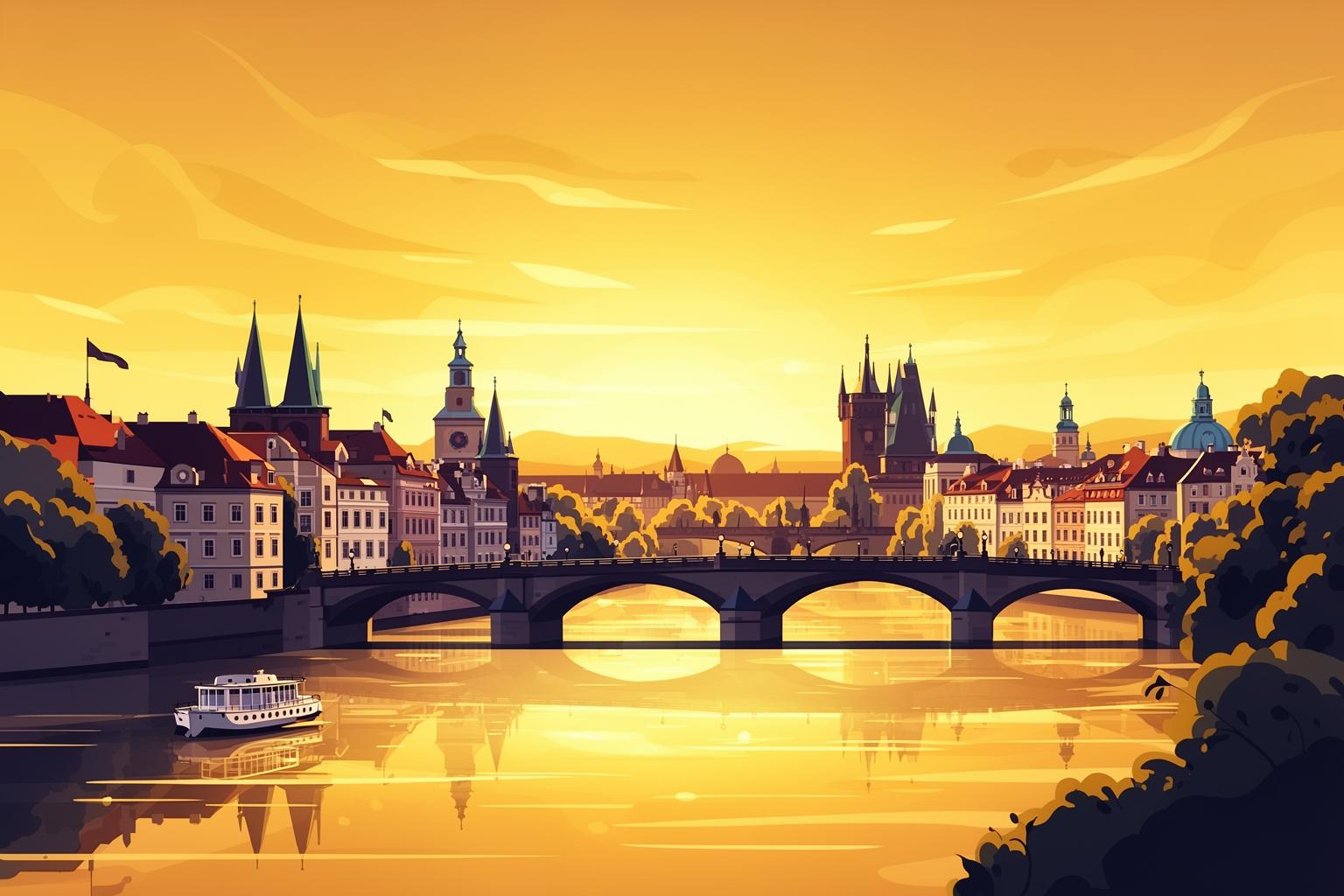
Much like he did in Dresden, Kokoschka climbed to the city’s high vantage points, painting stunning panoramas of Prague. His depictions of the Charles Bridge, with Prague Castle looming behind, are among the most celebrated cityscapes of 20th-century art. He portrayed the city in all its moods—in brilliant summer sunlight, beneath heavy snow, and bathed in the golden hues of autumn. His brushwork is fluid and energetic, capturing the constant movement of the river, clouds, and people. He painted the city not from a single, fixed viewpoint but from a blend of memories and impressions, creating a vision of Prague that is both topographically precise and emotionally evocative. Viewing his Prague paintings, especially at the National Gallery Prague, reveals his profound love for his adopted home. The gallery, spread across historic buildings throughout the city, holds a significant collection of his works from this period, making it an essential destination for any art enthusiast.
A Traveler’s Note: Finding Kokoschka’s Vistas
To truly experience Kokoschka’s Prague, seek out his viewpoints. Walk across the iconic Charles Bridge early in the morning before the crowds arrive. The soft light and the silhouetted statues will transport you into one of his canvases. Climb the hill to Letná Park on the river’s north side. From here, you’ll enjoy a stunning panoramic view of the Old Town and its bridges, a perspective Kokoschka painted many times. Another must-visit spot is Petřín Hill, reachable via funicular. From its lookout tower, you gain a bird’s-eye view of the entire city—a sprawling tapestry of red roofs and green domes. By visiting these vantage points, you begin to see the city through his eyes, appreciating how he transformed this three-dimensional world into two-dimensional masterpieces of color and light.
London’s Somber Fog: An Artist in Exile
The refuge Kokoschka found in Prague was brief. After the Munich Agreement in 1938, he and his future wife, Olda Palkovská, escaped to London just weeks before the Nazi invasion of Czechoslovakia. Arriving as refugees, they were part of a wave of European émigrés who sought a fragile sanctuary in Britain. London during World War II was a stark contrast to the continental capitals Kokoschka had known. It was a city marked by blackouts, air raid sirens, and a resilient, determined spirit. The foggy, muted light of London replaced Prague’s golden glow, and his art transformed in response.
The War Years and Political Allegory
While in London, Kokoschka’s work grew explicitly political. He created compelling allegories denouncing Nazism and fascism, such as “The Red Egg,” which ridicules the Munich Agreement, and “What We Are Fighting For.” These paintings were more than art; they were acts of defiance by an exiled artist wielding his brush as a weapon. His color palette turned darker, and his compositions became denser and more chaotic, mirroring the era’s upheaval. He felt compelled to bear witness to the disaster unfolding across Europe. Visitors to London today can still sense this wartime spirit. Touring the Churchill War Rooms offers insight into the city’s command center during the Blitz. Strolling through neighborhoods like Hampstead or Belsize Park, where many European refugees settled, reveals a vibrant émigré community. These leafy streets and intellectually charged atmospheres provided a small enclave of continental culture amid wartime hardships.
Navigating a New World
Life as a refugee presented many challenges. Kokoschka struggled to gain recognition within the British art scene, which was more insular than those on the continent. Nonetheless, he persevered, painting portraits of fellow exiles and scenes of the Thames. The Tate Modern is a key destination for those following his path in London, housing several important works from his British period and enabling a deeper appreciation of this pivotal chapter in his life. Viewing his wartime paintings within the context of a city that endured so much offers profound insight into his role as a political artist. His London years stand as a testament to his resilience and his belief in art’s power to challenge tyranny and uphold humanistic values, even in the darkest times.
A View from the Lake: The Final Peace in Villeneuve
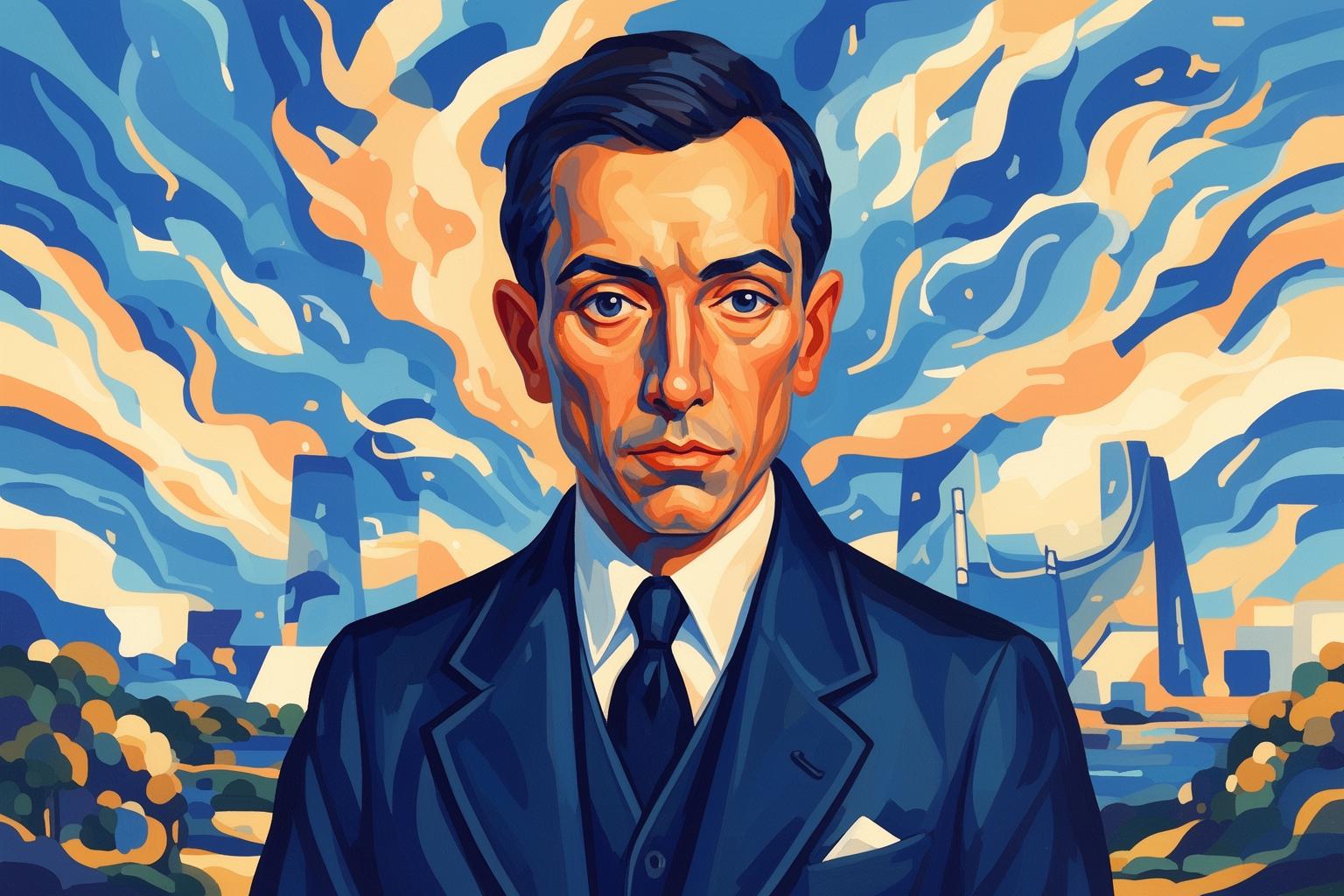
After the war, Kokoschka finally found enduring peace. In 1953, he settled in the small town of Villeneuve, Switzerland, located at the eastern end of Lake Geneva. Here, surrounded by the striking beauty of the Swiss Alps and the calm expanse of the lake, he spent the final decades of his long and tumultuous life. The move to Villeneuve marked a decisive shift in both his art and perspective. The frantic energy of his early years and the political urgency of the wartime period gave way to a more reflective, monumental style. The Lake Geneva region exudes a majestic tranquility. The light is clear, the air crisp, and the scenery stunning. This landscape invites contemplation and, for Kokoschka, was the ideal setting for his closing chapter. He built a home and studio, from which he enjoyed panoramic views of the lake and mountains—a subject he revisited frequently. His late landscapes are grand and symphonic, rendered with broad, assured strokes and a vibrant, nearly ethereal palette. He wasn’t merely painting a view; he was capturing the elemental forces of nature—the interplay of light on water, the mass of the mountains, the movement of clouds. During this period, he also committed himself to teaching, founding his “School of Seeing” (Schule des Sehens) in Salzburg. He encouraged his students to reject academic conventions and to truly see the world with their own eyes, aiming to capture the essence of a subject rather than its superficial form. Visiting this region is like stepping into Kokoschka’s peaceful final act. One can stroll along the lakefront promenade from Montreux to the Château de Chillon, a path Kokoschka would have known well. Close by, the town of Vevey hosts the Fondation Oskar Kokoschka, an archive and research center that houses a major part of his estate. Though not a traditional public museum, it remains the core of his legacy. Villeneuve was where the storm finally settled, leaving behind a clear, expansive view of a life spent at the crossroads of art, love, and history.
A Final Brushstroke: Reflecting on the Kokoschka Trail
To journey through the world of Oskar Kokoschka is to traverse a century marked by upheaval, passion, and unyielding creativity. From the tranquil banks of the Danube in Pöchlarn to the sweeping views of Lake Geneva, each place serves as a chapter in a grand narrative. You experience the rebellious spirit of his youth in Vienna’s coffee houses, the poignant romance captured in the swirling masterpiece inspired by Alma Mahler, the steadfast determination of his professorship in a restored Dresden, and the deep affection for his adopted homeland revealed in the golden panoramas of Prague. You sense the defiant hope of his wartime exile in London and, ultimately, the profound peace he discovered in the Swiss Alps. Following this path is more than a sightseeing tour—it is an invitation to perceive the world as he did—not as a static image, but as a living, breathing force, a whirlwind of color, emotion, and light. It challenges you to look beyond the surface, to uncover the psychological truth in a face, the vibrant energy in a cityscape, the raw power in a landscape. The trail he forged across Europe remains open to travel. And as you stand on a bridge over the Vltava or gaze across the waters of Lake Geneva, you may feel the lingering presence of the storm-chaser himself, forever capturing the untamable beauty of the world.