
There are films that entertain, films that thrill, and then there are films that carve a piece of themselves into your memory, leaving an indelible mark that resonates long after the credits roll. Louis Malle’s 1987 masterpiece, Au Revoir les Enfants, is one such film. It is a quiet, devastatingly human story that whispers truths about childhood, friendship, and the immense gravity of small choices made under the shadow of great evil. Based on Malle’s own harrowing childhood memories of Occupied France, the film follows the burgeoning friendship between Julien Quentin, a privileged boy at a Carmelite boarding school, and Jean Bonnet, a new student who is secretly Jewish, hidden from the Nazis by the school’s compassionate headmaster, Père Jean. The film’s power lies not in grand pronouncements, but in its meticulous observation of stolen glances, shared secrets, and the fragile innocence of boys on the precipice of a world that will not let them be children. To journey to the places where this story was brought to the screen is not merely a sightseeing trip; it is a pilgrimage. It is an act of remembrance, a way of stepping through the celluloid veil to stand in the very spaces where Malle resurrected his past, and in doing so, gave it to the world. The primary filming location, the stand-in for the real Petit-Collège d’Avon, is the Institution Saint-Croix in the medieval town of Provins, a place where the stones themselves seem to hold the echoes of the film’s poignant farewell.
This act of cinematic pilgrimage, seeking out the real-world echoes of a film’s soul, is a journey shared by those who travel to the locations that inspired ‘Drive My Car’.
The Soul of the Story: Institution Saint-Croix de Provins
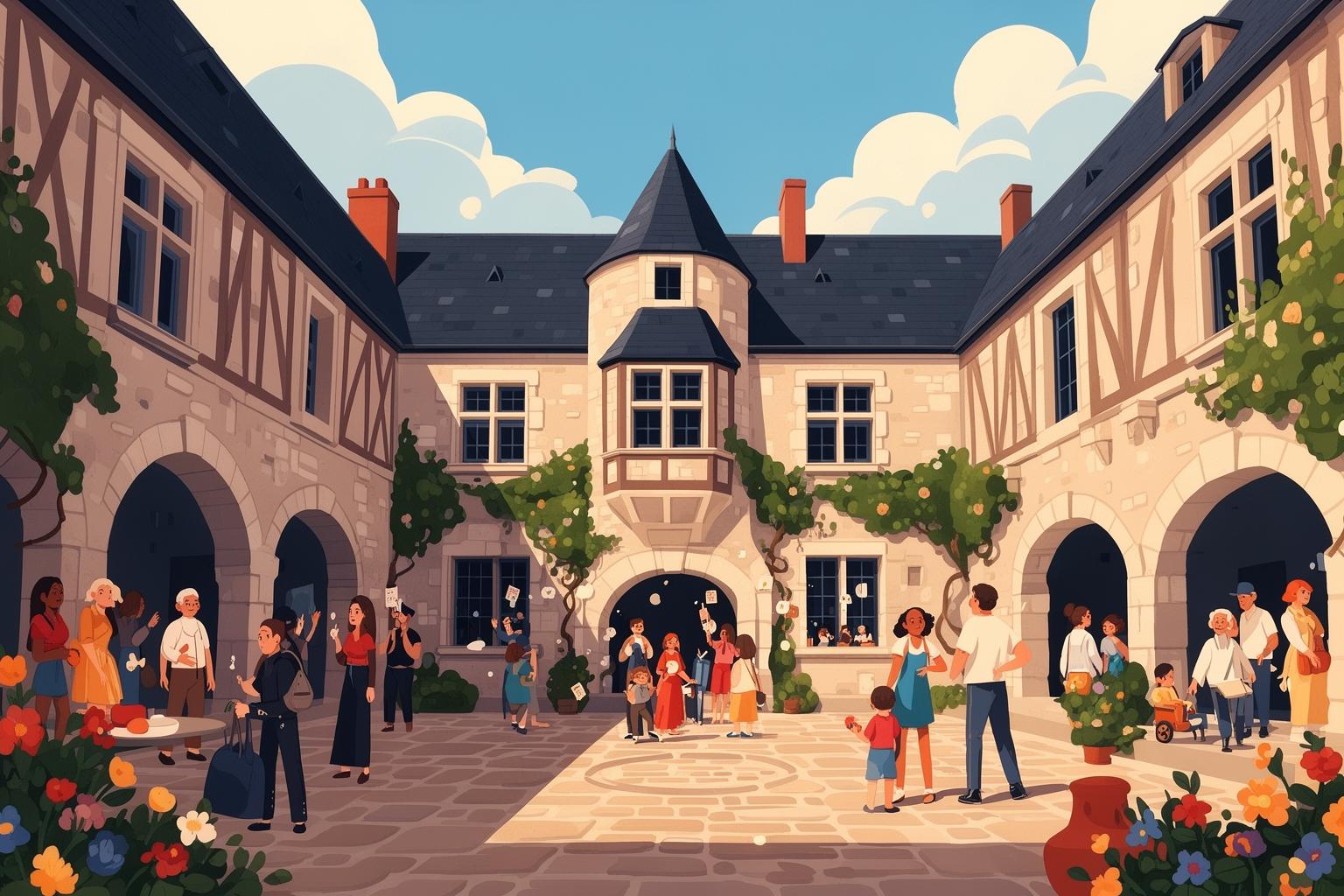
The heart of Au Revoir les Enfants pulses within the walls of its boarding school, the fictional Petit-Collège Saint-Jean-de-la-Croix. In truth, these scenes were shot at the Institution Saint-Croix, a historic school nestled in Provins’ upper town. This location was a brilliant choice by Malle. Its ancient stone, labyrinthine corridors, and expansive enclosed grounds provided an ideal backdrop for a story about confinement and hidden sanctuaries. The school itself becomes a character—a protector, a witness, and ultimately, a site of betrayal. Visiting Provins and standing before the school’s imposing gates is a deeply moving experience. Even from outside, you can sense the weight of the narrative. The very air feels thick with unspoken tensions and whispered friendships that shaped the film. Although the school remains a functioning educational institution and public access inside is generally restricted, the pilgrimage is far from futile. The true essence of the journey lies in walking its perimeter, standing where the camera once stood, and allowing the atmosphere to transport you back to that fateful winter of 1944.
The Courtyard of Farewells
No single space in the film carries more emotional weight than the central courtyard. It is the setting for the film’s most iconic and heart-wrenching moments. Here, the boys arrive at the start of term, spilling out of cars with their trunks and anxious goodbyes. Here they play, their shouts and laughter echoing off stone walls, creating a bubble of youthful energy temporarily shielded from the war outside. And here, in this very place, the film delivers its final, devastating blow. The image of Julien turning back to watch his friend led away by the Gestapo, Père Jean’s quiet, almost reflexive utterance of “Au revoir, les enfants,” and Jean Bonnet’s haunting, accusing gaze toward Julien—all unfold on this cold, unforgiving ground. Standing near the gates of Institution Saint-Croix and looking upon that courtyard induces a palpable chill. You can almost see the scene replay in your mind’s eye: the stark winter light, the gray stone, and the boys’ breath turning to mist in the cold air. Malle’s cinematography captures the space with a documentary-like realism, making it feel less like a set and more like a preserved memory. The courtyard’s architecture itself contributes to this sensation. The tall, imposing buildings hem in the space, creating an enclosed world, a microcosm of society. Early on, this enclosure feels protective, a shield against outside dangers. But by the end, it becomes a trap, a place with no escape. The worn cobblestones serve as silent witnesses. Observing the space, one contemplates the countless arrivals and departures it has seen—the moments of joy and sorrow it has held. For a visitor, this is the emotional core of the pilgrimage—a place for quiet reflection on the fragility of innocence and how abruptly it can be shattered. Take your time here. Notice how the light shifts across the facades and how the sounds of the modern town are muffled by thick walls. This is a place that calls for stillness and contemplation.
Hallowed Halls and Whispered Secrets
Though the interiors of Institution Saint-Croix are usually off-limits, imagining the scenes that took place inside is essential to the experience. The film immerses us in the school’s inner world—from the spartan, chilly dormitory to the formal wood-paneled classroom and the sacred silence of the chapel. Each serves as a backdrop for the delicate development of Julien and Jean’s friendship. Consider the dormitory, with rows of identical beds beneath a vaulted ceiling—a public space where privacy is scarce. Yet it is here, under cover of darkness, that the boys share moments of intimacy. It’s where Julien first notices Jean praying in Hebrew, a secret both intriguing and frightening. It’s where they read adventure stories by flashlight, escaping into fantasy worlds to forget their grim reality. The coldness of the room, vividly depicted by Malle, underscores the warmth and comfort they find in each other’s company. The classroom is another key setting, a place of structure, rules, and intellectual rivalry. Here, Julien’s initial jealousy of Jean’s brilliance gradually turns into respect and admiration. Scenes of them at their desks—subtle competition in math or literature—are beautifully portrayed. Malle uses this formal setting to highlight the small, nearly imperceptible gestures that strengthen their bond—a shared glance, a faint smile, the passing of a note. The air in these imagined halls would carry the scent of chalk dust, old books, and floor polish, the aroma of timeless education. The chapel also plays a vital role. For Julien and the Catholic boys, it is a place of familiar ritual. For Jean, it represents profound alienation and danger, where he must perform a faith not his own to survive. The scene where Père Jean invites the Jewish boys to receive communion, an act of radical inclusion, stands as one of the film’s most powerful moments. The chapel’s quiet solemnity becomes a stage for a quiet rebellion and deep empathy. Outside the school, you can piece together this interior geography, imagining which windows belong to dormitories or classrooms. You can envision the boys moving through unseen corridors, their lives shaped by the school bell’s ringing, their friendship blooming in stolen moments between lessons and prayers.
The Forest of Fleeting Freedom
In contrast to the school’s rigid confinement, the nearby forest scenes offer a fleeting taste of freedom and chaos. The treasure hunt organized by the priests lets the boys shed the restrictions of classrooms and dormitories. In the wild, untamed woods, they are simply boys—running, shouting, and competing with boundless energy. This forest symbolizes a temporary escape, a parallel world where the rules of adult war don’t seem to apply. It is here that Julien and Jean’s bond deepens. When they become lost together, separated from the group, they must rely on one another. The fear and uncertainty strip away their remaining pretenses. They share stories, confess fears, and find common ground that transcends their different backgrounds. The forest, with dappled light and tangled undergrowth, is both beautiful and menacing. It mirrors their own situation—a place of potential discovery and danger. Malle films these scenes with lyrical grace, capturing the natural world’s raw beauty. The crisp air, the crunch of leaves underfoot, the towering trees seeming to watch over them—all create a powerful atmosphere. The forests around Provins are accessible, and a walk through them can be an emotional part of the pilgrimage. Though you may not find the exact filming spots, being in a similar landscape—the quietness, earthy scents, and sense of removal from civilization—evokes the spirit of those scenes. It offers a moment to reflect on freedom’s nature and the brief, precious glimpses the boys stole before their world came apart.
Provins: A Medieval Canvas for a Modern Tragedy
Louis Malle’s choice to film in Provins was truly inspired. This UNESCO World Heritage site, an exceptionally well-preserved medieval fortified town, offers a setting that seems frozen in time. Strolling through its ancient streets feels like stepping back centuries, which paradoxically makes the film’s 1940s setting appear both immediate and timeless. The town itself acts as an extension of the school’s enclosed world, with its ramparts and fortified gates reinforcing themes of confinement and the illusion of safety. The intrusion of the modern, mechanized evil of the Gestapo into this ancient, seemingly unchanging landscape is all the more jarring and sacrilegious.
A Town Outside of Time
Exploring Provins is an essential part of the Au Revoir les Enfants pilgrimage. The town is split into two main sections: the Ville Haute (Upper Town), home to the Institution Saint-Croix, and the Ville Basse (Lower Town). The magic resides in the Upper Town. Here, you’ll find the imposing ramparts that you can walk along, providing panoramic views of the surrounding countryside. As you follow these ancient defensive walls, it’s easy to imagine the schoolboys feeling as though they were in a fortress, shielded from the war. The Tour César, a magnificent 12th-century keep, dominates the skyline. Climbing its winding staircase rewards visitors with a breathtaking view of the town’s medieval layout and clusters of terracotta rooftops. The narrow, cobbled streets of the Ville Haute—like Rue de Jouy and Rue du Val—are lined with half-timbered houses leaning into each other as if whispering secrets. There is a profound stillness here, especially on weekday mornings or during the off-season. The atmosphere is heavy with history. You can feel the passage of time in the worn stones beneath your feet and the weathered wood of the buildings. This historical weight offers a somber backdrop to the film’s story, reminding you that this place has witnessed centuries of human drama, of which the events of 1944 represent just one tragic chapter. Malle made perfect use of this ambiance. Though he rarely displays much of the town in the film, focusing tightly on the school, the spirit of Provins permeates every frame shot within its bounds. The sense of an old, deeply rooted France, with its traditions and faith, is tangible—making the betrayal that leads to the film’s climax, a betrayal by a fellow Frenchman, all the more heartrending.
Living History and Somber Reflection
Visiting Provins is not merely about following the film’s locations; it is about immersing yourself in the culture of a town that has proudly preserved its heritage. Famous for its roses, you will find shops offering a variety of rose-based products, from jam and honey to soaps and candies. Pausing at a local café to sample regional specialties like Niflettes pastries connects you to the living, breathing town of today. As you explore, reflect on the dual nature of the place. Provins hosts vibrant medieval festivals featuring falconry displays and costumed performers, celebrating a romanticized vision of its history. Yet, for a pilgrim of Au Revoir les Enfants, the town also carries a more somber meaning. It serves as a reminder that history is not always a joyous celebration but is also marked by profound darkness and moral failure. The beauty of Provins—its charming squares and ancient churches like the Collégiale Saint-Quiriace—stands in sharp contrast to the ugliness of the events depicted in the film. This contrast lies at the heart of the film’s power. It challenges us to look beyond a place’s picturesque façade and consider the complex, often painful histories beneath. When visiting, it is crucial to be a respectful observer. The Institution Saint-Croix is a place of learning, not a tourist site. The town is home to residents whose daily lives unfold against this historic backdrop. The best approach is to move slowly, observe quietly, and let the atmosphere of Provins speak to you. It is a place that invites reflection on the film’s enduring themes: the courage of compassion, the devastating effects of hatred, and the unbreakable bonds of friendship forged in the darkest of times.
A Director’s Confession: The Spirit of Louis Malle

Au Revoir les Enfants is perhaps Louis Malle’s most intimate and significant film. It is a story he carried within him for over forty years, a haunting memory from his past that he felt driven to exorcise through cinema. Recognizing the autobiographical origins of the story brings an entirely new depth to a visit to its filming locations. You are not merely touring a film set; you are stepping into the tangible embodiment of a director’s deepest, most painful recollection. The film serves as an act of bearing witness, a confession, and a tribute to the friends he lost.
More Than a Memory: The True Story
During the winter of 1944, Louis Malle was a student at the Petit-Collège d’Avon, a Carmelite boarding school near Fontainebleau. Like his on-screen counterpart, Julien Quentin, Malle saw the Gestapo raid the school and arrest three Jewish students along with the headmaster who had been hiding them. Père Jacques de Jésus, the headmaster, was a Carmelite priest and member of the French Resistance who courageously used his school as a refuge for those escaping Nazi persecution. Both he and the boys he sought to protect died in concentration camps. Malle has confessed that the memory of that day, especially the last look from his friend, haunted him throughout his life. He carried a sense of guilt, believing that a moment of inadvertent betrayal on his part might have led the Gestapo to his friend. The film represents his way of processing this trauma and honoring the memory of Père Jacques and the boys. The character Jean Bonnet is a composite drawn from students Malle knew, his name poignantly reflecting a hidden identity. Visiting Provins with this understanding transforms the experience. The Institution Saint-Croix stands in for a real place marked by both great courage and profound tragedy. The story feels less fictional and more like a docudrama. Every corner of the school grounds seems infused with the spirit of Père Jacques’s bravery and the boys’ lost innocence. This context elevates the film beyond a mere tale of friendship into a powerful tribute to the Holocaust and the Righteous Among the Nations—those non-Jews who risked their lives to save others. The pilgrimage becomes an act of homage not just to a remarkable film but to the genuine heroes and victims behind the story.
The Choice of Provins: A Cinematic Space
One might ask why Louis Malle chose not to film at the actual school in Avon. Several factors, both practical and artistic, likely influenced his decision. The original school may have changed too much over the decades to be suitable for recreating a period setting. Logistically, shooting in a lesser-known, well-preserved town like Provins may have been more manageable than in the more developed Fontainebleau area. Artistically, however, the selection of Provins feels intentional. As noted, its medieval character lends an almost mythic atmosphere to the setting. The town seems like a fortress, a separate world, which makes the Gestapo’s eventual breach all the more jarring and violent. Malle was a meticulous director, known for his precision with atmosphere and tone. He likely found in the Institution Saint-Croix and the town of Provins the perfect physical embodiment of the themes he wished to explore. The school’s architecture—its austere classicism, enclosed courtyard, and long, echoing corridors—was ideally suited to a story about order and its disruption, sanctuary and its violation. By choosing a new location, Malle also freed himself from the limits of exact historical replication. He was not making a documentary but creating a work of art from the raw material of memory. Provins provided the canvas he needed to paint his story with the emotional truth he had carried for so long. For visitors, this perspective adds another layer to the journey. You can appreciate the town not merely as a historical site but as a conscious artistic choice. You can observe how a director’s vision was both shaped by and helped shape a sense of place, and how the stones and streets of Provins became essential to telling this unforgettable story.
A Pilgrim’s Guide: Practical Steps for Your Journey
A journey to Provins to engage with the world of Au Revoir les Enfants is a deeply fulfilling experience. It takes some planning but is easily doable as a day trip from Paris or a more immersive overnight stay. The key is to treat the visit not as a checklist of sights but as a slow, reflective immersion into the atmosphere of both the film and the town.
The Path to the Past: Getting to Provins
Your pilgrimage most likely begins in Paris. The easiest way to reach Provins is by train from Gare de l’Est. The trip itself offers a gentle transition from the bustling modern city to the tranquil historic heart of the Île-de-France region. Transilien Line P regularly serves Provins, the final stop on the line. The journey lasts about one hour and twenty-five minutes, providing a perfect opportunity to watch the urban landscape give way to rolling fields and small villages. As you sit on the train, you might reflect on the film’s opening scenes, with Julien on a platform surrounded by boys, all leaving their families for the cloistered world of boarding school. Upon arriving at Provins station, you’ll find yourself in the Ville Basse. The walk up to the Ville Haute, the medieval citadel, is a pleasant and atmospheric fifteen- to twenty-minute climb. As you ascend, the modern world fades away, replaced by the imposing sight of ancient ramparts. This walk is part of the experience—a gradual immersion into the world you’ve come to explore. Alternatively, a small tourist shuttle occasionally runs between the lower and upper towns, useful for those with mobility concerns. But if you can, walking is highly recommended. It allows the scale and grandeur of the medieval town to reveal itself slowly and impressively.
When to Walk These Hallowed Grounds
Provins can be visited year-round, though the season will shape your experience. To best capture the stark, somber mood of Au Revoir les Enfants, a trip in late autumn or winter is ideal. The bare trees, crisp cold air, and soft, low winter sunlight immediately evoke the film’s visual tone. The town is quieter during these months, with fewer tourists, allowing for a more personal and contemplative visit. Walking the empty cobblestone streets on a gray winter day, you might almost hear the boys’ footsteps echoing. Spring and summer offer a different but equally valid experience. The town bursts with life, the famous rose gardens are in full bloom, and longer days invite more extensive exploration. While the mood is less in line with the film’s melancholic tone, seeing the school and town amid renewal and growth offers a sense of hope and continuity—a reminder that after the darkest winters, spring always returns. Autumn visits perhaps provide the best of both worlds—beautiful foliage, pleasant weather, and a wistful quality fitting the film’s themes of memory and loss. Whatever season you choose, try to visit on a weekday if possible. Weekends, especially in peak season, can be crowded with tourists attending medieval shows, which might detract from the quiet, reflective atmosphere you seek.
Beyond the Gates: Approaching the Institution Saint-Croix
It is important to set proper expectations when visiting Institution Saint-Croix. This is a private, operational school, not a museum, so you cannot simply enter and explore the grounds. Nonetheless, this does not lessen the visit’s significance. The pilgrimage is about being present at the location, not necessarily gaining entry. The school sits at 1 Rue des Jacobins in the Ville Haute, easily found on any local map. Spend time at the main gate, instantly recognizable from the film. This is the threshold between the outside world and the boys’ secluded sanctuary. Look into the courtyard, the scene of many pivotal moments. Walk around the school walls; from various vantage points, you can glimpse parts of the buildings, the chapel’s spire, and the upper windows of what was likely the dormitory. Circling the school becomes a meditative ritual, helping you appreciate the scale of the place and reflect on the stories—both real and fictional—contained within its walls. Be quiet and respectful; students and staff are going about their day. A quiet, unobtrusive presence is the most fitting way to honor the location and the film. The power of this place lies not in access but in its existence. Standing where Malle recreated his most formative memory is a profound and moving experience in itself.
A Deeper Immersion: Staying and Dining in Provins
While Provins makes an excellent day trip, staying overnight allows for a much deeper connection with the town. In the evening, once the day-trippers have left, the Ville Haute takes on a magical, peaceful quality. The ancient streets, lit by gaslight-style lamps, feel even more historic and atmospheric. A quiet walk along the ramparts at sunset can be unforgettable. Several charming hotels and guesthouses within the medieval walls offer the chance to sleep steeped in history. Waking to church bells rather than city traffic is a rare delight. Dining options in Provins range from casual crêperies to formal restaurants serving traditional French cuisine. Look for a cozy, family-run bistro and order a classic dish—perhaps a hearty stew or coq au vin. Sharing a meal in this historic setting deepens your connection to the region’s culture and rounds out your pilgrimage. It offers a moment to sit, reflect on your day, and discuss the film and its lasting impact. Experiencing the town in the quiet hours of early morning or late evening, away from crowds, lets its true character—and the spirit of the film—shine through.
Louis Malle gifted the world a film that is both a profoundly personal confession and a universal story about humanity’s capacity for both cruelty and compassion. It is a quiet film, yet its message reverberates with immense power. Traveling to Provins is to seek the source of that resonance. It is to follow the footsteps of Julien and Jean, to stand in the courtyard where a final, silent farewell was exchanged, and to feel the enduring weight of history. The journey is more than cinematic tourism; it is an act of remembrance. It ensures that the whispers of the past, so beautifully captured by Malle, are never forgotten. You may arrive in Provins as a cinephile, but you will likely leave as a pilgrim, carrying with you the profound and melancholic spirit of a place where a masterpiece was made and where the echoes of “Au revoir, les enfants” will forever linger in the cold, quiet air.