Cairo is a city that screams life. Its heartbeat is a symphony of car horns, the melodic call to prayer, the sizzle of street food, and the constant hum of millions of souls moving together. It’s a place of vibrant, intoxicating now. But just on its edge, where the concrete gives way to the infinite expanse of the Sahara, lies a silence that has outlasted empires. Here, under a sun that has bleached the very concept of time, stand the Pyramids of Giza. They are more than just stone; they are the earth’s memory, a testament to a human ambition so colossal it seems to defy reality itself. To travel from the chaos of modern Cairo to the serene grandeur of the Giza Plateau is not merely a trip across a city. It is a journey across millennia, a pilgrimage to the dawn of architectural wonder and the very heart of what it means to build for eternity. These are not ruins in the typical sense; they are not the skeletal remains of a forgotten dream. The pyramids are a presence, powerful and absolute, challenging your sense of scale, your understanding of history, and the brief flicker of your own existence against their enduring majesty. They are the ultimate destination for anyone who has ever looked at the past and felt its pull, a place that has inspired artists, writers, and dreamers for thousands of years, and a site that continues to hold its secrets close, whispering them only to the desert wind.
For a different kind of pilgrimage, one that explores vibrant modern culture through its cuisine, consider a 72-hour foodie guide to Tokyo.
The Passage from Present to Past: Journeying to Giza
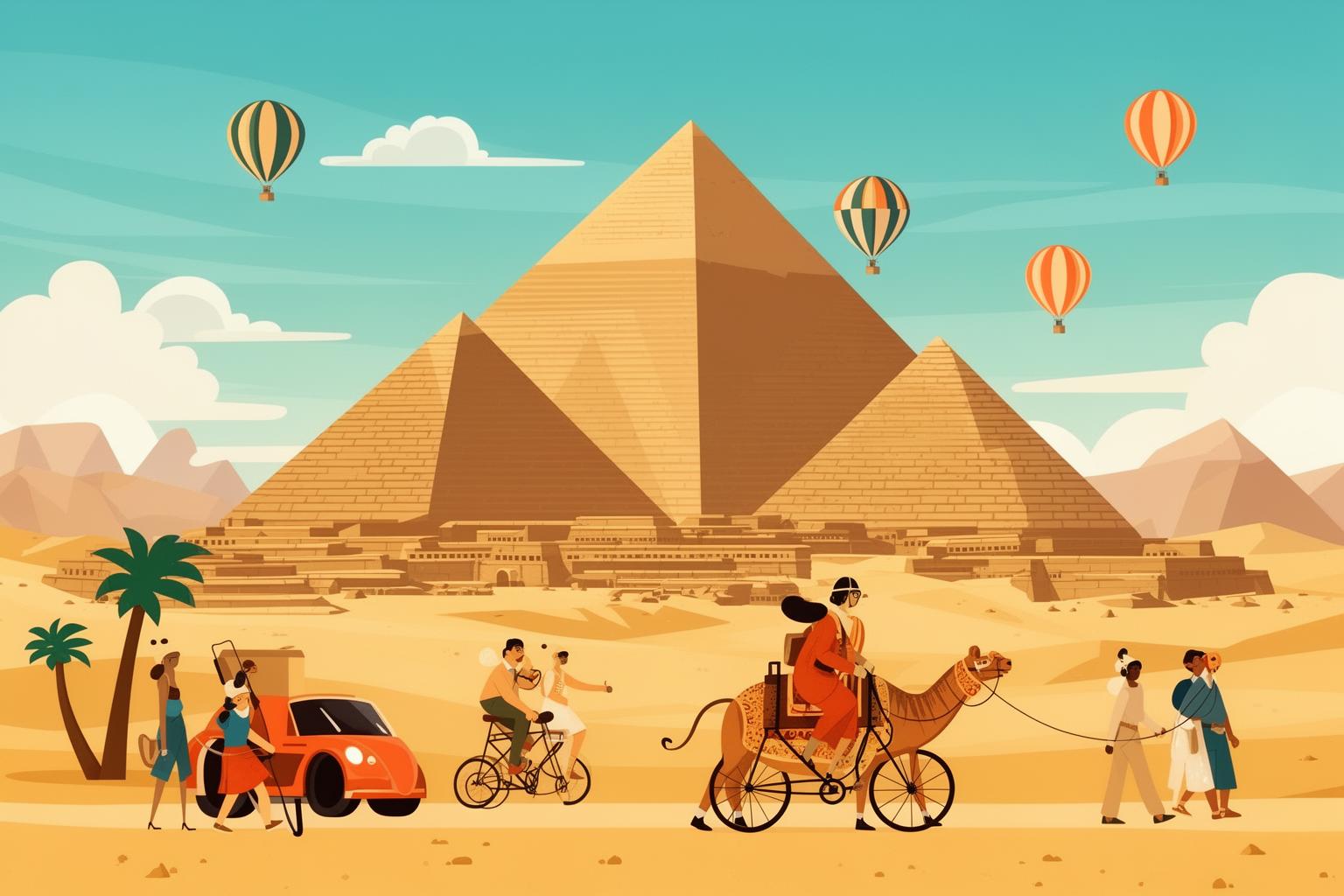
The shift from Cairo’s electric energy to Giza’s quiet calm is a crucial part of the experience. How you travel shapes your initial impression of the monuments, which often emerge suddenly, ghost-like, through the haze and towering buildings. Although the Giza Plateau is technically in Giza—a separate city now engulfed by the urban spread of Greater Cairo—the journey feels like moving between neighborhoods, yet it transports you to a completely different world.
For the smoothest and most hassle-free option, using a ride-sharing app such as Uber or Careem is a revelation in Cairo. It avoids the often-complicated negotiations with taxi drivers and offers a clear, upfront fare. The trip can range from 45 minutes to well over an hour, entirely dependent on Cairo’s famously unpredictable traffic. Look out the window as the dense, European-style architecture of Downtown Cairo transitions to the more functional apartment blocks of the suburbs. Notice the canals, the lively local markets, and donkey carts sharing lanes with modern cars. This drive acts as a crash course in the city’s complex identity. Your driver may engage in friendly chat or silently master the controlled chaos. Either way, this air-conditioned cocoon provides a comfortable buffer before you step into the desert sun.
For those seeking a more adventurous and truly local experience, taking a taxi is an option. Flagging down one of the city’s black-and-white cabs requires confidence. You will need to negotiate the fare in advance; always agree on a price for the one-way trip to the Giza Plateau entrance. This presents an opportunity to practice your bargaining skills, a well-respected craft here. The experience is less filtered and more immediate. The windows might be rolled down, bringing in the city’s unfiltered sounds and smells—a raw, authentic taste of Cairene life.
For those wanting a curated experience, hiring a private guide and driver for the day is the ultimate choice. This is about more than just transportation; it’s about context. A knowledgeable Egyptologist guide turns the visit from mere sightseeing into an immersive lecture. They handle tickets, navigate crowds, and most importantly, share the stories carved into the stones. They can clarify the difference between the Step Pyramid at Saqqara and the true pyramids at Giza, highlight subtle details in the hieroglyphs, and bring the pharaohs and their courts to life. While the most expensive option, it often proves the most rewarding, weaving a narrative throughout your day and ensuring you see sights you might otherwise miss. They know the best times to visit each site, the quietest spots for reflection, and how to politely but firmly fend off the persistent touts.
First Sight: The Scale of Forever
No photograph, no documentary, nor any words can truly prepare you for the moment you see them in person. You might catch a glimpse of a pointed tip between two apartment buildings during the drive over—a surreal intrusion of the ancient into the modern. Yet the first unobstructed view, as you near the entrance to the plateau, is breathtaking. It recalibrates your entire sense of scale and time.
The pyramids are not set in some remote, untouched desert as often portrayed. They loom at the very edge of the city. One moment you’re on a bustling street; the next, you find yourself standing before structures that were ancient when the Roman Empire was just beginning. What strikes you first is their sheer size. They are not merely large; they are mountains of stone, carefully positioned with a purpose that feels both intensely human and profoundly divine. The Great Pyramid of Khufu, especially, seems to command the landscape, its mass drawing the sky downward. The air here shifts—thinner, drier, filled with the fine dust of millennia. The city’s noise fades into a distant hum, replaced by the whisper of the wind, the soft footsteps of camels, and the murmurs of a dozen languages spoken in hushed, reverent tones. It feels like stepping into another realm, a place where the rules of the modern world seem temporary and insignificant.
The atmosphere is one of deep awe combined with a dizzying sense of historical vertigo. You walk on the same ground once tread by pharaohs, priests, architects, and countless generations of travelers who came to behold these wonders. There is an energy at the Giza Plateau—a weight of accumulated history that is almost tangible. It’s the sensation of being a small, fleeting part of a story that is impossibly vast.
The Titans of Giza: Exploring the Three Great Pyramids
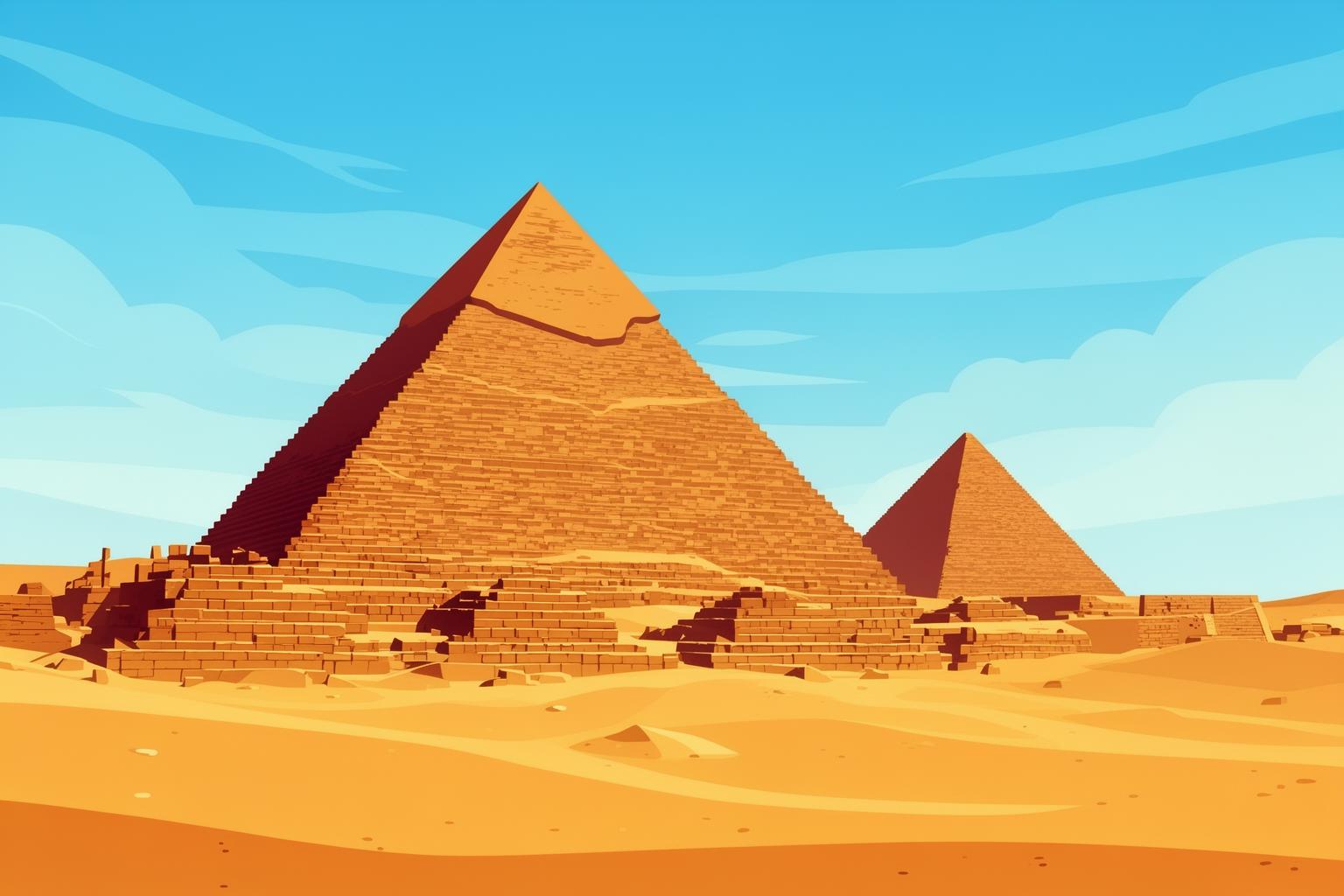
The Giza Necropolis is defined by three main pyramids, each erected for a distinct pharaoh of the Fourth Dynasty. Although they may appear alike from afar, each pyramid possesses its own distinct character and history.
The Great Pyramid of Khufu
This is the largest, and the last surviving Wonder of the Seven Wonders of the Ancient World. Constructed for Pharaoh Khufu around 2580 BC, it remained the tallest man-made structure globally for almost 4,000 years. Standing at its base and gazing upward is an awe-inspiring experience. The enormous limestone blocks, each weighing several tons, are arranged with a precision that continues to perplex engineers. Touch the stone; it’s sun-warmed, weathered by millennia of wind and sand, yet remarkably solid. This is the foundation of history.
For the bold and not claustrophobic, visiting the interior of the Great Pyramid is essential. Be warned: this is no casual walk. The entrance leads to a long, narrow, and steeply ascending passage where you’ll move slowly, bent over, in single file with other visitors. The air is warm, heavy, and still. It’s physically challenging, but the payoff is reaching the King’s Chamber located deep within the pyramid’s core. The chamber is simple: a rectangular room of polished red granite with a large, empty sarcophagus. There are no hieroglyphs or ornate decorations. The wonder lies not in what you see, but where you are—at the heart of the grandest tomb ever built, encased by millions of tons of stone, sealed for thousands of years. The silence is complete, and the experience deeply moving. It is a pure moment of history.
The Pyramid of Khafre
The second-largest pyramid on the plateau was built for Khufu’s son, Khafre. From some perspectives, it can seem taller than the Great Pyramid due to its slightly higher elevation. Its most notable feature is the smooth, polished casing stones that remain near its top. These remnants offer a glimpse of the original appearance of all the pyramids: not the stepped, rough forms we see today, but shining, smooth-sided structures clad in fine white Tura limestone, brilliantly reflecting the Egyptian sun. The causeway extending from Khafre’s pyramid is one of the most well-preserved on the plateau, leading the eye straight toward the Valley Temple and beyond it, the Great Sphinx, which is also attributed to Khafre.
The Pyramid of Menkaure
The smallest of the three major pyramids, built for Menkaure, Khafre’s son, is no less remarkable. Its uniqueness lies in its construction. The lower courses of its casing consist of red granite, a much harder stone imported from Aswan in the south. This gives it a distinctive two-tone effect. Though smaller, it represents a monumental commitment of resources and labor. Nearby are three smaller subsidiary pyramids, known as the Queens’ Pyramids. Though heavily damaged, they help convey the scale of the entire royal burial complex.
The Guardian of the Plateau: The Great Sphinx
Crouched silently in a ditch below the pyramids, the Great Sphinx is arguably the most enigmatic statue in the world. With the body of a lion and the head of a king, it has symbolized mystery and ancient wisdom for centuries. Carved from a single massive block of bedrock, it stands as a remarkable feat of sculpture. Time has been unkind to the Sphinx; desert winds have worn down its features, and its famous nose was lost centuries ago. Yet, its gaze remains steady, fixed eastward toward the rising sun.
To visit the Sphinx, you descend into its enclosure through the Valley Temple of Khafre. This temple, constructed from enormous granite blocks, is a marvel in itself and provides a brief, cool refuge from the sun. As you emerge and walk along the causeway toward the Sphinx, its immense scale becomes clear. It is much larger than it appears in photographs—a silent, powerful guardian seeming to hold the plateau’s secrets within its stone heart. The best time for photography is often in the morning, when sunlight directly illuminates its face, or in the late afternoon, when golden light casts dramatic shadows. Spend time here not only taking pictures but also simply observing. Reflect on the questions it has inspired for centuries: Who does it represent? What is its purpose? What has it witnessed during its 4,500-year vigil?
The Classic Experience: Camels and Panoramic Views
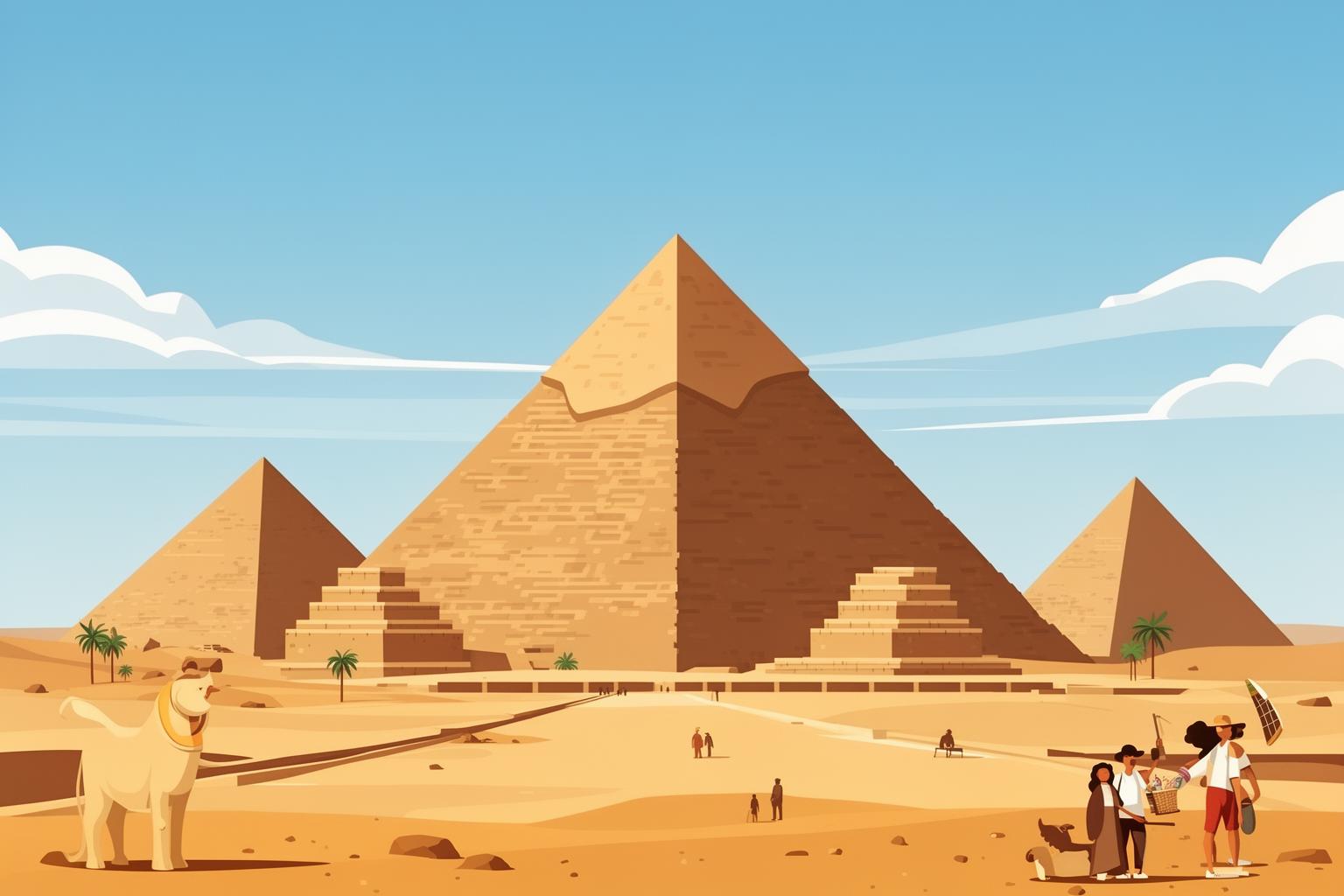
A trip to Giza rarely feels complete without the iconic image of riding a camel with the pyramids in the background. This can be either a magical experience or a source of frustration, depending on your approach. The official stables are the most reliable place to arrange a ride. However, many unofficial camel and horse owners will approach you across the plateau. If you decide to engage with them, be ready to negotiate firmly yet politely. Always agree on the price, duration of the ride, and the exact currency before mounting the animal. A common tactic is to agree on a price to get on, then demand a much higher amount to dismount. Make sure the price covers everything—including the ride, dismounting, and any photos the handler might take for you. A simple phrase like, “Ten US dollars, for thirty minutes, for everything?” can prevent many issues.
Once you’re settled, the experience is delightful. The camel’s slow, swaying gait lifts you high above the ground, offering a fresh perspective on the monuments. The best rides take you out into the desert to a panoramic viewpoint where all three main pyramids are aligned. This is the classic postcard shot, every bit as stunning as you imagine. The silence of the desert, the grandeur of the pyramids on the horizon, and the gentle rhythm of the camel’s walk create a moment of pure, timeless travel magic. Choose your animal handler carefully; look for someone who treats their animal with care and respect. A healthy animal and a calm, professional handler are good indicators.
Navigating with Confidence: Avoiding Touts and Scams
Despite its awe-inspiring nature, the Giza Plateau can also be an intense experience due to the abundance of persistent vendors and touts. Being prepared is essential for a calm and enjoyable visit. Remember that many depend on this for their livelihood, but you are under no obligation to purchase anything or accept unsolicited services.
A firm yet polite “la, shukran” (no, thank you) is your most effective response. Say it with a smile and keep moving. Avoid stopping or engaging in lengthy conversations, as this often encourages continued sales efforts. Be cautious of anyone claiming your ticket is invalid, an area is closed, or that they are an official inspector needing to see your documents. Official personnel are stationed at ticket booths and designated offices; they do not roam the site approaching tourists. Similarly, be wary of individuals offering “free” gifts like headscarves, as accepting these usually results in high-pressure demands for donations or purchases.
Another common tactic involves offers of special tours or access to “secret” tombs, which are always unofficial and designed to extract more money. Stick to official paths and entrances. The best approach is to show confidence: walk with purpose, know where you are heading, and politely dismiss any unwanted advances. Hiring an official guide is an excellent way to shield yourself from touts, as they serve as a buffer between you and persistent vendors.
Timing Your Visit: Chasing the Light and Dodging the Crowds
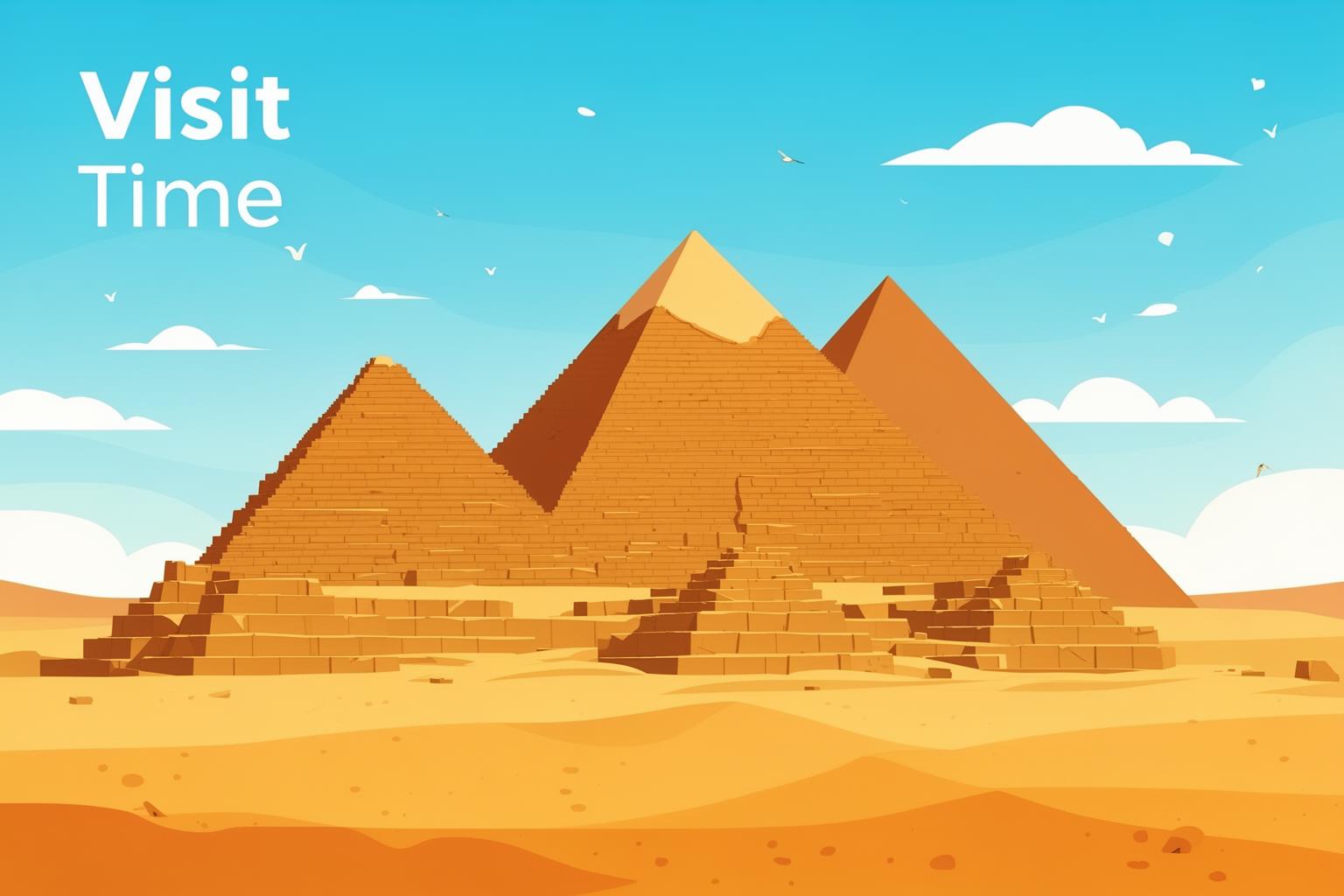
The Giza Plateau presents a different atmosphere depending on the time of day and season. Timing your visit thoughtfully can greatly enhance your experience.
The ideal time to visit is as early as possible in the morning. The gates usually open at 8:00 AM, and arriving then allows you to enjoy the site before the large tour buses arrive and before the sun reaches its harshest intensity. The morning light is soft and golden—perfect for photography—and the air remains relatively cool. You can explore the main pyramids and the Sphinx in a peaceful setting.
Late afternoon is another enchanting time to visit. As tour groups begin to leave, calm returns to the plateau. The setting sun casts a warm, orange glow over the pyramids, creating long, dramatic shadows. This “golden hour” is ideal for photographers and a serene moment to sit quietly and take in the atmosphere.
Regarding the seasons, spring (March to April) and autumn (October to November) offer the most comfortable weather, with warm, sunny days and mild temperatures. Winter (December to February) can be cool, especially in the evenings, but is generally clear and pleasant for sightseeing. Summer (June to August) can be extremely hot, with temperatures frequently soaring above 100°F (38°C). If visiting in summer, aim to arrive early, stay hydrated, and plan to finish your visit by midday.
Practical Preparations: What to Wear and Bring
Your comfort and safety on the Giza Plateau largely depend on a few simple preparations. The environment is harsh—there is very little shade, and the sun reflecting off the sand and stone is intense.
Wear lightweight, loose-fitting clothing that covers your skin. Long sleeves and long pants made from natural fibers like cotton or linen are ideal. This not only protects you from the strong sun but also shows respect for the local culture. A wide-brimmed hat is absolutely essential, as are high-quality sunglasses to shield your eyes from the glare.
Comfortable, closed-toe walking shoes are essential. You will be walking on sand, uneven stone, and climbing stairs. Sandals are not advisable, as the sand can become very hot and small stones can be uncomfortable.
Your daypack should include several key items. First and foremost is water—more than you think you will need. Dehydration is a serious risk. Bring at least one large bottle per person and sip it continuously throughout your visit. Sunscreen is another must-have; apply it generously to all exposed skin before you arrive and reapply as necessary.
Carry cash, specifically small Egyptian pounds. You will need it for tickets, small purchases, tips, and possibly a camel ride. Having small bills makes transactions much easier and helps avoid issues with getting change. A portable power bank for your phone is also a smart addition, as you’ll be taking numerous photos and may rely on it for navigation or communication.
Beyond the Icons: Discovering the Plateau’s Hidden Depths
While the Great Pyramids and the Sphinx are the primary attractions, the Giza Plateau is an extensive complex featuring many other intriguing sites that are often overlooked by hurried visitors.
The Solar Boat Museum, situated beside the Great Pyramid of Khufu, contains a remarkable artifact. Found in a sealed pit at the pyramid’s base, this full-sized cedarwood ship was dismantled and buried more than 4,500 years ago. It has been meticulously restored and is now exhibited in a climate-controlled environment. The ship is believed to have been meant for the pharaoh’s journey in the afterlife, to carry him across the heavens with the sun god Ra. The craftsmanship is extraordinary, showcasing the advanced shipbuilding expertise of ancient Egyptians.
Surrounding the main pyramids are fields of mastabas—flat-roofed rectangular tombs constructed for high officials and nobles of the Old Kingdom. Many are open to visitors and feature beautifully preserved carvings and paintings that depict everyday life in ancient Egypt, including scenes of farming, fishing, feasting, and religious ceremonies. These tombs offer a more personal and intimate view of the past than the colossal pyramids. For instance, the Tomb of Meresankh III is famous for its vivid and intricate reliefs.
South of the main pyramids lies the Workers’ Village, the remains of the settlement that accommodated the skilled laborers who built the monuments. Excavations here have disproved the long-standing myth that slaves built the pyramids. Evidence of bakeries, breweries, and medical facilities points to a well-organized and cared-for workforce. Exploring this site provides a meaningful insight into the ordinary people whose skill and effort turned the extraordinary vision of the pharaohs into reality.
An Evening of Spectacle: The Sound and Light Show
After sunset and once the plateau gates close, the pyramids take on a new form. The Sound and Light Show is a quintessential Giza experience. Seated in an outdoor theater facing the Sphinx and the pyramids, you witness the monuments illuminated by a brilliant display of colored lights and lasers as darkness falls. A powerful narrator recounts the story of ancient Egypt, with the Sphinx itself appearing to serve as the storyteller. Although some may find it somewhat theatrical, there is an undeniable magic in seeing these ancient structures lit against the night sky, their iconic shapes transformed into a canvas of light and narrative. It’s a dramatic and engaging way to conclude a day of exploration, providing one final, spectacular view before returning to the modern world of Cairo.
The Weight of Ages, The Touch of a Hand
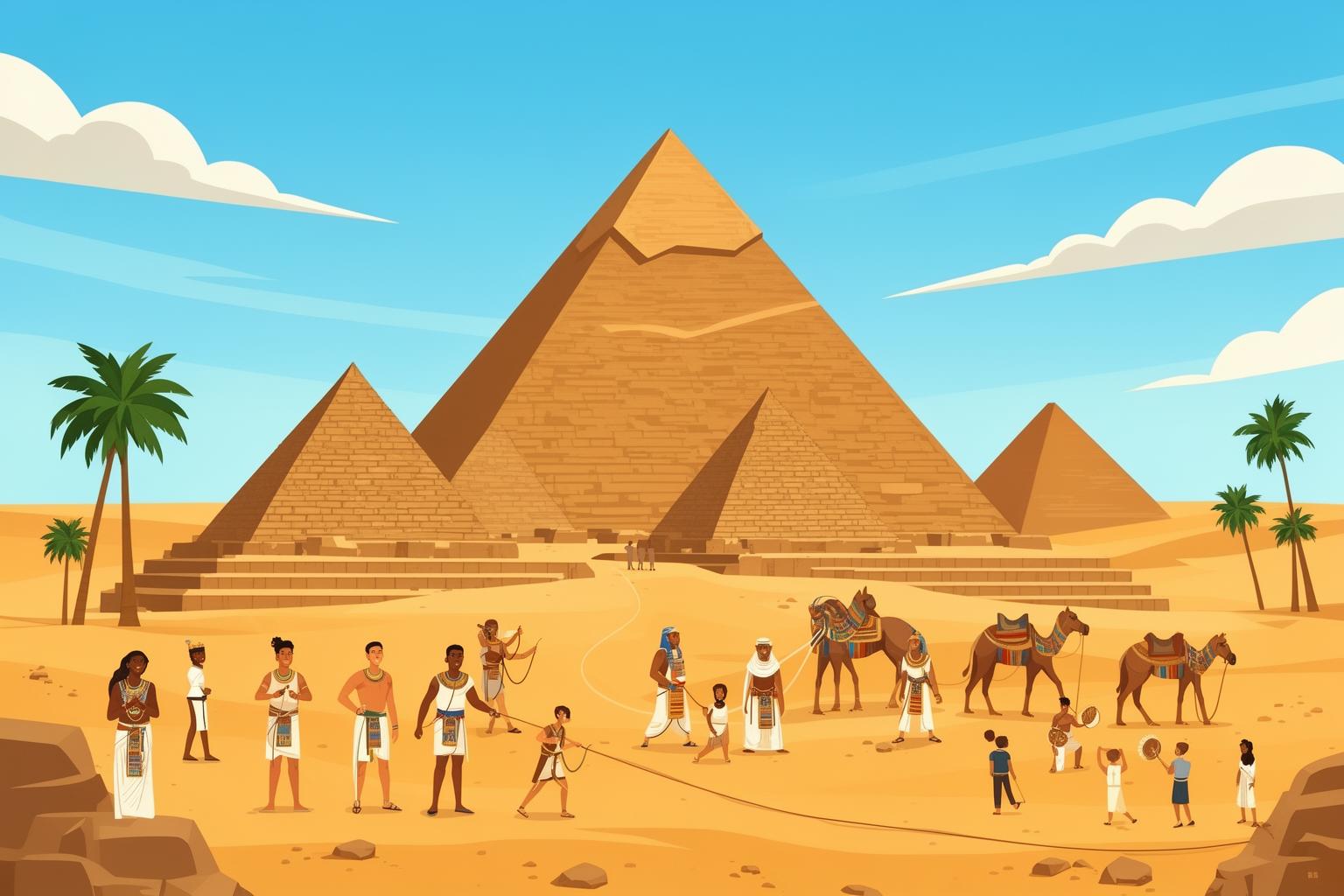
Visiting the Pyramids of Giza is more than merely ticking off a landmark on a list. It is an encounter with the distant past and the pinnacle of human achievement. It teaches humility, standing before something that has endured for millennia and will remain long after we have gone. The true wonder of Giza lies not only in its monumental scale but also in its intimate details: the warmth of sun-baked stone beneath your palm, the intricate chisel marks left by a craftsman 4,500 years ago, and the sound of the wind sweeping across the open desert.
This is a place that invites you to slow down, observe, and truly feel. The journey begins amid the vibrant chaos of Cairo but ends in a timeless silence beneath the watchful eyes of the Sphinx and the eternal gaze of the pyramids. Prepare well, walk with confidence, and open yourself to wonder. The echoes of the pharaohs linger here, carried on the desert wind, waiting to share their story with you.