
To read Abdulrazak Gurnah is to travel. Not as a tourist skimming surfaces, but as a soul adrift on the currents of history, memory, and migration. His novels, which earned him the Nobel Prize in Literature in 2021, are not just stories; they are maps of the human heart, charting the profound emotional landscapes of those caught between worlds. They explore the uncompromising effects of colonialism, the deep ache of displacement, and the quiet resilience of individuals piecing together their identities far from home. A journey into the physical places that shaped his life and his fiction is, therefore, more than a literary tour. It is an immersion into the very pulse of his work, a pilgrimage that traces the fault lines between a vibrant, sun-drenched past on the island of Zanzibar and a contemplative, often melancholic, present in the seaside towns and academic halls of England. This is a tale of two shores, two climates, two histories—the two poles of an existence that Gurnah has so brilliantly transmuted into literature. We begin where he did, on the spice-scented archipelago of Zanzibar, the origin point of so many of his characters’ longings, before crossing the ocean to the cool, temperate coast of England, the site of their exile and their hard-won peace. It’s a journey that asks you to listen to the whispers in the walls, to feel the weight of the sea, and to understand that home is sometimes a place you can never truly leave, even when you are a world away.
This literary pilgrimage echoes a similar journey into the heart of Mo Yan’s Gaomi, where a writer’s homeland is also the vital source of their fictional world.
The Whispering Walls of Stone Town
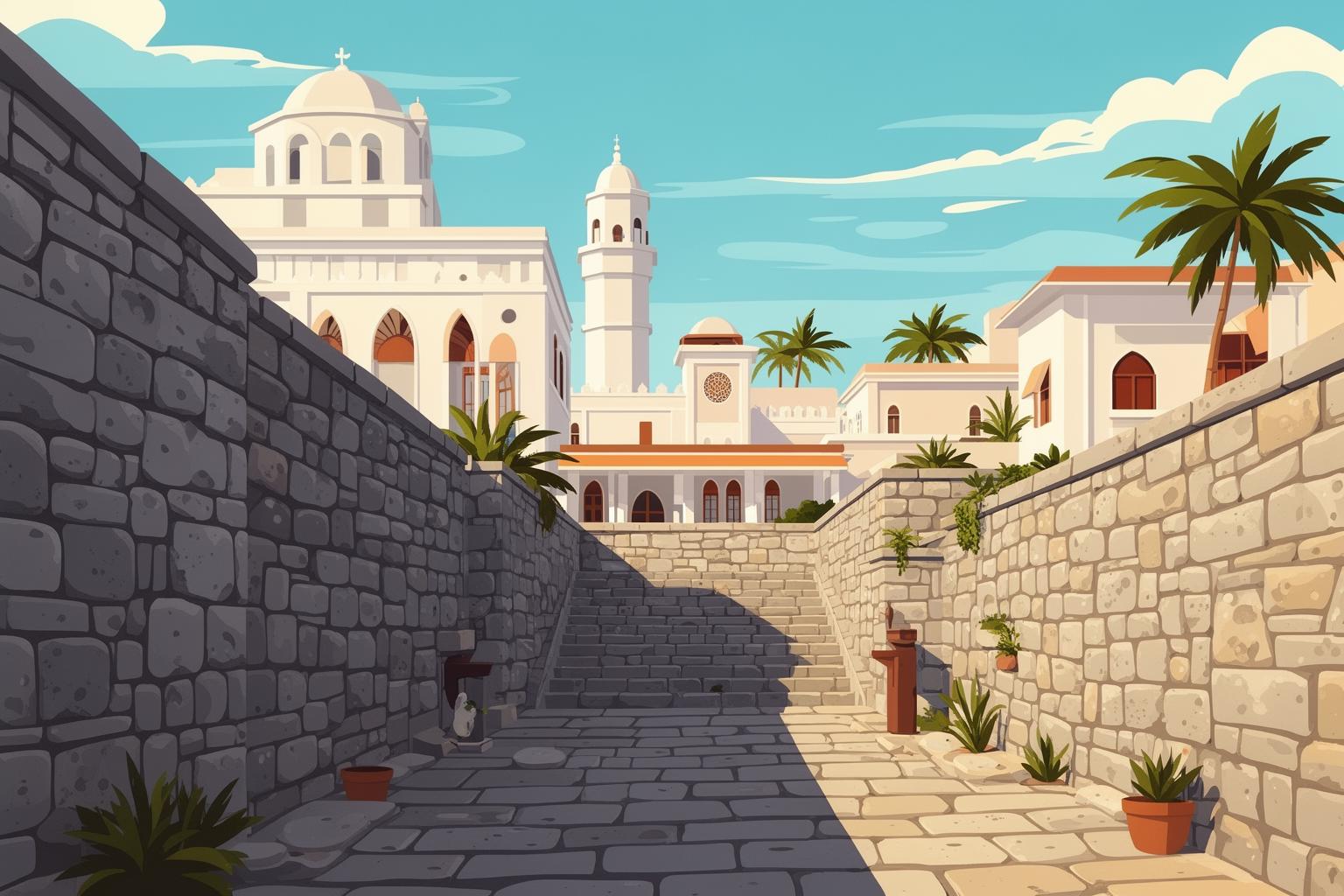
The journey begins with a breath of warm, humid air, heavy with the aroma of cloves, cardamom, and the salty breeze of the Indian Ocean. This is Stone Town, the ancient core of Zanzibar City and a UNESCO World Heritage site. It is more than just a backdrop in Gurnah’s novels; it is a living, breathing character. To walk its streets is to step directly into the world of Paradise, By the Sea, and Afterlives. The city feels less like a rigid grid and more like a living organism—a labyrinth of narrow, twisting alleys that turn unpredictably, opening into sunlit courtyards or ending abruptly at the sea. The walls themselves seem to hold stories. Built from coral rag and mangrove timber, plastered with lime, they bear the weathering of centuries of monsoon winds and salty air. Their texture is the texture of history itself—porous, layered, and soaked with the past.
The atmosphere is a symphony of sound and sensation. The melodic call to prayer from a dozen minarets echoes through the maze, mingling with the chatter of Swahili, the distant hum of a scooter, and the laughter of children playing football in a dusty square. Sunlight streams through the narrow spaces between buildings, casting sharp, dramatic shadows that dance and shift as the day moves on. It is in these shadows that the ghosts of Gurnah’s fiction seem to linger. You can almost see Yusuf, the young protagonist of Paradise, moving through these same alleys, his senses overwhelmed by the city’s potent blend of commerce, faith, and intrigue.
Tracing Footsteps in a Labyrinth of Time
To truly experience Stone Town as Gurnah’s characters would, one must forsake the map. The pleasure lies in getting lost. Turn a corner, and you are met with a magnificent, intricately carved wooden door, studded with brass knobs—a testament to the owner’s wealth and a fusion of Swahili, Omani, and Indian craftsmanship. These doors are gateways, not just into homes, but into the island’s layered identity. Some are adorned with verses from the Quran, others with symbols of fish or chains, hinting at the owner’s trade or, more darkly, their connection to the slave trade that once cast a long shadow over this prosperous port.
As you wander, the grand, crumbling facades of former palaces and merchants’ houses loom overhead. The House of Wonders (Beit-al-Ajaib), with its soaring verandas and clock tower, stands as a monument to a past era of Omani sultans, symbolizing a modernity that was both imposed and embraced. Nearby, the Old Fort (Ngome Kongwe), a massive stone fortress built by the Omanis, now hosts artisan shops and an open-air amphitheater. Its sturdy walls, once defending against the Portuguese, now provide a backdrop for cultural festivals. This ongoing interplay of past and present, grandeur and decay, permeates Stone Town’s soul. Gurnah’s characters are shaped by this environment; they carry the weight of history, the stories embedded in the very stones beneath their feet. The city lives within them, its complexities reflected in their own inner struggles.
A first-time visitor should plan to spend several days simply walking. Begin early in the morning, when the city is just waking and the light is soft and golden. This is the moment to see the city at its most genuine, before the main streets fill with crowds. Let your intuition lead you. Follow the scent of freshly baked bread to a hidden bakery or the sound of hammering to a craftsman’s workshop. This unstructured wandering lets you feel the city’s rhythm, notice the small details that bring Gurnah’s prose to life: women in colorful kangas sweeping their doorsteps, old men playing bao in the shade, stray cats stretching lazily in patches of sunlight.
The Scent of Cloves and the Taste of Memory
No visit to Stone Town is complete without a full sensory immersion in its markets. Darajani Market is the island’s bustling, chaotic, and utterly captivating heart. Inside, the air is a potent mix of aromas: the sweet perfume of mangoes and jackfruit, the earthy pungency of turmeric and ginger, the sharp metallic smell of the fish market, and overarching all, the warm, woody scent of cloves that once made this island a prize of empires. This is the world of trade and transaction that Gurnah portrays—a place where cultures converge and bargains are struck. Observing the vendors and hearing the symphony of commerce, you gain a vivid sense of the city as a nexus of the Indian Ocean world, where goods and people have converged for centuries.
To understand this history more deeply, travelers must engage with the island’s spice trade. While Gurnah does not focus on today’s tourist-oriented spice farms, the legacy of the plantations is a crucial undercurrent in his work, especially in Paradise. The wealth of the Omani aristocracy was built on clove cultivation, an enterprise fueled by the brutal institution of slavery. Visiting a spice farm, therefore, is more than a pleasant sensory experience—it is an opportunity to learn about the island’s economic past, to see, touch, and taste the commodities that shaped its fate. A knowledgeable local guide will not shy away from this difficult history. They will explain how the clove tree, imported from the Moluccas, transformed the island’s landscape and society, creating vast wealth for a few and great suffering for many. This context adds a poignant layer to the fragrant leaves of a cinnamon tree or the vivid red of a lipstick fruit, helping you grasp the complex social hierarchies and historical grievances simmering just beneath the surface of Gurnah’s narratives.
For a practical approach, consider hiring a licensed local guide on your first day in Stone Town. They can provide invaluable historical context, navigate the labyrinthine alleys with ease, and help you understand cultural etiquette. When visiting mosques or local homes, modest dress is essential. Women should consider carrying a light scarf to cover their heads and shoulders. The best time to visit Zanzibar is during the long dry season, from June to October, when the weather is clear and humidity is lower—ideal for walking and exploring the city’s hidden corners.
Beyond the City – The Rhythms of the Island
While Stone Town serves as the historical and cultural heart of Zanzibar, the island of Unguja, on which it is located, holds a different kind of enchantment. To truly understand the world Gurnah depicts, one must venture beyond the city’s limits and explore the turquoise waters, white-sand beaches, and tranquil villages scattered along the coast. The island’s identity is deeply intertwined with the Indian Ocean, which remains a powerful and constant presence in Gurnah’s work. It symbolizes escape, opportunity, connection, and profound, heartbreaking loss. It was the route taken by traders, the path followed by exiles, and the vast, unknowable expanse separating his characters from the homes they have lost.
The Dhow’s Journey: Echoes of the Indian Ocean
The most iconic vessel of this ocean is the dhow, a traditional sailing boat distinguished by its triangular lateen sail. For centuries, these boats have sailed the monsoon winds, linking Zanzibar to the Arabian Peninsula, Persia, India, and the African mainland. They stand as symbols of the island’s deep connection to the broader world. Watching them glide across the water at sunset, their sails silhouetted against a fiery sky, is a timeless and profoundly moving sight. It is easy to imagine the characters of Afterlives or By the Sea gazing toward this same horizon, their minds filled with dreams of departure or memories of arrival.
A highly recommended experience is to take a sunset dhow cruise from Stone Town. As the city fades behind you and the only sounds are the creaking wooden hull and the gentle lapping of the waves, the immense power and allure of the ocean become palpable. The experience is meditative, offering space to reflect on the themes of journeys and separation that are central to Gurnah’s storytelling. Alternatively, visit one of the fishing villages on the northern or eastern coasts, such as Nungwi or Matemwe, where life follows a slower rhythm, dictated by the tides. Rise early to watch fishermen bring in their nightly catch, their boats dotting the shoreline. This is not a staged tourist attraction but the daily, rhythmic reality for many Zanzibaris. Observing this enduring bond between the people and the sea provides a powerful insight into the maritime spirit of the island and its inhabitants.
The Ghosts of the Plantations and the Ruptures of History
Inland from the coast, the landscape shifts. Here, you find the remnants of old plantations and the grand, crumbling homes of former landowners. This is the world Gurnah subtly critiques in his novels—a world marked by entrenched inequality and colonial exploitation. Though many of the old estates have disappeared, their ghosts remain. The Zanzibar Revolution of 1964 was a seismic event that violently toppled the Sultan and ruling Arab elite. It stands as the pivotal, often unspoken, historical moment that propelled Gurnah, then a teenager, into exile in England. This revolution represents a great rupture in the island’s modern history, a moment of profound social and political upheaval that haunts many of his characters. It is why they are refugees, why their families were torn apart, and the source of a collective trauma resonating through generations.
Of course, a visitor cannot “see” the revolution, yet its legacy is everywhere: in nationalized buildings, in the stories of older Zanzibaris, and woven into the very fabric of society. To truly grasp Gurnah’s work is to understand the significance of this event. When his characters in England speak of what they left behind, it is often this violent break from their past to which they refer. Engaging in conversation with a knowledgeable local, perhaps over a cup of spiced coffee, can provide greater insight than any museum. Ask about family histories, about life after 1964. These personal narratives offer a human connection to the abstract sweep of history, making the themes of loss and memory in Gurnah’s novels feel immediate and deeply personal. It serves as a reminder that beneath the island’s serene beauty lies a complex and sometimes painful history—a duality that Gurnah masterfully captures with subtlety.
England: A New Shore, A Different Silence

The second chapter of our pilgrimage involves crossing continents, moving from the warm, vibrant chaos of the tropics to the cool, ordered calm of southern England. This is the landscape of Gurnah’s exile—the place where he established a new life, developed his career, and discovered his literary voice. The contrast could hardly be more pronounced, and it is within this contrast that the emotional core of his work lies. His characters continuously navigate this duality, their present lives in England perpetually layered with vivid, enduring memories of Africa. Their journey mirrors our own, as we transition from the sensory overload of Zanzibar to the more subdued, introspective ambiance of the English coast and its historic cathedral cities.
Canterbury and the Halls of Academia
For many years, Abdulrazak Gurnah was a professor of English and Postcolonial Literatures at the University of Kent in Canterbury. This ancient city, dominated by its magnificent cathedral, the mother church of the Anglican Communion, serves as a crucial location in our journey. Canterbury epitomizes English heritage. Its cobbled streets, timber-framed medieval buildings, and peaceful river walks feel worlds apart from the labyrinthine alleys of Stone Town. The air is cool and moist, carrying the scent of rain on old stone rather than spices on a sea breeze. The predominant sound is the ringing of cathedral bells—a symbol of order, tradition, and deep-rooted history, though a history vastly different from Zanzibar’s.
Walking through Canterbury means feeling the weight of a particular kind of Englishness. It is a place of pilgrimage, famously immortalized in Chaucer’s The Canterbury Tales. For Gurnah, a young refugee arriving in the 1960s, this setting was likely both a refuge and a source of deep alienation. It is this sense of being an outsider, an observer on the margins of a well-established culture, that many of his characters embody. They find safety and opportunity in England, yet they are also met with a subtle, pervasive feeling of not belonging, a “different silence,” as one of his characters might describe it.
The Shadow of the Cathedral and a Refuge for Words
A literary pilgrim’s path in Canterbury should begin in the city center. Spend time within the precincts of Canterbury Cathedral, marveling at its Gothic architecture. Let the sheer scale and history of the site sink in. Then, stroll along the city walls, gazing down on the tidy gardens and the gently flowing River Stour. This is the England of postcards—a serene and orderly world. Against this backdrop, the inner turmoil of Gurnah’s characters unfolds. Their struggle is not with overt conflict, but with the quiet, persistent ache of nostalgia and the challenge of forging a new identity in a land not their own.
From the ancient city, the journey continues up to the University of Kent campus, perched on a hill overlooking Canterbury. The university’s architecture, predominantly from the 1960s, features functional, modernist concrete buildings that sharply contrast with the medieval city below. This contrast is itself symbolic. The university was a place of new ideas and intellectual inquiry, where the legacies of empire could be critically examined. For Gurnah, it was here—in lecture halls and libraries—that he found the intellectual framework and creative space to write his novels. It became his professional home, a refuge where he transformed personal experiences of displacement into universal stories about the human condition.
While the campus is not a traditional tourist spot, it holds immense significance for those following Gurnah’s journey. Walk the grounds. Visit the Templeman Library, where he likely researched and wrote. Imagine the generations of students he taught, introducing them to the very literatures of which he would become a celebrated master. The atmosphere is one of quiet reflection, a marked contrast to the vibrant energy of Stone Town. It is a place of the mind, and it is here that Gurnah refined his craft, carefully building narratives that bridge the two worlds he inhabited. Reaching Canterbury is straightforward; frequent trains run from London’s St Pancras and Victoria stations. The journey offers a pleasant ride through the Kent countryside, the “Garden of England,” a landscape that further highlights the pastoral, temperate nature of Gurnah’s adopted home.
Brighton’s Coastal Resonance
Another significant place in Gurnah’s English life is Brighton, the lively, bohemian city on the south coast. Whereas Canterbury symbolizes historic, academic England, Brighton represents a more contemporary, multicultural, and transient version of the country. It is a city of arrivals and departures, offering a space for escape and reinvention. For a writer focused on the sea, coasts, and the lives of those who cross them, Brighton provides a different, yet equally powerful, resonance.
A Different Kind of Sea
The sea at Brighton is not the warm, turquoise Indian Ocean, but the cold, grey, and often turbulent English Channel. The beach is not composed of fine white sand but of smooth, grey pebbles that clatter and shift with the tide. The coastal experience here is invigorating, bracing, and tinged with melancholy. Walking along the famous seafront, with the skeletal framework of the Palace Pier extending into the water and grand Regency-era hotels lining the promenade, one senses a faded grandeur and constant movement. People come here from all over the world. It is a traditional holiday resort but also a city with a large student population and a rich history of welcoming immigrants and refugees.
This makes Brighton an intriguing setting for reflecting on Gurnah’s themes. The sea here does not serve as a link to a cosmopolitan trading world like Zanzibar’s; it is a boundary, a barrier, the final obstacle for those seeking refuge. Strolling along the pebble beach and gazing toward the horizon invites contemplation of the varied meanings a coastline can embody. For the English holidaymaker, it connotes leisure. For the refugee in a small boat, it means survival and the hope for a fresh start. Gurnah’s work inhabits this complex space, examining how the same geographical feature can hold profoundly different meanings depending on individual history and circumstance.
Finding Stories in the Everyday
A pilgrimage to Brighton in Gurnah’s honor is less about specific sites and more about immersing oneself in the city’s distinctive atmosphere. The genuine connection arises from observation. Sit at a café in The Lanes, the labyrinth of narrow shopping streets at the city’s historic core, and listen to the many languages spoken. Wander through the lively North Laine district, with its independent shops, vibrant street art, and diverse inhabitants. This is the modern, multicultural Britain where Gurnah’s later characters navigate their lives. They are woven into the fabric of these cities, yet carry within them the memory of another place, another life.
In Brighton, the sense of “in-betweenness” that defines the refugee experience becomes tangible. It is a city that embraces individuality and difference, yet the feeling of being an outsider often remains. A walk along the undercliff path from Brighton Marina toward Rottingdean, with white chalk cliffs on one side and the turbulent sea on the other, is a moving experience. It is a journey on the very edge of the country, a liminal zone that resonates with a writer so concerned with borders, both geographical and psychological. Here, the internal exile of his characters feels most vivid—they inhabit this shore, yet their hearts and memories lie elsewhere, far across the water.
Bridging Two Worlds: The Traveler’s Takeaway

A journey through the worlds of Abdulrazak Gurnah ultimately reveals a passage between two vastly different states of being. It is an exploration of contrasts: the warmth of Zanzibar against the coolness of England; the communal, outward-facing life of Stone Town compared to the more individualistic, introspective existence in a British university town; the weight of a long, multicultural history alongside the complexities of a post-colonial present. Moving from one to the other is to physically embody the experience of displacement and adaptation central to his literary work. The traveler is not merely observing landscapes; they are immersing themselves in the emotional geography that Gurnah’s characters navigate daily.
Reading the Landscape
To deepen this connection, there is no better approach than to read Gurnah’s work in the places that inspired it. Find a quiet spot in the Forodhani Gardens in Stone Town as evening descends and the food market awakens, and open the pages of Afterlives. Reflect on the German colonial era while seated in the shadow of buildings that witnessed its rise and fall. In England, settle on a bench along the Brighton seafront, the wind blowing off the Channel, and lose yourself in By the Sea. Let the authentic sensory experience of the place—the cry of gulls, the scent of salt and vinegar, the chill in the air—blend with the fictional narrative. Reading in situ creates a powerful, resonant dialogue between text and world. The landscape ceases to be a mere backdrop; it becomes an active participant in the story, its features and mood deepening your understanding of the characters’ emotions and motivations. Abstract ideas of exile and memory become tangible, felt experiences.
A Journey of Empathy
Ultimately, this pilgrimage transcends literary sightseeing. It is an exercise in empathy. By walking the same streets, breathing the same air, and sensing the sun or rain on your skin in these two distinct parts of the world, you gain a deeper, more visceral understanding of the human stories Gurnah tells. You come to appreciate the courage required to leave everything familiar behind. You sense the persistent pull of the past and the immense challenge of forging a meaningful future in a new land. You recognize that history is not a static subject in a textbook but a living force continuously shaping the present, leaving traces on both people and places.
In an era of global migration and political polarization, Abdulrazak Gurnah’s work is more vital than ever. His novels defy easy answers and resist simple categories. They compel us to look beyond headlines and statistics to perceive the complex, nuanced, deeply personal stories of individuals caught up in the vast currents of history. A journey through his world is a journey into these narratives. It is an invitation to listen, observe, and connect with the shared humanity that unites us all, no matter where we come from or where we find ourselves.
To follow Abdulrazak Gurnah’s footsteps from the shores of Zanzibar to the coast of England is to realize that his novels are composed not just of words, but of places, feelings, and memories. The landscapes are as essential as the characters, each shaping the other in a delicate, intricate interplay. This journey leaves you with more than photographs and souvenirs; it grants a deeper appreciation for the quiet power of literature to bridge divides, illuminate past shadows, and celebrate the enduring resilience of the human spirit. It reminds us that in every whispered story from a winding alleyway, and in every silent gaze out over a cold sea, lies a world of meaning waiting to be uncovered.