
There are stories that entertain, and then there are stories that change you. They embed themselves deep within your soul, altering the way you see the world, the way you feel the ground beneath your feet. Tokyo Magnitude 8.0 is one such story. Released in 2009, this anime series wasn’t about superheroes or fantasy realms. It was a stark, unflinchingly realistic portrayal of what could happen if a catastrophic earthquake struck the heart of one of the world’s most sprawling metropolises. It follows two young siblings, Mirai and her little brother Yuki, who find themselves stranded far from home in the immediate, chaotic aftermath. Their journey home, a walk across a shattered Tokyo, is the emotional core of a series that explores themes of family, loss, human kindness, and the sheer, terrifying fragility of our everyday lives.
To watch this series is to be deeply moved. But to walk in the footsteps of its characters is to engage with its message on an entirely different level. A pilgrimage, or seichi junrei, through the real-life locations of Tokyo Magnitude 8.0 is a journey unlike any other. It’s not about finding cute photo spots or buying merchandise. It’s a meditative experience, one that layers the fictional narrative of Mirai and Yuki’s struggle over the very real, vibrant, and resilient city that inspired it. You’ll stand in places of futuristic wonder and serene beauty, and in your mind’s eye, see them as they were in the anime: twisted, broken, and yet, somehow, enduring. This journey is an exploration of that contrast—between the peace of today and the chaos of a story that feels hauntingly possible. It’s a walk that reminds us to cherish the mundane, to appreciate the stability of a bridge, the comfort of a park bench, and the simple promise of returning home. It’s a way to connect with the spirit of Tokyo itself, a city that has risen from disaster time and again, and to honor a story that so powerfully captured its heart-wrenching vulnerability and its unbreakable spirit.
If you’re interested in exploring more anime pilgrimages, consider reading our guide to the real-world locations of The Girl Who Leapt Through Time.
The Day the Future Cracked: Odaiba’s Shattered Dream

The story begins on what appears to be an ordinary summer day. Mirai Onozawa, a typical middle schooler struggling with teenage angst, is reluctantly accompanying her endlessly energetic younger brother, Yuki, to a robot exhibition. Their destination is Odaiba, a vast man-made island in Tokyo Bay. For any pilgrim, this is where the journey must begin. Today, Odaiba is a vision of the future—a playground of shining architecture, enormous shopping malls, and technological wonders. It’s a place built on dreams and ambition, making it the perfect and poignant setting for the moment when everything unravels.
A Glimpse of Wonder Before the Fall
The robot exhibition Yuki is eager to see is heavily inspired by the real-life National Museum of Emerging Science and Innovation, more affectionately called the Miraikan. Stepping inside Miraikan is like stepping into the world through Yuki’s eyes: a place of limitless wonder. The sleek, modern building contains remarkable displays on space exploration, robotics, and environmental science. You can watch ASIMO, Honda’s famous humanoid robot, perform its eerily lifelike demonstrations, and almost hear Yuki’s gasp of amazement. The atmosphere is one of optimism and human creativity. It celebrates our ability to shape the future. Spend time here. Explore the exhibits, marvel at the Geo-Cosmos display—a massive globe made of organic LED panels presenting real-time weather patterns. Feel the excitement in the air. This is the precious, peaceful “before” that the anime so effectively conveys. It’s a world of normalcy, the world the characters will spend the remainder of the series desperately trying to reclaim. The sharp contrast between this vibrant reality and the horror that unfolds in the very same location is the anime’s first powerful emotional impact on the pilgrimage.
The Broken Connection: Odaiba’s Iconic Bridge
When the 8.0 magnitude earthquake hits, Odaiba’s futuristic dreamscape becomes an island of isolation. Its shining bridges, the lifelines connecting it to the mainland, are depicted as damaged, impassable structures. The most notable of these is the magnificent Rainbow Bridge. In the anime, its twisted, shattered form is among the first and most striking symbols of the disaster’s magnitude. It symbolizes a city—and a family—suddenly and violently cut off.
To experience this site as a pilgrim, you must see the real Rainbow Bridge. It is anything but broken. It stands as a graceful, stunning suspension bridge dominating the skyline. By day, it is brilliant white; by night, it lives up to its name, illuminated in a cascade of colors. One of the most profound experiences is walking across it. A pedestrian walkway on the lower deck offers breathtaking panoramic views of the Tokyo skyline on one side and the industrial port and Odaiba on the other. As you walk, the city’s hum is a constant companion. You feel a faint vibration as cars and the Yurikamome train pass by. It feels solid, permanent. This walk becomes a meditation. You think of Mirai and Yuki, stranded on the opposite side, viewing this same bridge not as a passage, but as an insurmountable barrier. The simple act of crossing it—a routine for millions—feels like a privilege. It serves as a powerful reminder of the infrastructure we take for granted and the terror of its loss.
Practical advice for visiting Odaiba: The Yurikamome Line, an automated driverless train, provides a spectacular ride from the mainland, weaving between skyscrapers and over the water, offering cinematic views of the Rainbow Bridge. Plan to spend at least half a day here to fully soak in the atmosphere, visit the Miraikan, and perhaps take that reflective walk across the bridge as the sun sets and the city lights begin to sparkle.
The Long Walk Begins: A Perilous Journey Across the Water
After the initial shock, the story of Tokyo Magnitude 8.0 transforms into one of movement. Mirai and Yuki, along with thousands of other stranded individuals, must find a way off the island. Their journey on foot along Odaiba’s waterfront is a harrowing portrayal of a mass exodus—a desperate attempt to return to a home that suddenly seems worlds away. This segment of their pilgrimage focuses less on specific landmarks and more on atmosphere—on grasping the geography of their confinement and the emotional burden of their first steps toward home.
The Waterfront of Despair and Hope
Odaiba is encircled by beautifully maintained seaside parks and promenades. Nowadays, these spots serve as peaceful retreats from the city’s bustle. You can walk along the shore at Odaiba Seaside Park, feel the sea breeze, and watch boats glide across the bay. There’s even a replica of the Statue of Liberty, a quirky photo opportunity. From here, the view of the Tokyo skyline—with the Rainbow Bridge and Tokyo Tower—is picture-perfect. It feels calm, orderly, and safe. Now, impose the anime’s reality onto this scene. Imagine the same stretch of land crowded with shell-shocked survivors. Picture the pristine water cluttered with debris, the air thick with smoke from distant fires. See the skyline not as a symbol of urban beauty but as a distant, damaged destination. This is where the siblings begin their arduous trek. Standing on this tranquil shore, looking across the water to the mainland, you can viscerally sense the psychological gap they had to overcome. It wasn’t just a few kilometers of water; it was a gulf of uncertainty and fear.
The anime depicts relief efforts coordinated by the Japan Coast Guard and Maritime Self-Defense Force, employing boats to ferry people to the mainland. In reality, Tokyo Bay is a busy hub for water buses, which provide a scenic and efficient mode of public transportation. Taking one of these water buses from Odaiba to Hinode Pier or Asakusa is a wonderful way to experience this part of the journey. As the boat pulls away from Odaiba, watch the island shrink and the city grow larger. You’re retracing the characters’ emotional journey in reverse. While they were fleeing a place of trauma, you are peacefully crossing the same waters. This boat ride offers a moment of reflection on the logistics of disaster and the remarkable effort it would take to evacuate such a densely populated area. It gives a tangible sense of the scale of the challenge the characters faced.
In the Shadow of a Giant: Shiba Park and Tokyo Tower
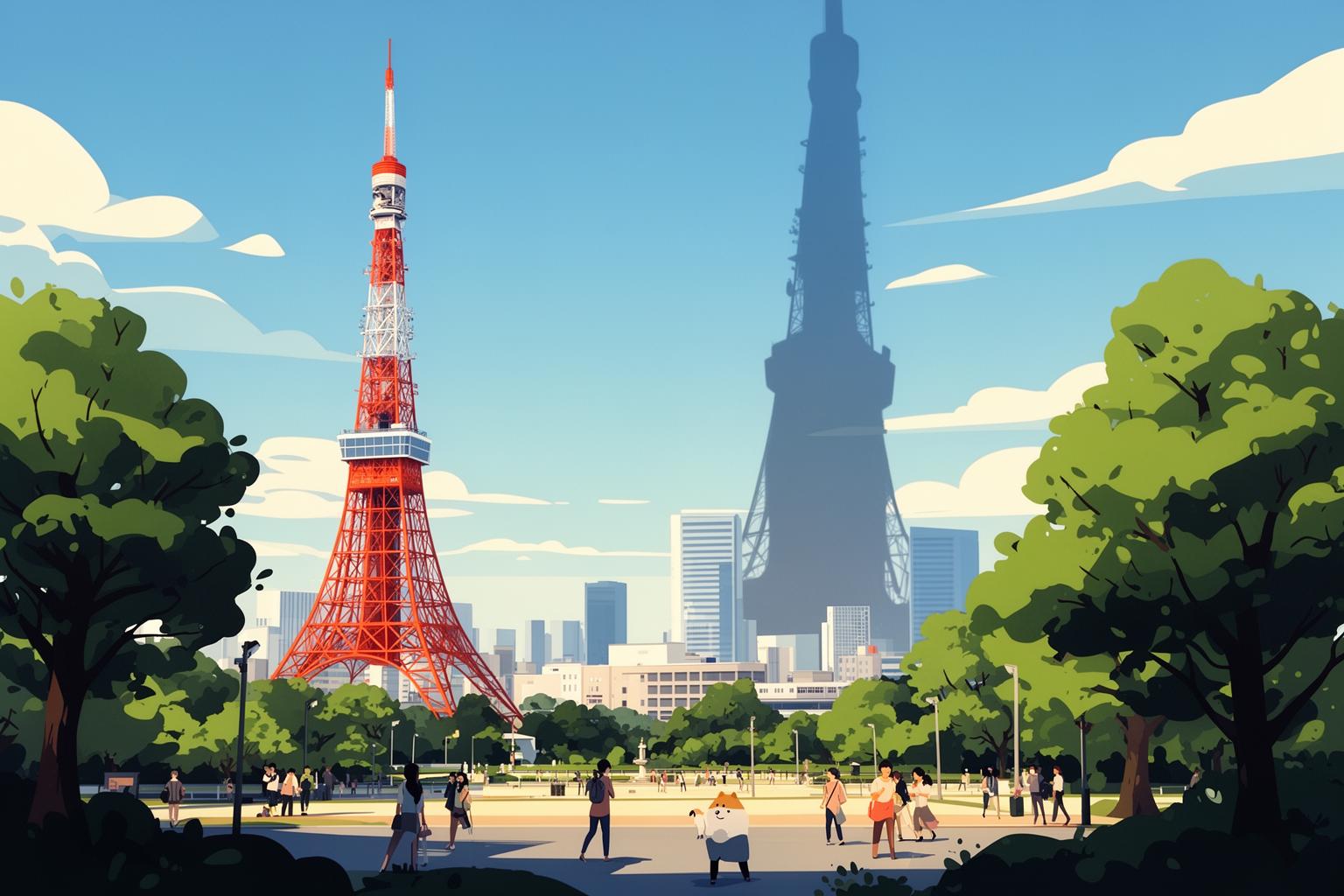
Once Mirai and Yuki reach the mainland, they find themselves in the Shiba area, a district centered around one of Tokyo’s most cherished landmarks: Tokyo Tower. In the story, the tower, though damaged, still stands—a steadfast beacon amid the shattered cityscape, serving as a reliable point of reference on their westward journey. The surrounding area, especially Shiba Park, becomes a crucial location—a temporary haven filled with deep sorrow.
A Beacon of Resilience, A Field of Rest
Tokyo Tower is more than just a communications structure; it symbolizes Japan’s post-war revival and holds nostalgic value for generations of Tokyo residents. In Tokyo Magnitude 8.0, its survival serves as an important visual metaphor for the city’s enduring spirit. When visiting, you’ll encounter a structure that is both elegant and commanding. Climb to its observation decks to enjoy a breathtaking 360-degree view of the sprawling urban landscape. From this vantage point, you can trace the characters’ journey—looking east toward Odaiba, where they began, and west toward Setagaya, their distant home. This perspective helps you understand the vast distance they had to cover on foot, through streets invisible from above. The view places their struggle into an awe-inspiring geographical context.
At the base of the tower lies Shiba Park, one of Tokyo’s oldest public parks. In the anime, this green space transforms into a large triage and relief center, a place marked by heart-wrenching scenes where families are separated and the human toll of the disaster is starkly revealed. Today, Shiba Park is quite different—a peaceful, lovely space where locals walk their dogs, office workers enjoy lunch, and children play. The park also houses the historic Zojoji Temple, a major Buddhist temple with centuries of history. The striking visual contrast between the ancient dark-wood temple and the modern bright-orange tower rising behind it is one of Tokyo’s most memorable sights.
Visiting Shiba Park as a pilgrimage is a profoundly moving experience. Find a bench beneath a tree’s shade. Listen to the temple bells, distant city traffic, and children’s laughter. These are the sounds of peace once lost. It is in this very place that Mirai and Yuki witness immense suffering and confront the overwhelming scale of the tragedy. To sit quietly in this serene reality while recalling the fictional trauma is to grasp what is truly at stake in a disaster—not just buildings and roads, but these simple, irreplaceable moments of everyday life. It is a place for reflection on the quiet strength embodied by both the ancient temple and the modern tower that stand watch over the park, symbols of Tokyo’s resilience in the face of any storm.
Finding Kindness in the Wreckage: The Journey West
As the siblings leave the heavily damaged city center behind, their journey takes them through the expansive, sprawling residential neighborhoods of western Tokyo. This segment of their trek focuses less on iconic landmarks and more on the human stories. It is within these seemingly ordinary neighborhoods that they encounter Mari, a motorcycle courier who becomes their protector and guardian. This partnership forms the show’s core, illustrating how strangers can become family in times of crisis. This stage of the pilgrimage is about finding that same sense of community and the quiet life of a neighborhood.
The Soul of Suburban Tokyo: Inokashira Park
Although the anime doesn’t specify exact locations for many suburban scenes, the neighborhoods portrayed evoke places like Kichijoji. At the heart of Kichijoji lies the beautiful Inokashira Park. Visiting here is essential to grasping the world the characters are striving to reclaim. Unlike tourist-heavy parks like Ueno, Inokashira Park is a cherished local spot, deeply embedded in the community’s daily life. It features a large central pond with swan boat rentals, surrounded by dense groves of trees that dazzle through all seasons—from cherry blossoms in spring to vibrant maple leaves in autumn.
The atmosphere is one of calm, everyday living. You’ll find university students sketching, elderly couples taking leisurely walks, families enjoying picnics, and street performers entertaining weekend crowds. This represents a world of normalcy—the ultimate destination after a long journey. It is places like this that foster community spirit. In the anime, temporary aid stations and shelters appear in schools and public areas. Strolling through Inokashira Park, one can easily imagine its wide open spaces used similarly, with neighbors reaching out to help each other. The park reflects the resilience Mari demonstrates to Mirai and Yuki. It offers a place to sit by the water, watch passersby, and contemplate the series’ central theme of human connection. Adding to its charm, the park neighbors the Ghibli Museum, another heartfelt tribute to storytelling that celebrates the magic of Japanese animation.
This part of the journey invites you to slow your pace. Step off the main tourist route. Explore the small shopping streets (shotengai) near the park, visit local grocers and bakeries, and take in the gentle rhythm of daily life. This is the world the earthquake shattered. Seeing it thriving, peaceful, and whole is a profoundly hopeful experience.
The Final Steps Home: Sangen-jaya’s Embrace
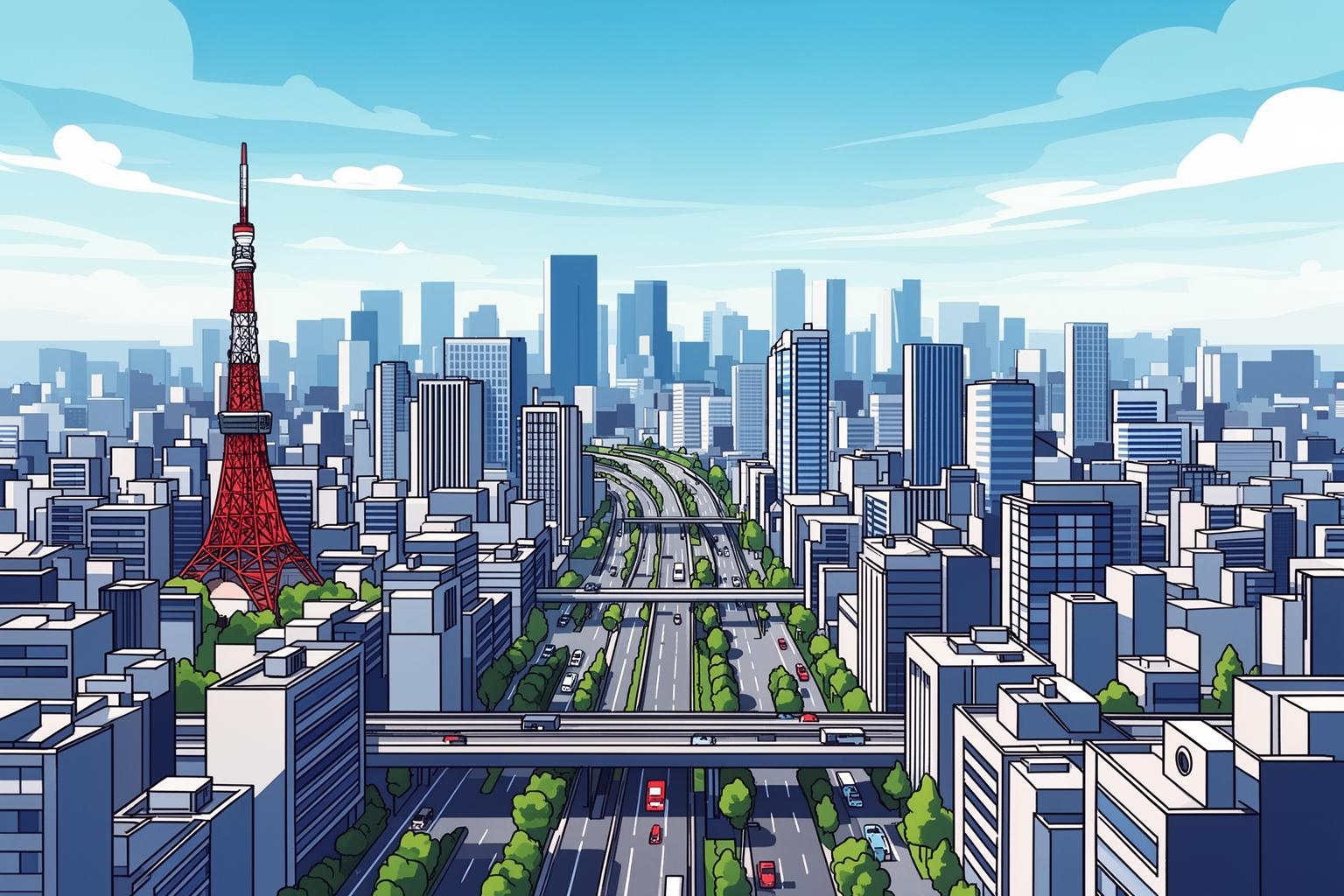
The climax of Mirai and Yuki’s physical journey home unfolds in Sangen-jaya, a neighborhood in Setagaya Ward. This is their familiar ground. The anime depicts this area with remarkable precision, and for a pilgrim, arriving here feels like reaching the emotional heart of the entire story. Sangen-jaya is not a flashy tourist spot; it is a lively, slightly nostalgic, and genuinely authentic Tokyo neighborhood, which is exactly why it holds such significance.
The View from the Carrot Tower
Your first stop in Sangen-jaya should be the Carrot Tower, the neighborhood’s most notable landmark, directly connected to the station. Its name derives from its distinctive orange hue. Make your way to the 26th floor, where you’ll find a free observation deck. Rather than glittering skyscrapers, the view here reveals an endless expanse of low-rise residential Tokyo. It’s a sea of homes. From this vantage point, you can gaze over Setagaya and envision Mirai and Yuki on their final, agonizing walk through these same streets. On a clear day, Mount Fuji appears in the distance, a quiet, distant witness to their struggle. This sweeping view offers a profound sense of what “home” means in Tokyo—not just a single house, but a place within this vast, interconnected community.
The Streets of a Painful Reunion
Descending from the tower, you’ll find yourself in the heart of Sangen-jaya. The area is an intriguing blend of old and new. Narrow, atmospheric backstreets and covered shotengai seem untouched by time, filled with the sounds and scents of everyday local life. The Setagaya Line, one of Tokyo’s last remaining tram lines, clatters charmingly through the neighborhood. In the anime, these familiar sights and sounds signal to the children that they are finally, painfully close to home. It is here, amidst these very real streets, that the story delivers one of its most powerful and unforgettable emotional moments. Walking these streets—past the actual shops, train crossings, and corners shown in the anime—is almost surreal. You can almost sense the characters’ exhaustion, despair, and faint glimmers of hope. Seek out the small park and pedestrian bridge that play significant roles in the final episodes. Standing there is a heavy, somber experience. It is a place where the boundary between fiction and reality feels remarkably thin. You are in a real location, recalling a fictional event that carries the weight of a true memory. This speaks to the story’s power, as these ordinary neighborhood spots evoke such deep emotion.
When visiting Sangen-jaya, take your time. This is no place to rush. Enjoy a coffee at a local café, explore the small shops, and simply observe. The atmosphere is what matters. It is the feeling of a real, living, breathing neighborhood—the very essence that represents the destination, the prize, and the entire purpose of Mirai and Yuki’s impossible journey.
A Journey’s End: More Than Just Locations
Completing a pilgrimage for Tokyo Magnitude 8.0 is an experience that lingers long after you leave the final location. It transforms the way you view Tokyo. You start to notice the disaster preparedness signs in subway stations, the emergency supply depots in parks, and the earthquake-resistant designs of newer buildings. The city becomes more than just a bustling metropolis; it feels like a living entity, keenly aware of its own vulnerability and ready for the unimaginable. The story’s realism seeps into your perception of the real world.
This pilgrimage is deeply humanistic. It isn’t about celebrating animation; it’s about engaging with the profound, universal themes the show so beautifully explores. It’s a journey of empathy. By standing where the characters once stood, you gain a richer understanding of their struggles. You sense the vastness of the city, the weariness of their long trek, and the overwhelming strength of their bond.
Ultimately, this walk through Tokyo is a tribute to the human spirit. It serves as a reminder that beneath the concrete and steel of this great city lies a foundation of community, resilience, and hope. After seeing the world through the eyes of Mirai and Yuki, the simple sight of Tokyo Tower rising against the sky or a peaceful family enjoying a park is no longer just a pretty scene. It becomes a victory—a symbol of a hard-won, precious peace that was lost and, miraculously, still endures in the real world. This journey leaves you with a deep gratitude for the solid ground beneath your feet and the simple, profound joy of having a place to call home.