There’s a certain kind of exhaustion that only city life can create. A relentless hum of traffic, a sea of anonymous faces, and the crushing weight of expectation. It’s a feeling that makes you crave an escape, not just a vacation, but a fundamental shift in scenery and soul. This is the very precipice where we first meet Seishu Handa, the gifted yet troubled calligrapher at the heart of the beloved anime and manga series, Barakamon. Exiled from his Tokyo life after a very public meltdown, he finds himself on a remote island, a place that promises to be the blank page he so desperately needs. That island, a character in its own right, is real. It’s part of the Goto Islands in Nagasaki Prefecture, an archipelago of raw beauty and profound tranquility floating in the East China Sea. For fans of the series, visiting the Goto Islands is more than a simple anime pilgrimage; it’s a chance to step directly into Handa-sensei’s world, to breathe the same salty air that cleared his mind and filled his art with newfound life. It’s a journey to a place where the rhythm of the tides dictates the pace of the day, where community is woven into the fabric of existence, and where a child’s simple wisdom can unlock the most complex artistic block. This guide is your invitation to follow in his footsteps, to discover the real-life landscapes that inspired the heartfelt story of Barakamon, and perhaps, to find a little piece of your own inspiration along the way.
If you’re inspired to explore more anime locations that offer a profound sense of place and tranquility, consider planning a pilgrimage to the serene world of Laid-Back Camp.
The Soul of the Island: Embracing the “Barakamon” Vibe
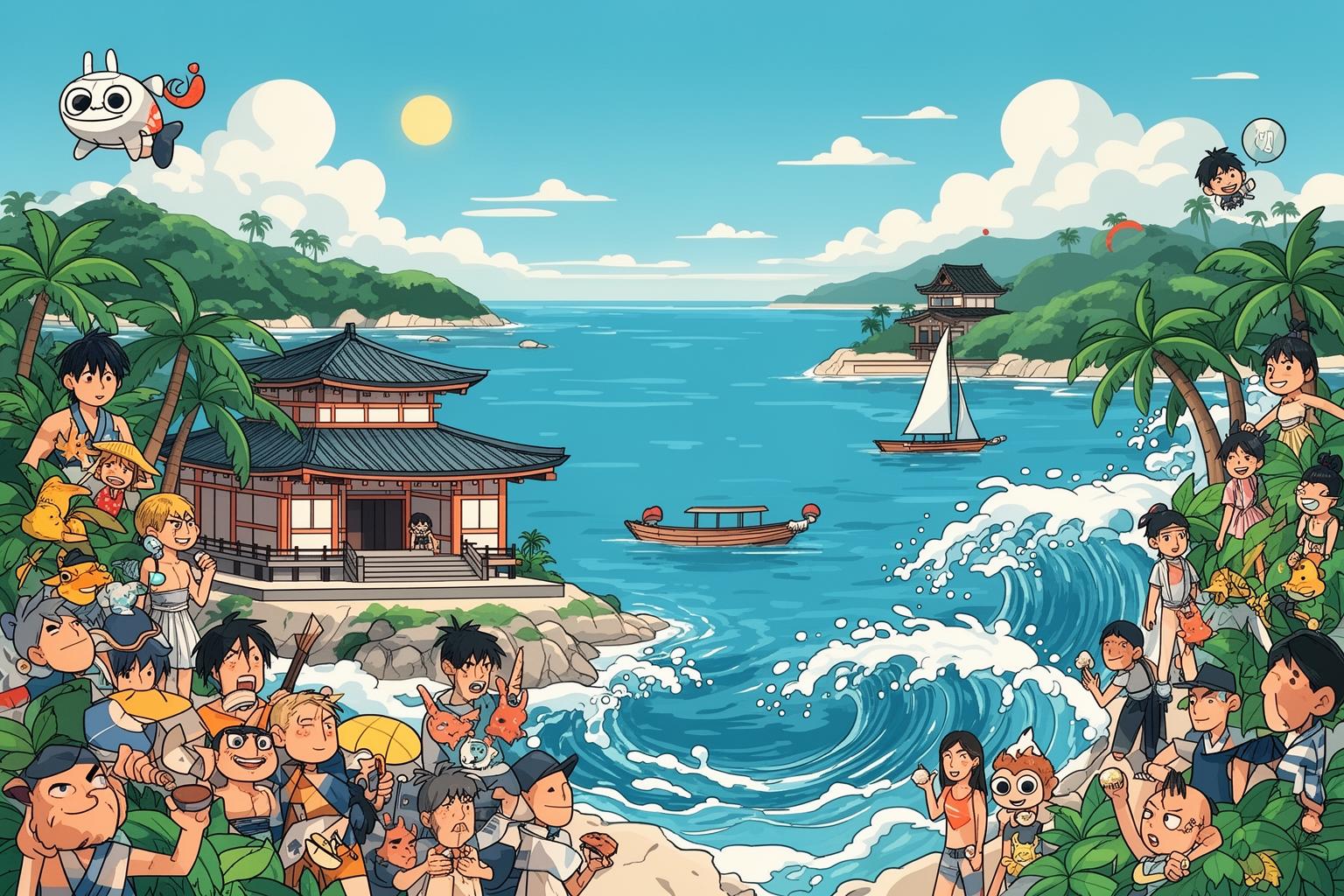
Before setting out to find specific spots, the first thing to do upon arriving in the Goto Islands is simply to breathe. Inhale the fresh, salt-kissed air and exhale the stress of your journey. The essence of Barakamon isn’t captured in a single building or viewpoint, but in the overall atmosphere. It’s a tangible sense of calm that envelops you. Life here flows at a different pace. The hectic rush of the mainland gives way to a gentle, unhurried rhythm. You’ll notice it in the way shopkeepers take their time chatting, in the slow pace of the few cars on the road, and in the patient manner fishermen mend their nets by the harbor. This is the world that initially frustrated, then ultimately healed, Seishu Handa. He arrived expecting solitude to be a creative forge for his art, only to discover that true inspiration came from the spontaneous, chaotic, and wonderfully human connections he formed.
This spirit is heightened by the local dialect, the charming Goto-ben, which plays a vital role in the anime. While you might not grasp all its nuances, you’ll hear its melodic, earthy tones in the greetings shared between neighbors and the laughter of children playing near the sea. It’s the genuine soundtrack of the island, a constant reminder that you are somewhere with a rich and unique cultural identity. For Handa, this dialect was initially a barrier, another layer of his isolation. But as he began to understand it—not just the words but the warmth behind them—it became a symbol of his acceptance into the community. Visitors, too, can sense this. A simple “konnichiwa” is often met with a smile and a string of friendly Goto-ben that, even if its literal meaning is unclear, expresses an unmistakable feeling of welcome.
To truly embrace the Barakamon vibe is to embrace the art of doing nothing. Find a spot on a seawall, much like Naru’s favorite lookout, and simply watch. Watch the clouds drift across the expansive blue sky, watch the clear water lap against the shore, watch the sun sink below the horizon in a blaze of orange and purple. In our hyper-productive world, we’re conditioned to believe every moment must be occupied. The Goto Islands teach a different lesson. They show that stillness is not emptiness; it’s a space for observing, reflecting, and creating. It’s in these quiet moments that the island works its magic, clearing away mental clutter and allowing for the clarity that Handa struggled so hard to achieve.
A Calligrapher’s Footsteps: Tracing Handa’s Journey on Fukue Island
The primary setting for Barakamon is Fukue Island, the largest and most accessible in the Goto archipelago. This is where the fictional village of Nanatsutake is located, and where you can find landscapes that seem lifted straight from the anime’s animation cells. Exploring Fukue feels like wandering through a memory of the series, with each turn in the road revealing a scene that sparks a charming sense of recognition.
Handa’s House: The Heart of the Story
At the center of Handa’s new life is the old, traditional house he rents from the village chief. This wooden, slightly worn home serves as a sanctuary, a studio, and an inadvertent community center all at once. Although there isn’t a single specific building identified as the official model, the essence of Handa’s house lives on in the historic residences across the island. For an authentic sense of it, a visit to Fukué City’s Samurai Residence Street is a must. Here, you can explore beautifully preserved samurai homes, such as the Matsunaga Buke Yashiki Residence. Sliding open the wooden doors and stepping onto the cool tatami mats, the world of Barakamon comes alive around you. You can almost picture Handa, brush in hand, struggling with a new character on a large sheet of paper spread across the floor. You can imagine Naru and her friends bursting through the engawa—the open-air veranda—disrupting his concentration with their lively energy. These houses, with their elegant simplicity, their link to the surrounding gardens, and their sense of history, perfectly capture the rustic charm of Handa’s home. They stand as a testament to a lifestyle that values nature, simplicity, and community—the very lessons Handa learns during his time on the island.
The Iconic Seawall: Where Naru Played
One of the most enduring images from Barakamon is Naru, the boundlessly energetic seven-year-old, perched atop a concrete seawall, gazing out at the vast ocean. This seawall is more than coastal infrastructure; it is a playground, a lookout, and a stage for some of the series’ most heartwarming and humorous moments. The coastline around the Tomie area of Fukue Island is dotted with these seawalls. Traveling along the coast by car or bike, you’ll encounter numerous spots evoking that iconic scene. The raw, functional concrete contrasts strikingly with the vivid turquoise waters and the lush green interior of the island. Standing on one of these seawalls, feeling the sea breeze and hearing the waves below, you sense an overwhelming freedom. It’s easy to see why it was Naru’s favorite spot—a place for reflection, crab fishing, and making promises to the sea. For visitors, it’s an ideal place to pause during a day of sightseeing. Sit, let your legs dangle, and absorb the panoramic view. This simple act connects you directly to the show’s innocent, joyful spirit.
The Village Shrine: Whispers of Local Life
Throughout the series, the small village shrine provides a backdrop for festivals, quiet conversations, and cultural immersion for Handa. The Goto Islands are rich with local Shinto shrines, each serving as a spiritual anchor for its community. Often nestled within groves of ancient trees and marked by a simple torii gate that separates the sacred from the everyday, these shrines are modest, intimate spaces deeply woven into daily island life. They are places where people pray for a good catch, a bountiful harvest, or their family’s health. Visiting one, you can sense centuries of devotion embedded in the earth. You can envision the lively festival scenes from the anime, with lanterns casting a warm glow and the sounds of music and laughter filling the air. This serves as a powerful reminder of the strong community bonds that Handa grows to cherish—bonds celebrated and renewed in these sacred spaces.
The Mochimaki Experience: A Shower of Blessings
A particularly memorable and lively episode of Barakamon features Handa’s first encounter with mochimaki, the tradition of throwing rice cakes to a crowd from a height to celebrate the completion of a new building. This scene perfectly captures the spirited, communal energy of island life. While you can’t simply show up expecting a mochimaki event, it is a genuine tradition in Goto and other rural parts of Japan. It symbolizes sharing good fortune, a joyful and sometimes competitive scramble for blessings in the form of tasty mochi. If you’re lucky enough to be on the island during a festival or building celebration, you may witness this joyful custom firsthand. It offers a vivid expression of the community’s interconnectedness. For travelers hoping to experience such an event, the best approach is to check with the local tourist information office. They often provide schedules for festivals and events where these traditions are kept alive. Participating in, or simply observing, mochimaki lets you experience the vibrant and living culture of the island well beyond any guidebook’s description.
Beyond the Anime: Discovering the Deeper Charms of the Goto Islands
While the Barakamon pilgrimage is an excellent reason to visit, the Goto Islands possess a rich history, culture, and natural beauty that go far beyond the anime. To fully understand the place that influenced Handa’s journey, one must explore these additional aspects that make the archipelago truly unique. This is where a mere location search evolves into a deeply meaningful travel experience.
A Legacy of Faith: The Hidden Christian Sites
The history of the Goto Islands is deeply intertwined with a remarkable story of faith and perseverance. During Japan’s long era of feudal isolation and the ban on Christianity, these remote islands served as a refuge for “Hidden Christians” (Kakure Kirishitan). For over 250 years, they secretly practiced their faith, blending it with Buddhist and Shinto rituals to avoid detection by authorities. After the ban was lifted in the 19th century, these communities resurfaced, constructing beautiful churches that remain today as symbols of their steadfast devotion. Several of these sites, collectively known as the “Hidden Christian Sites in the Nagasaki Region,” are UNESCO World Heritage locations. Visiting them is a profoundly moving experience. The Dozaki Church, with its striking red brick façade, sits serenely by the sea and now functions as a museum narrating this intriguing history. The Egami Church, a wooden building nestled in a dense forest, exhibits a unique blend of Western architecture and Japanese carpentry. Exploring these sacred sites gives valuable insight into the island’s culture. Themes of resilience, strong community bonds, and steadfast faith against all odds are ingrained in the island’s identity—resonating deeply with Barakamon and Handa’s personal artistic struggle.
The Symphony of the Sea: Goto’s Natural Masterpieces
The wild, unspoiled nature of the islands is Handa’s constant companion and, ultimately, his greatest inspiration. The series is filled with stunning visuals of dramatic coastlines, pristine beaches, and verdant hills. The real Goto Islands live up to these depictions; if anything, they are even more breathtaking in person.
Takahama Beach: A Slice of Paradise
Frequently praised as one of Japan’s most beautiful beaches, Takahama Beach is a breathtaking display of nature’s artistry. A crescent of dazzling white sand meets waters that shift through every shade of blue and green—from pale turquoise to deep sapphire. The water’s clarity is remarkable. On a clear day, the volcanic silhouette of Mt. Onidake is visible in the distance. In summer, it’s an ideal place for swimming and sunbathing, reminiscent of Naru’s carefree seaside days. Even during cooler weather, its beauty remains captivating. A peaceful stroll along the shore, accompanied only by the gentle sound of waves, offers a meditative experience. It’s a tranquil spot that quiets the mind and opens the heart, ideal for an artist or anyone seeking a moment of perfect clarity.
The Osezaki Lighthouse: A Sentinel on the Cliffs
For a more dramatic and rugged coastal adventure, a visit to the Osezaki Lighthouse is essential. Perched precariously on the edge of a sheer cliff at the southwestern tip of Fukue Island, this white lighthouse stands as a solitary guardian against the vast sea. The view from the lookout is nothing short of spectacular. You can observe the powerful waves of the East China Sea crashing against jagged cliffs below—a vivid display of nature’s force. The steep descent to the lighthouse is challenging but incredibly rewarding, presenting ever-changing views of the striking coastline. It feels like standing at the very edge of the world. Such a powerful landscape would surely have inspired Handa’s bold, dynamic brushstrokes in calligraphy. Practically speaking, sturdy and comfortable shoes are recommended for this trek. Given the strong winds, a light jacket is advisable, even on warm days. This is nature in its most magnificent and untamed form—humbling and unforgettable.
A Taste of the Island: Savoring Goto’s Culinary Delights
A region’s culture is often best experienced through its cuisine, and the Goto Islands boast a culinary tradition as fresh, honest, and delightful as their landscapes. The local dishes are rooted in the bounty of the sea and the ingenuity of its people.
Goto Udon: The Elusive “Phantom Udon”
One of the islands’ renowned culinary gems is Goto Udon. Unlike typical thick, chewy udon, Goto Udon noodles are uniquely thin and round, created by hand-stretching the dough repeatedly. During this process, they are coated with locally produced camellia oil, which prevents sticking, imparts a subtle fragrance, and allows for long preservation. Their exceptionally smooth texture has earned them the nickname “maboroshi no udon,” or “phantom udon.” The most traditional way to enjoy them is in “Jigoku-daki,” meaning “Hell’s Boil.” The noodles are cooked in a bubbling pot of water at the table, then dipped into a savory broth often made from ago (flying fish), and mixed with a raw egg and other condiments. It’s a simple, comforting, and utterly delicious dish that embodies the heart of Japanese home cooking.
Fresh from the Kuroshio Current: Seafood Bounty
As an archipelago, the Goto Islands naturally offer exceptional seafood. Blessed by the warm Kuroshio Current, the area is home to an incredible variety of marine life. Fresh fish and shellfish abound in local restaurants and markets. Be sure to try Kibinago, a small silver-striped herring often served as sashimi with vinegar-miso sauce. The squid (ika) is also famously fresh, sometimes so translucent it appears almost transparent. Visiting a local izakaya (Japanese pub) is an excellent way to sample various regional specialties, with chefs often recommending the freshest catch of the day. It’s a direct and vibrant taste of the ocean that defines and sustains the islands.
More Than Just Noodles: Kankoro Mochi and Local Sweets
For something sweet and uniquely regional, try Kankoro Mochi. This traditional sweet showcases the islanders’ creativity. It’s made by steaming and sun-drying slices of sweet potato, then pounding them together with glutinous rice (mochi). The result is a soft, chewy, naturally sweet treat with a rustic, earthy flavor. Originally devised to preserve sweet potatoes through winter, Kankoro Mochi carries a taste of the island’s history and resourcefulness. It’s the kind of simple, unpretentious food the characters in Barakamon likely grew up enjoying—a comforting flavor of home.
Your Island Itinerary: Practicalities and Planning
Falling in love with the idea of a Goto pilgrimage is easy; however, planning the logistics takes a bit more effort. These remote islands are part of what makes them so special, but this also means that some advance planning will greatly help ensure a smooth and enjoyable journey.
Getting to Your Island Escape
Your trip to the world of Barakamon will most likely start from either Nagasaki or Fukuoka on the Kyushu mainland.
By Air: The Fastest Route
The quickest and most direct way to reach the main island of Fukue is by plane. Oriental Air Bridge (ORC), in codeshare with ANA, operates daily flights from both Fukuoka Airport (FUK) and Nagasaki Airport (NGS) to Fukue Airport (FUJ). The flight itself is short and scenic, providing beautiful aerial views of the islands as you descend. This option is best if you’re short on time. It’s highly recommended to book your tickets well in advance, especially if traveling during peak Japanese holiday periods like Golden Week in May or Obon in August, as the small planes fill up quickly.
By Sea: The Scenic Journey
For a more romantic and leisurely arrival that truly reflects Handa’s own exile journey, travelling by sea is unforgettable. Ferries and high-speed jetfoils depart from Nagasaki Port and Sasebo Port. The standard ferry is the most economical choice. It takes several hours (about 3-4 hours from Nagasaki) but allows you to stand on deck, feel the sea spray, and watch the islands slowly come into view. For a unique travel tip, consider the overnight ferry from Nagasaki. Departing late in the evening and arriving in Fukue early the next morning, it saves the cost of one night’s accommodation and lets you wake refreshed and ready to explore. The jetfoil is much faster, reducing travel time by about half, but it is more expensive and resembles a bus ride, with limited chances to go outside.
Navigating the Islands: Your Key to Freedom
Once you arrive on Fukue Island, you’ll quickly notice that public transportation is not designed for tourists. Buses exist, but they are infrequent and their routes don’t always align with the key sightseeing spots, which are often spread across the island.
The Freedom of a Rental Car
By far the most efficient and enjoyable way to explore Fukue is by renting a car. This offers ultimate freedom to travel at your own pace, chase the sunset to a secluded beach, or spend as long as you wish at a Barakamon-like spot. Several rental car agencies have offices conveniently located near Fukue Port and Fukue Airport. Be sure to book your car well in advance, especially during peak season. An International Driving Permit (IDP) is required for most foreign visitors to drive in Japan, so arrange this in your home country before traveling. The island’s roads are generally well-maintained, but be prepared for some narrow, winding coastal paths. Drive carefully and enjoy the stunning views.
Other Options: Buses, Taxis, and Bicycles
If you don’t drive, it’s still possible to explore, though it requires more planning. You can piece together journeys using the local bus system, but you’ll need to study the timetable closely. Taxis are available but can be costly for longer distances; they are best used for short trips from the port or airport to your hotel. Renting a bicycle is a great option for exploring a specific town like Fukue City or the Tomie area. Many places now offer electric-assist bicycles, which make tackling the island’s gentle hills much easier.
When to Visit: Finding Your Ideal Season
The Goto Islands are a wonderful destination year-round, with each season offering a distinct character.
- Spring (March – May): The weather is pleasantly mild and the islands are covered in fresh, vibrant greenery. This is an ideal time for hiking and outdoor exploration without the intense summer heat.
- Summer (June – August): This season is perfect for beach lovers. The water is warm and great for swimming, just as Naru and her friends would enjoy. However, be prepared for hot, humid weather, and it is also the peak typhoon season, which can occasionally disrupt ferry and flight schedules.
- Autumn (September – November): Many consider this the best time to visit. Temperatures are comfortable, skies are often brilliantly clear, and summer humidity has lessened. It’s an ideal season for sightseeing, photography, and enjoying a bountiful autumn harvest.
- Winter (December – February): The islands become quiet and tranquil in winter, with far fewer tourists, allowing for a more introspective and personal experience, much like Handa’s arrival. While it can be chilly and windy, the crisp air and peaceful atmosphere have their own special charm.
Where to Stay: From Local Inns to Modern Comforts
Fukue Island offers a variety of accommodations to suit different travel styles. In Fukue City, modern hotels provide convenience and standard amenities. However, to fully immerse yourself in the Barakamon experience, consider staying at a minshuku or ryokan. These traditional Japanese inns, often family-run, offer home-cooked meals featuring local ingredients and a chance to experience the renowned Japanese hospitality, or omotenashi. Staying in a minshuku provides a great opportunity to interact with locals, much like Handa gradually became part of the island community. It’s an authentic and heartwarming way to experience the Goto Islands.
A Traveler’s Notebook: Final Tips for Your Goto Pilgrimage
As you get ready to enter this beautiful world, here are a few final thoughts and pieces of advice to help make your journey as smooth and fulfilling as possible. Think of it as packing your bag not only with clothes but also with the right mindset for this unique adventure.
- Cash is King: Although Japan is technologically advanced, rural areas like the Goto Islands still rely heavily on cash. Major hotels and rental car services accept credit cards, but many smaller restaurants, local shops, and minshuku may not. It’s wise to carry enough Japanese Yen to avoid any awkward moments.
- Pack Smart and Stylishly Functional: Comfort is essential for exploring the islands. Bring sturdy, comfortable walking shoes for trekking cliffsides and historic streets. Since the weather can change quickly, layering is your best bet—a light t-shirt, a cozy sweater, and a waterproof or windproof jacket will come in handy. Don’t forget sun protection: a stylish hat, sunglasses, and sunscreen are crucial as the sun reflecting off the water can be strong. And, of course, insect repellent is necessary, especially during the warmer months.
- Connect with Courtesy: The warmth of the local community is one of the greatest charms of the Goto Islands, much like in Barakamon. You can participate in this positive exchange by learning a few simple Japanese phrases. A cheerful “Konnichiwa” (Hello), a polite “Sumimasen” (Excuse me), and a sincere “Arigato Gozaimasu” (Thank you very much) will be warmly received and show your respect for the local culture.
- Safety for the Solo Traveler: From a woman’s perspective, the Goto Islands feel incredibly safe, with a strong sense of community where everyone looks out for each other. Still, it’s smart to follow typical travel safety precautions. If you’re hiking a remote trail, inform someone at your accommodation about your plans. Be cautious when driving on narrow, unfamiliar roads and keep your valuables secure as you would anywhere. The biggest safety concern is respecting nature’s power—be careful near cliff edges and stay aware of weather conditions.
- Embrace the Disconnect: Don’t expect constant high-speed Wi-Fi throughout the island. While it’s available in hotels and some cafes in main towns, connectivity can be limited or absent in more remote areas. Embrace this as an opportunity—to put your phone aside and truly be present. This forced digital detox lets you connect more deeply with your surroundings, the people you meet, and your own thoughts—a central theme of Handa’s entire island experience.
The Calligraphy of the Heart
A journey to the Goto Islands following in the footsteps of Seishu Handa is more than merely ticking off locations from a list. It’s about recognizing that the place itself serves as the ink, the community acts as the brush, and the experience forms the paper upon which a new story is created. The islands are not just a passive setting for Barakamon; they are an active force that challenges, nurtures, and ultimately transforms the protagonist. The untamed beauty of the sea, the steadfast kindness of the villagers, and the simple, profound pleasures of island life break down Handa’s walls and enable him to create calligraphy that is not only technically flawless but also deeply heartfelt.
As you stand on a cliff overlooking the ocean, share a meal of Goto Udon, or watch children laugh and play on a seawall, you are not simply witnessing the anime come to life. You are experiencing its very essence. This pilgrimage invites you to slow down, listen to the world around you, and connect with something authentic and real. Whether you are an artist seeking your muse, a traveler escaping the noise of modern life, or simply a fan with a love for this beautiful story, the Goto Islands offer a canvas—a place to reflect, recharge, and discover your own barakamon—your unique source of energy and inspiration.