
The roar of the crowd, the squeak of shoes on a polished gymnasium floor, the gut-wrenching tension of a match point—these are the sounds that define Haikyuu!!. For fans around the globe, the story of Shoyo Hinata and the Karasuno High School volleyball team is more than just an anime; it’s a shot of pure adrenaline, a testament to teamwork, and a powerful story about chasing impossible dreams. The series captures the spirit of high school sports with a raw, kinetic energy that feels impossibly real. And what if I told you that, in a way, it is? The world that Haruichi Furudate so brilliantly crafted isn’t confined to the pages of manga or the frames of animation. The sleepy town, the formidable schools, and the electric atmosphere of the courts all have real-life counterparts, nestled in the beautiful, resilient Tohoku region of northern Japan. This is a journey into the heart of Haikyuu!!, a pilgrimage, or seichi junrei as it’s known in Japan, to the very places that gave birth to the legend of the flightless crows who learned to soar. We’re heading to Iwate and Miyagi Prefectures, to walk the same streets as our favorite characters, to feel the same crisp air, and to stand in the shadow of the very buildings that inspired a generation of fans to yell, “Fly!” So, lace up your sneakers and pack your bags. The whistle is about to blow, and our journey to Karasuno is just beginning.
If you’re inspired to explore more real-world anime destinations, consider embarking on a pilgrimage to the mystical landscapes of Kumamoto that inspired Natsume’s Book of Friends.
The Heart of the Crows: Karumai Town, Iwate Prefecture
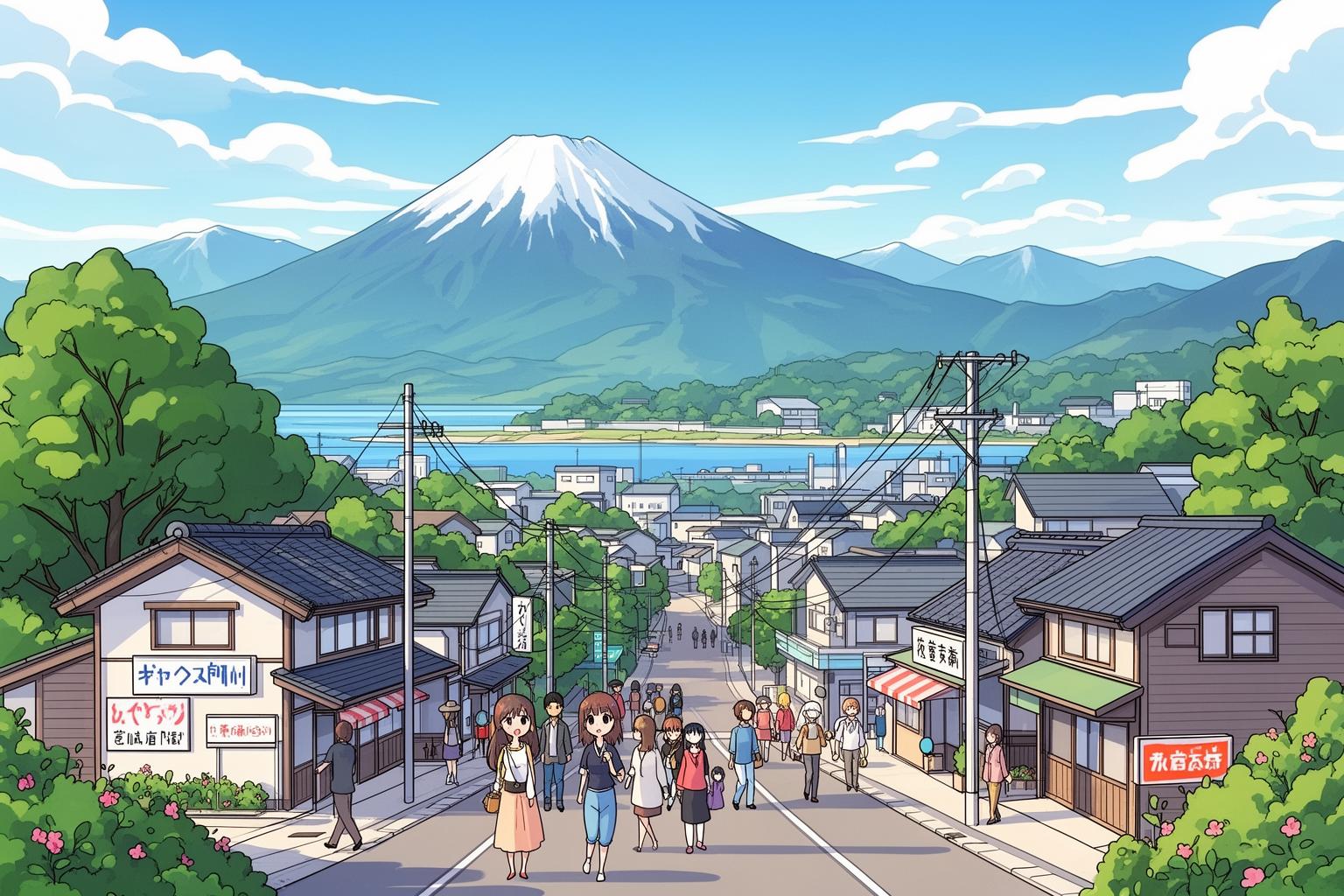
Our first destination is the heart of the series, the quiet, modest town of Karumai in Iwate Prefecture. This is the hometown of creator Haruichi Furudate, and it’s immediately apparent that Karasuno isn’t merely inspired by Karumai—it is Karumai. The moment you step off the bus, you’re not just a visitor; you become part of the world of Haikyuu!!. The town lacks the neon energy of Tokyo or the ancient splendor of Kyoto. Instead, it offers something deeper for fans: authenticity. It’s a place of rolling hills, winding rivers, and a quiet dignity that seems to fill the air. This peaceful setting provides the perfect backdrop for the fiery passion of the Karasuno team, a place where their loud ambitions and chaotic energy truly stand out.
A Town That Lives and Breathes Volleyball
The bond between Karumai and Haikyuu!! is a source of great local pride. You don’t have to look far to find reminders of their famous fictional residents. Posters decorate shop windows, character standees greet visitors at local businesses, and there’s a genuine warmth welcoming fans who have journeyed from all over the world to be here. This is not a commercial theme park; it’s a real community that has embraced its role in a global phenomenon with grace and enthusiasm. The town feels alive and authentic. You can easily imagine Ukai’s grandfather training the legendary team here decades ago, the echoes of their efforts still lingering in the mountain air. Walking through Karumai is like leafing through the early chapters of the manga, where every corner and storefront murmurs the story. It’s a slow-paced exploration—a chance to breathe deeply and absorb the atmosphere that shaped the boys of Karasuno.
Following in the Footsteps of Hinata and Kageyama
To truly experience Karumai is to follow the daily paths of the characters. This is where the story’s most foundational moments took place, where rivalries were kindled and dreams first took shape. It’s a pilgrimage best enjoyed on foot, allowing the landscape to reveal its secrets gradually.
Karumai High School: The Real-Life Karasuno High
There it stands, perched atop a steep hill, its silhouette instantly recognizable to fans: Karumai High School, the real Karasuno High. The sight of the main gate, the school building, and the surrounding fences sends a thrill through any follower of the series. This is the place. This is where it all began. The most distinctive feature is undoubtedly the steep, winding road leading to the school—the very hill where Hinata races Kageyama on their first day. Standing at the bottom and looking up, you can almost feel Hinata’s fierce determination to be the first to reach the top, to prove himself. It’s a vivid piece of the story brought to life.
A crucial reminder for visitors: this is a functioning school. Students attend classes, and teachers work daily. Visitors must not enter the school grounds. The beauty of this pilgrimage is in respectfully viewing from public roads outside. Please do not trespass, avoid photographing students or staff, and keep your voice low. The goal is to honor the location’s role in the story without disturbing the everyday life of the community that generously shares its home with fans.
Karumai Town Gymnasium: The Training Ground of the Crows
A short walk from the high school is another revered spot: the Karumai Town Gymnasium. While the interior scenes of Karasuno’s gym were likely based on the school’s facilities, the exterior of this public gymnasium closely matches the building where the team practiced. You can imagine the doors sliding open and the team spilling out after a tough session, faces flushed with effort. Here, they strategized, struggled, and ultimately grew into the powerhouse team beloved by fans. It feels like a place of quiet potential—a simple building holding extraordinary dreams. Standing outside, you can almost hear the phantom sounds of volleyballs hitting the floor and determined shouts.
The Sloping Road and the Vending Machine
Some of the most beloved scenes in Haikyuu!! take place in small, everyday moments. The series shines in showing the characters’ lives off the court, and one iconic setting for these scenes is the sloping road near a certain vending machine. Here, Hinata and Kageyama share many early interactions, often bickering over a carton of milk or a yogurt drink. The real-life spot exists in Karumai, a simple residential street that has become a must-visit for fans. It’s a testament to Furudate’s attention to detail that such a minor location is drawn directly from his hometown. Discovering this place feels like uncovering a hidden gem—a quiet acknowledgment of the deep connection between the story and its setting.
Takeda Shoten Store: The True Sakanoshita Market
What’s a post-practice ritual without stopping by Coach Ukai’s Sakanoshita Market for some hot, savory meat buns? The real counterpart is the Takeda Shoten store, a charming local shop whose green-and-white striped awning is instantly familiar. The store has fully embraced its anime fame. Inside, you’ll often find a collection of Haikyuu!! memorabilia left by fans worldwide. One touching tradition is the fan exchange notebooks, where visitors can write messages, draw fan art, and share their love for the series. Flipping through these notebooks is a moving experience, a reminder of the vast international community united by this story. And of course, you can support the local business by purchasing a drink or snack, although you may need to find your meat buns elsewhere.
Practical Guide to Karumai
Traveling to Karumai requires a bit more planning than visiting a major city, but the journey is part of the experience. It offers a chance to see a different side of Japan, one deeply connected to nature and local communities.
Getting There: The Journey to Crow Country
The most common way to reach Karumai is by train and bus. Your first stop is Ninohe Station, served by the Tohoku Shinkansen, making it reachable from Tokyo in just a few hours. From Ninohe Station, the final leg is a local bus ride of about an hour. Don’t see this bus ride as just a transfer; it’s the start of your immersion. As the bus winds out of the city and into the mountains, the scenery shifts. Rice paddies stretch in lush patches, traditional houses dot the landscape, and time seems to slow. This is the view Hinata and his teammates saw every day. It’s the perfect transition from spectator to pilgrim.
Where to Stay and What to Know
Karumai is a small town with limited accommodation. Many visitors opt to stay in larger nearby cities like Ninohe, Hachinohe, or Morioka, making day trips to Karumai. This offers more hotel and dining options. Before heading out, consider stopping by the local tourist information center. The staff are often knowledgeable about Haikyuu!! locations and may provide helpful maps marking key spots. Remember, respect is essential. These are people’s homes and workplaces. Be a guest they’d be glad to welcome back.
The Big Stage: Sendai City, Miyagi Prefecture
If Karumai is the heart of Haikyuu!!, where the team’s spirit was forged and nurtured, then Sendai serves as the grand stage where their ambitions are challenged. As the capital of Miyagi Prefecture, Sendai is a bustling, modern city known as the “City of Trees.” It stands in sharp contrast to the rural calm of Karumai and symbolizes the broader world of competition that Karasuno aims to conquer. The journey from Karumai to Sendai parallels the team’s transformation from local underdogs to formidable contenders on the prefectural stage.
From Small Town Dreams to City Showdowns
Sendai is the setting for the high-stakes tournament arcs. It’s the battleground for the Inter-High preliminaries and the Spring High qualifiers. The city’s energy mirrors the intensified tension and pressure of these critical matches. The anonymity of the urban environment, with towering buildings and crowded streets, emphasizes the feeling of being a small fish in a very large pond. For the Karasuno boys, traveling to Sendai meant facing powerhouse schools like Aoba Johsai and the seemingly unbeatable Shiratorizawa. For visitors, arriving in Sendai means stepping into the heart of the anime’s most thrilling and emotionally charged scenes.
Tracing the Tournament Arcs in Sendai
While Karumai invites quiet discovery, Sendai invites you to relive the thunderous applause and nail-biting moments of the official games. The locations here are larger, more public, and pulsate with the phantom energy of thousands of cheering fans.
Sendai City Gymnasium (Kamei Arena Sendai): The Sacred Grounds of the Inter-High Prelims
This venue is the ultimate pilgrimage site for many Haikyuu!! fans visiting Sendai. The Sendai City Gymnasium, officially called Kamei Arena Sendai, is the iconic setting for the Miyagi prefectural tournaments. Its distinctive, futuristic design featuring a swooping, shell-like roof is faithfully depicted in the anime, making it instantly recognizable. Standing before this massive structure, you can’t help but feel a rush of excitement. It’s where Karasuno suffered a crushing defeat against Aoba Johsai and where they achieved a hard-won, triumphant rematch victory. It’s where Oikawa’s legendary serves soared and where Hinata and Kageyama’s freak quick stunned the world. If fortunate, you might glimpse inside, but even just walking the grounds around the arena is a powerful experience. You can easily imagine the teams arriving by bus, the nervous energy buzzing as they prepare for battle. It’s a place that feels sacred to the story—a modern-day coliseum where legends were born.
Around Sendai Station: Urban Scenes and Team Gatherings
Sendai Station is the city’s main gateway and features prominently in many scenes where teams arrive, depart, and interact. The sprawling station complex and surrounding pedestrian decks appear frequently in the anime, making it an excellent starting point for exploring Sendai. Navigating the busy crowds, you can picture the Karasuno team, wide-eyed and slightly overwhelmed, making their way through the city. It’s in these urban settings that the story’s world expands, revealing a vast volleyball community filled with formidable opponents.
The Road to Nationals: Additional Miyagi Locations
Though Karasuno and Sendai City Gymnasium are the most notable real-life spots, the world of Haikyuu!! includes many other inspired locations. Many fans believe the model for the formidable Shiratorizawa Academy is Tohoku High School, known for its strong real-life volleyball program. However, like Karumai High, this remains an active school and should be visited with respect from a distance. The series masterfully captures the sense of Miyagi Prefecture as a volleyball hotbed, and exploring the wider Sendai area gives visitors insight into that rich competitive environment.
Exploring Sendai Beyond Volleyball
A trip to Sendai offers more than just anime landmarks. It’s a lively city with a rich culture and, for a foodie, an exceptional culinary scene. Taking the time to enjoy the city as a whole enhances the pilgrimage experience.
A Culinary Treat: Gyutan and Zunda
You can’t visit Sendai without trying gyutan, or grilled beef tongue. It’s the city’s most famous specialty and absolutely delicious. Thinly sliced and grilled over charcoal, it’s served with barley rice and oxtail soup—a hearty, protein-packed meal you can easily imagine the volleyball players enjoying after a tough match. For dessert, be sure to try zunda, a sweet paste made from young edamame. Found in various forms, from zunda mochi (rice cakes) to zunda milkshakes, it offers a unique and refreshing flavor that is quintessentially Sendai.
Highlights of the City of Trees
Step away from volleyball to explore Sendai’s other attractions. The Loople Sendai, a charming retro-style tour bus, is a fantastic way to see the city’s main sights. Visit the Zuihoden Mausoleum, the ornate resting place of Date Masamune, the feudal lord who founded Sendai. Or head to the Sendai Castle ruins for a panoramic city view and reflect on its growth over centuries. In August, the city comes alive with the spectacular Tanabata Festival, where enormous, colorful streamers adorn shopping arcades, creating an unforgettable sight.
Practical Guide to Sendai
As a major city, Sendai is easy to reach and navigate, making it an ideal base for your Haikyuu!! pilgrimage.
Access and Transportation
Sendai is a key stop on the Tohoku Shinkansen line, making travel from Tokyo quick and easy—usually under two hours. The city boasts an excellent public transportation system, including a subway and extensive bus service. For tourists, the Loople Sendai bus is the most convenient way to visit major attractions, including those near the Sendai City Gymnasium.
Best Time to Visit
Sendai is beautiful year-round. Spring brings cherry blossoms, while autumn offers crisp air and vibrant foliage. Summer is lively, especially during the early August Tanabata Festival. Winter can be cold and snowy but also presents a serene beauty. For a Haikyuu!! pilgrim, any season works well since the main locations are accessible all year; just be sure to dress appropriately for the weather.
The Pilgrim’s Mindset: A Journey of Passion and Respect
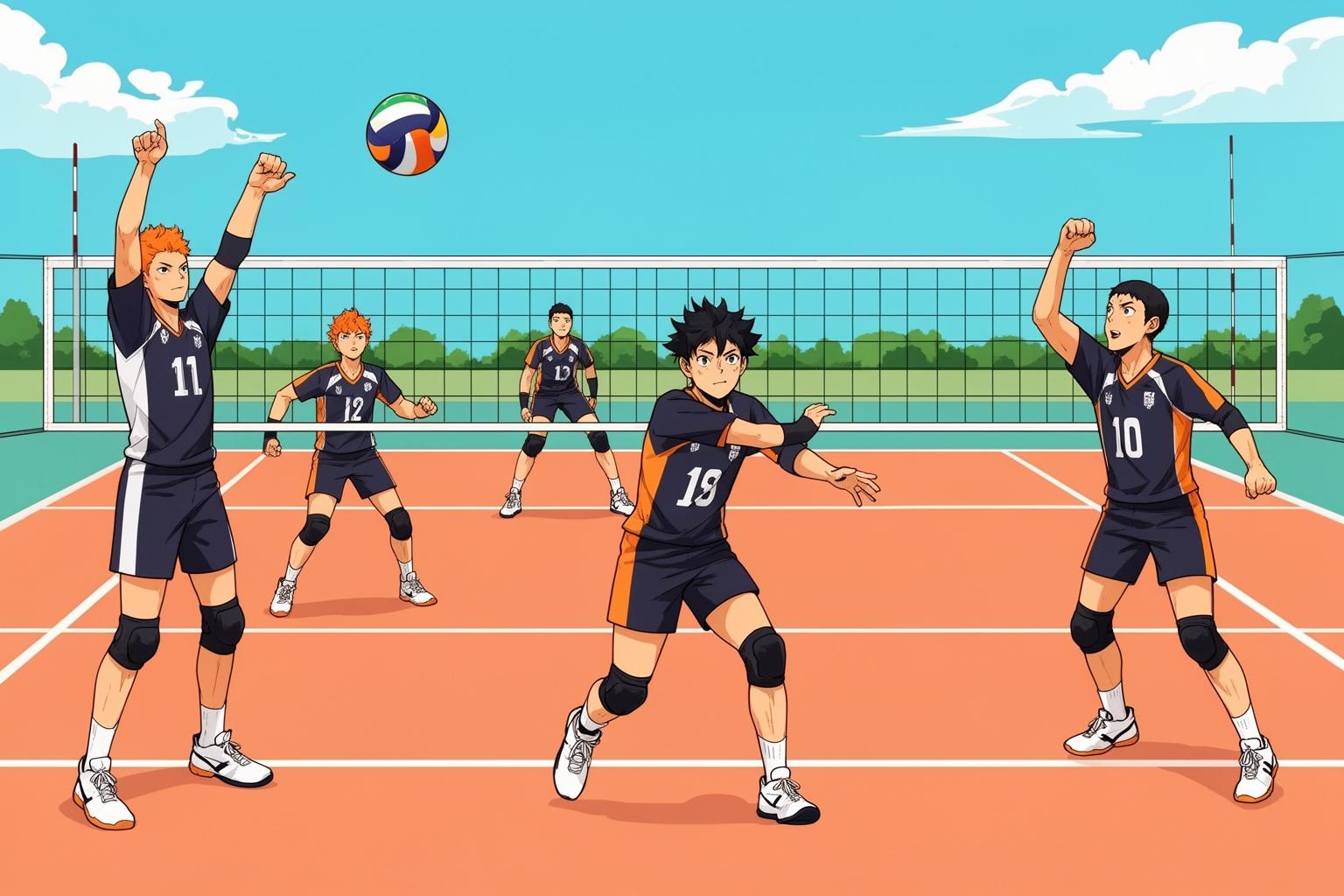
Embarking on a Haikyuu!! pilgrimage is more than merely sightseeing to tick off locations on a list. It is an act fueled by passion. It involves connecting with the story on a deeper, more tangible level. It’s about immersing yourself in the environment that shaped these characters and sensing the authentic atmosphere that fills every panel and frame of the series. This journey calls for a particular mindset—one that combines enthusiasm with a deep respect for the places and people who call them home.
More Than Just Locations
Standing at the foot of the hill leading to Karumai High, you’re not just observing a school; you’re experiencing Hinata’s unwavering determination. When outside the Sendai City Gymnasium, you’re not merely admiring the architecture; you’re absorbing the electric tension of a final set. This pilgrimage is an emotional and sensory journey. It’s the crisp, clean air in Iwate, the sound of the river flowing through Karumai, and the sight of the sunset over the Sendai skyline. These elements bridge the gap between fiction and reality, making the world of Haikyuu!! feel close and tangible. The journey connects you to the story’s core messages: that greatness can arise from unexpected places, the value of community, and the relentless pursuit of passion.
Essential Etiquette for Anime Pilgrims
As ambassadors of the fan community, it’s our duty to ensure our presence is positive. Anime pilgrimages have become a popular form of tourism in Japan, with many communities, such as Karumai, welcoming fans warmly. To preserve this wonderful relationship, it’s crucial to follow simple, common-sense etiquette. Always remember that you are in residential neighborhoods and school zones. Keep your voice low and avoid traveling in large, disruptive groups. Never trespass on private property, especially school grounds. Ask permission before taking photos inside shops or restaurants. Support the local economy by buying souvenirs, snacks, or meals. And perhaps most importantly, carry your trash until you find a proper disposal bin. By being respectful and considerate guests, we express our gratitude to the communities that inspired the stories we cherish, ensuring future fans can share the same magical experience.
Crafting Your Ultimate Haikyuu!! Itinerary
Blending the tranquil countryside of Karumai with the vibrant city of Sendai requires some logistical coordination, but it results in a perfectly balanced pilgrimage that reflects the narrative arc of the series itself. A thoughtfully planned trip lets you fully immerse yourself in both settings without feeling hurried.
A Suggested Travel Plan
A comfortable itinerary would span at least three to four days. You could allocate one full day to Sendai, one full day for a day trip to Karumai, and use the remaining days for travel. A sample plan might be: On day one, take the Shinkansen to Sendai, check into your hotel, then spend the afternoon and evening exploring the city center and enjoying a delicious gyutan dinner. On day two, catch an early train to Ninohe, then transfer to the bus to Karumai. Spend the entire day walking through the town, absorbing the atmosphere and visiting all the important sites. Return to your hotel in Sendai by evening. On day three, explore more of Sendai—visit the Sendai City Gymnasium, perhaps see the Zuihoden Mausoleum, and enjoy some souvenir shopping. On day four, enjoy a final breakfast in Sendai before boarding the Shinkansen to your next destination.
The Tohoku Immersion
Don’t overlook the beauty of the journey itself. The train rides through the Tohoku region are a vital part of the experience. Watching the scenery pass by from the Shinkansen window, as it speeds past mountains and fields, gives you a real sense of Japan’s vastness and the distance the Karasuno team traveled. The local bus to Karumai offers an even more personal glimpse into daily life in the region. This travel time isn’t just about moving from point A to point B—it’s an opportunity to reflect on the story and see the landscape that, in many ways, acts as a character itself.
Combining Karumai and Sendai
Understanding the geography is key to a smooth trip. Karumai is not a simple day trip from Tokyo and is best reached from a northern city in Tohoku. While Sendai is a strong choice, some travelers may find it more convenient to stay in Morioka (the capital of Iwate) or Hachinohe (in Aomori, but close to the Iwate border) as a base for visiting Karumai, since they are geographically closer to Ninohe Station. Whichever base you select, booking your Shinkansen tickets and accommodations in advance is always wise, especially during peak travel seasons.
This journey—from the quiet beginnings in Karumai to the roaring stadiums of Sendai—is more than a mere trip. It is a chance to step into a world that has inspired millions. It offers an opportunity to honor a story about perseverance, friendship, and the pure joy of giving your all. Standing on that hill in Karumai, you’ll realize the flight of the crows wasn’t just a metaphor—it was a promise. A promise that with enough heart, even those told they cannot fly can learn to touch the sky. And for a moment, in the heart of Tohoku, you get to feel that promise come true.