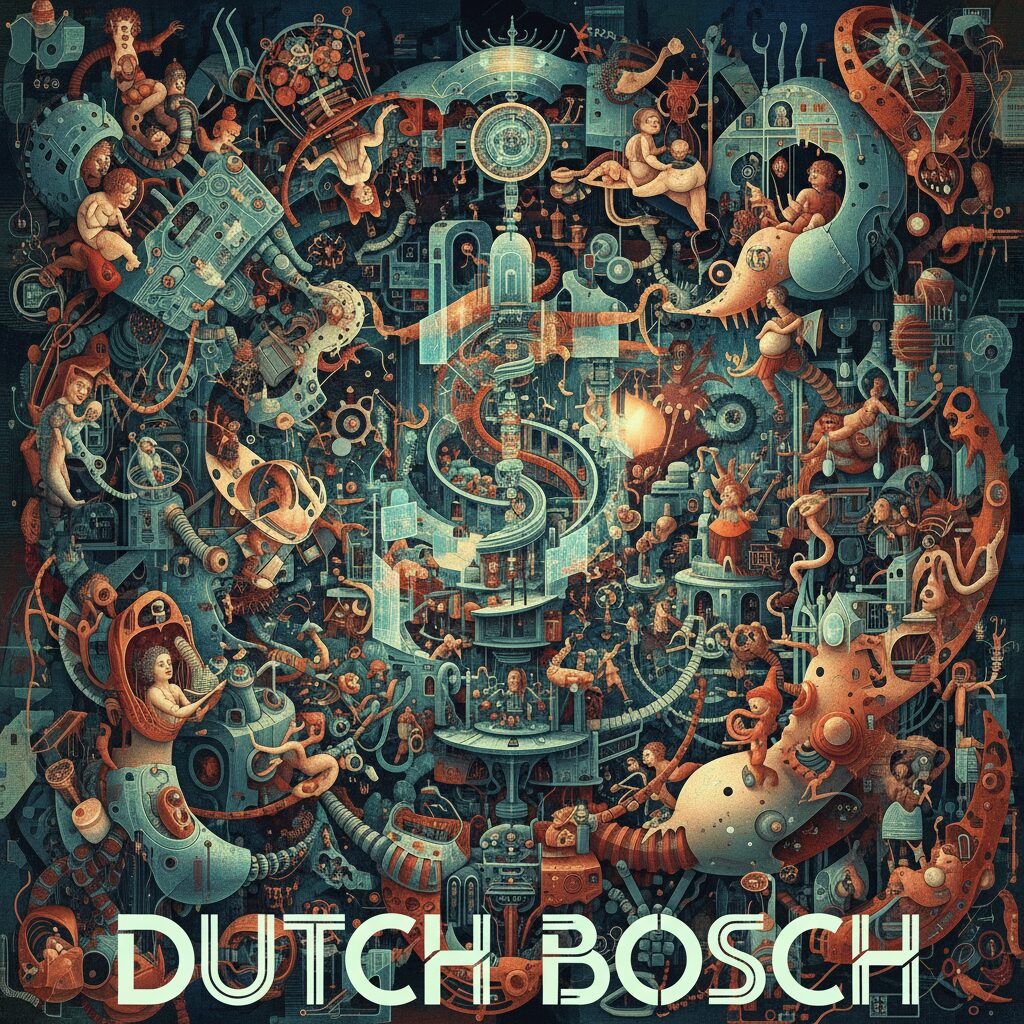
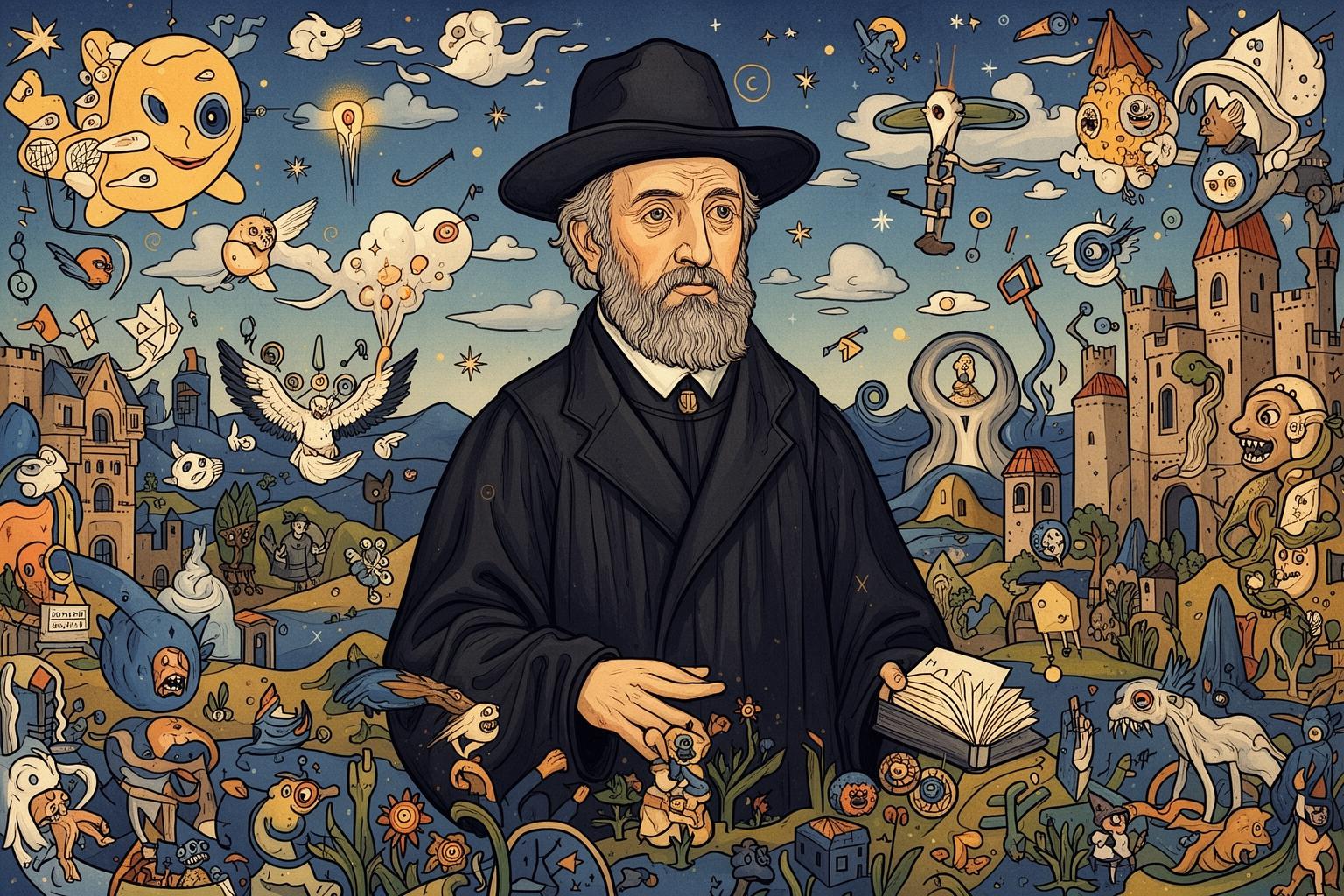
Step into a world where earthly delights curdle into hellish nightmares, where saints are tormented by surreal creatures, and where the moral fabric of humanity is laid bare in sprawling, hallucinatory detail. This is the universe of Hieronymus Bosch, a painter who, more than five centuries ago, dipped his brush into the deepest wells of the medieval imagination and conjured visions that continue to haunt, baffle, and mesmerize us today. To truly understand the man behind these enigmatic masterpieces, one must journey to the place that forged him, the city that was both his canvas and his muse: ‘s-Hertogenbosch, known colloquially as Den Bosch, in the heart of the Netherlands. This is no ordinary art history tour; it is a pilgrimage to the very source code of his genius, a city whose ancient stones and winding waterways still whisper the secrets of its most famous son. Walking the streets of Den Bosch is like stepping through the frame of one of his paintings, a place where the line between the sacred and the profane, the grotesque and the sublime, feels as beautifully thin as it did in the 15th century. It is here, in the city of the Duke’s Forest, that we can begin to unravel the threads of Bosch’s apocalyptic yet profoundly human vision, exploring the very crucible where his unparalleled creativity was fired into existence.
For another artistic pilgrimage that explores how a master’s environment shaped their vision, consider a journey through the landscapes of Renoir’s France.
The Medieval Heartbeat: ‘s-Hertogenbosch, The Den of the Duke
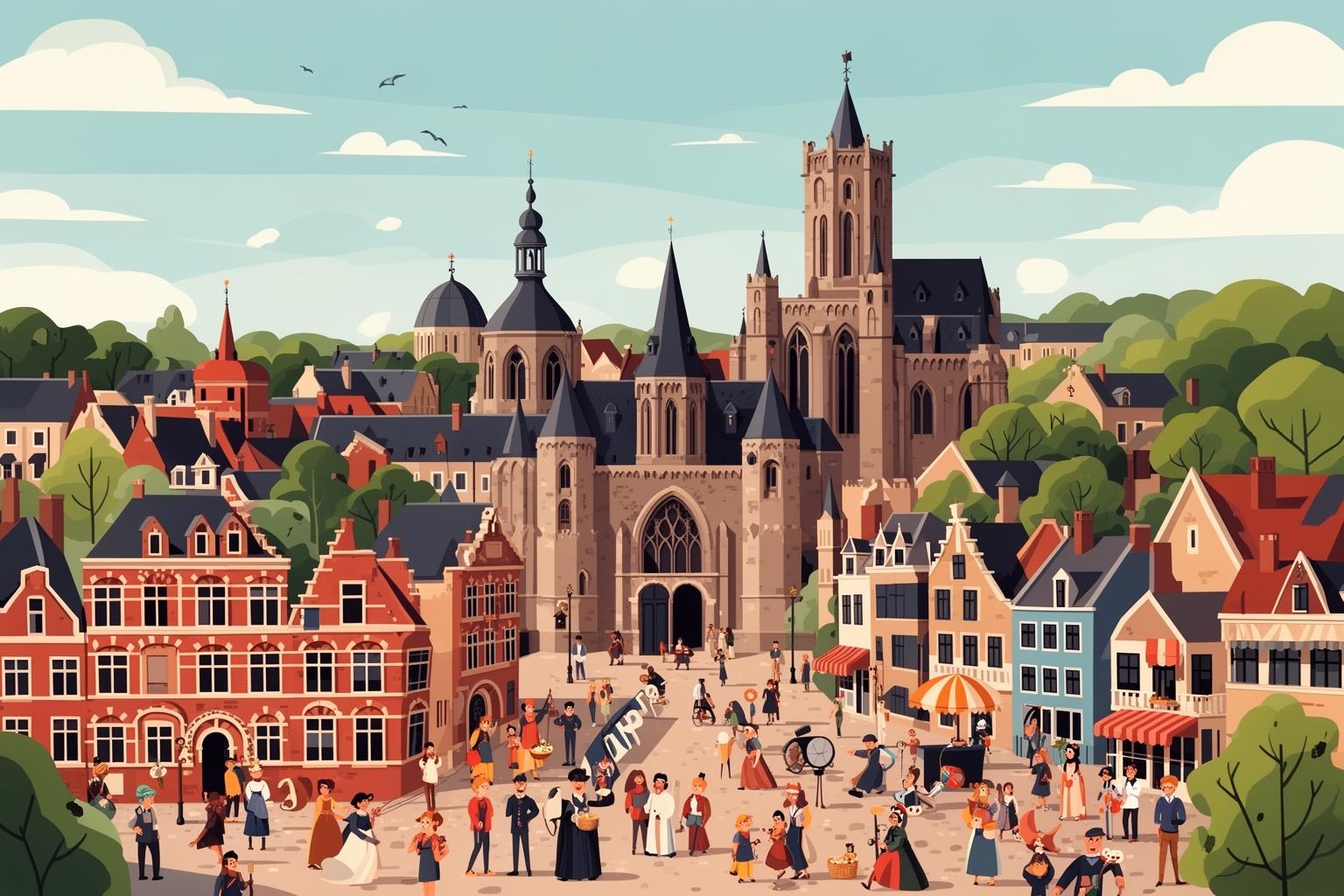
Arriving in ‘s-Hertogenbosch is to experience the enduring heartbeat of the late Middle Ages. This city is not preserved in time like a relic but thrives as a living, breathing entity where history extends beyond museums and is embedded in the very cobblestones beneath your feet. As the capital of the province of North Brabant, its official name means “The Duke’s Forest,” honoring Duke Hendrik I of Brabant, who established a new town on a forested dune in 1185. By the time Jheronimus van Aken—known as Hieronymus Bosch—was born around 1450, this ducal forest had blossomed into one of the most prosperous and significant cities in the powerful Duchy of Brabant.
A City Shaped by Commerce and Faith
During Bosch’s time, Den Bosch was a thriving center of commerce, renowned for trade in cloth, metalwork, and art. The city’s affluence was evident in the grand merchant houses that still surround the central market square and in the ambitious, decades-long building of its magnificent cathedral. Yet, this prosperity was tightly intertwined with deep and widespread religious devotion. The late 15th century was an era marked by fierce spiritual intensity, when the promises of heaven and the threats of hell were lived realities rather than distant ideas. The civic calendar was dominated by processions, feast days, and religious rites. Bosch’s entire life unfolded within this vibrant, anxious, and deeply spiritual environment. Far from being a recluse or madman on society’s edge, he was a respected member of a prominent family of painters and a pledged member of an elite religious confraternity. His art did not emerge in isolation but was a direct reflection of the world around him—a world of stark contrasts, rising wealth, profound spiritual unease, civic pride, and a deep fear of damnation. Grasping this context is essential, as it transforms his fantastic creatures and moral allegories from mere imagination into a nuanced critique of the spiritual and social realities of his era.
Following the Path of a Master
Exploring the historic heart of Den Bosch offers a richly immersive experience. The city’s layout—a web of narrow lanes and alleys radiating from the central market—has largely remained unchanged for over five centuries. As you stroll, you are tracing the steps Bosch himself would have taken daily. Look up at the gabled facades, many dating back to his lifetime, their brickwork glowing in warm hues of red and orange. The atmosphere blends a sense of intimate coziness with sudden bursts of grandeur. A narrow street might suddenly open onto a broad square, or a modest alleyway might reveal a stunning view of the cathedral’s soaring buttresses. Yet the true enchantment of Den Bosch lies in its unique canal network, the Binnendieze. These waterways flow not only between streets but beneath buildings, creating a hidden subterranean realm. Taking a boat tour on the Binnendieze offers a wholly new perspective of the city, gliding through shadowy vaulted tunnels into sunlit courtyards—a journey that feels suitably surreal and Bosch-like in its dreamlike quality.
The Market Square (De Markt): The Heart of Bosch’s World
All roads in Den Bosch converge on the Markt, the grand triangular market square that has served as the city’s core for centuries. This square was the setting for Bosch’s entire life—his birthplace, workplace, and final resting place. Standing at its center, you are enveloped by history. The impressive 17th-century City Hall, or Stadhuis, dominates one side, but your gaze is inevitably drawn to a smaller yet deeply meaningful building at number 29. This is “De Kleine Winst” (The Little Profit), the house and studio where Bosch lived and worked much of his adult life. Though the original building has been modified over the centuries, the location remains precise. Close your eyes and imagine the scene around 1500: the square bustling with merchants selling their goods, the air heavy with the scents of spices, livestock, and woodsmoke. From the upper windows of his studio, Bosch would have observed this lively spectacle of human life—the sacred and the profane, the wealthy and the poor, the virtuous and the corrupt. This daily theater was his raw material, the source from which he drew the figures and narratives that fill his dense, allegorical paintings. The square was his microcosm of the world, and it is here, more than anywhere else, that you can sense the palpable presence of the artist.
The Sacred and the Profane: St. John’s Cathedral (Sint-Janskathedraal)
If the Markt represented the secular heart of Bosch’s city, then St. John’s Cathedral was its spiritual core. A stunning masterpiece of Brabantine Gothic architecture, Sint-Jan was more than just a backdrop to Bosch’s life; it stood as a stone testament to the worldview that deeply influenced his art. Its construction took centuries, and Bosch would have seen its spires rising ever higher, serving as a constant, tangible reminder of God’s glory and the church’s might. For him and the people of Den Bosch, this building was the center of their spiritual universe, a gateway between the earthly and the divine.
A Gothic Masterpiece and a Stone Canvas
The exterior of St. John’s presents an overwhelming forest of stone. The building’s striking verticality draws the gaze upward, past the elaborate window tracery and along the elegant lines of the flying buttresses, reaching toward the heavens. The sheer intricacy is astonishing, showcasing the skill and devotion of the medieval stonemasons who worked here for generations. The Brabantine Gothic style, with its focus on height, light, and ornate details, was designed to inspire awe and transport worshippers from the ordinary world into a sacred space. Bosch, as a member of the Illustrious Brotherhood of Our Blessed Lady—a distinguished religious confraternity based in the cathedral—would have known this edifice intimately. He would have grasped the symbolism behind each statue, carving, and architectural element. The cathedral served as his primer in religious iconography, a library of sacred narratives etched in stone.
Demons on the Rooftops
What truly distinguishes St. John’s, and what links it so closely to Bosch, is its remarkable array of sculptures. While many cathedrals feature gargoyles and grotesques, Sint-Jan elevates this tradition to a whole new level. Crawling over its flying buttresses and gazing down from its ledges is a vast bestiary of strange and fantastical creatures. There are not just dozens but hundreds of them. Among these figures, you’ll find a man in a tunic clutching a mobile phone (a 20th-century addition, proving the tradition continues), a winged demon devouring a human soul, a two-headed beast playing the bagpipes, and countless other unidentifiable hybrids. These carvings, created with wildly imaginative and unsettling detail, are the architectural counterparts of the creatures populating Bosch’s paintings. Did the cathedral’s masons inspire Bosch, or did Bosch’s rising fame influence the masons? Likely, the relationship was mutually influential. Walking around the cathedral’s exterior and looking up is like witnessing a freak show atop the heavens. It powerfully reminds us that in the medieval mindset, the demonic and grotesque were not hidden but were ever-present in the sacred world—a constant warning against temptation and sin. These stone monsters render Hieronymus Bosch’s world startlingly vivid and tangible.
The Inner Sanctum: Light, Shadow, and Devotion
Entering the cathedral is to step into a realm of soaring space and ethereal glow. The nave unfolds before you, its ribbed vaults seeming to float impossibly high. Sunlight filters through magnificent stained-glass windows, casting shifting patterns of color onto the stone columns. The vast scale and beauty are meant to humble the individual and lift the spirit. It is easy to imagine Bosch attending services here, his mind filled with the dramatic liturgy, the resonant choir chants, and powerful sermons warning of eternal damnation. Of special significance is the chapel dedicated to the Illustrious Brotherhood of Our Blessed Lady—Bosch’s spiritual home within the cathedral. As a sworn member, he belonged to an elite group of clerics and laypeople devoted to venerating the Virgin Mary. The brotherhood was also a major patron of the arts, commissioning music, illuminated manuscripts, and altarpieces. It was within this context of elite piety and artistic support that Bosch worked, creating pieces for patrons who shared his profound grasp of complex religious symbolism. The cathedral’s atmosphere—a potent mix of divine beauty, solemn ritual, and the ever-present threat of hellfire—forms the very emotional landscape Bosch so masterfully depicted on his wooden panels.
Decoding the Visions: The Jheronimus Bosch Art Center
While Bosch’s original masterpieces are dispersed across museums worldwide, the ultimate experience to grasp the full scope of his work is found right here in his hometown. The Jheronimus Bosch Art Center is more than a traditional museum; it is a brilliant and immersive homage, a space for study and marvel that offers a unique journey into the artist’s complete visual universe. Situated in a beautifully restored former church, its very location adds a layer of spiritual depth to the experience.
A Deconsecrated Church Transformed into a Shrine
Choosing to house the Art Center in a former church is a masterstroke. The soaring ceilings, the nave-like central hall, and the quiet, reverent ambiance create the perfect setting to reflect on Bosch’s often religiously inspired work. There’s a sense of pilgrimage when entering, as if stepping into a modern shrine dedicated to the city’s artistic saint. The center does not exhibit original works but instead presents high-quality, full-scale photographic reproductions of every known painting and drawing by Bosch and his workshop. This clever strategy offers an unmatched opportunity: to view his entire oeuvre all in one place.
The Complete Works at Full Scale
This is the heart of the Art Center’s genius. Bosch’s paintings are famously rich in detail, filled with tiny, intricate scenes that invite close examination. In a typical museum, you might have to peer over crowds just to catch a glimpse of a small corner of The Garden of Earthly Delights. Here, you can stand inches away from life-sized reproductions, following the narrative flow and uncovering countless hidden dramas within every section. You can directly compare the torments depicted in The Last Judgment from Vienna with those in the Garden triptych from Madrid. You witness the evolution of his style, recurring motifs, and the vastness of his imagination displayed before you. The experience is both deeply educational and visually overwhelming in the best sense, enabling a holistic understanding of his work and revealing connections and patterns impossible to detect when his originals are scattered thousands of miles apart.
Ascending Into Madness and Genius
One of the Art Center’s most memorable features is the climb to the top of its tower. A glass elevator slowly lifts you upward, but this is no ordinary ride. Along the way, you pass a series of platforms displaying bizarre, life-sized, three-dimensional sculptures of creatures pulled straight from Bosch’s paintings. Suddenly, you come face-to-face with a fish with human legs, a bird-headed monster devouring a sinner, and a walking egg pierced by an arrow. It’s a surreal, slightly unsettling, yet utterly fantastic experience. This journey shifts you from being a passive viewer of his two-dimensional art to an active participant in his three-dimensional realm. It’s a playful yet profound interaction with his work, bringing his nightmares to life in a way that is both startling and oddly delightful. Each level presents a new scene of grotesquerie, a physical ascent through Bosch’s limitless imagination.
The View from the Heavens (or Hell)
At the tower’s summit, you encounter the final, awe-inspiring revelation. Stepping onto an open-air platform, you are greeted by a spectacular panoramic vista of ‘s-Hertogenbosch. The entire city stretches out beneath you like a map: red-tiled roofs, the majestic St. John’s Cathedral, the green ribbon of the city walls, and the straight lines of modern roads extending into the Brabant countryside. From this vantage point, the bond between Bosch’s world and our own becomes crystal clear. You are gazing upon the very same cityscape that Bosch himself saw—the same horizon that shaped his reality. It is a powerful moment of connection, linking the fantastical worlds of his paintings with the real, tangible city that inspired them. You realize that his wild visions were ultimately anchored in this specific place, in its people, its faith, and its fears.
Beyond the City Walls: Tracing Bosch’s Legacy Across Europe
While Den Bosch remains the core of the Bosch pilgrimage, viewing his most renowned original works necessitates travel beyond its borders. Bosch’s impact was so significant that his paintings became treasured by kings and cardinals, now serving as the crown jewels in some of the world’s foremost museums. For the truly devoted pilgrim, the journey extends to these artistic sanctuaries.
The Garden of Earthly Delights: Madrid’s Museo del Prado
No painting in history has sparked more fascination, speculation, and awe than The Garden of Earthly Delights. Experiencing it firsthand at Madrid’s Museo del Prado is a vital rite of passage for any art enthusiast. The triptych is far larger than many expect, and its colors, even after five centuries, remain astonishingly vivid. Standing before it, you are drawn into its three-act narrative of creation, temptation, and damnation. The Prado presents it magnificently, enabling viewers to closely examine thousands of minute details—the lovers frolicking inside a translucent fruit, musical instruments turned into tools of torture, the eerily serene face of the Prince of Hell. No reproduction can match the luminous quality of the oil on oak panel or the overwhelming presence of the original. It is an unforgettable experience, a direct encounter with the pinnacle of Bosch’s genius.
The Last Judgment: Vienna’s Academy of Fine Arts
Another monumental triptych, The Last Judgment, is housed in the Picture Gallery of the Academy of Fine Arts in Vienna. Though it shares thematic elements with the Madrid masterpiece, its tone is darker and its depiction of hell even more terrifying and chaotic. Here, Bosch’s vision of torment is fully unleashed: sinners are skewered, cooked, and tormented by legions of monstrous demons in a fiery, apocalyptic setting. The central panel, showing the weighing of souls, is a masterclass in moral storytelling. Viewing this work is to face the raw, terrifying force of the medieval understanding of sin and punishment. It is less a garden of earthly delights and more a blazing inferno, a powerful expression of the spiritual anxieties of its era.
Other Pilgrimage Sites: Lisbon, Venice, and Beyond
The Bosch pilgrimage extends to other European capitals. In Lisbon, the Museu Nacional de Arte Antiga houses another masterpiece, The Temptation of St. Anthony. This triptych is a chaotic whirlwind of demonic assault, depicting the hermit saint beset by every imaginable horror Bosch could conceive. Venice’s Palazzo Ducale contains several of his works, including panels portraying saints and visions of the afterlife. Each site offers another piece of the puzzle, another insight into a mind that seemed to have a direct link to the subconscious. Visiting these works in their original settings adds depth to the pilgrimage, highlighting the international acclaim Bosch’s art commanded even during his lifetime.
Practical Pilgrim’s Guide to Den Bosch
Setting out for Den Bosch is incredibly easy, and the city is ideal for exploration. Its compact, pedestrian-friendly center means all the main attractions are a short, pleasant walk from one another. The ambiance is relaxed and inviting, a stark contrast to the nightmarish images one might imagine.
Navigating to the Netherworld
‘s-Hertogenbosch is conveniently situated and easily reached via the excellent Dutch rail network. From Amsterdam’s Schiphol Airport or Centraal Station, a direct intercity train will get you to Den Bosch in about an hour. The city’s main station is only a ten-minute walk from the historic center, ensuring a smooth and straightforward arrival. Once there, the best way to explore is on foot, allowing you to savor the charming architectural details and take spontaneous turns down intriguing alleyways. The city is also well-known for being bike-friendly, perfect for venturing to the outer ramparts or nearby countryside.
A Journey on the Binnendieze
Besides walking, a boat tour on the Binnendieze is an essential Den Bosch experience. These historic waterways, once the city’s sewer and water supply, now offer a unique and atmospheric perspective. Flat-bottomed boats glide through the city’s hidden channels, passing under ancient bridges and even beneath the foundations of houses and the main market square. The guides share fascinating insights into the city’s history, and the passage through the dark, echoing tunnels is unforgettable. It feels like descending into the city’s subconscious—a fittingly mysterious way to experience the world of Bosch.
The Taste of Brabant: Culinary Delights
No trip to Den Bosch is complete without savoring its most famous culinary treasure: the Bossche Bol. This is more than a pastry; it’s a local institution. Picture a tennis-ball-sized choux pastry sphere, filled to bursting with sweet whipped cream and coated in a thick, dark chocolate glaze. It’s decadent, messy, and utterly delicious. The best place to try one is at the Jan de Groot bakery near the train station, often with a line out the door for these legendary treats. Beyond pastries, the city offers a vibrant culinary scene, with cozy cafés and excellent restaurants lining Korte Putstraat, known as the city’s gastronomic heart. Here you can enjoy local Brabant specialties and unwind after a day steeped in the city’s mysterious allure.
When to Visit the Visionary’s Home
Den Bosch is charming throughout the year. Summer brings pleasant weather for strolling and enjoying the outdoor terraces. Spring paints the city in bloom, while autumn bathes the historic buildings in golden light. Winter can be cold, but the festive holiday atmosphere, complete with Christmas markets and ice skating, adds its own special charm. Visiting during carnival in early spring is a unique delight, as the entire city transforms into “Oeteldonk,” a loud and joyful celebration reminiscent of one of Bosch’s chaotic crowd scenes—only much more cheerful.
As your time in ‘s-Hertogenbosch draws to a close, you realize the journey isn’t truly finished. The city’s sights and ambiance linger, forever influencing how you see Bosch’s art. You are no longer merely an observer of his paintings; you have become a part of his world. You have walked his streets, stood in the shadow of his church, and looked upon the same market square that inspired him. A pilgrimage to Den Bosch does more than reveal the life of one artist; it opens a window into the soul of the late Middle Ages, an era rich in deep faith and haunting fears. Hieronymus Bosch remains an enigma, a man whose true intentions are lost to time, but by visiting the city that shaped him, you come closest to understanding the source of his wild, beautiful, and hauntingly human visions. You leave not with all the answers, but with a deeper appreciation for the questions he painted so brilliantly—questions about morality, temptation, and our ultimate fate that remain as relevant now as they were five centuries ago.