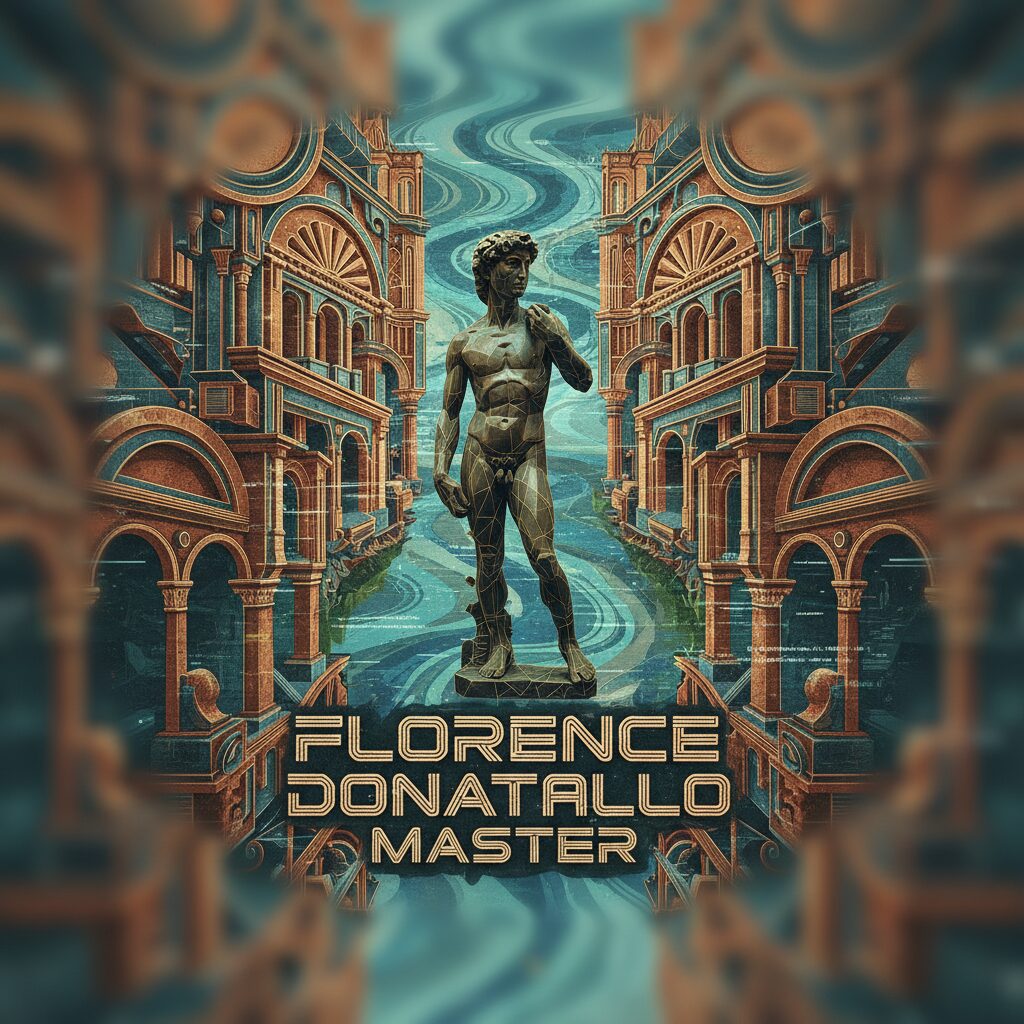
To walk through Florence is to walk through a living museum, where every cobblestone and terracotta roof seems to whisper tales from the Renaissance. It’s a city that wears its history with an easy, sun-drenched elegance. But beneath the staggering beauty of its grand landmarks lies the story of the individuals who shaped it, the artists whose hands and minds gave birth to a new age of human expression. Towering among them, a true giant of his time, is Donato di Niccolò di Betto Bardi, known to the world simply as Donatello. He was more than a sculptor; he was a revolutionary. A man who breathed life, emotion, and a fierce, raw humanity into bronze and marble. He didn’t just carve statues; he sculpted souls.
Following Donatello’s trail is not merely an art history tour; it is a journey into the very heart of the Renaissance. It’s about standing in the shadow of the same bell tower he looked upon, walking the same narrow streets that led to his workshop, and feeling the immense power of his work in the very spaces for which it was conceived. This is a pilgrimage to the source, a chance to connect with the passion, the innovation, and the rebellious spirit of an artist who dared to see the world differently. From the grand public squares to the hallowed silence of a Medici chapel, his legacy is etched into the very fabric of Florence, waiting to be rediscovered. It’s a story told not in words, but in the subtle turn of a head, the tense grip of a hand, and the heartbreaking sorrow in a face carved from stone five centuries ago. Prepare to meet the master, not in a dusty book, but in the vibrant, breathing city he called home.
For a different kind of artistic journey, consider a pilgrimage through the landscapes of André Derain.
The Heart of Florence: Where Genius Was Forged
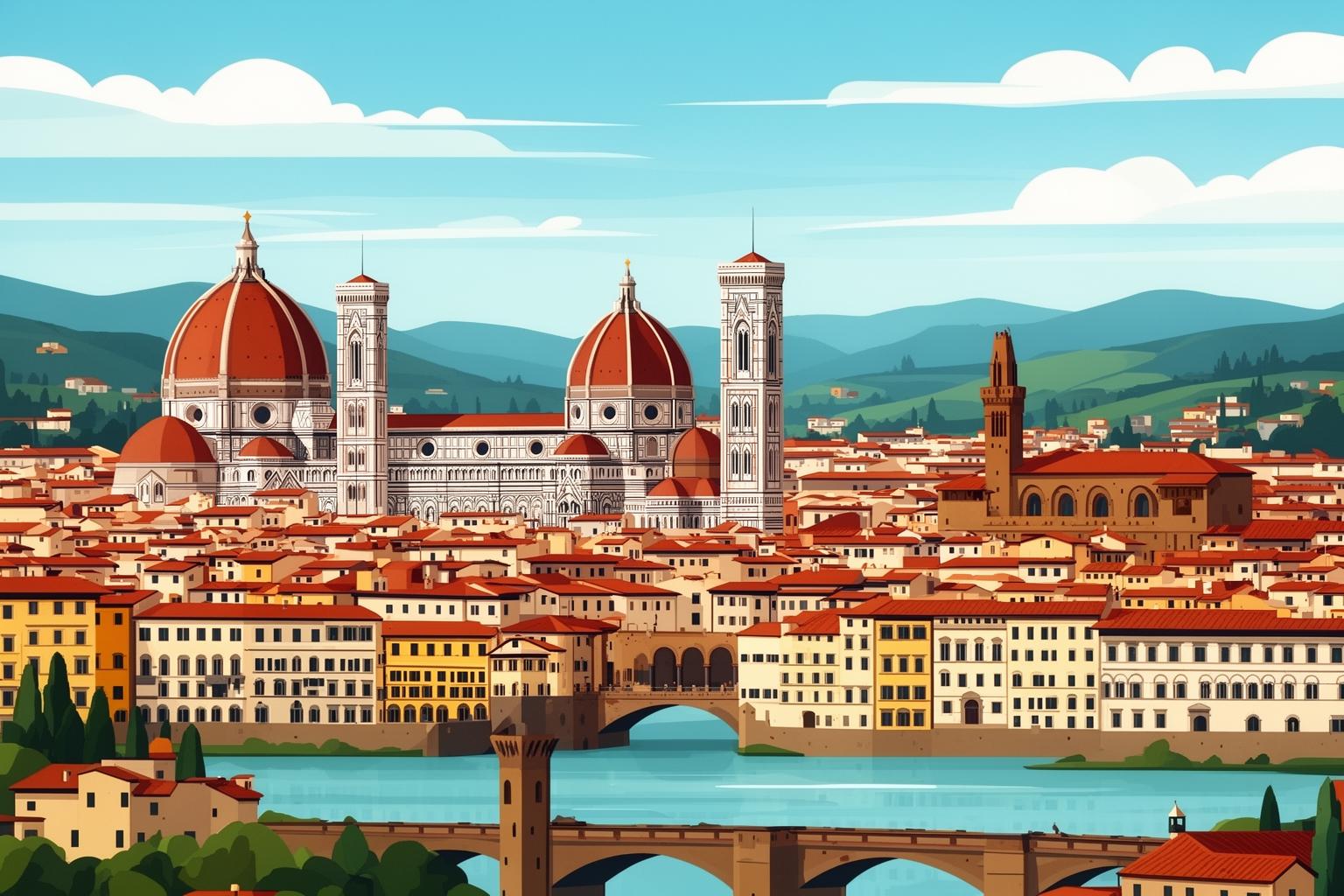
Our journey begins where Donatello’s did, at the monumental heart of the city: the Piazza del Duomo. Today, it’s a bustling whirl of tourists, guides, and the gentle murmur of countless conversations. But try to peel back the layers of time. Picture it in the early 1400s: a vast construction site, humming with the ambitious energy of a city on the rise. This was Donatello’s training ground, his university, and his first grand stage. The immense Florence Cathedral, the Cattedrale di Santa Maria del Fiore, was the project that shaped a generation of artists, and a young Donatello, brimming with talent, was at the very heart of it.
The Duomo’s Shadow: First Steps and Fierce Rivalries
Donatello’s early life was deeply rooted in the city’s craft. As the son of a wool comber, he came from modest artisan origins, yet his talent stood out clearly. He found himself in the workshops of the Duomo, learning alongside the era’s greatest masters, including Lorenzo Ghiberti. However, it was his friendship—and more significantly, his rivalry—with Filippo Brunelleschi that ignited the flames of the Renaissance.
A legendary story, perhaps exaggerated over time but still resonant with truth, recounts a competition between the two young men. Each carved a wooden crucifix. After seeing Donatello’s raw, painfully human Christ for the church of Santa Croce, Brunelleschi reportedly derided it as “putting a peasant on the cross.” In response, he created his own crucifix, a work of sublime mathematical perfection for Santa Maria Novella. The tale captures the essence of their dynamic: Donatello’s passionate, emotional realism versus Brunelleschi’s harmonious, intellectual idealism. To see both crucifixes today, just a short walk apart, is to witness the birth of two distinct, powerful visions shaping the future of art.
Yet it was on the cathedral itself that Donatello truly began to make his name. He was commissioned to carve a series of prophets to fill the niches of the Duomo and Giotto’s Campanile (bell tower). Today, the weathered originals are safely kept inside the magnificent Museo dell’Opera del Duomo, a must-visit for anyone tracing Donatello’s legacy. Standing before these statues is a profound experience. These are not serene, generic saints; they are men of flesh and blood, consumed by their visions. Take the so-called Zuccone, or ‘pumpkin head,’ believed to depict the prophet Habakkuk. His bald head, gaunt face, and intense, tormented gaze are unsettlingly alive. Legend has it that while carving this figure, Donatello became so engrossed in his pursuit of realism that he would shout at the stone, “Speak, damn you! Speak!” In that museum hall, surrounded by these powerful, brooding figures, you can almost hear the chisel’s echo and feel the fierce urgency of his creative spirit.
The Bell Tower’s Perch: A New Perspective
The figures he crafted for the Campanile were meant to be viewed from far below, a challenge he met with bold carving and exaggerated features that come into perfect focus from a distance. Visiting the museum offers the chance to see them eye-to-eye, to appreciate the raw power and psychological depth he infused into each one. After spending time with the originals, I encourage you to climb the Campanile itself. As you ascend the 414 steps, the city of Florence unfurls beneath you, a breathtaking panorama of red-tiled roofs. From that vantage point, you can look down on the piazza and grasp the perspective Donatello had to master. You can sense the scale of the ambition that drove him and his contemporaries to create such heavenly beauty in the earthly realm.
Orsanmichele: The Guilds’ Grandstand
A short stroll from the Duomo, along the lively Via dei Calzaiuoli, stands an unusual and magnificent building: Orsanmichele. It serves as part church, part grain market, and part sculptural gallery—a uniquely Florentine creation. In the 15th century, the city’s influential guilds were assigned the task of adorning the exterior niches with statues of their patron saints, transforming the building into a kind of public relations masterpiece, showcasing their wealth and devotion. It became a battlefield for artistic dominance, where Donatello unveiled a work that would forever change the course of sculpture.
A Saint in Shining Armor: The Revolutionary St. George
The Armourers and Sword Makers guild commissioned Donatello to sculpt a statue of their patron, St. George. What he created was nothing less than revolutionary. Prior to Donatello, statues placed in niches tended to be stiff, frontal, and purely ornamental. His St. George defies that tradition. He stands with a tangible sense of coiled energy, shield held before him, his brow knit in fierce concentration. He is not merely posing; he is bracing for action. His body twists, breaking free from the rigid confines of the niche, his eyes fixed on an unseen threat down the street. It captures a moment of intense psychological tension in marble. Donatello endowed the saint with a mind and a mission. St. George feels like a true hero, a guardian you can believe in.
Today, a bronze replica occupies the original niche, while the stunning marble original rests safely inside the Bargello Museum. Experiencing both is essential. First, stand on the street, soak in the urban energy, and see the replica in its intended setting, standing guard over the city. Then, visit the Bargello to face the original. In the calm of the museum, you can get close, notice the delicate drill work in his hair, the fierce intensity in his eyes, and appreciate the confident vision of a young artist rewriting the rules.
The Predella’s Secret: A Story in Stone
But the revolution didn’t end with the statue. Look down to the marble panel at its base, called a predella. Here, Donatello carved the scene of St. George slaying the dragon. In this small section of stone, he perfected a technique that would become a hallmark of Renaissance art: rilievo schiacciato, or “flattened relief.” Through incredibly shallow carving—sometimes just millimeters deep—he created a convincing illusion of depth and atmospheric perspective. The landscape fades into the distance, the architecture is rendered with mathematical accuracy, and the narrative unfolds with cinematic drama. It was the first time an artist successfully applied the new science of linear perspective, developed by his friend Brunelleschi, to sculpture. This quiet masterpiece is often overlooked, yet it stands as one of the most significant single works in art history. In that tiny panel, Donatello taught marble how to paint.
Piazza della Signoria: The Theater of Power
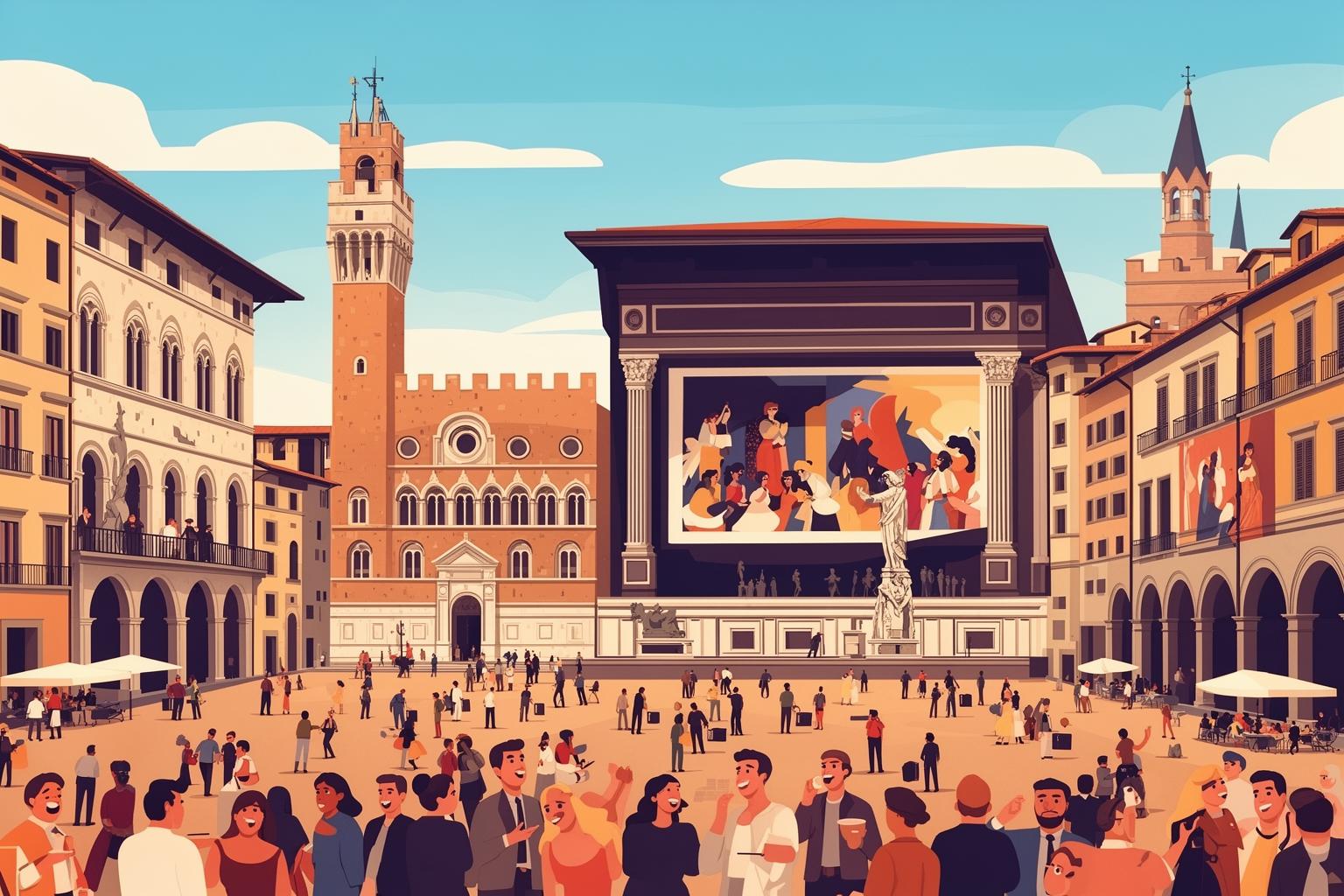
Every city has a heart, and in Florence, it beats most powerfully in the Piazza della Signoria. Dominated by the imposing, fortress-like Palazzo Vecchio, the city’s town hall, this has served as the hub of Florentine political life for centuries. It is a space steeped in history, hosting festivals, political declarations, and even fiery executions. Additionally, it functions as an exceptional open-air sculpture gallery, where Donatello’s impactful, often politically charged works have significantly shaped its character.
Judith and Holofernes: A Bronze Warning Against Tyranny
Hidden within the Hall of Lilies inside the Palazzo Vecchio is one of Donatello’s most compelling and intricate creations: Judith and Holofernes. This bronze group, cast late in his career, masterfully tells a dramatic story. It shows the biblical heroine Judith, her arm raised, poised to behead the Assyrian general Holofernes, who lies drunken and defenseless at her feet. The emotional power is immense. Judith is not a jubilant victor; her face reveals grim determination and sorrow. It narrates a dreadful act committed for a higher purpose.
Originally commissioned by the Medici family, the statue was seized by the Florentine people after the Medici were exiled in 1494. They relocated it to the Piazza della Signoria, right before the Palazzo Vecchio, and engraved it with a new motto: “Kingdoms fall through luxury, cities rise through virtues. Behold the neck of pride severed by the hand of humility.” It became a potent emblem of republican freedom and a stark caution against tyranny. Seeing it today, surrounded by the symbols of Florentine civic authority, one feels the weight of this legacy. It reminds us that in Renaissance Florence, art was never merely decoration; it embodied power, politics, and could be a matter of life and death.
The Marzocco: Florence’s Fierce Spirit
While wandering the piazza, you will notice numerous lions, each with a paw resting on a shield marked by the fleur-de-lis. This is the Marzocco, the heraldic emblem of Florence. The stone version now standing before the Palazzo Vecchio is a replica of the one Donatello carved around 1420. The original, with its proud stance and dignified expression, now resides in the Bargello Museum. It is more than just a statue of an animal; it personifies the city’s fierce independence and pride. Donatello captured not only the lion’s form but the very spirit of the Florentine Republic. When you see his Marzocco, you are gazing upon the face Florence chose for itself—strong, noble, and ever vigilant.
The Bargello National Museum: A Temple to the Master
If the Duomo complex marks the beginning of our pilgrimage, the Bargello National Museum stands as its revered destination. This imposing medieval structure, once a barracks and prison, now houses the world’s most significant collection of Italian Renaissance sculpture. The ground-floor hall devoted to Donatello is, without exaggeration, one of the most awe-inspiring spaces in the art world. Entering it means being in the direct presence of his brilliance, witnessing the full extent of his innovation, humanity, and unmatched skill. Be prepared to spend considerable time here; this place insists on and rewards slow, attentive observation.
The Bronze David: A Symbol of an Era
At the center of the room, poised with an almost effortless, leisurely grace, is the work that has come to define Donatello: the bronze David. Nothing else from its period compares. It was the first free-standing nude bronze statue made since antiquity, a bold and daring return to classical traditions. Yet this is far from a mere replica of a Roman deity. Donatello’s David is wholly original. He is a youth, not a man. Slender and nearly adolescent, he stands in a relaxed contrapposto stance atop the severed head of Goliath. His expression is mysterious, a subtle, inscrutable smile on his lips. Is it pride? Sadness? Quiet reflection following a violent act?
The statue is intentionally and deeply ambiguous. Its smooth, polished bronze seems to radiate from within, and the sensuous portrayal of the young body shocked as much as it revolutionized 15th-century art. Created for the private courtyard of the Medici Palace, it was intended for an educated elite who would grasp its layered references to classical ideals and Florentine civic pride (David, the underdog victor, symbolized the Republic). Standing before it now, you sense the power of its restrained defiance. It declares the beauty of the human form, the significance of the individual, and the birth of a new, human-focused world. In every respect, it is the Renaissance incarnate in bronze.
Beyond David: A Showcase of Genius
The density of masterpieces in this single hall is staggering. Here, you encounter the original marble St. George from Orsanmichele, whose psychological depth is even more intense in person. You can compare the two Davids: the earlier, marble version, youthful and perhaps somewhat cocky, and the later, bronze one, more contemplative. You will see the stately Marzocco, the playful and curious Atys-Amorino (a dancing cherub with leggings and a poppy-seed belt), plus numerous terracotta busts that reveal Donatello’s extraordinary skill at capturing individual character. Take your time. Move around each piece. Observe how they shift with the light and command their surroundings. The Bargello is more than a collection; it is a dialogue among masterpieces, guided by the spirit of their creator. A practical tip: book your tickets online ahead of time to avoid long lines. This is a place you won’t want to hurry through.
The Basilica of San Lorenzo: The Medici Parish
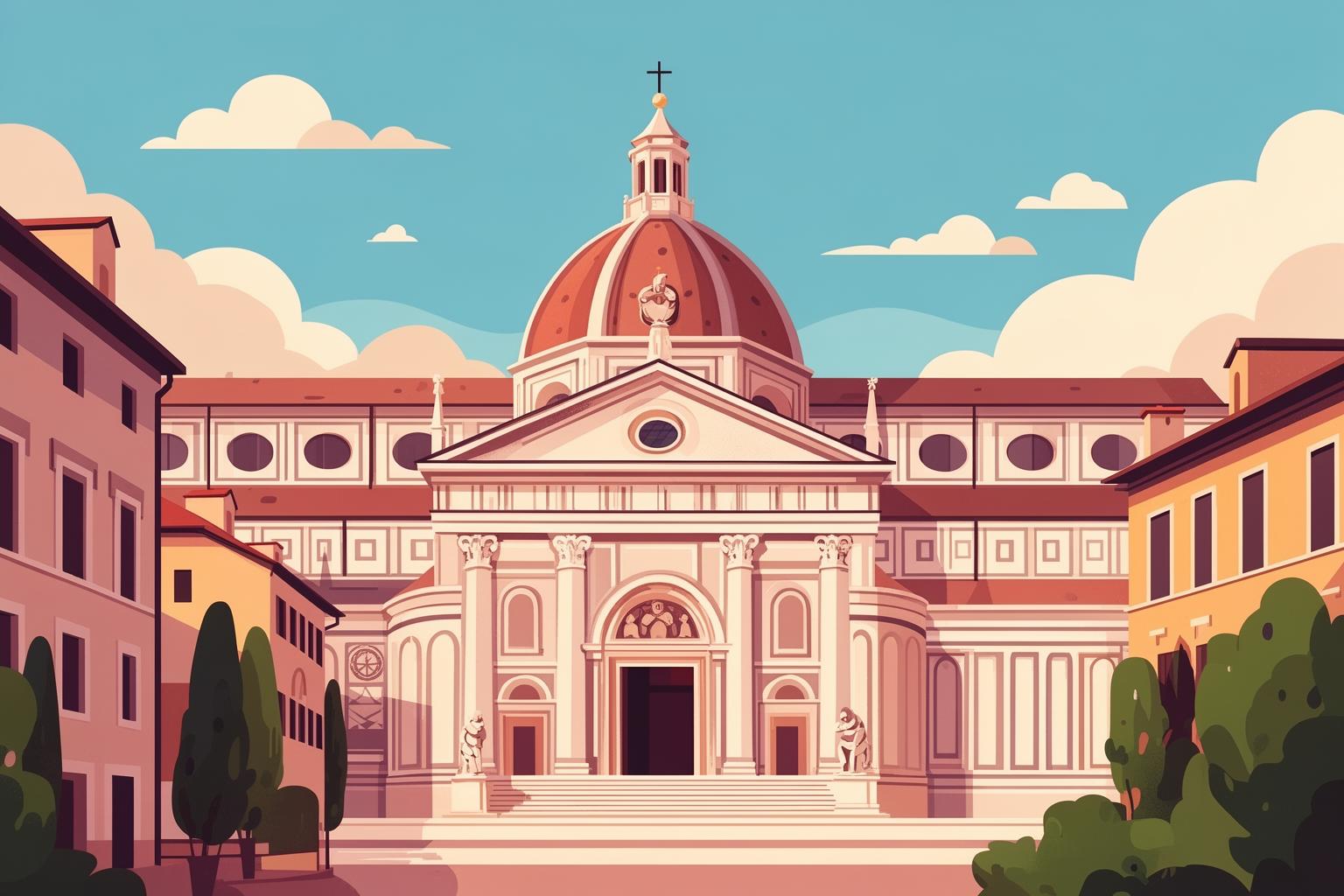
Just a stone’s throw from the lively Mercato Centrale lies the Basilica of San Lorenzo, a structure that feels more rustic and authentic compared to Florence’s more grandiose churches. It lacks the shining marble façade of the Duomo, yet its rough exterior conceals a wealth of artistic treasures. This was the Medici family’s parish church, their place of worship and ultimately their final resting place. They invested immense wealth in its decoration, commissioning their favored artists, Brunelleschi and, naturally, Donatello.
The Old Sacristy: A Perfect Harmony
Step into the Old Sacristy, designed by Brunelleschi, and you enter a space of perfect Renaissance balance. The clean lines, grey pietra serena stone against white plaster, and precise geometric proportions evoke a deep sense of peace and order. Yet this flawless architectural setting is enlivened by Donatello’s sculptures. He created a series of large, painted stucco roundels illustrating scenes from the life of St. John the Evangelist. These are full of energy and dramatic narrative, providing a lively contrast to the calmness of the architecture. He also crafted the stunning bronze doors, with panels depicting apostles and martyrs engaged in intense debate. The partnership between architect and sculptor here is flawless. It serves as a masterclass in how diverse art forms can unite to produce a space that is both intellectually engaging and profoundly spiritual. The sacristy’s quiet atmosphere invites genuine contemplation, offering an opportunity to appreciate the subtle interplay between form and emotion.
The Bronze Pulpits: A Master’s Final Cry
In the church’s main nave stand two of Donatello’s most extraordinary and demanding works: the twin bronze pulpits. These were his final creations, begun in old age and left incomplete at his death. They differ greatly from anything else he produced. The serene classicism of his middle years is replaced by a raw, turbulent, and deeply emotional expressionism. The panels illustrate the Passion of Christ, but these are not orderly, straightforward narratives. Instead, they are swirling, crowded, and frantic scenes of profound suffering and spiritual anguish. Figures are roughly outlined, backgrounds blurred, and emotion pushed to its utmost intensity. It seems that the elderly Donatello, confronting his own mortality, infused these works with all his remaining energy, faith, doubts, and pain. They are not conventionally beautiful; they possess a more potent power. They deliver a direct, unfiltered expression of human feeling. To stand beneath them in San Lorenzo’s nave is to bear witness to the final, passionate testament of a genius who never ceased pushing boundaries, innovating, and seeking truth in his art until the very end.
Beyond Florence: Travels and Triumphs
While Florence was Donatello’s home and the primary stage for his genius, his renown was such that patrons from throughout Italy sought his work. A decade-long stay in the northern city of Padua proved especially productive, yielding two of his most monumental achievements. For the dedicated pilgrim, a visit to Padua is essential to fully grasp the extent of his influence.
Padua: An Equestrian Monument for the Ages
In the piazza outside the Basilica of Saint Anthony in Padua stands a figure of immense power and authority: the equestrian monument to the condottiero (mercenary captain) Erasmo da Narni, known as “Gattamelata” (The Honeyed Cat). This was the first major equestrian bronze cast since the Roman Empire, a technical and artistic achievement of extraordinary scale. Donatello took inspiration from the ancient Roman statue of Marcus Aurelius but created something distinctly modern. Gattamelata is neither a god nor an emperor; he is a man. His face is weathered, realistic, and resolutely focused. He embodies the Renaissance individual—a master of his destiny, powerful, and self-aware. The statue radiates an aura of unyielding command and dominates the square as a timeless tribute to human will and ambition. Traveling to Padua is an easy and scenic train journey from Florence, making it an ideal day trip to witness this northern masterpiece.
Siena: A Story in a Baptismal Font
Closer to Florence lies the magnificent hill town of Siena, its eternal rival. Early in his career, Donatello was invited to contribute to a major project: the new baptismal font for the Siena Baptistery. There, he worked alongside other leading artists of the period, each creating a bronze relief panel. Donatello’s panel, The Feast of Herod, is a masterclass in narrative clarity and dramatic tension. Using his technique of flattened relief and precise linear perspective, he depicts a scene of unfolding horror. At one end, Salome dances; in the center, a musician recoils; on the right, a servant presents the head of John the Baptist to a horrified King Herod, who raises his hands in shock. The entire drama unfolds within a credible architectural space that seems to extend deep into the bronze. It is like watching a play on a miniature stage, a moment of profound psychological insight that remains striking even today.
Weaving Donatello into Your Florentine Experience
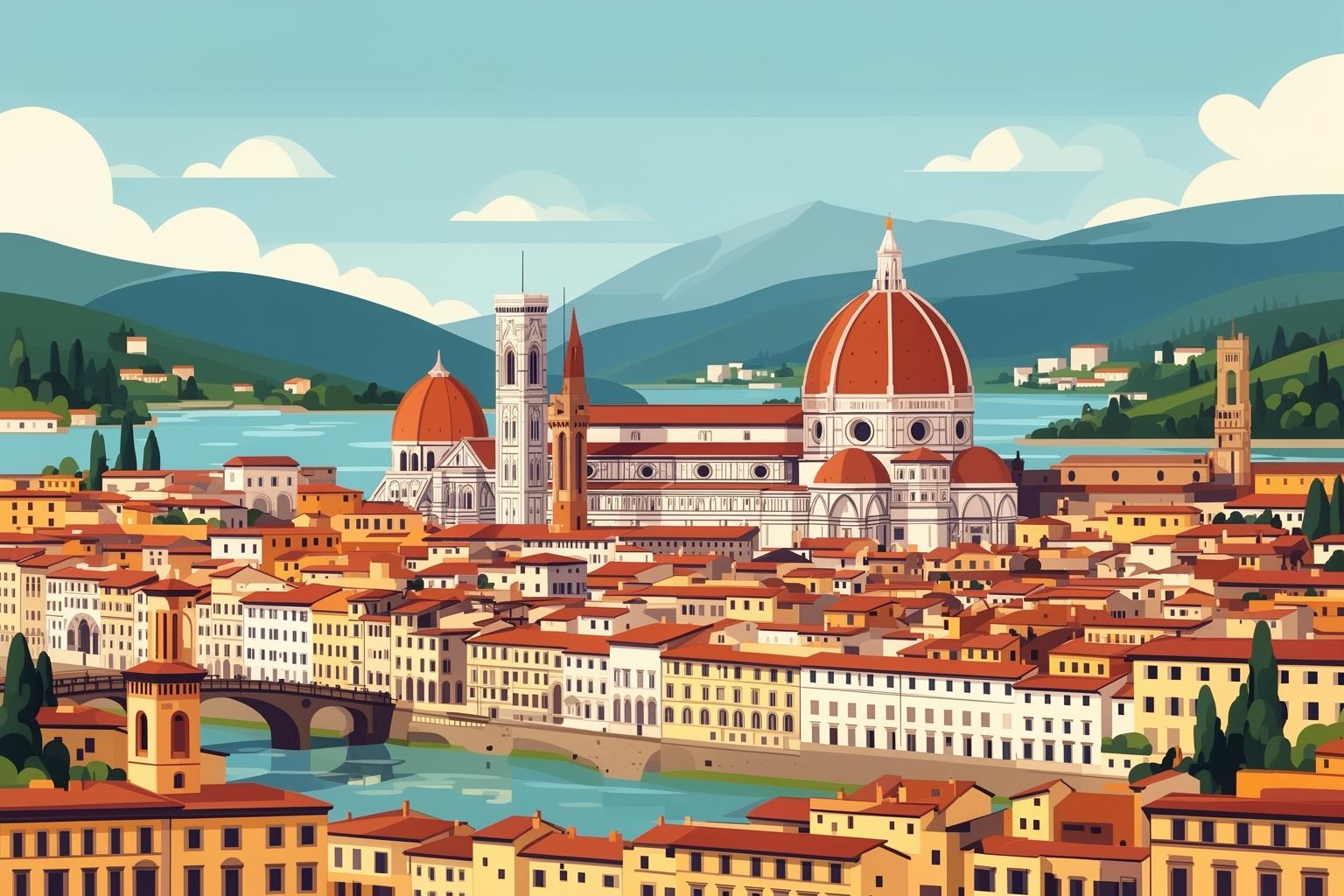
A pilgrimage following Donatello’s footsteps involves more than just visiting museums and churches; it’s about immersing yourself in the atmosphere of the city that shaped him.
Walking the Oltrarno: The Artisan’s Heart
Cross the Ponte Vecchio into the Oltrarno district, the “other side of the Arno.” This has long been the neighborhood of Florence’s artisans. The streets are narrower, and the vibe more authentic. Here, you can still hear the steady tap-tap-tap of a hammer from a small workshop and smell the scent of wood and leather. This is the world Donatello knew. It was in a lively workshop, surrounded by apprentices, the heat of the furnace, and marble dust, that his masterpieces were born. Strolling these streets allows you to connect with the hands-on, deeply tactile nature of his craft.
A Taste of the Renaissance
After visiting San Lorenzo, head to the Mercato Centrale. This lively, bustling food market is a delight for the senses. Although the current building dates from the 19th century, a market has existed on this spot for centuries. Picture Donatello walking here, gathering food, immersed in the same earthy aromas of cheese, cured meats, and fresh produce. Treat yourself to a simple, hearty Tuscan meal—perhaps some ribollita (a robust bread and vegetable soup) or a plate of pasta. The cuisine of this region is much like Donatello’s art: honest, straightforward, and crafted with exceptional skill using the finest local ingredients.
The Enduring Echo of the Chisel
To follow Donatello through Florence and beyond is to understand that his work is not confined behind velvet ropes. It is woven into the city’s very DNA. You sense it in the defiant posture of St. George, a spirit that continues to inspire the independent Florentines. You find it in the profound humanity of the prophets, a testament to the emotional depth underlying all the city’s beauty. Donatello gave his figures weight—both physical and psychological—grounding them in the real world while imbuing them with a transcendent spiritual energy.
As you leave the quiet halls of the Bargello or the sunlit Piazza della Signoria, you carry that weight with you. The master’s presence does not fade; it sharpens your perception. You begin to see the city through his eyes—a place of fierce pride, deep faith, and unyielding belief in the power of the human spirit. The echo of Donatello’s chisel is far from faint; it resonates in every stone, a lasting rhythm at the heart of the Renaissance.