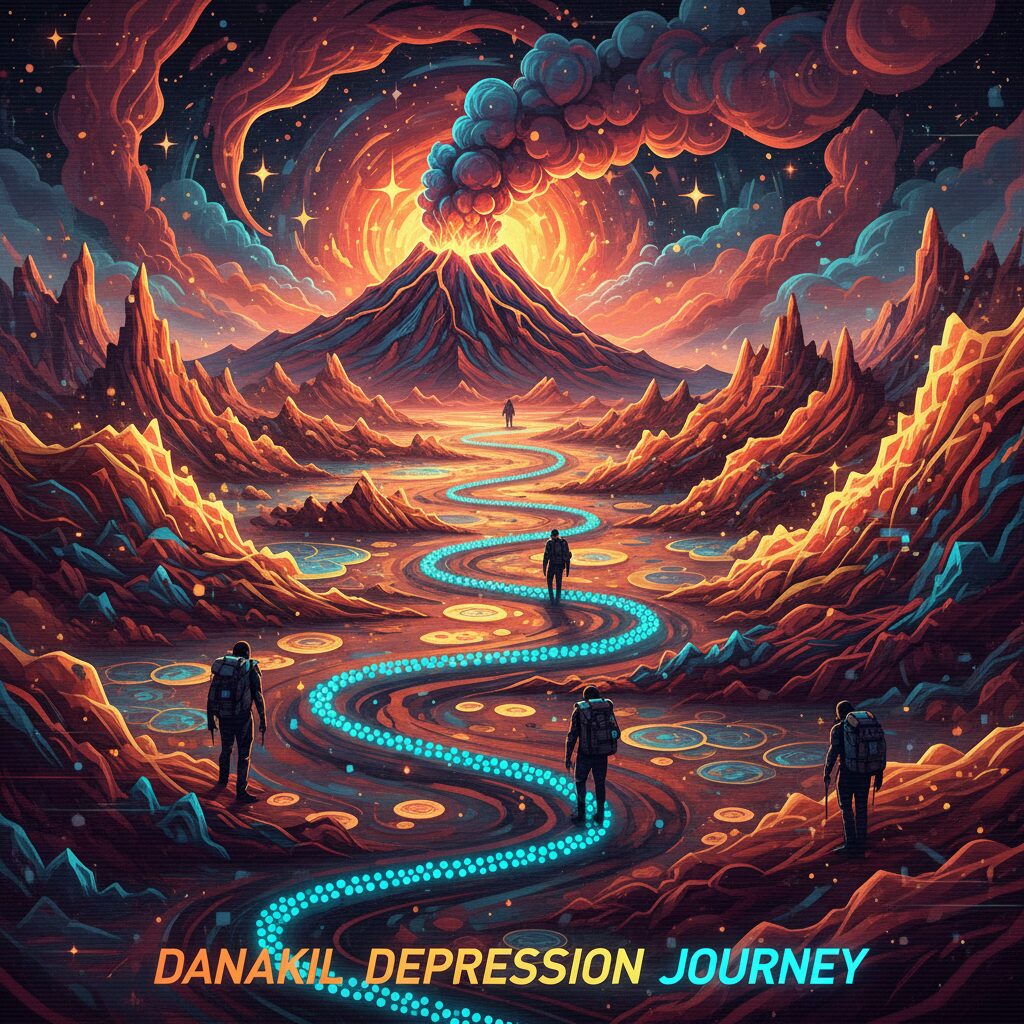
There are places on this planet that defy easy description, landscapes that shatter your perception of what Earth can be. They feel less like destinations and more like transmissions from another world, echoes of a planet in its violent, primordial youth. The Danakil Depression in Ethiopia is not just one of these places; it is their very soul. This is not a vacation spot. It is a pilgrimage. A journey to the crucible of creation, a searing, hallucinatory landscape that has become a hallowed ground for those of us who grew up gazing at the stars, reading tales of distant planets, and watching heroes traverse alien worlds on screen. To visit Danakil is to walk through the frames of a science fiction epic made real, to set foot on a terrain so outrageously surreal it feels like a meticulously crafted film set. It’s the ultimate sacred site for the dreamer, the artist, the adventurer—anyone who seeks to find the truly alien without ever leaving our own world.
Nestled in the Afar Triangle, this geological marvel is one of the lowest, driest, and hottest places on Earth. Here, the planet’s crust is literally tearing itself apart as three tectonic plates diverge, creating a spectacle of raw, untamed geology. It’s a land of extremes, of bubbling lava lakes, vast salt pans that shimmer like frozen oceans, and hydrothermal fields that paint the earth in colors too vivid to seem natural. This is a journey that demands respect, meticulous planning, and a surrender to the elements. But for those who answer its call, the reward is an experience that rewrites your understanding of beauty, resilience, and life itself. It is a profound encounter with the fierce, creative power of our own planet, a power that has inspired storytellers for generations.
Much like a literary pilgrimage to Monroeville, this journey is a profound encounter with the landscapes that shaped a story.
The Unearthly Trinity: Dallol, Erta Ale, and the Salt Flats

A pilgrimage to the Danakil is defined by three essential experiences—a trinity of geological marvels at the core of this surreal journey. Each represents a unique realm, showcasing a different aspect of the planet’s raw, elemental force. Traveling between them is like turning the pages of a planetary science textbook authored in fire, salt, and acid. These are not simply sights to behold; they are environments to be experienced, to be absorbed, and to endure. They stand as the cathedrals of this alien terrain, each commanding its own form of reverence.
Dallol: Painting with Geothermal Fire
Picture a painter’s palette crafted by a mad deity. That is Dallol. This hydrothermal field, officially the hottest inhabited place on Earth, delivers a breathtaking sensory onslaught. The earth itself seems to breathe, releasing sulfurous steam from countless cracks. Hot, brine-saturated water rises from deep within, dissolving minerals such as salt, sulfur, and potash, then depositing them on the surface as it evaporates under the scorching sun. The outcome is a landscape that defies existence.
The Colors of Chaos
The array of colors is staggering. Acidic pools of vivid neon green sit alongside crystalline canary yellow structures. Edges of oxidized iron form deep reds and oranges that blend into the pristine white salt crust. The ground crunches beneath your feet, a delicate lattice of salt and minerals as brittle as spun glass. You tread on the newest land on Earth, a surface continually created and destroyed before your eyes. The air is thick with the sharp, acrid scent of sulfur, a constant reminder of the volatile chemistry at work. It feels perilous—and it is. The pools are fiercely acidic, the ground unstable, and the heat wraps you like a heavy blanket. Yet, the beauty is so intense, so utterly alien, it transcends discomfort. For artists, photographers, or filmmakers, Dallol is a revelation—a living, breathing canvas offering color and texture compositions so complex and vivid they seem unreal. It is the perfect setting for a story on a volcanic moon orbiting a distant gas giant, a place where life, if present, would follow entirely different rules.
A Fragile Creation
Exploring Dallol demands careful guidance. Your Afar guide will point out safe paths, their feet sensing the difference between solid ground and a fragile crust hiding a scalding acidic bath. There is a quiet tension in the air, a profound respect for the power simmering just beneath the surface. You find yourself speaking softly, as if not to disturb the sleeping earth. Every angle reveals a new abstract masterpiece, formations resembling coral reefs from a fever dream. It is a place that feels sacred in its chaotic creativity, a testament to how the most beautiful things often arise from violent forces.
Erta Ale: The Gateway to the Underworld
If Dallol is the planet’s art studio, Erta Ale is its pulsating, molten heart. Its name means “Smoking Mountain” in Afar, a deceptively simple moniker for one of the world’s few continuously active lava lakes. The journey to Erta Ale is a pilgrimage itself—an hours-long drive over desolate volcanic terrain followed by a nocturnal hike to the crater’s edge. It is a quest into darkness to witness the planet’s primordial light.
The Night Trek to the Fire
The trek starts at sunset, casting long, dramatic shadows across volcanic plains. The oppressive daytime heat fades, replaced by cool, dry desert air. You walk by moonlight and headlamp, the crunch of volcanic scree your only sound in vast silence. Ascending the volcano’s gentle slope, a faint ominous glow appears, growing brighter with each step. It is a primal beacon, promising fire ahead. The anticipation is overwhelming—a mix of excitement and deep, instinctual nervousness. You approach a hole in the world leading to its core.
Staring into the Crucible
Reaching the crater rim is a moment etched forever in memory. Peering over the edge, you see the lava lake—a roiling, breathing sea of molten rock, glowing with impossible intensity. The surface is a moving tapestry of black, cooling crust punctuated by incandescent orange-red fissures that split open like wounds. It pulses, breathes, pops, and spits, sending molten fountains into the air. The sound is a low, constant rumble—the planet’s heartbeat. Heat washes over your face in waves, a tangible connection to the immense energy unleashed below. It is mesmerizing, terrifying, and profoundly beautiful. This sight has inspired countless fantasy epics—the forge of creation, dragons’ lairs, the essence of Mount Doom. Standing at Erta Ale’s edge makes you feel infinitesimal, a temporary witness to geological processes shaping Earth for billions of years. Hours can pass as you watch, lost in the hypnotic dance, sensing the raw, untamed power of the earth. It is a humbling, almost spiritual encounter.
Lake Asale and the Salt Caravans: A Timeless Spectacle
The third gem in Danakil’s crown is a landscape of stark, minimalist beauty. After Dallol’s chaotic colors and Erta Ale’s fiery drama, the salt flats of Lake Asale offer serene, blinding purity. This vast expanse of crystallized salt stretches to the horizon, its perfectly flat surface creating mirages and optical illusions. Under the relentless sun, the ground sparkles like diamonds.
The White Desert
Here, the sensation is one of immense space and silence. The sky feels larger, the horizon infinite. Driving across the flats is surreal, your 4×4 seeming to float over a white, featureless void. In some spots, the salt crust is thin enough to reveal briny water beneath, forming a perfect mirror reflecting the sky and blending earth with heaven. It is a photographer’s dream, a place of clean lines, dramatic shadows, and minimalist compositions. It resembles a frozen moon’s surface—a place where time appears to stand still.
The Echoes of History
Yet this landscape is far from lifeless; it is the heart of an ancient industry. For centuries, the Afar people have mined salt here, cutting it into rectangular slabs by hand. Witnessing this process is like stepping back in time. You see the miners, faces weathered by sun and salt, laboring in staggering heat with tools and methods unchanged for generations. Then, you see the caravans—long lines of camels, sometimes numbering in the hundreds, patiently loaded with salt slabs for the arduous trek to Ethiopia’s highlands, where the salt is traded. This scene reads like a page from history—a living tradition linking the modern world to an ancient economy. Watching a camel caravan steadily cross the white expanse at sunset is among Africa’s most poignant and unforgettable sights. It stands as a testament to human endurance and a powerful reminder that even in Earth’s harshest places, life and culture endure and flourish with quiet dignity.
Preparing for Your Sci-Fi Expedition: The Logistics of Survival
A journey to the Danakil Depression is not to be taken lightly. This is one of the most hostile environments on Earth, and a successful trip depends entirely on thorough preparation and expert guidance. Viewing it as a real-world expedition to another planet is the right mindset. You need a detailed mission plan, the appropriate gear, and a dependable team. There is no room for improvisation here; safety is the top priority.
Why You Must Travel with a Tour
Let this be clear: attempting to visit the Danakil Depression independently is both impossible and recklessly dangerous. This is not a suggestion but a rule dictated by the harsh realities of the desert. The reasons are many and non-negotiable. The terrain demands a fleet of well-maintained 4×4 vehicles and expert drivers intimately familiar with the perilous tracks. The heat is deadly, and organized tours carry ample water, food, and emergency supplies. Permits are required to enter the area, and these are managed by tour operators. Most importantly, the region borders Eritrea and is politically sensitive. Reputable tour companies collaborate with the Afar community and provide armed scouts or police escorts, which are standard, necessary precautions to ensure the group’s safety. Choosing a reputable, professional tour operator is the most critical decision you will make. They are your lifeline and mission control, providing the logistical support needed for a safe journey through this otherworldly landscape.
Timing Your Visit: Pursuing the “Cool” Season
There is a specific window for visiting Danakil. The “cool” season extends from November to early March. The term “cool” is relative here—daytime temperatures still climb to 35-40°C (95-104°F), but this is far more bearable than the scorching 50°C (122°F) or higher common the rest of the year. Traveling outside this period is not only uncomfortable but also genuinely dangerous due to the heightened risk of heatstroke. Planning your trip during these cooler months is crucial for your health, safety, and your ability to appreciate the awe-inspiring landscapes without being overwhelmed by the heat.
Packing for Another Planet: Essential Gear
Packing for Danakil prioritizes function over fashion. You are preparing to survive in an extreme environment—think lightweight, practical, and protective.
Clothing
Wear loose-fitting, long-sleeved shirts and pants made from breathable, light-colored fabrics like linen or moisture-wicking synthetics. This protects your skin from the relentless sun and helps regulate heat. A wide-brimmed hat is indispensable; it’s critical for shielding your face and neck. A buff or lightweight scarf is also very useful for protecting your face from dust and sun. For the Erta Ale trek, sturdy, comfortable hiking boots with thick soles are essential. The volcanic rock is sharp, uneven, and hot—sneakers won’t suffice. For the evenings, which can become surprisingly cool and windy, especially atop Erta Ale, bring a light fleece or windbreaker.
Health and Hygiene
The sun and dryness are your main enemies. High-SPF sunscreen (50+) is a must and should be applied generously and often. Sunglasses are equally vital to protect your eyes from the intense glare, particularly on the salt flats. Pack a basic first-aid kit with antiseptic wipes, bandages, painkillers, and any personal medications. Blister treatment supplies are also advisable. Rehydration salts or electrolyte tablets are highly recommended to add to your water to help combat extreme sweating and prevent dehydration. Wet wipes will be invaluable, as showers are not part of this expedition.
Essential Electronics
Although this trip is about disconnecting, you’ll want to capture the stunning sights. Bring extra batteries for your camera and a high-capacity power bank since charging options are extremely limited. A headlamp with fresh batteries is absolutely essential for the Erta Ale night trek and for finding your way around camp after dark. Don’t rely on your phone’s flashlight. Finally, store your electronics in dustproof bags—the fine sand and salt penetrate everything.
The Soul of the Salt Lands: Understanding the Afar People
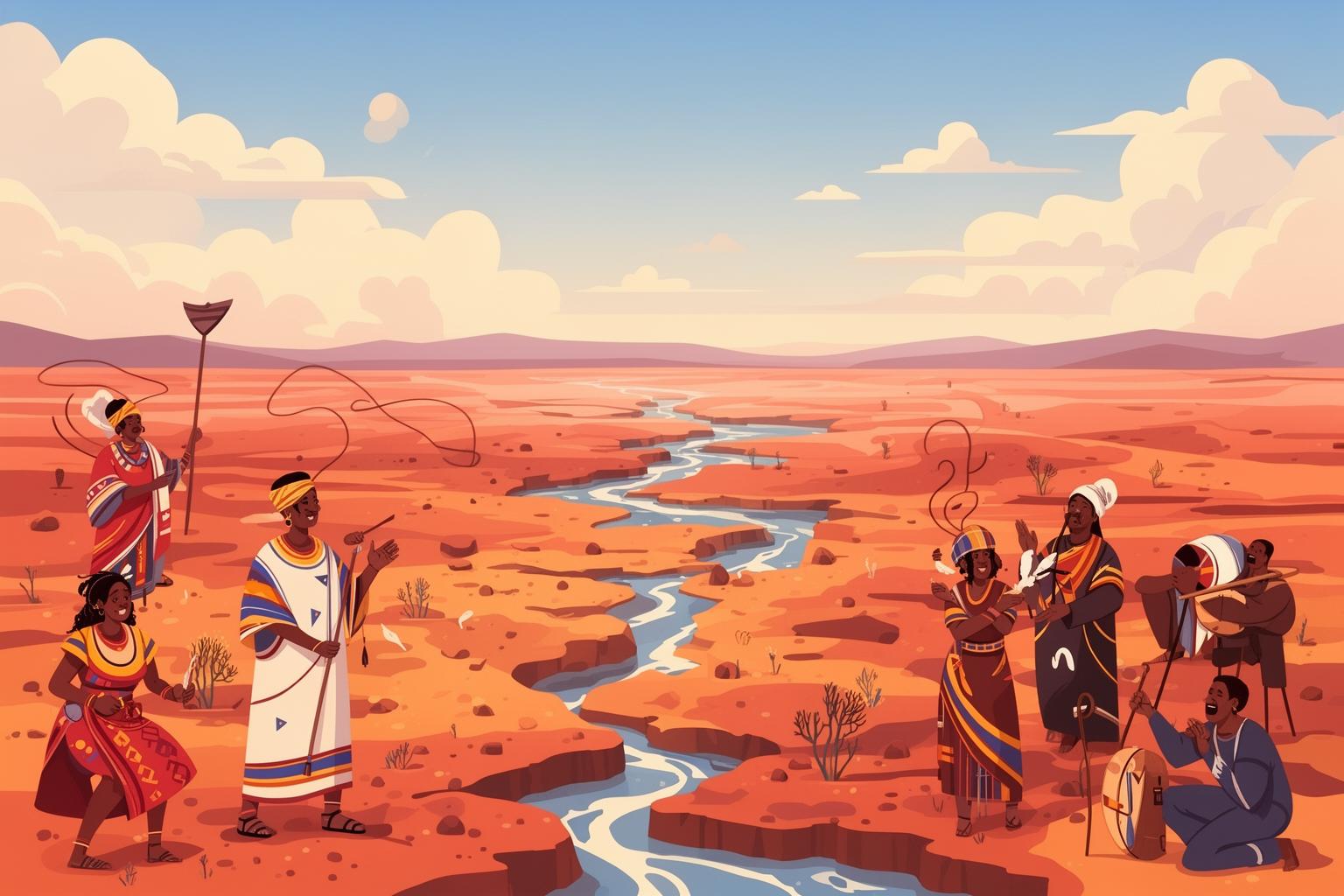
To visit the Danakil and focus solely on the geology is to miss half the story. Despite its harshness, this land is a homeland—the ancestral territory of the Afar people, a semi-nomadic community of proud and resilient pastoralists who have perfected the art of survival in one of the world’s most challenging environments. Their culture is deeply connected to the landscape, shaped by the heat, salt, and volcanic earth. Engaging with their world, even briefly as a visitor, adds a profound dimension to the journey.
Historically known for their fierce independence and warrior culture, the Afar possess a rich social structure and a strong bond with their clans and land. They have resisted outsiders for centuries, and their ability to thrive here is a testament to their remarkable knowledge and adaptability. They can interpret the subtle signs of the desert, find water where it seems impossible, and navigate the dangerous terrain with a skill that is humbling to witness. Your local Afar guides and drivers serve not just as facilitators but as cultural interpreters, bridging the gap to understanding this ancient way of life. Showing them respect, being open to learning, and recognizing that you are a guest in their home is essential.
Their involvement in the salt trade is the most visible part of their economy. The demanding labor of mining and transporting the desert’s “white gold” has been a cornerstone of their culture for centuries. Watching the salt miners at work means witnessing a tradition carried through countless generations. It is a powerful human story of labor, endurance, and survival. This human element grounds the surreal landscapes in a profound reality, transforming your journey from mere sightseeing into a richer, more meaningful cultural experience.
The Danakil Atmosphere: What It Truly Feels Like
No photograph or documentary can truly prepare you for the sensation of being in the Danakil Depression. It is an all-encompassing, sensory experience that leaves a lasting impression. The initial thing that overwhelms you is the heat. It’s not just hot; it feels like a physical weight, a palpable presence radiating from the ground and lingering in the air. You sense it on your skin, deep in your lungs. It governs the pace of your day, compelling a slow, deliberate rhythm.
Next comes the silence. Across the vast salt flats, the silence is absolute and profound. There are no birds, no insects, no sounds of civilization—only the whisper of the wind and your own breath. This silence is both serene and intimidating, a void inviting deep introspection. At Dallol, this is interrupted by the hiss of fumaroles and the gurgle of acidic springs—the sounds of a young planet coming to life. At Erta Ale, it shifts to the primal, guttural rumble of the lava lake, a sound that seems to emanate from the earth’s core itself.
The aromas are equally powerful. The fresh, mineral scent of the salt flats gives way to the sharp, acrid smell of sulfur at Dallol—the odor of a huge matchstick igniting. It is the raw, chemical aroma of geology in motion. Visually, the experience is simply overwhelming. The scale is vast, the colors unbelievably vibrant, and the textures endlessly captivating. It’s a place that demands your full presence, asking you to notice the world around you in ways modern life seldom permits. It makes you feel small, vulnerable, and intensely, exhilaratingly alive. This is the true spirit of the pilgrimage: a shedding of the familiar, confronting you with the raw, elemental force of nature.
A Journey’s End, A Story’s Beginning
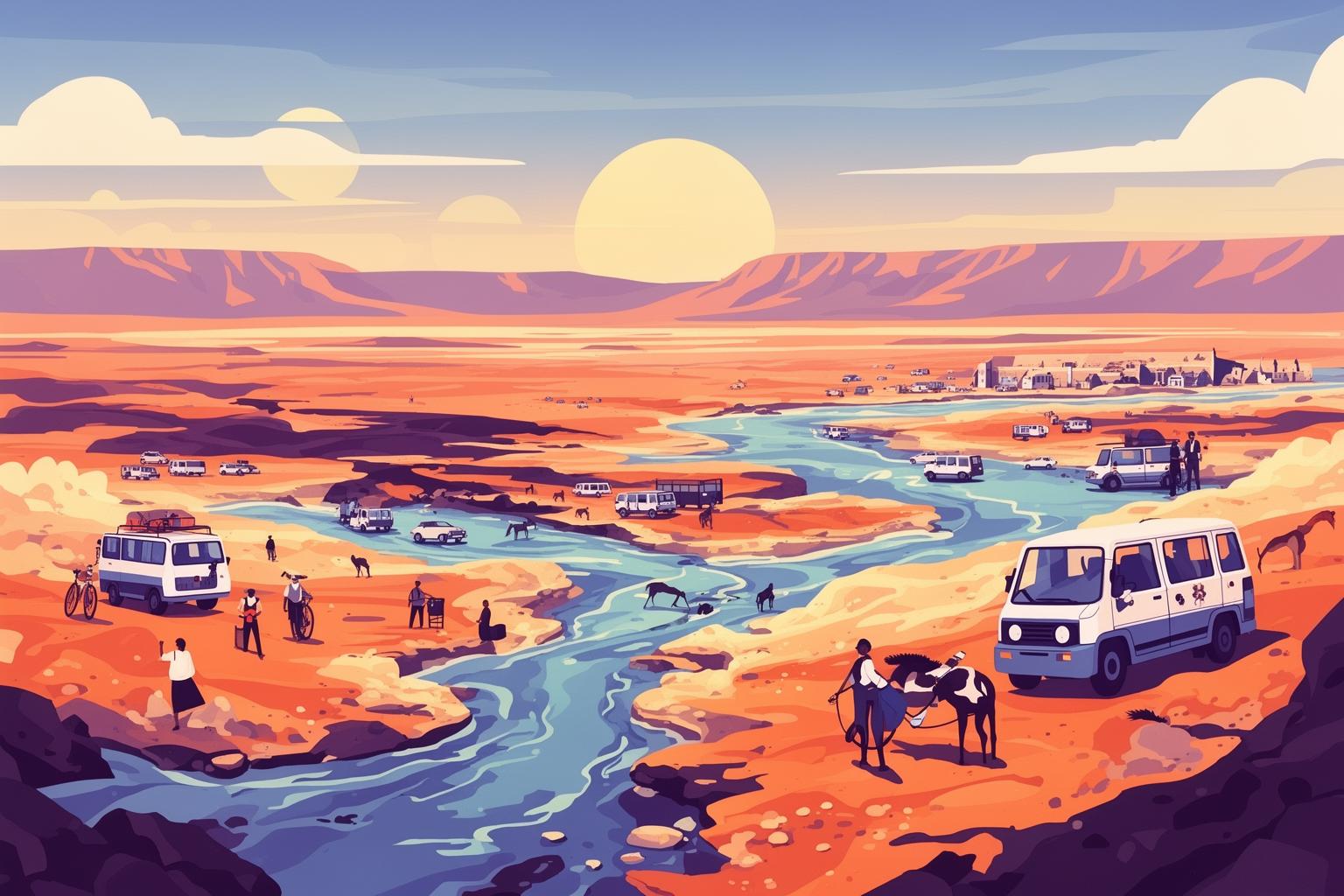
Leaving the Danakil Depression feels like emerging from a strange and powerful dream. As your 4×4 ascends back into the Ethiopian highlands, the alien landscapes give way to more familiar scenes of green hills and bustling villages. The transition is abrupt. The oppressive heat fades, the air loses its sulfurous scent, yet the experience lingers, a vivid memory etched deeply in your mind.
A journey here offers more than just incredible sights. It is both a challenge and a reward. It tests your physical endurance and grants you a newfound appreciation for life’s resilience—both the extremophile organisms surviving in Dallol’s acidic pools and the Afar people who call this demanding land home. This journey pushes you to your comfort zone’s edge and, in doing so, broadens your perspective on the world.
You arrive in Danakil seeking the alien—a real-world place to rival the fantastical realms of your imagination. You leave having discovered something deeper: a stronger connection to our own planet. You realize the most incredible, otherworldly wonders aren’t light-years away in distant galaxies, but here, simmering just beneath the Earth’s surface, waiting for those brave enough to seek them out. The story of Danakil is one of creation, endurance, and a fierce beauty that steals your breath away. It marks a journey’s end, but for those who experience it, it is also the beginning of seeing our world with new, astonished eyes.