
Some films are watched. Others are experienced. And then there are a select few that invite you on a journey, a pilgrimage into the very heart of their world. Quentin Tarantino’s Kill Bill: Vol. 2 is one such cinematic odyssey. It’s a film that breathes with the dust of the American West, meditates in the mountain mists of China, and settles its final score under the warm, deceptive sun of the Mexican coast. To trace the footsteps of The Bride on her final, gut-wrenching quest for revenge is to embark on a globe-trotting adventure that transcends mere fandom. It’s about standing in the quiet places where cinematic fury was unleashed, feeling the phantom echo of a Hattori Hanzō sword, and understanding how landscape itself becomes a character in Tarantino’s masterful hands.
While Vol. 1 was a hyper-stylized explosion of Japanese action cinema, Vol. 2 is its patient, simmering counterpart. It’s a contemplative Western, a gritty kung fu lesson, and a tense family drama all rolled into one. The locations reflect this shift in tone. They are vast, lonely, and steeped in a palpable atmosphere that speaks of isolation, endurance, and the long road to a bloody reckoning. This journey is not for the faint of heart; it’s for the true cinephile, the seeker of stories etched into the very soil of our world. It’s a quest to find the reality behind the celluloid myth, from a desolate chapel in the Mojave Desert to the sun-drenched hacienda where Bill finally meets his fate. Prepare yourself, for the path of the pilgrim is long, but the revelations found along the way are worth every step. Here, we begin our search for those sacred grounds where the legend of Beatrix Kiddo was written in blood, sweat, and tears.
This cinematic pilgrimage is part of a broader tradition of exploring iconic film locations, where the settings become as integral to the story as the characters themselves.
The Lonely Chapel of Two Pines: A Massacre in the Mojave
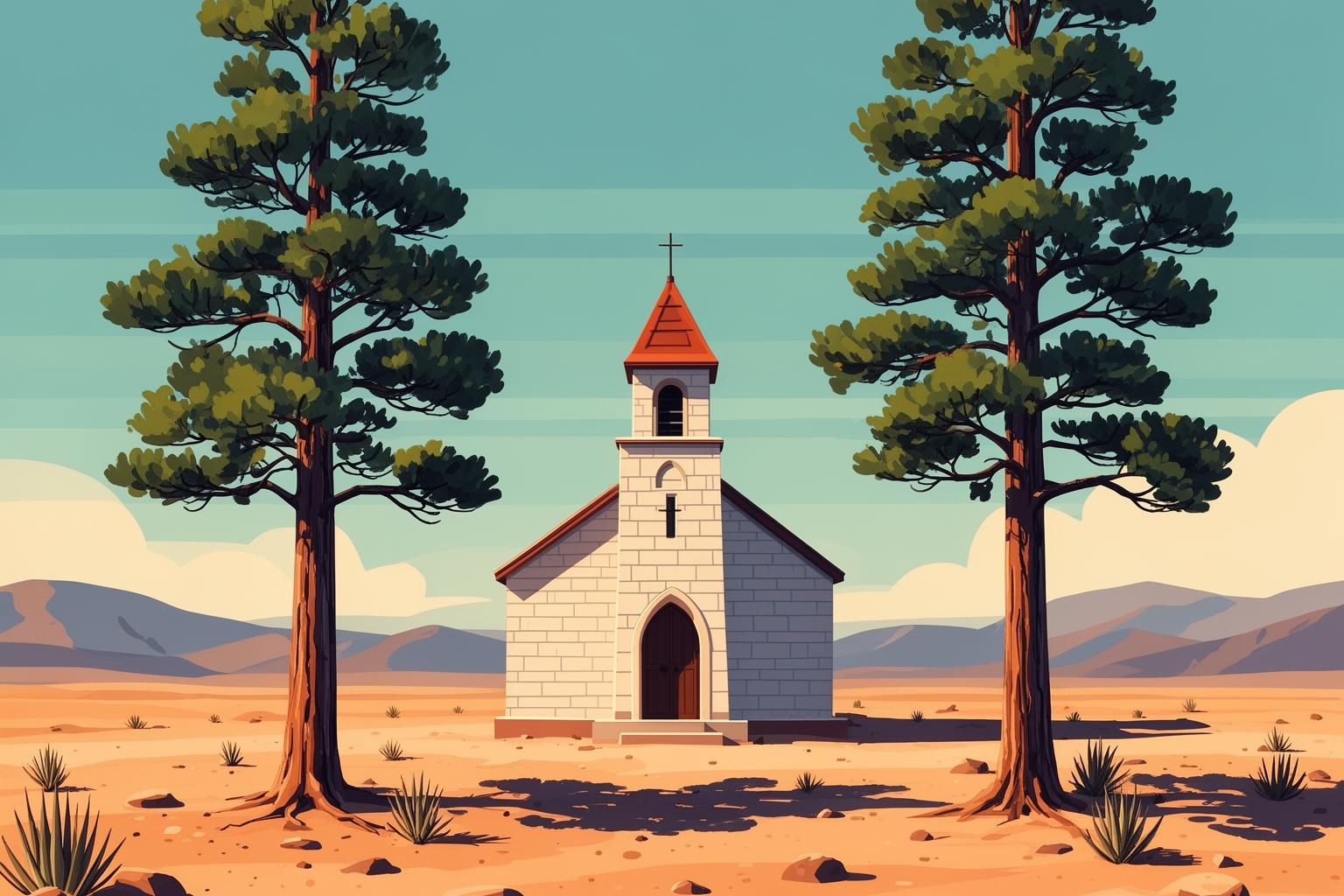
The story of Kill Bill: Vol. 2 truly begins where The Bride’s first life ended: in a small, unassuming chapel located in the middle of nowhere, supposedly in El Paso, Texas. This is the site of the wedding rehearsal, a moment meant to be joyful but violently shattered by the Deadly Viper Assassination Squad. The stark, sun-bleached image of the white chapel against an endless blue sky stands as one of the most powerful visuals in Tarantino’s entire filmography. It symbolizes innocence lost and a sanctuary defiled. However, visiting the place reveals that its real-world counterpart is not in Texas but in the windswept expanse of California’s High Desert.
Finding the Sanctuary in Lancaster
The actual “Two Pines Wedding Chapel” is the Sanctuary Adventist Church, situated on a remote stretch of East Avenue G in Lancaster, a city on the western edge of the Mojave Desert. Discovering it feels like a cinematic revelation. As you move away from the suburban sprawl, the landscape broadens, the houses become sparse, and the world shrinks to asphalt, sand, and the vast, silent presence of the desert. Then, there it is. The church stands almost exactly as it appears in the film, a lone white beacon set against the subdued earth tones surrounding it. Its stark isolation is immediately striking. You can almost hear the mournful harmonica from the soundtrack carried on the dry desert breeze.
The atmosphere here is charged with an unusual duality. On one side, it is a place of peace—an active church and a house of worship where a genuine community gathers. A sense of calm pervades the air, the quiet that only such an expansive and open space can bring. Yet, for any fan of the film, standing here inevitably sends a chill down the spine. You instinctively envision Bill arriving in his convertible, the Vipers assembling, and the horrific violence about to erupt within these serene walls. The contrast is striking. It is a testament to Tarantino’s brilliance that he could imbue such a peaceful site with a lasting aura of dread and tragedy for millions of viewers.
A Pilgrim’s Moment of Reflection
Visiting the Sanctuary Adventist Church invites contemplation. The best time to visit is during the golden hours of late afternoon, when the sun hangs low in the sky, casting long shadows and bathing the chapel in the same warm, cinematic light as the film. This moment is ideal for photography. You can frame shots that echo the iconic low-angle perspectives used by cinematographer Robert Richardson, making the chapel appear monumental and mythic against the desert landscape. Walk around the church, feel the crunch of the dry earth underfoot, and gaze toward the horizon. In these still moments, the film’s themes of solitude and resilience truly resonate.
First-time visitors should keep a few important points in mind. This remains a functioning place of worship, so respect is essential. Avoid visiting during service times unless you plan to participate in the congregation. The grounds are mostly open to visitors, but the true magic lies outside. The desert climate is unforgiving; even on a mild day, the sun’s intensity can be harsh. Bring water, apply sunscreen, and dress in layers, as temperatures can quickly drop once the sun sets. Amenities nearby are virtually nonexistent, which adds to the place’s raw, unfiltered authenticity.
The Interior: A Space Reimagined
It is important for any visitor to understand that the chapel’s interior featured in the film was not actually the inside of the Sanctuary Adventist Church. The intimate, wood-paneled space where The Bride, Tommy, and their friends were brutally attacked was a set built by Tarantino’s production team. This is common in filmmaking, as it allows greater control over lighting, camera angles, and the complex choreography of action scenes. Knowing this does not lessen the power of the real exterior location; instead, it enhances one’s appreciation for the art of cinema. Tarantino skillfully fused the stark reality of the Lancaster desert with the crafted artifice of a studio set to create a seamless, unforgettable sense of place. The real church supplies the soul and setting, while the set provided the stage for the tragic drama.
The Buried Alive Sequence: A Grave in the Desert
Few scenes in cinema are as claustrophobic and viscerally terrifying as The Bride’s premature burial by Budd. The scrape of the shovel, the splintering wood of the coffin, the suffocating darkness—this sequence is crafted to evoke our most primal fears. The setting plays a crucial role in its horror: a lonely, unmarked grave beneath a vast and indifferent sky. Once again, the Mojave Desert surrounding Lancaster and its neighboring city, Palmdale, served as the perfect backdrop for this nightmare.
Pinpointing Paula’s Grave
Unlike the chapel, there is no single, clearly identifiable spot for “Paula Schultz’s” grave. The location was a carefully selected patch of desert landscape, likely on private property or a remote area accessible to the film crew. For the devoted pilgrim, the journey here isn’t about finding an exact GPS coordinate but about immersing oneself in the environment that made the scene so powerful. This involves driving the backroads of the Antelope Valley, the region encompassing Lancaster and Palmdale. As you explore, you’ll be enveloped by the very elements seen on screen: the twisted silhouettes of Joshua trees stretching toward the sky like arthritic hands, sparse, resilient creosote bushes, and the endless, dusty terrain extending to a hazy mountain range in the distance.
The strength of this location lies in its emptiness. It’s a landscape that feels forgotten by time. The silence is profound, broken only by the wind or the distant call of a hawk. To stand in a place like this is to grasp The Bride’s utter isolation. There’s no one to hear your screams. The sun beats down with oppressive intensity, mirroring the stifling heat she must have endured inside the coffin. This part of the pilgrimage is an exercise in imagination, in placing yourself within the film’s emotional terrain. Find a quiet spot, look at the hardened earth, and reflect on the sheer force of will needed to break free from such a desperate situation.
The Art of Location Scouting
Tarantino’s choice of the Antelope Valley was intentional. This is not the picturesque, majestic desert of Monument Valley; it’s a tougher, grittier, more rugged landscape. It perfectly reflects the characters inhabiting it in Vol. 2—people like Budd, living their days amid decay and regret. It’s a desert that evokes the harsh realities of a Sergio Leone Spaghetti Western, a major influence on the film. The landscape itself becomes a character—unforgiving and primal.
For anyone planning to explore this area, preparation is essential. A reliable vehicle is necessary, ideally one equipped for unpaved roads. Always start with a full tank of gas, and bring more water than you expect to need. Cell service can be unreliable, so inform someone of your plans. This is not a casual tourist destination; it’s a genuine adventure into a harsh but stunning environment. The reward is a deep, atmospheric connection to the film—a sensation that cannot be duplicated by merely watching it on screen. You experience the grit, the heat, and the vast, beautiful desolation that forms the backdrop to The Bride’s resurrection.
Budd’s Trailer of Despair: A Lone Wolf’s Den
If the chapel symbolizes a desecrated sanctuary, Budd’s trailer stands as a shrine to rock bottom. Here, the once-proud assassin has withdrawn, working as a bouncer at a rundown strip club and drowning himself in regret. The location serves as a striking piece of visual storytelling—a sun-bleached, rusting trailer stranded in the middle of nowhere that perfectly reflects his internal decay. The tense encounter between The Bride and Budd, followed by the startling arrival of Elle Driver and her reptilian companion, all take place in this bleak, desolate setting.
The Dust-Swept Home of a Killer
Budd’s trailer was filmed once again amid the versatile desert landscapes near Lancaster. The trailer itself was a set piece brought in for the production, carefully positioned to enhance the feeling of isolation. Though the prop has long since disappeared, the environment that housed it remains intact. Driving through the sparsely populated residential areas on the outskirts of Lancaster and Palmdale, you can spot many real-life inspirations. The region is scattered with mobile homes and small, weathered houses, many of which stand in a similar state of sun-bleached desolation. The vast, empty lots, dusty yards, and the distant hum of the highway all contribute to the atmosphere of quiet desperation that Tarantino masterfully captured.
For film enthusiasts, there’s an intriguing piece of trivia connected to Budd’s trailer. The same prop was reportedly refurbished and reused in the popular television series My Name is Earl. This fun fact underscores the interconnected, resourceful nature of Hollywood productions, where an emblem of nihilistic despair in one story can become a backdrop for lowbrow comedy in another. This knowledge offers an additional layer to the pilgrimage, serving as a reminder of the artifice and transformation integral to storytelling.
Capturing the Desolation
This part of the journey centers on observation and empathy. It’s about grasping a character through his surroundings. Find a safe spot to pull over on a quiet road and simply take it in. Notice how the harsh desert sunlight drains all the color from the landscape. Observe how the homes appear to brace themselves against the relentless wind. This is no glamorous location; it’s a place of struggle and survival—and that’s precisely why it fits Budd’s story so well. He is a man who has surrendered, and his home stands as a testament to that defeat. Visiting this area allows you to step into that mindset, to feel the burden of a life overshadowed by past glories and terrible deeds. It’s a somber yet essential part of understanding the emotional fabric of Kill Bill: Vol. 2.
The Pai Mei Training Montage: A Temple in the Clouds
From the harsh landscape of the American desert, Vol. 2 suddenly transports us to the mythical, mist-shrouded mountains of China for one of the film’s most unforgettable sequences: Beatrix Kiddo’s grueling training under the legendary Shaolin master, Pai Mei. This extended flashback serves as a loving and masterfully executed tribute to the classic Hong Kong kung fu films of the 1970s, especially those produced by the Shaw Brothers Studio. Filming these scenes in China adds remarkable authenticity and visual splendor to the homage.
From Beijing to a Mythical Mountain
The breathtaking exterior shots of Pai Mei’s temple, including the seemingly endless stone staircase The Bride must climb, were filmed at the Miao Gao Shan Temple (translated as Sublime Peak Mountain Temple) in the Mentougou District west of Beijing. Though it is not as renowned as the Great Wall or the Forbidden City, this temple complex offers a deep sense of history and spirituality that is immediately felt upon arrival. Nestled within a rugged, mountainous terrain, it feels worlds apart from the busy city of Beijing. The air is thinner here, the silence more profound, and the architecture reflects centuries of devotion and practice.
As a fan of Chinese culture, I find this location especially meaningful. It connects Tarantino’s cinematic world to the profound, philosophical origins of martial arts. The temple is more than just a backdrop; it actively participates. The ancient stonework, the ornate roof tiles, and the surrounding pine-covered hills all enhance the sense that this is a place of great power and ancient wisdom—a fitting home for a master like Pai Mei. The contrast between the temple’s peaceful reality and the harshness of Pai Mei’s training on screen is striking. It underscores the film’s theme that true strength is forged through intense hardship, often in places of great beauty.
The Steps of a Master
The most iconic element of the Miao Gao Shan Temple for any Kill Bill fan is the imposing stone staircase. In the film, The Bride must carry buckets of water up these steps, a brutal test of her endurance. For visitors, climbing the same stairs physically forges a strong connection to her journey. The ascent is strenuous, and with each step, you gain admiration for the sheer physical effort Uma Thurman’s performance demanded. As you climb, the views of the surrounding valley grow increasingly stunning. Reaching the summit feels like a genuine triumph, offering a small glimpse of the perseverance that defines The Bride’s character. This is one of the most tangible and rewarding experiences along the entire Kill Bill pilgrimage.
Practicalities of a Chinese Pilgrimage
Getting to Miao Gao Shan requires some preparation. It’s off the main tourist path, which adds to its charm. The most convenient way to travel there from Beijing is by hiring a private car and driver for the day, allowing you to explore at your own pace. Alternatively, a combination of subway and local taxi can take you there, but expect a longer journey and potential language challenges. The best times to visit are spring and autumn, when the weather is mild and the natural scenery at its peak. Summer can be hot and crowded, while winter may bring snow and ice, making the steps hazardous. Be sure to wear comfortable, sturdy shoes suitable for hiking. As with any temple visit in China, dress modestly and show respect. The interiors of Pai Mei’s training chambers, like the chapel scenes in Lancaster, were filmed on carefully constructed sets at the renowned Beijing Film Studio. This choice highlights the blend of authentic exterior grandeur and controlled settings for the complex action and dialogue sequences.
Bill’s Hacienda: The Final Confrontation in Mexico
Every path of vengeance must come to an end. For The Bride, that end is a breathtaking modernist hacienda perched on a cliff overlooking the Pacific Ocean in Mexico. This is where she ultimately finds Bill, who lives an idyllic life with their daughter, B.B. Though the setting is a paradise, it is one built on a foundation of violence and betrayal. It’s the perfect lair for a man like Bill: refined, charming, and dangerously lethal. The final, emotionally charged confrontation takes place not in a dark alley or dusty street, but within a beautiful, sun-drenched living room.
Discovering Villa Quinta in Costa Careyes
Bill’s stunning villa is not a movie set but a real, awe-inspiring private residence called Villa Quinta, located in the exclusive resort community of Costa Careyes in Jalisco, Mexico. This stretch of coastline, nestled between Puerto Vallarta and Manzanillo, is famous for its dramatic cliffs, secluded beaches, and distinctive, colorful architecture. The style is a lively blend of Mediterranean and Mexican influences, and Villa Quinta stands as a prime example. Its vibrant colors, infinity pool that blends seamlessly into the ocean, and open-air design create an atmosphere of luxurious, secluded calm.
Tarantino’s selection of this location is a brilliant choice for character development. This is the world Bill has built for himself—a realm of taste, wealth, and beauty, far removed from the grimy trailer of his brother Budd. Bill is a collector of beautiful things, and his home is the crowning jewel of his collection. The beauty of the setting intensifies the underlying tension. This idyllic sanctuary becomes the final battleground, where a conversation over a sandwich is as charged as a sword fight, and where the legendary Five Point Palm Exploding Heart Technique is ultimately unleashed.
Immersing in the Sanctuary of a Villain
For most visitors, access to the specific Villa Quinta is likely impossible, as it is a private rental with a price reflecting its exclusivity. However, this doesn’t mean you can’t experience the allure of the location. The entire Costa Careyes resort area is open to visitors staying in one of its other villas, casitas, or bungalows. By immersing yourself in this environment, you can fully appreciate the atmosphere Tarantino captured. Spend your days exploring the striking coastline, swimming in the vibrant blue waters, and admiring the community’s distinctive architectural vision. This is a different kind of pilgrimage—one focused not on a single place but on an entire aesthetic and way of life. It’s about understanding the appeal of the world Bill created, the golden cage where he kept his daughter and awaited his fate.
The Truth Serum Showdown
Relaxing on a veranda overlooking the Pacific, perhaps in a nearby casita, it’s easy to envision the film’s climax—the long, tense conversation between The Bride and Bill, driven by truth serum. The heart-stopping revelation that Beatrix’s daughter is alive. The brief, beautiful emergence of a playful family dynamic before the final, inevitable duel. The physical space of the villa—its openness and connection to the vast ocean—plays a vital role in these scenes. It is a place with no secrets and no escape, where the truth, in all its painful and beautiful forms, must finally emerge. Experiencing the light, sea breeze, and vibrant colors of Costa Careyes offers a profound sensory connection to the emotional heart of the film’s unforgettable conclusion.
A Mosaic of Genres and Homages
Traveling through the locations of Kill Bill: Vol. 2 is like journeying through Quentin Tarantino’s own cinematic passions. Each site serves not merely as a backdrop but as a tribute—a thoughtfully selected stage that embodies the spirit of the film genres he cherishes. This pilgrimage doubles as a lesson in film history, etched into the very landscape.
The American West as a State of Mind
The vast, relentless desert surrounding Lancaster, California, lies at the core of the film’s Spaghetti Western influence. Tarantino employs this terrain much like Sergio Leone did in classics such as The Good, the Bad and the Ugly. It’s a space that dwarfs the characters, highlighting their isolation and the enormity of their trials. Wide-angle shots of The Bride approaching the chapel or Budd’s trailer recall the iconic image of a solitary gunslinger striding into town for a showdown. Here, the desert is not passive; it acts as an elemental force, a crucible stripping characters down to their essence. It’s where The Bride is buried and reborn, and where Budd comes to wither and die. The desert embodies the film’s raw, American soul.
The Shaw Brothers’ Legacy in China
The move to Miao Gao Shan Temple is a pilgrimage within a pilgrimage, a journey to the heart of another of Tarantino’s passions: kung fu cinema. The entire Pai Mei sequence is a painstaking recreation of the style, tone, and conventions of a classic Shaw Brothers movie. The stern, white-eyebrowed master, the grueling training exercises, the snap-zoom effects, and the stylized sound design all serve as direct homages. By shooting at an authentic Chinese temple, Tarantino anchors his fantasy in palpable reality, lending the tribute both weight and respect. For Li Wei, this segment resonates deeply—a Western director reaching across cultures to honor an art form with genuine passion and insight. It stands as a beautiful example of cinematic cross-pollination, affirming that the language of great storytelling is universal.
The Exoticism of the Villain’s Lair
Bill’s hacienda in Costa Careyes draws from a long tradition of cinematic villainy, evoking the lairs of James Bond antagonists and characters from 1960s Eurospy thrillers. The trope of a refined, wealthy villain residing in an architecturally striking, remote estate is a classic one. These locations symbolize a corrupted paradise—a stunning façade masking a monstrous core. The vibrant, sun-soaked beauty of Villa Quinta only makes Bill appear more dangerous. He is not a monster lurking in shadows; he is a monster living in broad daylight, his evil concealed by impeccable taste. The setting serves as the ultimate reflection of his character: a man capable of appreciating beauty, philosophy, and fatherhood, yet able to orchestrate a massacre at a wedding rehearsal without hesitation.
Following The Bride’s path is an epic endeavor, spanning continents and cinematic styles. It’s a pilgrimage that carries you from the desolate, sun-baked Mojave to the misty, sacred mountains of China, culminating on the luxurious yet perilous coast of Mexico. Each location offers more than just a picturesque moment; it provides a deeper insight into Quentin Tarantino’s vision. It’s an opportunity to stand where cinematic legends were born, to sense the enduring energy of a story about revenge, resilience, and the intricate, often chaotic, but ultimately beautiful nature of the human heart. Walking these grounds means seeing the world through a new perspective, discovering the mythical within the real, and appreciating the remarkable artistry that turns a simple church, a stretch of desert, or a seaside villa into an enduring piece of cinematic history. Though The Bride’s fierce quest for revenge has ended, for the pilgrim, the journey is only beginning.