What makes a family? Is it blood, or is it the time we spend, the memories we build, the love we nurture? This is the soul-stirring question at the heart of Hirokazu Kore-eda’s 2013 masterpiece, Soshite Chichi ni Naru, or as the world knows it, Like Father, Like Son. The film is a quiet storm of emotion, a poignant exploration of fatherhood, class, and the invisible threads that bind us. It tells the story of two families from vastly different worlds who are thrown together by a shocking revelation: their six-year-old sons were switched at birth. We follow the journey of Ryota Nonomiya, a successful, driven architect, as he is forced to confront his own rigid beliefs about success, lineage, and love.
But this story isn’t just told through dialogue and performance; it’s etched into the very landscapes the characters inhabit. The filming locations of Like Father, Like Son are more than mere backdrops; they are characters in their own right, physical manifestations of the emotional and social distances between the two families. From the cold, vertical ambition of Tokyo’s glittering skyscrapers to the warm, horizontal sprawl of a community-focused town in Gunma, the geography of the film is the geography of its heart. To embark on a pilgrimage to these places is to do more than just see where a movie was made. It’s an invitation to walk the path of Ryota’s transformation, to feel the textures of two different Japans, and to reflect on the film’s profound questions in the very air where they were posed. This journey will take us from the heart of modern Japan’s economic engine to its quiet, beating heartland, tracing the map of a man’s journey to becoming a father.
For more on how film locations shape a story, explore our guide to the filming locations of The Last Emperor.
Echoes of Ambition: The Nonomiyas’ Tokyo Life
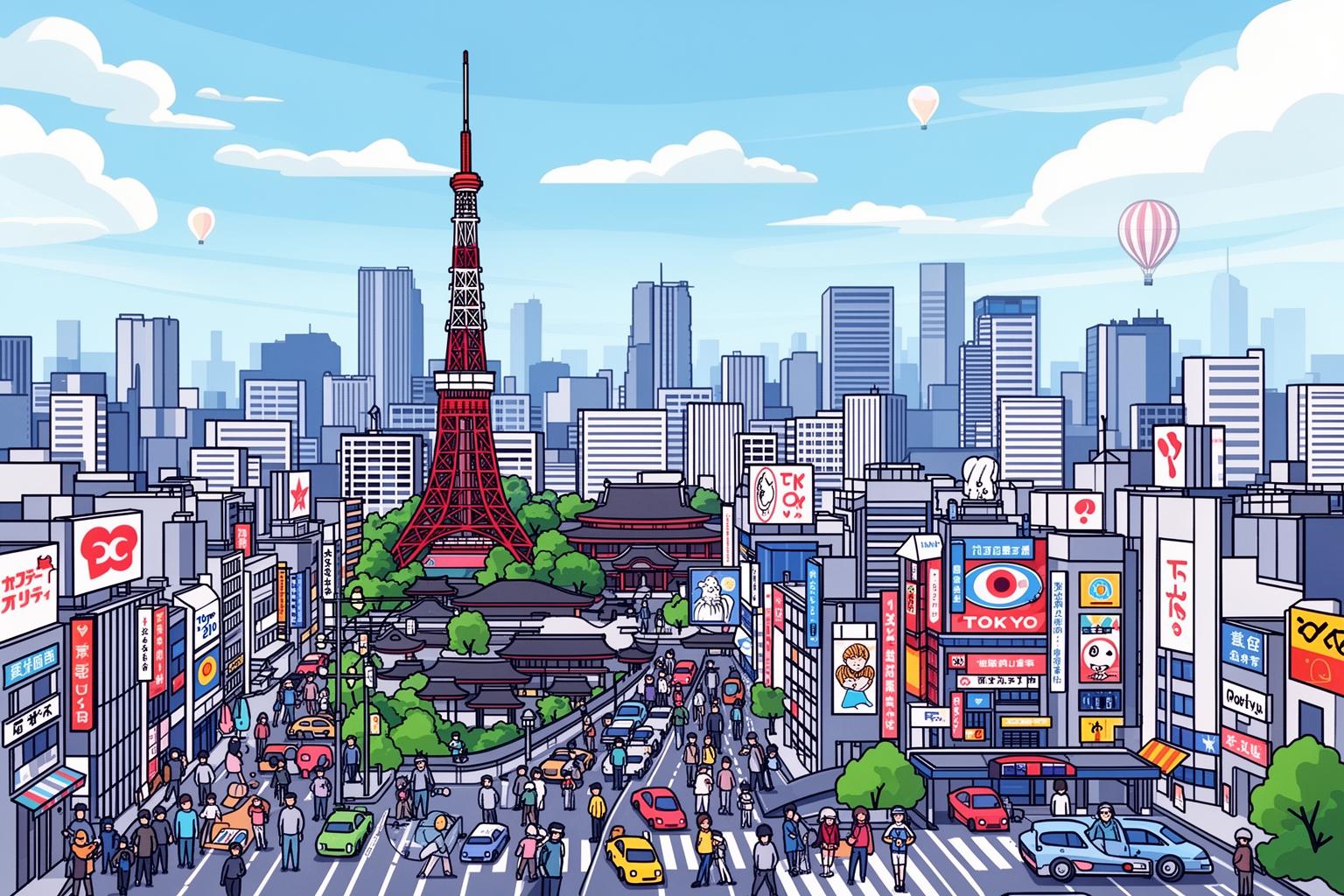
The world of the Nonomiya family is defined by vertical lines—a life oriented upwards, aspiring toward the sky, marked by promotions, awards, and their apartment’s floor number. Kore-eda skillfully frames their existence within the sleek, impersonal, and strikingly modern architecture of central Tokyo. This setting serves not merely as a backdrop but as a visual metaphor for a life rooted in perfection, order, and a quiet, persistent isolation.
The Glass Tower: The Nonomiya Apartment
The film begins with images that immediately convey the Nonomiyas’ social status. Their home is a pristine, minimalist sanctuary elevated above the city’s chaotic energy. Although the interior scenes were likely filmed on a soundstage, the exterior shots and stunning views from their windows anchor their life in the exclusive high-rise residential neighborhoods along Tokyo’s waterfront, such as Toyosu or Ariake in Koto Ward. These areas, created on reclaimed land, are canvases for Japan’s most ambitious modern architects—forests of glass and steel promising convenience, security, and breathtaking scenery.
Inside, the atmosphere is one of controlled silence. Every item is precisely placed. The muted color scheme is dominated by whites, grays, and the cool blue of the sky visible through floor-to-ceiling windows. It feels less like a home and more like a gallery or showroom for success. This sterile beauty directly reflects Ryota’s personality—he is a man who builds flawless structures, believes in clear blueprints, and expects predictable outcomes. He tries to shape his son, Keita, with the same meticulous care, arranging piano lessons and admissions interviews for elite elementary schools. The apartment, with its commanding view, symbolizes Ryota’s perspective: he stands above the turmoil, watching the world from a safe distance. It is a fortress of achievement, yet, by nature, fortresses are isolating.
For those wishing to immerse themselves in the Nonomiyas’ world, a visit to Tokyo’s Bayside area is essential. Take the Yurikamome line, an automated train gliding on elevated tracks, and head toward Odaiba or Toyosu. Crossing the Rainbow Bridge, you are surrounded by the very skyline that shapes the Nonomiyas’ life—a sensation of vast scale and futuristic ambition. Wander through the expansive, immaculate public spaces, marveling at gravity-defying buildings. To fully step into Ryota’s viewpoint, visit one of Tokyo’s observation decks at dusk. The Tokyo Skytree or the more understated (and free) Tokyo Metropolitan Government Building in Shinjuku offer panoramic views much like those seen in the film. As the lights illuminate the Kanto Plain, you feel a stirring mix of power and solitude—a perception of the city as a complex, exquisite machine to be mastered, just as Ryota conceives it. This experience is essential to understanding the gilded cage he has built for his family—a world of immense privilege that somehow lacks the warmth of a true home.
The Corporate Battlefield: Ryota’s Office
If the Nonomiya apartment serves as the serene command center, Ryota’s office represents the front line. The film situates his workplace in the heart of Tokyo’s financial and corporate core, the Marunouchi district. Nestled between the Imperial Palace and the iconic Tokyo Station, Marunouchi is where Japan’s economic fate is shaped. The streets form canyons between towering skyscrapers housing the headquarters of the nation’s most powerful corporations—a realm of sharp suits, purposeful strides, and the relentless hum of commerce.
The atmosphere here is fraught with high stakes and immense pressure. Kore-eda films these scenes with a cool, detached gaze. The offices are sleek and modern, permeated by the silent tension of competition. Success here is measurable—winning contracts, outmaneuvering rivals, and dedicating every waking hour to the company. This environment has molded Ryota’s worldview, teaching him that life is a zero-sum game of winners and losers. Tragically and unconsciously, he applies this philosophy to his own family, regarding his son’s perceived flaws as personal failures. His chilling line, “Well, now I see. It all makes sense now,” uttered upon discovering the switch, reveals his belief that genetics—a winning bloodline—is the ultimate key to success.
To grasp this dimension of the film, a weekday stroll through Marunouchi is indispensable. Begin at the magnificent red-brick Tokyo Station, a century-old symbol of Japan’s Meiji-era modernization. Cross over to the other side, and you step into the 21st century. The pace quickens instantly. You are surrounded by a flood of “salarymen” and “office ladies,” the devoted workforce driving the Japanese economy. The architecture impresses and intimidates. The Marunouchi Building and the Shin-Marunouchi Building stand like glass sentinels, their lower floors filled with upscale boutiques and restaurants where business deals unfold over lavish lunches. Find a café with a window along Marunouchi Naka-dori, a lovely tree-lined avenue, and simply watch. You will sense the energy, the focus, and the heavy burden of expectation defining Ryota’s professional world. This context powerfully explains why he struggles to connect on a simpler, more human level—conditioned to prize performance over presence, results over relationships.
A Different Kind of Richness: The Saikis’ Gunma Home
Leaving the vertical, high-stakes world of Tokyo, the film takes us about 100 kilometers north to Gunma Prefecture, immersing us in a world shaped by horizontal connections, community, and a lively, messy authenticity. The Saiki family—the cheerful, hands-on Yudai, his warm wife Yukari, and their two younger children—serves as the emotional core of the film and stands as the perfect contrast to the sterile existence of the Nonomiyas. Their life is not about climbing upward but about rooting themselves more deeply in the place they call home.
The Electric Heart: The Saiki Denki Shop
At the center of the Saikis’ world is their small, family-run electronics shop, Saiki Denki. For pilgrimage travelers, this spot might be the most meaningful location in the entire film. The shop seen in the movie is a real, functioning business called Miyata Denki, located in a quiet neighborhood of Maebashi, the capital city of Gunma. Discovering this place feels like stepping through a secret portal directly into the heart of the film.
The contrast with the Nonomiya apartment is striking. While the Nonomiyas inhabit empty space, the Saikis are surrounded by things. The shop is a delightful, chaotic mix of new and old appliances, spare parts, wires, tools, and personal items. It functions as a workspace, a playground for the children, and a home all at once. The air is thick with the scents of dust, solder, and home-cooked meals drifting in from the adjoining living area. The sounds are not of silent reflection but of vibrant life: the hum of a television, customers chatting, children laughing, and Yudai constantly tinkering as he repairs broken objects.
This act of fixing serves as a powerful metaphor. Though Yudai may lack Ryota’s wealth or status, he possesses a practical, hands-on skill for mending what is broken. He applies it not only to toasters and televisions but also to people. He is present, playful, and emotionally accessible to his children in ways that Ryota, at least initially, cannot grasp. The shop symbolizes a different kind of wealth—not monetary but relational. It acts as a community hub where neighbors drop by not just for batteries, but to converse, seek advice, and connect. It’s a world based on relationships, not transactions.
To reach Maebashi from Tokyo, take the Joetsu or Hokuriku Shinkansen (bullet train) to Takasaki, a major transport hub, then transfer to the local Ryomo Line for a short ride to Maebashi Station. From there, Miyata Denki is reachable by bus or taxi. Visitors should remember this is a private business and home—respect is essential. Avoid trespassing or causing disruptions. The charm of the place lies in its authenticity, remaining just as it appeared in the film. A discreet, respectful photo from the street is the best way to pay tribute. Visiting Maebashi offers a glimpse into regional Japanese city life, which is slower and more grounded. You’ll encounter charming, sometimes faded shōtengai (covered shopping arcades) and numerous small businesses serving their communities for generations. This is a side of Japan many tourists miss when restricting themselves to the Tokyo-Kyoto-Osaka route.
Where Worlds Collide: The Maebashi Luna Park
One of the film’s most memorable and emotionally charged scenes takes place at a local amusement park where the two families meet to let their children play together. This is Maebashi Luna Park (or Runa Park), a genuine treasure. Established in 1954, it is one of Japan’s oldest and most cherished local parks—a time capsule of simple, unpretentious fun. Here, the stark differences between the two families become vividly clear.
The park is the Saikis’ natural environment. It’s affordable (many rides still cost an astonishingly low 50 yen, a detail the film highlights), accessible, and designed for true family enjoyment. The Nonomiyas, especially Ryota, appear completely out of place amid the cheerful but slightly worn rides and the joyful chaos of local families. Luna Park exudes nostalgia. It’s not a slick, corporate theme park but a place featuring peeling paint, classic wooden horse carousels, and a miniature train clattering along a simple track. The joy here is genuine and heartfelt.
Kore-eda uses this setting to underscore the contrasting parenting styles. Yudai plays effortlessly with the children, flying a remote-controlled helicopter with abandon. Ryota stands back—stiff and awkward—watching without joining in. He’s accustomed to curated, expensive experiences and fails to appreciate the simple pleasures of a place like this. To him, it’s merely old and cheap. For the Saikis, it is a palace of memories.
Visiting Maebashi Luna Park is a true delight and highly recommended for any pilgrim. It’s easily accessible within the city and remains as charming and affordable as shown in the film. Riding the 10-yen rocking horses or the tiny Ferris wheel evokes stepping directly into the movie. It offers a visceral connection to the Saiki family’s values, teaching that the worth of an experience isn’t measured by cost but by the quality of shared moments. Standing in the park, you can almost hear the film’s dialogue, sensing the tension and the budding bonds between the two families. It is a perfect, tangible piece of the film’s emotional world, preserved beneath the broad Gunma sky.
Navigating the Emotional Landscape
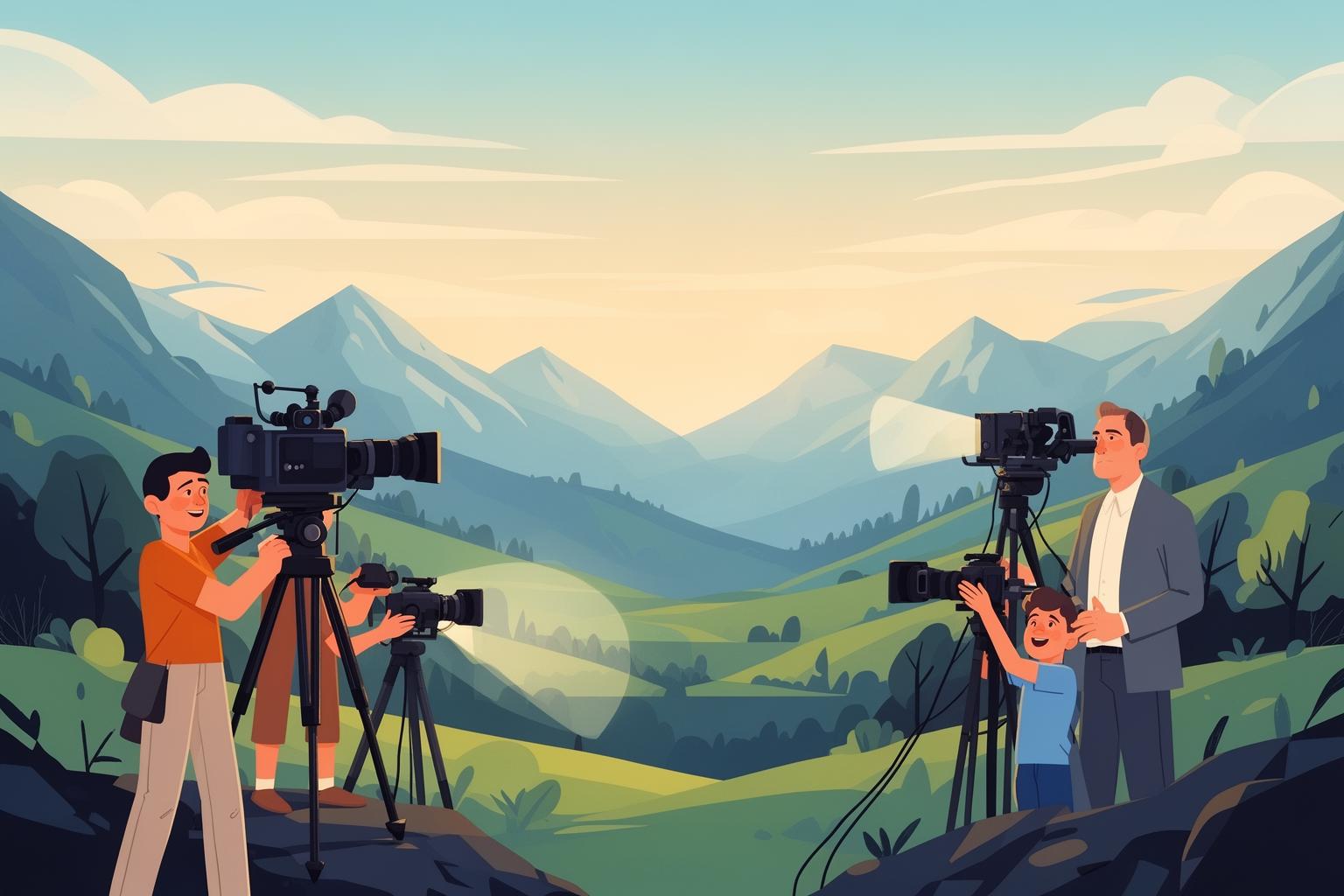
Beyond the primary settings of home and work, Like Father, Like Son is rich with transitional spaces—places of movement, decision-making, and awakening realization. These “in-between” locations are equally vital to the film’s narrative, symbolizing an emotional journey that runs parallel to the physical one. They encompass the roads, hospitals, and schools where the characters wrestle with their new reality.
The Long Road Home: The Drive Between Tokyo and Gunma
A recurring visual motif throughout the film is Ryota’s drive between Tokyo and Gunma. The camera frequently remains inside his luxury sedan, capturing him within his isolated bubble as the scenery shifts outside his window. This journey stands as the film’s most powerful emblem of his internal struggle. Leaving behind the familiar, orderly grid of Tokyo, the landscape gradually unfolds. Concrete gives way to lush green rice paddies, and skyscrapers are replaced by the imposing, brooding forms of Gunma’s renowned mountains—Akagi, Haruna, and Myogi.
Each trip signifies a distinct phase in his emotional growth. At first, the drive is an unwelcome chore, a passage to a world he scorns. He remains sealed in his air-conditioned car, listening to classical music, fundamentally detached from the world passing by. However, as the story unfolds, the car transforms into a space for painful reflection. It becomes where he listens to the recordings Keita made of him and confronts the photographs taken by his biological son, Ryusei. The highway, a path of transition, mirrors his own transformation from a man defined by certainty to one humbled by doubt and love.
For visitors, retracing this journey is a compelling experience. While Japan’s train system is famously efficient, renting a car and driving the Kan-Etsu Expressway from Tokyo toward Gunma offers a unique viewpoint. You witness firsthand the striking change in Japan’s geography as dense urban sprawl gradually thins out, replaced by suburbs, then farmland, and eventually the majestic mountain scenery. The trip allows you to sense the physical distance between these two worlds, thereby deepening appreciation for the vast emotional divide Ryota must bridge. Along the way, you can stop at Japan’s exceptional “Service Areas” (SA) and “Parking Areas” (PA). Far beyond simple rest stops, these are miniature destinations with excellent restaurants featuring local cuisine, bakeries, and shops selling regional specialties. They provide a glimpse into Japan’s vibrant travel culture and a moment for rest and reflection, just as they might have for Ryota on his long drives home.
A Moment of Clarity: The Institutional Spaces
The film is punctuated by scenes set in sterile institutional environments, which sharply contrast with the emotional warmth of the Saiki home. The hospital is where life-changing news is delivered. It is a place of white walls, silent corridors, and impersonal authority. The cold, clinical atmosphere underscores the shocking nature of the revelation—a human error, a bureaucratic mistake that has irreversibly altered the lives of two families. The hospital symbolizes a failing system that reduces children to mismatched files.
Likewise, the elite elementary school Ryota is desperate for Keita to attend is another key location. It represents the pinnacle of the competitive, achievement-oriented world Ryota admires. The interview scenes are tense and formal, focusing on a child’s potential as a future asset rather than their current happiness. This setting is crucial for understanding the intense pressure of Japan’s notorious juken, or “examination hell,” culture. From an early age, children are groomed for success, with their futures plotted along trajectories of prestigious schools and companies. Ryota’s faith in this system is unwavering, and his devastation at the thought that his “lesser” biological son might not be able to compete is central to his initial conflict.
While tourists may not easily visit the specific hospital or school in the film, they can grasp their significance by observing the society surrounding them. You can see uniformed students heading to cram schools (juku) in the evenings or the serious atmosphere around prestigious universities. These institutional spaces in the film are not pilgrimage sites but rather lenses through which we better understand the social pressures that shaped Ryota’s character. They represent the faceless systems that prioritize lineage, achievement, and conformity—the very values the film questions.
The Path to Fatherhood
A journey through the filming locations of Like Father, Like Son is a journey through contrasts: city and countryside, wealth and warmth, ambition and acceptance. It’s a pilgrimage that goes beyond mere sightseeing, inviting you to engage with the film’s most profound questions. Standing in the shadow of a Tokyo skyscraper, you feel the weight of Ryota’s world—the pressure to succeed, to be flawless. Standing on a quiet street in Maebashi, gazing at a small electronics shop, you come to understand that richness takes many forms, and that the strongest bonds are often built with the simplest tools: time, laughter, and presence.
In the end, the film and its locations bring us to the same conclusion. The final, heart-wrenching scene where Ryota and Keita walk down a path, finally breaking through their emotional walls, could take place anywhere. It’s a metaphorical road lying between Tokyo and Gunma, between his mind and his heart. This is the path to fatherhood Ryota ultimately discovers—a path not defined by blood or a prescribed blueprint, but one forged, step by difficult step, through empathy, forgiveness, and the humbling, unconditional love for a child raised as your own.
Visiting these sites leaves you with a deep sense of connection to Kore-eda’s gentle, humanistic vision. You depart with more than just photographs of filming locations; you gain a richer appreciation for the story’s emotional landscape. You’re reminded that family is not something you are born into, but something you create. And sometimes, the most meaningful journeys are those that lead us back to the simple, messy, and beautiful reality of home—wherever and with whomever that may be.