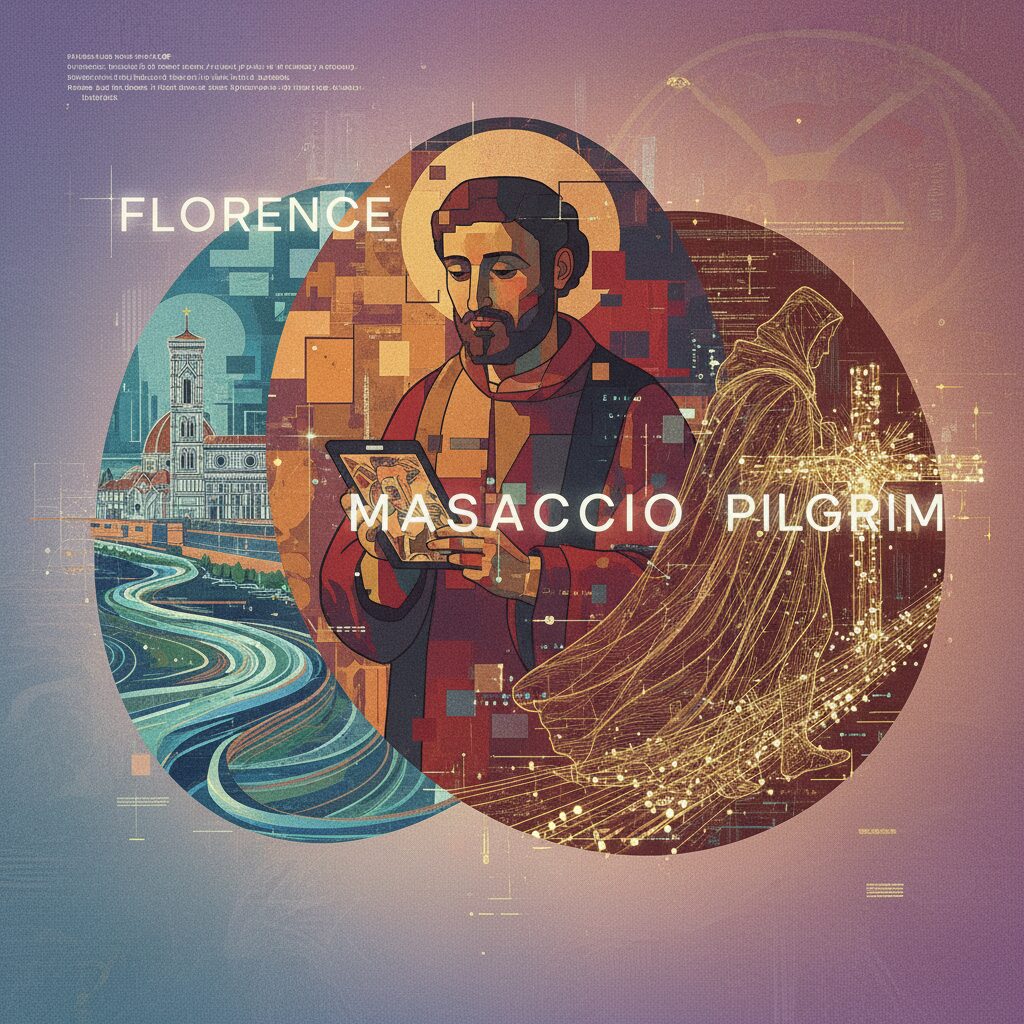
The Renaissance was not a gentle sunrise; it was a thunderclap. In the bustling, competitive streets of early 15th-century Florence, a new way of seeing the world was being forged in the fires of intellect and artistry. Amidst this crucible of change, one young man, gone from the world before his 28th birthday, unleashed a revolution so profound that it would permanently alter the course of Western art. His name was Tommaso di Ser Giovanni di Simone, but history knows him by his nickname, Masaccio—a name that translates roughly to “Big Tom” or even “Clumsy Tom,” a moniker that belies the staggering precision and intellectual rigor of his vision. To trace the footsteps of Masaccio through Florence is more than an art tour; it is a pilgrimage to the very birth of modernity. It is an opportunity to stand in the exact spots where he shattered the flat, gilded dream of the Middle Ages and replaced it with a world of three-dimensional space, human gravity, and raw, palpable emotion. This journey will take us from a quiet chapel in the artisan’s quarter to a grand basilica’s nave, revealing how a short, explosive career provided the foundational grammar for centuries of painters to come. We are not just looking at frescoes on a wall; we are peering through the windows he first opened, into a world made solid, real, and breathtakingly new.
For a different kind of artistic pilgrimage, consider exploring the modern sonic landscapes of Japan’s jazz scene.
The Florentine Crucible: Birthplace of a Revolution
A City Awakening
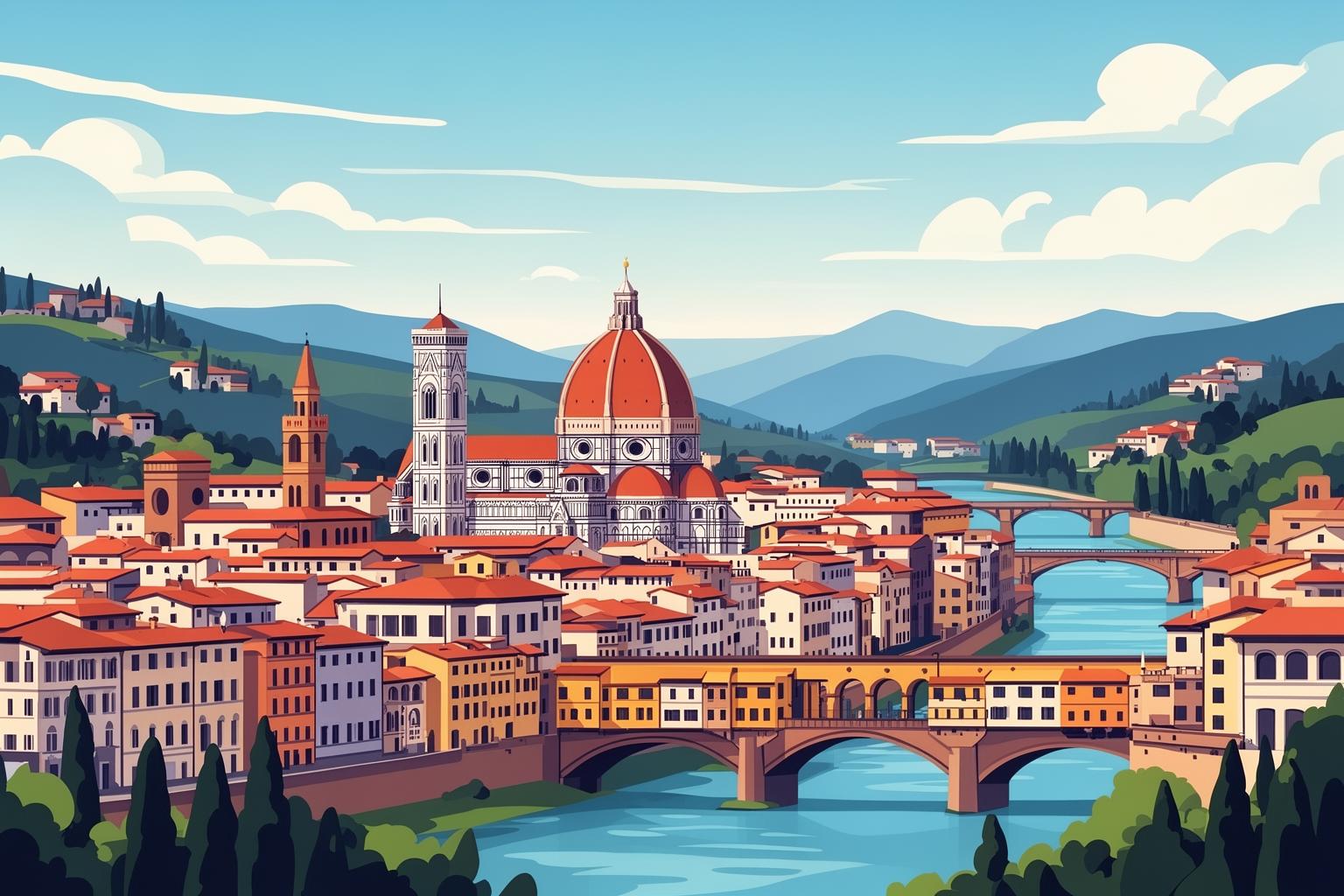
To grasp Masaccio, one must first grasp his Florence. The early Quattrocento was a time of intense civic pride and volatile energy. Florence was not a kingdom but a republic, its wealth founded on wool, banking, and an unyielding spirit of enterprise. This was a city that viewed itself as the heir of ancient Rome, a new Athens on the Arno’s banks. Humanism was in the air, a philosophical movement celebrating human potential and a renewed fascination with the classical past. The city’s guilds, powerful and affluent, were locked in constant rivalry, commissioning art and architecture not merely for the glory of God, but for the glory of Florence itself. It was into this charged environment that Masaccio, a young painter from the provincial town of Castel San Giovanni, arrived around 1422. He was not alone in his ambition. He developed a creative kinship with two other giants of the era: the architect Filippo Brunelleschi, who had recently uncovered the mathematical secrets of linear perspective, and the sculptor Donatello, who was infusing bronze and marble with unprecedented vitality and psychological depth. Together, this trio of geniuses shaped the visual language of the Renaissance. They inspired one another’s discoveries, creating a cycle of innovation that transformed Florence into the most thrilling artistic laboratory on earth. The city itself became both their canvas and their muse, a place where the sacred met the secular, and the ancient clashed with the modern, with spectacular results.
The Oltrarno: Stepping into Masaccio’s World
Our journey begins not in the grand piazzas of the city center, but across the river in the Oltrarno. The name literally means “the other side of the Arno,” and for centuries, this district has been the epicenter of Florentine craftsmanship. In Masaccio’s era, as today, its narrow, cobbled streets buzzed with the sounds of workshops. It was a realm of artisans—woodcarvers, gilders, and metalsmiths. It felt earthier, more grounded than the political and financial hub across the Ponte Vecchio. This is the ideal place to start understanding Masaccio because his art, despite its intellectual depth, is fundamentally about the tangible, the real—the world of human experience. Walking through the Oltrarno today, you can still sense that spirit. You pass workshops where artisans employ time-honored techniques to craft leather goods, restore antique furniture, or create intricate jewelry. The scent of wood shavings and turpentine fills the air. It is a neighborhood that invites you to slow down, observe closely, and appreciate the skill and dedication involved in making something solid and true. It is here, in the Church of Santa Maria del Carmine, that Masaccio would leave his most enduring legacy—a work as solid, true, and revolutionary as the neighborhood that nurtured it. To stand here is to feel the heartbeat of the world that shaped him, a world where art was not a rarefied luxury but a vital thread woven into the fabric of everyday life.
The Brancacci Chapel: Where Art History Turned a Corner
The Church of Santa Maria del Carmine
From the outside, the Church of Santa Maria del Carmine can be misleading. Its rough, unfinished facade offers little indication of the treasures hidden inside. It is a vast, sprawling complex, established by Carmelite friars in the 13th century, and it feels like a functioning church—a vital part of the community—rather than a polished museum artifact. However, the true highlight of our pilgrimage lies through a separate entrance around the side of the church. The Brancacci Chapel is treated with the reverence it merits. Access is carefully regulated, and visitors are admitted in small, timed groups. This is not a bureaucratic obstacle but a necessary measure to preserve one of the most fragile and significant sites in art history. A practical tip: booking your ticket online well in advance is not just advisable, it is essential. Arriving without a reservation almost guarantees disappointment. The atmosphere inside the chapel is one of quiet reverence. The small space, bathed in soft light, directs all your attention to the frescoed walls. You are separated from the main church, enveloped in a bubble of artistic genius. It is a space that demands silence and reflection, allowing the power of the images to communicate directly across the centuries.
A Collaboration Across Time
The story behind the chapel’s decoration is dramatic in itself. The commission was made by Felice Brancacci, a wealthy silk merchant and diplomat, around 1424. He hired two artists to adorn the chapel with scenes from the life of Saint Peter, the Brancacci family’s patron saint and the first pope. The artists were Tommaso di Cristoforo Fini, known as Masolino da Panicale (“Tommy Delicate”), and the much younger Masaccio. Masolino was the established master, his style elegant and aligned with the decorative International Gothic tradition. Masaccio was the young innovator, his vision bold, powerful, and radically new. They worked side by side, presenting a fascinating contrast between old and new. Their work was interrupted when both artists left for other commissions. Then misfortune struck the patron; Felice Brancacci fell out of favor with the ruling Medici family and was exiled in 1436. The chapel, now politically compromised, remained unfinished, its frescoes even defaced, with the Brancacci portraits chiseled away. It was not until the 1480s, well after Masaccio’s death, that the cycle was finally completed by another great Florentine painter, Filippino Lippi, who adeptly imitated the style of his predecessors. This layered history—marked by collaboration, interruption, and restoration—renders the chapel a living document, a dialogue between artists across generations.
Reading the Walls: The Life of St. Peter
To step into the Brancacci Chapel is to enter the “school of the world,” as the great sculptor Benvenuto Cellini later described it. For generations, artists from Leonardo da Vinci to Michelangelo and Raphael came here to study, absorbing the new principles of painting that Masaccio established. The narrative unfolds around the walls, but one scene immediately captures your attention—a fresco that serves as a manifesto for the entire Renaissance: The Tribute Money.
This single fresco is a masterful blend of storytelling and technique. It portrays a moment from the Gospel of Matthew when a Roman tax collector demands the temple tax from Christ and his apostles. Masaccio boldly compresses three separate moments of the story into one seamless, coherent scene. In the center, Christ, the calm eye of the storm, instructs Peter to find a coin in the mouth of a fish. On the far left, set within a finely rendered landscape, we see a foreshortened Peter, bent in effort, withdrawing the coin from the fish’s mouth. On the far right, Peter, his expression solemn and dutiful, pays the tax collector by placing the coin firmly in his hand. This is not a static tableau but a narrative moving through time and space, guided by the figures’ gestures. The innovative approach lies in how he represents this space. Employing Brunelleschi’s newly developed linear perspective, Masaccio arranges the scene around a single vanishing point directly behind Christ’s head. The architecture on the right recedes convincingly, and the apostles form a semicircle, producing a palpable sense of depth. They are not floating against a golden background; they stand firmly on solid ground. And what figures these are! Not ethereal saints but men of substance and seriousness. Their simple, heavy robes, reminiscent of a Greek philosopher’s toga, reveal the shapes of the bodies underneath through masterful chiaroscuro, the dramatic interplay of light and shadow. For the first time, the light in a painting emanates from a single, consistent source (matching the chapel’s real window), and as it falls across the figures, it sculpts them out of the background, bestowing a sculptural presence unprecedented before. Look closely, and you can see their shadows cast on the ground—a simple detail that firmly anchors them to the earth. Their faces are individual portraits, not idealized masks, showing emotions ranging from confusion to quiet faith. Christ is calm and authoritative; Peter is impulsive and deeply human. The tax collector, with his back boldly turned towards us, is a figure of worldly power, dressed in a contemporary short tunic, bridging the biblical past with 15th-century Florence.
Facing The Tribute Money is Masaccio’s Expulsion from the Garden of Eden. While the former teaches rational order and narrative clarity, the Expulsion is a cry of raw human anguish. It stands as one of the most emotionally powerful images in art history. Adam and Eve, naked and vulnerable, stumble out of Paradise, driven by a fearsome angel in red robes. Their pain is not stylized or symbolic; it is starkly real. Eve’s head is thrown back, mouth open in a silent scream, her body twisted as she tries to hide her nakedness in shame. Adam, once strong, covers his face with his hands, unable to bear his despair. Masaccio’s grasp of human anatomy gives their bodies a startling physicality. The harsh light cutting across them highlights every tensed muscle, every ounce of suffering. This depicts the tragic core of the human condition with empathy and psychological insight that still feels modern. It stands in stark contrast to the adjacent serene Temptation scene by Masolino, where Adam and Eve appear as graceful courtiers in an idyllic garden. The contrast is striking and underscores just how radical Masaccio’s vision was. He rejected courtly elegance in favor of fundamental truth.
Other scenes by Masaccio reinforce this theme of grounded realism. In St. Peter Healing the Sick with His Shadow, the apostle walks along a Florentine street, and the sick and disabled who come under his shadow are miraculously healed. The setting is not a distant Holy Land but the streets of Masaccio’s own city, populated by lifelike figures drawn from everyday life. In The Baptism of the Neophytes, as Peter pours water over a kneeling convert’s head, another young man stands nearby, arms crossed and shivering from the cold. This small detail—an acknowledgment of a simple physical sensation—is a stroke of pure brilliance. It transforms a remote religious event into a moment of shared human experience. You can almost feel the chill of the water yourself. This is what made the Brancacci Chapel a school for artists. Masaccio taught that painting could transcend storytelling to express the tangible weight, texture, and emotional depth of human existence.
The Holy Trinity: A Window into God’s Domain
The Dominican Bastion: Santa Maria Novella
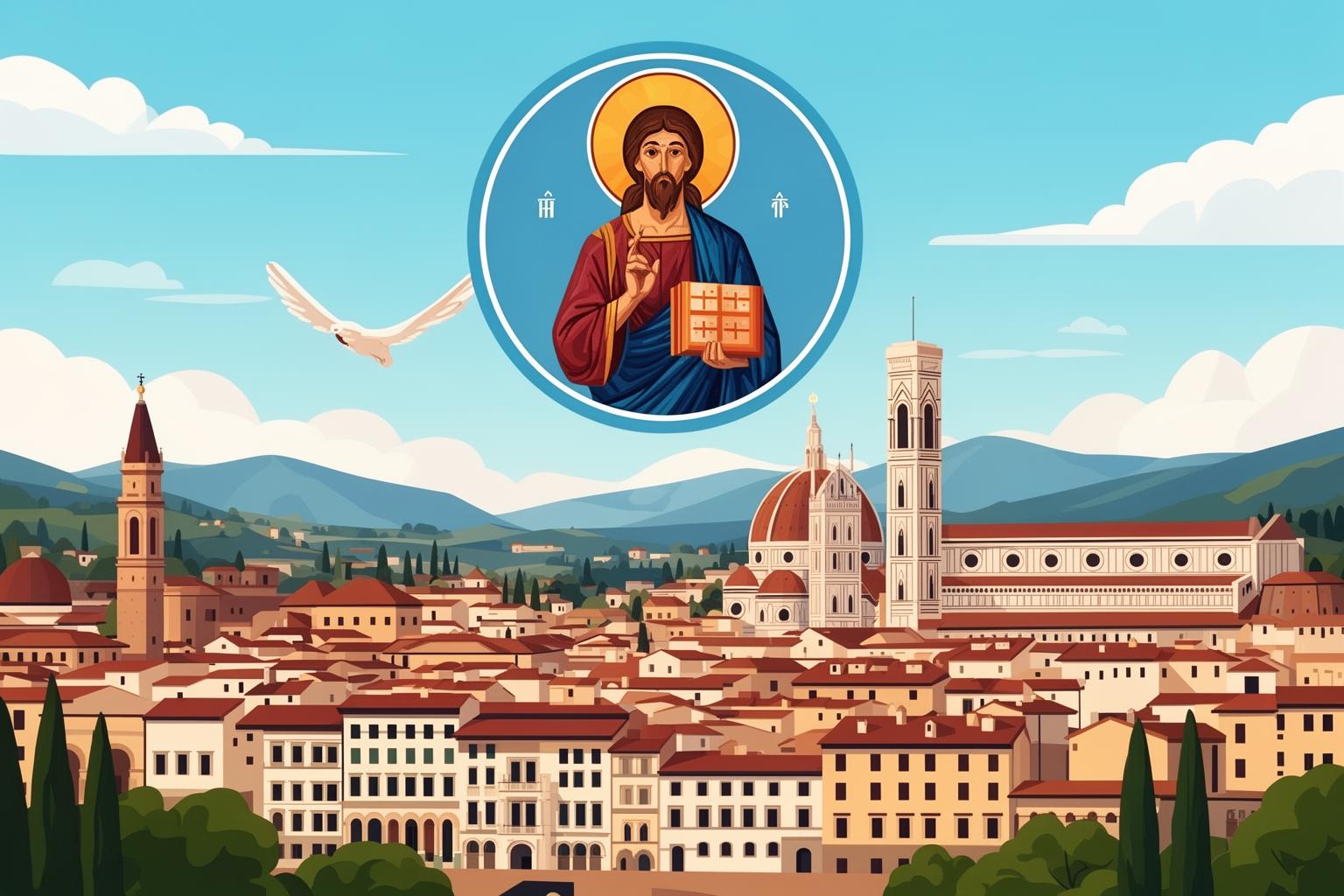
From the artisan district of the Oltrarno, we cross the Arno River to reach another of Florence’s major ecclesiastical sites, the Basilica of Santa Maria Novella. This basilica serves as the mother church of the Dominican order and stands as a center of theological study and intellectual rigor. Its striking facade, composed of green and white marble geometric patterns and completed later by Leon Battista Alberti, is a quintessential symbol of Renaissance harmony. The interior is vast and grand, housing a wealth of art, including Giotto’s early crucifix and Ghirlandaio’s splendid frescoes in the Tornabuoni Chapel. Yet, our focus is more subtle. It is easy to overlook, situated on the left aisle of the nave. Many visitors, drawn to the larger and more colorful artworks, pass it by without notice. But missing it means overlooking the single most important and intellectually perfect painting of the early Renaissance. Take a quiet moment, stand before it, and prepare for your perception of space to be fundamentally transformed. This is Masaccio’s Holy Trinity.
Deconstructing a Masterpiece
Painted around 1427, the Holy Trinity is a monumental breakthrough: the first painting ever constructed according to the exact mathematical rules of linear perspective. The impact is immediate and overwhelming. This is not merely a painting on a wall; it is an opening in the wall. Masaccio has crafted a flawless illusion of a deep, recessed chapel, a space so convincing that you feel you could step into it. The architecture he depicts is impeccably classical, featuring a coffered barrel vault that seems to be lifted directly from an ancient Roman triumphal arch. It is a clear tribute to the architectural principles of his friend Brunelleschi. Within this sacred space, the arrangement of figures is both theologically and geometrically precise. At the apex stands God the Father, a commanding, patriarchal figure whose hands rest on the horizontal bar of the cross to support his crucified son, Jesus. Between their heads, the Holy Spirit appears as a white dove, completing the Trinity. The presence of divine power and solemn sacrifice is overwhelming.
Yet Masaccio does not end there. He links this divine realm to our own world. On either side of the cross, positioned inside the sacred space but on a lower level, stand the Virgin Mary and Saint John the Evangelist. They serve as intercessors, bridging the divine and the human. Saint John gazes on with sorrowful contemplation. But Mary does something remarkable: she looks directly out from the painting, meeting the viewer’s eyes. With a calm, solemn gesture of her right hand, she presents her crucified son to us. She breaks the fourth wall, inviting us to become participants in this sacred drama. She is more than a figure in a painting; she is a guide, urging us to reflect on the mystery of salvation. Just outside this painted chapel, on an even lower level, kneel the two donors who commissioned the work—a man and his wife. They occupy a space that belongs simultaneously to our world and the painting, their sober, realistic portraits attesting to both their piety and social status. Yet the final, startling element lies beneath them all. At the very bottom of the fresco is a painted tomb containing a skeleton. Above it, an Italian inscription reads: “IO FU GIÀ QUEL CHE VOI SIETE E QUEL CH’IO SONO VOI ANCOR SARETE”—”I was once what you are, and what I am you also shall be.” This is a memento mori, a stark reminder of mortality. The message is clear and powerful: we, the viewers, share the mortality of the skeleton. Through faith in the Holy Trinity, shown above, we can hope for salvation and eternal life, just as the donors kneeling in prayer aspire to achieve. The fresco offers a complete theological argument—a visual sermon portraying the journey of the human soul from earthly life to death and, through Christ’s sacrifice, to resurrection.
The Science of Faith
What makes the Holy Trinity so awe-inspiring is its perfect fusion of faith and reason, art and science. Masaccio applied the most advanced intellectual tools of his time—mathematics, geometry, perspective—to convey a profound and timeless spiritual truth. He showed that this new, rational worldview was not a threat to faith but a powerful means to enhance it. The illusion is so flawless that it creates a new kind of reality, one in which the divine is not distant or abstract but accessible, occupying a space that is a direct, measurable extension of our own. To stand before the Holy Trinity is to witness the moment when the mathematical order of the universe and the spiritual order of Christianity merged into a single, awe-inspiring image. It is a work of supreme intellect and deep piety that set a new standard for religious art that would resonate for centuries to come.
Traces and Echoes: Beyond the Major Works
Sant’Ambrogio and the “Sant’Anna Metterza”
While the Brancacci Chapel and the Holy Trinity stand as Masaccio’s two major public masterpieces in Florence, an important earlier work is now housed in the revered halls of the Uffizi Gallery. The painting, titled Virgin and Child with Saint Anne (or Sant’Anna Metterza in Italian), dates to around 1424 and provides a compelling insight into Masaccio’s artistic evolution. It was created in collaboration with the older, more experienced Masolino, the same artist with whom he would later work in the Brancacci Chapel. The painting showcases a study in contrasts, a visual conversation between two distinct artistic approaches. The figure of Saint Anne, who forms the backdrop, along with some of the more delicate angels, are generally attributed to Masolino. These elements are graceful, ethereal, and characterized by the soft, flowing lines of the International Gothic style. In contrast, the Virgin Mary and most strikingly, the Christ Child, are unmistakably Masaccio. The Madonna is not portrayed as a delicate queen of heaven; instead, she appears as a solid, monumental, earth-bound mother. Her body possesses a tangible volume beneath her simple blue robe. Similarly, the Christ Child is not a doll-like figure; he is a real, robust baby, rendered with remarkable realism and sculptural weight. Though divine, he is also depicted as a physical being. Observing these two styles side by side in a single piece makes Masaccio’s innovations strikingly evident. It is like hearing a duet where one singer performs a traditional ballad while the other unexpectedly breaks into a powerful, revolutionary anthem. Originally created for the Church of Sant’Ambrogio, the painting reveals Masaccio finding his own artistic voice, asserting a powerful vision of a weightier, more human reality even as he worked alongside a master of the older tradition.
From Pisa to Rome: The Final Chapter
Masaccio’s renown quickly extended beyond Florence. In 1426, he received a commission to paint a large, intricate altarpiece for a chapel in the Church of Santa Maria del Carmine in Pisa. This work, the Pisa Altarpiece, was a major triumph. Unfortunately for today’s admirers, it no longer remains intact. In the 18th century, the altarpiece was dismantled, and its panels were sold off and scattered widely. To view the Pisa Altarpiece today requires an international journey. The central panel, the Madonna and Child, is housed in the National Gallery in London; the dramatic Crucifixion resides in the Museo di Capodimonte in Naples; the predella panels are in Berlin’s Gemäldegalerie; and other fragments are found in the Getty Museum in Los Angeles and elsewhere. Although it cannot be seen as a whole, the surviving panels display Masaccio at the peak of his abilities, depicting figures of immense dignity and emotional depth. Following this achievement, he was drawn to the ultimate artistic center: Rome. In 1428, he traveled to the Eternal City, likely reuniting with Masolino to work on the frescoes in the Basilica of San Clemente. But here his story abruptly ends. In the late summer of 1428, Masaccio died at just 27 years old. The cause of his death remains uncertain. Some claimed it was the plague; others whispered of poison, suggesting he had been murdered by a jealous rival. Whatever the truth, his passing sent shockwaves through the art world. His friend Brunelleschi is said to have mourned, “Noi abbiamo fatto una gran perdita”—”We have suffered a great loss.” It stands as one of art history’s greatest tragedies: a life of extraordinary brilliance extinguished all too soon.
The Birthplace: San Giovanni Valdarno
For the most devoted follower of Masaccio, a pilgrimage beyond Florence is essential. A short train ride through the Tuscan countryside brings you to San Giovanni Valdarno, the small town where Tommaso di Ser Giovanni was born in 1401. This is where it all began, far removed from the grand commissions and intellectual vibrancy of the capital. Visiting the town offers a touching connection to his roots. You can explore Casa Masaccio, his traditional birthplace, now a contemporary art exhibition space that creates a meaningful link between the town’s most famous native and today’s artists. Nearby, the Basilica di Santa Maria delle Grazie contains a small museum featuring fine Renaissance works, including a panel of the Annunciation by Fra Angelico and a much-debated piece some scholars attribute to a young Masaccio. Although the attribution remains uncertain, wandering the quiet streets of this Tuscan town provides vital context. It reminds us that the artist who revolutionized painting did not emerge from Florence’s elite circles, but from a grounded, provincial background—an origin that perhaps shaped his dedication to portraying a solid, unembellished, and profoundly human reality.
A Practical Guide to Your Masaccio Pilgrimage
Planning Your Visit
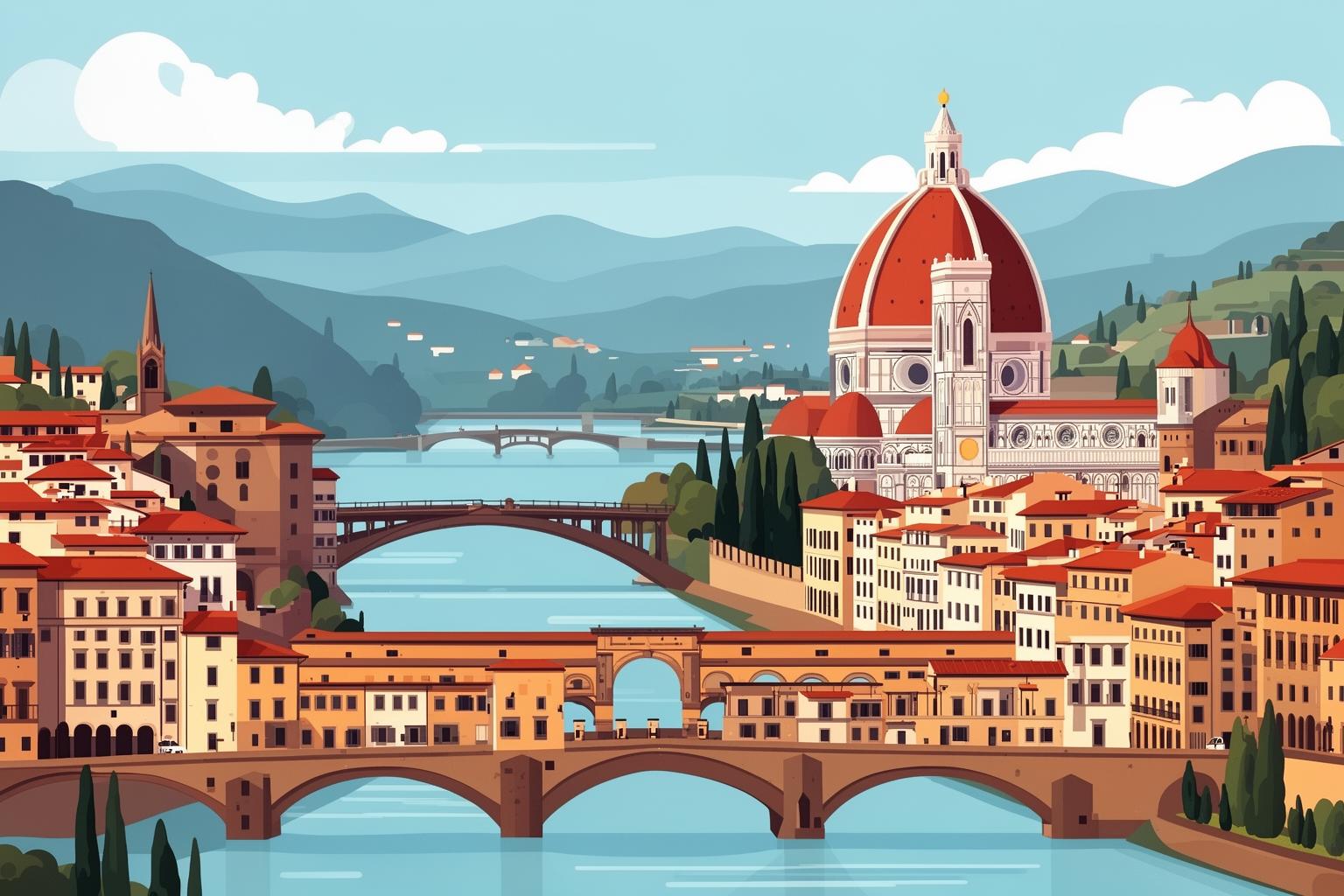
Embarking on a journey to explore Masaccio’s Florence is a rewarding experience, but a bit of planning makes all the difference. The ideal times to visit are in spring (April-May) and autumn (September-October), when the weather is pleasant and the city is less crowded than during the busy summer months. The most important practical tip is this: book your ticket for the Brancacci Chapel online as early as possible. Visitor numbers are strictly limited, and slots fill up weeks or even months in advance. For wider access to Florence’s treasures, consider the Firenze Card, which provides entry to numerous museums, including Santa Maria Novella and the Uffizi Gallery, although you will still need a separate, timed reservation for the Uffizi. Getting around Florence is a delight. The historic center is compact and wonderfully walkable. In fact, walking is the only way to truly experience the city’s atmosphere. Invest in comfortable shoes, as you will be navigating centuries-old cobblestones. Allow yourself to get lost in the maze-like streets; every corner offers a new discovery.
Immersing Yourself in the Quattrocento
To genuinely connect with Masaccio’s world, immerse yourself in the culture that shaped him. After visiting the Brancacci Chapel, spend some time in the Oltrarno. Avoid tourist traps and seek out a small, family-run trattoria. Order simple, hearty Tuscan dishes like pappa al pomodoro (a thick tomato and bread soup) or a lampredotto sandwich (a Florentine specialty). This is the kind of unpretentious, nourishing food that has fueled the city’s artisans for centuries. Consider staying in the Oltrarno as well. The neighborhood offers a more authentic, local experience than the bustling city center, allowing you to feel the rhythm of everyday life. To deepen your understanding of the artistic revolution, be sure to visit Masaccio’s collaborators. Head to the Bargello Museum, the city’s sculpture collection, to admire Donatello’s groundbreaking bronze David and his strikingly realistic St. George. No trip is complete without climbing to the top of Brunelleschi’s magnificent Dome at Florence Cathedral. From that vantage point, overlooking the city these three men transformed, you can truly appreciate the scale of their collective achievement. You will see Florence not just as a beautiful city, but as a living monument to a moment when humanity rediscovered its power to create, innovate, and see the world anew.
The Enduring Gaze of Masaccio
Masaccio’s life was a brief, brilliant flash, yet his legacy endures forever. He fundamentally transformed the relationship between the viewer and the painting. Before him, art was primarily a symbolic language, a window into a divine, otherworldly realm. Masaccio transformed that window into a mirror, reflecting a world recognizable as our own, inhabited by figures who felt the chill, bore the weight of their bodies, and experienced the pangs of human emotion. He gave shape to the intellectual currents of his era, turning the mathematical theories of perspective into a potent tool for storytelling and spiritual expression. His work is not always conventionally beautiful; it is austere, serious, and intellectually challenging. It forgoes decorative elegance in favor of psychological depth and physical presence. Yet its power is undeniable. To gaze upon a Masaccio fresco is to feel the solid ground beneath your feet. To stroll through Florence seeking his works is to witness the very moment the modern world learned to see itself. It is a passage back to the source code of Western art, a pilgrimage that will forever alter how you view a painting on a wall. You cease to be merely an observer; you become a participant, invited by the steady, enduring gaze of a young master who, six centuries ago, taught us all how to see.