Paris. The name itself is a sigh, a whispered promise of romance. It’s a city that doesn’t just exist on a map; it lives in the collective imagination as the undisputed capital of love. But why? What is it about these Haussmannian boulevards, these rain-slicked cobblestone lanes, that has captivated lovers, artists, and dreamers for centuries? The romance of Paris isn’t a modern marketing invention. It’s a palpable energy woven into the very fabric of the city, a legacy left by generations who came here to write, to paint, to sculpt, and to love with an intensity that still echoes from the garret apartments of Montmartre to the smoky cafés of Saint-Germain. This is not just a destination; it’s a pilgrimage for the heart. It’s a place where every bridge seems to arch like a knowing eyebrow, every garden bench invites a shared secret, and every golden-hued streetlamp at dusk seems to conspire to create a perfect moment. For couples, a trip to Paris is a chance to step into that story, to find your own verse in the grand poem of the city. It’s about more than just seeing the sights; it’s about feeling the pulse of a place where passion has always been the most celebrated art form. This guide is your map to the heart of it all, a journey through the iconic and the intimate, the places where the spirit of Parisian romance burns brightest.
Just as Paris has inspired countless artists, you can also embark on a literary pilgrimage through the heart of France.
The Eiffel Tower: More Than Iron, An Emotion
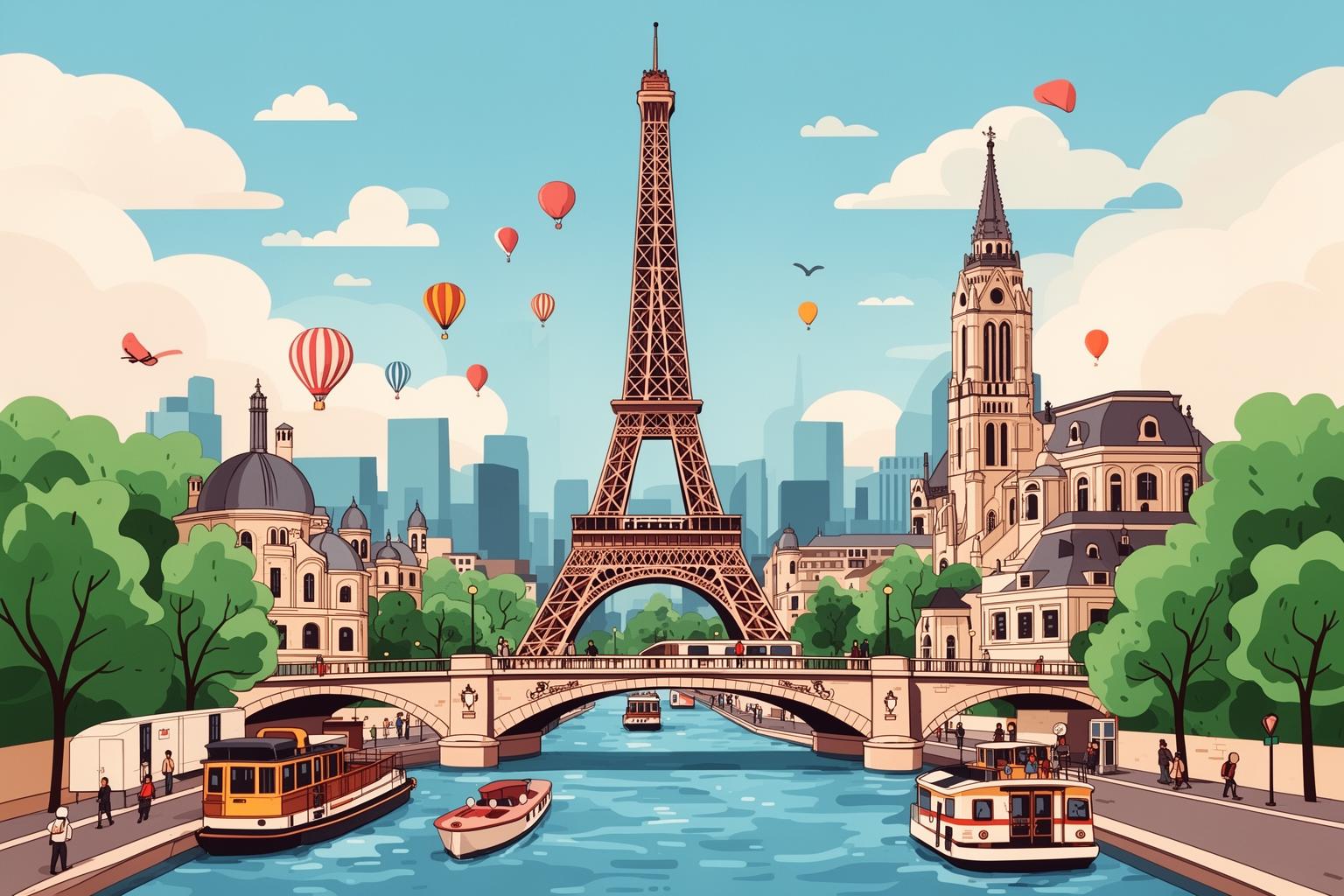
Paris cannot be mentioned without her: La Tour Eiffel. She serves as the city’s North Star, a steady, comforting presence on the skyline. Though some dismiss her as a cliché, the Iron Lady remains the ultimate symbol of Parisian romance, and to overlook her would be like reading a book and skipping the opening chapter. Her power lies in her dual nature: an industrial engineering marvel that somehow exudes pure, unadulterated elegance. Seeing her for the first time is a rite of passage, a moment that stops you in your tracks. Yet the true romance of the Eiffel Tower isn’t just in viewing it; it’s in how you experience it.
The Sparkle and the Ascent
There are two quintessential Eiffel Tower moments for any couple. The first occurs from the ground, ideally as dusk falls over the city. Choose your spot—perhaps across the river at the Trocadéro—and wait. On the hour, every hour after sunset, the tower bursts into a five-minute cascade of 20,000 sparkling lights. It’s pure magic. The collective gasp from the crowd, the sudden hush, the sight of the iconic silhouette transforming into a diamond-studded dream—it’s a moment of shared awe that feels both public and deeply intimate. The second moment is the ascent. Booking your tickets online well ahead of time is not just advice; it’s essential to avoid hours-long queues that can sap any romantic mood. The climb, whether by the glass-walled elevator or, for the more daring, the open-air stairs to the second level, builds anticipation. As Paris shrinks beneath you, roofs turning into a mosaic of greys and terracotta, the world feels far away. At the summit, pressed against the railing with the wind swirling around you, the city stretches out in a stunning 360-degree panorama. Here, suspended between clouds and city, you truly grasp its scale and beauty. Pointing out landmarks together, tracing the serpentine Seine, you’re not merely seeing Paris—you’re owning it for a moment, sharing a view that has inspired countless love declarations.
A Picnic on the Champ de Mars
While the view from above is heavenly, the experience from below is grounded and profoundly Parisian. The sprawling green lawn of the Champ de Mars at the tower’s base serves as Paris’s communal backyard, and there’s no more romantic way to spend an afternoon or evening than with a picnic. This ritual celebrates the simple, profound joys of French life. It begins with gathering supplies. Skip the tourist traps and head to a proper boulangerie on a side street like Rue Cler. Let the warm, yeasty aroma guide you. Select a crusty baguette, still warm at the ends. Then visit a fromagerie, a cheese sanctuary. Don’t be shy; point to what looks tempting or ask for a recommendation—perhaps a creamy Camembert, a sharp Comté, or a tangy chèvre. Complete the sacred trio with a bottle of wine—a crisp Sancerre or a light rosé—from a local Nicolas or similar wine shop. Add some charcuterie and ripe strawberries, and you have a feast. Find your spot on the Champ de Mars. Spread your blanket. The atmosphere is convivial and relaxed, a symphony of languages and laughter. As you tear off pieces of baguette and share sips of wine, beneath the immense, intricate latticework of the tower soaring above, you partake in a timeless Parisian tradition. Stay until nightfall to see the tower’s first illumination—a golden glow bathing the park and its visitors—followed by that unforgettable first sparkle. It’s a simple, perfect, and utterly romantic experience.
A Serenade on the Seine
The Seine River is the lifeblood of Paris, its vital artery. It divides the city into the Rive Droite (Right Bank) and Rive Gauche (Left Bank) and has been the city’s main stage for centuries. To experience the Seine is to truly grasp the geography of Paris’s soul. The grand museums and monuments lining its banks were designed to be viewed from the water, their façades presenting themselves to the river like actors to an audience. A journey along the Seine is a floating serenade, a gentle glide through the heart of history and art.
Drifting Through History
A boat tour, whether on the large Bateaux-Mouches or the more intimate Vedettes du Pont Neuf, is an essential romantic experience. As you glide beneath the ancient bridges, the city’s story unfolds before you. You’ll pass the stony gargoyles of Notre Dame, still standing strong; the formidable fortress-turned-palace of the Louvre; and the magnificent old train station, now the Musée d’Orsay, home to the Impressionists who so beautifully captured Parisian light. The commentary offers context, but the true magic lies in the changing perspectives. Viewing these iconic landmarks from the low vantage point of the river grants them a new grandeur. A daytime cruise is perfect for photography and sightseeing, but an evening cruise is pure romance. As the sun sets, the “City of Light” lives up to its name. The buildings along the riverbank light up, their golden reflections shimmering on the dark water. The Pont Alexandre III glows like a jeweled bracelet, and the Eiffel Tower takes center stage once more with its nightly sparkling show. Huddled together on the open-air deck, with the cool river breeze on your faces, you feel as if you are in a movie—a slow, beautiful tracking shot through the most romantic city on Earth.
The Bridges of Paris: Arches of Amour
The bridges of Paris are more than mere crossings; they are destinations in their own right, each with its unique character and story. A romantic stroll in Paris inevitably includes lingering on a bridge. The Pont Neuf, despite its name meaning “New Bridge,” is actually the oldest standing bridge over the Seine, its stone alcoves perfect spots to pause and watch boats drift below. The most opulent is unquestionably the Pont Alexandre III. A Beaux-Arts masterpiece adorned with cherubs, winged horses, and ornate lamps, it links the Grand Palais and Petit Palais with Les Invalides. Standing in the center of this bridge at sunset, with the Eiffel Tower in one direction and the grand palaces in the other, places you at the very heart of Parisian splendor. Then there is the Pont des Arts, famous as the original “love lock” bridge, where couples from around the world once fastened padlocks engraved with their initials and tossed the key into the Seine as a symbol of unbreakable love. Although the city, concerned for the bridge’s structural safety, removed the locks in 2015 and replaced the grills with clear panels, the bridge’s romantic spirit still endures. It remains a pedestrian-only bridge, offering an unobstructed, breathtaking view of the Île de la Cité. It continues to be a popular spot for artists, musicians, and couples who come to sit, talk, and soak in one of the world’s most beautiful urban landscapes. The ghost of those countless declarations of love still lingers in the air.
Montmartre: The Village of Starry-Eyed Artists
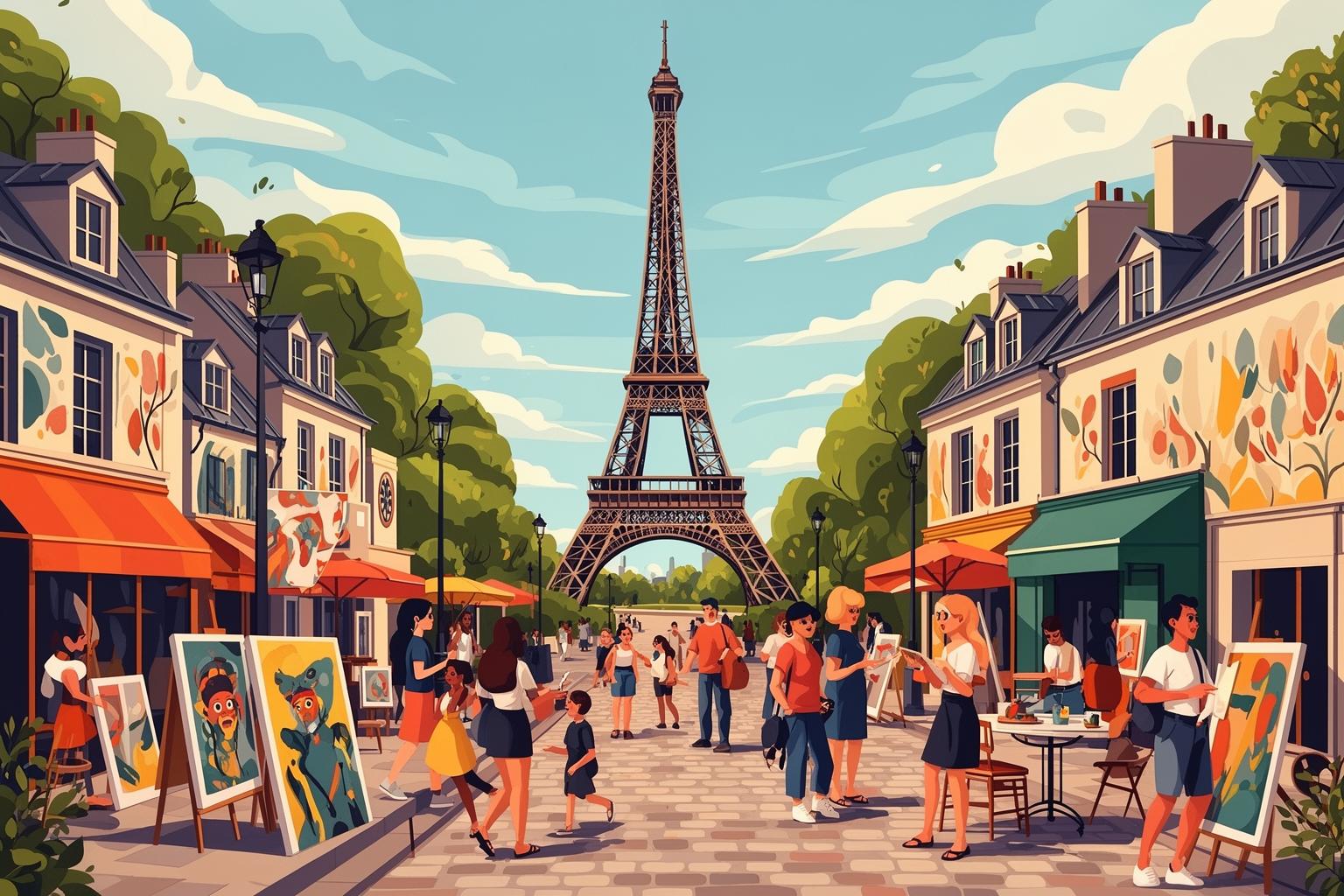
Perched on a hill in the 18th arrondissement, Montmartre feels like a world apart from the grand boulevards below. With its winding cobblestone streets, hidden squares, and enduring bohemian spirit, it preserves the charm of the village it once was. This was the sacred ground of the Belle Époque, attracting artists like Picasso, Renoir, Van Gogh, and Toulouse-Lautrec, who were drawn by the affordable rent, inspiring views, and free-spirited atmosphere. Today, that artistic soul continues to thrive, making it one of the most enchanting and romantic neighborhoods in Paris.
Ascending to the Sacré-Cœur
The climb to the top of the “butte,” or hill, is part of the charm. You can take the funicular, but the most romantic way is to ascend the winding staircases. With each turn, the view grows more breathtaking. At the summit stands the Basilica of the Sacré-Cœur, a radiant white marble masterpiece that seems to hover above the city. Its Romano-Byzantine architecture stands in striking contrast to the Gothic style of Notre Dame. Inside, it offers a place of quiet reflection, with a ceiling adorned by one of the world’s largest mosaics. Yet, the true magic is found on the steps outside. This is one of Paris’s favored meeting places. Find a spot on the steps and simply watch. The panoramic view of the city is stunning, a vast expanse of zinc rooftops stretching to the horizon. There is almost always a street musician playing accordion or guitar, providing a heartfelt soundtrack to the scene. It’s a spot to sit close, share quiet conversation, and watch the sky change hues as the sun sets over Paris.
Place du Tertre: A Portrait of Love
Just a short walk from the Sacré-Cœur lies the Place du Tertre, the historic heart of artistic Montmartre. This lively, tree-lined square is an open-air studio. It’s filled with artists setting up their easels, ready to capture your likeness in pastel, charcoal, or caricature. The atmosphere is electric with creativity and commerce. This is a direct legacy of the masters who once worked in studios nearby. Though it can feel tourist-heavy, there’s an undeniable charm to it. Having your portrait drawn together makes for a wonderfully romantic and personal keepsake. Take your time wandering the square. Observe the different styles and talk with the artists. The process itself is intimate—sitting still, gazing at your partner, while a stranger captures a moment of your shared life on paper. Surrounding the square are historic cafés where you can enjoy a drink and watch the artistic bustle unfold, imagining Picasso and his peers doing the same a century ago.
Lost in the Cobblestone Labyrinth
The true essence of Montmartre is discovered by getting lost. Wander away from the crowds of Place du Tertre and Sacré-Cœur into the maze-like side streets. It’s here that you’ll find the authentic village atmosphere. You might come across the Musée de Montmartre, located in the former home of Auguste Renoir, which recounts the neighborhood’s bohemian history. Nearby lies Paris’s last remaining vineyard, the Vigne du Clos Montmartre, a surprising patch of countryside within the city. Keep an eye out for La Maison Rose, an iconic pink restaurant famously painted by Maurice Utrillo. For a modern symbol of love, visit the Wall of Love (Le Mur des Je t’aime) in Square Jehan Rictus. On this large tiled wall, “I love you” is written over 300 times in 250 different languages. It’s a beautiful, quiet place to find the phrase in your own language and reflect on the universal emotion that defines this city.
The Literary Heartbeat: The Latin Quarter & Saint-Germain-des-Prés
If Montmartre embodies the spirit of Paris’s artists, then the Left Bank neighborhoods of the Latin Quarter and Saint-Germain-des-Prés represent the heart of its writers and thinkers. These areas have long been the city’s intellectual and academic hub, housing the Sorbonne and a lively student community. This landscape is dotted with ancient bookshops, iconic cafés, and carefully tended gardens where the specters of the Lost Generation still linger, engaging in philosophical debates over glasses of absinthe.
Shakespeare and Company: A Haven for Wordsmiths
Situated across the river from Notre Dame, Shakespeare and Company is more than just a bookstore; it is a literary landmark and a revered pilgrimage destination for book lovers. Founded in 1951 by the eccentric and generous George Whitman, it became a refuge for Beat Generation expatriate writers like Allen Ginsberg and William S. Burroughs, continuing the legacy of Sylvia Beach’s original shop that first published James Joyce’s Ulysses. Stepping inside feels like entering an enchanting, disorderly library. Books are packed into every available space, from floor to ceiling. Narrow staircases wind up to cozy reading corners, inviting visitors to sit and read for hours. Above a doorway, the shop’s motto, “Be not inhospitable to strangers lest they be angels in disguise,” is painted. For decades, aspiring writers called “tumbleweeds” have been welcomed to sleep among the books in exchange for helping out in the shop and reading a book a day. The atmosphere here is steeped in reverence for the written word. For a couple who cherish literature, spending time browsing the shelves, leaving a note on the community board, and perhaps purchasing a book stamped with the store’s iconic logo is a deeply romantic experience. It’s a place that celebrates stories and the perfect spot to begin your own Parisian chapter.
Café Culture and the Lost Generation
The cafés of Saint-Germain-des-Prés served as offices, living rooms, and debate halls for some of the 20th century’s greatest minds. At Les Deux Magots and its rival across the street, Café de Flore, existentialists Jean-Paul Sartre and Simone de Beauvoir held court, shaping modern philosophy from their favorite seats. Ernest Hemingway, F. Scott Fitzgerald, and other members of the “Lost Generation” drank here, crafting and revising the American literary canon. To sit in one of these cafés today is to immerse yourself in a rich cultural legacy. The experience itself is the reward. Order a café crème or a glass of wine. The waiters, dressed in their traditional black and white uniforms, are famously brisk yet efficient. There’s no need to hurry. The cost of your coffee grants you the privilege of lingering for hours. This is people-watching perfected. Observe the parade of stylish Parisians, students, and tourists. Discuss the book you recently bought at Shakespeare and Company. Jot down thoughts in a journal. Simply being there together, soaking in the intellectual and artistic atmosphere, is a quintessentially Parisian moment. It’s a quiet connection amid the city’s lively buzz.
Whispers of History in the Jardin du Luxembourg
Close to the cafés’ bustle lies the Jardin du Luxembourg, a peaceful oasis of formal beauty. Created for Marie de’ Medici, widow of King Henry IV, the gardens blend French and Italian styles flawlessly. This is Paris’s most cherished park, where locals come to relax. For couples, it offers countless romantic opportunities. You can rent a miniature vintage sailboat to float across the Grand Bassin, the large octagonal pond before the Luxembourg Palace. Find a pair of the iconic green metal chairs and settle beneath a chestnut tree for an intimate conversation. Seek out the enchanting Medici Fountain, a secluded, shaded grotto fountain considered one of the city’s most romantic spots. The gardens are adorned with statues, orchards, an apiary, and perfectly groomed flowerbeds. It’s a place for a leisurely, hand-in-hand walk—a refuge from the city where time seems to slow, allowing moments of simple, shared tranquility.
A Passion Carved in Stone: The Musée Rodin
While the Louvre and the Musée d’Orsay house countless masterpieces, for a deeply focused and intensely romantic museum experience, nothing rivals the Musée Rodin. Located in the Hôtel Biron, a splendid 18th-century mansion where Auguste Rodin once lived and worked, the museum offers an intimate and powerful exploration of human passion, sensuality, and turmoil as interpreted by a master sculptor.
The Kiss: An Embrace in Marble
The museum’s collection is stunning, but one piece stands as the ultimate emblem of sculpted love: The Kiss. This life-sized marble sculpture portrays Paolo and Francesca, the adulterous lovers from Dante’s Inferno, locked in a tender, eternal embrace at the moment they are discovered. The piece overwhelms with its sensuality and emotion. Rodin’s genius lies in his ability to make marble appear soft, warm, and alive. One can almost sense the breath and heartbeat of the figures. Standing before it, you become more than a spectator; you are a witness to a moment of absolute passion, frozen in time. The raw emotion etched in the stone powerfully conveys the intensity of love and desire.
The Garden of Earthly Delights
What makes the Musée Rodin truly unique is that the experience goes beyond the mansion’s walls into its magnificent three-hectare garden. The garden serves as a gallery as much as the museum itself. Masterpieces are scattered among rose bushes, fountains, and manicured lawns. Here you will find The Thinker, lost in deep contemplation, and the monumental, awe-inspiring Gates of Hell. Bronze sculptures are thoughtfully placed, inviting discovery as you stroll along the paths. Finding a secluded bench in the shade, surrounded by the fragrance of roses and the sight of Rodin’s powerful figures, creates an unforgettable experience. It transforms a museum visit into a romantic retreat, a serene dialogue between art, nature, and self. In spring and summer, the garden bursts with color, making it one of the most beautiful and peaceful spots in Paris.
A Turbulent Love Story: Rodin and Camille Claudel
To truly grasp the passion in Rodin’s work, one must know his relationship with Camille Claudel. She was his student, model, muse, and lover, as well as a brilliant sculptor herself. Their relationship was a turbulent, decade-long storm of creative collaboration and intense passion that ended in heartbreak and tragedy for Claudel. Much of Rodin’s work from this period carries her presence and the emotional turmoil of their affair. The museum includes a dedicated room showcasing Claudel’s work, allowing visitors to appreciate her exceptional talent and distinctive artistic voice. Understanding their story adds a poignant layer of depth to the museum. The art is seen not merely as beautiful objects but as relics of a great and ultimately tragic love story. The museum stands as a monument to their intertwined lives, a testament to a love that was both a source of divine inspiration and profound pain.
A Culinary Duet: The Taste of Parisian Romance
Romance in Paris delights all the senses, with taste perhaps being the most vital. The city’s culinary scene is an integral part of the romantic journey, from the flawless simplicity of a morning croissant to the lasting contentment of a cozy bistro dinner. In Paris, food is more than nourishment; it is a ritual, an art, and a language of love.
The Morning Ritual: Boulangeries and Pâtisseries
Every morning in Paris should start at a boulangerie. The aroma of freshly baked bread and butter serves as the city’s natural alarm clock. The sight of a bakery window, displaying neat rows of golden baguettes, flaky croissants, and glistening pastries, is a masterpiece in itself. The quintessential romantic breakfast is straightforward: visit a local bakery, purchase two croissants au beurre and two pains au chocolat, then find a nearby park bench or return to your apartment. A perfect croissant offers an experience: it should crackle upon biting, shedding a shower of flaky crumbs, with an airy, layered interior enriched by the flavor of premium butter. A pain au chocolat, with its twin bars of dark chocolate tucked inside, is a slightly more indulgent treat. Later in the day, the pâtisserie beckons. Here, you’ll discover the jewels of French baking: delicate, pastel-hued macarons from Ladurée or Pierre Hermé, rich chocolate or coffee éclairs, and intricate fruit tarts. Sharing a pastry from a box tied with a lovely ribbon is a small, perfect moment of shared delight.
The Market Haul: A Feast for the Senses
For a deeply immersive culinary experience, visit one of Paris’s many outdoor markets. The Marché Bastille or the market on Rue Mouffetard are lively and rich with local flavor. A market is a symphony of colors, sounds, and aromas. The vibrant hues of fresh fruits and vegetables, the sharp scent of various cheeses, and the shouts of vendors selling their goods create an enchanting atmosphere. It’s a wonderful place to stroll together, sampling cheeses or saucisson. This is an ideal spot to gather ingredients for a picnic or a simple meal. Pick up a rotisserie chicken, roasted potatoes, a selection of olives, a tub of fresh strawberries, and a crusty loaf of bread. Choosing your food together directly from those who grew or crafted it creates a tangible and delicious connection to the city.
The Intimate Bistro Dinner
For a quintessential romantic dinner, nothing compares to the ambiance of a traditional Parisian bistro. These cozy, unpretentious neighborhood restaurants are the heartbeat of Parisian dining. Seek out places with chalkboard menus, checkered tablecloths, and tables set close together. The atmosphere is warm, lively, and convivial. The menu features French classics: soupe à l’oignon (French onion soup) with a melted Gruyère topping, hearty boeuf bourguignon, tender confit de canard (duck confit), or a perfectly cooked steak frites with a peppery sauce. The wine list is typically simple and affordable. A bistro dinner isn’t about culinary showmanship; it’s about comfort, tradition, and food that nourishes the soul. It’s an ideal setting for long conversations, a shared bottle of wine, and the feeling of being woven into the timeless tapestry of Parisian life. It’s a warm, intimate, and utterly romantic way to conclude a day of exploration.
Pilgrimage to Père Lachaise: Love Among the Legends
Visiting a cemetery may not seem like a typical romantic outing, but Père Lachaise is far from an ordinary cemetery. It is one of the most renowned and beautiful cemeteries in the world, an atmospheric, 110-acre park of rolling hills, ancient trees, and ornate, moss-covered tombs. It feels less like a burial ground and more like a sculpture garden or a silent city. For those drawn to art, music, and literature, it serves as a profound pilgrimage site, a place to honor the icons of passion who rest there.
A City of the Silent
As you pass through the gates, the noise of the city fades away, replaced by the crunch of gravel beneath your feet and the rustle of leaves. The cemetery is a maze of winding paths and avenues, lined with an extraordinary variety of funerary art, ranging from simple headstones to grand, chapel-like mausoleums. The atmosphere is not gloomy but deeply peaceful and reflective. It’s a beautiful place to stroll hand-in-hand, getting lost among the tombs and uncovering the stories of those buried there. The cemetery’s age and artistry give it a unique, melancholic romance.
Visiting the Icons of Passion
Many couples visit Père Lachaise to see specific graves. The tomb of Oscar Wilde, the brilliant and tragic writer, is among the most famous. Created by sculptor Jacob Epstein, it was once covered in lipstick kisses from admirers. Though now shielded by a glass barrier, the tradition of leaving notes and flowers endures. Nearby lies the modest grave of Edith Piaf, the “Little Sparrow,” whose powerful voice sang of love and heartbreak, becoming the soundtrack of Paris. The most frequented grave is that of Jim Morrison, the frontman of The Doors, a constant pilgrimage site for music fans. Perhaps the most romantic is the joint tomb of Héloïse and Abélard, the renowned 12th-century lovers whose tragic tale of forbidden love and lifelong devotion has become legendary. Their gothic canopy tomb stands as a monument to eternal love, and many believe that leaving flowers there blesses their own relationships with fidelity. Honoring these figures together allows couples to connect their own stories to a greater history of art, passion, and enduring love.
Insider’s Guide to a Flawless Parisian Romance
Beyond the grand gestures and iconic landmarks, the true romance of Paris often lies in the small details of exploring the city together. A bit of practical knowledge can turn potential travel frustrations into a smooth, shared adventure.
Mastering the Métro Together
The Paris Métro system is a marvel of efficiency and an essential part of the Parisian experience. Don’t be daunted by the map; approach it as a puzzle to solve as a team. Purchasing a carnet (a bundle of ten tickets) is usually more cost-effective than buying single tickets for a brief stay. Learning the lines, figuring out the correspondances (transfers), and admiring the elegant Art Nouveau station entrances become small, shared triumphs. The Métro is more than just transportation; it’s an underground world full of fleeting moments—the sound of an accordionist playing in a tunnel, the glimpse of a stylish Parisian engrossed in a book, the rumble of an arriving train. It’s a genuine slice of city life.
The Art of the Flâneur
The most essential Parisian skill to embrace is the art of the flâneur—the aimless stroller, the wanderer who views the city without a fixed destination. For couples, this is the ultimate romantic pastime. Dedicate an entire afternoon without a set plan. Choose a neighborhood—the chic, historic Le Marais with its hidden courtyards or the charmingly winding streets of Saint-Germain—and simply walk. Let your curiosity lead. Follow an intriguing alley, peek into a secret garden, stop at a welcoming café. It’s in these spontaneous moments that you’ll find your own Paris: a tiny, perfect pastry shop, a quiet square all your own, a piece of street art that makes you both smile. Getting lost in Paris isn’t a misstep; it’s the whole point.
Speaking the Language of Love (and Politeness)
You don’t have to be fluent in French, but knowing a few key phrases can enhance your interactions and show respect for the local culture. The French place great importance on politeness. Always begin any encounter, whether in a shop, café, or when asking for directions, with a simple Bonjour (Good day) or Bonsoir (Good evening). End your interaction with Merci (Thank you) and Au revoir (Goodbye). Mastering S’il vous plaît (Please) and Excusez-moi (Excuse me) will also go a long way. Making even a small effort is deeply appreciated and met with warmth and helpfulness. This simple courtesy transforms you from a mere tourist into a welcomed guest.
Paris invites you to fall in love—with its beauty, its history, its cuisine, and most of all, with each other anew. The romance here isn’t only in the grand, sweeping views from the Eiffel Tower’s summit, but in the quiet, shared moments: the taste of a warm croissant on a crisp morning, the sound of a distant accordion drifting through an open window, the joy of happily getting lost together down a street you can’t pronounce. It’s a city that rewards slowness, observation, and a willingness to simply be. So walk, wander, taste, and talk. Let the city weave its magic. Come to Paris not just to see the sights, but to begin a new chapter in your own love story, forever glowing with the golden light of the City of Light.