Welcome, fellow traveler, to a journey that peels back the layers of one of Hollywood’s most biting satires. We’re diving headfirst into the world of The Hunt, a film that drops its audience, and its characters, into a disorienting nightmare with little explanation. The premise is brutal and brilliant: a group of strangers wakes up in a field, hunted for sport by a cabal of wealthy elites. The film’s opening act masterfully convinces us we are somewhere in the remote wilderness of Croatia or a forgotten corner of rural Arkansas. But the truth, as it often is, is far more intriguing and creatively deceptive. The sprawling manor, the dense forests, the eerie, isolated gas stations—they all share a secret. They are not scattered across continents or states; they are almost entirely contained within the vibrant, enigmatic, and utterly unique landscape of New Orleans, Louisiana, and its surrounding parishes. This guide is your key to unlocking that secret, to walking the same ground as Crystal Creasey, and to understanding why the soul of the Crescent City was the perfect, unseen character in this savage story. Prepare to explore a world where Southern Gothic charm masks a wild heart, where history haunts every corner, and where the line between the civilized and the savage feels thrillingly thin. Here, in the heart of the American South, the hunt becomes real.
If you’re inspired to explore other destinations where the landscape itself becomes a central character in a story, consider planning a culinary pilgrimage to Oaxaca.
The Grand Deception: Athena’s Manor and the Southern Gothic Soul
The central set piece of The Hunt is the grand, imposing manor. It functions as the hunters’ headquarters, embodying their detached, aristocratic cruelty. The film portrays it as a secluded European estate, a fortress of wealth and privilege hidden from the outside world. The remarkable fact is that this bastion of the elite is actually located on the outskirts of New Orleans. The filmmakers executed a masterful act of cinematic alchemy, using the distinctive architecture and atmosphere of the American South to create a convincing European illusion.
The English Turn Golf & Country Club: A Facade of Elegance
The main location for the manor’s impressive exterior is the clubhouse of the English Turn Golf & Country Club, situated in the West Bank area of New Orleans. This is not an ancient, inherited estate but a modern symbol of luxury, designed with a nod to traditional Southern plantation architecture. Its grand columns, sweeping verandas, and meticulously landscaped lawns project an image of order, tradition, and immense wealth. For the film, this facade was crucial. It perfectly reflected the hunters’ self-image: they see themselves not as monsters, but as a refined, new aristocracy, entitled to their cruel games.
Visiting the area, while respecting the club’s privacy, reveals the power of this location. The atmosphere here is distinct from the lively French Quarter. It’s quieter, more exclusive. You can almost sense the oppressive weight of the carefully controlled environment, sharply contrasting with the wild nature just beyond its borders. The clubhouse stands as a monument to human control over nature, a theme that strongly resonates with the film’s narrative. Although you may not wander its halls as the characters do, the club often hosts events and offers dining facilities that may be accessible. Standing outside its gates, you can appreciate the architectural grandeur and imagine the sinister plotting that took place within for the movie. The choice of a golf club is itself a subtle irony; a venue dedicated to a leisurely, controlled sport becomes the center of a brutal, chaotic hunt.
Channeling the Croatian Illusion
Creating the illusion of a foreign land required more than a single building. The production team expertly combined various locations throughout Louisiana to construct their fictional world. The state’s diverse architectural heritage—a rich mix of French, Spanish, and Caribbean influences—provided a versatile palette. Stately homes in the Garden District, with their ornate ironwork and lush, overgrown gardens, could stand in for old-world villas. The narrow streets and hidden courtyards of the French Quarter, with the right camera angles and lighting, evoke a sense of European antiquity. This transformative ability is one of Louisiana’s greatest assets for filmmakers. By blending the pristine look of English Turn with other more rustic or historic properties found across the region, they convincingly sell the audience on a location thousands of miles away. For a fan of The Hunt, a pilgrimage is therefore not just about finding one spot but about appreciating the chameleon-like nature of the entire New Orleans area—a place that can wear any mask it chooses.
Into the Wild: Surviving the Louisiana Hunting Grounds
The second major setting in the film is the vast, wild wilderness where the hunt actually takes place. This is the arena of survival, filled with primal fear and instinct. The dense forests, murky waters, and stifling humidity act as characters themselves, influencing the desperate struggle of the hunted. Though the film suggests this might be Arkansas or the Balkans, the landscape unmistakably belongs to Louisiana’s bayou country. The deep, humid greens, the chorus of unseen insects, and the Spanish moss hanging like ancient ghosts from the cypress trees embody the raw, untamable spirit of the Gulf Coast.
The Perilous Beauty of the Bayou State
Filming occurred in the forests and parklands surrounding the greater New Orleans area—an environment worlds apart from the manicured lawns of the manor. Here, nature rules. The air is thick and heavy, filled with the scent of damp earth and decaying leaves. Sunlight struggles to break through the dense canopy, casting a disorienting mix of deep shadows and sudden, brilliant flashes of light. This setting is ideal for a thriller: every rustle in the undergrowth could signal danger, every shadow might conceal an attacker. The ground is often soft and muddy, making footing treacherous for anyone fleeing for their life. This is a world Crystal, with her deeply ingrained survival skills, knows intimately. She feels at home amid this chaos, unlike the other captives. The Louisiana wilderness—filled with hidden threats like snakes, alligators, and treacherous waters—is a natural extension of the film’s deadly game. It is both beautiful and utterly indifferent to human survival, providing a chillingly effective backdrop for the hunt.
A Pilgrim’s Path: Experiencing the Wilderness
For adventurers eager to connect with the film’s setting, the region offers numerous ways to immerse yourself in the wild. Visiting Jean Lafitte National Historical Park and Preserve is a must. Here, elevated boardwalks let you safely explore the swamp, bringing you close to the environment seen on screen. You’ll see towering cypresses with knobby knees breaking the surface of dark waters, and perhaps even spot an alligator sunning itself on a log. The sounds, though, are what truly transport you—the deep croak of a bullfrog, the high-pitched buzz of cicadas, the splash of fish—forming a symphony of life that’s both mesmerizing and slightly menacing.
For a more intense experience, consider a guided swamp boat tour. Gliding through narrow bayous, you’ll sense the isolation and vastness of the wetlands. Guides often highlight unique flora and fauna while sharing tales of the area’s history, from pirates to Cajun trappers. For those who prefer dry land, Fontainebleau State Park, located on Lake Pontchartrain’s north shore, offers scenic trails winding through forests of live oaks and pines. Walking these paths, it’s easy to imagine the desperate flight of the film’s characters and the vulnerability of being exposed in a landscape with few places to hide. In moments like these, surrounded by the untamed beauty of Louisiana, the primal fear at the center of The Hunt becomes palpably real.
Roadside Realities: The Unsettling Stops Along the Way
Beyond the manor and the forest, The Hunt is marked by scenes set in liminal spaces—those in-between places. These locations are equally vital to the film’s atmosphere of disorientation and paranoia. The isolated gas station, the deserted train car, the expansive open fields—they all embody a distorted vision of the American landscape, familiar yet unsettlingly wrong. These scenes were also filmed in and around New Orleans, utilizing the state’s more rural and industrial areas to evoke a sense of anywhere-and-everywhere America.
The Gas Station Standoff: A Glimpse of Rural Anonymity
The scene at the remote gas station stands out as one of the film’s most memorable and shocking moments. It’s where both the captives and the audience first catch a hint of the conspiracy entangling them. The location itself is a triumph of production design. It resembles one of the countless aging, independent gas stations you might spot along a forgotten highway anywhere in the country. The faded paint, the old-style pumps, the dusty convenience store shelves—all feel genuine. To achieve this atmosphere, the production team explored parishes near New Orleans, such as St. Bernard and Plaquemines. These regions feature distinctly rural landscapes, marked by long, flat roads, small towns, and weathered, lived-in buildings that carry a story.
A road trip through these parts is a journey into the core of the film’s aesthetic. Along the way, you’ll encounter many real-life versions of Ma and Pa’s Gas Station. These are places of passage, not destinations. There’s a strong sense of isolation and the impression that help is far away. This mood is crucial to the film’s tension. The gas station ought to be a refuge and a place to refuel, but in The Hunt, it turns into a deadly trap. Exploring these backroads deepens your appreciation for the filmmakers’ skill in transforming an ordinary setting into a space filled with unbearable dread. It serves as a reminder that the most horrifying events can occur in the most commonplace places.
Echoes of the Escape: Train Tracks and Open Fields
Another pivotal sequence shows the captives discovering a train car filled with other victims. Set against an endless expanse of flat fields, this scene reinforces the feeling of a vast, inescapable prison. Louisiana’s landscape, especially in areas along the Mississippi River, is crisscrossed by freight train lines and farmland. The filmmakers leveraged these real-world features to heighten the characters’ helplessness. Train tracks, often symbols of connection and travel, become elements of the hunters’ cruel infrastructure. The open fields, which should suggest freedom, provide no cover, leaving the hunted frighteningly exposed.
Driving through this region, you can sense that vulnerability. The enormous sky feels overwhelming. The straight roads and railway lines seem to stretch into infinity. It’s a landscape both beautiful and intimidating. For those seeking a film pilgrimage, finding these spots isn’t about pinpointing an exact location but capturing a mood. Pull over safely near some railroad tracks, listen to the metal’s hum and the wind whispering over the fields, and you’ll tap into the deep sense of isolation and fragility that defines the characters’ journey in The Hunt. It’s a powerful example of how the film skillfully uses the American landscape to amplify its terrifying story.
The Big Easy’s Secret Role: Why New Orleans?
So why go to the trouble of portraying Croatia and Arkansas in Louisiana? The answer lies in a mix of practicality and thematic relevance. New Orleans has become a major center for film production, and its distinctive character makes it the ideal secret ingredient for a story as complex and layered as The Hunt.
A Filmmaker’s Paradise
From a practical standpoint, Louisiana offers significant tax incentives that attract filmmakers. This has fostered a world-class film industry infrastructure, complete with skilled local crews, cutting-edge soundstages, and a wealth of local talent. More importantly, the state provides an extraordinary variety of locations all within a short drive. In a single day, a shoot can move from a bustling modern city to a historic European-looking town, a grand southern mansion, a remote rural area, and a dense, ancient swamp. This versatility saves productions both time and money, allowing them to create the illusion of a globe-trotting narrative without leaving the state. New Orleans is a cinematic chameleon, and The Hunt made full use of its transformative abilities.
A City of Contradictions
Beyond the logistics, there’s a deeper reason New Orleans fits the spirit of this film. The city is built on contradictions. It’s famous for the wild, joyous chaos of Mardi Gras but also steeped in a dark, haunted history filled with legends of ghosts, vampires, and voodoo. It boasts immense beauty, with striking architecture and lush gardens, yet constantly grapples with natural disasters—hurricanes, floods, and sinking land. It is a place of deep faith and tradition, while also embracing indulgence and rebellion. This inherent duality reflects The Hunt’s central themes. The film explores the polished, civilized veneer of the elite contrasted with the brutal, savage reality beneath. It delves into the political divides that split a nation, creating parallel realities that coexist without truly intersecting. New Orleans is a city familiar with masks, secrets, and the blending of light and darkness. It has endured catastrophe and repeatedly rebuilt itself, embodying a resilience that parallels Crystal’s fierce will to survive. Though never named outright, the spirit of the Crescent City—its complexity, danger, and unyielding soul—infuses every frame of the film.
Your Field Guide to a New Orleans Pilgrimage
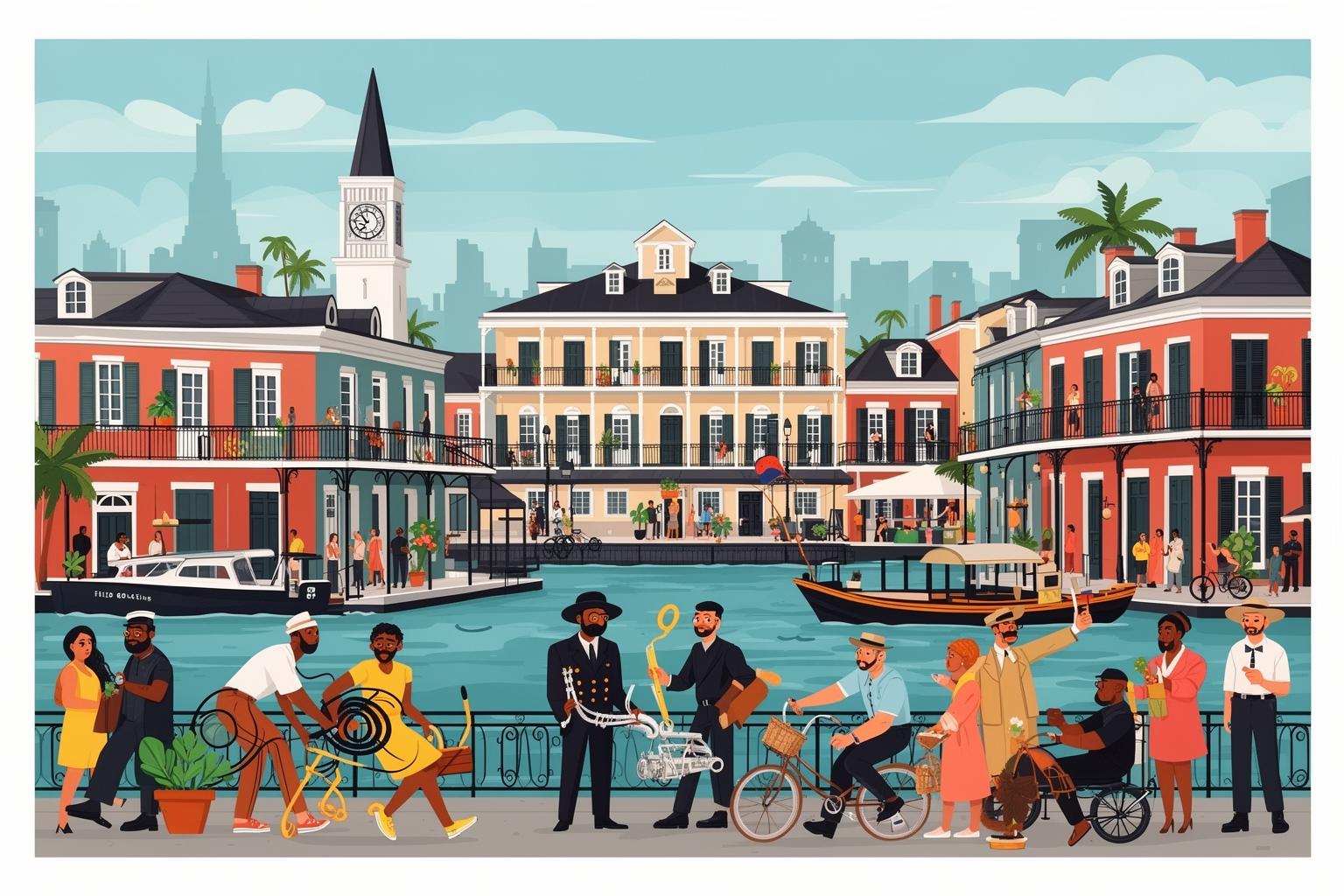
Embarking on a journey to the filming locations of The Hunt is more than just sightseeing; it’s an immersion into the culture and atmosphere that brought the film to life. To fully appreciate your pilgrimage, you need a plan. Here is your guide to navigating, lodging, and indulging in the city that served as the story’s hidden backdrop.
Navigating the Crescent City
New Orleans is a city of distinct neighborhoods, each with its own mode of travel. When exploring the historic French Quarter and adjacent Faubourg Marigny, your best means of getting around is on foot. The area is compact, and walking lets you uncover hidden courtyards, quirky shops, and historic plaques you might otherwise miss. To venture further into the elegant Garden District or Uptown, the St. Charles Streetcar is indispensable. It’s not just transportation; it’s a moving piece of history, offering a scenic and affordable ride beneath ancient live oaks. However, to truly follow in the film’s production footsteps and reach more remote spots like the English Turn clubhouse or the rural parishes, renting a car is essential. It grants you the freedom to explore backroads and discover the landscapes that gave the film its unsettling, all-American atmosphere.
Choosing Your Base of Operations
Where you stay in New Orleans will greatly influence your experience. For first-time visitors wanting to be in the heart of the action, the French Quarter is the obvious choice. Here, historic architecture, world-renowned restaurants, and the constant hum of live music surround you. If you prefer something a bit more tranquil yet equally historic, consider Faubourg Marigny, just downriver from the Quarter. It’s home to Frenchmen Street, the locals’ favorite spot for authentic live jazz, and boasts charming Creole cottages. For a taste of opulent Southern living, the Garden District is unmatched. Staying there means waking up to magnificent antebellum mansions and tree-lined avenues. For a more modern, artsy vibe, the Warehouse District offers trendy hotels, contemporary art galleries, and some of the city’s most innovative dining. Each neighborhood offers a distinct perspective on the city, allowing you to tailor your pilgrimage to your personal style.
Fueling the Hunt: A Taste of Louisiana
You can’t visit New Orleans without savoring its legendary cuisine. This city lives to eat, and its food reflects its rich, multicultural history. Start your day the traditional way: with beignets and café au lait at Café du Monde or the slightly less crowded Café Beignet. For lunch, a po’boy is essential. This iconic Louisiana sandwich, served on crusty French bread and piled high with fried shrimp, oysters, or roast beef, is a culinary institution. You’ll find them everywhere, from humble corner shops to upscale eateries. Dinner is your chance to explore the depths of Creole and Cajun cooking. A bowl of rich, dark gumbo is a must—a complex stew that tells the story of Louisiana’s heritage with every spoonful. Don’t miss jambalaya, étouffée, or a platter of charbroiled oysters. If you visit during the right season (usually spring), a crawfish boil is a social and culinary ritual you should experience. The food here isn’t just sustenance; it’s a celebration of life, history, and community.
The Rhythm of the City: Timing Your Visit
New Orleans is a city of festivals, with events year-round. The most famous, of course, is Mardi Gras, culminating on Fat Tuesday in late winter or early spring. This is the city at its most chaotic, colorful, and crowded—an unforgettable experience that requires planning months, if not years, ahead. For a slightly calmer atmosphere, spring and fall offer the best weather, with pleasant temperatures ideal for exploring. Spring also brings the New Orleans Jazz & Heritage Festival, a massive celebration of music and culture. Summers are famously hot and humid but can be a good time for hotel deals and enjoying the city’s slower, more languid pace. Winters are mild and less crowded, providing a cozy setting to enjoy indoor attractions, from incredible museums to intimate jazz clubs. No matter when you visit, something is always happening—an energy that keeps the city vibrant and alive.
Your journey into the world of The Hunt will inevitably lead you beyond the specific filming sites and into the very soul of New Orleans. You’ll discover that the film, in its clever disguise, actually pays homage to the city’s true character. This is a place of masks, hidden depths, and an untamable spirit that won’t be broken. It’s a city that can be anything—a European manor, a rural gas station, a terrifying wilderness. As you walk its streets and explore its bayous, you’re not merely a film tourist; you’re part of the city’s ongoing story of survival, mystery, and vibrant, defiant life. The hunt for locations will end, but your fascination with the Crescent City will have only just begun.