
There’s a certain magic to the films of Shunji Iwai, a hazy, sun-drenched nostalgia that feels like a half-remembered summer from your own youth. In his 2015 animated feature, The Case of Hana & Alice, this signature aesthetic is translated through the unique medium of rotoscoping, where live-action footage is meticulously traced over to create a world that is both fantastically animated and uncannily real. This film, a prequel to his beloved 2004 live-action movie Hana & Alice, follows the burgeoning friendship between the eccentric Alice and the reclusive Hana as they investigate a strange rumor at their new middle school. The story is a whimsical blend of teenage mystery, comedy, and heartfelt drama, but what makes it truly unforgettable is its setting. The world Hana and Alice navigate—their school, the train they ride, the coastal town they call home—is a direct reflection of real places in Japan. This isn’t just a backdrop; it’s a character in itself, breathing life and authenticity into every frame. Embarking on a journey to these locations is more than a simple sightseeing trip; it’s a pilgrimage into the heart of the film, a chance to walk the same streets, feel the same sea breeze, and see the world through the soft, painterly lens of Shunji Iwai’s vision. We’ll be exploring the two primary areas that give the film its soul: the timeless seaside city of Kamakura and the charming, retro streets of Ashikaga. Prepare to step through the screen into a world where animation and reality dance in perfect harmony.
This kind of cinematic pilgrimage to trace the footsteps of beloved characters is also beautifully explored in our guide to The Social Network’s iconic filming locations.
The Heart of the Mystery: Kamakura’s Timeless Streets
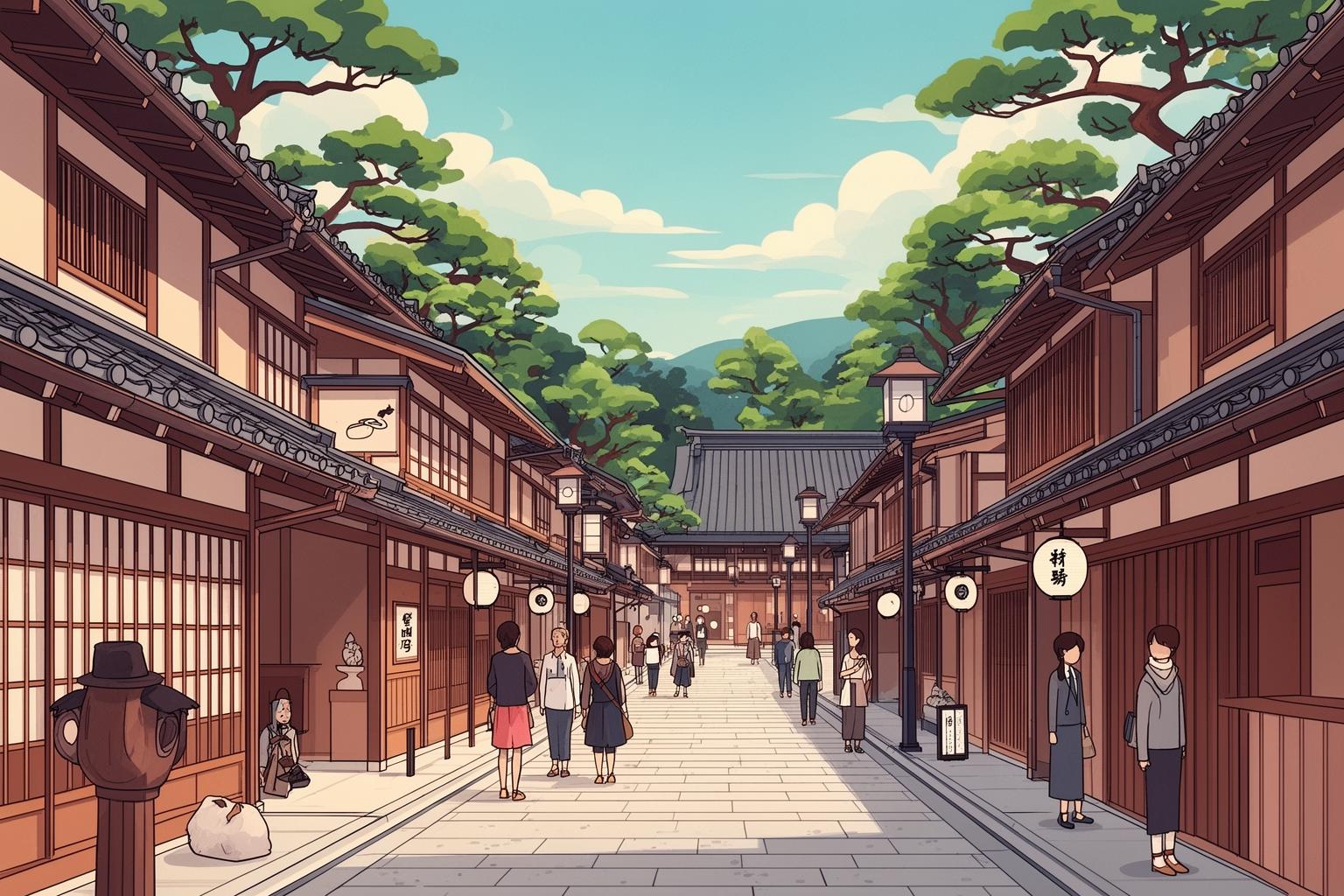
Kamakura, a coastal city in Kanagawa Prefecture, is the heart and soul of The Case of Hana & Alice. Less than an hour from Tokyo, it feels like a world apart—a place where ancient history blends seamlessly with relaxed beach culture. Once the de facto capital of Japan during the Kamakura Shogunate, the city’s landscape is dotted with majestic temples, tranquil shrines, and imposing statues nestled among forested hills. However, the film largely avoids these well-known tourist landmarks, choosing instead to highlight the quiet, everyday charm of its residential neighborhoods, its iconic local train line, and the dramatic coastline. This is the Kamakura familiar to its residents, and it’s where the story of our two young detectives truly comes to life.
Ishigamori Middle School: The Model at Kamakurayama
The central setting of the story, Ishigamori Middle School, is where Hana and Alice first meet, where rumors about the mysterious “Judas” begin to swirl, and where their adventure takes shape. While the school itself is fictional, its design draws heavily from a real place: Kamakura Municipal Kamakurayama Junior High School. Located in the quiet, upscale Kamakurayama neighborhood, the school mirrors the look and atmosphere of the one depicted in the film. The distinctive school gates, building layout, and surrounding greenery are instantly recognizable. Standing outside the gates, you can almost hear the distant ring of the school bell and imagine Hana shyly making her way to class.
Reaching this spot requires a bit of a journey from Kamakura’s main station, often involving a bus ride up winding hills, but the trip is part of the charm. It transports you away from the bustling tourist hubs into the peaceful daily rhythms of the city. The air feels fresher here—cleaner, quieter, and filled with the scent of trees and earth. Since it is an active school, it is vital to show respect: visitors should avoid entering the grounds, disrupting classes, or photographing students. The pilgrimage is about quietly observing from public roads outside. The real magic is in seeing the building and its surroundings, appreciating how the rotoscoping process captured not only the architecture but also the atmosphere. You can observe how the animators conveyed the glow of sunlight on classroom windows, the texture of concrete walls, and the gentle sway of trees in the schoolyard. It stands as a powerful example of how a real location can inspire a fictional world, lending it authenticity, life, and relatability.
The Commute of Discovery: Enoden and Shichirigahama
One of the most iconic features of life in the Shonan region, which includes Kamakura, is the Enoshima Electric Railway, affectionately called the Enoden. This charming small train, with its classic green and cream carriages, has been rattling along the coastline for over a century. It’s more than just transportation; it’s a scenic journey that defines the character of the area. In The Case of Hana & Alice, the girls’ rides on the Enoden serve as pivotal moments—quiet times for reflection and conversation as the stunning coastal scenery passes by their windows.
The train line itself is remarkable. It hugs the shoreline so closely you feel you could almost reach out and touch the waves. It winds through narrow gaps between houses where residents can hear its familiar clatter from their living rooms. This closeness is beautifully captured in the film. The route offers many famous sights, but the key station for our story is Shichirigahama. When Hana and Alice step off here, they are met by one of Japan’s most breathtaking views: a wide, sweeping bay with the distinctive silhouette of Enoshima Island in the distance and, on clear days, the majestic peak of Mount Fuji visible on the horizon.
The beach at Shichirigahama is a long stretch of dark volcanic sand, a favorite spot for surfers who ride the waves from dawn to dusk. Walking along the shore here, with the salty breeze in your hair and the sound of the ocean filling your ears, you are literally treading in Hana and Alice’s footsteps. This is where they stroll and talk, the vast sea serving as a backdrop to their growing friendship. The atmosphere is one of freedom and possibility. It’s a place that feels both lively, with the constant motion of the waves, and wonderfully peaceful. For the best experience, try to visit on a weekday to avoid crowds. Consider buying an Enoden one-day pass, which lets you hop on and off to explore the many small, charming stations along the line. A ride at sunset is especially magical, as the sky bursts into color and the coastal lights begin to twinkle, creating a scene worthy of an Iwai film.
A Path of Friendship: The Gokurakuji Kiridoshi Pass
Kamakura’s unique geography—hills on three sides and the sea on the fourth—made it a natural fortress during its era as a military capital. To connect the city to the outside world, ancient trails known as kiridoshi were carved directly through the rocky hills surrounding it. These narrow, moss-covered passes remain today, serving as atmospheric portals to the past. Although the film doesn’t specify a particular pass, the scenes of Hana and Alice walking through a sunken, tree-lined path strongly evoke these historic routes, especially those near Gokurakuji Temple.
Walking through a kiridoshi is like stepping back in time. The temperature drops immediately, and the sounds of modern life fade, replaced by dripping water, rustling leaves, and the echo of your footsteps. The earthen and rocky walls rise high on either side, cloaked in thick moss and ferns. Sunbeams filter down through the dense tree canopy, dappling the path in shifting patterns of light and shadow. The setting feels secluded, intimate, and a bit mysterious—the perfect place for the two girls to share secrets and unravel the puzzle they’ve discovered. These paths were once traversed by samurai and monks, and you can sense the weight of that history with every step. Exploring these ancient trails adds rich historical depth to your pilgrimage, linking the fictional tale of Hana and Alice to Kamakura’s real, centuries-old story. When visiting, be sure to wear sturdy, comfortable shoes, as the paths can be uneven and slippery, especially after rain. This is a place not to be hurried through; it invites slow, reflective walking, noticing small details, and soaking in the profound sense of peace.
A Touch of Nostalgia: Ashikaga’s Cinematic Charm
While Kamakura serves as the coastal heart of the film, another city imparts its distinct character to Hana and Alice’s world: Ashikaga, located in Tochigi Prefecture. Once a textile town with a rich heritage, Ashikaga has recently become a favored spot for filmmakers seeking a nostalgic, “everytown” Japan atmosphere. Its well-preserved streets, retro architecture, and film-friendly community have transformed it into a vast, open-air movie set. Shunji Iwai and his team incorporated parts of Ashikaga to craft the final image of the town and school, blending its inland, slightly rustic ambiance with Kamakura’s seaside charm to create the unique world of Ishigamori.
The Iconic Scramble Crossing and Town Center
One of Ashikaga’s most recognizable spots is the main intersection, commonly known as the Ashikaga Scramble Crossing. This broad, open junction, surrounded by a mix of modern and Showa-era buildings, features in numerous films and TV dramas. It embodies a quintessential Japanese regional city vibe—busier than a small town yet without Tokyo’s overwhelming scale. In The Case of Hana & Alice, it enhances the everyday, slice-of-life feeling. It’s the kind of place where you’d see students lingering after school, heading to cafes or cram schools. The ordinariness of the location is precisely its appeal. It roots the film’s whimsical mystery in a believable, relatable reality. Walking through this area, one can appreciate the subtle architectural details and the slower pace of life that filmmakers treasure. It feels authentic and well-lived, an ideal backdrop for stories about ordinary people caught up in extraordinary events.
The School’s Other Face: Ashikaga’s Filming Sets
Ashikaga City actively promotes itself as a hub for film and media production, boasting a prized collection of former school buildings now used almost exclusively as sets. The Former Ashikaga Nishi High School, in particular, has appeared in hundreds of productions. It’s highly likely that interior scenes or additional exterior shots of Ishigamori Middle School were filmed at a location like this. This highlights a fascinating aspect of modern Japanese filmmaking: a single fictional setting is often a creative composite of multiple real places, sometimes miles apart. The school gate may be in Kamakura, while the classrooms, hallways, and gym could all be in Ashikaga. For fans, this reveals the artistry behind the film and reminds us that world-building is a form of creative geography. Although these dedicated film sets aren’t always open to the public, they remain central to Ashikaga’s identity. Interested visitors can check with the Ashikaga Film Commission or local tourist information for any special tours or events. Exploring Ashikaga offers a deeper appreciation for filmmaking craft and how directors like Iwai intricately assemble real locations to create their imagined worlds.
Capturing the Iwai Aesthetic: Beyond the Locations

A pilgrimage to see locations from a Shunji Iwai film is about much more than just ticking places off a checklist. It’s about fully immersing yourself in the aesthetic he so expertly crafts. His films are renowned for their dreamy visual style, marked by soft focus, natural lighting, and a sense of genuine intimacy. Visiting the actual sites lets you grasp how he achieves this effect, revealing the raw elements that he transforms into cinematic poetry.
The Magic of Rotoscope and Reality
Choosing rotoscoping for The Case of Hana & Alice was a brilliant decision. It enabled Iwai to preserve the subtle nuances of his live-action cinematography—the slightly shaky handheld camera movements, the stunning lens flares as sunlight filters through the trees, and the shallow depth of field that blurs the background into softness. When you stand at Shichirigahama and watch the sunset over the water, you’re not just enjoying a pretty view; you’re witnessing the very light source that was filmed and meticulously traced by animators. You can sense the atmosphere in which the live actors originally performed. This link between the animated image and its real-world origin is profoundly moving. It sharpens your awareness of your surroundings, encouraging you to notice the quality of light, the texture of walls, the way the wind rustles leaves—all the components that define the Iwai aesthetic.
The Soundscape of the Film
Don’t focus only on what you see, but also on what you hear. The sound design in Iwai’s films is always deeply immersive. As you explore, tune in to the real-life sounds captured in the movie: the iconic gatan-goton rhythm of the Enoden train rumbling along the tracks; the constant, soothing roar of waves crashing on the shore at Shichirigahama; the piercing electric hum of cicadas in the summer heat, a hallmark of Japanese summers; the soft rustle of bamboo groves and the distant ringing of a temple bell. Even the ambient noises of residential streets—a passing bicycle, a barking dog, the chatter of students—all contribute to the film’s strong sense of place. To deepen your immersion, consider playing the film’s charming, piano-driven soundtrack composed by Iwai himself as you walk. The music adds another layer of meaning to the scenery, blurring the boundary between your reality and the film’s world.
Seasonal Pilgrimages: When to Visit
Kamakura, like the rest of Japan, undergoes dramatic changes with the seasons, and each season offers a unique way to experience the world of Hana and Alice. A spring visit coincides perfectly with the start of the Japanese school year. The weather is pleasant, and the city is awash in pale pink cherry blossoms, evoking a hopeful, fresh-start feeling. Summer brings vibrant, intense energy: lush, deep greens, brilliant blue skies, and the sounds of summer filling the air. It’s hot and humid—the classic anime summer setting—a time for adventure and discovery. Autumn is perhaps the most comfortable season for walking. The air is crisp and clear, offering the best views of Mount Fuji from the coast. The hills are painted in warm autumnal colors, creating a beautifully melancholic mood. Winter is quiet and reflective. Crowds thin out, and the city adopts a stark, serene beauty. Bare tree branches form intricate silhouettes against the low winter sun, and the cold, salty sea air feels invigorating. There’s no wrong time to visit; each season simply reveals a different aspect of the film’s soul.
Your Pilgrimage Planner: A Practical Guide
Embarking on your own Hana & Alice pilgrimage is a simple and rewarding journey. With a bit of preparation, you can effortlessly travel between these beautiful spots and fully immerse yourself in the experience.
Access and Transportation
Getting to Kamakura is easy. From major Tokyo stations like Tokyo Station or Shinjuku, you can take the JR Yokosuka Line or the JR Shonan-Shinjuku Line to Kamakura Station in about an hour. Once there, your primary means of getting around will be on foot and the Enoden line. The city center is very walkable, but to visit areas like Kamakurayama or the more distant temples, local buses departing from the station are your best option. For coastal exploration, the Enoden is indispensable and enjoyable in itself. Renting a bicycle is also a great choice on a pleasant day, allowing you to explore at your own pace.
To reach Ashikaga from Tokyo, take the Tobu Isesaki Line from Asakusa Station, which provides a direct and scenic route. Alternatively, you can use the JR Utsunomiya Line or Shinkansen to Oyama, then transfer to the JR Ryomo Line. The journey takes approximately 90 minutes to two hours.
A Suggested Itinerary
To get the most out of a day trip to Kamakura, consider an itinerary inspired by the film. Begin your morning by catching a bus from Kamakura Station up to the Kamakurayama area. Enjoy the peaceful residential vibe and respectfully view the exterior of the school that inspired Ishigamori. Then, take a bus back down towards the coast. From Kamakura Station, ride the Enoden towards Fujisawa and get off at Shichirigahama Station. Spend the middle of your day walking along the beach, savoring lunch at one of the seaside cafes, and taking in the iconic scenery. In the afternoon, hop back on the Enoden and disembark at Gokurakuji Station, one of the oldest and most atmospheric stops on the line. From there, explore the nearby temple and discover one of the Kiridoshi passes for a quiet, historic stroll. As evening comes, find a spot along the coast between Inamuragasaki and Shichirigahama to watch the sun set—a perfect, cinematic conclusion to your day.
Etiquette for the Modern Pilgrim
Anime pilgrimage, or seichi junrei, has become a wonderful way for fans to connect with their favorite stories, but it carries the responsibility of being a respectful visitor. The world of Hana and Alice includes real neighborhoods, schools, and communities. The most important rule is to respect private property. Never trespass on school grounds or private residences. Be considerate of noise, especially in quiet residential areas and on the narrow Kiridoshi paths. Avoid photographing local residents, especially students, without their explicit consent. Always carry out any trash you bring along. The aim is to appreciate the locations and their atmosphere without leaving a negative impact. By being a thoughtful and considerate pilgrim, you help keep these places welcoming for future fans and, more importantly, comfortable for the people who live there every day.
A Mystery to Call Your Own

Strolling through the streets of Kamakura and Ashikaga feels like developing a photograph. The vague, dreamlike images from the film gradually come into clear focus, unveiling the real, tangible world that inspired them. You begin to grasp why Shunji Iwai selected these particular locations—the way the Enoden train seems like a vessel for storytelling, the way the ancient Kiridoshi passes carry an air of mystery, the way the light glimmers over the sea at Shichirigahama. This journey changes your connection with the movie. It becomes more than just a story you watched; it turns into a place you’ve experienced, a path you’ve walked. The Case of Hana & Alice is a story about friendship forged through a shared investigation, about looking more closely at the world around you and discovering the extraordinary in the ordinary. By making this pilgrimage, you are, in a sense, creating your own case—a personal quest to uncover the beautiful reality behind an animated dream and, in doing so, finding a touch of magic right here in the real world.